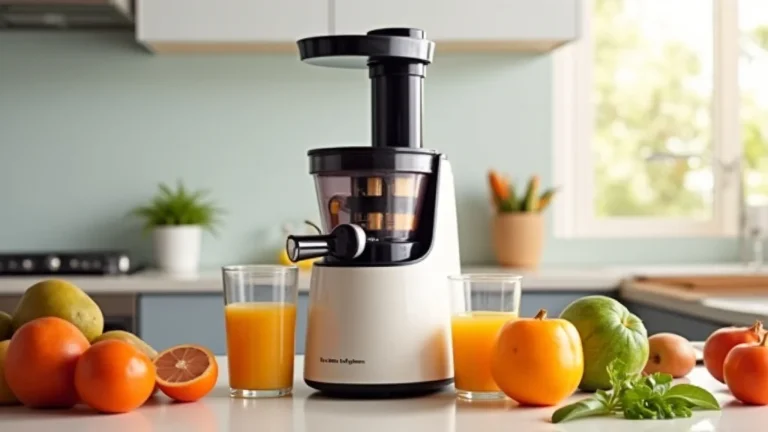
Figuring out how much electricity juicer uses can be tricky when you’re just starting. It’s common to wonder if your juicer is a power hog and how much it’ll add to your electricity bill. This guide will help you easily find out, breaking down the factors involved and giving you simple steps to calculate your juicer’s energy consumption. We’ll explore everything from the juicer’s wattage to how often you use it. Let’s get started!
What Affects a Juicer’s Electricity Consumption?
Several things decide how much juice extraction uses. The primary factor is the juicer’s wattage, which shows how much power it pulls from your outlet. Other elements, like the type of juicer (centrifugal or slow) and how long you run it, also contribute. Furthermore, the voltage in your area impacts the total energy use. Grasping these factors gives you the ability to estimate your juicer’s power consumption accurately and manage your energy usage. Let’s look at the key elements influencing electricity use.
Juicer Wattage: The Power Factor
The wattage rating, typically found on the juicer or in its manual, is the most crucial number. It indicates how much energy the juicer draws per hour of operation. A higher wattage means the juicer will generally use more electricity. Centrifugal juicers usually have higher wattages because they use a powerful motor to spin the produce rapidly. Slow juicers, sometimes called masticating juicers, tend to have lower wattages. Recognizing the wattage helps you predict the appliance’s electricity needs.
- Locate the Wattage: Find the wattage on the juicer itself (usually on the bottom or back) or in the user manual. This number is essential for calculating energy consumption.
- Higher Wattage Means More Power: A juicer with a higher wattage will consume more electricity per hour compared to one with a lower wattage. It doesn’t necessarily mean it is better; it just means it has a more powerful motor.
- Compare Wattages: When shopping, compare the wattages of different juicers to see their power requirements. This comparison helps you pick a model that fits your energy preferences.
For example, a centrifugal juicer might have a wattage of 800-1200 watts, while a slow juicer may have a wattage of 150-250 watts. This variance directly impacts the total energy use.
Juicer Type and its Impact
The design of a juicer affects how much electricity it uses. Centrifugal juicers, the most common type, usually have powerful motors to chop and spin fruits and vegetables at high speeds. This high-speed operation requires more energy. In contrast, slow juicers, also known as masticating juicers, use a screw-like mechanism to crush produce slowly. This method is more energy-efficient, using less electricity. The type of juicer, therefore, directly influences energy usage.
- Centrifugal Juicers: These juicers often have higher wattage ratings and consume more electricity due to the powerful motor needed for high-speed operation.
- Slow Juicers: Slow juicers use less power because their motors work at lower speeds. They are generally more energy-efficient and can reduce your energy costs.
- Choosing the Right Type: Consider how often you plan to juice and the types of produce you’ll use. If you juice frequently, the energy savings of a slow juicer can add up.
According to a recent study, slow juicers can use up to 60% less energy than centrifugal juicers. This difference makes a significant impact on monthly electricity bills, particularly for regular juicers.
How Long You Use Your Juicer Matters
The time you operate your juicer directly correlates with the amount of electricity it consumes. The longer you juice, the more power it needs. A quick morning juice session uses less electricity than a session lasting a long time. Furthermore, how often you use your juicer influences the total amount of energy consumed over a month. Taking into account your typical juicing time helps estimate your total energy needs.
- Calculate Juicing Time: Note how long you typically run your juicer each session. Even a few extra minutes of juicing each day can increase consumption.
- Regular Usage: If you juice daily, the total energy usage will be higher than if you juice occasionally. Frequency impacts overall electricity use over time.
- Plan Your Juicing: Consider how often you juice and for how long. Efficient juicing times can save energy, lowering your electricity costs.
Calculating Electricity Usage: A Simple Guide
Calculating the electricity used by your juicer is straightforward, enabling you to keep an eye on your energy costs. You can use a simple formula: (Wattage × Hours Used) / 1000 = Kilowatt-hours (kWh). Kilowatt-hours are the units your electricity bill uses. After determining your kWh usage, multiply by your electricity rate to determine the cost. Here’s a step-by-step breakdown to make it easy to follow.
Step-by-Step Calculation
Here’s a step-by-step method to figure out how much electricity your juicer is using. This process makes it easier to measure and manage your energy consumption. By following these steps, you can estimate your juicer’s energy costs accurately and plan your energy usage better.
- Find the Wattage: Look for the wattage of your juicer. This number is usually printed on the appliance itself or in the manual. For example, your juicer might have a wattage of 800 watts.
- Estimate Use Hours: Determine how many hours you use the juicer each day or week. For instance, you may use it for 15 minutes (0.25 hours) per day.
- Calculate Daily/Weekly Consumption: Use the formula: (Wattage × Hours Used) / 1000 = kWh. In the example: (800 watts × 0.25 hours) / 1000 = 0.2 kWh daily.
- Figure Out Monthly Costs: Multiply the daily kWh by the number of days in a month (about 30 days) to get monthly usage. Then, multiply this number by your electricity rate per kWh (check your bill).
- Determine the Cost: Multiply the monthly kWh usage by your electricity rate (e.g., $0.15 per kWh). This calculation shows the monthly cost of using your juicer.
Real-World Examples
Let’s look at a few examples to see how the calculations work in practice. The following cases demonstrate how wattage, use duration, and electricity rates affect the total costs. These examples will give you a clear view of the real impact of your juicer’s power consumption.
-
Example 1: Centrifugal Juicer
A centrifugal juicer with 1000 watts is used for 20 minutes daily (0.33 hours). The local electricity rate is $0.14 per kWh.- Daily Consumption: (1000 watts × 0.33 hours) / 1000 = 0.33 kWh
- Monthly Consumption: 0.33 kWh × 30 days = 9.9 kWh
- Monthly Cost: 9.9 kWh × $0.14 = $1.39
-
Example 2: Slow Juicer
A slow juicer with 200 watts is used for 30 minutes daily (0.5 hours). The electricity rate is $0.16 per kWh.- Daily Consumption: (200 watts × 0.5 hours) / 1000 = 0.1 kWh
- Monthly Consumption: 0.1 kWh × 30 days = 3 kWh
- Monthly Cost: 3 kWh × $0.16 = $0.48
-
Example 3: Occasional Use
A centrifugal juicer with 800 watts is used for 1 hour per week. The electricity rate is $0.15 per kWh.- Weekly Consumption: (800 watts × 1 hour) / 1000 = 0.8 kWh
- Monthly Consumption (assuming 4 weeks): 0.8 kWh × 4 weeks = 3.2 kWh
- Monthly Cost: 3.2 kWh × $0.15 = $0.48
Understanding Electricity Rates
Electricity rates are how much you pay for each kWh of electricity you use. These rates vary depending on your location, your utility provider, and the time of day. Knowing your electricity rate is crucial for accurately figuring out how much it costs to operate your appliances. You can find this rate on your electricity bill.
- Check Your Bill: Your electricity bill shows your rate per kWh. It might be listed as a flat rate or in different tiers based on usage.
- Consider Time-of-Use Rates: Some areas have time-of-use rates, where electricity is cheaper during off-peak hours (like nights and weekends) and more expensive during peak hours.
- Compare Providers: If possible, review different electricity providers in your area to find the most cost-effective rates.
Electricity rates vary widely. The national average is around $0.14 per kWh, but this can range from $0.09 to $0.25 or more depending on your region and the electricity provider.
Ways to Lower Your Juicer’s Energy Use
You can cut down on your juicer’s energy consumption and, therefore, your electricity bill. There are several ways to improve efficiency, from choosing energy-efficient models to changing how you use your juicer. These small changes can add up, helping you save money while still enjoying your favorite fresh juices.
Choosing an Energy-Efficient Juicer
The type of juicer you pick has a major impact on energy use. Slow juicers generally use less power than centrifugal juicers. This design makes them a good option if you want to save energy. When buying a juicer, review the wattage. A lower wattage means the appliance will use less electricity. Considering energy efficiency helps in the long run.
- Opt for Slow Juicers: Slow juicers, or masticating juicers, are designed to be energy-efficient, using less electricity than centrifugal models.
- Check the Wattage: Review the wattage rating before you buy. Choose a juicer with a lower wattage if energy efficiency is a priority.
- Read Reviews: Search for juicers that have been reviewed for energy efficiency. Look for models noted for their low power consumption.
A slow juicer can use up to 70% less energy than a centrifugal model. Over the life of your appliance, these savings will reduce both your energy bills and your carbon footprint.
Tips for Efficient Juicing
You can do some things to make the most of your juicer. The first idea is to juice only the amount you need. It also makes sense to cut your produce into smaller pieces. Smaller pieces reduce the time the juicer runs. Cleaning your juicer regularly helps it work correctly and efficiently. These easy steps help you save both energy and money.
- Juice Only What You Need: Avoid over-juicing to prevent waste and reduce the time your juicer runs. Plan your juicing sessions to prepare only what you will consume.
- Prep Produce Properly: Cut fruits and vegetables into the correct sizes before juicing. This makes the juicing easier and faster, decreasing the appliance’s running time.
- Maintain Your Juicer: Clean the juicer after each use and follow the maker’s instructions for upkeep. A clean, well-maintained juicer works more efficiently.
Smart Juicing Habits
Some modifications to your juicing schedule and routine can have a positive effect on your energy usage. Consider the best times to juice, using your appliance during off-peak hours. Juicing during these times could save you money. Preparing ingredients in bulk for multiple juices is another idea. These strategies can help make your juicing more efficient and cost-effective.
- Juice During Off-Peak Hours: If your energy provider has time-of-use rates, juice during off-peak hours (nights or weekends) when electricity costs less.
- Plan Your Juicing Schedule: Plan your juicing to ensure you are only juicing when needed. Avoid excessive juicing times or unnecessary use.
- Batch Preparation: Prepare ingredients for several juices at once. This reduces the number of times you need to start up your juicer and cleans the appliance.
Frequently Asked Questions
Question: How can I tell how much electricity my juicer uses?
Answer: You can calculate electricity use by finding the juicer’s wattage (usually on the appliance or in the manual) and multiplying it by the amount of time you use it. Then divide that number by 1000 to get kWh. Multiply that result by your electricity rate to get the cost.
Question: Do slow juicers use less electricity than centrifugal juicers?
Answer: Yes, slow juicers (masticating juicers) generally use less electricity than centrifugal juicers because they operate at lower speeds. This makes them more energy-efficient.
Question: Where can I find the wattage of my juicer?
Answer: The wattage of your juicer is commonly printed on a sticker on the juicer’s base, on the back, or in the user manual that came with the appliance.
Question: How does the length of time I use my juicer impact electricity usage?
Answer: The longer you run your juicer, the more electricity it will use. Extended juicing sessions increase power consumption, so keeping juicing times shorter helps manage energy costs.
Question: What’s the best way to lower the cost of running my juicer?
Answer: You can lower costs by choosing an energy-efficient juicer (like a slow juicer), using your juicer during off-peak hours, and by only juicing what you plan to consume.
Final Thoughts
Understanding how much electricity juicer uses is simple when broken down. The wattage of your juicer and how long you run it are the main factors. By knowing your juicer’s wattage and the hours it’s in use, you can accurately estimate its energy needs. Then, knowing your electricity rate lets you figure out the cost. Making small adjustments, such as choosing an efficient juicer or being mindful of how long you juice, can result in savings. You now have the knowledge to figure out and reduce the energy your juicer uses. Now, start enjoying those fresh juices with added confidence in your energy use!

I’m Emma J. Caldwell, the founder, lead writer, and home-cooking enthusiast behind KitchenGuideCo.com. With a background in culinary arts and over a decade of cooking experience in both professional and personal kitchens, I created this platform to demystify recipes, offer smart kitchen gadget reviews, and guide readers through meal prep with confidence and clarity.