It starts as a peaceful morning routine, pouring ingredients into the blender for a quick smoothie. Then, with the press of a button, the entire kitchen roars to life like a jet engine.
That sudden burst of noise often leaves many wondering why are blenders so loud and whether there’s a way to tame that chaos.
Blenders are among the loudest small appliances in modern kitchens, often reaching 90 to 95 decibels—the same level as a motorcycle or power drill (source).
For those living in apartments or small homes, this noise can be more than just annoying; it can disrupt morning peace or even wake others nearby. The question isn’t only about comfort but also about design and engineering choices that make these machines so powerful and noisy.
The sound isn’t accidental. High-speed motors, sharp blades, and air turbulence are all working together to create that familiar blender roar. In some models, thin plastic jars and poor vibration isolation amplify the sound even more.
Yet, those same elements are what help a blender crush ice, puree vegetables, and create silky smoothies in seconds.
According to Soundproof Living, premium “quiet” blenders equipped with acoustic covers can reduce sound levels by up to 50 percent, showing that the right design can make a real difference (source). This reveals an important truth: loud doesn’t always mean powerful, and quiet doesn’t have to mean weak.
What Makes Blenders Loud? The Core Noise Sources
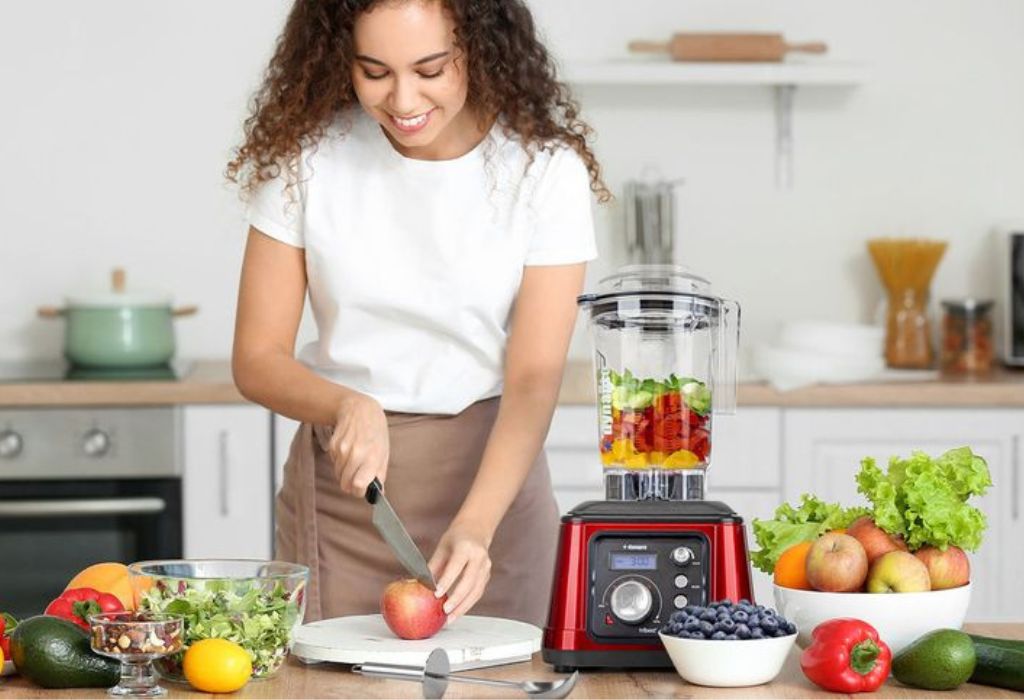
The sound that bursts from a blender isn’t random—it’s the result of intense mechanical and acoustic forces working together.
The powerful motor inside, spinning thousands of times per minute, generates vibrations that quickly spread through the blender’s body and into the surrounding air. Each part of the appliance, from the blades to the base, contributes to the noise in its own way.
At the heart of the problem lies the motor speed. Most blenders operate at speeds of 20,000 to 30,000 revolutions per minute, producing a high-pitched whir as the motor struggles against air resistance and ingredient density.
This rapid movement creates turbulent air inside the housing and generates what engineers call aerodynamic noise. Unlike slow kitchen tools, high-speed blenders move so fast that air itself becomes a source of loudness.
Blade turbulence is another major contributor to the overall sound. When sharp metal blades cut through liquid, they cause a phenomenon known as cavitation, where air bubbles form and collapse violently.
Each microscopic bubble burst adds a clicking or popping sound that amplifies the overall noise. The harder the ingredients—such as frozen fruit or ice—the louder the resulting acoustic bursts.
The jar design plays a bigger role than most realize. Thin plastic jars act like acoustic amplifiers, resonating with the sound waves produced by the blades. The shape of the jar can focus sound in specific directions, often toward the user.
Some newer models use double-walled or insulated jars to absorb vibrations, dramatically reducing perceived noise levels.
The connection between the motor and the jar also affects sound transmission. When these parts are tightly coupled without adequate insulation, mechanical energy travels directly into the countertop, turning the entire surface into a soundboard.
Hard surfaces such as stone or metal counters reflect these vibrations, further amplifying them in the kitchen environment.
Ingredients themselves can change how loud a blender sounds. When blending liquids, sound remains steady and smooth.
However, solid materials like nuts or ice create sudden impacts that spike decibel levels. The mixture’s density affects airflow and resistance, which in turn changes the motor’s strain and pitch.
Ultimately, blenders are loud because they combine multiple noise sources into one confined space. The motor’s mechanical vibration, the blade’s turbulence, the jar’s resonance, and the countertop’s reflection all merge to produce a sound that’s difficult to contain.
Manufacturers often prioritize performance and power over acoustics, which explains why even premium blenders can sound like jet engines in small kitchens.
In short, the answer to why are blenders so loud lies in physics and design. They rely on immense speed, sharp blades, and strong airflow to deliver smooth textures quickly.
That power comes at the cost of noise, but understanding its origins is the first step toward reducing it effectively.
Decibels 101: How Loud Is “Loud” for a Blender?
To understand why are blenders so loud, it helps to measure their sound levels in clear, scientific terms. Noise intensity is measured in decibels (dB), and every small increase on this scale represents a significant jump in perceived loudness.
The average household blender can reach between 88 and 96 dB, which is about the same as standing near a motorcycle or lawn mower. That level is loud enough to startle, especially in enclosed kitchens with reflective surfaces.
Decibels follow a logarithmic scale, meaning each 10 dB increase roughly doubles how loud the sound feels to human ears.
A blender operating at 90 dB doesn’t sound slightly louder than one at 80 dB—it actually sounds twice as loud. This explains why even minor differences in design or speed can drastically affect noise levels.
Laboratory tests conducted by Soundproof Living and Consumer Reports reveal that most high-performance blenders operate within this 88–96 dB range, while so-called “quiet” blenders drop closer to 70–80 dB (source).
To put this in perspective, normal conversation occurs around 60 dB, and city traffic averages about 85 dB. Anything above 90 dB for extended use can become uncomfortable or even harmful to hearing if exposure is frequent.
Blender sound also depends on environment and usage. Blending in a small kitchen with tile floors and hard counters reflects more sound than doing the same in a larger, furnished space that absorbs vibrations.
The distance between the blender and the listener also makes a big difference—a one-meter increase in distance can reduce perceived loudness by nearly half.
The type of recipe also influences the decibel range. Crushing ice or frozen fruit tends to produce sharper, higher-frequency sounds. In contrast, blending soft ingredients or liquids creates a lower, smoother tone that’s less piercing.
Manufacturers have tried to counteract these extremes with insulated housings and softer rubber seals, but full noise elimination remains difficult due to the motor’s energy output.
Interestingly, quiet models like the Blendtec Professional 800 and Vitamix Quiet One can operate as low as 64–70 dB thanks to sound enclosures and insulated jars (source).
These innovations show that while some noise is unavoidable, strategic design can make a blender almost as quiet as a normal conversation.
Understanding decibel levels gives perspective to everyday kitchen noise. Knowing that most blenders operate near the upper safe limit helps users appreciate why are blenders so loud and why certain designs focus on reducing acoustic pressure.
Whether for convenience or comfort, controlling decibel output is one of the key goals in modern blender engineering.
Design Factors That Make Blenders Noisy
The design of a blender determines how loud it will sound during operation. Every component—from the motor and blades to the jar and base—affects the way vibrations and air movement generate noise.
To fully understand why are blenders so loud, it’s essential to look at how each design element contributes to the overall sound profile.
Motor and Cooling System
The motor is the heart of every blender and the primary source of noise. Most household blenders use universal motors, which are powerful but inherently loud because they rely on carbon brushes that create friction and electrical buzzing.
When these motors spin at 20,000 revolutions per minute or higher, the sound becomes a high-pitched mechanical whine that’s difficult to suppress.
Cooling fans inside the motor housing add to this problem. These fans move large volumes of air to prevent overheating, but the airflow turbulence they create produces an additional layer of broadband noise. Even when the blades aren’t heavily loaded, the whirring fan ensures a constant background hum.
Manufacturers have started exploring brushless DC motors, which operate more quietly since they remove friction from the equation. However, these systems are more expensive and complex, so they are typically found only in high-end or commercial models.
Blade Assembly and Cavitation
Blades generate intense turbulence as they slice through liquids and solids. Each rotation disturbs the surrounding air and liquid, creating rapid pressure changes that lead to cavitation.
Cavitation is the formation and collapse of microscopic air bubbles, which release sharp popping sounds as they burst. This process contributes significantly to the loud, rattling quality that many blenders produce when mixing thick or frozen ingredients.
The sharper and faster the blades, the more pronounced the noise becomes. Multi-blade systems may blend ingredients more efficiently but also amplify vibration if not balanced precisely.
Even a slight imbalance in blade alignment can cause the motor and jar to shake, increasing mechanical noise.
Jar Material and Shape
The jar plays a surprisingly large role in determining how much sound escapes. Most blender jars are made from Tritan plastic or glass, both of which have distinct acoustic properties.
Plastic jars tend to resonate more, acting like speakers that project sound outward. Glass jars, though denser, can also transmit vibration unless they are thick or insulated.
The shape of the jar matters too. A narrow jar can concentrate noise at the bottom, while a wider jar disperses sound more evenly.
Some modern designs use double-walled or insulated jars that trap noise inside by absorbing vibrations between layers. This method has proven effective in reducing perceived loudness without affecting blending performance.
Base Structure and Countertop Vibration
The base connects the motor to the jar and the countertop, and it can either amplify or reduce noise depending on its build. If the base lacks proper insulation or rubber padding, vibrations from the motor travel directly into the counter, turning the entire kitchen surface into an amplifier.
A solid, heavy base made of dense materials helps absorb some of this energy. Rubberized feet or silicone mats beneath the blender can also act as dampers, isolating vibrations and reducing resonance. Many modern blenders now come equipped with anti-vibration mounts for this very reason.
Ingredient Interaction
Even the food inside the jar affects noise production. Hard ingredients like ice, nuts, or frozen fruit cause sudden impacts as they hit the blades, producing sharp, irregular sounds.
Softer ingredients like yogurt or liquid bases help cushion the impact and reduce the overall decibel level. This is why a smoothie made from frozen fruit often sounds much louder than one blended with fresh produce.
Power vs. Noise Trade-Off
A final design factor lies in the balance between power and noise control. More powerful motors generate stronger blending performance but also increase vibration and air turbulence.
Quieter designs often require additional insulation, thicker jars, and slower speed transitions—all of which can slightly reduce performance. Finding the balance between efficiency and quietness is one of the biggest engineering challenges in blender design.
In the end, design decisions directly explain why are blenders so loud. Every improvement in power or speed introduces new noise challenges that must be offset by better insulation and materials.
By addressing these factors—motor type, blade design, jar structure, and vibration control—manufacturers can significantly reduce blender noise without sacrificing performance.
Why Are Some Blenders So Loud? Brand and Model Examples
Not all blenders are built the same, and their noise levels often depend on engineering choices and design priorities. Some brands focus on raw power and speed, while others prioritize quiet operation and user comfort.
Understanding why are blenders so loud across different models reveals how performance, construction, and price work together to shape the sound you hear in your kitchen.
High-performance blenders like Vitamix and Blendtec are known for their impressive power, but that strength comes at a cost—volume. These machines often use motors that exceed 2 horsepower and can reach sound levels between 92 and 96 decibels during maximum blending .
At that intensity, the sound is comparable to standing near a lawn mower or city traffic. These models focus on achieving the smoothest blend possible, meaning their design sacrifices quiet operation for pure efficiency.
However, not all high-end blenders are equally noisy. The Blendtec Professional 800 and Vitamix Quiet One use acoustic enclosures, which significantly reduce sound without compromising performance.
These enclosures are transparent, dome-shaped covers that fit over the blender jar and motor base, trapping much of the noise inside. The result is a sound level that can drop as low as 64–70 decibels, which is roughly equivalent to normal conversation .
Mid-range blenders such as the Ninja Professional Series or NutriBullet Pro offer strong blending power but usually omit advanced noise-dampening features. Their lighter plastic housings and thinner jars tend to amplify vibrations.
Users often notice that these models are noticeably louder than premium ones, even though their motors are smaller. The reason lies in cost-saving design choices that favor affordability over acoustic performance.
Entry-level blenders typically feature compact motors, low-cost materials, and limited insulation. While these units don’t reach the same decibel levels as professional models, they often emit a more high-pitched sound because of thinner plastic casings and less stable bases.
The lighter body vibrates more freely, transferring sound directly into the countertop and surrounding air.
Commercial blenders used in cafés and smoothie bars are engineered for power and speed, making them some of the loudest machines on the market.
Many professional kitchens use sound enclosures to protect workers from prolonged noise exposure. These models operate for longer periods and at higher speeds, producing consistent noise above 90 decibels if not enclosed properly.
In contrast, newer “quiet blender” technologies have gained popularity among home users seeking balance between performance and peace.
Brands now use noise-reducing motor mounts, thicker insulated jars, and weighted bases to absorb vibrations. Some companies even integrate smart sensors that automatically adjust speed to minimize turbulence, which reduces both sound and wear on the motor.
Ultimately, the difference in blender noise levels comes down to how much engineering effort is put into sound control. Cheaper blenders may seem louder because they lack insulation, while premium models invest heavily in noise isolation and acoustic enclosures.
Knowing these distinctions helps buyers understand not only why are blenders so loud but also which models fit their tolerance for sound and performance needs.
Choosing the right blender depends on what matters most—power, price, or quietness. For those blending early in the morning or living in shared spaces, a quiet model with acoustic insulation can make a world of difference.
For others who prioritize speed and texture quality, accepting a little noise might be part of the trade-off for professional-level results.
How to Reduce Blender Noise at Home (Fast Fixes to Pro-Level)
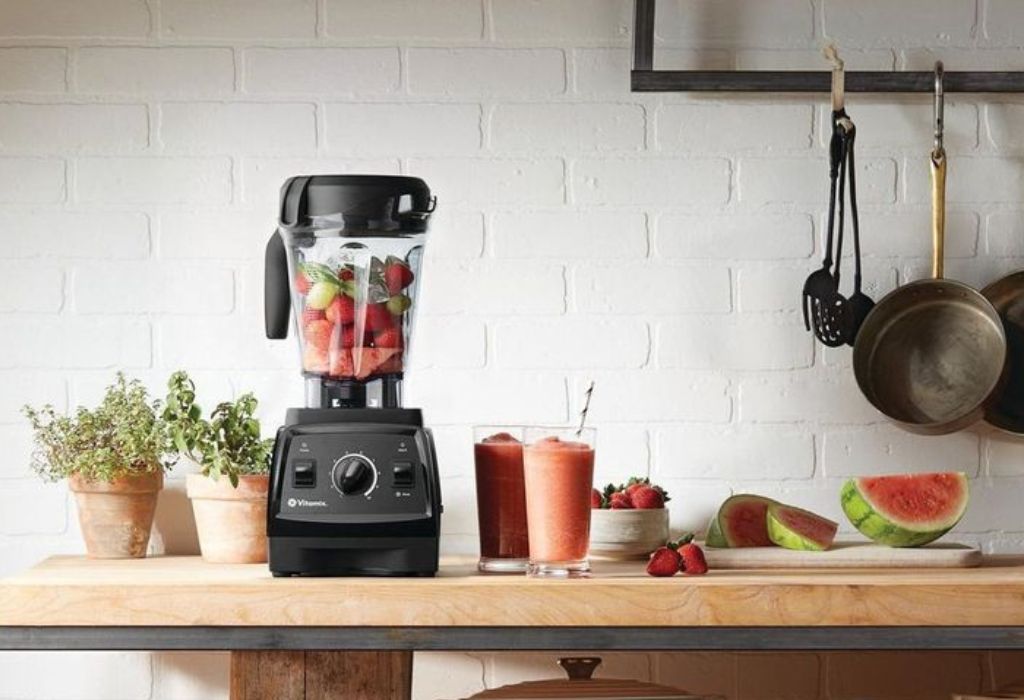
Even though blender noise is inevitable, there are practical ways to make it quieter without sacrificing performance. Small changes in setup, materials, and blending habits can noticeably reduce the harsh sound that fills your kitchen.
The first and simplest fix is to change the surface where your blender sits. Hard countertops like granite or metal reflect vibrations, amplifying noise.
Placing a rubber mat or silicone pad under the base absorbs shock and prevents the counter from acting like a soundboard. Even a folded towel can work as a quick DIY solution.
Positioning also plays a role. Keeping the blender away from walls and corners reduces echo since flat surfaces bounce sound waves back toward the user. A central counter space or kitchen island minimizes this reflection and lowers overall noise levels.
Adjusting your blending habits can also help. Start at a lower speed and gradually increase to full power instead of turning it on at maximum speed. This approach reduces sudden motor strain and air turbulence, keeping the sound more consistent and less jarring.
The ingredients you use make a difference too. Adding liquids before solids allows the blades to move more smoothly, preventing rough impacts from ice or nuts. Pre-soaking hard ingredients softens them, helping the motor run with less effort and noise.
For a bigger improvement, consider a noise enclosure. Some manufacturers sell transparent covers designed to fit over blender bases, which can cut sound levels by up to 40%.
While it’s an investment, it’s one of the most effective ways to reduce kitchen noise for daily smoothie lovers.
Ultimately, understanding why are blenders so loud helps identify where that sound originates—and how to stop it. With small adjustments like mats, distance, and blending sequence, anyone can make their blender significantly quieter and more enjoyable to use.
Why are blenders so loud?
Blenders are loud because of their high-speed motors, sharp blades, and airflow turbulence. These combined forces create vibrations that amplify inside the jar and reflect off kitchen surfaces.
Do all blenders make the same amount of noise?
No. Noise levels vary by design, motor type, and insulation. Premium blenders with sound enclosures or insulated jars are noticeably quieter than standard models.
Why do high-speed blenders sound like jet engines?
High-performance blenders spin up to 30,000 RPM, forcing air and liquid at extreme speeds. That rapid movement produces a high-pitched mechanical whine similar to small engines.
Can blenders damage hearing if they’re too loud?
Short bursts of noise aren’t harmful, but regular exposure above 90 dB can cause discomfort. Standing farther away or using a sound shield helps reduce impact.
How can I make my blender quieter?
Use a rubber mat under the base, blend away from walls, start at low speed, and avoid overloading with hard ingredients like ice or nuts.
Are glass blender jars quieter than plastic ones?
Not always. Glass is denser but can still vibrate; thick or double-walled plastic jars often absorb sound better.
Do powerful blenders always make more noise?
Generally yes, since stronger motors create more vibration and airflow. However, newer models use insulation and smart speed control to reduce this effect.
Why do some blenders come with covers or enclosures?
Sound enclosures trap noise around the jar and motor, lowering decibel levels by up to 40%. They’re common in commercial and high-end home blenders.
Is there a difference between corded and cordless blenders in sound?
Cordless blenders are usually quieter because they run at lower power, but they’re also less capable of crushing tough ingredients.
What’s the quietest type of blender available?
Models like the Vitamix Quiet One or Blendtec Professional 800 are among the quietest, operating near 65–70 dB thanks to insulated housings and sound-reducing covers.
Conclusion
Blenders are naturally loud because they rely on high-speed motors, sharp blades, and turbulent airflow to achieve perfect textures in seconds. The sound you hear is a mix of mechanical vibration, air resistance, and the impact of ingredients against the jar. While this noise can’t be fully eliminated, understanding why are blenders so loud helps users find ways to control it effectively.
Modern designs are already improving the experience. Features like insulated jars, rubber bases, and acoustic enclosures have proven that blending doesn’t have to sound like a jet engine. Even small changes—such as using a soft mat, blending away from walls, or starting at a lower speed—can make a big difference in reducing noise at home.
For those who want the quietest experience possible, investing in a noise-reducing blender is a smart choice. Models equipped with sound shields and brushless motors deliver smooth performance while keeping decibel levels near normal conversation.
In the end, the answer to why are blenders so loud comes down to power and design. They’re built to perform tough tasks quickly, and that power naturally brings sound with it. But with smarter blending habits and modern technology, the kitchen can stay powerful, efficient, and a lot quieter.

I’m Emma J. Caldwell, the founder, lead writer, and home-cooking enthusiast behind KitchenGuideCo.com. With a background in culinary arts and over a decade of cooking experience in both professional and personal kitchens, I created this platform to demystify recipes, offer smart kitchen gadget reviews, and guide readers through meal prep with confidence and clarity.