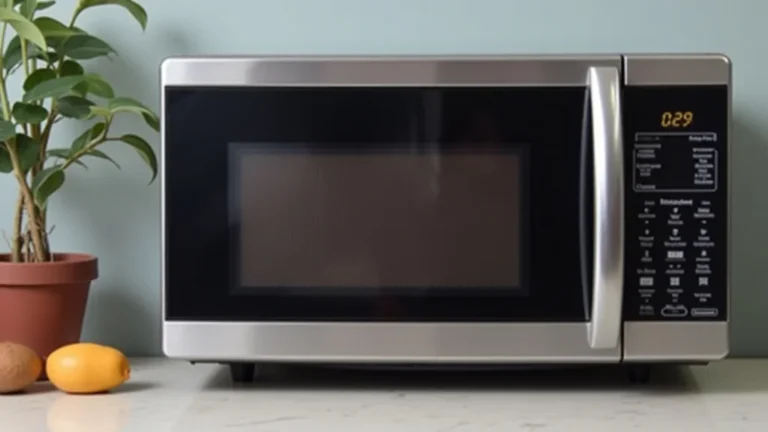
If you’ve ever wondered why microwaves rotate food, you’re not alone! It’s a common question, especially for those new to using these handy kitchen appliances. It might seem like a simple concept, but the science behind it can be a little tricky. Don’t worry, we’re going to break it down in a way that’s easy to grasp. We’ll explore the reasons for the spinning and show you how it ensures your food is heated evenly. Ready to find out the secrets? Let’s get started!
Key Takeaways
- The primary reason is to heat food uniformly, preventing cold spots.
- Rotating ensures the food is exposed to microwaves from all angles.
- Microwaves don’t penetrate food deeply, requiring rotation for complete heating.
- Uneven heating can lead to some parts overcooking while others remain cold.
- The turntable ensures every part of the food spends time in the “hot spots” of the microwave.
- Food is cooked more consistently due to the interaction of waves and rotation.
Microwave Basics Understanding the Technology
The core concept of a microwave oven revolves around using electromagnetic radiation, specifically microwaves, to heat food. Microwaves are a type of radio wave, but they have a shorter wavelength. The fundamental principle is that these waves are absorbed by water, fats, and sugars present in food. This absorption generates heat at the molecular level, cooking the food from the inside out. This differs greatly from conventional ovens, which heat food from the outside. The initial design of the microwave and its heating method are key to its operational effectiveness. This initial design and setup are critical for food safety and the efficient use of the appliance.
How Microwaves Work to Heat Food
Microwaves are produced by a component called a magnetron. This device converts electrical energy into microwave radiation. When you turn on your microwave, the magnetron starts generating these waves. These microwaves bounce around inside the oven cavity, and when they hit the food, they cause the water molecules (and other polar molecules) to vibrate rapidly. This rapid vibration creates heat, which then cooks the food. The frequency of microwaves used in these ovens is typically around 2.45 gigahertz (GHz). This frequency is chosen because it is effective at heating food and it does not interfere with other devices. The consistent frequency is essential for uniform heating within the cooking chamber.
- Magnetron Operation: The magnetron is the heart of the microwave, generating the microwave radiation. It works by creating a strong magnetic field and using it to accelerate electrons.
- Wave Propagation: The microwaves then travel through the oven cavity, reflecting off the metal walls. These waves distribute energy.
- Molecular Excitation: When the microwaves encounter food, they cause the polar molecules (primarily water) to vibrate, producing heat. This is the crucial part.
- Food Absorption: The ability of food to absorb microwaves depends on its composition, especially the water content. The greater the water content, the more heat will be absorbed.
The Role of Water in Microwave Cooking
Water molecules are the unsung heroes of microwave cooking. They are polar molecules, meaning that one end of the molecule has a slightly positive charge, and the other end has a slightly negative charge. Microwaves, being electromagnetic waves, have an electric field component that oscillates, or flips back and forth. When microwaves hit water molecules, the electric field of the microwaves causes the water molecules to try to align themselves with the field. As the field rapidly flips, the water molecules are forced to rotate, bumping into each other and generating heat. This process is very efficient. This mechanism is key in explaining why microwaves rotate food, as the even distribution of the microwaves is essential.
- Polarity and Heating: Water’s polar nature is essential for microwave heating, as the molecules align with the changing electric field.
- Water Content Variation: Different foods have varying water content, which affects how quickly and evenly they heat up. The more water, the faster it heats.
- Moisture Migration: As food heats, moisture moves, affecting the cooking process and potentially leading to uneven heating if not managed well.
- Dry Foods Challenge: Foods with low water content heat more slowly and may require more time or special techniques. This can lead to different results.
Why Microwaves Rotate Food Unveiling the Rotating Mechanism
The primary reason why microwaves rotate food is to ensure even cooking. Microwaves don’t penetrate food very deeply. Instead, they cook the food from the outside in. Without rotation, some parts of the food would be exposed to more of the microwave energy than others. This would result in hot spots, where the food is overcooked or even burned, and cold spots, where the food remains undercooked. The rotating plate moves the food through the microwave field, making sure every part of the food gets an equal share of the energy. Therefore, the consistent movement is essential for a good cooking experience.
The Benefits of a Rotating Turntable
The rotating turntable in a microwave is a vital element. It ensures that the food rotates through the microwave field, allowing all parts of the food to be exposed to the microwaves. This even exposure is crucial for uniform heating and preventing hot or cold spots. This is a simple but effective solution to the uneven heating problem that was apparent in the early days of microwave design. Without the turntable, parts of the food would be consistently closer to the microwave source and exposed to more intense energy, which will lead to different results. The advantages extend beyond even cooking, helping to ensure the safety and palatability of the prepared food.
- Uniform Heating: Ensures all parts of the food receive even exposure to microwave energy, preventing hot and cold spots.
- Preventing Overcooking: Helps to avoid overcooking or burning specific areas of the food.
- Consistent Cooking: Results in food that is cooked consistently throughout, improving both texture and taste.
- Enhanced Food Safety: Promotes more thorough cooking, reducing the risk of foodborne illnesses.
Microwave Design and Wave Patterns
The internal design of a microwave oven is deliberately structured to enhance the effectiveness of the cooking process. The shape of the cavity, the location of the magnetron, and the presence of a stirrer or a rotating plate all contribute to the distribution of microwaves. The aim is to create a more even distribution of the energy. Early microwave ovens sometimes used a “stirrer,” a fan-like device that would move the microwaves around inside the oven. But the rotating turntable proved to be a simpler and more effective solution for most applications.
- Wave Interference: Microwaves reflect off the metal walls, creating complex wave patterns within the oven. This is part of the engineering design.
- Hot Spots: Without rotation, these wave patterns would create “hot spots” where food receives more energy. This would be a problem.
- Turntable’s Role: The turntable moves the food through these hot spots, ensuring even exposure to the microwaves. It is key to achieving a good result.
- Efficient Design: Modern microwave designs aim to maximize the efficiency of microwave distribution for optimal cooking.
Common Issues and Solutions Uneven Heating Challenges
Even with the rotating turntable, uneven heating can still happen. The composition of the food, the shape of the dish, and the way the food is arranged can all impact the cooking process. Some foods, like chicken pieces or irregularly shaped vegetables, may cook unevenly if not arranged properly. Similarly, dense foods take longer to heat. These issues can usually be managed with a few simple techniques. The proper techniques and knowledge can often overcome common cooking difficulties, such as an oven producing cold spots.
Food Arrangement Techniques
How you arrange food in your microwave can significantly affect how evenly it cooks. When heating multiple items, place thicker or denser parts towards the outer edges of the dish, where they will absorb more energy. Arrange foods in a circle, leaving space in the center, to promote even heating. Foods placed too close together will block microwaves from reaching each other. Cover food with a microwave-safe lid or plastic wrap to trap steam and promote even cooking. Always follow the manufacturer’s recommendations for food preparation.
- Placement Matters: Thicker parts of food should be placed around the edges of the plate for better microwave absorption.
- Spacing for Circulation: Ensure food items have enough space between them to allow microwaves to circulate.
- Uniform Thickness: Cut or shape foods to a uniform thickness whenever possible to promote even cooking.
- Stirring and Rotating: Stir or rotate food midway through cooking to redistribute heat and prevent uneven cooking.
Dealing with Cold Spots
If you find that your food has cold spots, there are a few things you can do. First, make sure you’re using the correct power setting and cooking time for the food you’re preparing. Power settings and time adjustments can make a big difference. Check your microwave for hotspots or uneven energy distribution; if you frequently see uneven heating, your microwave might have a problem. Allow food to rest for a couple of minutes after cooking; this lets the heat distribute evenly throughout the food. If you still find cold spots, try rotating the food halfway through the cooking time or adjusting the arrangement of the food.
- Check Power Settings: Use the correct power level to prevent the exterior of food from overcooking before the interior is heated.
- Resting Time: Allow the food to sit for a few minutes after cooking to distribute heat. This technique will often solve the problem.
- Stir or Rotate: Rotate or stir food midway through cooking to ensure even heating. This is one of the easiest steps.
- Monitor and Adjust: Carefully monitor the cooking progress and adjust the cooking time as necessary to avoid undercooking.
Microwave Oven Technology Evolution and Future Trends
Microwave technology continues to evolve, with ongoing improvements aimed at enhancing cooking efficiency and convenience. These advancements include innovations in magnetron design, the development of more efficient microwave distribution systems, and the integration of smart technologies. Research is always being done to enhance efficiency. The future of microwave ovens will likely see greater integration with smart kitchen ecosystems, offering enhanced cooking capabilities and user-friendly interfaces. The goal is to provide better performance and a more seamless cooking experience for all users.
Recent Advancements
Recent developments in microwave oven technology include the use of inverter technology, which provides more consistent and precise power levels. Inverter technology can produce smoother cooking results by distributing energy more evenly. Some models now feature advanced sensors that can detect the type and weight of food, automatically adjusting cooking times and power levels. Smart ovens are emerging, with features like Wi-Fi connectivity, recipe downloads, and voice control. These innovations are designed to make cooking easier, faster, and more enjoyable, as well as providing consistent results.
- Inverter Technology: Provides more consistent and precise power levels for better cooking control.
- Smart Sensors: Detect food type and weight to automatically adjust cooking settings.
- Smart Features: Wi-Fi connectivity and voice control for enhanced cooking experiences.
- Improved Efficiency: Efforts to increase energy efficiency and reduce cooking times.
Future of Microwave Cooking
The future of microwave cooking points towards more advanced, user-friendly, and efficient appliances. These new models will leverage artificial intelligence (AI) and machine learning (ML) to learn from user cooking habits. The development of new materials and designs for enhanced microwave distribution could produce a better cooking experience for users. The use of innovative materials for cooking surfaces will promote more even heating and improved food quality. The smart integration of microwave ovens with other kitchen appliances will also increase convenience and streamline cooking processes, producing a seamless experience.
- AI and ML: AI and ML will allow ovens to learn user habits, personalize cooking recommendations, and optimize cooking processes.
- Enhanced Distribution: New materials and designs will improve microwave distribution for more efficient heating.
- Seamless Integration: Integration with other smart kitchen appliances to streamline cooking and reduce preparation time.
- Healthier Cooking Options: Greater emphasis on cooking methods that preserve nutrients and promote healthier eating habits.
| Feature | Standard Microwave | Future Smart Microwave |
|---|---|---|
| Heating Method | Microwaves from magnetron | Advanced wave distribution, AI-optimized |
| Power Control | Preset power levels | Variable, precise control with inverter technology |
| User Interface | Manual controls | Touchscreen, voice control, recipe suggestions |
| Connectivity | None | Wi-Fi, app control, smart integration |
Frequently Asked Questions
Question: Why is my food sometimes still cold in the middle after microwaving?
Answer: This can happen if the food isn’t arranged correctly or if the microwave’s power level or cooking time is incorrect. Make sure the food is placed evenly and use the correct settings.
Question: Is it safe to use plastic containers in the microwave?
Answer: Only microwave-safe plastic containers are safe to use. Check the label for the microwave-safe symbol before use.
Question: How do I clean my microwave?
Answer: You can clean your microwave by heating a bowl of water with lemon slices in it until the inside is steamy. Then, wipe the interior surfaces with a damp cloth.
Question: Can I put metal in the microwave?
Answer: No, you should not put metal in the microwave. Metal can cause sparks and damage the oven.
Question: What’s the purpose of the glass turntable?
Answer: The glass turntable rotates the food, which helps ensure that it cooks evenly by exposing all sides of the food to the microwaves.
Final Thoughts
So, we’ve explored the fascinating reasons why microwaves rotate food. The rotating turntable plays a pivotal role in ensuring that your meals are heated thoroughly and consistently. The rotation ensures that the microwaves hit every part of your food, preventing those annoying cold spots. You now have a simple, practical grasp of this fundamental feature. Try experimenting with different food arrangements and cooking times to optimize your microwave experience. With a little practice, you can easily avoid uneven heating. Keep exploring and enjoying the convenience of this essential kitchen tool!

I’m Emma J. Caldwell, the founder, lead writer, and home-cooking enthusiast behind KitchenGuideCo.com. With a background in culinary arts and over a decade of cooking experience in both professional and personal kitchens, I created this platform to demystify recipes, offer smart kitchen gadget reviews, and guide readers through meal prep with confidence and clarity.