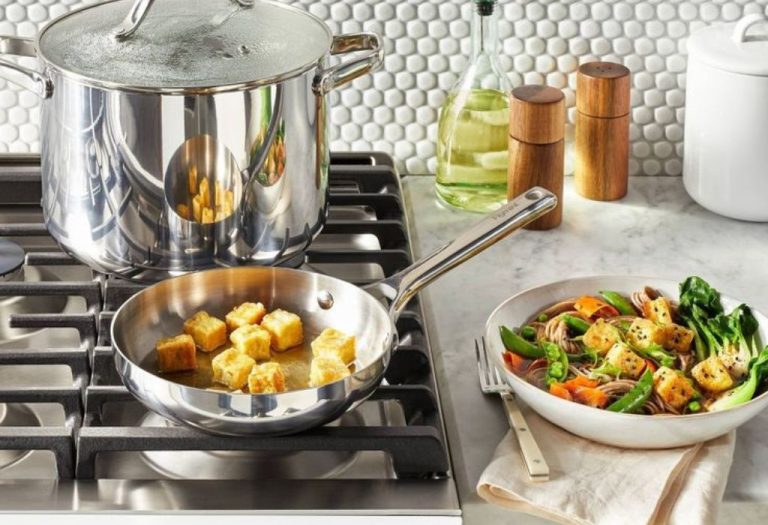
A pot of creamy tomato soup bubbles on the stove, and the cook is faced with a question that every home chef eventually asks: what are immersion blenders good for?
Instead of pouring the hot soup into a countertop blender, one quick dip of a handheld stick blender transforms it into a smooth, velvety masterpiece right in the pot.
This moment captures the beauty of immersion blenders—speed, simplicity, and minimal cleanup. Yet curiosity doesn’t stop at soup.
Can this small kitchen tool handle smoothies, whipped cream, sauces, or even homemade mayonnaise? The answer depends on understanding how it works and what tasks it’s truly built for.
An immersion blender, also called a hand or stick blender, can blend, puree, emulsify, and whip directly in the container where ingredients are prepared. This saves time and reduces dishes, making it one of the most practical appliances in modern kitchens.
According to Consumer Reports, stick blenders are among the top-rated small appliances for their versatility and compact design (source).
Research from Serious Eats found that high-quality immersion blenders can puree a pot of soup to restaurant-level smoothness in under two minutes (source). This combination of performance and convenience has made them a staple for both beginners and professionals.
What Are Immersion Blenders Good For? Core Uses
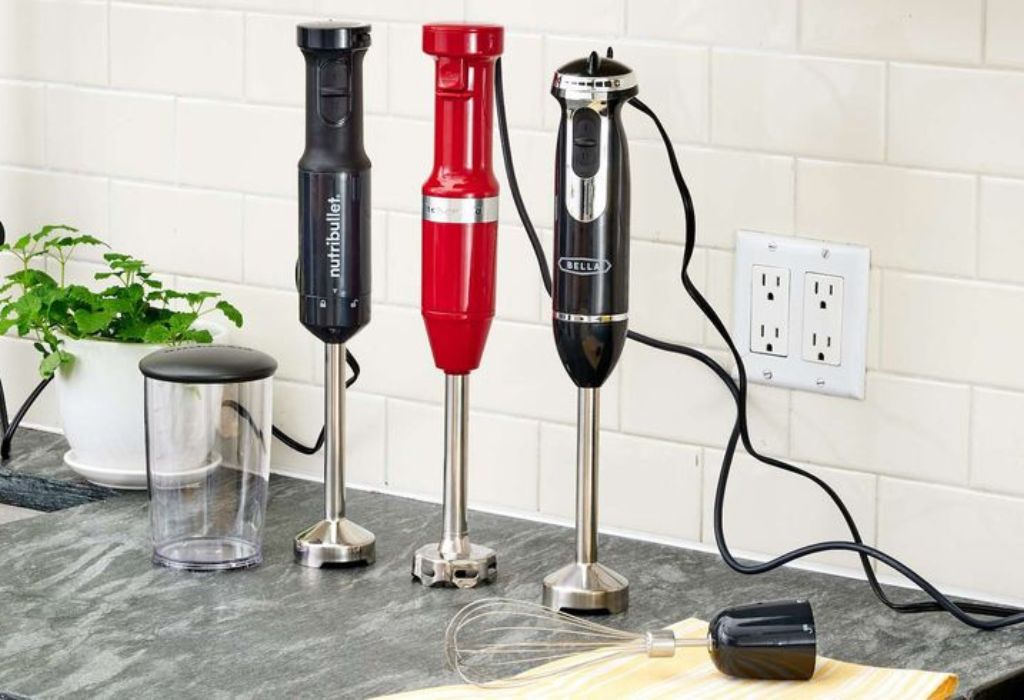
At first glance, an immersion blender looks simple—just a sleek wand with spinning blades at the tip. Yet this compact tool can perform a surprising variety of kitchen tasks when used correctly.
Knowing what are immersion blenders good for helps home cooks unlock their full potential while saving space and time.
Unlike bulky countertop blenders, immersion blenders work directly in bowls, pots, or jars. They blend soups, emulsify dressings, whip cream, puree baby food, and create smoothies without transferring ingredients.
Their greatest advantage is convenience: no more pouring hot liquids or washing multiple containers.
Professional chefs often use them to refine soups and sauces right on the stove. According to BBC Good Food, stick blenders are “ideal for creating ultra-smooth purées and silky sauces without the hassle of transferring hot liquids” (source). This hands-on approach gives cooks more control over consistency and texture.
Smoothies, milkshakes, and protein shakes are also easy wins. A tall beaker or glass keeps everything contained, while the blade quickly blends soft fruits, yogurt, and ice.
When handled properly, even small ice pieces can be blended into a creamy texture perfect for quick breakfasts.
Can immersion blenders make soup directly in the pot?
Yes, this is one of their most popular uses. It saves time, reduces dishes, and produces evenly smooth results.
Are immersion blenders good for making mayonnaise or sauces?
Absolutely. Their high-speed blades create stable emulsions in seconds, ideal for mayonnaise, hollandaise, or vinaigrette.
Can immersion blenders handle smoothies and shakes?
Yes, especially in narrow, tall containers where ingredients circulate efficiently.
Are they good for whipping cream or eggs?
Yes, with a whisk attachment or short pulses, they create light, fluffy textures.
Do immersion blenders replace countertop blenders completely?
Not entirely. They excel in small batches and liquid-based recipes but aren’t ideal for hard or dry ingredients.
Technique Essentials to Get the Best Results
To truly understand what are immersion blenders good for, technique matters just as much as power. Even the best model can produce poor results if used incorrectly. Mastering simple techniques ensures smoother textures, better control, and a longer lifespan for the appliance.
The first rule is to fully submerge the blade head before turning it on. This prevents splattering and creates an even vortex that pulls ingredients toward the blades.
According to Consumer Reports, most blending issues—like air bubbles or uneven texture—come from running the blender too close to the surface (source).
It’s also important to move the blender slowly around the container. A gentle up-and-down motion helps blend thicker foods like soup or mashed vegetables evenly.
For liquids such as smoothies or sauces, a slow circular motion near the bottom is often enough to create a uniform consistency.
When working with hot foods, always start on a low speed and keep the blade completely submerged. This reduces splashing and protects your hands from burns. Experts recommend blending for short bursts instead of long runs to avoid overheating the motor.
Why should the blender head be fully submerged before blending?
Because it prevents splatter and ensures that all ingredients circulate smoothly.
What’s the right container shape for best results?
A tall, narrow container helps form a stable vortex, making blending faster and smoother.
Should you pulse or blend continuously?
Pulsing gives more control and prevents over-processing, especially for delicate sauces or whipped cream.
Can immersion blenders be used safely for hot liquids?
Yes, as long as the blade remains submerged and you use a deep pot or container.
How can you prevent overheating or burnout?
Blend in short intervals and let the motor rest between uses, especially during heavy blending sessions.
10 Everyday Wins — What Are Immersion Blenders Good For in Practice
When it comes to daily cooking, what are immersion blenders good for extends far beyond simple soups. These tools can perform a surprising number of kitchen tasks that save time while delivering professional-quality textures.
From silky sauces to creamy desserts, the immersion blender proves itself as one of the most adaptable tools in the kitchen.
One of its most famous uses is blending soups directly in the pot. There’s no need to pour hot liquids into a countertop blender, which saves cleanup and prevents dangerous splashes.
According to Serious Eats, high-powered hand blenders can turn chunky soup into a perfectly smooth purée in under two minutes (source).
Another everyday use is for emulsified sauces such as mayonnaise, aioli, or vinaigrettes. The blade spins fast enough to combine oil and eggs into a stable mixture in seconds. The same principle applies to hollandaise, which becomes foolproof with an immersion blender and warm melted butter.
It’s equally useful for breakfast prep. Smoothies, milkshakes, and protein drinks blend beautifully in a tall glass or measuring cup. Some models even handle soft fruits, yogurt, and small ice pieces for a quick on-the-go blend.
Can immersion blenders make creamy soups easily?
Yes, they excel at creating smooth soups like tomato, butternut squash, or potato leek without using a separate blender.
Are they good for homemade mayonnaise or dressing?
Definitely. With proper technique, they create thick, stable emulsions in seconds.
Can they make smoothies and shakes?
Yes, use a tall container for best results and blend soft ingredients with a bit of liquid.
Do they work for whipped cream or frothy drinks?
Yes, pulse the blender in short bursts to create light foam or whipped cream.
Can immersion blenders help with eggs and batters?
Absolutely. They mix pancake batter, scrambled eggs, or custards evenly with minimal effort.
Attachments and Accessories — Whisks, Mini Choppers, and Beakers
To expand what are immersion blenders good for, attachments play a major role. Modern hand blenders often come with a variety of accessories designed to make them even more versatile. These add-ons transform a basic stick blender into a complete mini food-processing system.
The most common accessory is the whisk attachment, ideal for whipping cream, beating eggs, or frothing milk for coffee. It provides light aeration without over-mixing, giving home cooks the same control as a hand mixer.
For example, KitchenAid’s whisk attachment allows users to whip cream or egg whites to stiff peaks in less than two minutes (source).
Next is the mini chopper bowl, a small container with a rotating blade inside. This attachment is perfect for chopping herbs, onions, garlic, and nuts in seconds. It’s also helpful for preparing quick salsas, pestos, or bread-crumb mixes without using a full-sized food processor.
Most immersion blenders also include a tall beaker or blending cup. These narrow containers are designed to optimize the vortex created by the blades, ensuring smoother blends and less splatter.
According to Consumer Reports, using the right-sized beaker significantly improves blending speed and texture (source).
When should the whisk attachment be used?
Use it for tasks that require aeration, such as whipped cream, egg whites, or pancake batter.
Is the mini chopper good for solid foods?
Yes, it works perfectly for nuts, herbs, and vegetables in small batches.
Do you need the original beaker for blending?
Not necessarily, but a tall, narrow container gives smoother results and less splatter.
Are corded models better for attachment power?
Yes, corded immersion blenders often provide more consistent torque for accessories.
Can attachments be cleaned easily?
Yes, most are dishwasher-safe, but always detach them before cleaning the motor handle.
Limitations — Tasks Immersion Blenders Are Not Good For
While it’s tempting to think these versatile tools can handle everything, understanding what are immersion blenders good for also means recognizing their limits. Knowing where they fall short helps prevent damage, poor results, and unnecessary frustration.
Immersion blenders are designed primarily for soft or liquid-based ingredients. They excel in soups, sauces, and emulsions but struggle with hard or dry materials. Trying to crush nuts, grind coffee beans, or process dough can quickly dull the blades or overheat the motor.
According to Philips Kitchen Appliances, these blenders are not intended for dry blending or crushing large ice cubes, as the impact can damage the blade assembly (source).
Another limitation lies in volume. While countertop blenders can process large quantities, immersion blenders are better for small to medium batches. Filling a pot or bowl beyond two-thirds of its height often leads to uneven blending or splatter.
Consistency control is another challenge. Unlike countertop blenders that create uniform blends with a fixed vortex, hand blenders rely on manual movement. This makes it difficult to achieve the same level of uniformity in thicker recipes like nut butter or hummus.
Can immersion blenders handle hard or dry ingredients?
No, they work best with soft or liquid foods. Hard items can damage the blades.
Can they replace a full-sized blender?
Not entirely. Countertop blenders are better for large quantities or frozen mixtures.
Can they grind coffee beans or spices?
No, their blades and motors aren’t designed for fine grinding tasks.
Can they blend large frozen batches?
No, large or dry frozen chunks can jam the blade and strain the motor.
What’s the safest way to avoid damage?
Always check the manual for restricted uses and keep ingredients soft, wet, or partially cooked.
Power, Design, and Performance — Why Some Models Do More
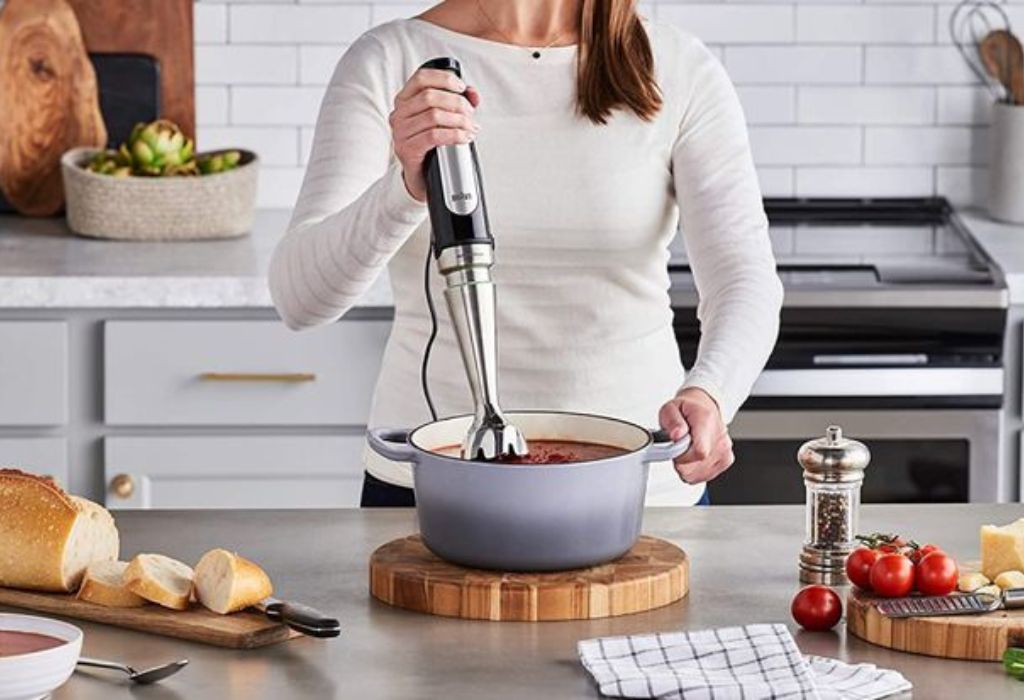
When evaluating what are immersion blenders good for, not all models perform equally. The ability to blend smoothly, emulsify quickly, or chop efficiently depends largely on power, blade design, and overall build quality.
Power is the foundation of performance. Entry-level hand blenders usually range between 200 to 400 watts, which is sufficient for soft foods and sauces.
High-end models with 500 to 1000 watts can handle thicker mixtures and small ice fragments with ease.
According to Serious Eats, immersion blenders with stronger motors and open guard designs consistently outperformed cheaper models in blending speed and smoothness (source).
Design also plays a vital role. The blade guard, the dome-shaped shield around the blades, determines how well ingredients circulate.
A wide guard with open vents allows a stronger vortex, reducing suction and blending faster. In contrast, narrow or closed guards trap ingredients and make it harder to achieve consistent results.
Material quality further impacts performance. Stainless-steel shafts and blades resist heat and corrosion better than plastic alternatives, making them ideal for blending hot soups or sauces directly in the pot.
Ergonomic handles and variable-speed triggers give better control for delicate emulsions like mayonnaise or hollandaise.
Does wattage affect blending results?
Yes. Higher wattage models blend faster, smoother, and with less strain on the motor.
Why is blade guard design important?
It helps create a vortex that pulls ingredients toward the blades instead of pushing them away.
Are stainless-steel models better than plastic ones?
Yes. They last longer, handle heat better, and offer more stability during blending.
Do multiple speed settings make a difference?
Absolutely. Variable speeds allow greater precision when handling delicate sauces or thick purées.
What should you prioritize when choosing a model?
Focus on motor power, open guard design, stainless-steel shaft, and a comfortable grip for steady control.
Immersion Blender vs. Blender vs. Food Processor — Choosing the Right Tool
Understanding what are immersion blenders good for also means knowing when they aren’t the best choice. While all three appliances—immersion blender, countertop blender, and food processor—blend, chop, or purée, each has distinct strengths suited to specific tasks.
The immersion blender is ideal for liquid-based recipes. It blends soups directly in the pot, whips up sauces, and emulsifies dressings or mayonnaise without extra cleanup. Because it’s handheld, it offers precision and flexibility in small spaces.
The countertop blender, by contrast, handles large batches and tougher textures. Its powerful motor and enclosed jar make it perfect for smoothies, frozen fruits, and thick shakes.
If the goal is to pulverize ice or blend multiple servings at once, a traditional blender wins for both speed and consistency.
Then there’s the food processor, which excels at solid or dry ingredients. Tasks like chopping nuts, grating cheese, kneading dough, or shredding vegetables are far better suited for processors. Unlike immersion blenders, they rely on sharp slicing blades rather than spinning propellers.
When should you use an immersion blender instead of a countertop model?
Use it for soups, sauces, and single-serving drinks that require less power and easy cleanup.
When is a countertop blender the better choice?
When blending large volumes, frozen items, or dense ingredients like nut butter or crushed ice.
When is a food processor most effective?
For chopping, slicing, grating, or mixing thick doughs and dry ingredients.
Can one tool replace the others entirely?
Not realistically. Each appliance is designed for different kitchen tasks and performs best within its category.
What’s the best way to decide which to buy first?
Base your choice on cooking style—if you make soups or sauces often, the immersion blender offers the most immediate value.
Cleaning, Care, and Safety — Keeping Performance at Its Best
Knowing what are immersion blenders good for also includes understanding how to maintain them properly. Regular cleaning and safe handling not only extend the tool’s lifespan but also ensure consistent performance in every use.
Cleaning an immersion blender is surprisingly simple. The blending shaft detaches easily from the motor handle and can be rinsed under warm water immediately after use.
For thicker mixtures, fill a tall cup with warm soapy water, submerge the blade, and pulse for a few seconds.
According to Consumer Reports, this method prevents food buildup and helps maintain blade sharpness over time (source).
Dishwasher-safe parts make maintenance even easier, but always confirm this in the user manual before placing attachments inside.
The motor handle should never be submerged or rinsed directly under water; instead, wipe it gently with a damp cloth. Proper drying before storage prevents corrosion and motor damage.
Safety is equally important. Keep fingers, utensils, or cloths away from the blade area during use and cleaning.
Always unplug the blender before detaching accessories or cleaning the shaft. When blending hot liquids, ensure the blade head stays fully submerged to prevent splattering and burns.
What’s the quickest way to clean an immersion blender?
Blend a cup of warm soapy water for a few seconds, then rinse thoroughly and dry.
Are all parts dishwasher-safe?
Not always. Most blending shafts and beakers are, but motor handles must be cleaned by hand.
How can you prevent overheating?
Avoid blending continuously for long periods and allow the motor to cool between batches.
Is it safe to blend hot liquids?
Yes, as long as the blade stays submerged and the container is deep enough to prevent splashes.
What’s the best way to store an immersion blender?
Detach the shaft, dry completely, and store it upright or in its holder to keep the blades protected.
Buying Guide — Features That Determine What Immersion Blenders Are Good For
Before deciding which model to purchase, it’s worth understanding the features that define what are immersion blenders good for. A well-chosen blender can elevate everyday cooking, while a weak or poorly designed one can make blending frustrating and inconsistent.
The first factor to consider is motor power. For everyday tasks like soups, dressings, and smoothies, a 300–500-watt model is ideal. For thicker blends, frozen fruit, or nut-based recipes, look for at least 600 watts.
According to Serious Eats, immersion blenders with higher wattage and open-vented guards perform significantly better in tough blends (source).
Next comes blade and guard design. A stainless-steel blade with a wide, open guard improves circulation and prevents suction against the bottom of the container.
This helps maintain a smooth, even texture in sauces and soups. Avoid narrow plastic guards—they tend to trap ingredients and cause splatter.
Variable speed control is another valuable feature. Having two or more speed settings allows better precision when working with delicate emulsions or thicker mixtures. Cordless models offer flexibility, but corded versions generally deliver stronger, more consistent power.
Comfort and build quality also matter. An ergonomic handle reduces fatigue during longer blending sessions, while dishwasher-safe detachable parts simplify cleaning.
Lastly, always check warranty terms and included accessories such as whisks, choppers, and beakers—they often expand what your immersion blender can handle.
What’s the ideal power range for an all-purpose immersion blender?
Between 400 and 800 watts for most kitchen needs.
Why is stainless steel preferred over plastic?
It’s heat-resistant, durable, and maintains better hygiene during hot blending.
Are variable speeds necessary?
Yes. They offer finer control for recipes ranging from light dressings to thick soups.
Corded or cordless—which is better?
Corded provides consistent performance, while cordless offers mobility for light tasks.
Do accessories really make a difference?
Absolutely. Attachments like whisks or mini choppers extend versatility far beyond basic blending.
Sample Recipes and Quick Wins to Prove Their Value
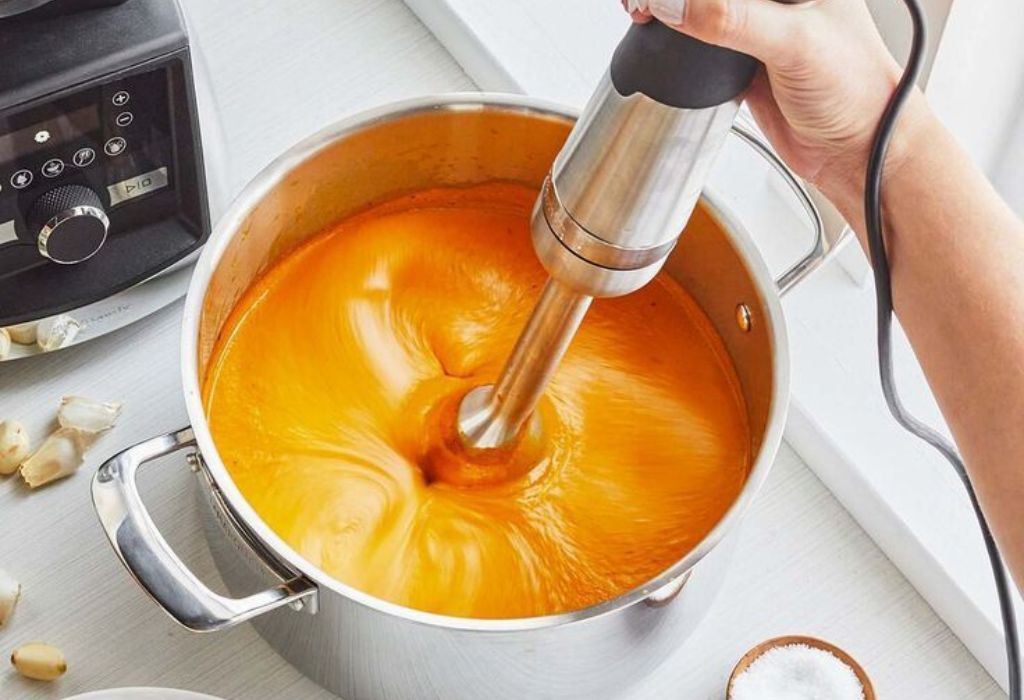
Understanding what are immersion blenders good for becomes much clearer when you see them in action. From smooth soups to creamy sauces and fresh desserts, this handheld tool can execute a range of recipes that usually require bulkier appliances.
Start with a classic: creamy tomato soup. Sauté onions and tomatoes, add broth, then blend directly in the pot until silky smooth. There’s no transferring, no extra mess, and the consistency rivals that of a countertop blender.
According to Serious Eats, a quality immersion blender can puree a pot of soup in under two minutes (source).
Next, try two-minute mayonnaise—a favorite among chefs and home cooks alike. Place an egg, mustard, vinegar, and oil in a tall cup.
Insert the immersion blender and watch it transform into thick, glossy mayonnaise within seconds. This quick emulsion demonstrates the tool’s precision and speed, saving time while delivering perfect texture.
Another recipe to test is hollandaise sauce, often seen as a challenge for beginners. Using an immersion blender simplifies the process: combine egg yolks and lemon juice, then drizzle in hot melted butter while blending. The result is a rich, stable sauce that never splits.
Smoothies and milkshakes are everyday winners too. Blend bananas, yogurt, and berries in a tall glass for a quick breakfast. You can even make pesto, whipped cream, or baby food purées with ease—simply switch to the chopper or whisk attachment.
What’s the easiest starter recipe to test your immersion blender?
Creamy soup or tomato bisque—both blend smoothly and showcase instant results.
What’s the fastest recipe it can make?
Homemade mayonnaise in less than two minutes.
Can immersion blenders handle hot sauces like hollandaise?
Yes, as long as the blade stays submerged and the butter is added slowly.
What dessert recipes work best?
Whipped cream, chocolate mousse, and milkshakes blend perfectly in small batches.
Can immersion blenders make pesto or dips?
Yes, the mini chopper attachment is ideal for pesto, salsa, and guacamole.
Conclusion
By now, the answer to what are immersion blenders good for is clear — they’re compact, powerful multitaskers that make everyday cooking faster, cleaner, and more enjoyable.
From blending soups right in the pot to whipping cream, emulsifying sauces, and creating smoothies, these tools deliver impressive versatility without the bulk of a countertop blender.
Their strength lies in efficiency and precision. A single tool can handle tasks that once required multiple gadgets, saving both time and counter space.
With proper technique, attachments, and care, an immersion blender can last for years while consistently producing restaurant-quality results.
However, knowing what not to use it for is just as important. Tasks like grinding dry nuts or crushing ice are better left to more powerful appliances. Understanding these limits ensures safe use and extends your blender’s life.
Ultimately, an immersion blender is more than a kitchen shortcut — it’s a bridge between convenience and creativity. Whether preparing soups, sauces, or desserts, mastering this tool opens endless possibilities for home chefs.

I’m Emma J. Caldwell, the founder, lead writer, and home-cooking enthusiast behind KitchenGuideCo.com. With a background in culinary arts and over a decade of cooking experience in both professional and personal kitchens, I created this platform to demystify recipes, offer smart kitchen gadget reviews, and guide readers through meal prep with confidence and clarity.