Nothing beats an icy smoothie on a hot afternoon or a chilled frozen drink after a workout. But for many people, that refreshing texture depends on one crucial ability — whether their blender can actually crush ice.
What sounds like a simple task can quickly turn frustrating when blades jam, motors stall, or chunks of ice refuse to break down.
Many assume every blender can handle ice, but that’s far from true. Ice-crushing is one of the toughest challenges for any blender because it tests motor strength, blade design, and overall durability.
According to Consumer Reports, nearly 25% of standard blenders fail their ice-crushing test due to weak motors or poor blade design (source).
Similarly, Good Housekeeping Institute notes that only high-wattage models with robust stainless-steel blades can consistently pulverize ice into fine, snow-like texture (source).
Understanding How Blenders Crush Ice
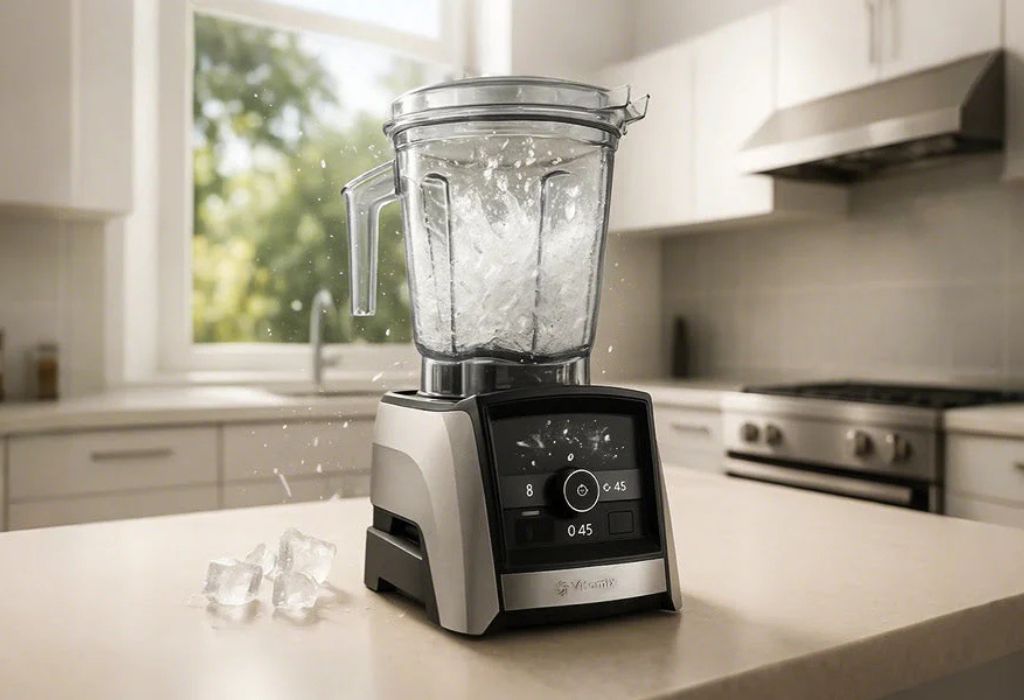
Blending ice isn’t just about sharp blades — it’s about torque, speed, and design. The process involves high-impact collisions between hard cubes and fast-spinning blades, creating stress on both the motor and the pitcher.
When a blender lacks adequate power or the right blade angle, the cubes bounce rather than break. Over time, this can dull blades and overheat the motor. That’s why not all blenders are built equally for crushing ice.
The best ice-crushing blenders feature strong stainless-steel blades positioned at varying heights, ensuring each cube gets struck repeatedly as it cycles through the vortex.
What happens inside the blender during ice crushing?
The blades spin at thousands of revolutions per minute, creating a vortex that forces ice cubes toward the blades, breaking them apart into smaller pieces.
Does blade sharpness matter?
Yes, but strength and thickness matter more. Dull but sturdy blades can crush ice better than thin, razor-sharp ones that bend or chip.
What role does motor torque play?
High torque allows blades to maintain consistent speed under heavy load, preventing stalling when ice resists cutting.
Is speed control important?
Yes. Starting slow and gradually increasing speed prevents cavitation and allows even crushing.
Can pitcher design influence results?
Absolutely. Pitchers with wide bottoms and angled walls help create better circulation and reduce clogging.
Why Not All Blenders Can Crush Ice
The biggest misconception is assuming any blender with blades can crush ice. In reality, ice places immense strain on a blender’s internal components, and not every model is designed for that.
Budget or compact blenders often prioritize portability and convenience over raw strength. Many use plastic gears, weak motors, or lightweight blades that aren’t capable of handling solid ice cubes.
According to TechRadar, low-power blenders under 300 watts often fail to crush ice properly, leading to burned motors or cracked jars (source).
Even some mid-range blenders struggle because their design favors soft blending (smoothies, soups, baby food) rather than high-impact ice crushing.
Why can’t all blenders crush ice?
Because crushing ice requires higher torque, thicker blades, and durable materials that cheaper models lack.
What happens if you crush ice in a weak blender?
The blades may dull, the motor can overheat, and in some cases, the pitcher may crack.
Does wattage determine ice-crushing ability?
Mostly yes. Models below 500 watts often struggle, while 800–1500 watts handle it smoothly.
Are portable blenders good for ice?
No. Most portable USB blenders are not powerful enough for solid ice or frozen cubes.
Can using too much ice damage the blender?
Yes. Overloading increases friction and puts excess strain on the motor bearings.
How to Know if Your Blender Can Crush Ice
Before throwing in a tray of ice cubes, it’s smart to assess your blender’s specifications. Key indicators like motor wattage, blade quality, and manufacturer recommendations will tell you whether your model is ice-friendly.
Check your user manual — if “crush ice” isn’t listed as a preset or suggested function, proceed with caution. Even if the motor seems strong, the blades or jar material might not be designed for the shock of solid ice.
Look for terms like “ice crush,” “frozen drink,” or “smoothie” mode. These indicate the manufacturer tested it for hard ingredients.
How can you tell if your blender can handle ice?
If it has 700 watts or more, stainless-steel blades, and a sturdy pitcher, it’s likely suitable.
Is a glass pitcher better for crushing ice?
Tempered glass performs well, but modern BPA-free plastic pitchers are also strong if rated for frozen ingredients.
What brands explicitly support ice crushing?
Vitamix, Ninja, Blendtec, KitchenAid K400, and Oster Pro 1200 are known for excellent ice performance.
Should you use smaller ice pieces?
Yes. Breaking cubes into smaller chunks reduces stress on the blades and ensures smoother blending.
Can pulse mode help?
Definitely. Pulse bursts prevent jamming and produce more consistent crushed-ice textures.
Power and Wattage: The Real Game Changer
When it comes to crushing ice, power equals performance. The wattage rating of a blender directly affects its ability to handle dense ingredients like ice, nuts, or frozen fruits.
A higher-wattage blender can sustain the torque needed to maintain blade speed even under heavy resistance. Most professionals recommend at least 700–1000 watts for efficient ice crushing.
According to KitchenAid, models with at least 1 peak horsepower (≈750 watts) can handle ice without strain, while lower-powered models risk overheating or dulling blades (source).
Why does wattage matter so much?
Because higher wattage allows the blades to maintain speed even when resistance increases, preventing stalling.
Is more power always better?
Up to a point. Excessive power without proper blade design can cause splintering or uneven crushing.
Can low-wattage blenders still crush ice?
Only if you use smaller amounts of ice with added liquid to reduce friction.
Does voltage differ from wattage?
Yes. Wattage reflects power output; voltage alone doesn’t determine blending strength.
What’s the ideal wattage range for ice?
Between 800 and 1500 watts for consistent, fine results without stressing the motor.
Blade Design and Material Matter
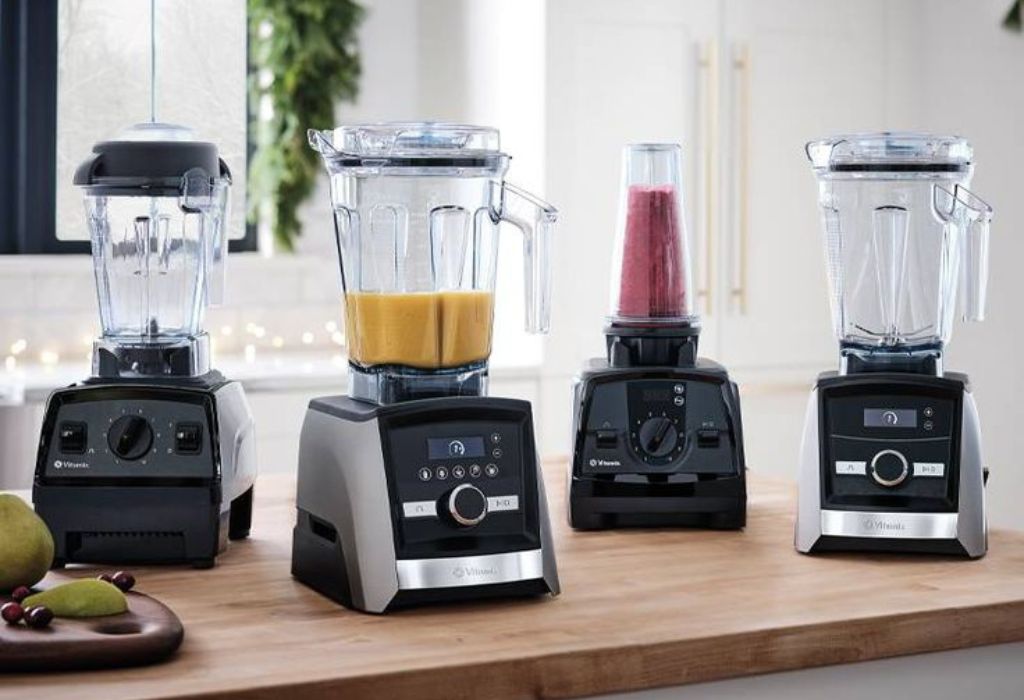
Even a powerful motor won’t help if the blades can’t handle impact. Ice requires sturdy, angled stainless-steel blades that create turbulent flow to break cubes efficiently.
Premium blenders use multi-level blades, often offset at varying heights to catch every cube. The Magic Bullet or mini personal blenders, for instance, have smaller, flat blades optimized for soft ingredients, not hard impact blending.
According to Blendtec, blunt, thick blades can crush ice better than sharp ones because they rely on sheer force rather than slicing (source).
Do sharp blades crush ice better?
Not necessarily. Blunt, strong blades are less likely to chip or bend under impact.
What blade materials are best?
Hardened stainless steel resists corrosion and impact fatigue better than thin alloys.
Does blade angle make a difference?
Yes. Angled blades generate a vortex that continuously pulls ice toward the cutting zone.
Can dull blades still crush ice?
Yes, if they’re thick and paired with enough power and torque.
How often should you replace ice-crushing blades?
Every 12–18 months for regular use, depending on wear and cleaning habits.
Top Blenders That Can Crush Ice Efficiently
Not all blenders are created equal, and some models stand out for their proven ice-crushing capabilities. Whether you’re preparing frozen margaritas or smoothie bowls, these machines consistently deliver.
1. Vitamix 5200
A professional-grade 2-horsepower motor effortlessly pulverizes ice into snow in seconds. Its variable speed control ensures perfect texture for frozen drinks.
2. Ninja Professional BL610
With 1000 watts and stacked six-blade technology, this model crushes ice rapidly and evenly.
3. Blendtec Classic 575
Features blunt-tip blades designed to smash ice instead of slicing it — a signature innovation by Blendtec.
4. KitchenAid K400
The asymmetric blade design creates a dynamic vortex that handles ice and frozen fruit with ease.
5. Oster Pro 1200
A budget-friendly option offering 1200 watts of power and a dedicated “Crush Pro 6” blade assembly for ice performance.
Are high-end blenders worth it for ice?
Yes. They not only crush ice efficiently but also last years without blade damage.
Can mid-range blenders achieve similar results?
Some, like the Oster Pro 1200 or Ninja BL610, deliver near-professional performance at a lower cost.
Is glass or plastic better for ice?
Both work, but glass provides a sturdier feel, while BPA-free plastic is lighter and shatter-resistant.
Do expensive blenders last longer?
Yes, because their motors and blades are built for continuous high-stress use.
Can refurbished high-end blenders be a good buy?
Absolutely. Certified refurbished units often perform like new at a lower price.
Tips and Best Practices for Crushing Ice Safely
Even the strongest blender benefits from proper technique. Overloading or using too much ice at once can cause jamming or uneven blending.
Start with smaller batches — about one cup of ice per blend — and combine it with liquid if possible. Pulse several times before running the blender continuously; this minimizes blade stress.
What’s the safest way to crush ice in a blender?
Add small batches of ice with a bit of water or juice to reduce friction and protect the motor.
Should you pre-crack large cubes?
Yes. Breaking them with a mallet or ice bag helps ensure smoother blending.
Can adding liquid improve results?
Definitely. Liquid helps ice circulate evenly and prevents air pockets from forming.
What speed setting works best?
Start low, then move to high speed once movement is consistent.
How do you know when the ice is perfectly crushed?
When it reaches a snow-like texture with no large chunks at the bottom.
Mistakes to Avoid When Crushing Ice
Even a strong blender can fail prematurely if used incorrectly. Avoid common errors that stress motors or dull blades.
Never blend dry ice cubes without liquid unless your blender is explicitly rated for it. Also, resist the urge to fill the jar beyond its halfway mark with ice — this prevents proper circulation.
According to CNET, running a blender continuously for more than a minute on ice loads can overheat the motor and damage internal gears (source).
What mistakes shorten blender lifespan?
Overloading with ice, ignoring pulse mode, and blending too long without breaks.
Can blending ice without liquid damage the pitcher?
Yes, especially plastic jars that aren’t reinforced for impact.
Is it safe to blend dry ice or frozen food blocks?
No. Always allow frozen food to thaw slightly before blending.
Should you ever shake the blender mid-operation?
No. Instead, stop and stir manually to avoid motor misalignment.
Can leaving ice in the blender dull the blades?
Yes. Leaving wet residue or ice fragments can cause corrosion or micro-chipping.
Who Should Buy a Blender That Crushes Ice
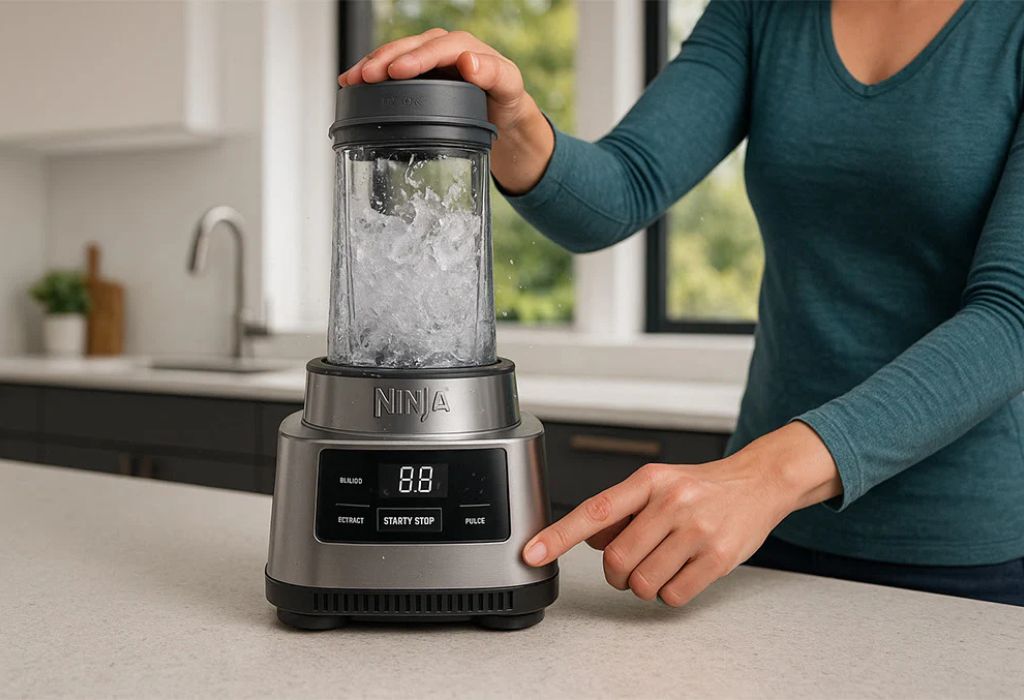
An ice-crushing blender isn’t just for bartenders. Anyone who regularly makes smoothies, frozen cocktails, milkshakes, or acai bowls will benefit from a durable, high-power machine.
If your lifestyle includes daily frozen drinks, fitness shakes, or meal prep smoothies, a high-performance blender saves time and ensures consistent results.
For occasional users, a mid-range model with at least 800 watts provides enough strength for weekend drinks or occasional frozen recipes.
Who benefits most from ice-crushing blenders?
Smoothie lovers, gym enthusiasts, bartenders, and families who enjoy frozen desserts.
Can home users justify a high-power blender?
Yes, because durability, consistency, and convenience pay off in the long term.
Is it worth upgrading from a basic model?
If you often blend frozen ingredients, absolutely — stronger motors prevent frustration.
Are commercial blenders overkill for home use?
Not necessarily. They last longer and can handle tougher tasks effortlessly.
Can you use an immersion blender for ice?
No. Most handheld immersion blenders lack the torque and blade strength for ice.
Conclusion
So, can all blenders crush ice? The clear answer is no — not every blender is built for the challenge. Crushing ice requires a combination of power, durable blades, and proper technique that budget or compact models simply can’t match.
High-wattage blenders with reinforced stainless-steel blades and sturdy jars are engineered for the job. They not only crush ice quickly but also maintain performance over years of heavy use.
If your blending routine includes frozen fruit smoothies, margaritas, or iced coffees, investing in a powerful blender isn’t just a luxury — it’s essential for consistent, safe performance.
According to Good Housekeeping, models above 800 watts are far more likely to produce fine, snow-like crushed ice without straining the motor (source).
For light blending or occasional use, smaller blenders can manage partially melted ice with added liquid. But for those who crave that perfect frozen texture daily, a dedicated ice-crushing blender transforms the experience entirely.
Ultimately, not all blenders can crush ice — but the right one makes it effortless. Choose wisely, blend smartly, and your ice-cold creations will always come out perfectly smooth, every single time.

I’m Emma J. Caldwell, the founder, lead writer, and home-cooking enthusiast behind KitchenGuideCo.com. With a background in culinary arts and over a decade of cooking experience in both professional and personal kitchens, I created this platform to demystify recipes, offer smart kitchen gadget reviews, and guide readers through meal prep with confidence and clarity.