Blenders have long been the go-to appliance for smoothies, soups, and sauces. But when it comes to prepping ingredients for cooking, one question continues to pop up in kitchens everywhere — can blenders chop vegetables or do they simply turn them into puree?
At first glance, the answer seems obvious. Blenders use high-speed blades spinning thousands of times per minute. That power should easily handle chopping, right?
In practice, it’s more complicated. The speed and blade design that make blenders great for liquids can also make them a little too aggressive for delicate chopping.
Still, modern blenders with pulse functions and advanced blade technology claim to mimic the chopping action of food processors. According to Consumer Reports, premium blenders like the Vitamix Ascent Series and KitchenAid K400 can roughly chop veggies when used properly. (source)
How Blenders Work Compared to Food Processors
To understand whether a blender can chop vegetables, you first need to know how it differs from a food processor. Though they share some mechanical similarities, the two appliances are built for entirely different tasks.
A blender relies on high-speed, vortex-creating blades that pull ingredients down toward a central spinning hub. Its goal is to create uniform mixtures and smooth textures. That’s perfect for liquids and soft foods but problematic for ingredients that need precision cuts, like diced onions or evenly chopped carrots.
A food processor, on the other hand, uses a wide bowl and a flat multi-blade system that rotates more slowly. Instead of creating a vortex, it tosses ingredients around, striking them intermittently — closer to the rhythmic motion of knife chopping.
So, when you drop vegetables into a blender and press start, the rapid suction effect drags everything into the bottom where the blades constantly hit. The result? Overprocessing and mushy textures.
Some higher-end blenders include pulse modes to counter this. Short bursts of power let users simulate chopping by keeping the motor from running continuously. It’s not as precise as a processor, but with care, it works for rough chopping.
In short, blenders blend. Food processors chop. But when used strategically, a blender can cross that boundary — if you know how to control its power.
The Science Behind Blending vs. Chopping
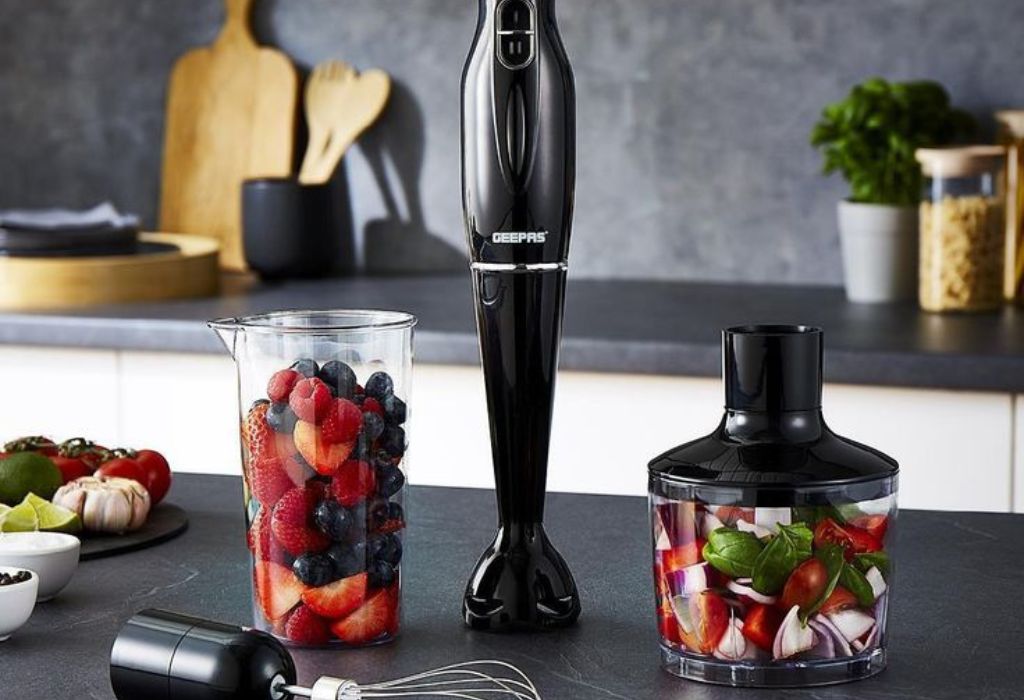
At the heart of this debate lies one key factor — blade motion. The physics of blending depend on continuous circular force, while chopping relies on intermittent impact.
Blenders create a vortex by spinning their blades at speeds reaching up to 20,000 RPM. The motion pulls food downward and liquefies it through repeated collisions. This works wonderfully for soft ingredients like tomatoes or bananas but can turn crisp vegetables into watery pulp.
Chopping, on the other hand, needs space between impacts. Food processors achieve this through slower blade rotations and wider containers, allowing ingredients to tumble rather than stay fixed at the blade’s center.
Temperature and moisture also play roles. The friction from high-speed blending generates heat, slightly cooking veggies and releasing water content. That’s why blended onions or peppers quickly lose structure and flavor balance.
However, using a pulse-only method minimizes continuous contact. Each pulse gives the blades just enough momentum to nick or slice pieces without liquefying them. Adding minimal liquid and working with small batches further enhances control.
The difference may seem minor, but physics decides whether your ingredients end up chopped, shredded, or soupy. Understanding that distinction lets you turn your blender from a puree machine into a functional chopper.
Which Vegetables Can Blenders Chop Successfully
Not every vegetable behaves the same way under spinning blades. Some handle the pressure beautifully, while others collapse into mush within seconds.
Blenders can effectively chop soft to medium-firm vegetables like onions, bell peppers, zucchini, mushrooms, and tomatoes. Their natural moisture helps create frictionless movement around the jar, allowing blades to nick them without pulverizing.
Carrots, potatoes, and beets, however, are dense and fibrous. Standard blenders struggle with these because the blades spin too fast to make precise cuts, instead bruising and cracking the fibers. Without proper technique, you end up with uneven chunks surrounded by a thin puree.
Leafy greens are another tricky category. Kale, spinach, and herbs like cilantro tend to stick to the sides, blending unevenly. A quick pulse can chop them roughly, but extended blending liquefies them instantly.
High-performance blenders, particularly those with variable-speed controls, can handle a wider range of vegetables when operated at low speeds. KitchenAid’s K400 or Vitamix Explorian series allows gradual acceleration, letting you find that sweet spot between chop and puree. (source)
Ultimately, success depends on vegetable texture, water content, and speed control. Softer vegetables and controlled pulses equal good results; hard or fibrous ones require caution.
How to Chop Vegetables in a Blender Properly
Even though blenders aren’t designed for chopping, smart technique can make them surprisingly effective for light prep work. The key lies in managing load, moisture, and timing.
Start by cutting vegetables into uniform, smaller pieces — around one-inch cubes. This ensures even contact with the blades and reduces jamming. Add a tablespoon or two of water or oil to help create gentle circulation.
Always use the pulse setting. Short bursts of one or two seconds allow you to gauge consistency after each pulse. Continuous blending, even for five seconds, can turn your veggies into soup.
Keep your batch size small. Overfilling the blender forces the bottom ingredients to puree while the top ones stay untouched. Half-capacity is usually ideal. After every few pulses, stop and stir manually to reposition ingredients.
Avoid using very cold or frozen vegetables for chopping. Their hardness increases friction, causing unnecessary wear on the blades and motor.
Lastly, never walk away from the blender during the process. The difference between chopped and pureed happens in seconds. Staying attentive ensures you stop right when your veggies reach the desired consistency.
With practice, this technique can make your blender a handy substitute for a food processor — perfect for quick salsas, stir-fry bases, or chunky soups.
When a Blender Falls Short for Chopping
Despite its versatility, there are clear limits to what a blender can do. It’s essential to recognize when to stop pushing your appliance beyond its purpose.
Blenders fail at chopping when dealing with very dry or hard ingredients. Carrots, celery, and root vegetables require slicing rather than tearing. A blender’s vortex motion traps these items at the bottom, over-processing one area while leaving others untouched.
Texture control is another limitation. While a food processor delivers consistent dice, a blender gives unpredictable results — fine pieces mixed with mushy bits. For recipes requiring precision, like chopped salad or vegetable filling, that inconsistency can ruin texture.
Moreover, blenders are not designed for sustained dry chopping. Without liquid, blades can overheat quickly, especially in entry-level models under 800 watts. Continuous dry pulsing strains the motor, shortening its lifespan.
The shape of the blender jar also plays a part. Tall, narrow containers funnel food into the center too efficiently, intensifying blending rather than chopping. Food processors, by contrast, have wide bowls that distribute ingredients evenly across blades.
If your goal is coarse chopping for stir-fries, salsas, or relishes, a careful pulse technique might work. But for precise dicing or grating, a food processor or manual knife remains irreplaceable.
Best Types of Blenders for Chopping Tasks
Not all blenders are created equal, and the model you choose greatly affects how well it handles chopping. High-performance blenders offer more control and power, essential for processing firm ingredients without turning them to mush.
Variable-speed blenders are your best bet. These models let you start at a slow speed to mimic a chopping motion before ramping up if needed. The Vitamix Explorian and KitchenAid K400 stand out for their precision and build quality. (source)
Next, consider blade design. Wide, multi-level blades with a slight upward tilt help create a chopping effect rather than a pureeing vortex. Models featuring “dual-direction” blade technology, like certain Oster blenders, improve ingredient circulation for more uniform results.
Container shape also influences outcome. Short, wider jars encourage movement and reduce the suction effect, leading to rougher chops. Some professional blenders even include separate food-chopping attachments with flatter bases to handle drier ingredients better.
For budget options, blenders with dedicated pulse buttons provide enough control for occasional chopping. Avoid single-speed bullet blenders — their fixed high RPMs make chopping nearly impossible.
Ultimately, look for power (at least 1000 watts), durable stainless-steel blades, and adjustable speeds. Those features transform a regular blender into a capable all-rounder that can handle both smoothies and light chopping jobs.
Tips for Getting Better Texture Control
Chopping with a blender requires finesse. Because these machines operate at high speed, small adjustments make a big difference in texture.
Always use the pulse function instead of continuous blending. Pulsing gives you moment-by-moment control, preventing overprocessing. For firmer veggies like peppers or onions, 4–6 quick pulses usually do the trick.
Add just enough moisture to encourage movement — a few tablespoons of water or broth works well. Too much liquid triggers the blending vortex, leading to unwanted puree.
Watch your fill level. Half the container’s volume is ideal for chopping, allowing food to bounce rather than stick. Overfilling compresses ingredients against the blades and creates uneven results.
Temperature also matters. Room-temperature vegetables chop better than refrigerated ones, which tend to release excess water when processed.
Lastly, stop frequently to check texture. Don’t rely solely on sound; visually inspect between pulses. Once your vegetables reach the desired roughness, empty them immediately to avoid carry-over blending.
With patience and precision, you can achieve consistent coarse cuts that rival a basic food processor — all using your regular kitchen blender.
Blender Maintenance After Chopping Vegetables
Using your blender for chopping tasks exposes it to more wear than typical blending. To keep it running smoothly, proper cleaning and maintenance are vital.
After each use, rinse the jar immediately to prevent residue from drying around the blades. Sticky vegetables like onions and garlic can leave lingering odors, so add a drop of dish soap and warm water, then blend for a few seconds to self-clean.
Inspect the blade assembly regularly. Chopping harder vegetables accelerates blade dulling and can loosen couplings. If you notice reduced efficiency or noise changes, consider tightening or replacing the blade unit.
Avoid dishwashers for metal parts; hand-washing preserves seals and bearings. Dry thoroughly before reassembling to prevent rust or mildew inside the base.
Finally, never run your blender empty. Dry spinning wears out the motor bearings faster and causes unnecessary heat buildup.
Routine care extends your blender’s life and ensures it performs reliably — whether you’re pulsing onions or making creamy soups.
Frequently Asked Questions About Chopping Vegetables in a Blender
Can blenders chop vegetables properly?
Yes, blenders can chop vegetables, but only with the right settings. Using short pulse bursts and minimal liquid prevents over-blending and keeps pieces coarse instead of pureed.
Why do some blenders turn vegetables into puree instead of chopping them?
Most blenders spin their blades too fast, creating a vortex that pulls veggies toward the center. This continuous motion liquefies ingredients instead of chopping them.
Which blenders are best for chopping vegetables?
High-performance models like Vitamix, KitchenAid K400, and Ninja Professional work best. They offer variable speeds and pulse modes for precise chopping control.
Can personal or bullet blenders chop vegetables?
Not effectively. Their fixed, high RPMs are designed for smoothies and soft ingredients. They tend to over-blend or leave uneven chunks when used for chopping.
What vegetables can blenders chop easily?
Soft and medium-firm vegetables — such as onions, peppers, zucchini, tomatoes, and mushrooms — chop well in a blender with proper pulsing technique.
Should I add water when chopping vegetables in a blender?
Add only a small amount (1–2 tablespoons) to help movement. Too much liquid activates the blending vortex, which leads to unwanted pureeing.
Can a blender replace a food processor for chopping?
Partially. A blender can handle rough chopping for salsas or soups, but it can’t replace a food processor for precise, uniform dice or grating.
Is it safe to chop vegetables in a glass blender jar?
Yes, as long as the jar is tempered glass or BPA-free Tritan plastic. Avoid sudden temperature changes that could crack the container.
Does chopping vegetables damage blender blades?
Over time, chopping dense veggies like carrots or beets can dull or bend blades slightly. Regular maintenance and cleaning help extend their life.
What’s the best way to chop vegetables in a blender?
Use the pulse button in short bursts, fill the jar halfway, and stop frequently to stir. Remove contents immediately once you achieve the desired texture.
Conclusion
So, can blenders chop vegetables or just puree them? The honest answer is that while blenders excel at liquefying, they can indeed chop vegetables with the right approach.
It’s all about control — short pulses, small batches, and the right power settings. Soft or medium-firm vegetables chop best, while dense or fibrous ones demand caution.
High-performance models like Vitamix, KitchenAid, and Oster make the process easier with advanced speed control and durable blades.
However, if your recipe requires precision chopping or uniform texture, a food processor remains the better tool. The blender’s design prioritizes fluid motion, not fine slicing.
In the end, it’s not just about what your blender can do — it’s about how you use it. Mastering pulse control and understanding your machine’s limits lets you unlock a surprising new use for an everyday appliance.
Whether you’re prepping a salsa, rough-cutting onions, or experimenting with soups, your blender can rise to the challenge — as long as you blend smart, not hard.

I’m Emma J. Caldwell, the founder, lead writer, and home-cooking enthusiast behind KitchenGuideCo.com. With a background in culinary arts and over a decade of cooking experience in both professional and personal kitchens, I created this platform to demystify recipes, offer smart kitchen gadget reviews, and guide readers through meal prep with confidence and clarity.