Understanding how much water your dishwasher uses per cycle is essential for both saving money and protecting the environment. Many homeowners assume that dishwashers consume excessive amounts of water, often thinking that handwashing is a more efficient option.
However, modern dishwashers are designed to be highly water-efficient, delivering clean dishes with significantly less water than washing by hand.
On average, a modern Energy Star-certified dishwasher uses between 3 to 5 gallons of water per cycle. In comparison, handwashing the same number of dishes can consume anywhere from 15 to 25 gallons, depending on your technique and faucet usage.
This stark difference highlights how investing in an efficient dishwasher and using it wisely can make a noticeable impact on household water consumption.
Several factors determine the exact amount of water used by a dishwasher. The age and model of your appliance play a significant role. Older dishwashers tend to be less efficient, sometimes using up to 10 gallons of water per load.
Newer models, particularly those with eco-settings or soil sensors, can adjust water usage automatically based on the number and dirtiness of the dishes.
Knowing your dishwasher’s water usage allows you to make smarter choices. You can select appropriate cycles for different loads, avoid unnecessary pre-rinsing, and ensure the machine is fully loaded before running.
This not only conserves water but also reduces electricity consumption, since less energy is needed to heat water for smaller or partial loads.
By understanding how dishwashers consume water and implementing small efficiency habits, you can save both resources and money while maintaining sparkling clean dishes.
Efficient dishwasher use is a small change that can lead to substantial benefits for your household and the environment.
Factors Affecting Dishwasher Water Usage
The amount of water a dishwasher uses per cycle depends on several key factors that influence efficiency and overall consumption.
One of the most significant factors is the type and age of the dishwasher. Older models often use between 8 to 10 gallons per cycle because they lack modern water-saving technology.
In contrast, newer Energy Star-certified dishwashers are engineered to be highly efficient, using as little as 3 to 5 gallons per cycle without compromising cleaning performance.
Cycle type also plays a critical role in water consumption. Heavy-duty cycles, designed for pots and pans, use more water to thoroughly remove grease and stubborn food residues.
Light or quick wash cycles, on the other hand, are intended for lightly soiled dishes and use much less water. Many modern dishwashers feature eco or energy-saving cycles that adjust water usage automatically to reduce waste.
Soil sensors are another feature that affects water usage. These sensors detect the level of dirt on dishes and adjust the water flow and cycle duration accordingly.
This smart adjustment ensures that only the necessary amount of water is used for each load, improving efficiency and saving resources.
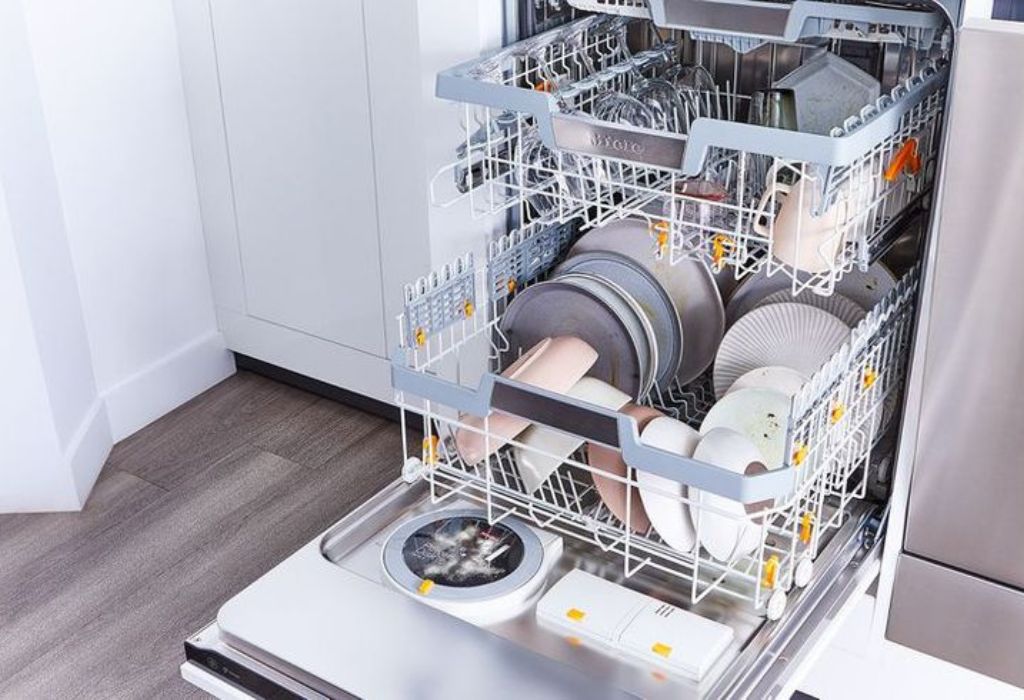
Load size and proper loading technique are also important considerations. Running a dishwasher that is only half full can waste water and energy.
Fully loading the dishwasher maximizes the number of dishes cleaned per gallon of water. Proper placement of dishes ensures that spray arms can reach all surfaces for optimal cleaning.
Other factors, such as water temperature, water pressure, and detergent type, influence consumption as well. Hot water is essential for grease removal, and certain detergents require specific temperatures to perform effectively.
Understanding these factors can help you use your dishwasher efficiently and reduce unnecessary water usage.
How much water does an older dishwasher use?
Older models can use between 8 to 10 gallons per cycle.
Do soil sensors save water?
Yes, they adjust water usage based on how dirty the dishes are.
Does load size affect water consumption?
Running a full dishwasher is more efficient than half loads.
Which cycle uses the most water?
Heavy-duty or pots-and-pans cycles consume the most water.
Can water temperature influence dishwasher efficiency?
Yes, optimal hot water improves cleaning and reduces the need for extra cycles.
Does proper loading make a difference?
Yes, it ensures water reaches all dishes efficiently.
Can upgrading to a new model save water?
Absolutely, modern Energy Star dishwashers are significantly more water-efficient.
How to Reduce Water Usage
Reducing water usage in your dishwasher starts with simple habits that maximize efficiency. One of the most effective strategies is to run your dishwasher only when it is full.
Half-loaded cycles waste water and energy, as the machine still uses a similar amount of resources regardless of load size.
Avoid pre-rinsing dishes unless necessary. Most modern dishwashers are designed to remove food particles effectively without rinsing, and skipping this step can save several gallons of water per load.
Selecting eco-friendly or energy-saving cycles is another way to conserve water. These settings optimize the amount of water used while maintaining effective cleaning performance.
They typically extend the cycle slightly but use significantly less water and energy, which is better for both your bill and the environment.
Regular maintenance also plays a crucial role in water efficiency. Clean the filters, check spray arms for clogs, and use the recommended detergent amount. This ensures that water circulates properly, and your dishwasher cleans effectively without requiring extra cycles.
Proper loading techniques can make a difference as well. Avoid overcrowding or blocking the spray arms. Arrange dishes so that water can reach all surfaces, and group similar items together to enhance cleaning efficiency.
Investing in a modern, Energy Star-certified dishwasher can provide long-term water savings. Newer models often incorporate soil sensors, efficient water pumps, and advanced spray patterns to minimize water use without compromising cleanliness.
How much water can you save by skipping pre-rinsing?
Skipping pre-rinsing can save up to 2–3 gallons of water per cycle.
Do eco cycles clean as effectively as standard cycles?
Yes, eco cycles use less water and energy while providing the same cleaning results for most loads.
How often should I clean filters to maintain efficiency?
Filters should be cleaned at least once a month to ensure proper water flow and prevent clogs.
Does load arrangement affect water usage?
Yes, proper placement ensures water reaches all dishes and reduces the need for extra cycles.
Can upgrading to a modern dishwasher save water?
Absolutely, newer Energy Star models use significantly less water than older machines.
Will running half loads waste water?
Yes, half loads often use similar water as full loads, reducing overall efficiency.
Is detergent quantity important for water conservation?
Yes, using the correct detergent amount ensures effective cleaning and avoids re-runs.
Comparing Dishwashers to Handwashing
Many people assume that washing dishes by hand uses less water than a dishwasher, but studies suggest the opposite is true. Modern dishwashers are designed to be highly efficient, cleaning more dishes per gallon of water than handwashing.
On average, a modern dishwasher uses 3 to 5 gallons of water per cycle. By contrast, handwashing the same number of dishes can consume 15 to 25 gallons, depending on how long the faucet runs.
Efficiency depends not just on water consumption, but also on energy use. Dishwashers heat water internally, using energy more efficiently than running hot water continuously from a faucet.
They also clean more consistently, reaching high temperatures that help sanitize dishes effectively.
Cycle type also matters in comparison. Quick wash or eco cycles in dishwashers are much more water-efficient than running a sink with continuously flowing water for handwashing.
Even for lightly soiled dishes, the dishwasher uses less water per plate and reduces overall household energy consumption.
Another factor is time and convenience. Dishwashers save time and reduce effort, allowing you to handle larger loads in one cycle rather than washing each dish individually.
Proper loading maximizes efficiency, ensuring that spray arms reach all items and cleaning is thorough without wasting water.
Overall, using a modern, full-capacity dishwasher is usually more environmentally friendly and cost-effective than handwashing. It conserves water, saves energy, and provides consistent results for your household.
How much water does a dishwasher use compared to handwashing?
A modern dishwasher uses 3 to 5 gallons per cycle, while handwashing the same dishes can use 15 to 25 gallons.
Are dishwashers more energy-efficient than handwashing?
Yes, dishwashers heat water internally and use energy more efficiently than running hot water continuously.
Do eco or quick cycles save water?
Yes, these cycles use less water while still cleaning dishes effectively.
Does dishwasher load size affect water efficiency?
Yes, running a full dishwasher maximizes water efficiency, whereas half loads waste water.
Can handwashing ever use less water?
Only if you wash very few dishes quickly with minimal faucet use, but it’s generally less efficient.
Does proper loading improve water usage?
Yes, arranging dishes correctly ensures water reaches all surfaces efficiently.
Is using a dishwasher better for the environment?
Yes, it saves both water and energy, reducing household resource consumption.
Environmental Benefits
Reducing water usage in dishwashing has a direct impact on the environment. Using a modern, efficient dishwasher conserves water, which is a precious and often limited resource.
By minimizing the amount of water per cycle, households can contribute to the preservation of local water supplies and reduce strain on municipal water systems.
Energy savings are another key environmental benefit. Less water usage means less energy is required to heat the water for washing. Modern dishwashers heat only the water they need, unlike handwashing, which typically requires continuously running hot water.
This reduction in energy consumption lowers greenhouse gas emissions associated with electricity and gas used to heat water.
Dishwashers also help reduce overall household waste. By optimizing cycles and using proper detergents, they prevent unnecessary re-washing, which further conserves both water and energy.
When combined with eco-friendly detergents, dishwashers can limit the release of harmful chemicals into wastewater systems, contributing to cleaner rivers, lakes, and oceans.
The cumulative effect of water and energy savings across millions of households is substantial. Efficient dishwashing reduces environmental impact on a large scale, supporting global sustainability goals.
Choosing modern appliances and using them correctly ensures that households can meet daily cleaning needs without harming natural resources.
In addition, many new dishwasher models are designed with environmentally friendly materials and manufacturing practices. Investing in a modern dishwasher is not just a choice for convenience but a responsible step toward sustainability.
How does using a dishwasher help conserve water?
A modern dishwasher uses less water per cycle compared to handwashing, saving several gallons per load.
Can dishwashers reduce energy consumption?
Yes, they heat only the water needed for the cycle, which uses less energy than running hot water continuously.
Do eco-friendly detergents matter?
Yes, they reduce chemical runoff into water systems, protecting rivers and lakes.
Is dishwasher use better for the environment than handwashing?
Yes, it saves water, reduces energy consumption, and lowers greenhouse gas emissions.
Can proper dishwasher use reduce household waste?
Yes, efficient cycles prevent the need for re-washing, conserving both water and energy.
Do modern dishwashers support sustainability goals?
Yes, they are designed to minimize environmental impact through water and energy efficiency.
Does upgrading to a new dishwasher make a difference?
Absolutely, newer models are far more efficient and environmentally friendly than older ones.
Tips for Optimal Water Efficiency
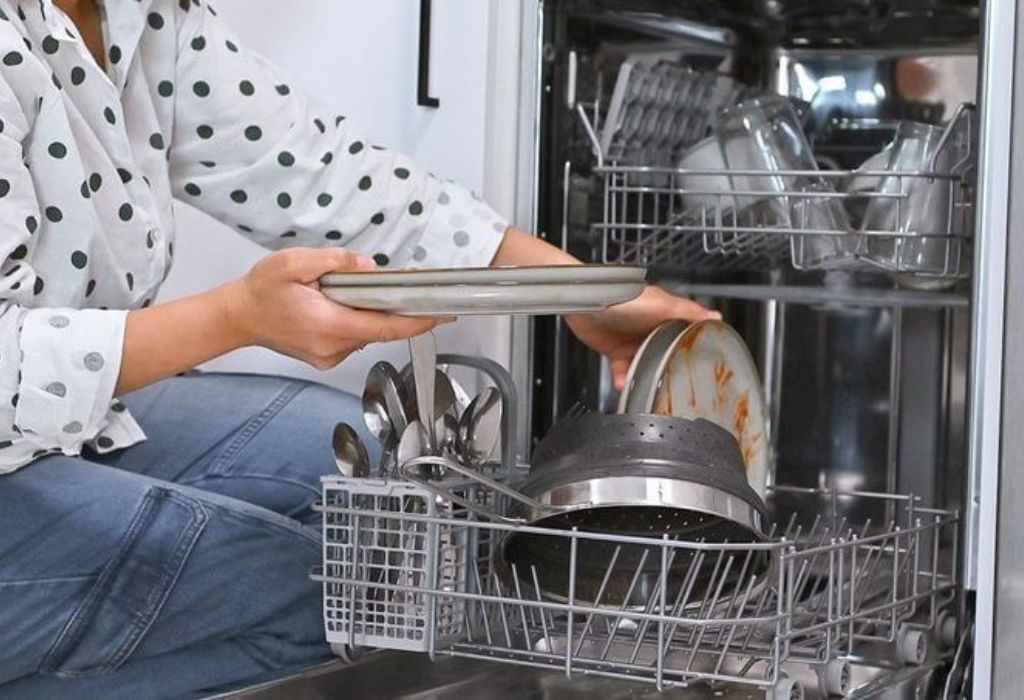
Maximizing water efficiency in your dishwasher starts with simple, practical habits. One of the most effective strategies is to run your dishwasher only when it is full.
Half-loaded cycles consume nearly the same amount of water as full loads, reducing efficiency and wasting resources.
Avoid pre-rinsing dishes unless absolutely necessary. Modern dishwashers are designed to remove food particles effectively without rinsing, and skipping this step can save multiple gallons of water per cycle.
Selecting eco-friendly or energy-saving cycles is another important way to conserve water. These cycles are designed to optimize water flow and temperature, using the minimal amount of water necessary to clean dishes effectively.
While eco cycles may take slightly longer, they provide the same cleaning performance with significantly less water.
Regular maintenance also plays a crucial role in efficiency. Clean the filters regularly, inspect spray arms for clogs, and ensure that detergent levels are correct.
Proper maintenance allows the dishwasher to function optimally, reducing the likelihood of running extra cycles due to poor cleaning performance.
Proper loading techniques improve water circulation and cleaning results. Place dishes so that spray arms can reach all surfaces and avoid overcrowding the dishwasher. Grouping similar items together allows water to flow freely and ensures that all dishes are cleaned evenly.
Investing in a modern, Energy Star-certified dishwasher can provide long-term water savings. These models are designed with advanced water-efficient technologies, such as soil sensors and optimized spray patterns, that automatically adjust water usage according to load size and dirtiness.
What is the best way to save water in a dishwasher?
Run the dishwasher only when it is full and avoid unnecessary pre-rinsing.
Do eco cycles actually reduce water usage?
Yes, they use less water while maintaining effective cleaning performance.
How does regular maintenance help save water?
Clean filters and spray arms ensure proper water flow and reduce the need for additional cycles.
Does loading technique affect water efficiency?
Yes, arranging dishes properly allows water to circulate effectively, cleaning all items evenly.
Can modern dishwashers save more water than older models?
Absolutely, newer Energy Star-certified dishwashers are significantly more efficient.
Is skipping pre-rinsing safe for clean dishes?
Yes, most modern dishwashers are designed to clean effectively without pre-rinsing.
Should items be grouped when loading a dishwasher?
Yes, grouping similar items allows water to reach all surfaces efficiently.
Common Myths About Dishwasher Water Usage
Many people believe that dishwashers use more water than handwashing, but this is often a misconception. Modern dishwashers are designed to be highly efficient, using as little as 3 to 5 gallons per cycle, whereas handwashing the same number of dishes can use 15 to 25 gallons.
Another common myth is that pre-rinsing is necessary. Most modern dishwashers are capable of cleaning even heavily soiled dishes without rinsing. Skipping this step can save significant amounts of water per cycle.
Some assume that running quick wash or eco cycles compromises cleanliness. In reality, these cycles are carefully calibrated to optimize water usage while maintaining effective cleaning. Soil sensors in many models also ensure that water is only used as needed, avoiding waste.
Overloading the dishwasher is another misconception. While it may seem efficient, overcrowding can block spray arms and prevent proper cleaning. Properly arranging dishes ensures water reaches all surfaces and reduces the need for additional cycles.
Regular maintenance is often overlooked but is key to efficient operation. Clean filters, spray arms, and the interior of the dishwasher allow for optimal water flow and cleaning performance, preventing wasted water.
Do dishwashers really use less water than handwashing?
Yes, modern dishwashers are designed to clean more dishes with less water.
Is pre-rinsing necessary?
No, most dishwashers can clean effectively without pre-rinsing.
Do eco cycles compromise cleaning quality?
No, they maintain the same cleaning performance while saving water.
Can overloading reduce efficiency?
Yes, overcrowding blocks water flow and reduces cleaning effectiveness.
Does maintenance affect water usage?
Yes, clean filters and spray arms ensure proper water flow and efficient cycles.
Are soil sensors effective in saving water?
Yes, they adjust water usage according to how dirty the dishes are.
Choosing the Right Dishwasher for Water Efficiency
When selecting a dishwasher, water efficiency should be a top priority. Energy Star-certified models are specifically designed to use less water and energy while providing optimal cleaning performance. These appliances are tested to ensure maximum efficiency without compromising results.
Consider the size and capacity of the dishwasher. Larger models can clean more dishes per cycle, maximizing water efficiency, but make sure the model fits your household needs. Choosing a dishwasher that matches your typical load prevents running multiple partial cycles.
Look for advanced features such as soil sensors, eco cycles, and adjustable racks. Soil sensors detect the level of dirt on dishes and automatically adjust water usage.
Eco cycles reduce water and energy usage, while adjustable racks allow for better loading, maximizing the efficiency of each cycle.
Another consideration is the water connection. Some dishwashers come with hot water hookup options that ensure water reaches the optimal temperature quickly, reducing cycle duration and saving both water and energy.
Proper maintenance also plays a role in long-term efficiency. Cleaning filters, spray arms, and checking seals ensures that the dishwasher operates at peak performance, avoiding unnecessary water waste.
Should I choose an Energy Star dishwasher?
Yes, Energy Star models are tested for maximum water and energy efficiency.
Does dishwasher size affect water usage?
Yes, selecting a model that matches your household load prevents wasted cycles.
Are soil sensors worth it?
Yes, they adjust water usage based on how dirty the dishes are.
Do adjustable racks improve efficiency?
Yes, they allow better loading and maximize water use per cycle.
Can hot water hookup save water?
Yes, it reduces cycle time and water use by quickly reaching optimal temperatures.
Does maintenance affect long-term efficiency?
Yes, keeping filters and spray arms clean ensures the dishwasher uses water effectively.
Tracking and Monitoring Dishwasher Water Usage
Monitoring your dishwasher’s water usage can help identify ways to save even more. Many modern dishwashers display estimated water consumption per cycle, allowing homeowners to make informed choices about which cycles to use.
Some smart dishwashers connect to apps or home monitoring systems, giving detailed insights into water and energy usage. This technology can track usage over time and suggest more efficient cycles based on household habits.
Keeping a log of cycles and water usage can also reveal patterns. For example, frequent half-load cycles or using heavy-duty cycles unnecessarily can waste water and energy. Adjusting your routines based on these insights ensures optimal efficiency.
Water meters and smart home monitoring devices can further quantify savings. By comparing dishwasher usage with overall household water consumption, you can identify other areas for conservation.
Proper education about cycle options, load size, and maintenance can help maximize efficiency. The more you understand your dishwasher’s capabilities, the better you can reduce waste.
Can smart dishwashers track water usage?
Yes, many models provide detailed water and energy reports via apps.
Does monitoring usage save water?
Yes, it helps identify inefficient cycles and habits.
Can half-loads waste water?
Yes, running partial loads often uses nearly the same water as full loads.
Do heavy-duty cycles use more water?
Yes, these cycles consume more water to clean heavily soiled dishes.
Can water meters help monitor dishwasher use?
Yes, they allow you to see actual water consumption and identify savings.
Does understanding cycles improve efficiency?
Yes, knowing which cycles use less water helps you choose the most efficient option.
The Role of Detergents in Water Efficiency
The type and amount of detergent you use can affect your dishwasher’s water efficiency. Using too much detergent can create excess suds, which may require additional rinsing cycles. This not only wastes water but also increases energy consumption.
Eco-friendly or concentrated detergents are designed to work effectively with minimal water. They break down grease and food residue efficiently, allowing the dishwasher to clean thoroughly without extra cycles.
Choosing the right detergent also protects your dishwasher’s internal components, ensuring spray arms and filters remain unclogged and water flows freely.
Detergent placement is another important factor. Always follow manufacturer guidelines, placing the detergent in the correct compartment. This ensures proper distribution during the cycle, optimizing cleaning and reducing the need for reruns.
Some detergents are specifically formulated to work with eco cycles or low-water settings. Using these products in the appropriate cycle can maximize water savings without compromising cleanliness.
Regularly checking detergent quality and using the correct dosage is a simple yet effective way to improve overall dishwasher efficiency.
Can too much detergent waste water?
Yes, excess suds may require extra rinsing cycles, using more water.
Do eco-friendly detergents save water?
Yes, they clean effectively with minimal water and energy.
Does detergent placement matter?
Yes, placing detergent in the correct compartment ensures proper cleaning.
Can concentrated detergents improve efficiency?
Yes, they provide optimal cleaning with less water and prevent suds buildup.
Are some detergents better for eco cycles?
Yes, certain detergents are designed to work efficiently with low-water settings.
Does using the right detergent protect the dishwasher?
Yes, it prevents clogs and ensures water flows freely during cycles.
Maintaining Your Dishwasher for Long-Term Efficiency
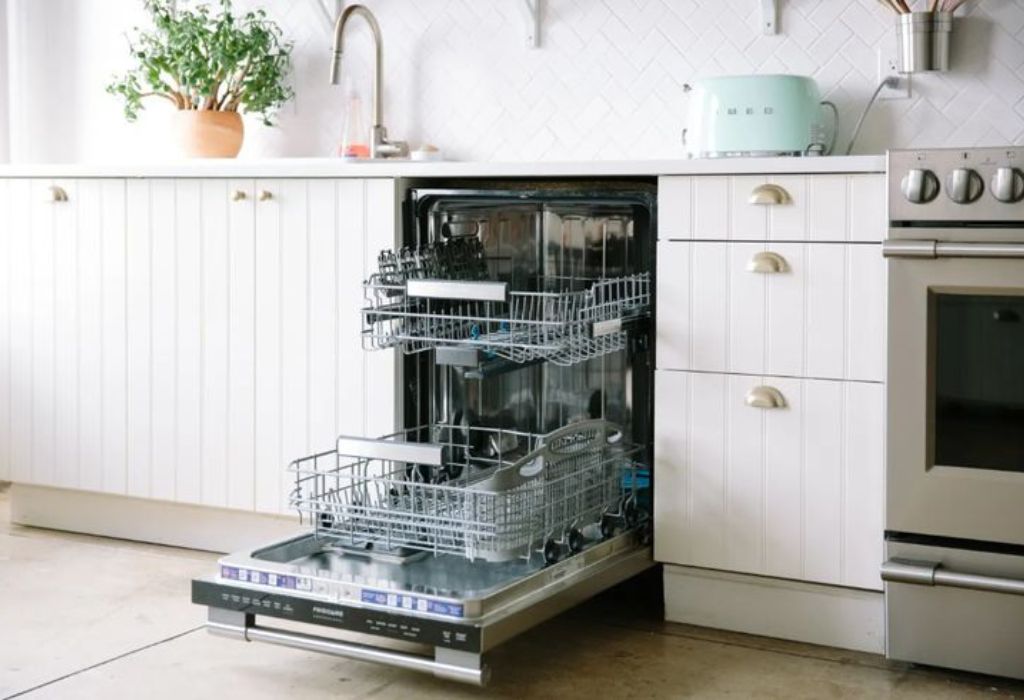
Proper maintenance is key to keeping your dishwasher water-efficient over time. Regularly cleaning filters, spray arms, and the interior prevents clogs and ensures water circulates evenly during each cycle.
Neglecting maintenance can reduce efficiency and require additional cycles, wasting both water and energy.
Inspecting and cleaning spray arms is especially important. Mineral buildup or food particles can block nozzles, preventing water from reaching all surfaces. Removing these blockages ensures consistent cleaning performance and prevents unnecessary water usage.
Check seals and gaskets regularly. Worn or damaged seals can cause leaks, forcing the dishwasher to work harder and potentially use more water. Replacing seals promptly maintains both efficiency and reliability.
Running a monthly maintenance cycle with a dishwasher cleaner can remove grease and mineral deposits. This simple practice improves water flow, reduces odors, and enhances cleaning performance, contributing to overall efficiency.
Scheduling professional inspections occasionally ensures that all mechanical components are working optimally. A well-maintained dishwasher lasts longer, performs better, and conserves water effectively over its lifetime.
Does cleaning filters affect water efficiency?
Yes, clean filters allow water to circulate properly, improving efficiency.
Can blocked spray arms waste water?
Yes, blockages prevent proper water distribution, requiring more cycles.
Do worn seals affect water usage?
Yes, leaks caused by damaged seals can increase water consumption.
Is a monthly maintenance cycle beneficial?
Yes, it removes mineral buildup and improves water flow and cleaning performance.
Should professional inspections be done?
Yes, periodic inspections ensure all components work efficiently and prevent waste.
Does proper maintenance extend dishwasher life?
Yes, regular care ensures optimal performance and long-term water efficiency.
Conclusion
Understanding how much water a dishwasher uses per cycle is essential for conserving both water and energy. Modern dishwashers are designed to be highly efficient, using significantly less water than handwashing the same number of dishes.
By adopting smart habits, such as running full loads, skipping unnecessary pre-rinsing, and selecting eco-friendly cycles, homeowners can maximize water efficiency while maintaining sparkling clean dishes.
Investing in an Energy Star-certified dishwasher ensures long-term savings and reduces your household’s environmental footprint.
Features like soil sensors, adjustable racks, and eco cycles optimize water usage, ensuring that each cycle uses only the amount of water necessary for effective cleaning.
Regular maintenance, including cleaning filters, checking spray arms, and inspecting seals, helps sustain this efficiency over the life of the appliance.
Additionally, understanding the role of detergents and proper loading techniques can further improve water conservation. Using the right detergent in the correct amount and arranging dishes for optimal water circulation reduces the need for extra cycles and prevents water waste.
By monitoring your dishwasher’s usage and incorporating these best practices, you can save water, reduce energy consumption, and contribute to a more sustainable household.
Small changes in routine can lead to significant savings over time while promoting responsible water use.
Adopting these strategies not only benefits your household in terms of cost and efficiency, but also contributes to broader environmental sustainability.
Efficient dishwasher use is a simple yet powerful way to reduce your water footprint, minimize energy consumption, and ensure that your daily dishwashing routine is both effective and eco-friendly.

I’m Emma J. Caldwell, the founder, lead writer, and home-cooking enthusiast behind KitchenGuideCo.com. With a background in culinary arts and over a decade of cooking experience in both professional and personal kitchens, I created this platform to demystify recipes, offer smart kitchen gadget reviews, and guide readers through meal prep with confidence and clarity.