You open your dishwasher expecting to see clean, dry dishes—but instead, there it is: a small pool of water sitting quietly at the bottom.
The dishes might be spotless, but the sight of leftover water instantly makes you wonder what went wrong. The smell isn’t pleasant either, and you can’t help but worry if your appliance just broke down.
The truth is, this is a very common problem among homeowners. A bit of standing water doesn’t always mean your dishwasher is broken. In most cases, it’s caused by something minor—like food debris clogging the filter, a blocked drain hose, or even a forgotten air gap connection that needs cleaning.
Dishwashers are designed to drain water completely after every cycle. So, when water remains in the tub, it’s usually a sign that the drainage system isn’t working as intended. Sometimes the issue is visible, but often, it’s hiding inside the parts you rarely look at.
Before you call a repair technician, it’s worth learning how to identify and fix these problems yourself. Many of the solutions are simple, take less than an hour, and require no special tools.
In this guide, you’ll discover exactly why water collects in the bottom of your dishwasher, how to troubleshoot the drainage system, and which maintenance steps will keep your machine running smoothly for years.
By the end, that pool of water will be gone, and your dishwasher will be back to doing what it does best: cleaning efficiently.
The Shock of Finding Standing Water After a Wash Cycle

It usually starts with surprise. You open your dishwasher door after a long cycle, ready to unload sparkling dishes, but your eyes instantly catch the pool of murky water sitting at the bottom. The dishes are clean, yet that puddle ruins the satisfaction of a job well done.
This sight can be alarming because dishwashers are built to drain every drop after rinsing. When water lingers, it often signals that something inside the drainage path is blocked or malfunctioning. However, it doesn’t always mean a serious breakdown — many times, the issue is minor and easy to resolve.
A small amount of water left beneath the filter area is normal in most models. Manufacturers design it that way to keep the pump seal moist and prevent cracking.
But if you notice more than an inch of water standing in the tub, that’s a clear sign of restricted flow or partial drainage failure.
For many homeowners, the first reaction is panic. They might think a pump has burned out or a major repair is needed. In reality, clogged filters, food particles, or even a kinked hose can all cause drainage issues without requiring expensive parts or tools.
Ignoring the problem, though, can make it worse. Stagnant water quickly turns foul, encouraging bacterial growth and unpleasant odors inside your appliance. Over time, this moisture can also cause mineral scaling or damage electrical sensors.
The key is to act early. By identifying the cause and taking a few careful steps, you can restore normal draining without professional help. The process is simpler than it looks once you understand how the dishwasher’s internal system moves and disposes of water.
With a little patience and attention, that unexpected pool of water can become a quick weekend fix instead of a stressful repair call.
How the Dishwasher Drainage System Works
Every dishwasher has a simple but efficient drainage system designed to remove dirty water after each cycle.
Once the washing and rinsing are complete, the machine uses a small electric pump to push water out through a connected hose. That hose leads to your sink drain or garbage disposal, where the wastewater is released safely.
The process starts when the control board sends a signal to the drain pump. This component creates suction that pulls leftover water from the bottom of the tub. The water passes through a filter assembly that traps food particles, seeds, or debris before it moves onward through the drain hose.
The hose is a crucial link in the system. It must remain unobstructed and positioned correctly — typically in a high loop or air gap — to prevent wastewater from flowing backward.
If the hose becomes clogged, kinked, or installed too low, the dishwasher can’t drain completely, causing water to pool at the bottom.
Another key part of the system is the check valve, which stops water from re-entering the dishwasher once it has drained.
If this valve gets stuck or damaged, water can flow back inside after the cycle ends. Over time, that leads to recurring standing water no matter how often you clean.
Some models also connect directly to a garbage disposal. When the disposal’s knockout plug isn’t removed or becomes clogged with grease, it blocks the dishwasher’s drain path entirely. This is one of the most common causes of standing water after installation or heavy kitchen use.
Understanding how these parts work together helps you troubleshoot drainage problems effectively. Each component has a specific job, and if even one fails, the water flow stops.
The good news is that most of these issues are easy to locate and repair without calling a technician.
With this basic knowledge, you can now move on to identifying the real reason why water remains in the bottom of your dishwasher and how to fix it quickly.
Top Reasons Why Water Stays in the Bottom
Standing water in your dishwasher doesn’t appear out of nowhere — it’s almost always caused by something small blocking or slowing the drain system. The most frequent culprit is a clogged filter.
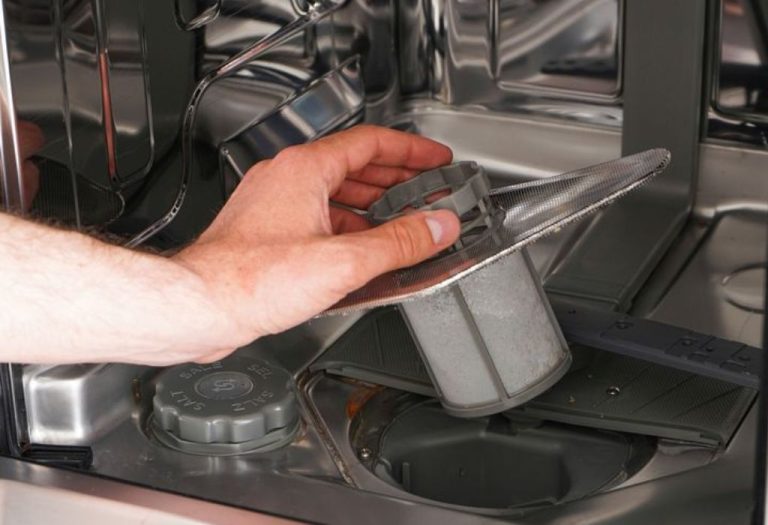
Every dishwasher has a fine mesh filter at the bottom that traps leftover food, seeds, and grease before the water drains. When that filter becomes packed with debris, water can’t pass through easily and starts pooling at the base.
Another common issue is a blocked drain hose. The hose that carries wastewater out of your dishwasher can collect grease and soap scum over time, creating buildup that narrows the flow path.
Sometimes, the hose even gets kinked behind the appliance during installation or cleaning, stopping water from escaping.
A dirty or jammed drain pump can also be the reason. This small motor-driven pump is responsible for pushing water through the drain hose.
If bits of food or glass block its impeller, it loses power and can’t move the water efficiently. You might hear the pump humming but notice no draining action afterward.
The garbage disposal connection is another spot where problems often occur. If the disposal’s knockout plug wasn’t removed during installation, it completely blocks the drain outlet.
Even if the plug is out, food residue or grease buildup can close off the opening, sending water back into the dishwasher.
Improper hose setup also leads to recurring drainage issues. If your drain hose doesn’t have a high loop or isn’t connected to an air gap, wastewater from the sink can flow backward into the dishwasher after each cycle. This makes it look like the appliance didn’t drain, even though it technically did.
Lastly, mineral buildup from hard water can narrow internal passages over time. Calcium deposits form inside hoses, filters, and pump parts, reducing water flow little by little. Regular cleaning with vinegar or a descaler can prevent this problem.
Pinpointing which of these reasons applies to your dishwasher is the first step toward a quick fix. Once you know the cause, the repair process becomes straightforward, often requiring nothing more than a screwdriver and a few minutes of cleaning.
How to Check for and Remove Blockages Safely
Before you grab tools or start taking parts apart, it’s important to work safely. Begin by unplugging your dishwasher or turning off its circuit breaker. This ensures there’s no electrical risk while you inspect or handle any components.
Also, if your dishwasher recently ran, wait a few minutes for the water and internal parts to cool down before you start.
Once it’s safe, remove the bottom dish rack to access the sump area where the filter sits. You’ll likely see a round or rectangular mesh cover near the base.
Twist or lift it out gently, depending on your model, and look underneath for trapped food particles, seeds, or paper bits. Wipe away any residue using a damp cloth or soft brush.
Next, check the filter compartment. If you find heavy buildup, soak the filter in warm water mixed with a little vinegar for 10–15 minutes. This helps loosen grease and soap scum that could be clogging the mesh. Rinse thoroughly before reinstalling it.
Now move on to the drain area at the back or side of the tub. Use a flashlight to look for small objects like broken glass, bones, or food chunks.
Anything stuck here can block the pump intake. Remove debris carefully with tweezers or a gloved hand—avoid using sharp tools that might puncture seals.
After the interior is clear, inspect the drain hose. Detach it from under the sink or garbage disposal and run warm water through it. If it feels slow or completely blocked, use a flexible pipe cleaner or straightened wire hanger to push out debris. Reconnect the hose tightly afterward.
Finally, pour a cup of hot vinegar water into the bottom of the dishwasher and run a short rinse cycle. This step flushes out remaining grime and clears the drain path fully. When the cycle ends, open the door—if there’s no water pooling, you’ve successfully removed the blockage.
Step-by-Step Fix for Standing Water Problems
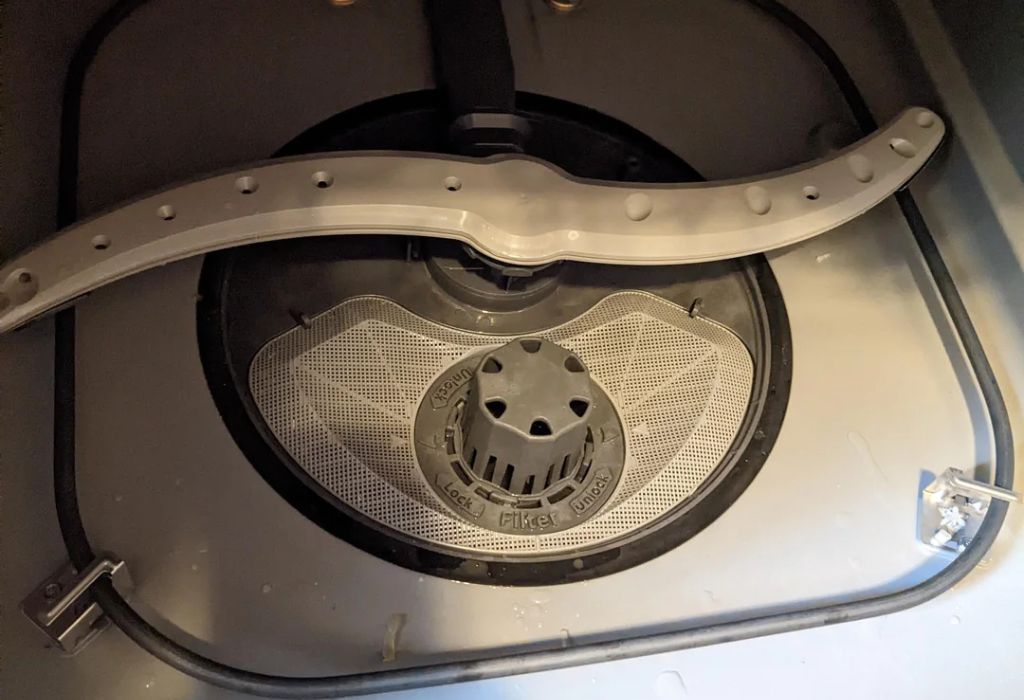
Once you’ve ruled out visible clogs, it’s time to perform a complete step-by-step fix to restore proper draining. This process focuses on cleaning, inspection, and reconnection of the main drainage components.
With just a few basic tools and some patience, you can get your dishwasher running like new again.
Step 1: Disconnect Power and Remove the Bottom Rack
Safety first. Always turn off the circuit breaker or unplug the dishwasher before touching any parts. Pull out the bottom dish rack to give yourself full access to the sump area where water collects.
Step 2: Clean the Filter Thoroughly
Take out both the coarse and fine mesh filters and rinse them under hot water. If the grime is thick, soak them in vinegar for 15 minutes to break down grease and calcium buildup. A soft toothbrush works great for scrubbing away stubborn debris stuck in the screen.
Step 3: Inspect and Clean the Drain Pump Area
You’ll find the drain pump beneath the filter housing. Remove any screws or covers protecting it and look for blockages inside. If you see food, broken glass, or paper bits, clear them out carefully. Try spinning the impeller with your finger — if it’s stuck, free it gently until it turns smoothly.
Step 4: Check and Flush the Drain Hose
Detach the hose from both ends — one near the dishwasher base and the other near your sink or garbage disposal. Hold it upright and run warm water through it to test for a clear flow. If water backs up, use a flexible cleaning brush or pipe snake to dislodge any buildup inside.
Step 5: Test the Garbage Disposal Connection
If your dishwasher drains through the disposal, make sure the knockout plug inside that connection has been removed. Also check for food, grease, or sludge buildup in the disposal port. Running the disposal for 15–20 seconds before starting a dishwasher cycle can help clear blockages.
Step 6: Reassemble and Test the Drain Cycle
After cleaning all parts, reconnect the hose, reinstall the filters, and restore power. Run a short rinse cycle to test. If water drains completely at the end, congratulations — you’ve fixed the issue!
Step 7: If It Still Doesn’t Drain…
Persistent standing water might point to a failed pump motor or sensor issue. In that case, move to deeper troubleshooting — checking the pump’s electrical continuity or the float switch — which we’ll cover in upcoming sections.
By following these steps carefully, most homeowners can clear 90% of dishwasher water problems without professional repair.
When the Filter or Drain Pump Is the Real Culprit
If you’ve already cleaned the visible clogs and still see standing water, the next suspect is usually the filter assembly or drain pump.
These two parts are at the heart of your dishwasher’s drainage system, and even a small issue in either can stop water from flowing out properly. Knowing how to check and service them can save you from unnecessary repair costs.
The filter is your dishwasher’s first line of defense. It traps food particles, seeds, and residue so they don’t reach the pump. But over time, grease and soap film can form a sticky layer over the mesh, making it hard for water to pass through. Even if the filter looks clean on top, buildup underneath can quietly restrict drainage.
To fix this, remove the filter completely and inspect it under strong light. If you see cloudy spots or mineral residue, soak it in warm vinegar water for 20 minutes.
Gently scrub both sides with a soft brush and rinse thoroughly. Let it dry before reinstalling it securely — a loose filter can let debris slip into the pump area.
If the filter isn’t the problem, the drain pump might be. This small motor-driven component creates suction to push water through the drain hose. It sits beneath the dishwasher floor, often covered by a small access panel. Disconnect power, remove the panel, and check the pump for debris or signs of damage.
Try spinning the pump’s impeller with your finger. If it doesn’t move freely, something may be jammed inside. Use tweezers or a cotton swab to remove the obstruction. If the impeller spins but the pump still won’t activate during a drain cycle, it could be an electrical issue or a burned-out motor.
Replacing a pump is more complex, but still doable for DIY users. Unplug the wire harness, twist the pump counterclockwise to remove it, and install a compatible replacement part. Once secured, reconnect everything and test a rinse cycle to confirm proper drainage.
In many cases, cleaning or replacing the filter and pump completely eliminates standing water issues. These components handle the dirtiest part of every wash — giving them a little attention keeps your dishwasher efficient, odor-free, and long-lasting.
Checking the Garbage Disposal and Air Gap Connection
When your dishwasher doesn’t drain properly, one of the most overlooked culprits is the garbage disposal connection or air gap.
Both play key roles in how wastewater exits the dishwasher, and when they’re blocked, water has nowhere to go but back into the bottom of the tub. Understanding how these components work — and how to clean them — often solves the problem instantly.
If your dishwasher’s drain hose connects to a garbage disposal, start there. During installation, most disposals have a small plastic knockout plug inside the inlet port that must be removed.
If the installer forgets to remove it, water cannot pass through. This is one of the most common reasons for standing water in brand-new dishwashers.
Even if the plug is already out, grease, food sludge, or coffee grounds can easily clog that port over time. To check, disconnect the drain hose from the disposal and shine a flashlight into the opening.
If you see buildup or residue, use a narrow brush or a wooden skewer to clean it out. Never use metal tools that could scratch the inside of the disposal.
Next, inspect the air gap, if your kitchen has one. The air gap is the small silver or chrome cylinder mounted near the sink faucet.
Its purpose is to prevent dirty water from backflowing into your dishwasher in case of a blockage. However, the air gap itself can also become clogged with debris.
To clean it, twist off the air gap cap and look inside the plastic tube. Remove any food particles or buildup using a bottle brush or pipe cleaner. Rinse with warm water to ensure everything flows freely. Once cleaned, replace the cap securely.
If you don’t have an air gap, make sure your drain hose is installed in a high loop that rises above the sink’s drain line before going down again. This loop acts as a natural barrier against backflow and prevents sink water from seeping into your dishwasher.
Electrical or Sensor Faults That Prevent Draining
If your dishwasher’s filter, hose, and disposal are all clean but water still won’t drain, the problem may lie in the electrical or sensor system.
Modern dishwashers rely on sensors and switches that communicate with the control board to start, stop, and drain cycles. When any of these components fail, the machine might think the cycle is finished even though water remains at the bottom.
One common cause is a malfunctioning float switch. This small part monitors water levels inside the dishwasher. If it gets stuck in the “up” position due to debris or mineral buildup, the machine assumes it’s full of water and stops draining.
Gently lift and release the float; if it doesn’t move freely, clean it with warm soapy water until it does.
Another potential issue is a faulty drain pump relay or control board connection. The control board sends the signal that powers the pump motor.
If the wiring is loose or the board’s relay has burned out, the pump won’t activate during the drain cycle. Checking for burnt smells or discoloration around the board can help confirm this issue.
Some dishwashers use turbidity or pressure sensors to measure water cleanliness and flow. If these sensors are dirty or corroded, they can send false readings that interrupt the drain process. Cleaning them gently with a soft cloth or replacing damaged sensors often resolves the problem.
Electrical failures can also occur in the pump motor itself. If you’ve ruled out clogs and still hear no humming or vibration from the pump during the drain phase, it might not be receiving power.
Testing the motor with a multimeter will show whether it has continuity. A reading of zero or infinite resistance indicates it needs replacement.
Lastly, always inspect the wiring harness underneath the dishwasher. Heat, vibration, and moisture can wear down insulation over time, causing weak or broken connections. Secure or replace damaged wires before reassembling the unit.
While electrical issues may sound intimidating, many are simple to identify with patience and a multimeter. Fixing a stuck float switch or replacing a small wire can make the difference between a dishwasher full of water and one that drains perfectly every time.
Preventive Care to Avoid Future Water Buildup
Once your dishwasher drains properly again, the next goal is to keep it that way. Preventive care is the easiest and most cost-effective way to avoid future standing-water issues. With just a few simple habits, you can ensure your machine stays clean, efficient, and odor-free for years.
Start with the filter—it should be rinsed every week or after every few heavy loads. Food scraps, seeds, and soap residue easily build up inside the mesh, slowing water flow. A quick rinse under warm water with a drop of dish soap prevents clogs before they form.
Run a vinegar rinse cycle once a month. Place a cup of white vinegar on the top rack and run a hot, empty wash. The mild acid breaks down grease, mineral deposits, and detergent film inside the pump and hoses. Follow up with a handful of baking soda sprinkled on the bottom for a fresh smell.
Always scrape off leftover food before loading dishes—but don’t pre-rinse them under running water. Pre-rinsing wastes gallons of water and can confuse soil sensors in newer machines. A simple scrape into the trash or disposal is enough.
Inspect the drain hose quarterly for bends or blockages. Make sure the high loop or air-gap connection is still firmly in place. Over time, vibration can shift these components, allowing sink water to backflow into the dishwasher.
If you live in an area with hard water, use a descaler or dishwasher cleaner every few months. Hard water minerals can coat the pump and heating element, reducing performance and leading to more frequent drainage problems.
Finally, leave the door slightly open after every wash cycle. This allows moisture to escape and prevents mold or mildew growth inside the tub. Good airflow keeps your dishwasher dry, fresh, and ready for the next load.
Preventive maintenance takes only a few minutes each month but saves hours of frustration later. A clean, well-maintained dishwasher not only drains perfectly but also lasts longer and uses less energy with every cycle.
Routine Cleaning Habits for a Trouble-Free Dishwasher
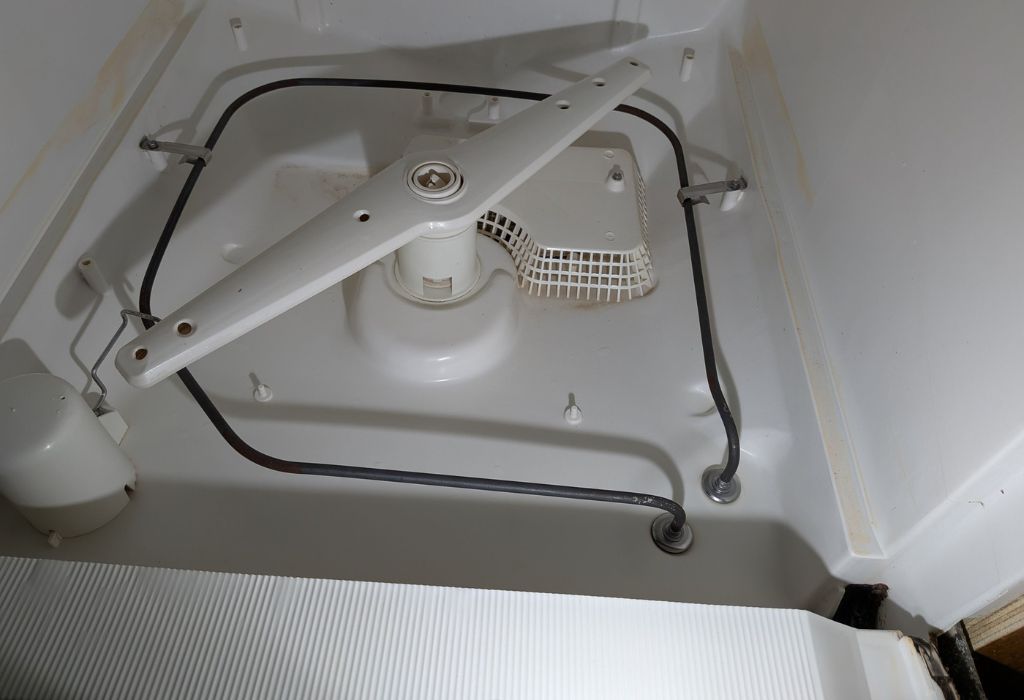
Keeping your dishwasher free of standing water starts with consistent cleaning habits. Just like any other household appliance, it performs best when maintained regularly.
A few simple routines each week can prevent blockages, odors, and mineral buildup that eventually lead to drainage problems.
Begin by wiping down the door gasket and edges after every few cycles. Food residue and soap scum often collect in these spots, creating grime that can trap moisture and cause mold. A quick wipe with a damp cloth and a drop of mild detergent keeps the seals flexible and clean.
Once a week, inspect and clean the filter. Rinse it thoroughly under warm water to remove grease or food particles. This small task ensures unrestricted water flow and prevents the filter from becoming a clogging source.
Every month, run a deep-cleaning cycle using vinegar and baking soda. Place a cup of white vinegar on the top rack and sprinkle baking soda along the bottom. Run the hottest cycle available. This combination dissolves mineral scale, eliminates odors, and refreshes your dishwasher’s interior.
Clean the spray arms quarterly to maintain strong water pressure. Remove them carefully and use a toothpick or pipe cleaner to clear any blocked holes. Rinse them in warm water, then reinstall them securely before running a rinse cycle to flush out debris.
Also, check the drain area and sump basin regularly for small bits of food or glass that might escape the filter. Removing these early prevents blockages in the pump and hose.
Finally, finish each load by leaving the door slightly open. This allows steam to escape and prevents condensation from settling in corners or crevices. It keeps the inside dry, fresh, and ready for the next use.
Following these simple routines turns maintenance into a habit rather than a chore. A few minutes of care each week guarantees that your dishwasher remains powerful, efficient, and completely free of standing-water surprises.
FAQ Section: Solving the Mystery of Dishwasher Standing Water
Why is there standing water in my dishwasher bottom?
Standing water usually means your dishwasher isn’t draining properly. The most common reasons are a clogged filter, blocked drain hose, or food buildup in the garbage disposal connection. Cleaning these parts often fixes the issue quickly.
Is a little water in the bottom normal?
Yes, a small amount—usually less than half an inch—is completely normal. Manufacturers leave a small pool in the sump area to keep the pump seal moist and prevent cracking. Anything beyond that indicates a drainage problem that needs attention.
Can a dirty filter cause water to stay in the dishwasher?
Absolutely. The filter traps food particles and grease, and when it’s clogged, water can’t flow through properly. Cleaning the filter regularly ensures smooth draining and prevents unpleasant smells from stagnant water.
How do I know if my drain hose is blocked?
If you hear the pump running but the water doesn’t leave the tub, the hose might be kinked or clogged. Disconnect it from under the sink and run water through it. If it flows slowly or backs up, it needs cleaning or replacement.
What should I do if the drain pump isn’t working?
If the pump doesn’t hum or spin, unplug the dishwasher and check for obstructions in the impeller. If it’s clear but still won’t run, the motor may be burned out. A multimeter test can confirm whether it needs to be replaced.
Can my garbage disposal cause standing water?
Yes, especially if it’s newly installed and the knockout plug wasn’t removed. Even with older disposals, grease and food sludge can block the port where the dishwasher hose connects. Cleaning this port usually restores proper drainage.
How often should I clean my dishwasher to prevent water buildup?
Clean the filter weekly, run a vinegar rinse monthly, and check the drain hose every three months. These small maintenance steps prevent 90% of standing-water problems and keep your appliance performing like new.
Why does my dishwasher still smell after draining the water?
Odors come from trapped grease or bacteria in the filter or hose. Soak the filter in vinegar, wipe the interior walls, and run a hot cycle with baking soda to eliminate lingering smells.
Can a faulty float switch cause standing water?
Yes. The float switch monitors water levels and signals the drain pump to start. If it’s stuck or damaged, it can falsely tell the dishwasher that it’s empty, leaving water behind after every cycle.
When should I call a professional for help?
If you’ve cleaned all parts and water still remains, or if your dishwasher shows error codes, it’s time to call a technician. Electrical or sensor issues may require testing tools or replacement parts beyond standard DIY repair.
Conclusion
Finding standing water in your dishwasher bottom can be frustrating, but it’s rarely a serious problem. In most cases, the cause is something simple — a dirty filter, a clogged hose, or a small blockage in the disposal line.
Once you know how the drainage system works, solving it becomes an easy, step-by-step process instead of a stressful mystery.
Your dishwasher depends on a smooth flow of water through its filters, hoses, and pumps. When one part slows down, the entire system reacts. A bit of routine care — cleaning filters weekly, checking the drain path, and running monthly vinegar rinses — keeps everything moving freely and prevents unpleasant surprises.
Remember that prevention is always better than repair. Small habits like scraping plates, keeping the hose loop high, and leaving the door open after each cycle can save you from expensive service calls later. These quick actions also keep your machine fresh and odor-free.
If you’ve gone through all the cleaning steps and still notice standing water, that’s when it’s worth checking electrical components such as the float switch or pump motor. Most homeowners can handle basic cleaning, but electrical repairs are better left to professionals.
Your dishwasher is designed to make life easier, not harder. A little time spent maintaining it ensures it continues to perform that way — efficiently, quietly, and without a puddle left behind.
The next time you open the door after a cycle, you’ll see exactly what you expect: spotless dishes and a clean, dry bottom.
Consistent maintenance doesn’t just prevent drainage problems — it extends the life of your appliance. With every well-drained cycle, you’re saving water, energy, and the peace of mind that comes from knowing your dishwasher is running at its best.

I’m Emma J. Caldwell, the founder, lead writer, and home-cooking enthusiast behind KitchenGuideCo.com. With a background in culinary arts and over a decade of cooking experience in both professional and personal kitchens, I created this platform to demystify recipes, offer smart kitchen gadget reviews, and guide readers through meal prep with confidence and clarity.