You load the plates, add detergent, close the door, and press Start. Within moments the familiar hum begins, but have you ever wondered how much water your Whirlpool dishwasher really uses each time?
Most people never think about it until their water bill climbs or they hear claims that new dishwashers are far more efficient.
Whirlpool, one of the world’s best-known appliance brands, has spent decades refining its dishwashers to deliver spotless cleaning with minimal waste.
Whether you own an older model or the latest Smart Dishwasher Series, understanding how much water it uses can help you control costs and protect the environment.
In this in-depth guide, we’ll explore real usage numbers, explain what affects consumption, and share maintenance tips to keep your Whirlpool running efficiently for years.
Why Dishwasher Water Usage Matters

Every drop of water that flows through your kitchen has an energy cost attached to it. Heating, pumping, and treating water all consume resources. The average household runs the dishwasher four to five times a week, which can add up to hundreds of gallons per month.
Whirlpool focuses on sustainability by designing systems that clean thoroughly while reducing both water and electricity use. Compared with washing dishes by hand—which can use 20 to 27 gallons—modern Whirlpool units typically need only a fraction of that.
Knowing your dishwasher’s water footprint helps you plan better usage habits. It also shows how choosing the right cycle or loading style can directly influence consumption.
Water conservation isn’t just about saving money; it’s about ensuring long-term access to clean water for communities and ecosystems. Whirlpool’s commitment to Energy Star standards means every model undergoes strict testing to minimize waste.
Average Water Consumption of Whirlpool Dishwashers
On average, Whirlpool dishwashers use 3 to 5 gallons (11 to 19 liters) of water per cycle, depending on the model and selected program. Compact or Eco models may use closer to 3 gallons, while heavy-duty or older units can approach 5 or 6.
The most popular Normal cycle typically consumes around 3.5 to 4 gallons, balancing performance and efficiency. The Eco cycle reduces that further to about 3 gallons but takes longer to complete. Heavy Wash or Pots and Pans cycles increase water volume to handle grease and baked-on food.
Each model’s efficiency is also influenced by pump pressure and filtration design. Whirlpool’s latest models—like the Quiet Series and Smart Dishwasher line—use high-pressure spray jets to clean effectively with less water.
Older models manufactured before 2010 used 6 to 8 gallons, but modern engineering has cut that nearly in half without reducing cleaning power.
Does using less water affect performance?
No. Whirlpool’s soil sensors and targeted spray arms ensure spotless cleaning even at lower water levels.
How many liters does a Whirlpool Eco cycle use?
Roughly 11 to 12 liters, compared with 15 to 17 liters for standard cycles.
Should I worry if my Whirlpool uses more than 5 gallons?
Yes, check filters and hoses for clogs or choose an Eco setting if available to reduce usage.
How Whirlpool Designs for Water Efficiency
Whirlpool engineers each dishwasher to use only the water needed for the load size and soil level. Central to this design are the Soil Sensor and Adaptive Wash Technology, which measure how dirty the water becomes during a cycle.
If the water remains clear, the dishwasher automatically shortens the wash and reduces water volume. When it detects heavy soil, it extends rinses and boosts pressure for better results.
Another key innovation is the Resource Saver™ system, found in many newer models. It circulates filtered water back into the wash tank to reuse some of it during the same cycle, reducing total consumption without affecting cleaning.
High-efficiency spray arms and targeted jets also play a role. They are angled to maximize coverage, ensuring that each drop strikes dirty surfaces rather than pooling at the bottom.
Because these features work automatically, users often don’t realize how much water is being saved each cycle until they see the utility bill.
Factors That Affect Water Usage
Even with efficient design, real water use can vary depending on your habits and home conditions.
Cycle Selection: Heavy cycles use more water for stubborn stains; Eco or Quick cycles use less but may take longer.
Load Size: Running half-loads too often increases water per dish ratio. It’s best to wait for a full load when possible.
Water Temperature: Cold water requires longer heating time, increasing overall energy use.
Maintenance: Dirty filters and clogged spray arms force the machine to run longer rinses to compensate.
Water Pressure: Low household pressure can extend cycle duration as the dishwasher refills to maintain cleaning power.
Understanding these factors lets you adjust settings and habits to get the best balance of performance and efficiency.
Is running Quick Wash every day efficient?
Only for light loads; full cycles use slightly more water but are more thorough.
Does pre-rinsing save water?
No, it wastes it—Whirlpool’s sensors detect soil automatically.
Can hard water affect consumption?
Yes, scale buildup reduces pressure and forces extra rinses.
Comparing Whirlpool to Other Brands
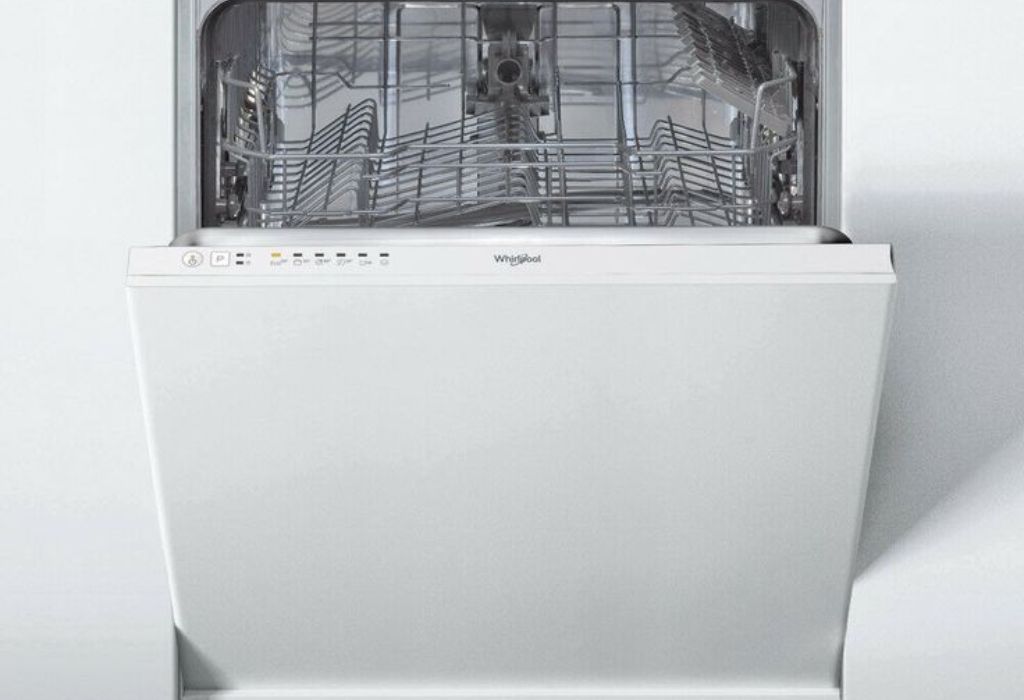
Whirlpool competes closely with Bosch, LG, and Samsung in efficiency ratings. Here’s how they stack up:
| Brand | Average Gallons per Cycle | Energy Star Certified |
| Whirlpool | 3 – 5 | ✅ Yes |
| Bosch | 2.9 – 4 | ✅ Yes |
| LG | 3.6 – 4.5 | ✅ Yes |
| Samsung | 3.5 – 5 | ✅ Yes |
| GE | 4 – 6 | ✅ Yes |
While Bosch edges ahead in absolute efficiency, Whirlpool offers a strong balance of affordability, reliability, and ease of maintenance. Many Whirlpool models achieve similar water savings without requiring premium pricing.
Whirlpool is also known for robust wash cycles that handle tough stains while remaining energy compliant. Its parts are easy to find and repair, reducing long-term costs.
Does Whirlpool beat Bosch in quietness?
Not always—Bosch wins on noise reduction, but Whirlpool offers competitive decibel levels in its Quiet Series.
Are Whirlpool dishwashers more durable than Samsung?
Yes, especially for models with stainless steel tubs and filter systems.
Do Whirlpool and LG use the same amount of water?
Very close, though LG Eco cycles tend to run longer with slightly less water.
Understanding Whirlpool Dishwasher Water Cycle Stages
Each Whirlpool dishwasher follows a sequence of stages designed to maximize cleaning while minimizing waste.
The cycle begins with a Pre-Wash Stage, using about half a gallon to loosen food particles and prepare dishes. This prevents residue from spreading during later stages.
The Main Wash Stage uses 2 to 3 gallons of hot, detergent-mixed water to dislodge grease and stains. High-pressure jets ensure coverage on every rack level.
Next comes the Rinse Stage, where fresh water removes detergent and debris. Whirlpool’s Soil Sensor monitors clarity and ends the rinse early once the water runs clear.
Finally, the Drying Stage uses heat and air circulation, sometimes combined with rinse aid residue evaporation, to leave dishes spot-free. This stage requires no additional water but benefits from proper loading and ventilation.
These stages ensure your dishes come out clean while minimizing water usage at each step.
Real-World Usage Data and Customer Experiences
Laboratory numbers show efficiency, but real-world users prove it. Across thousands of homes, Whirlpool owners report consistent water savings and excellent cleaning results.
In California, a user tracked their Smart Dishwasher through a smart water meter and found an average of 3.1 gallons per Normal cycle. Compared with their previous model from 2008, that was a 45 percent reduction in water use.
Families with large loads praise Whirlpool’s capacity and filtration system, saying it cleans better without extra rinses. Even on Eco mode, dishes emerge dry and shiny.
Reviewers on Consumer Reports and Reddit often highlight how rarely they need to pre-rinse. Whirlpool’s soak and spray pattern handles dried food efficiently, saving both time and water.
Independent tests from Energy Star confirm user feedback: Whirlpool maintains a 3 to 4 gallon average across all standard models. Even after years of use, performance remains steady thanks to durable motors and self-cleaning filters.
Users who switched from hand washing reported not only cleaner dishes but lower utility bills. Many see savings of $40 to $60 per year, proving efficiency translates into real money.
If properly maintained, Whirlpool dishwashers deliver consistent results and environmental benefits in equal measure.
Does Whirlpool perform better on Eco or Normal mode?
Eco uses less water but takes longer; Normal offers balanced efficiency and speed.
Do older Whirlpool models waste too much water?
Yes, pre-2010 units can use double the amount of modern ones.
Are Smart Whirlpool dishwashers worth it?
Definitely; they track usage and suggest efficient settings automatically.
Tips to Make Your Whirlpool Dishwasher More Efficient
Efficiency doesn’t end with design—it depends on daily habits. Follow these practical steps to keep usage low and performance high.
Always run full loads to maximize each gallon of water. Half loads waste both water and electricity.
Clean the filter monthly to maintain steady pressure and avoid clogs. A blocked filter forces extra rinses.
Use the Eco cycle for lightly soiled dishes and avoid pre-rinsing. Modern sensors handle food residue efficiently.
Check the spray arms for debris and rotate them manually once a month to ensure free movement.
Maintain optimal water temperature around 120°F (49°C) for effective cleaning without energy waste.
Place larger items along the edges to avoid blocking jets. Proper loading improves coverage and reduces cycle length.
Run vinegar cleaning cycles every few months to remove mineral deposits and soap film.
Can dishwasher tablets affect water use?
No, but using too much soap causes oversudsing and extra rinses.
Should I use heated drying every time?
No, air-dry when possible to save energy and water retention.
Does filter maintenance really matter?
Yes, a clean filter reduces cycle time and water usage by up to 20 percent.
Environmental Impact and Cost Savings
Each Whirlpool dishwasher cycle represents a small but meaningful act of conservation. Using about 3 to 4 gallons of water per load, compared with nearly 25 for handwashing, translates to thousands of gallons saved every year.
For a family that runs five loads a week, that can mean 4 000 to 6 000 gallons less water consumed annually.
These savings reduce not only the water bill but also the energy required to heat it. Every gallon saved lowers greenhouse-gas emissions associated with water treatment and electricity generation.
According to Energy Star, upgrading from an older dishwasher to a new Whirlpool model can cut combined utility costs by $60–$80 per year.
Whirlpool’s sustainability program extends beyond the kitchen. The company manufactures many of its dishwasher components in facilities powered partly by renewable energy and uses recyclable packaging wherever possible.
Each product is tested for efficiency and compliance with both U.S. EPA and European Union standards.
When multiplied across millions of households, these small efficiencies make an enormous global impact.
Whirlpool estimates that if every American replaced an outdated unit with an Energy Star-rated one, the national water savings could exceed 150 billion gallons annually. That’s enough to supply hundreds of thousands of homes for an entire year.
Environmental benefits and cost savings go hand in hand. By maintaining your Whirlpool dishwasher—keeping filters clean and selecting efficient cycle, you not only protect your wallet but also contribute to a cleaner, more sustainable planet.
Troubleshooting High Water Usage Issues

Sometimes a Whirlpool dishwasher may begin using more water than expected. The reasons are usually simple to identify and fix.
A clogged filter is one of the most common causes. When trapped debris limits water flow, the machine compensates by extending cycles or repeating rinses. Cleaning the filter once a month prevents this.
Another cause is faulty sensors. The soil or turbidity sensor may misread water clarity, causing extra rinses. Resetting or replacing the sensor usually restores efficiency.
Improper loading habits also affect water use. Blocking spray arms with oversized pans or tall utensils forces longer wash times to reach all surfaces. Always load dishes facing inward with space between them.
Finally, incorrect installation—such as low drain-hose placement—can cause residual water buildup and trigger longer pump cycles. Ensure hoses form a high loop to maintain correct drainage.
If troubleshooting at home doesn’t solve the issue, Whirlpool customer support or a certified technician can perform diagnostics quickly and affordably.
Is it normal for cycles to take longer over time?
Yes, sensors may adapt to dirtier filters or harder water, extending wash time slightly.
Should I replace a malfunctioning sensor myself?
No, professional replacement ensures calibration accuracy.
Can old detergent increase water use?
Yes, poor sudsing can cause multiple rinse phases. Always use fresh, high-efficiency detergent.
Future of Water-Saving Technology in Dishwashers
Whirlpool continues to invest in next-generation designs aimed at reducing resource consumption even further. Engineers are testing micro-spray systems that deliver precise jets only where needed, cutting water use below 3 gallons per load.
Upcoming models will include AI-driven wash cycles that learn from user habits and automatically optimize temperature, time, and spray intensity. These smart algorithms can recognize load patterns and adjust consumption dynamically.
Another promising technology is grey-water reuse, where filtered rinse water from one phase is recycled for the next pre-wash. Combined with improved filtration and antimicrobial coatings, this could make dishwashers nearly self-sustaining in water efficiency.
Whirlpool’s focus on connected appliances also allows remote monitoring of energy and water usage through smartphone apps. Users can track consumption history and receive maintenance reminders to keep systems performing efficiently.
As water scarcity grows worldwide, such innovations are vital. Whirlpool’s forward-thinking research ensures future dishwashers will deliver cleaner dishes, lower costs, and smaller environmental footprints.
Conclusion
Whirlpool dishwashers prove that convenience and conservation can coexist. With most modern models using only 3 to 5 gallons per cycle, they deliver the same spotless results as older machines that consumed twice as much.
That efficiency saves thousands of gallons of water and reduces utility bills year after year.
From the Soil Sensor to the Resource Saver™ system, every Whirlpool innovation is designed to make each drop count. The result is a machine that quietly handles the toughest messes while protecting both your budget and the environment.
Homeowners who adopt simple habits—running full loads, cleaning filters, and selecting Eco mode—can amplify these savings even further. Over the life of the appliance, those habits can conserve tens of thousands of gallons and hundreds of dollars.
The next time you press “Start,” remember that your Whirlpool dishwasher isn’t just washing dishes—it’s part of a larger movement toward responsible resource use. Every efficient cycle supports a cleaner kitchen, a lighter utility bill, and a healthier planet.

I’m Emma J. Caldwell, the founder, lead writer, and home-cooking enthusiast behind KitchenGuideCo.com. With a background in culinary arts and over a decade of cooking experience in both professional and personal kitchens, I created this platform to demystify recipes, offer smart kitchen gadget reviews, and guide readers through meal prep with confidence and clarity.