Dinner is over, and you stand before a sink filled with dishes and silverware. You rinse your plates, scrape off the leftovers, and begin loading the dishwasher like every other night. But when you reach the silverware basket, you hesitate.
Do you put the forks with the handles up or down? Should the spoons face the same direction or alternate? You recall different opinions from family, friends, and even appliance manuals, each claiming to be the “right” way.
This everyday moment might seem trivial, yet it determines whether your utensils come out clean, shiny, or still covered with food. Poor loading can cause nesting spoons, rusty knives, or blocked spray arms that prevent full cleaning.
Dishwashers are powerful cleaning machines, but they rely on proper placement to perform efficiently. Every fork, spoon, and knife must face the right direction to ensure water and detergent reach all surfaces.
In this guide, we’ll uncover the science and technique behind loading silverware correctly. You’ll learn the ideal positioning, how to avoid rust, and common mistakes to steer clear of.
By the end, you’ll be able to load your silverware like a professional — saving time, energy, and ensuring every utensil comes out spotless. The next time you close the dishwasher door, you’ll do it with full confidence.
How Dishwashers Actually Clean Silverware
Dishwashers are far more advanced than they appear. Inside that stainless-steel box, high-pressure water jets, heat, and detergent work together in a precise cleaning cycle.
Each part, from the spray arms to the filtration system, plays a vital role in removing grime from your dishes and silverware.
When you press the start button, the machine fills with hot water, usually between 120°F and 150°F. The water mixes with detergent and is then pumped through rotating spray arms.
These arms shoot streams of water upward and outward, hitting every item inside from multiple angles.
If your silverware is bunched together, the spray cannot reach every surface. This is why proper spacing and placement are essential. Even the best detergent can’t compensate for blocked water flow or overlapping utensils.
The detergent in modern dishwashers is designed to break down grease and soften food particles. However, it works best when evenly distributed across all surfaces. Properly loaded silverware ensures detergent molecules can attach to each item, lifting dirt effectively.
During the rinse cycle, hot water washes away all detergent residues. The high temperature also sanitizes utensils by killing bacteria and germs. If utensils are incorrectly positioned, rinse water can pool between items, leaving streaks or spots.
Most modern dishwashers include a final heat-dry stage, where hot air circulates to remove moisture. This process prevents water spots but also highlights any missed cleaning areas. The result is only as good as how well you’ve positioned each piece in the basket.
Understanding how the dishwasher operates helps you make smarter loading decisions. Every spray arm, heat burst, and rinse wave is designed to clean efficiently — but only if the silverware allows water to move freely between pieces.
When you master the inner workings of your dishwasher, you’ll realize that technique is just as important as technology. The cleaner you load, the cleaner you’ll get back.
Forks, Spoons, and Knives — Handle Up or Down
This question has sparked countless kitchen debates: should silverware go into the dishwasher with handles up or down? It may seem like a small detail, but this single decision affects cleaning quality and safety. The right answer depends on balancing both efficiency and protection.
When forks are loaded with handles down, the tines face upward, allowing direct contact with the spray of water. This orientation ensures that bits of food between the prongs are blasted away during the wash. The open shape of the fork collects detergent and heat more effectively when facing the jets.
However, there’s a small trade-off — unloading can become riskier when sharp or pointed ends are facing up. If you reach in carelessly, you might prick your fingers or scrape your hand. That’s why some people choose to load forks handle up for safety, especially when children help unload dishes.
Spoons create a different challenge. When they’re all facing the same way, their rounded bowls “nest” together, blocking water and detergent from reaching in between. Alternating spoons — one up, one down — prevents this problem and gives every piece a direct spray path.
Knives require extra attention for both cleaning and safety. Sharp kitchen knives should never be loaded blade-up in the basket, as they can easily cut you while unloading. Always place them handle up, or better yet, hand-wash fine knives to protect their edges.
For everyday butter knives or table knives, positioning blade-down is fine if you’re careful. Just ensure they don’t press against other utensils, which can cause scratches or incomplete rinsing. Spacing between each knife makes a big difference in overall cleanliness.
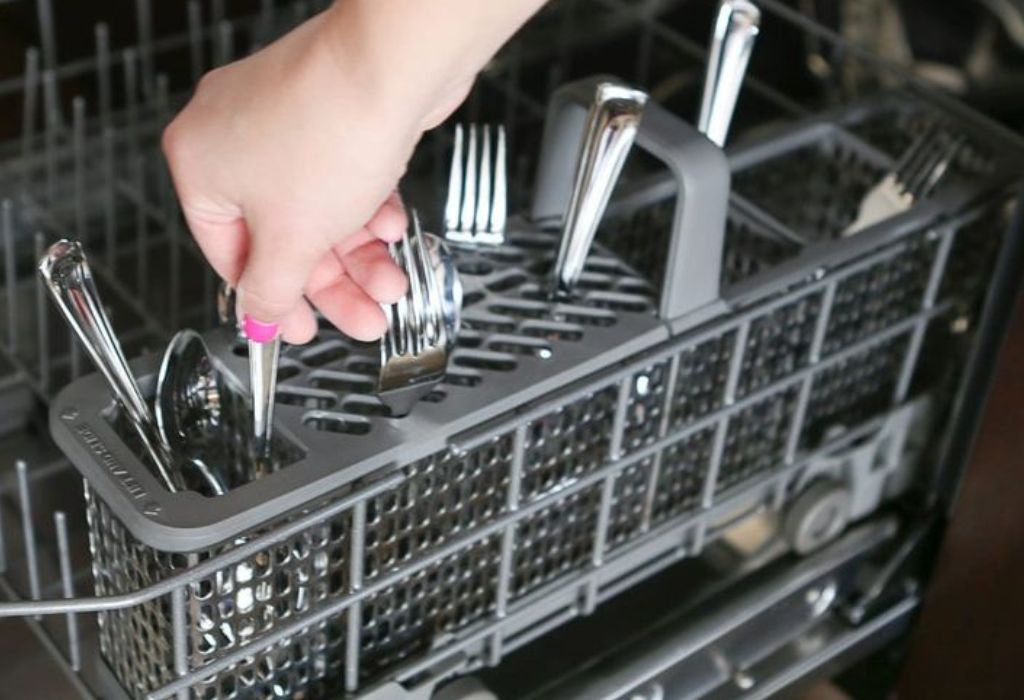
Many modern dishwashers include silverware slots or dividers that automatically separate utensils. Using these dividers helps maintain proper distance between pieces, prevents scratching, and optimizes water flow. They also make unloading more organized and sanitary.
The key takeaway is to load your silverware based on its shape and use. Forks and spoons benefit from alternating directions for cleaning, while knives need careful placement for safety. Once you find a consistent pattern that works, stick to it for perfect results every time.
Sorting and Separating Silverware Before Loading
Before you even open your dishwasher door, a little organization goes a long way. Sorting your silverware before loading may seem unnecessary, but it can completely change your cleaning results. It improves water circulation, prevents overcrowding, and simplifies unloading once the cycle finishes.
Start by dividing your utensils into basic groups — forks, spoons, and knives. This step helps distribute them evenly across the basket and prevents metal-on-metal friction. When utensils of the same type cluster too closely together, they tend to “nest” and shield each other from water jets.
Sorting also allows you to balance the weight of the basket. Heavier spoons and knives can tilt the compartment if loaded unevenly, blocking the lower spray arm from spinning freely. A balanced basket ensures water and detergent reach every corner during the cycle.
It’s tempting to toss all utensils together after a meal, but that habit often leads to uneven cleaning. Food particles from one piece can stick to another, especially if they’re made of different metals. A quick pre-sort reduces this problem and helps detergent perform better.
If your dishwasher includes a removable flatware tray instead of a basket, sorting becomes even more useful. You can line up utensils side by side without stacking them, ensuring each piece gets direct contact with spray water. Flat trays are perfect for precise organization and easier unloading.
When placing sorted utensils into the basket, alternate the direction of each type. For example, put one fork handle up and the next handle down. This alternating method prevents the utensils from sticking together while maximizing cleaning efficiency.
Avoid mixing metals such as stainless steel and silver-plated pieces in the same section. When different metals touch during hot cycles, they can cause chemical discoloration or dark spots. Keeping them separate preserves their shine and prevents long-term corrosion.
Taking a few extra seconds to sort your silverware before washing is a small effort with big rewards. It keeps utensils cleaner, avoids frustrating rewash cycles, and turns the post-dishwashing unload into a quick, organized task.
Best Placement for the Silverware Basket
Not every dishwasher has the same silverware basket location, but its position makes a big difference in cleaning results. Some models have it attached to the door, while others place it along the front or middle of the lower rack. Understanding where yours sits helps you optimize both water flow and detergent coverage.
The ideal basket position depends on your dishwasher’s spray arm design. The lower spray arm sends water upward, and utensils must be placed where that stream can hit them directly. If the basket blocks the arm or sits too close to the wall, some utensils may stay dirty after the wash.
If your dishwasher allows you to move the basket, place it near the center of the bottom rack. The middle position offers balanced exposure to both top and bottom spray arms. It ensures forks, spoons, and knives get equal cleaning power without water being deflected by nearby dishes.
Dishwashers with removable baskets give you more flexibility. When cleaning heavily soiled loads, move the basket slightly forward or sideways to improve water circulation. Just make sure it’s locked securely before starting the cycle so it doesn’t shift or rattle during washing.
For dishwashers with door-mounted baskets, check that utensils don’t interfere with detergent dispensers. If a long-handled spoon or knife rests near the soap door, it might block the detergent from opening fully. Leaving a little clearance space guarantees proper detergent release.
In some newer models, the basket can split into smaller sections that fit on either side of the rack. Using this feature helps distribute utensils evenly and reduces clumping. It also makes unloading faster since similar items stay grouped together.
If your dishwasher has a third-level flatware tray, that’s often the best spot for silverware. Laying utensils flat prevents scratching and allows hot air to dry everything evenly. The top tray also avoids the water pooling that sometimes happens in bottom baskets.
The correct basket position might seem minor, but it can dramatically improve cleaning performance. When water flows freely and reaches every utensil, you’ll notice shinier forks, spotless spoons, and no more sticky food residue.
Avoiding Common Mistakes When Loading Silverware
Even a top-rated dishwasher can’t fix poor loading habits. Many people unknowingly make small errors that reduce cleaning quality, cause rust, or waste energy. Learning what not to do is just as important as knowing the correct technique.
The most common mistake is overloading the basket. When utensils are too tightly packed, water and detergent can’t reach every surface. This often leaves greasy smudges, stuck-on food, and cloudy stains even after a full cycle.
Another major issue is nesting, especially with spoons. When identical shapes stick together, water cannot circulate between them. To prevent this, alternate directions — one up, one down — and avoid stacking multiple spoons in the same slot.
Some users place dirty utensils facing away from the spray arm. That position prevents water pressure from hitting food particles directly. Always aim the dirtiest ends — the part that touches food — toward the center spray jets for a thorough rinse.
Leaving food residue on silverware before loading also reduces effectiveness. Dried food becomes harder for detergent to break down and can redeposit on other dishes. Quickly rinsing or scraping large bits before washing keeps the entire load cleaner.
Mixing different metals is another easily overlooked mistake. Stainless steel and silver-plated utensils can chemically react under heat and detergent, leading to tarnish or corrosion. Always separate them into different sections or wash silverware by hand.
Ignoring the dishwasher’s capacity is another issue. When other dishes block spray arms or water jets, the silverware basket receives less pressure. Proper spacing and rack arrangement ensure every utensil gets equal access to the water stream.
Lastly, avoid using harsh detergents or abrasive cleaners. These can scratch the finish of fine cutlery or leave dull residues. Stick to dishwasher-safe detergent and, if necessary, use a rinse aid to prevent spotting and dullness.
By avoiding these common mistakes, you protect your silverware and extend your dishwasher’s lifespan. Good habits guarantee spotless results every time — without rewashing, scrubbing, or frustration.
How to Load Specialty Silverware and Utensils
Not all utensils fit neatly into the silverware basket. Specialty tools such as ladles, tongs, serving spoons, spatulas, and small whisks require special care when loading. Placing them incorrectly can block spray arms or prevent other dishes from getting clean.
Large serving spoons and soup ladles should be placed flat on the top rack instead of standing upright. Their long handles can interfere with the rotating spray arms if positioned vertically. Laying them flat ensures even cleaning and prevents accidental jamming.
Tongs should be loaded in an open position to allow water to reach both sides. Closed tongs trap detergent and block rinsing, often leaving greasy spots near the hinges. If your dishwasher has an upper utensil tray, this is the best spot to place them flat.
For silicone or rubber-handled tools, avoid placing them near the heating element. Excess heat can cause warping, discoloration, or a burnt smell. These items clean best on the top rack using a normal wash cycle instead of high-heat drying.
Wooden-handled utensils should never go into the dishwasher. The constant exposure to water and heat causes swelling, cracking, and fading. Always wash them by hand with mild soap and a soft sponge to preserve their shape and finish.
Plastic cooking tools, such as spatulas or measuring spoons, are usually top-rack safe. Placing them on the bottom rack risks melting or deformation from high temperatures. Keep them spaced out to avoid bending under pressure during the drying cycle.
If you have delicate or antique silverware, skip the dishwasher entirely. The detergent and heat can dull the shine, strip patterns, and cause permanent damage. Hand wash these pieces separately, then polish gently with a soft cloth.
Properly loading specialty utensils ensures that every tool, no matter its size or material, comes out spotless and safe. Each piece plays a role in your kitchen routine — taking care of them keeps your dishwasher efficient and your tools long-lasting.
Preventing Rust and Corrosion on Silverware
Even stainless steel, known for its strength and resistance, can develop rust under certain conditions. The combination of heat, water, and metal contact inside a dishwasher creates the perfect environment for corrosion if not managed properly. Knowing how to prevent it keeps your utensils shining like new for years.
The most common cause of rust is trapped moisture. When silverware pieces touch or overlap, water gets stuck between them during the drying cycle. This lingering dampness gradually oxidizes the metal surface, leading to brown or orange spots.
Avoiding metal-on-metal contact is one of the simplest solutions. Load utensils in separate compartments whenever possible, and keep them from clumping together. If your dishwasher has slots for each piece, use them to maintain proper distance and airflow.
Another factor is mixing different metals, such as stainless steel and silver-plated cutlery. When these come into contact in a hot, moist environment, they can trigger a mild electrochemical reaction called galvanic corrosion. To prevent this, always wash silverware types separately or by hand.
Water quality also plays a role in rust formation. Hard water contains minerals that leave deposits on utensils, making rust more likely to appear. Using a rinse aid or installing a water softener minimizes this issue and helps your dishwasher perform more efficiently.
If rust spots do appear, don’t panic — they can usually be removed easily. Make a paste using baking soda and water, gently rub it on the affected areas, and rinse thoroughly. Avoid using steel wool or harsh scrubbers, which can scratch the protective coating of the metal.
Opening the dishwasher door slightly after the drying cycle helps steam escape. This simple habit prevents moisture buildup and keeps your silverware perfectly dry. For extra care, towel-dry any high-end cutlery immediately after unloading.
By understanding the causes and solutions of rust, you not only protect your utensils but also extend your dishwasher’s lifespan. Clean spacing, separate metals, and proper drying will keep your silverware gleaming cycle after cycle.
Best Practices for Even Cleaning and Drying
Getting spotless, streak-free silverware isn’t just about good detergent or water temperature. It’s also about how you load, space, and dry each piece inside the dishwasher. When you follow proper loading techniques, every cycle becomes more efficient and produces a gleaming finish.
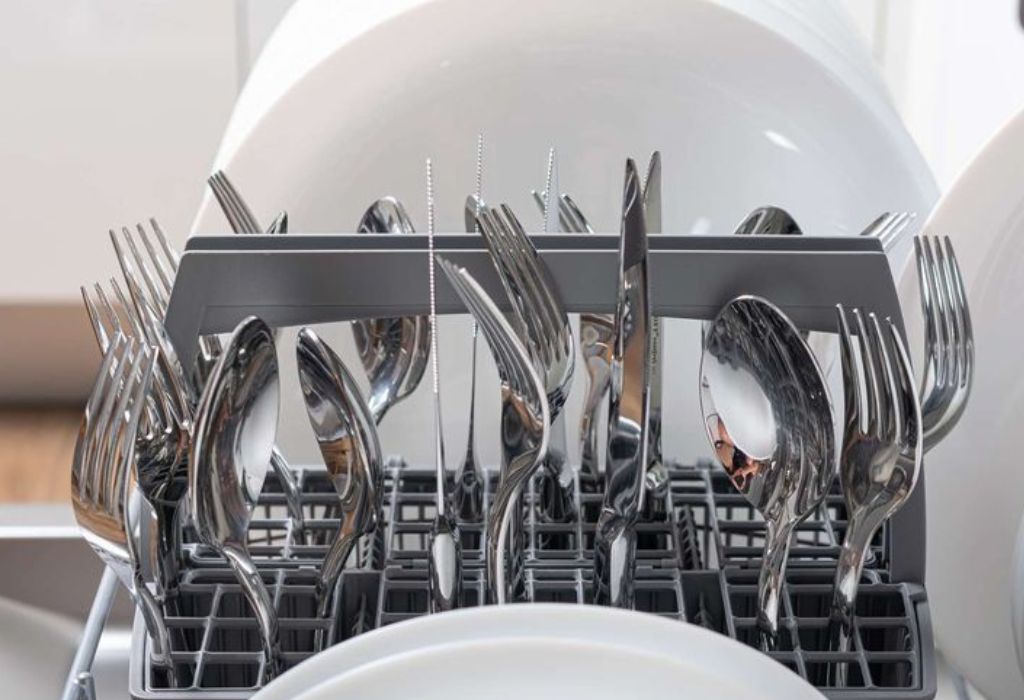
Start with proper spacing between utensils. When forks, spoons, and knives touch, they block water and detergent from reaching every surface. Leaving a little room between each piece allows hot water to circulate and remove food particles more effectively.
Alternate utensil directions whenever possible. For example, load some forks handle up and others handle down to prevent nesting and improve spray coverage. This variation keeps utensils from sticking together and guarantees complete cleaning during each wash.
If your dishwasher includes a heated-dry option, use it occasionally for faster drying. However, relying on it for every cycle can shorten the lifespan of utensils with plastic or wooden handles. Air drying is gentler, saves energy, and prevents heat damage or discoloration.
After a cycle finishes, open the dishwasher door slightly for ten to fifteen minutes. This releases trapped steam, letting condensation evaporate naturally. The result is cleaner, drier silverware with fewer water spots.
Always unload the bottom rack first before the top. Doing so prevents any remaining water droplets from upper-rack items from dripping onto clean silverware below. It’s a small step that makes a big difference in maintaining spotless results.
Using a rinse aid is another simple way to boost drying performance. It breaks the surface tension of water, preventing droplets from clinging to metal surfaces. As a result, utensils dry faster and retain their mirror-like shine without streaks.
Consistency is the secret behind perfectly clean and dry silverware. When you combine even spacing, gentle drying, and mindful unloading, your utensils will always come out sparkling — ready for your next meal.
Cleaning the Silverware Basket Itself
Many people forget that the silverware basket needs cleaning just as much as the utensils inside it. Over time, bits of food, grease, and detergent residue accumulate in its corners and holes. This buildup can block water flow and reduce your dishwasher’s cleaning performance.
Start by removing the basket completely from the lower rack after every few cycles. Check for crumbs or stuck food particles trapped at the bottom. These particles can rot over time and cause unpleasant smells inside your dishwasher.
Rinse the basket under warm running water to loosen dirt. Then use a small brush, such as an old toothbrush, to scrub inside every compartment. Focus especially on the tiny holes where residue often collects and hardens.
For deeper cleaning, soak the basket in a solution of one part vinegar and two parts warm water for about 15 minutes. Vinegar naturally breaks down mineral deposits and kills bacteria without damaging the plastic. After soaking, rinse thoroughly and let it air dry before placing it back.
Avoid using bleach or harsh chemicals, as they can weaken plastic and leave strong odors. If your basket is stainless steel, mild soap and water are more than enough. Always ensure the basket is fully dry to prevent rust on metal parts or mold on plastic.
Inspect the basket regularly for cracks or broken dividers. Damaged compartments can let utensils slip through, block spray arms, or scratch other dishes. Replacing a worn basket immediately helps maintain optimal cleaning performance.
Cleaning the basket once a month keeps your dishwasher hygienic and efficient. When the basket is clean, water circulates better, utensils dry faster, and your entire dishwasher runs more smoothly. It’s a small maintenance habit that makes a big difference in the long run.
Dishwasher FAQs: The Right Way to Load Silverware
Should silverware handles face up or down?
Handles facing down usually give a deeper clean since the food end faces the spray jets. However, knives should always be handle up to prevent injuries when unloading. The best method is to alternate handles for even cleaning and safety.
Can I mix silver and stainless steel utensils in the same load?
It’s better not to. When different metals touch in the dishwasher’s hot, moist environment, they can react and cause tarnish or discoloration. Wash silver-plated utensils separately to maintain their shine.
Why do my spoons stay dirty after washing?
They may be nesting together, which blocks water and detergent flow. Alternate their direction and spread them apart in the basket. This ensures spray jets reach both sides for a complete clean.
Is it okay to wash knives in the dishwasher?
Table knives are generally fine, but sharp kitchen knives should be washed by hand. The heat and detergent can dull the edges and loosen handles over time. Hand washing protects their precision and extends their lifespan.
Why does my silverware still have water spots?
Spots appear when rinse aid isn’t used or when utensils are too close together. Add a rinse aid and open the door slightly after the cycle to release steam. This allows water to evaporate naturally, reducing spots and streaks.
Should I rinse silverware before putting it in the dishwasher?
Lightly scraping off food debris is helpful, but pre-rinsing isn’t always necessary. Modern detergents are designed to break down food particles effectively. Just avoid letting food dry completely on utensils before loading.
Can I put plastic-handled cutlery in the dishwasher?
Yes, but only on the top rack away from heating elements. High heat can melt or warp plastic handles. Gentle cycles and air drying work best for these utensils.
Why does my dishwasher smell after washing silverware?
Food particles trapped in the basket or filter often cause lingering odors. Clean both parts regularly with warm water and vinegar. Leaving the door slightly open after washing also helps reduce moisture buildup.
What’s the safest way to load children’s cutlery?
Always place children’s utensils with handles up to avoid sharp ends facing upward. Use the basket’s dividers to keep small pieces from falling through. Mild cycles are ideal for cleaning lightweight or colorful plastic sets.
How often should I clean my silverware basket?
Clean it once every few weeks or whenever you notice grime buildup. A clean basket prevents cross-contamination and ensures proper water flow. Regular maintenance keeps both your dishwasher and silverware performing perfectly.
Conclusion
Loading silverware in a dishwasher may appear simple, but it’s a precise balance of spacing, direction, and care.
Every utensil you place determines how efficiently your dishwasher performs. A well-arranged basket ensures your forks, spoons, and knives emerge spotless after every cycle.
Once you understand how water moves and heat circulates, the process becomes logical. Dirty ends should always face the spray arms, and spacing should allow jets to reach every surface. Small adjustments like alternating spoons or separating metals can make a huge difference.
Safety is just as important as cleanliness. Knives must always be placed handle-up to prevent cuts, while forks and spoons can alternate directions for balanced washing. By thinking about both cleaning and safety, you get flawless results without risking injury.
Regular maintenance also matters more than most people realize. Cleaning the basket, using a rinse aid, and leaving space for airflow keeps your silverware bright and your dishwasher running smoothly. A neglected basket can undo all the effort of proper loading.
Using rinse aids, moderate heat settings, and a short door-open drying period prevents water spots and rust. These habits protect not only your utensils but the inner parts of your dishwasher. Careful handling transforms a routine chore into an efficient system.
Over time, these practices become automatic. You’ll find yourself loading faster, using less detergent, and getting consistent sparkle with every wash. Clean dishes will no longer be a matter of chance but a predictable, satisfying result.
When you master the art of loading silverware, you save time, energy, and frustration. Every meal ends with the comfort of knowing your dishwasher will do its job perfectly.
Precision, patience, and awareness are all it takes to achieve professional-level results right in your own kitchen.

I’m Emma J. Caldwell, the founder, lead writer, and home-cooking enthusiast behind KitchenGuideCo.com. With a background in culinary arts and over a decade of cooking experience in both professional and personal kitchens, I created this platform to demystify recipes, offer smart kitchen gadget reviews, and guide readers through meal prep with confidence and clarity.