Many people look for quick ways to clean dirty shoes, especially when mud, sweat and stains build up faster than they can scrub them. The dishwasher seems like a tempting shortcut because it blasts items with hot water at high pressure and removes dirt without physical effort.
For someone who is tired, busy or simply looking for convenience, placing shoes in a dishwasher might sound like a creative solution.
However, this idea creates more problems than it solves once the cycle actually starts. Shoes are made of delicate materials such as glue, foam, rubber and fabric, all of which react poorly to intense heat and strong detergents.
The dishwashing environment is far harsher than most people realize, and it can warp, crack or melt important parts of the shoes.
Some people online claim they have washed shoes successfully in their dishwasher, but these cases depend heavily on the shoe type and the dishwasher model.
What works once under special conditions rarely works consistently. Without understanding the risks, homeowners may ruin their shoes permanently and even damage their dishwasher.
This guide explains everything clearly so you can make a safe and informed decision. From understanding why shoes react badly to dishwashers to exploring safe cleaning alternatives, each section gives complete and practical information.
By the end, you will understand why dishwashers and shoes simply do not belong together and what you should do instead.
Why People Consider Putting Shoes In The Dishwasher
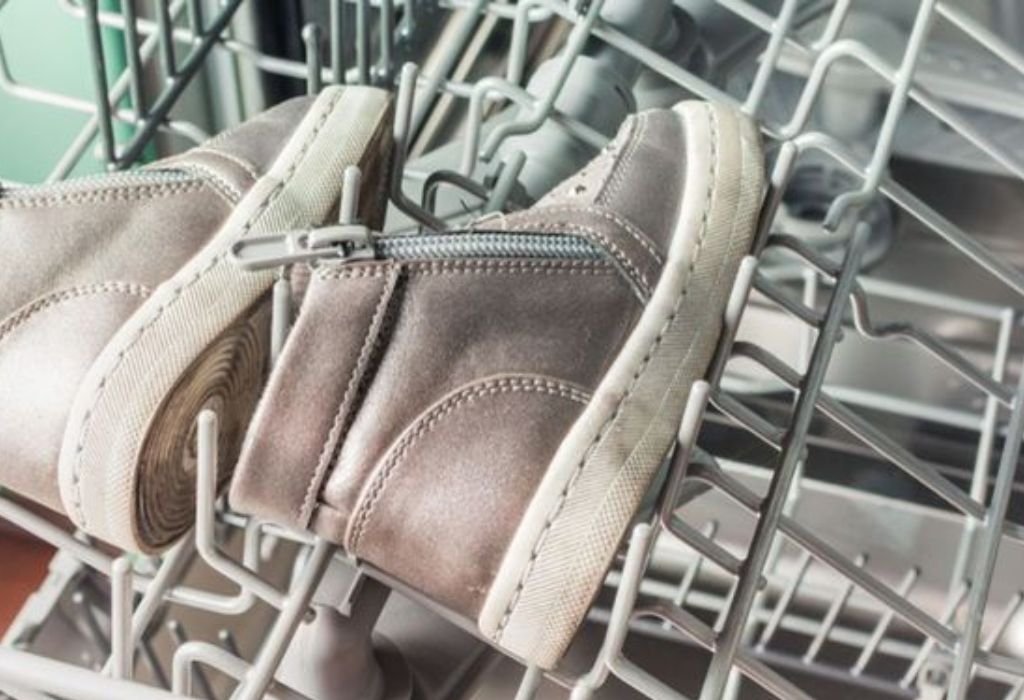
People often look for quick ways to clean shoes because hand scrubbing takes time, effort and patience. When shoes get covered in dirt or stains, the thought of letting a machine handle the washing feels easier and more convenient.
Dishwashers offer high pressure water jets, which many believe can cut through mud and grime effortlessly.
Dishwashers also appear safe because they clean items without direct scrubbing. Many assume that if a dishwasher can clean greasy dishes, it should handle dirty shoes just as well. This assumption makes the dishwasher seem like a powerful all in one cleaning tool.
Some individuals see videos or online posts claiming success with this method. These posts show shoes coming out clean, which gives the impression that the process is safe. However, what the videos do not show is how quickly the shoes degrade afterward.
People also misunderstand how durable shoes really are. Because shoes endure constant outdoor wear, many assume they can withstand harsh cleaning conditions. In reality, shoe construction involves materials far more delicate than they seem.
Another reason people try the dishwasher method is to remove bad odor. Dirty shoes often develop strong smells, and many believe dishwashers sanitize items effectively. However, dishwashers sanitize only hard kitchen materials, not fabric or foam.
Dishwashers also seem appealing because they use hot water, which some associate with deep cleaning. But this high heat becomes destructive when applied to glues, rubber and synthetic materials inside shoes. The result is damage that cannot be reversed.
What Happens To Shoes Inside A Dishwasher
A dishwasher exposes items to temperatures far higher than washing machines. Shoes placed inside absorb this heat quickly, causing the glue to melt and weaken. Once glue softens, the shoe layers start separating immediately.
Dishwasher jets use extreme pressure, far more powerful than people expect. These jets shoot water at angles meant for hard plates, not soft footwear. Shoes bounce around violently when hit by these jets.
Detergent used in dishwashers is not intended for fabric or rubber. The formula contains chemicals meant to break down food grease. When these chemicals touch shoe materials, discoloration and material thinning often follow.
Most dishwashers include a dry cycle that uses very hot air. This heat is enough to warp fabric, deform foam padding and shrink rubber soles. Shoes lose their original shape and support after drying.
The high heat causes the material inside shoes to hold moisture differently. Foam and synthetic fibers become brittle when drying too fast. This leads to splitting and cracking.
Dirt inside the shoes also gets released into the dishwasher water. Mud, sand and bacteria flow into the machine’s filter system. These contaminants can clog parts of the dishwasher and reduce its cleaning power.
Types Of Shoes That Get Damaged Inside A Dishwasher
Canvas shoes absorb water deeply, and once soaked, they lose structural strength. When high heat dries them, they shrink noticeably. Their glue also dissolves easily under heat.
Leather shoes suffer even more damage because leather reacts badly to water. Dishwashers wash away essential oils inside the leather. Without those oils, leather cracks, hardens and becomes unusable.
Rubber soles deform under high heat. They soften first, then bend or melt depending on the temperature. Once they warp, they cannot return to their original shape.
Shoes made of synthetic mesh or foam padding degrade quickly in a dishwasher. The delicate fibers tear under pressure and melt under heat. Many sneakers rely on foam layers that break apart instantly.
Shoes with metal parts such as eyelets or zippers also suffer damage. Moisture and detergent cause metal corrosion that spreads across the shoe surface. Rust ruins both appearance and durability.
Shoes with glued layers fall apart rapidly. Dishwashers dissolve adhesive more aggressively than people realize. Once adhesive weakens, soles detach from the upper portion.
Do canvas shoes shrink in the dishwasher?
Yes, canvas shrinks significantly under dishwasher heat.
Can rubber soles melt in the dishwasher?
Yes, high heat often melts or deforms rubber soles.
Will leather shoes get damaged in a dishwasher?
Yes, leather cracks and loses natural oils immediately.
Can dishwasher detergent discolor shoes?
Yes, detergents stain and fade shoe materials quickly.
Do synthetic shoes survive dishwashers?
No, synthetic mesh and foam break down very easily.
Why Dishwashers Are Not Designed For Shoe Cleaning
Dishwashers are built to clean hard kitchen surfaces, not soft absorbent materials. Plates and glasses withstand intense heat, but shoes cannot. The high temperature breaks down fabrics, adhesives and rubber.
Dishwasher racks are shaped to hold dishes safely. Shoes do not sit correctly on these racks. They shift around during cycles and collide with the machine walls.
Dishwasher jets spray high pressure water to clean grease. For shoes, this water pressure creates structural damage. The force bends and twists shoe parts that were never designed to handle such conditions.
Dishwasher detergent is made for ceramic, metal and glass. Its chemical strength is unnecessary for shoes. Shoes absorb these chemicals and degrade quickly.
The drying cycle causes additional harm. Hot air melts inner soles and foam padding. This creates irreversible deformities.
Dirt from shoes can harm the dishwasher itself. Mud and sand enter the spraying system. This reduces future cleaning efficiency for dishes.
Risks To Your Dishwasher When Washing Shoes
Shoes introduce dirt into the dishwasher that can clog the filter. Mud, small stones and debris become trapped inside the drain system. This restricts water flow and reduces cleaning performance.
Small stones inside shoes may break loose and get lodged inside spray arm holes. Once stuck, they prevent proper water pressure from reaching dishes. Removing these stones becomes difficult.
Soles and rubber pieces break off shoes during washing. These soft particles melt slightly and stick to heating elements. Residue buildup causes long term dishwasher damage.
Dishwasher racks can bend under shoe weight. Shoes are heavier than plates, especially when soaked. Bent racks no longer hold dishes securely.
Odors from shoes linger inside the dishwasher. Shoes contain sweat bacteria that spread during dishwasher cycles. These odors remain even after washing dishes.
Detergent mixed with shoe dirt becomes a thick residue. This sticky mixture coats the drains. Cleaning the dishwasher manually becomes necessary.
Is It Ever Safe To Put Any Shoes In A Dishwasher
Most shoes should never enter a dishwasher because the materials cannot handle the pressure, heat and detergent. Even shoes labeled as washable do not mention dishwashers. They refer only to gentle washing machines or hand washing.
Certain waterproof shoes may survive mild exposure to water, but dishwasher heat still damages them. Even molded rubber shoes soften under extreme heat. Their structure weakens over time.
Manufacturers warn against dishwashers in their care instructions. Companies test shoes extensively and understand their limits. Their recommendations should always be followed.
Even if a shoe survives one dishwasher cycle, it suffers silent long term damage. Adhesives weaken slowly. Cushioned layers compress and lose support.
The risk extends to the dishwasher as well. Dirt and debris harm internal parts even if the shoe appears clean afterward. Shoes simply do not belong in this machine.
Safer cleaning methods exist for every shoe type. These methods protect both the footwear and household appliances. Choosing them reduces long term costs and frustration.
Are waterproof shoes safe in dishwashers?
No, waterproof materials still get damaged by high heat.
Is dishwashing safer without detergent?
No, heat and pressure still harm shoes even without detergent.
Can dishwasher cleaning sanitize shoes?
No, sanitizing temperatures harm shoe components.
Will removing the drying cycle make it safer?
No, wash cycles alone are enough to cause damage.
Do any brands recommend dishwasher cleaning?
No, manufacturers strongly discourage it.
Better Alternatives To Washing Shoes In A Dishwasher
Hand washing is the safest method and gives full control over pressure and cleaning intensity. It protects delicate materials and prevents heat damage. Shoes stay structurally intact this way.
Machine washing works for some shoes depending on their label instructions. Using gentle cycles with cold water preserves materials. Machine washing is softer than dishwasher pressure.
Spot cleaning is useful for minor stains. A small brush dipped in soapy water removes dirt effectively. This method avoids soaking the shoe entirely.
Using a mesh laundry bag helps protect shoes in washing machines. The bag prevents excessive movement. Shoes remain supported during the cycle.
Odor eliminating sprays help refresh shoes without water exposure. These sprays kill bacteria and remove bad smells. They also prevent moisture buildup.
Air drying shoes prevents warping and shrinking. Natural drying protects shoe shape. Avoid using dryers or heaters that apply direct heat.
How To Hand Wash Shoes Safely
Start by removing the shoelaces and insoles. These parts collect the most dirt and odor. Washing them separately ensures a deeper clean.
Brush loose dirt off the surface of the shoes. A dry brush removes dust and small debris. Preparing the shoe makes washing easier.
Mix warm water with a mild detergent in a bowl. This mixture cleans gently without damaging material. Harsh chemicals are unnecessary.
Dip a soft brush into the soapy water. Scrub the shoes in small sections. Controlled brushing removes dirt while protecting the fabric.
Rinse using a damp cloth. Avoid fully submerging shoes in water. Excess water damages glue and foam.
Stuff the shoes with paper towels to help them dry evenly. This also maintains their shape. Change the towels when they become damp.
Let the shoes air dry naturally. Place them in a cool, shaded area. Direct heat shortens shoe lifespan.
Can hand washing damage shoes?
No, gentle hand washing is safe for most materials.
Should I soak shoes in water?
No, soaking weakens glue and fabric.
Is dish soap safe for hand washing?
Yes, mild dish soap works for most shoes.
How long should shoes dry after washing?
Most shoes need one full day to dry completely.
Can I scrub hard for tough stains?
Scrub gently to avoid damaging the material.
How To Machine Wash Shoes Safely
Always check the care label before using a washing machine. Some shoes cannot handle machine cycles. Labels give the correct instructions.
Remove insoles and laces before washing. Insoles absorb water and become misshapen. Laces wash better separately.
Place shoes in a mesh laundry bag. The bag protects them during spinning. Shoes stay secure inside.
Wash using a gentle cycle with cold water. Cold water preserves glue and fabric. Hot water causes shrinking and deformation.
Add towels to the load to reduce impact. Towels cushion the shoes. This prevents banging inside the machine.
Use mild detergent instead of strong chemicals. Gentle soaps preserve color and material. Harsh detergents weaken shoe structure.
Air dry shoes after washing. Avoid dryers. Dryers melt glue and warp soles.
How To Remove Shoe Odor Without Dishwashers
Bad odor forms from bacteria growing inside the shoe. Removing odor requires eliminating this bacteria. Dishwashers cannot do this safely.
Sprinkle baking soda inside the shoes. Baking soda absorbs moisture and odor. Leave it overnight for best results.
Use odor eliminating sprays designed for footwear. These sprays kill bacteria without harming materials. They freshen the shoe interior quickly.
Place the shoes in sunlight for a short time. Sunlight kills bacteria naturally. However, avoid long exposure to prevent fading.
Wash removable insoles separately. They hold most of the odor. Cleaning them improves overall freshness.
Dryer sheets can also help. They add a pleasant scent to shoes. Replace them frequently for consistent freshness.
Does baking soda work for odor removal?
Yes, it absorbs both moisture and odor effectively.
Can I soak shoes to remove odor?
No, soaking causes structural damage.
Do insoles cause most odor?
Yes, insoles trap sweat and bacteria.
Can sunlight remove odor safely?
Yes, but avoid long exposure to prevent fading.
Do odor sprays damage shoes?
No, sprays designed for footwear are safe.
How To Keep Shoes Clean Without Risky Methods
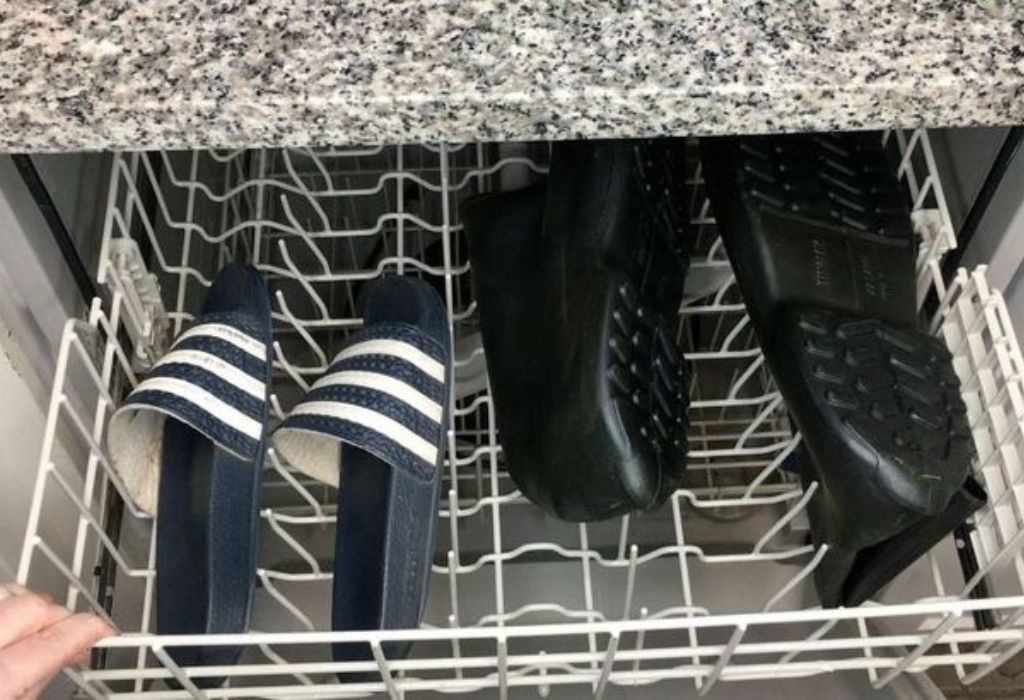
Regular cleaning prevents stains from becoming stubborn. Wipe shoes after outings to remove light dirt. Consistency makes deep cleaning easier.
Use shoe protectant sprays. These sprays repel water and dirt. Protected shoes stay cleaner longer.
Avoid walking in muddy or harsh environments when possible. Mud penetrates deeply into fabric. Reactive cleaning becomes harder.
Store shoes properly in a dry place. Moisture leads to bacteria and odor. Good storage extends shoe lifespan.
Rotate between different pairs of shoes. Wearing the same pair daily reduces drying time. Damp shoes accumulate odor faster.
Clean soles separately from the shoe body. Soles collect outdoor bacteria. Keeping them clean improves hygiene.
Conclusion
Putting shoes in the dishwasher may seem like a quick cleaning shortcut, but it causes significant damage to both the shoes and the dishwasher.
High temperatures, aggressive water pressure and strong detergents ruin glue, fabric, foam and rubber components inside shoes. Even if shoes survive a single cycle, they suffer hidden long term wear that makes them fall apart sooner.
Safer cleaning methods such as hand washing, machine washing with gentle cycles or using odor eliminating sprays provide much better results without risking the shoe’s structure.
These methods protect delicate materials, preserve shoe shape and maintain comfort. They also prevent dishwasher damage caused by dirt, stones and bacteria inside shoes.
By following the detailed cleaning techniques in this guide, you can keep your shoes fresh, clean and long lasting without relying on harmful shortcuts.
Good maintenance habits extend shoe life and save money while avoiding unnecessary appliance repairs. Shoes and dishwashers simply do not mix, and choosing the right method ensures both remain in excellent condition.

I’m Emma J. Caldwell, the founder, lead writer, and home-cooking enthusiast behind KitchenGuideCo.com. With a background in culinary arts and over a decade of cooking experience in both professional and personal kitchens, I created this platform to demystify recipes, offer smart kitchen gadget reviews, and guide readers through meal prep with confidence and clarity.