If a lid doesn’t seal properly, your food is immediately vulnerable to spoilage, rapidly succumbing to bacterial growth, mold, and air exposure. This compromised seal accelerates degradation, leading to lost freshness, flavor, and texture, making it unsafe for consumption. Always ensure a tight seal to protect your culinary creations and prevent waste.
The humble lid. A simple piece of plastic, glass, or metal, often taken for granted. We slap it on containers of leftovers, jars of preserves, and packages of dry goods, assuming it will perform its duty without question.
But what happens if the lid doesn’t seal properly? What are the unseen battles being waged, the silent threats lurking, and the eventual fate of your food when that crucial barrier is compromised?
The consequences are far more significant than a mere spill, extending into realms of food safety, quality, and economic waste. Understanding the critical role of a proper seal is paramount for anyone who stores, preserves, or simply enjoys food.
From the delicate ecosystem within a fermenting jar to the robust protection of a vacuum-sealed bag, the integrity of a lid’s seal is the frontline defense against a multitude of environmental aggressors.
When that seal is weak, broken, or simply non-existent, your food becomes vulnerable. It’s not just about keeping things tidy in the fridge; it’s about preserving nutrients, preventing spoilage, and most critically, safeguarding your health from potentially harmful microorganisms.
The difference between a tightly sealed container and one where the lid doesn’t seal properly can be the difference between a delicious meal tomorrow and a trip to the emergency room.
This comprehensive guide will delve into the intricate world of food sealing, exploring the various ways an improper seal can impact your food, from immediate quality degradation to serious health risks.
We’ll examine the science behind why seals matter, detail the visible and hidden dangers of a compromised lid, and provide practical advice on how to ensure your food remains safe, fresh, and delicious. Let’s uncover the true fate of your food when the lid doesn’t seal properly.
Key Takeaways
- Seal failures: Immediately invite bacteria and rapid spoilage.
- Air exposure: Hastens oxidation, staling, and nutrient loss.
- Food safety risk: Unsealed food poses serious health hazards.
- Discard doubtful food: Prioritize safety; when in doubt, throw it out.
- Verify lid integrity: Always ensure an airtight seal for freshness.
- Avoid food waste: Proper sealing preserves quality and prevents loss.
Quick Answers to Common Questions
Is it safe to eat food if the lid doesn’t seal properly?
If the lid doesn’t seal properly, your food is exposed to air and contaminants, drastically increasing the risk of spoilage and potential foodborne illness. It’s best to err on the side of caution and discard it if you suspect a compromised seal, especially for perishable items.
How does a bad seal affect the quality and texture of my food?
When the lid doesn’t seal properly, moisture can escape or enter, leading to stale crackers, freezer-burned meats, or dry leftovers. Your food will quickly lose its intended texture and fresh taste.
What happens if I store liquids and the lid doesn’t seal properly?
Storing liquids when the lid doesn’t seal properly can lead to messy spills in your fridge or pantry, and the contents can also evaporate, concentrating flavors or drying out your meal. Always double-check liquid containers!
Does an improper seal shorten my food’s shelf life?
Absolutely! An unsealed lid means air can circulate freely, accelerating oxidation and bacterial growth, dramatically shortening how long your food stays fresh and edible. This is why a good seal is crucial for preserving food.
How can I tell if the lid didn’t seal properly?
You can often tell if the lid doesn’t seal properly by a loose fit, condensation inside, or if the food looks dry or discolored prematurely. For jars, listen for that characteristic “pop” when you open a good seal!
📑 Table of Contents
- The Science of Sealing: Why It Matters
- Immediate & Visible Consequences of a Poor Seal
- The Hidden Dangers: Food Safety Risks
- Economic and Environmental Impact
- Common Scenarios Where Lids Fail and How to Spot Them
- Ensuring a Proper Seal: Practical Tips and Best Practices
- Food Storage Shelf Life Comparison: Proper vs. Poor Seal
- Conclusion
The Science of Sealing: Why It Matters
At its core, food preservation is a battle against time and microorganisms. An effective seal acts as an impermeable barrier, controlling the environment around the food. When the lid doesn’t seal properly, this crucial control is lost, initiating a cascade of detrimental effects.
What is an Airtight Seal?
An airtight seal, also known as a hermetic seal, is a barrier that prevents the exchange of gases, particularly oxygen, and moisture between the food inside a container and the external environment. This creates a modified atmosphere that is inhospitable to many spoilage agents.
For instance, in canning, a vacuum is created, drawing the lid down and forming an extremely tight seal that keeps air out and preserves the contents. When a lid doesn’t seal properly, this vacuum is either not formed or is quickly broken, allowing air to rush in.
The Enemies of Food Preservation
Several factors contribute to food spoilage, all of which are exacerbated when the lid doesn’t seal properly:
- Microorganisms: Bacteria, molds, and yeasts are ubiquitous. They thrive on food, breaking it down and producing byproducts that cause off-flavors, odors, and visible deterioration. Most spoilage bacteria and molds require oxygen to grow. An airtight seal starves them of this essential element. If the lid doesn’t seal properly, these microbes have an open invitation.
- Enzymes: Naturally occurring enzymes within food continue to function after harvesting or preparation, leading to ripening, browning, and eventually, degradation. While sealing doesn’t stop enzyme activity entirely, it can slow it down by limiting exposure to oxygen and maintaining a consistent temperature.
- Oxidation: Oxygen reacts with fats, vitamins, and pigments in food, causing rancidity, loss of nutritional value, and discoloration (e.g., apples turning brown). A proper seal minimizes oxygen exposure, dramatically slowing down oxidative processes. When a lid doesn’t seal properly, food is exposed to a continuous supply of oxygen, accelerating these reactions.
- Moisture Loss/Gain: Foods can dry out (dessication) or absorb excess moisture, altering their texture and making them unappetizing. A good seal maintains the food’s inherent moisture content or protects dry goods from environmental humidity.
How a Proper Seal Protects Food
By creating a controlled environment, a proper seal effectively:
- Restricts Oxygen: Halts or significantly slows the growth of aerobic spoilage organisms and oxidative reactions.
- Maintains Moisture Levels: Prevents dehydration or the uptake of unwanted moisture.
- Forms a Physical Barrier: Keeps out dust, insects, and other contaminants.
- Retains Aromas and Flavors: Prevents desirable volatile compounds from escaping and undesirable external odors from entering.
When the lid doesn’t seal properly, all these protective mechanisms fail, leaving your food vulnerable.
Immediate & Visible Consequences of a Poor Seal
The moment a lid doesn’t seal properly, the clock starts ticking faster on your food. Many of the initial signs are visual or sensory, indicating a rapid decline in quality and freshness.
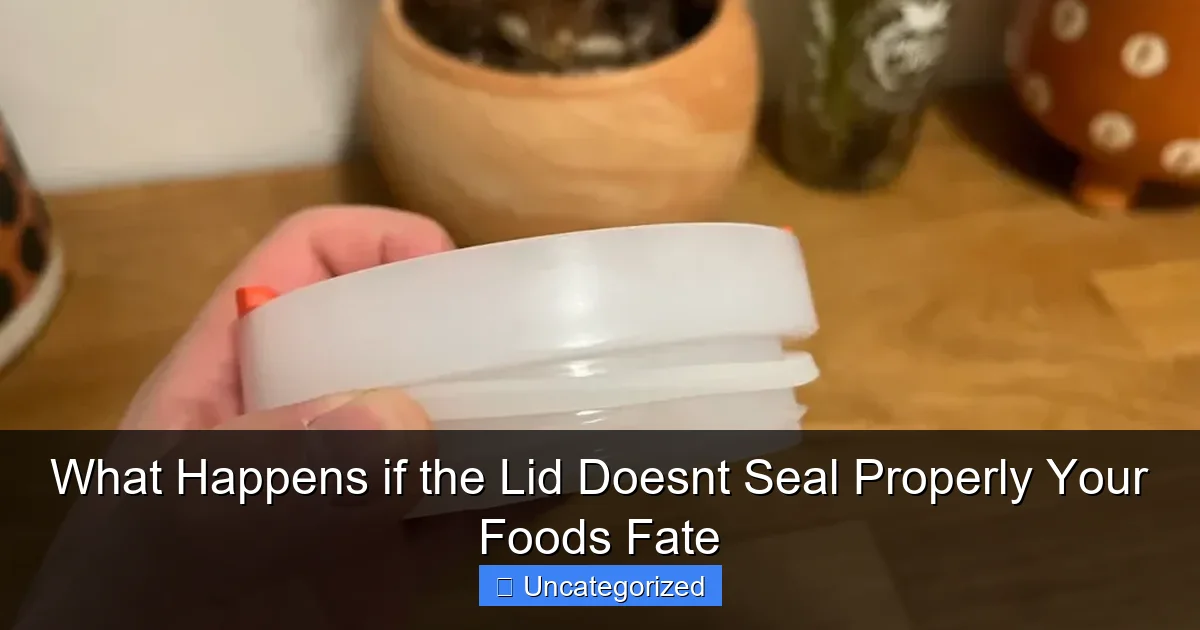
Image source: huntingwaterfalls.com
Accelerated Spoilage
Perhaps the most obvious sign when the lid doesn’t seal properly is the rapid onset of spoilage. Molds, yeasts, and bacteria, now with access to oxygen, begin to multiply quickly. You might see:
- Mold Growth: Fuzzy, discolored patches (green, white, black) appearing on surfaces. This is very common when a lid doesn’t seal properly, especially on foods with high moisture content or those stored in humid environments.
- Yeast Fermentation: A sour smell, bubbling, or slight alcoholic odor, particularly in fruit-based items or sugary liquids.
- Discoloration: Foods may brown or blacken faster due to oxidation (e.g., guacamole, cut apples) or develop unnatural hues as microbes grow.
- Sliminess: A tell-tale sign of bacterial growth, particularly on meats and dairy products.
Loss of Freshness and Texture
A poor seal directly impacts the sensory appeal of food, often making it unappetizing even before visible spoilage. When the lid doesn’t seal properly:
- Drying Out (Dessication): Foods like cut vegetables, cheeses, and leftovers quickly lose moisture, becoming hard, brittle, or rubbery. This is particularly noticeable with freezer burn when air pockets form because the lid doesn’t seal properly or the packaging is inadequate.
- Staleness: Baked goods (bread, cookies) rapidly go stale as moisture migrates out and starch molecules recrystallize.
- Sogginess: Crisp foods like crackers or chips absorb ambient moisture, losing their crunch and becoming soft and unappealing.
- Wilting: Leafy greens quickly wilt and become limp due to moisture loss.
Odor Transfer and Absorption
Refrigerators are notorious for housing a variety of strong smells. When the lid doesn’t seal properly, food in that container is not only releasing its own odors into the fridge but also absorbing the odors of other foods. Your delicate dessert might end up tasting faintly of garlic or onion, an unpleasant surprise that highlights the importance of a tight seal.
Leakage and Mess
While perhaps the least dangerous, it’s certainly the most frustrating immediate consequence. Liquid contents from a container where the lid doesn’t seal properly can spill out, creating a messy situation in your fridge, cooler, or pantry. This not only wastes food but also necessitates cleanup and can lead to cross-contamination if the spilled liquid touches other food items.
The Hidden Dangers: Food Safety Risks
Beyond visible spoilage and diminished quality, the failure of a lid to seal properly can pose serious, sometimes invisible, threats to food safety. These risks are often more concerning because they might not manifest with obvious signs of spoilage, yet can lead to severe foodborne illness.
Bacterial Contamination
While many spoilage bacteria are aerobic (requiring oxygen), some dangerous pathogens can grow even with limited oxygen or are facultative (can grow with or without oxygen). When the lid doesn’t seal properly, it’s an open invitation for various harmful bacteria:
- Listeria monocytogenes: Can grow at refrigerator temperatures and is particularly concerning in ready-to-eat foods.
- Salmonella and E. coli: Often associated with raw poultry, meat, and produce. An unsealed lid can allow these to spread if the food is not handled correctly or if cross-contamination occurs.
- Staphylococcus aureus: Can produce toxins that are heat-resistant, meaning even cooking the food might not eliminate the danger if it has been allowed to grow in a poorly sealed environment.
These bacteria can multiply rapidly on nutrient-rich foods when the lid doesn’t seal properly and storage conditions (like temperature abuse) are favorable, leading to gastrointestinal distress, fever, and more severe complications.
Botulism Risk in Canning
This is perhaps the most severe food safety risk associated with an improper seal. Clostridium botulinum is an anaerobic bacterium, meaning it thrives in oxygen-free environments.
It produces a potent neurotoxin that can be fatal. In home canning, if the lid doesn’t seal properly, or if proper processing temperatures and times aren’t met, a vacuum might still form, but the spores might not be destroyed. This creates a perfect low-oxygen environment for toxin production.
The dangerous aspect is that food contaminated with botulism toxin might not show any signs of spoilage (no bad smell, no mold, no discoloration). Therefore, if a home-canned jar’s lid doesn’t seal properly, or if the seal is compromised, the contents must be discarded immediately and safely.
Fermentation Failures
For fermented foods like sauerkraut, kimchi, or kombucha, a proper seal (or controlled air exchange via an airlock) is crucial. When the lid doesn’t seal properly, unwanted aerobic molds and yeasts can grow, leading to undesirable flavors, slimy textures, or even toxin production.
The “kahm yeast” often seen on ferments is an aerobic yeast that isn’t typically harmful but indicates oxygen exposure and can impart off-flavors. More concerning is mold, which can produce mycotoxins. A compromised seal disrupts the intended microbial balance, often resulting in food that must be discarded.
Cross-Contamination
When the lid doesn’t seal properly, juices from raw meats or poultry can drip onto other foods in the refrigerator, spreading harmful bacteria. Similarly, allergens can transfer from one food to another if an unsealed container allows contact. This silent transfer of pathogens or allergens is a significant risk that a proper seal completely mitigates.
Economic and Environmental Impact
The consequences of a lid that doesn’t seal properly extend beyond personal health and immediate food quality. There’s a broader impact on your wallet and the planet.
Food Waste
This is the most direct economic consequence. Food that spoils prematurely because the lid doesn’t seal properly ends up in the trash. This represents a direct financial loss for every ingredient purchased, every meal prepared, and every snack stored.
Imagine throwing out a whole batch of home-canned tomatoes because the lids didn’t seal properly, or tossing a half-eaten container of leftovers after just a day. This adds up significantly over time, impacting household budgets and contributing to a larger global problem.
Resource Waste
Every piece of food represents a significant investment of resources: water, energy, labor, and land for its production, harvesting, processing, and transportation. When food is wasted due to a lid that doesn’t seal properly, all those resources are also wasted. This contributes to a larger environmental footprint, exacerbating issues like greenhouse gas emissions and water scarcity.
Packaging Waste
While often reusable, containers themselves have an environmental cost. If food needs to be discarded, the container might also be damaged or deemed unusable, leading to more plastic or glass waste. Furthermore, if you’re constantly replacing spoiled food, you’re also likely purchasing more often, potentially leading to more packaging waste from newly bought items.
Health Costs
Should an improperly sealed food lead to foodborne illness, there are direct and indirect health costs. These include medical expenses (doctor visits, medication, hospital stays), lost wages due to illness, and the significant discomfort and potential long-term health issues associated with severe food poisoning. These costs underscore the importance of ensuring a tight seal every time.
Common Scenarios Where Lids Fail and How to Spot Them
Lid seal failures aren’t always obvious. Knowing where and how to check can save your food and your health. Here are common scenarios where the lid doesn’t seal properly:
Canning Jars
Canning relies entirely on a vacuum seal. If the lid doesn’t seal properly:
- No “Ping” Sound: After processing and cooling, lids should make a distinct “ping” sound as the vacuum forms. If you don’t hear it, the lid hasn’t sealed properly.
- Dome/Flexing Lid: A properly sealed lid should be concave (curved inwards) and not flex when pressed. If it’s flat, bulges upwards, or springs back when pressed, the lid hasn’t sealed properly.
- Loose Lid: If the band easily spins or the lid can be lifted off after cooling, there’s no seal.
- Bubbles/Leakage: Continuous bubbles rising inside the jar after processing, or any signs of leakage, indicate a failed seal.
Tip: Always remove the bands after 12-24 hours. A lid that doesn’t seal properly will likely lose its seal when the band is removed. Store jars without bands to easily spot seal failures.
Refrigerator Containers
Everyday containers are prone to issues if the lid doesn’t seal properly:
- Worn Gaskets: Many containers have silicone or rubber gaskets. These can wear out, crack, or become detached, preventing a tight seal.
- Warped Plastic: Dishwasher heat can warp plastic containers or lids, making them incompatible. If the lid doesn’t fit snugly, it won’t seal.
- Improper Fit/Latching: Some lids require specific alignment or secure latching mechanisms. If not closed correctly, the lid doesn’t seal properly.
- Cracks or Damage: Visible cracks in the container or lid can compromise the seal.
Tip: When closing, press down firmly on the center of the lid to expel air, then secure edges. Periodically check gaskets for damage.
Freezer Bags/Containers
Freezer burn is the primary indicator of a poor seal in the freezer:
- Ice Crystals on Food: These form when moisture sublimates from the food surface into air pockets. If the lid doesn’t seal properly or the bag isn’t airtight, freezer burn is inevitable.
- Discoloration/Dry Patches: Food will look faded, leathery, or have dry, white patches.
- Air Pockets: Visible air inside a freezer bag or container means oxygen is present and the food is vulnerable.
Tip: Squeeze as much air as possible out of freezer bags before sealing. For containers, ensure they are filled appropriately to minimize air space.
Fermentation Crocks/Airlocks
Fermentation requires a barrier to keep out unwanted microbes while allowing fermentation gases to escape. If the lid doesn’t seal properly:
- Lack of Bubbling in Airlock: If your airlock isn’t bubbling, it could mean the seal isn’t tight, and gases are escaping elsewhere.
- Visible Mold/Kahm Yeast: The presence of mold or a thick white film (kahm yeast) on the surface of your ferment indicates oxygen exposure from a poor seal.
- Off-Odors: Unusual or putrid smells can signal contamination due to an unsealed environment.
Tip: Ensure airlocks are properly seated and filled with water. Check rims of crocks for debris that could prevent a tight fit.
Commercial Packaging
Even store-bought items can suffer if their seals are compromised:
- Torn or Damaged Seals: Check for tears on vacuum-sealed meats, safety seals on jars, or broken tamper-evident bands.
- Bloated Packaging: For perishable items, a bulging package can indicate gas production from bacterial growth, suggesting a compromised seal or spoilage.
- Vacuum Loss: If a vacuum-sealed item feels loose and soft instead of taut, its seal might be compromised.
Tip: Always inspect packaging before purchasing. If the lid doesn’t seal properly from the get-go, avoid buying it.
Ensuring a Proper Seal: Practical Tips and Best Practices
Preventing the issues that arise when the lid doesn’t seal properly is often simple common sense combined with attention to detail. Here are practical tips to ensure your food is always protected:
Choosing the Right Container
- Material Matters: Glass containers with rubber or silicone gaskets generally offer the best long-term airtight seals for refrigeration. High-quality plastic containers also work well but can warp over time.
- Lid Type: Snap-on lids, screw-on lids, and clamp-down lids all have their pros and cons. Ensure the lid design is appropriate for the food and storage duration.
- Size: Use a container that is appropriately sized for the food item, minimizing empty air space, especially for items prone to oxidation or freezer burn.
Preparation is Key
- Clean Rims: Before applying any lid, ensure the rim of the container is absolutely clean and free of food particles, grease, or liquids. Even a tiny crumb can prevent an airtight seal. This is crucial for canning jars and everyday storage alike.
- Proper Filling: Don’t overfill containers, as this can prevent the lid from seating properly. For canning, leave appropriate headspace.
- Dry Food Surfaces: For dry goods, ensure the food itself is dry before sealing to prevent moisture buildup and potential mold growth.
Inspection and Maintenance
- Check Lids and Gaskets: Regularly inspect your container lids and any accompanying gaskets for cracks, warping, tears, or signs of wear. Replace them if compromised. A lid that doesn’t seal properly due to damage is useless.
- Container Integrity: Examine the container itself for chips, cracks, or warping that could affect the seal.
- Test the Seal: For containers with latching mechanisms, ensure they click securely into place. For canning jars, always perform the “ping” and “press” tests after cooling.
Storage Conditions
- Temperature Control: Always store perishable foods at appropriate temperatures (refrigeration below 40°F/4°C, freezing below 0°F/-18°C), even with a perfect seal. A good seal slows spoilage but doesn’t stop it indefinitely.
- Minimize Opening: Limit how often you open sealed containers, as each opening introduces fresh air.
When in Doubt, Throw it Out
This is the golden rule of food safety. If you suspect the lid didn’t seal properly, or if there are any signs of spoilage (unusual odors, discoloration, mold, sliminess), it’s always safer to discard the food than to risk foodborne illness. Your health is not worth the gamble.
Food Storage Shelf Life Comparison: Proper vs. Poor Seal
To illustrate the dramatic impact a proper seal has, the table below compares approximate shelf lives for various common food items when stored with an effective seal versus when the lid doesn’t seal properly or the container is left open. These are general guidelines, and actual shelf life can vary based on food quality, initial freshness, and specific storage temperatures.
| Food Item | Storage Method (Proper Seal) | Approx. Shelf Life (Proper Seal) | Storage Method (No Seal/Poor Seal) | Approx. Shelf Life (No Seal/Poor Seal) | Risks of Poor Seal |
|---|---|---|---|---|---|
| Cooked Leftover Pasta | Airtight container (refrigerator) | 3-5 days | Uncovered/Poorly covered (refrigerator) | 1-2 days (dries out, spoilage) | Mold, bacterial growth (e.g., Bacillus cereus), dryness, odor absorption. |
| Cut Vegetables (e.g., carrots, celery) | Airtight container (refrigerator) | 5-7 days | Open bowl/Poorly covered (refrigerator) | 2-3 days (wilt, dry out) | Dehydration, texture loss, reduced nutrients. |
| Homemade Soup/Broth | Airtight container (refrigerator) | 3-4 days | Partially covered pot (refrigerator) | 1-2 days (surface spoilage) | Bacterial growth, mold, odor absorption, accelerated spoilage. |
| Dry Goods (e.g., flour, sugar, cereal) | Airtight container (pantry) | 6-12 months (flour) to 1-2 years (sugar) | Open bag/Poorly sealed container (pantry) | 1-3 months (flour) to 6 months (sugar) | Pest infestation, moisture absorption (clumping, staleness), rancidity in flour/grains. |
| Opened Cheese Block (e.g., Cheddar) | Wax paper then airtight container/bag (refrigerator) | 3-4 weeks | Plastic wrap only/Poorly sealed (refrigerator) | 1 week (dries out, mold) | Mold growth, hardened texture, flavor degradation, drying. |
| Home-Canned Goods (e.g., jam, pickles) | Properly sealed canning jar (pantry) | 12-18 months | Lid doesn’t seal properly/compromised seal | Immediately unsafe | Mold, yeast, bacterial growth, potentially botulism (low-acid foods), complete spoilage. |
As evident from the table, the integrity of the seal is not merely a convenience but a critical factor determining the longevity, quality, and safety of your food. When the lid doesn’t seal properly, food’s fate is sealed for a much shorter, and potentially hazardous, existence.
Conclusion
The seemingly minor issue of a lid that doesn’t seal properly can cascade into a myriad of problems, impacting everything from the taste and texture of your food to your health and your wallet. We’ve seen how a compromised seal offers an open invitation to spoilage microorganisms, accelerates oxidation, and can lead to dangerous bacterial contamination, including the severe risk of botulism in improperly canned goods. The economic toll of wasted food and resources further underscores the importance of this seemingly simple act of sealing.
From the precise vacuum seals of canning jars to the everyday snap-lids of your refrigerator containers, attention to detail in ensuring an airtight barrier is a cornerstone of effective food preservation. By understanding the science behind sealing, recognizing the signs of a failed seal, and implementing best practices for container selection, preparation, and maintenance, you empower yourself to protect your food. Remember to keep container rims clean, inspect lids and gaskets regularly, and when in doubt about a seal’s integrity, always prioritize safety by discarding the food. Your vigilance against a lid that doesn’t seal properly is a vital step in preserving not just your food’s fate, but also your health and peace of mind.
Frequently Asked Questions
What are the immediate dangers if the lid doesn’t seal properly?
The primary dangers are accelerated food spoilage and potential bacterial contamination. An improper seal allows air and moisture to enter, creating an ideal environment for mold and harmful microorganisms to grow rapidly, significantly shortening the food’s shelf life and making it unsafe to eat.
How will I know if my food has spoiled because the lid didn’t seal properly?
You’ll often notice clear changes in appearance, smell, and texture. Look for mold growth, discoloration, an off-odor, or a slimy texture, all distinct indicators that the food has gone bad due to exposure.
Does an improper seal just lead to spoilage, or does it affect taste and freshness too?
Absolutely, an improper seal significantly impacts the taste and freshness of your food, often before overt spoilage occurs. Exposure to air causes oxidation, leading to stale flavors, dryness, and a rapid degradation of the food’s original quality and texture.
What happens if a canning lid doesn’t seal properly during processing?
If a canning lid doesn’t seal properly, the contents are not safely preserved and should not be stored long-term. The critical vacuum seal necessary for safe canning hasn’t formed, meaning the food is susceptible to spoilage and potentially dangerous bacterial growth, such as Clostridium botulinum.
How can I ensure my lid seals properly to prevent food spoilage?
Always ensure jar rims and container edges are clean and free of food debris or grease before sealing. When using reusable containers, inspect the gasket for any damage or misalignment, and avoid overfilling the container to allow for proper lid engagement.
What should I do if I discover that the lid didn’t seal properly on my stored food?
If you notice the lid didn’t seal properly, immediately assess the food for any signs of spoilage, such as mold, off-smells, or discoloration. If there are any doubts about its freshness or safety, it’s always best to err on the side of caution and discard the food to prevent potential illness.