Fresh herbs add intense aroma, color, and depth to everyday cooking, but their shelf life is extremely short when stored raw.
Many people struggle to preserve herbs before they wilt, turn slimy, or lose their fragrance inside the refrigerator. Dehydrating herbs in the oven offers a reliable method to extend usability while keeping flavor concentrated.
Oven dehydration is especially helpful when large batches of herbs are harvested at once. Home ovens provide controlled heat, airflow, and accessibility that make dehydration possible without specialized equipment. With the right technique, herbs retain their essential oils and cooking power.
This guide explains how to dehydrate herbs in the oven using safe temperatures, proper preparation, moisture control, and storage techniques.
You will also learn common mistakes, ideal oven settings, and how different herbs respond to heat. Each section breaks the process into clear and practical stages.
Why Dehydrate Herbs Instead of Storing Them Fresh
Fresh herbs contain a very high moisture content that accelerates spoilage. Water trapped inside the leaves encourages bacterial growth, mold formation, and rapid breakdown of plant fibers. Dehydration removes this moisture and dramatically slows decay.
Dehydrated herbs have a much longer shelf life than fresh herbs. When stored correctly, they can last for months or even years without refrigeration. This makes them ideal for long-term kitchen use.
Drying herbs also concentrates their flavor compounds. Water loss increases essential oil strength per gram. This is why dried herbs often taste stronger than fresh ones in cooked dishes.
Dehydrating herbs also prevents waste during seasonal overproduction. Gardeners often harvest more herbs than they can use immediately. Dehydration allows the full harvest to be preserved instead of discarded.
Another advantage is convenience. Dried herbs are always available for cooking without washing or trimming. This saves time during daily meal preparation.
Understanding Moisture Content and Herb Dehydration Science
Herbs contain between 70 and 90 percent water by weight. This moisture is locked inside cell walls and intercellular spaces. Dehydration removes this internal water through controlled heat and airflow.
As heat rises, water molecules gain energy and escape the plant tissues. This evaporation process continues until moisture content reaches stable equilibrium with surrounding air. Low humidity speeds this process.
Essential oils within herbs are volatile compounds. Excessive heat drives these oils out of the leaves and causes flavor loss. Controlled low temperature dehydration preserves aroma while removing moisture.
Cell structure also changes during dehydration. As water leaves, plant cell walls collapse and shrink. This causes herbs to become brittle and crisp.
Proper dehydration balances temperature, airflow, and timing. The goal is moisture removal without overheating oils. This balance determines final herb quality.
Understanding this moisture behavior helps prevent common mistakes. Overheating destroys aroma while underdrying causes mold. Controlled science ensures safe storage.
Best Types of Herbs for Oven Dehydration
Soft leafy herbs dehydrate very easily in the oven. Basil, mint, parsley, cilantro, dill, and oregano respond well to low heat drying. Their thin leaves allow fast moisture release.
Woody herbs require longer drying times. Rosemary, thyme, sage, bay leaves, and lavender contain thicker stems and tougher fibers. These herbs need extended heat exposure.
Tender herbs dehydrate faster but lose aroma quickly if overheated. Woody herbs resist overheating but take longer to fully dry. Both categories need different monitoring times.
High oil herbs like oregano and thyme retain strong flavor after drying. Lower oil herbs like parsley become milder after dehydration. Adjusting use amounts is necessary.
Flowering herbs such as lavender and chamomile also dehydrate well. These are commonly used for culinary and tea applications. Proper drying preserves floral aroma.
Not all herbs are equal candidates for oven dehydration. Juicy herbs such as lemongrass require slicing for effective moisture removal. Knowledge of herb type improves final outcome.
Preparing Herbs for Oven Dehydration
Harvesting herbs at the right time improves dehydration results. Early morning harvest captures the highest essential oil concentration. Midday harvest reduces aroma strength due to sun exposure.
All herbs must be washed before drying. Dirt, insects, and chemical residues remain trapped if not removed. Washing must be gentle to avoid leaf bruising.
After washing, herbs must be completely surface dried. Water left on leaves slows dehydration and causes uneven drying. Excess surface moisture also increases mold risk.
Trimming thick stems speeds dehydration. Removing damaged leaves prevents contamination. Only healthy leaves should enter the drying process.
Sizing also matters. Large leaves should be separated to allow even airflow. Dense bundles slow evaporation and cause inner moisture pockets.
Proper preparation determines drying efficiency and product stability. Skipping this stage causes uneven dryness and spoilage. Clean and dry herbs always dehydrate best.
Ideal Oven Temperature for Dehydrating Herbs
The ideal oven temperature for drying herbs ranges between 95°F and 115°F. This low heat preserves essential oils and prevents scorching. Many home ovens do not reach such low settings.
If the oven cannot go below 170°F, the door must be slightly opened during drying. This lowers internal temperature and allows moisture to escape. Continuous monitoring becomes necessary.
Higher temperatures dry herbs faster but cause flavor loss. At 140°F and above, oils begin to evaporate rapidly. Prolonged exposure at these levels weakens aroma.
Slow low temperature drying produces the best flavor retention. Drying takes longer but preserves medicinal and culinary properties. Patience improves quality.
Temperature consistency matters more than speed. Sudden temperature spikes cause uneven texture and discoloration. Stable heat ensures uniform dehydration across all leaves.
Understanding temperature control is the foundation of oven dehydration. Heat must remove water without cooking the plant tissue. Balanced temperature creates shelf stable herbs.
Arranging Herbs on Baking Trays for Even Drying
Herbs must be arranged in a single layer on baking trays. Leaves should not overlap because stacked areas trap moisture. Overlapping causes uneven drying.
Airflow around each leaf speeds dehydration. Wire racks accelerate airflow more than solid trays. Parchment paper reduces sticking but slightly slows airflow.
Stems should be aligned in one direction for organized air exposure. Random clumping slows evaporation. Uniform spacing ensures consistent dryness.
Large trays should not be overcrowded. Moisture release increases overall humidity within the oven. Overcrowding causes slow and uneven results.
Rotating trays during drying balances heat exposure. Front and back oven zones heat differently. Rotation prevents hot spots from scorching sections.
Tray arrangement controls airflow distribution directly. Uniform layout produces consistent dehydration results. Good spacing is just as important as temperature.
Oven Dehydration Method Step by Step
Preheat the oven to the lowest possible setting. Place an empty metal tray on the lowest rack to absorb and stabilize heat. Allow full temperature saturation.
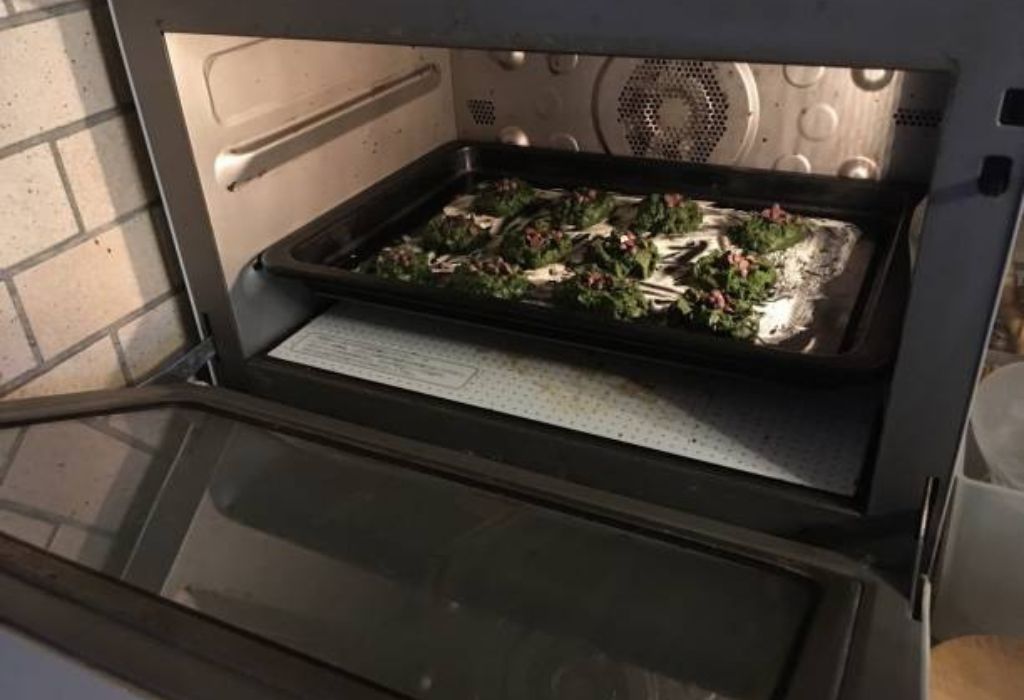
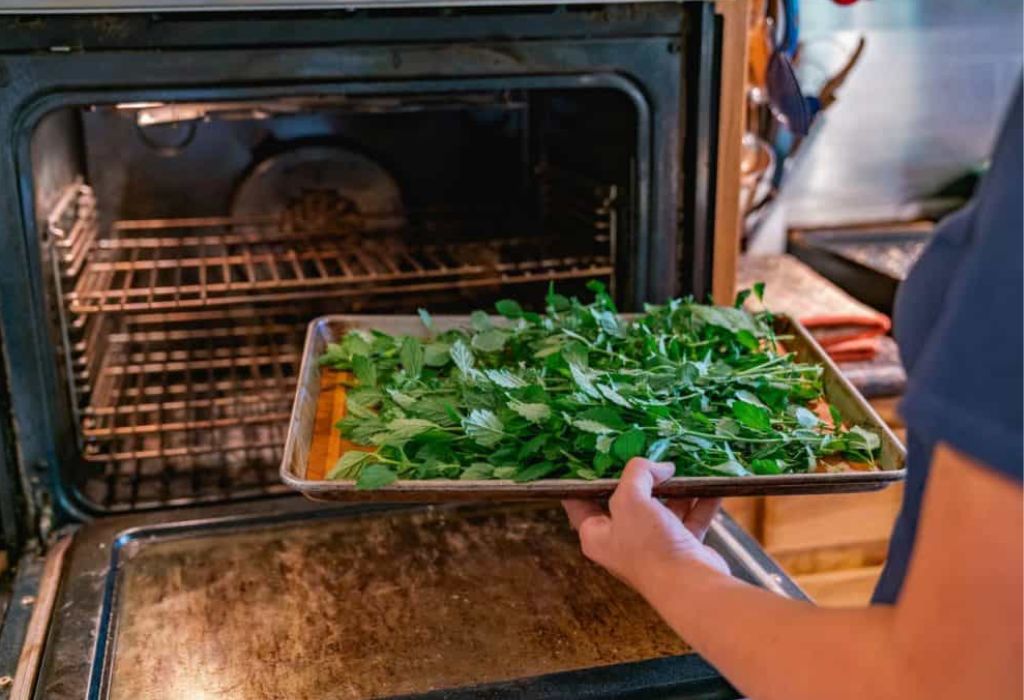
Arrange prepared herbs on upper racks with proper spacing. Insert trays quickly to prevent temperature drop. Leave oven door slightly open if temperature exceeds ideal range.
Check herbs every 20 to 30 minutes. Turn trays and flip leaves gently for even exposure. Break off stems as they dry faster than leaves.
Drying time ranges from one to four hours depending on herb type. Soft herbs dry faster while woody herbs require longer exposure. Monitor until leaves become brittle.
Once leaves crumble easily between fingers, dehydration is complete. Remove trays immediately to prevent continued heat exposure. Allow herbs to cool fully before storage.
Controlled step by step drying prevents overcooking. Proper monitoring ensures consistent dryness. Precision produces the best storage stability.
Common Mistakes That Ruin Oven Dried Herbs
Using high temperatures is the most common mistake. Excess heat drives off essential oils and destroys flavor. Herbs may appear dry but lose aroma completely.
Overcrowding trays traps moisture between layers. This causes parts of the batch to remain damp. Damp sections lead to mold during storage.
Closing the oven door fully traps humidity. Moisture removal slows dramatically under closed conditions. Proper ventilation is required for dehydration.
Failing to pre-dry surface moisture after washing is another major error. Wet leaves take much longer to dry and discolor easily. Surface water interferes with internal moisture migration.
Storing herbs before they fully cool causes condensation. Warm herbs release residual moisture into containers. This encourages microbial growth.
Avoiding these mistakes protects herb quality and shelf life. Dehydration is delicate and unforgiving. Precision matters more than speed.
How to Test Herbs for Complete Dryness
Fully dried herbs should crumble easily between fingers. Any bendable texture indicates remaining moisture. Flexibility means dehydration is incomplete.
Stems provide another dryness test. Dry stems snap cleanly instead of bending. Soft stems signal moisture retention.
Leaves should produce a crisp sound when crushed. Silent crushing suggests residual internal moisture. Sound cues help detect hidden dampness.
Color also changes with proper drying. Herbs become slightly darker but retain original shade. Blackened or yellowed color indicates overheating.
Cooling affects perceived dryness. Warm herbs feel soft and rubbery initially. After cooling, they harden as final moisture evaporates.
Testing ensures long-term storage safety. Improperly dried herbs mold quickly. Complete dryness is mandatory before packaging.
How long does it take to dehydrate herbs in the oven?
Drying time usually ranges from one to four hours depending on herb type and temperature.
Can dehydration be done without opening the oven door?
No, ventilation is necessary for proper moisture escape.
Is low temperature better than fast drying?
Yes, slow low heat drying preserves flavor and aroma.
Can different herbs be dried together?
Yes, if their moisture content and thickness are similar.
Do herbs shrink after dehydration?
Yes, most herbs shrink by more than half of their original volume.
How to Store Oven Dehydrated Herbs Properly
Once herbs are fully cooled, they must be stored immediately to prevent moisture reabsorption. Air exposure allows humidity to return into the dried leaves. Airtight containment is essential for long-term stability.
Glass jars with tight sealing lids provide the best storage environment. Plastic containers allow slow moisture transfer through the walls. Metal tins work only if sealed completely.
Herbs should be stored in a dark location away from heat and sunlight. Light degrades essential oils and weakens aroma over time. Heat accelerates flavor loss even in sealed containers.
Crushing or grinding should not be done before long-term storage. Whole leaves retain aroma better than powdered herbs. Grinding should be done only when needed for cooking.
Labeling each jar with date and herb name prevents confusion. Older batches should be used first to maintain freshness. Organized storage improves quality control.
Proper storage preserves flavor, color, and medicinal strength. Improper sealing causes moisture return and mold growth. Storage discipline is as important as dehydration itself.
Shelf Life of Oven Dehydrated Herbs
Properly dehydrated and stored herbs can last from six months to two years. Shelf life depends on storage conditions and original moisture removal. Cooler, darker environments extend usability.
High-oil herbs such as rosemary and thyme last longer than soft herbs. Parsley and cilantro lose flavor faster due to lower oil concentration. Shelf life varies by plant structure.
Crushed herbs lose aroma faster than whole leaves. Increased surface area accelerates oxidation and oil loss. Keeping herbs whole extends shelf stability.
Humidity is the greatest shelf life enemy. Even sealed jars can trap residual moisture if herbs were not fully dried. Mold growth usually appears first on poorly dried herbs.
Periodic inspection is recommended. Any sign of clumping, moisture droplets, or off smell indicates spoilage. Spoiled herbs must be discarded immediately.
Understanding shelf life prevents unsafe consumption. Long storage does not guarantee safety without moisture control. Stable dryness determines longevity.
Grinding and Crushing Dehydrated Herbs
Grinding herbs increases surface area and releases essential oils instantly. This enhances aroma but reduces shelf life after grinding. Powdered herbs should be used quickly.
Manual crushing using fingers or mortar keeps particle size controlled. This avoids excessive oil loss caused by high-speed grinders. Slow crushing protects volatile compounds.
Electric grinders generate heat during operation. Heat drives off aroma quickly during grinding. Short bursts reduce oil loss during processing.
Grinding should be done just before cooking for maximum flavor impact. Pre-ground storage leads to faded aroma within weeks. Fresh grinding ensures peak potency.
Different herbs require different grinding pressure. Soft herbs crumble easily while woody herbs require firm pressure. Adjusting technique improves particle consistency.
Grinding converts preserved herbs into ready-to-use seasoning. Timing determines flavor quality. Proper technique balances aroma release and shelf stability.
Using Oven Dehydrated Herbs in Cooking
Dried herbs are stronger than fresh herbs by weight. Water removal concentrates essential oils into a smaller mass. Recipe measurements must be adjusted accordingly.
Most cooking conversions use a three-to-one ratio. One teaspoon of dried herbs equals three teaspoons of fresh herbs. This ratio varies slightly by herb type.
Dried herbs release flavor more slowly than fresh herbs. They should be added earlier in the cooking process. This allows time for oil release during heating.
Some herbs perform better rehydrated before use. Sprinkling water over dried basil or cilantro softens texture. Rehydration improves mouthfeel in delicate dishes.
Dried herbs work best in soups, stews, sauces, and baked foods. Fresh herbs are preferred for garnishes and raw applications. Matching herb form to cooking method improves results.
Proper usage ensures flavor balance and prevents overpowering. Dry herbs pack more intensity per gram. Controlled dosage preserves dish harmony.
Preventing Mold and Spoilage in Dehydrated Herbs
Mold formation occurs only when residual moisture remains. Fully dried herbs cannot support fungal growth. Complete dehydration is the primary mold prevention method.
Storage containers must remain airtight at all times. Repeated opening introduces humid air into the container. Frequent exposure increases condensation risk.
Desiccant packets may be added inside storage jars. These absorb trace humidity and stabilize storage environment. Food-safe silica gel improves safety margin.
Never store warm herbs directly in sealed containers. Cooling allows residual moisture to escape into air. Sealing while warm traps condensation internally.
Periodic jar inspection is necessary for long-term storage. Any sign of fogging, clumping, or odor indicates moisture infiltration. Immediate disposal prevents contamination of nearby jars.
Mold prevention depends on dryness and sealing discipline. Moisture is the only true trigger. Eliminating moisture guarantees stability.
Can mold grow on properly dried herbs?
No, mold cannot grow without moisture present.
Is refrigeration needed for dried herbs?
No, room temperature storage works if the container is sealed.
Can freezer storage extend herb shelf life?
Yes, freezing preserves aroma longer but is not required.
Do desiccant packs really help?
Yes, they absorb trace humidity and protect herbs.
Should jars be opened often for air circulation?
No, frequent opening introduces unwanted moisture.
Dehydrating Different Herb Types With Oven
Soft herbs dry faster than woody herbs. Basil, mint, and parsley may dry within one hour. These herbs require close temperature monitoring.
Woody herbs such as rosemary, sage, and thyme dry more slowly. Their thick fibers trap moisture deeper within the stem. Drying time may reach three to four hours.
Flowering herbs like lavender require very gentle heat. Too much heat drives off floral oils prematurely. Lower temperature preserves fragrance best.
Large leaf herbs should be separated before drying. Stacking slows internal moisture migration. Thin leaf exposure ensures even dehydration.
Herb bundles should not be dried whole in ovens. Tied bundles block airflow at the center. Individual leaf separation is more effective.
Understanding herb physical structure improves dehydration strategy. Different textures respond differently to heat. Custom adjustments produce better quality results.
Do soft herbs dry faster than woody herbs?
Yes, soft herbs release moisture more quickly.
Can whole herb bundles be dried in the oven?
No, airflow blockage causes uneven drying.
Is lavender safe for oven dehydration?
Yes, at very low temperatures to preserve fragrance.
Do thick stems slow down dehydration?
Yes, stems retain moisture longer than leaves.
Should large leaves be cut before drying?
Yes, cutting improves airflow and drying speed.
Color, Aroma, and Nutrient Preservation During Dehydration
Herb color changes slightly during dehydration. Bright green often becomes darker olive or forest green. Extreme color change indicates overheating.
Aroma preservation depends heavily on drying temperature. Higher heat evaporates volatile oils rapidly. Lower heat retains aroma better.
Nutrient loss is minimal for most herbs during low-temperature dehydration. Vitamin C decreases slightly but most minerals remain intact. Drying does not destroy medicinal compounds.
Direct sunlight causes greater nutrient and color loss than controlled oven drying. Oven dehydration offers better control over heat exposure. Controlled heat preserves structure.
Enzyme activity continues briefly during early dehydration. If heat is too low initially, discoloration may occur. Balanced heat stops enzymatic breakdown quickly.
Preserving color and aroma indicates successful dehydration. Strong aroma confirms oil retention. Stable structure confirms moisture control.
Does oven dehydration destroy vitamins in herbs?
No, low heat preserves most nutrients.
Why do dried herbs sometimes turn brown?
Overheating or enzyme activity causes browning.
Does stronger aroma mean better quality?
Yes, strong aroma indicates oil retention.
Can sunlight drying cause more nutrient loss than oven drying?
Yes, sunlight causes greater oxidation.
Should herbs smell immediately after drying?
Yes, aroma should remain detectable after cooling.
Rehydrating Dried Herbs for Specific Cooking Uses
Some dishes benefit from partially rehydrated herbs. Dried basil and cilantro soften better when briefly soaked. Rehydration improves visual texture.
Warm water works better than cold water for rehydration. Heat speeds moisture absorption. Only thirty seconds is usually sufficient.
Rehydrated herbs should be used immediately. Soaking too long causes nutrient leaching. Short soak preserves structure.
Broths and sauces naturally rehydrate herbs during cooking. Direct dry addition works equally well in long simmer dishes. Timing controls flavor extraction speed.
Not all herbs require rehydration. Many release flavor best when added dry. Technique depends on dish type and texture requirement.
Rehydration is optional but useful for presentation. Controlled moisture improves mouthfeel. Dry use maximizes intensity.
Conclusion
Dehydrating herbs in the oven is a highly effective method for extending freshness, preserving flavor, and reducing waste from excess harvest. Controlled low heat removes internal moisture while protecting volatile essential oils that define aroma and potency.
With the right preparation, temperature control, and spacing, home ovens can produce high-quality dried herbs without specialized equipment.
Successful dehydration depends on complete moisture removal, proper ventilation, and careful monitoring throughout the process.
Storage practices play an equally important role in preventing spoilage and maintaining shelf life. Airtight containers, darkness, and dry conditions keep herbs stable for months or even years.
By understanding herb structure, moisture behavior, and usage conversion ratios, dehydrated herbs become a powerful everyday cooking resource.
Whether used whole, crushed, or lightly rehydrated, oven-dried herbs offer consistent flavor and convenience. Mastering this technique ensures reliable long-term preservation with professional-level results.

I’m Emma J. Caldwell, the founder, lead writer, and home-cooking enthusiast behind KitchenGuideCo.com. With a background in culinary arts and over a decade of cooking experience in both professional and personal kitchens, I created this platform to demystify recipes, offer smart kitchen gadget reviews, and guide readers through meal prep with confidence and clarity.