A home cook switches on the oven to bake cookies and notices a small fan symbol glowing on the control panel. Curious about faster cooking, the convection mode is activated for the first time.
Within minutes, the cookies begin browning unevenly, turning one batch perfect and another too dark.
Convection mode is often misunderstood and misused in everyday kitchens. Many people expect it to automatically improve every recipe without adjustment. In reality, convection changes how heat moves inside the oven, and that change must be managed correctly.
Understanding how to use convection mode properly helps prevent burnt edges, undercooked centers, and wasted ingredients. It allows faster cooking, even browning, and better moisture control when used the right way.
This guide explains exactly how convection mode works and how to use it step by step for consistent results.
What Convection Mode Is and How It Works
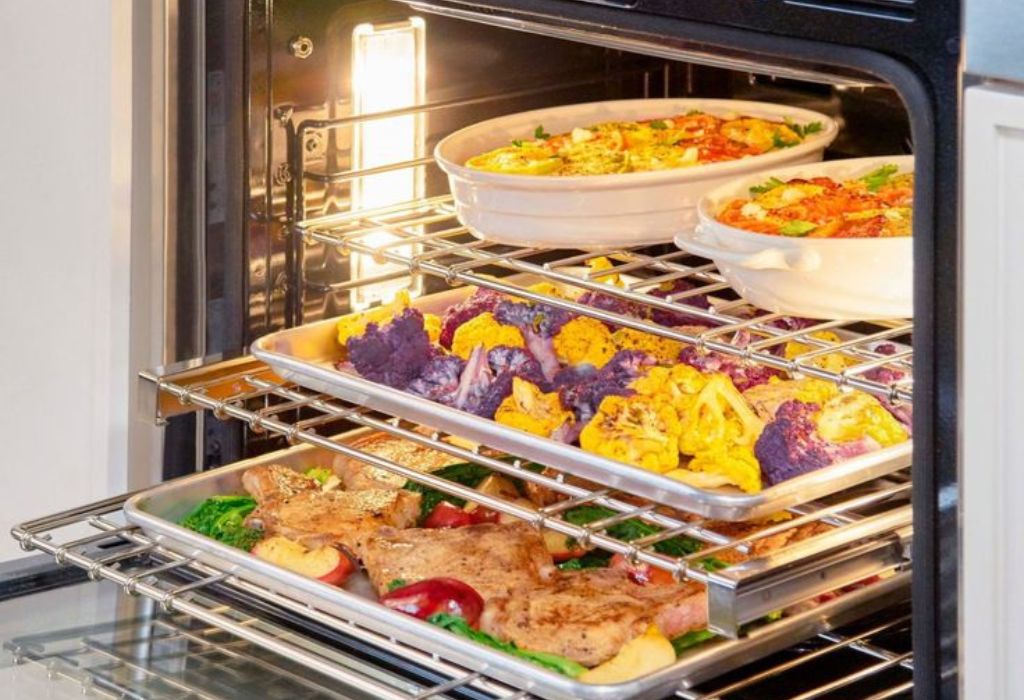
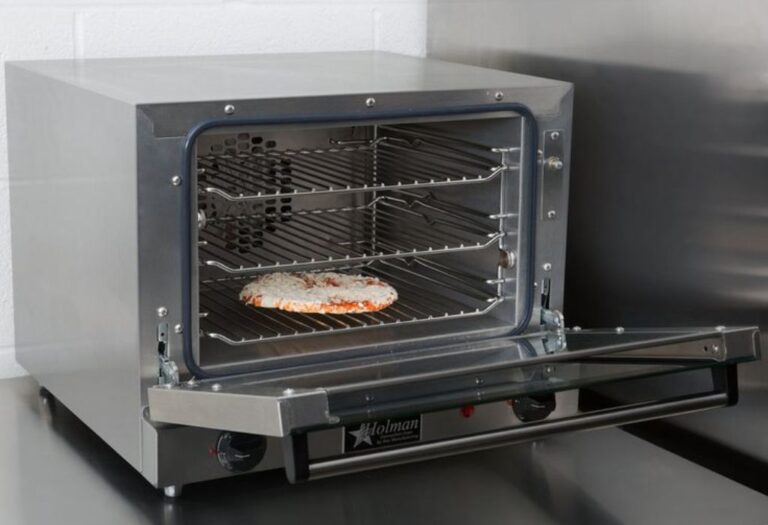
Convection mode is a cooking setting that uses a built-in fan to circulate hot air inside the oven chamber. This moving air distributes heat evenly around the food. It eliminates hot and cold spots that occur in regular baking.
In a standard oven, heat rises naturally and stays uneven across different areas. Food at the back often cooks faster than food at the front. Convection mode actively forces air movement to balance this heat.
The circulating air removes moisture from food surfaces more quickly. This accelerates browning and crisping. That is why convection is popular for roasting and baking.
The fan usually works together with a rear heating element. This creates a continuous loop of heated air. The loop ensures steady temperature across all rack levels.
Convection also reduces cooking time in most recipes. Faster heat transfer means food reaches internal temperature more quickly. This improves overall efficiency.
At its core, convection mode transforms static heat into moving heat. That movement is what makes cooking faster and more uniform. Understanding this airflow is the foundation of correct usage.
Difference Between Convection Mode and Regular Bake
Regular bake mode relies only on stationary heat from top and bottom elements. The hot air moves naturally but slowly. This creates uneven temperature zones inside the oven.
Convection mode adds active air circulation through a fan. This forces hot air across food surfaces continuously. The result is more consistent temperature throughout the oven.
In regular baking, food near oven walls often overcooks. The center of the oven runs cooler by comparison. Convection mode balances this difference automatically.
Cooking time also varies between the two modes. Convection usually cooks 20 to 25 percent faster. Regular baking takes longer due to slower heat transfer.
Moisture behavior is another key difference. Regular bake traps moisture better inside foods. Convection dries outer layers more quickly.
Choosing between convection and regular bake depends on recipe needs. Each mode serves a different cooking purpose. Proper selection prevents texture and doneness problems.
When You Should Use Convection Mode
Convection mode works best for foods that benefit from even browning. Roasted chicken, vegetables, and baked pastries perform especially well in this mode. The circulating air creates crisp outer layers.
It is ideal for cooking on multiple racks at once. Cookies, breads, and pizzas bake evenly across all trays. This saves time during batch cooking.
Frozen foods also cook better using convection mode. Hot air penetrates faster without trapping steam. This results in crisp exteriors instead of soggy surfaces.
Meat roasting benefits from convection due to moisture evaporation. The outer surface seals quickly while the inside remains juicy. This improves texture and appearance.
Bread baking also improves under convection when controlled correctly. Crust development becomes more uniform. The interior structure remains stable.
Convection mode is best suited for dry heat applications. It excels where browning, crisping, and speed matter most. Understanding food behavior helps determine correct usage.
Is convection mode faster than normal baking?
Yes, convection mode usually reduces cooking time by 20 to 25 percent.
Does convection mode dry out food?
It can if temperature is not adjusted properly.
Is convection mode good for cookies?
Yes, it provides even browning across multiple trays.
Can I use convection for frozen foods?
Yes, it improves crispness and reduces sogginess.
Does convection mode use more electricity?
It uses slightly more power but saves time overall.
When You Should Avoid Convection Mode
Convection mode is not suitable for every type of recipe. Foods that rely on gentle heat often suffer under strong airflow. Custards and cheesecakes are common examples.
Delicate batters can be disturbed by moving air. Cakes that depend on slow rising may collapse or bake unevenly. This changes texture and structure negatively.
Covered dishes should usually avoid convection. Steam trapped inside the lid already controls moisture. Extra airflow provides no benefit and may overcook edges.
Quick breads that rely on surface moisture for proper texture may dry out. The fan removes surface moisture too fast. This affects crumb softness.
Slow-cooked dishes do not benefit from convection speed. Stews, braises, and casseroles depend on steady heat. Rapid air movement disrupts this balance.
Avoiding convection when moisture control is critical prevents recipe failure. Knowing when not to use it is as important as knowing when to use it. This preserves food quality.
Temperature Adjustment Rules for Convection Mode
Most convection ovens require a reduction in temperature setting. A standard rule is to lower the recipe temperature by 25 degrees. This compensates for faster heat transfer.
Some modern ovens adjust temperature automatically. These systems sense convection activation and recalibrate heat output. Manual adjustment becomes unnecessary in these models.
Lower temperature protects food from surface burning. Since hot air moves faster, food absorbs heat more quickly. Reduced temperature prevents over-browning.
Baking recipes are most sensitive to temperature change. Cakes, breads, and pastries rely on controlled heat build-up. Even small mismatches affect final texture.
Roasting recipes are more forgiving with temperature shifts. Meats tolerate wider heat ranges under convection. However, monitoring still remains necessary.
Adjusting temperature correctly prevents common convection problems. Burnt edges and raw centers result from misadjustment. Proper calibration brings consistent success.
Rack Placement and Airflow Management
Proper rack placement is essential for even convection cooking. Food must be centered within the airflow path. This allows hot air to circulate evenly.
Crowding the oven restricts airflow movement. Trays placed too close together block heat circulation. This defeats the purpose of convection.
Multiple rack cooking requires spacing between trays. Air must pass freely around each tray surface. Tight stacking produces uneven browning.
Shallow trays work better than deep roasting pans. Deep sides block airflow along food edges. Shallow designs allow better heat exposure.
Rack position also affects browning intensity. Upper racks brown faster than lower racks. Adjusting rack height fine-tunes surface color.
Airflow management defines convection success. The fan only works effectively when air can move freely. Layout matters as much as temperature setting.
Should I always lower temperature in convection mode?
Yes, unless your oven adjusts temperature automatically.
Can I use all oven racks in convection mode?
Yes, if airflow between trays is properly maintained.
Does deep cookware affect convection results?
Yes, deep cookware blocks airflow and reduces crisping.
Is middle rack best for convection cooking?
Yes, it usually sits in the most balanced airflow zone.
Can overcrowding ruin convection cooking?
Yes, blocking airflow causes uneven cooking.
Best Foods to Cook Using Convection Mode
Roasted vegetables benefit greatly from convection airflow. Hot air caramelizes outer surfaces evenly. This enhances flavor and texture.
Whole chicken and turkey roast efficiently in convection mode. Skin becomes crisp while meat remains juicy. Heat penetrates uniformly through thick portions.
Pizza cooks exceptionally well under convection. The moving heat crisps the crust without drying toppings. This improves overall balance.
Cookies and pastries bake evenly across multiple racks. Browning remains consistent between batches. This saves time during large baking sessions.
Frozen convenience foods cook faster in convection mode. Hot air removes surface moisture rapidly. This restores crisp texture.
Convection mode is best for foods that benefit from dry heat. Crispness and browning improve significantly. These foods demonstrate convection advantages most clearly.
Common Mistakes While Using Convection Mode
Failing to reduce temperature is the most common beginner mistake. Recipes designed for regular bake overheat quickly in convection. This leads to burning.
Overcrowding the oven blocks airflow completely. Multiple trays touching each other prevent heat circulation. This produces uneven cooking.
Using parchment paper incorrectly can block airflow under food. Paper curled over tray edges restricts air movement. This prevents proper browning.
Skipping preheating is another frequent error. Even with convection, preheating stabilizes airflow temperature. Cold starts cause uneven doneness.
Using convection for moisture-heavy dishes causes drying. Custards and covered casseroles lose moisture too quickly. Texture suffers.
Avoiding these mistakes improves immediate cooking success. Most convection failures come from setup errors. Correct technique fixes nearly all problems.
Why does my food burn in convection mode?
Temperature is often set too high for moving air heat.
Can I use parchment paper with convection mode?
Yes, but avoid blocking airflow around food.
Is preheating necessary for convection ovens?
Yes, proper preheating improves consistency.
Why did my cake collapse in convection mode?
Moving air disrupted the delicate rising structure.
Does overcrowding affect convection cooking speed?
Yes, airflow restriction slows and unevenly cooks food.
Safety and Maintenance Tips for Convection Ovens
Convection fans must be kept clean for proper airflow. Grease buildup slows fan rotation. This reduces circulation efficiency.
Vent openings should remain unobstructed at all times. Blocked vents trap heat inside electronic systems. This increases failure risk.
Fan noise changes often signal bearing wear. Grinding sounds should not be ignored. Early service prevents full motor failure.
Heating elements should be inspected annually. Surface cracks weaken heat output. Replacing weak elements restores performance.
Control panels should be shielded from steam exposure. Moisture damages electronic circuits. Dry wiping prevents long-term damage.
Routine maintenance preserves both safety and performance. Convection systems require airflow integrity. Proper care extends usable lifespan.
How Convection Mode Affects Cooking Time
Convection mode typically shortens cooking time by up to one quarter. Faster heat transfer accelerates surface cooking. Internal temperature also rises more efficiently.
Small food portions show the largest speed difference. Thin foods crisp quickly under moving air. Regular bake takes longer.
Large roasts still benefit from convection speed. Heat penetrates more evenly across thick meat. Cooking becomes more predictable.
Baking time reduction must be monitored carefully. Cookies and cakes can finish earlier than expected. Timer adjustments prevent overbaking.
Cooking time also depends on food moisture content. Dry foods accelerate faster than moist foods. Moisture slows heat penetration slightly.
Understanding timing differences prevents undercooking and burning. Convection speeds everything equally. Awareness ensures accurate results.
How much faster is convection cooking?
Usually 20 to 25 percent faster than regular baking.
Do all foods cook faster in convection mode?
Most do, but very moist foods show smaller change.
Do I need to shorten recipe time manually?
Yes, unless your oven auto-adjusts time.
Is convection faster for roasting meat?
Yes, it improves both surface browning and internal doneness.
Can convection overcook food easily?
Yes, if time and temperature are not adjusted.
Conclusion
Convection mode transforms how heat moves inside an oven by introducing active airflow. This airflow eliminates temperature imbalance and speeds up cooking. When used correctly, results become faster, crispier, and more uniform.
Understanding the differences between convection mode and regular baking prevents common mistakes. Each mode serves unique recipe requirements. Choosing the correct mode determines cooking success.
Proper temperature adjustments protect food from burning. Lowering heat compensates for stronger airflow. This step is essential for baking accuracy.
Rack placement and airflow access control heat distribution. Crowding blocks circulation and ruins results. Correct spacing preserves convection benefits.
Certain foods thrive under convection while others should avoid it. Knowing when to use and avoid convection saves ingredients and time. Food behavior guides mode selection.
Learning how to use convection mode correctly unlocks an oven’s full potential. It improves efficiency, texture, and versatility. With proper technique, convection becomes a powerful everyday cooking tool.

I’m Emma J. Caldwell, the founder, lead writer, and home-cooking enthusiast behind KitchenGuideCo.com. With a background in culinary arts and over a decade of cooking experience in both professional and personal kitchens, I created this platform to demystify recipes, offer smart kitchen gadget reviews, and guide readers through meal prep with confidence and clarity.