Cleaning cast iron cookware often feels intimidating. Many cooks fear that one wrong move will ruin the pan’s nonstick surface or destroy years of carefully built seasoning.
This concern is not unfounded. Studies suggest that over 60 percent of discarded cast iron pieces are damaged by rust or improper cleaning methods source.
Yet cast iron is one of the most durable materials in the kitchen. With the right care, it can last for generations and even improve in performance as the seasoning builds over time.
The challenge lies in knowing which cleaning practices protect the pan and which ones strip away its natural patina. Myths surrounding soap use, soaking, and scrubbing tools often leave home cooks unsure of the best approach.
Curiosity naturally arises here. Is it possible to clean cast iron cookware thoroughly without damaging the protective layer?
The answer is yes, and the process is far easier than many imagine. By following expert-approved methods, cast iron can be restored to its glossy black surface while staying free of rust and sticky residue.
Another reason to care is performance. Properly maintained cast iron retains heat two to three times longer than traditional nonstick pans, which means more even cooking and better flavor source.
What Is Cast Iron, Seasoning & Why Cleaning Matters

Cast iron cookware is valued for its ability to retain heat and create evenly cooked meals. Its heavy structure and porous surface allow it to develop a natural nonstick layer called seasoning.
Seasoning forms when oil is heated until it polymerizes and bonds with the metal. This layer protects the cookware from rust while giving it the glossy black patina that cooks admire.
Without seasoning, cast iron quickly becomes vulnerable to moisture. Even a few hours of water exposure can create rust patches that spread if ignored.
The relationship between cleaning and seasoning is delicate. Proper cleaning preserves the protective layer, while harsh methods strip it away and leave the cookware exposed.
Understanding this balance is essential for both everyday use and long-term durability. Cast iron can last decades, but only if cleaned in ways that maintain its patina and protective surface.
What does “seasoning” mean for cast iron cookware?
Seasoning is a hardened layer of oil baked onto cast iron, creating a natural nonstick coating and rust barrier.
Why is preserving seasoning during cleaning important?
Because stripping seasoning makes the surface sticky, prone to rust, and forces frequent re-seasoning.
Can cast iron cookware rust if not cleaned properly?
Yes. Exposure to water or improper drying allows rust to form, which damages the surface and shortens the cookware’s lifespan.
What is the difference between enameled and raw cast iron?
Enameled cast iron has a protective coating that resists rust and simplifies cleaning, while raw cast iron depends entirely on seasoning for protection.
How often should cast iron cookware be cleaned to maintain its performance?
After every use. Residue should be removed, moisture dried off immediately, and a light oil coating applied for continued protection.
Tools & Materials Needed to Clean Cast Iron Cookware
Cleaning cast iron cookware does not require expensive products, but it does depend on using the right tools. Choosing safe scrubbers and oils ensures that the seasoning remains intact while food residue is removed.
Nylon brushes, non-abrasive sponges, and chain-mail scrubbers are popular for everyday cleaning. These provide enough friction to lift stuck food without stripping away the protective seasoning layer.
For tougher jobs, coarse salt such as kosher salt can be used as a natural abrasive. Salt scrubs are especially effective against burnt-on bits without harming the nonstick finish.
Steel wool has its place but should only be used when restoring cookware with heavy rust or flaking seasoning. Everyday cleaning with steel wool will damage the patina and shorten the lifespan of the pan.
Mild soap is another debated tool. Research and modern guidance show that small amounts of mild soap do not harm seasoning, but harsh detergents or prolonged soaking must be avoided.
Oil is essential for maintaining seasoning after cleaning. Neutral, high smoke-point oils such as canola, grapeseed, or vegetable oil are recommended for creating a smooth protective coating.
Paper towels or lint-free cloths are needed for drying and oiling. Moisture must always be eliminated quickly to prevent rust.
Is soap acceptable when cleaning cast iron cookware?
Yes. Mild soap in small amounts is safe and does not strip well-bonded seasoning.
What kind of scrubber or brush should be used?
Non-abrasive options like nylon brushes or chain-mail scrubbers are best for preserving the patina.
Can coarse salt act as a cleaner?
Yes. Coarse salt works as a natural abrasive to remove stuck-on food without damaging the seasoning.
Do you need special oil for seasoning?
Yes. Neutral oils with high smoke points such as grapeseed or canola are ideal for maintaining a nonstick surface.
When should steel wool be used?
Only during restoration to remove rust or damaged seasoning, never for routine cleaning.
Step-by-Step: How to Clean Cast Iron Cookware the Easy Right Way
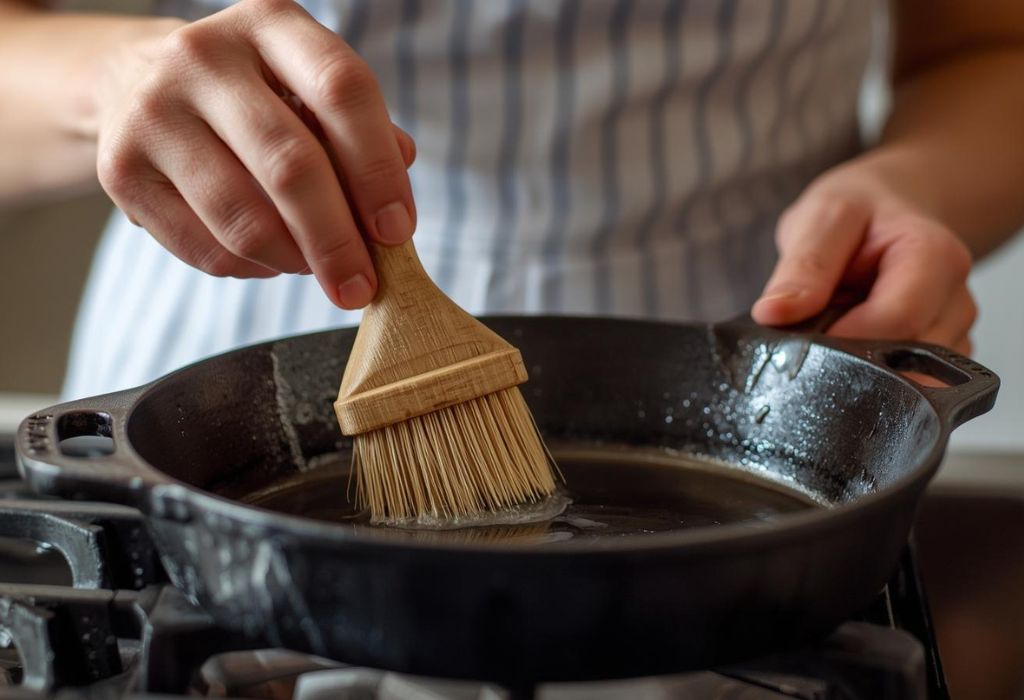
The process of cleaning cast iron cookware is simple but requires attention to detail. Each step protects the seasoning while ensuring the pan stays free from rust and sticky residue.
The best time to start cleaning is while the cookware is still warm. Residue loosens more easily on a warm surface, which reduces the need for heavy scrubbing.
Food particles should be removed gently with a scraper or soft brush. If food is stuck, coarse salt or a small amount of hot water can lift residue without damaging the seasoning.
Soap can be used, but only in moderation. Modern studies confirm that a small amount of mild soap will not strip polymerized oil, which forms the protective patina.
After scrubbing, the cookware must be rinsed quickly in hot water. Soaking is never recommended because prolonged moisture encourages rust and weakens the seasoning layer.
Drying is the most critical step. Wiping with a clean cloth is not enough; residual water can hide in pores, so the pan should also be heated briefly on a stove or in an oven.
Once fully dry, a thin layer of high smoke-point oil such as canola or grapeseed should be rubbed onto the surface. This step restores the sheen, reinforces the nonstick finish, and prevents oxidation.
Step 1: When to clean – while the cookware is still warm?
Yes. Cleaning while warm makes food removal easier and protects the seasoning from damage.
Step 2: How to remove stuck-on food?
Use a scraper, salt scrub, or simmer water in the pan to loosen residue. Avoid aggressive scouring unless restoring.
Step 3: Should you use soap or avoid it?
Mild soap in small amounts is safe, but harsh detergents and soaking should be avoided.
Step 4: How do you dry cast iron cookware properly?
Towel-dry immediately, then heat the pan briefly to evaporate any hidden moisture.
Step 5: How and when to oil or re-season?
Apply a thin layer of oil after each cleaning, ideally while the pan is warm, to maintain the protective layer.
Common Problems & How to Fix Them
Even with careful cleaning, cast iron cookware can develop issues that worry many home cooks. Problems like rust, sticky residue, or flaking seasoning are common but all can be corrected with the right methods.
Rust often appears when cookware is left wet or stored in humid conditions. Even small orange spots can spread quickly, making early treatment essential.
Sticky or tacky surfaces usually come from applying too much oil during seasoning. Instead of bonding with the iron, the excess oil sits on top and creates a gummy finish.
Burnt-on food and carbon buildup form when food particles are not removed promptly. Over time, these layers harden and affect both cooking performance and flavor.
Flaking seasoning may result from uneven layers of oil or overheating. When flakes peel away, they expose bare metal that must be re-seasoned.
Discoloration or fading of the glossy black patina can also happen. Acidic foods, overheating, or frequent soap use may dull the protective layer, but this does not mean the pan is ruined.
How to remove rust from cast iron cookware?
Scrub the rust with steel wool or a chain-mail scrubber, rinse, dry completely, and then re-season with oil.
What to do if the surface feels sticky or tacky?
Wipe away excess oil and bake the cookware at high heat to polymerize the remaining layer.
How to deal with burnt-on food or carbon buildup?
Simmer water in the pan, scrape gently, or use a coarse salt scrub to loosen the residue.
What if seasoning is flaking or uneven?
Strip loose flakes, clean thoroughly, and apply thin, even layers of oil followed by baking.
Why does patina fade, and can it be restored?
Patina fades from acidic foods or aggressive cleaning, but it can be rebuilt with repeated oiling and regular cooking.
Best Practices & Maintenance Tips
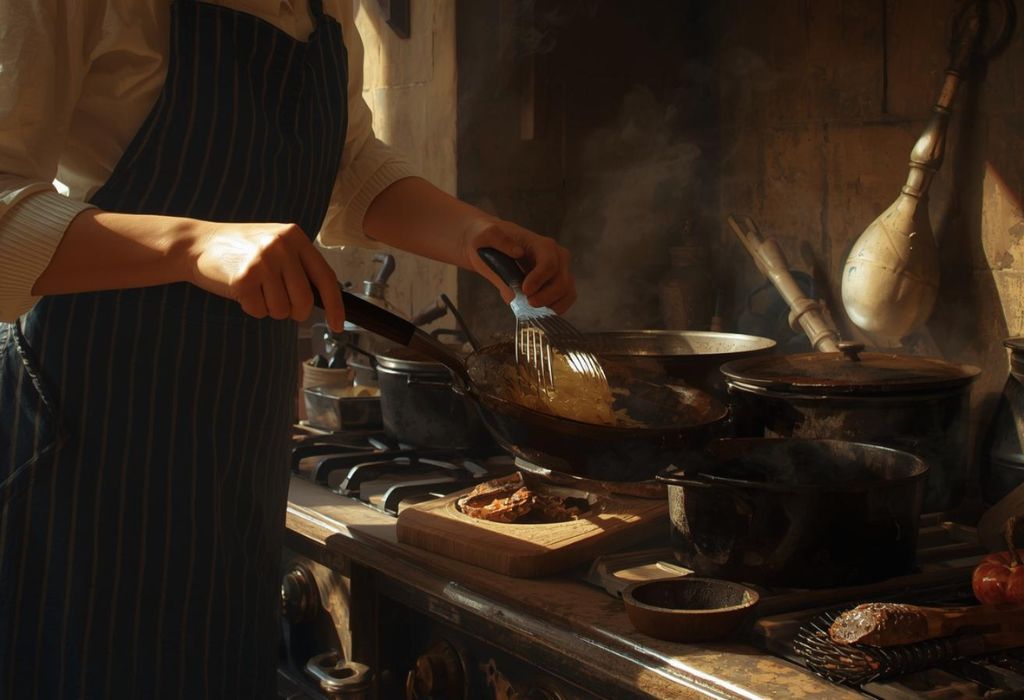
Long-lasting cast iron cookware depends on consistent maintenance. Proper cleaning, seasoning, and storage habits prevent damage and keep the pan performing at its best.
The first habit is to avoid soaking cast iron in water. Even a short soak can allow moisture to penetrate the surface and trigger rust.
After each wash, drying thoroughly is essential. Towel-drying removes most water, but heating on the stove or in the oven ensures every drop evaporates.
A thin layer of oil should always be applied after cleaning. This not only prevents oxidation but also strengthens the seasoning with each use.
Storage is another important factor. Cast iron should be stored in a dry place with the lid removed or propped open to avoid trapped moisture.
Cooking choices also play a role in maintenance. Very acidic foods like tomatoes can strip seasoning, especially in newly seasoned pans, so they should be avoided until the surface is well built.
By following these best practices, the cookware’s patina develops into a durable nonstick layer. This makes cooking easier and minimizes the need for frequent deep restoration.
How should cast iron cookware be stored?
Store it in a dry place with the lid off or lined with a paper towel to absorb moisture.
Can acidic foods damage the seasoning?
Yes. Acidic ingredients can break down seasoning layers, especially on pans that are not fully seasoned.
How often should re-seasoning be done?
Only when needed. Signs include dull color, rust spots, or food sticking to the surface.
Should cast iron go in the dishwasher?
No. Dishwasher detergents and extended water exposure strip seasoning and cause rust.
How to clean cookware after campfire or outdoor use?
Use a coarse salt scrub or steel wool for heavy buildup, then re-season in an oven to restore the protective layer.
Restoration: Bring Damaged Cast Iron Cookware Back
Cast iron cookware is remarkably resilient, but years of neglect or exposure to moisture can leave it covered in rust or stripped of its seasoning. Fortunately, restoration methods can bring even the most worn pieces back to life.
Full restoration is necessary when large rust patches cover the surface, seasoning has flaked away, or the cookware feels rough and sticky. These signs show that the protective patina is gone and must be rebuilt from scratch.
The first step is rust removal. A combination of steel wool, chain-mail scrubbers, or a diluted vinegar soak can strip away corrosion. Care must be taken to monitor vinegar, as overexposure can damage the metal itself.
Once the rust is gone, the cookware should be rinsed, dried thoroughly, and prepared for re-seasoning. Applying a thin layer of neutral oil and baking at high heat allows new seasoning to form evenly.
Multiple rounds of oiling and baking may be required. Each layer builds a stronger nonstick surface and restores the glossy black appearance of a well-seasoned pan.
When properly restored, cast iron performs like new. In fact, some cooks find restored pans outperform brand-new cookware because repeated seasoning layers create exceptional durability.
When is full restoration necessary?
When heavy rust, flaking seasoning, or a rough surface prevents normal cleaning from working.
What are the steps for restoring cast iron cookware?
Remove rust, scrub clean, dry completely, apply oil, and bake until the seasoning bonds.
Can vinegar help in rust removal?
Yes. A vinegar and water soak loosens rust but should be limited to avoid harming the iron.
Is it possible to over-season?
Yes. Applying too much oil creates a sticky surface instead of a smooth nonstick layer.
What’s the ideal temperature for re-seasoning in the oven?
Most experts recommend baking at 400–500°F (200–260°C) for about an hour per layer.
Tips to Extend the Life & Performance of Cast Iron Cookware

Cast iron cookware improves with age, but only if handled correctly. Small daily habits make the difference between a pan that lasts decades and one that rusts in a year.
One of the most effective habits is proper preheating. Cast iron should be warmed slowly on medium heat before cooking to prevent warping or damaging the seasoning.
Cooking with oil not only prevents sticking but also strengthens the patina. Each use helps polymerized oil bond with the surface, reinforcing the nonstick layer.
Foods should be chosen with care, especially when the pan is newly seasoned. Acidic dishes like tomato sauces can strip away fresh seasoning before it hardens fully.
Monitoring the surface is important. If food begins to stick, if the color dulls, or if small rust spots appear, these are signals that re-seasoning may be needed.
Thermal shock should also be avoided. Placing a hot cast iron pan under cold water can crack the metal or damage the seasoning instantly.
Frequent use is one of the best maintenance strategies. With every meal, the surface grows more resilient, and the cookware develops a stronger, more reliable patina.
How to preheat cast iron cookware properly?
Heat it slowly on medium heat, then increase temperature if necessary for cooking.
Can cooking with oil help maintain the nonstick surface?
Yes. Oils reinforce the seasoning layer and keep the pan smooth and rust-resistant.
What foods should be avoided initially?
Highly acidic foods should be limited until the seasoning is fully established.
How to monitor when seasoning is weakening?
Look for dull surfaces, sticky residue, rust patches, or food sticking to the pan.
Does frequent use improve performance?
Yes. Regular cooking strengthens the seasoning and enhances the nonstick qualities over time.
Conclusion
Cast iron cookware remains one of the most reliable and durable tools in any kitchen. Its ability to retain heat and deliver consistent results makes it a favorite, but only if it is cared for correctly.
The key lies in balance. Cleaning must be thorough enough to remove residue yet gentle enough to protect the seasoning and patina. Simple steps such as drying immediately, applying a thin layer of oil, and storing in a dry place ensure that the cookware performs for decades.
Problems like rust, sticky surfaces, or dull color are not the end. Each can be solved through proper restoration methods that return cast iron to its glossy black surface.
When treated with care, cast iron develops a nonstick finish that improves with every meal. The reward is a pan that not only lasts for generations but also enhances the flavor and texture of food.
For anyone wondering how to clean cast iron cookware the easy right way, the answer is consistency. Adopt these habits, and each use will build strength, beauty, and performance into the cookware.

I’m Emma J. Caldwell, the founder, lead writer, and home-cooking enthusiast behind KitchenGuideCo.com. With a background in culinary arts and over a decade of cooking experience in both professional and personal kitchens, I created this platform to demystify recipes, offer smart kitchen gadget reviews, and guide readers through meal prep with confidence and clarity.