The smell of fresh bread baking in the oven is something many people associate with comfort and home. For those who bake gluten free, that same experience often begins with uncertainty instead of excitement.
Dense textures, dry crumbs, and uneven rising become common frustrations before confidence finally begins to build.
Gluten free baking is not just about swapping one flour for another. It is a completely different approach to structure, moisture, heat control, and timing.
The oven plays a much bigger role because gluten free batters depend almost entirely on precise temperature and humidity balance to rise properly.
This guide explains exactly how to bake gluten free in an oven with consistent success. From understanding how gluten free dough behaves to controlling oven heat, moisture retention, and baking time, every major step is broken down so your results improve with every batch.
Understanding What Gluten Free Baking Really Means
Gluten free baking removes the natural protein network that gives traditional dough its elasticity and strength.
Gluten normally traps gases created by yeast and leavening agents, allowing baked goods to rise and maintain shape. Without gluten, the structure must come from starches, eggs, and binding agents instead.
Most gluten free flours are blends of rice flour, potato starch, tapioca starch, sorghum, or almond flour. Each ingredient reacts to heat differently and absorbs moisture at different rates. This makes oven control far more important than in standard baking.
Gluten free dough tends to be softer, wetter, and more fragile before baking. It does not stretch easily and often behaves more like thick batter than elastic dough. As a result, heat exposure must be carefully balanced to allow internal structure to set before the outside overbakes.
The oven becomes the primary tool for success. Too much heat too fast causes collapse and dryness. Too little heat results in gummy centers and weak crumb formation. Correct oven management is the foundation of successful gluten free baking.
Why Oven Control Is More Important in Gluten Free Baking
In traditional baking, gluten provides a safety net that stabilizes dough during temperature fluctuations. Gluten free batters lack that protection layer. Oven temperature fluctuations directly affect final texture without room for error.
High initial heat helps activate leavening quickly and strengthens structure early in the bake. However, excessive heat can cause the exterior to harden too fast, trapping moisture inside and creating dense centers.
Lower temperatures bake gluten free goods more evenly but can reduce lift and cause spreading if the structure sets too slowly. This is why correct temperature calibration is essential.
Gluten free baking also relies heavily on steam during early baking. Moist heat helps starches gelatinize properly, improving crumb softness and volume. Dry ovens cause premature crust formation and restrict expansion.
Best Oven Temperature Ranges for Gluten Free Baking
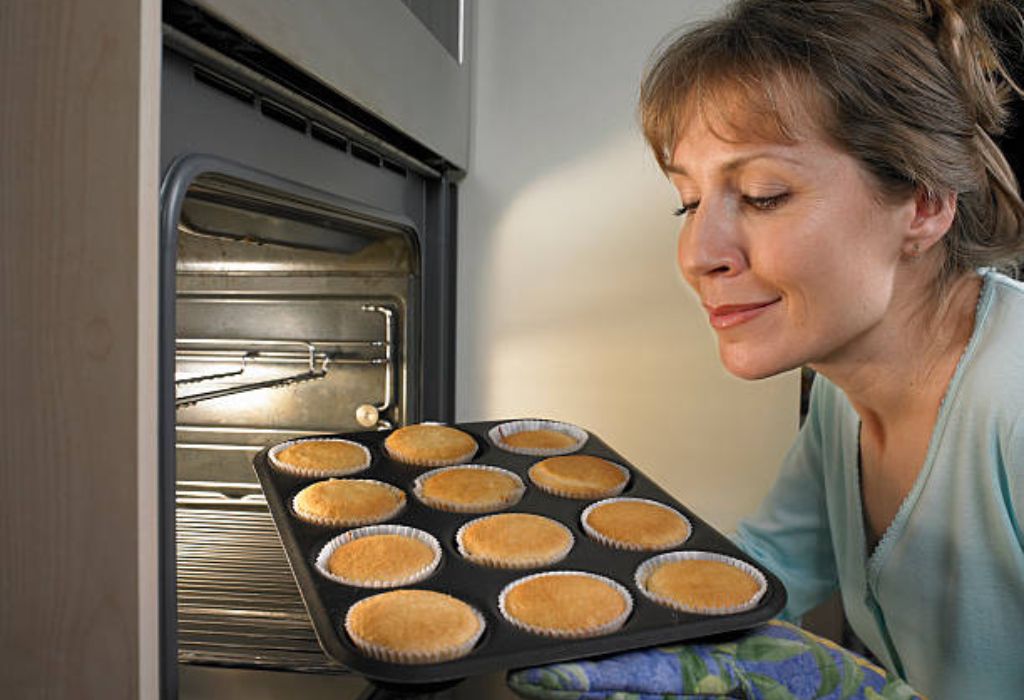
Most gluten free baked goods perform best between 325°F and 375°F depending on recipe type. Cakes and muffins benefit from lower temperatures around 325°F to allow slow even setting without cracking.
Breads and rolls typically perform best at 350°F to 375°F where structure sets firmly without drying out. Cookies require slightly higher heat to spread properly and set edges before collapsing.
High-protein gluten free flours like almond flour brown very quickly. Lower temperatures prevent excessive browning before internal baking completes.
It is essential to preheat the oven fully before baking. Gluten free batters begin setting immediately when heat is applied. Incomplete preheating causes weak rise and uneven crumb.
How to Prepare the Oven for Gluten Free Baking
The oven should always be fully cleaned before gluten free baking to prevent cross-contact. Even trace gluten residue from previous baking can cause problems for sensitive individuals.
Proper rack positioning is also critical. Middle rack placement allows even heat circulation and prevents bottom burning. Upper rack baking can dry gluten free goods too quickly.
Using an oven thermometer improves accuracy. Many home ovens run hotter or cooler than displayed settings. Even a 10°F difference can significantly impact gluten free texture.
Steam trays can be placed at the bottom of the oven for breads. This increases humidity during early baking and improves crust softness and rise.
The Role of Bakeware in Gluten Free Oven Baking
Bakeware material directly affects heat transfer. Metal pans heat quickly and promote better rise for breads and muffins. Glass pans retain heat longer and often cause gluten free items to overbake on edges.
Silicone pans are popular for gluten free baking but often produce pale, undercooked centers unless baking time is extended. They also slow crust development.
Dark-colored pans absorb heat rapidly and may require lower temperature settings to prevent bottom burning. Light aluminum pans offer the most balanced performance.
Always line pans with parchment paper instead of greasing heavily. Gluten free dough sticks easily and excessive oil can interfere with structural setting.
Mixing and Batter Consistency for Oven Success
Gluten free batters must be wetter than traditional dough. Thick dry mixtures do not expand properly and lead to dense baked goods.
Hydration is essential for starch gelatinization during baking. This process creates the structure that replaces gluten’s role. Without enough moisture, the crumb collapses.
Overmixing is less dangerous in gluten free baking since gluten is absent. In fact, thorough mixing improves distribution of binders like xanthan gum and psyllium husk.
However, excessive mechanical mixing can introduce too much air and cause collapse after baking. Balanced mixing is key.
How to Prevent Gluten Free Baked Goods from Drying Out
Dryness is one of the most common gluten free baking complaints. Moisture escapes quickly because there is no gluten structure to trap it.
Lower baking temperatures help retain moisture by reducing rapid surface evaporation. Covering baked goods loosely with foil halfway through baking prevents excessive surface drying.
Adding fats like oil, butter, yogurt, or sour cream improves moisture retention. Sweeteners like honey and syrup also attract moisture and soften crumb texture.
Removing baked goods at the correct internal temperature is critical. Overbaking by even a few minutes dramatically reduces moisture retention.
How Leavening Works in Gluten Free Oven Baking
Without gluten to trap gases naturally, gluten free baking relies heavily on chemical leaveners such as baking soda and baking powder.
Correct balance between acids and bases is required to generate lift. Too little leavening causes dense texture, while excess leads to rapid rise and collapse.
Oven heat activates chemical leaveners immediately. Once structure sets, leavening stops. This makes early baking temperature control very important.
Eggs also act as powerful natural leaveners in gluten free baking. Their protein structure expands and sets during baking, replacing lost gluten strength.
How to Bake Gluten Free Bread in a Home Oven
Gluten free bread dough is softer and wetter than traditional wheat dough. It should be spoonable rather than kneadable.
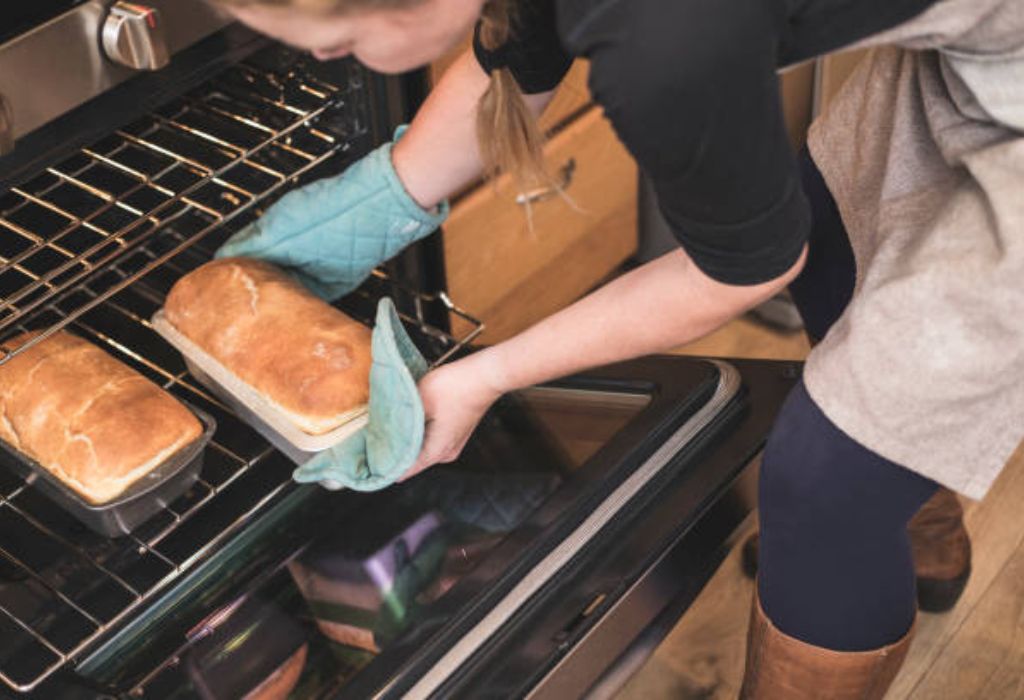
A hot initial oven temperature encourages rapid oven spring. Most gluten free bread bakes start at 375°F then reduce to 350°F after initial rise.
Steam during the first 10 minutes improves crust softness and volume. This can be added using a water pan or brief misting.
Gluten free bread requires longer internal baking time to fully set crumb structure. Center temperature must reach proper doneness or collapse will occur after cooling.
Common Gluten Free Baking Mistakes in Home Ovens
One of the biggest mistakes is opening the oven door too early. Sudden heat loss causes gluten free batters to collapse easily.
Using incorrect pan sizes also causes problems. Batter spread too thin dries too fast, while thick batter in small pans remains gummy inside.
Ignoring internal temperature readings leads to underbaking or overbaking. Visual cues alone are unreliable in gluten free baking.
Skipping resting time after baking causes crumb breakage. Gluten free goods firm gradually during cooling and slicing too early ruins structure.
How to Bake Gluten Free Cookies in a Home Oven
Gluten free cookies behave very differently from traditional wheat-based cookies because the absence of gluten changes how spread and structure develop in the oven.
Gluten normally slows down spreading and helps cookies hold their shape. Without it, gluten free cookies tend to spread faster and wider.
To control spreading, oven temperature should be slightly higher than for regular cookies. Baking at 350°F to 375°F allows the edges to set quickly while the center finishes baking. If the temperature is too low, the cookies spread excessively and become thin and greasy.
Chilling the dough before baking also improves structure. Cold fat melts more slowly in the oven, giving the cookie time to set before spreading too far. This produces thicker cookies with better texture.
Parchment-lined metal trays work best for gluten free cookies. Silicone mats trap heat differently and often cause uneven browning. Rotating the tray halfway through baking improves consistency.
How to Bake Gluten Free Cakes in a Home Oven
Gluten free cakes depend heavily on egg structure and starch gelatinization to rise properly. Because gluten is absent, the oven must provide gentle, even heat to prevent surface cracking and collapse.
Cakes perform best at 325°F to 350°F. Lower temperatures allow internal structure to set slowly without drying the crumb. Sudden high heat causes gluten free cakes to dome quickly and then sink as they cool.
Proper pan preparation is essential. Light metal pans with parchment-lined bottoms prevent sticking while allowing even sidewall heat transfer. Greasing alone is often not enough for gluten free batters.
Cooling the cake inside the pan for 10 to 15 minutes before removal helps stabilize the crumb. Removing too early causes breakage because gluten free cakes firm up slowly as steam redistributes.
Fan Oven vs Non-Fan Oven for Gluten Free Baking
Fan ovens circulate hot air continuously and bake faster than traditional static ovens. This changes how gluten free goods set and brown.
In fan ovens, temperatures should be reduced by approximately 25°F compared to non-fan ovens. Without this adjustment, gluten free items often dry out on the surface before the center finishes baking.
Fan ovens are excellent for even browning, especially when baking multiple trays of gluten free cookies or muffins. Airflow prevents hot spots and increases consistency.
Non-fan ovens provide gentler radiant heat that works better for delicate gluten free cakes and bread where moisture retention is critical. Choosing the correct mode based on recipe type improves overall results.
Moisture and Steam Control Techniques
Moisture is the backbone of successful gluten free baking. Without gluten to trap internal water, steam becomes the primary contributor to lift and crumb softness.
For gluten free bread, placing a shallow pan of water on the lower oven rack creates steam during the first phase of baking. This delays crust formation and allows better oven spring.
Spraying the oven walls lightly with water just after loading bread also increases early humidity. Care must be taken to avoid spraying the oven light or heating elements directly.
For cakes and cookies, excessive steam is not desirable. In these cases, controlled dry baking promotes proper crumb set and crisp edges.
Shelf Positioning and Airflow Control
Correct rack positioning greatly improves gluten free baking consistency. The middle rack provides balanced top and bottom heat and should be used for most recipes.
Lower racks generate stronger bottom heat that can burn gluten free crusts easily. Upper racks expose baked goods to aggressive top heat that causes premature browning.
When using multiple racks simultaneously, rotation becomes essential. Switching tray positions halfway through ensures even heat distribution in both fan and non-fan ovens.
Avoid overcrowding the oven. Poor airflow prevents proper moisture evaporation and causes uneven texture development.
How to Store Gluten Free Baked Goods After Baking
Gluten free baked goods stale differently than wheat-based products. Without gluten, moisture escapes faster after baking, causing rapid drying.
Bread should be cooled completely before slicing and stored in airtight containers. Refrigeration is not recommended for gluten free bread because it accelerates starch retrogradation and causes toughness.
Freezing works very well for gluten free baked goods. Slicing before freezing allows easy portion control. Properly sealed items retain texture for weeks.
Cookies and cakes store best at room temperature for short periods only. Adding a small moisture source like a slice of apple in the container helps retain softness.
Reheating Gluten Free Baked Food in the Oven
Reheating gluten free baked goods requires gentle heat to restore softness without drying. Reheating at 300°F to 325°F works best for most items.
Wrapping bread loosely in foil prevents moisture loss while warming. For crispy crust restoration, foil can be removed during the final minutes.
Microwaves heat gluten free food quickly but often cause rubbery texture. Ovens provide more even reheating and better moisture balance.
Avoid repeated reheating cycles. Each reheating removes more moisture and reduces quality permanently.
Fixing Dense or Gummy Gluten Free Baked Results
Dense texture is often caused by insufficient leavening, low oven temperature, or poor hydration balance. Increasing liquid slightly and verifying baking powder freshness improves lift.
Gummy centers occur when the internal structure fails to fully set. This is commonly caused by underbaking or excessive starch content in flour blends.
Using an internal thermometer prevents guessing. Most gluten free breads require a higher finishing temperature internally to stabilize starch structure.
Allowing full cooling time is also critical. Gluten free baked goods continue setting after removal from the oven as steam redistributes through the crumb.
Professional Tips for Better Gluten Free Oven Baking
Weighing ingredients instead of measuring by volume improves consistency across batches. Gluten free flour blends vary widely in density.
Resting batter for 20 to 30 minutes before baking allows starches and binders to hydrate fully. This improves crumb smoothness and reduces grittiness.
Combining multiple gluten free flours improves texture complexity. Single-flour recipes often feel flat and starchy.
Maintaining a baking journal helps identify humidity, temperature, and ingredient variables that influence outcomes.
Oven Baking Gluten Free Common Questions
Can gluten free baking be done in any standard oven?
Yes, any standard oven can be used with proper temperature calibration and moisture control.
Why does gluten free bread collapse after baking?
This usually happens from underbaking or weak internal structure due to incorrect hydration.
Is fan mode safe for gluten free baking?
Yes, but temperatures must be reduced to prevent drying the surface too quickly.
Should gluten free baking use higher oven temperatures?
Moderate temperatures work best. Excessive heat causes cracking and collapse.
Why are my gluten free cakes dry?
Overbaking and low fat content are the most common causes.
Can I use glass pans for gluten free baking?
Glass pans can cause edge overbrowning and are less ideal than metal.
Do gluten free recipes require longer baking?
Often yes, especially for breads where internal setting is slower.
Why do gluten free cookies spread too much?
Low dough temperature and low oven heat cause excessive spreading.
Is steam always needed for gluten free baking?
Steam is helpful for bread but not necessary for cakes or cookies.
Can I reuse failed gluten free baked goods?
Yes, dense bread can be dried and used for croutons or crumbs.
Conclusion
Baking gluten free in a home oven is a skill that blends careful temperature control, moisture management, and precise ingredient balance. Without gluten to provide structure, the oven becomes the most powerful tool for shaping texture, volume, and final crumb quality.
Mastering heat levels, steam control, and baking time transforms unpredictable results into consistent success.
From bread and cakes to cookies and reheating, gluten free baking requires an understanding of how starches behave under heat and how moisture escapes without gluten’s support.
Small changes such as pan selection, rack placement, and preheating accuracy create major improvements in outcomes.
With practice, the oven becomes a reliable partner instead of a source of frustration. By applying the methods in this guide, gluten free baking can move from struggle to confidence, producing soft, flavorful, and structurally sound results batch after batch.

I’m Emma J. Caldwell, the founder, lead writer, and home-cooking enthusiast behind KitchenGuideCo.com. With a background in culinary arts and over a decade of cooking experience in both professional and personal kitchens, I created this platform to demystify recipes, offer smart kitchen gadget reviews, and guide readers through meal prep with confidence and clarity.