In a busy home kitchen, finding an appliance that performs reliably without demanding constant attention is a major relief.
Imagine blending your morning smoothie, preparing a soup for dinner, and making a quick sauce—all without worrying the blender will stall, overheat or require a complicated cleanup. That kind of routine ease is what many home cooks seek when choosing a blender.
The brand Hamilton Beach is well known for affordable, no-frills kitchen appliances. The question that often arises is: “Are Hamilton Beach blenders good for everyday cooking?” In other words, can these budget-friendly machines handle the variety of tasks in a home kitchen—from smoothies and soups to sauces and dips—without becoming a weak link?
According to independent testing, the Hamilton Beach Power Elite model was identified as a “best value” pick in one comparison of over 50 blenders. (Allrecipes) Meanwhile, other reviews note limitations when tasked with heavy use or dense blends.
What Home Kitchens Really Need from a Blender
Motor Power and Blending Performance
In everyday home cooking, a blender needs enough motor power and the right blade design to handle tasks such as smoothies, pureed soups, sauces, nut-butters (occasionally), and ice-crushing.
If the motor is under-powered, fibrous ingredients like kale will remain chunky, frozen items may stall the blades, and the machine may overheat or shorten its lifespan.
Independent tests of Hamilton Beach models highlight this. For example, the popular Hamilton Beach Single-Serve Blender was judged to be “not very powerful … can’t crush ice” and leaves visible chunks when processing fibrous greens.
(RTINGS.com) Meanwhile, the Hamilton Beach Power Elite, featuring around a 700 W motor and simple preset modes, performed adequately for straightforward smoothie and puree jobs. (GearLab)
In short: for home kitchens where blending needs are moderate, a Hamilton Beach with adequate motor power can be sufficient. For heavy ice-crushing, nut-butters or commercial-style loads, higher-spec models may be needed.
Jar Capacity, Material & Blade Design
Another crucial factor for daily cooking is the jar capacity, material, and the blade configuration. A jar that is too small limits batch size; one that’s made of weak plastic may scratch, absorb odours or stain; blade design determines vortex formation and consistency.
Hamilton Beach offers models with glass jars (which resist scratches and odours) and plastic jars (lighter and more impact-resistant).
The Wave Crusher model, for example, uses a 40 oz glass jar and is said to be “good for pureeing fibrous ingredients … but struggles to crush ice.” (RTINGS.com) In other reviews, the personal blender variant with a 14oz capacity is described as only suited for very light use. (Shouldit)
For everyday cooking, then, a blender with a mid-size jar (say 48-60 oz), glass or strong plastic, robust blades, and safe for hot liquids (in case you blend soups) is ideal.
Cleaning, Maintenance & Ease of Use
Even the best blender will be under-utilised if cleaning or maintenance is too much hassle. Home cooks benefit most from machines with removable blades, dishwasher-safe jars/lids, easy-to-access controls and compact footprints.
In reviews, Hamilton Beach models generally excel for ease of cleaning: the personal blender “works like magic” for frozen fruit and is dishwasher-safe. (TechGadgetsCanada.com) On the other hand, some reviews cite build quality issues and slower performance when tasked with more demanding blends. (Shouldit)
In practical terms, a blender for everyday cooking should integrate into the workflow: quick to load, blend, clean and store—not an appliance that becomes a chore.
Overview of Hamilton Beach Blender Models for Home Kitchens
Entry-Level & Value Models
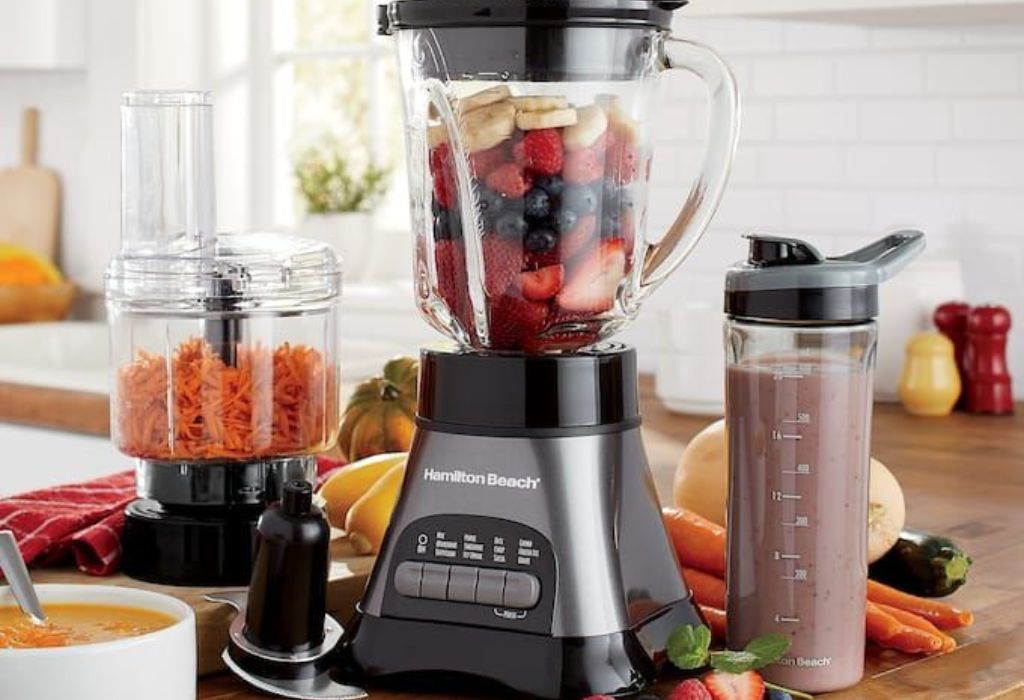
Models like the Hamilton Beach Personal Blender (14 oz) and the Power Elite (40-oz, ~700 W) represent the brand’s entry and value segments.
The Personal Blender is compact and affordable but has limitations in capacity and power. (Shouldit) The Power Elite is praised for simple preset modes and adequate performance in basic recipes. (GearLab)
These models are ideal for individuals or small households focusing on smoothies and soft ingredients. They may be less suitable if you regularly blend thicker mixtures or icy ingredients.
Mid-Range Models with More Features
In the mid-range you find models like the Hamilton Beach Wave Crusher Multi-Function Blender with 40-oz glass jar and hot-blend capability (to a limited degree).
(RTINGS.com) This offers better applicability for everyday cooking—soups, sauces, smoothies—though still with limitations (e.g., ice-crushing struggles).
Specialty & Single-Serve Models
For very small batches or portable blending, Hamilton Beach also offers personal/portable models such as the one-button Personal Blender reviewed at TechGadgetsCanada.
(TechGadgetsCanada.com) These are great for single-serve smoothies, but less suited for whole-meal prep or large batches.
Performance for Everyday Cooking: How Does It Handle Real-World Tasks?
Smoothies, Shakes & Soft Blends
In everyday use, many Hamilton Beach blenders perform well for tasks like blending banana, yogurt, berries, and soft ingredients. One review noted that frozen fruit smoothies were handled effectively by the personal blender (though ice alone wasn’t).
(TechGadgetsCanada.com) Similarly, the Power Elite blended berry mixes into “delicious albeit relatively thin smoothies.” (GearLab)
Thus, for smoothie-centric routines, Hamilton Beach can deliver reliable results at a good value.
Pureeing Soups and Sauces
For pureed soups or sauces with cooked vegetables, Hamilton Beach models with glass jars and decent motors (40 oz and up) handle fibrous veggies reasonably well.
The Wave Crusher model got a “7.0” rating for multi-purpose performance in tests, especially pureeing fibrous ingredients.
(RTINGS.com) Hot-blending is possible though limited: the review notes you should not add over 25 oz of hot liquids though the jar is 40 oz capacity. (RTINGS.com)
This makes the brand viable for everyday cooking tasks—not just smoothies, but also soups and sauces.
Ice-Crushing & Frozen Ingredients
Here the trade-offs become more obvious. Many reviews show Hamilton Beach models struggle with heavy ice loads. The Wave Crusher was rated only 4.6/10 for ice-crushing performance. (RTINGS.com) The personal blender review stated it “can’t crush ice.” (RTINGS.com)
If your typical cooking includes large quantities of ice, frozen fruit chunks, or nut butter preparation, you may find the performance less than ideal.
Consistency, Noise & Reliability
Noise and consistency matter in a home kitchen. While Hamilton Beach doesn’t emphasise ultra-quiet operation like premium brands, reviews note that the base units stay reasonably quiet for typical use.
However, build quality and long-term durability vary: users on forums report that heavy ice use causes more frequent motor failure. (Reddit)
In summary: For moderate everyday cooking needs (smoothies, soups, sauces, moderate frozen fruit), Hamilton Beach hits the mark. For intensive blending (large ice loads, thick doughs, frequent heavy use), there are limitations.
Build Quality, Materials & Long-Term Reliability
Construction Materials & Jar Design
Hamilton Beach uses a mix of materials: plastic bases, glass or plastic jars, stainless-steel blades. The glass jars (as seen in the Wave Crusher line) are a plus for durability and non-absorption of odors.
(RTINGS.com) Some entry models, however, use lower-grade plastics and thinner couplings, which may wear faster. (Shouldit)
Warranty, Parts & Service
Hamilton Beach as a brand (founded in 1910 and still active) has the infrastructure for aftermarket parts and support. (Wikipedia) Replacement jars, lids and even blades are available across many models.
This improves the long-term value of a blender because worn parts can be replaced without discarding the whole unit.
Durability in Real-Use Conditions
Reviews and user forums suggest that with correct usage (avoiding overload, cutting back on heavy ice loads, cleaning regularly), a Hamilton Beach blender can reliably serve a home kitchen for 3-5 years or more. But heavier usage or pushing past its limitations may shorten that lifespan. (Reddit)
So if you treat the machine according to its capacity—not pushing it like a commercial unit—it gives good durability in the home context.
Value for Money: Is It Worth It?
When assessing value, compare features, performance, durability and cost. Hamilton Beach blenders typically fall in the budget to mid-budget price range — often under $100 for full size models.
Feature-to-Cost Ratio
Models like the Power Elite deliver key features (glass jar option, ~700 W motor, preset functions) at a modest price. TechGearLab calls it “about as basic as it gets” but “serviceable option for making smoothies.”
(GearLab) In the Best Value pick of Allrecipes (over 50 blenders tested), the Hamilton Beach Power Elite was highlighted for its combination of value and performance. (Allrecipes)
Ideal User-Profiles for Value
If your blending needs revolve around everyday cooking tasks—smoothies, soups, sauces, dips—and your household size is small to moderate, the value offered is strong. You’re not paying a premium for commercial power or advanced features you won’t use.
When the Trade-Offs Matter
If you need blender performance at a specialist level—large batch ice crushing, frequent nut-butter making, commercial-style throughput—the trade-offs (motor power, build materials, jar capacity) become more visible.
In that case, you may get better long-term value by stepping up to a higher-spec brand, if you’ll truly use those features regularly.
How Hamilton Beach Blenders Compare to Other Brands
Against Mid-Budget Brands (e.g., Oster, KitchenAid)
Compared to brands like Oster and KitchenAid, Hamilton Beach holds up well on a budget. Jar designs and basic blending performance are comparable for many home tasks. However, build materials and motor robustness may be slightly less premium. The user may trade some performance for cost savings.
Against Higher-End Brands (e.g., Vitamix, Ninja)
Against high-end blenders with 1000-1500 W motors, advanced presets, vacuum jars or self-cleaning features, Hamilton Beach is not in the same league. For heavy ice, nut-butters, frozen vegetable big batches, those high-end machines shine. But for everyday cooking, the incremental benefit may not justify the cost.
In one video comparison the $22 Hamilton Beach was pitted against a $90 Ninja. While the Ninja did better in ice-tests, the Hamilton Beach held up fairly well in normal usage. (YouTube)
Summary of Comparative Position
Hamilton Beach offers a strong value proposition in the budget-to-mid segment for home kitchens. While not top-tier for high-demand blending, it meets the needs of most everyday users without over-investment.
Practical Tips to Get the Most from a Hamilton Beach Blender
Even a good blender will underperform if misused. Here are practical ways to maximise the performance and lifespan of your Hamilton Beach.
Use Correct Load Order & Speed Settings
Start with liquids, then soft ingredients, then harder/frozen items. This creates a vortex and helps efficient blending. Avoid overfilling—respect the jar capacity—especially for hot-blend models (e.g., the 25 oz limit for hot liquids in the Wave Crusher line). (RTINGS.com)
For Frozen Items & Ice
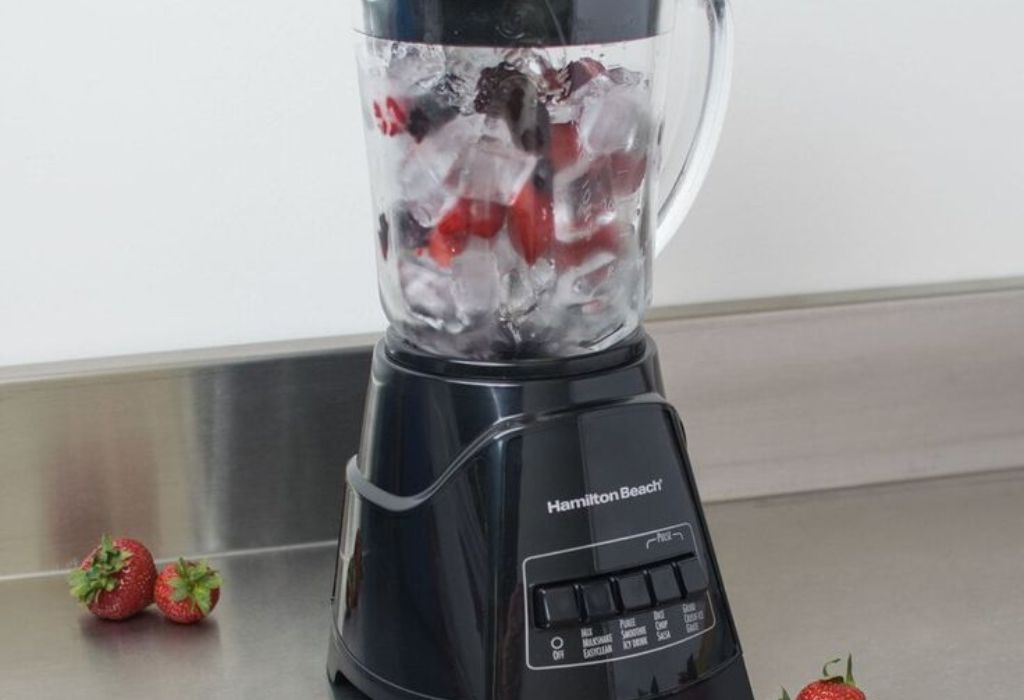
While basic Hamilton Beach models may struggle with pure ice loads, adding some liquid helps the blades engage better. Use pulse mode if available, break down large chunks, and consider smaller batches.
Cleaning & Maintenance
Immediately rinse or wash the jar after use to prevent residue and staining. Glass jars are more resistant to odor-absorption. Many models are dishwasher-safe (top rack). Ensure blade base and gasket are dry and clean before next use. Regularly inspect coupling and blade assembly to ensure no wear.
Avoid Overuse Beyond Capacity
Avoid using the blender for tasks beyond its design (e.g., grinding dry grains, making nut butter daily, blending large frozen blocks). These tasks shorten motor life. If you perform heavy duties occasionally, pulse in short bursts and allow cooling intervals.
Store Smartly
Keep the base and jar accessible; regular use helps maintain motor function. Residual food in couplings, or storing with lid off can degrade components.
By following these guidelines, the machine will serve reliably for everyday cooking needs.
Final Verdict: Are Hamilton Beach Blenders Good for Everyday Cooking?
Putting all the evidence together, the answer is yes — Hamilton Beach blenders are good for everyday cooking, provided the usage aligns with realistic expectations. They deliver solid performance for smoothies, soups, sauces and moderate blending tasks.
Their combination of reasonable motor power, adequate jar capacity, user-friendly cleaning and strong value makes them a smart choice for typical home kitchens.
However, they are not perfect for every scenario. Heavy ice-crushing, large batch frozen fruit processing, frequent nut-butter or dough blending may push them beyond their optimal range. Construction materials and motor longevity may not match premium models in those contexts.
But for the majority of home cooks who want a dependable, affordable, easy-to-use blender for everyday cooking—not commercial or ultra-high-end performance—Hamilton Beach hits the balance.
If your cooking habits involve moderate blending, this brand offers strong value. If you know you’ll push the machine’s limits, then either temper expectations or consider a higher-spec alternative.
Are Hamilton Beach blenders powerful enough for daily use?
Yes, most models feature 600–700 W motors, ideal for smoothies, soups, and sauces.
Can Hamilton Beach blenders crush ice well?
They can handle small ice batches, but struggle with heavy frozen loads.
Are the jars glass or plastic?
Both types exist—glass jars resist stains, while BPA-free plastic jars are lighter.
Do Hamilton Beach blenders overheat easily?
Not under normal use, though constant heavy blending may cause strain.
Is cleaning easy after cooking tasks?
Yes, most models have removable, dishwasher-safe parts for quick cleanup.
How long does a Hamilton Beach blender last?
Typically 3–5 years with proper use and maintenance.
Are the blades durable?
Yes, stainless-steel blades resist rust and perform well for soft to medium tasks.
Are they loud during operation?
Noise levels are moderate—quieter than many budget rivals but not silent.
Do they come with a warranty?
Yes, most models include a 3-year limited manufacturer warranty.
Are Hamilton Beach blenders worth buying?
Yes, they’re affordable, reliable, and ideal for everyday home cooking.
Conclusion
For everyday cooking—a morning smoothie, an afternoon sauce, a quick soup—many home kitchens don’t require the full-blast performance of a professional blender.
What matters more is consistency, ease of use, and minimal fuss. Hamilton Beach blenders deliver on that front with a compelling cost-to-benefit ratio.
By matching your usage to its strengths—moderate blends, soft or semi-frozen items, regular cleaning, avoiding overload—you’ll find that Hamilton Beach is indeed a good choice for home kitchens.
That doesn’t mean it’s perfect for all tasks, but for the vast majority of everyday blending needs it provides reliable, straightforward performance without breaking the bank.
So if you’re shopping for a blender that works well for meal preparation, sauces, smoothies and everyday kitchen routines—then yes, go ahead with confidence. A Hamilton Beach blender can serve as a dependable kitchen companion for years, as long as it’s treated in line with its design.

I’m Emma J. Caldwell, the founder, lead writer, and home-cooking enthusiast behind KitchenGuideCo.com. With a background in culinary arts and over a decade of cooking experience in both professional and personal kitchens, I created this platform to demystify recipes, offer smart kitchen gadget reviews, and guide readers through meal prep with confidence and clarity.