Morning routines often start with a rush — a quick breakfast, a packed schedule, and the need for something nutritious to keep the energy up. Smoothies have become the go-to solution, but lugging out a heavy countertop blender can feel like an extra chore.
That’s where the compact immersion blender catches attention. It promises speed, convenience, and minimal cleanup, all in one sleek tool. But can such a small device really create a creamy, lump-free smoothie that rivals a traditional blender?
Many home cooks wonder if this handy stick blender is powerful enough to crush frozen fruit or blend fibrous greens. The curiosity isn’t misplaced — motor strength and blade design matter more than most realize.
According to a Consumer Reports study, the average immersion blender has a power range between 200 and 800 watts, while high-end countertop blenders often exceed 1,200 watts (source). Another report from Serious Eats found that immersion blenders excel for single-serving smoothies but may struggle with large frozen batches (source).
Despite these limitations, the appeal is undeniable. Quick rinsing, less clutter, and blending right in the glass make them an attractive choice for anyone with a busy lifestyle.
What Is an Immersion Blender?
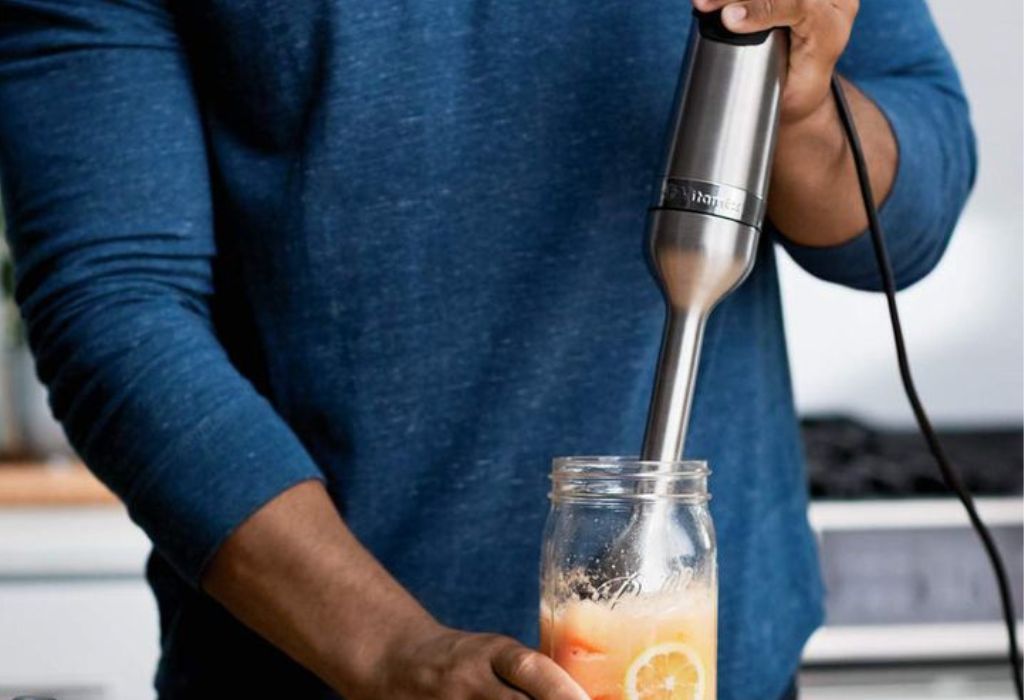
An immersion blender, often called a hand or stick blender, is a compact kitchen tool designed to blend ingredients directly in the container where they’re prepared. Its slim body and detachable blending arm make it easy to use for soups, sauces, and of course, smoothies.
Unlike bulky countertop blenders, immersion blenders don’t require transferring liquids into a separate jar. This minimizes mess and cleanup time while allowing more control over texture. The design makes them especially practical for small kitchens or those who prefer quick preparation.
According to KitchenAid, immersion blenders are ideal for single servings and small batches, blending efficiently without taking up counter space (source). Their blades rotate at high speeds, creating a vortex that pulls ingredients down for consistent blending.
These devices usually come with variable speed settings and interchangeable attachments such as whisks or choppers, expanding their versatility beyond smoothies.
The question remains: how different are they from full-sized blenders when it comes to power and performance?
What exactly is an immersion blender?
It’s a handheld blending tool that allows you to mix or puree ingredients directly in bowls, jars, or pots.
How does a stick blender differ from a countertop blender?
A stick blender is smaller, portable, and better suited for quick blending tasks, while a countertop blender handles larger volumes.
What attachments are commonly included?
Most models include a whisk or mini chopper for added functionality.
Is a hand blender the same as an immersion blender?
Yes, both terms describe the same handheld blending device.
What motor power range is typical?
Most immersion blenders range between 200 and 800 watts, ideal for soft to moderately tough ingredients.
How Well Do Immersion Blenders Handle Smoothies?
Immersion blenders promise a lot for smoothie lovers — fast blending, easy cleanup, and no need to move ingredients between containers. But performance can vary widely depending on what you toss into the mix.
For soft fruits, yogurts, and liquids, an immersion blender performs impressively, creating a smooth and drinkable texture within seconds. However, when frozen fruits or ice cubes are added, the results may not always be as silky as those made in a countertop blender.
According to Consumer Reports, immersion blenders can blend frozen ingredients but often leave small chunks when dealing with large ice pieces or fibrous greens (source).
Tests from Serious Eats also found that while some high-end models handled smoothies effectively, budget options struggled to maintain consistency across thicker mixtures (source).
The shape of the container also plays a key role. Tall, narrow jars help create a vortex for smoother blending, while wide bowls may cause splattering and uneven textures.
Can you make a smoothie with an immersion blender?
Yes, it can make a smoothie, especially with soft fruits and liquids, though texture may vary.
Does the texture match a full-size blender’s result?
Not always. Countertop blenders typically produce a creamier consistency due to higher power.
Can it handle frozen fruit and ice?
Only to a degree. Overloading the blade with ice or hard chunks can strain the motor.
What type of container works best for blending smoothies?
A tall, narrow cup or mixing beaker helps reduce splatter and ensures even blending.
Does batch size affect performance?
Yes, smaller single servings work best since immersion blenders are designed for compact mixing.
Key Advantages of Using an Immersion Blender for Smoothies
Convenience is the biggest advantage of using an immersion blender for smoothies. Its portable design allows blending directly in the cup or glass, eliminating the need for multiple containers.
Cleanup is fast — rinse the blade under running water, and it’s ready for the next use. For those who value simplicity, this feature alone can make it worth the investment.
According to The Spruce Eats, immersion blenders are ideal for quick, small portions and save significant time during busy mornings (source). The compact size also makes them a favorite among apartment dwellers or those with limited counter space.
Is it more convenient than a traditional blender?
Yes, especially for single servings and minimal cleanup.
Does it save time and space?
Absolutely. It’s smaller, lighter, and easier to clean.
Can it handle single-serving smoothies well?
Yes, it’s built for small portions rather than large batches.
Is it safer for small containers?
Yes, the wand can fit into jars or tall cups, offering better control.
Can it blend directly in a drinking glass?
Yes, and this reduces mess and makes serving immediate.
Common Limitations and When It Might Not Be Ideal
While immersion blenders shine in convenience, they fall short in power compared to full-size blenders. Most models aren’t built for heavy-duty blending like crushing large ice chunks or processing tough fibrous vegetables.
The blades are smaller and the motor weaker, making it harder to achieve the ultra-smooth texture preferred in high-protein or frozen smoothies.
Bon Appétit notes that immersion blenders can overheat when used continuously for thick mixtures or frozen ingredients (source). Over time, this can shorten the motor’s lifespan.
Does it crush ice as effectively as a countertop blender?
No, full-size blenders perform better with large ice or frozen fruit.
Can it handle tough greens like kale?
Not perfectly — results may be coarse or uneven.
Is it suitable for big batches?
No, immersion blenders are best for single servings.
Can the motor overheat with thick mixtures?
Yes, overuse can strain lower-wattage models.
Should you own both types of blenders?
If smoothies are a daily habit, having both ensures flexibility.
Best Practices for Making Smoothies with an Immersion Blender
To get smooth results, ingredient order and blending technique matter more than most realize. Always start with softer ingredients and liquids, letting gravity pull them toward the blade for smoother blending.
KitchenAid recommends using a tall, narrow vessel to create a stronger vortex and reduce splashing (source). Cutting frozen fruit into smaller pieces also helps reduce strain on the motor.
What order should ingredients go in?
Liquids first, then soft fruits, with frozen pieces or ice last.
What speed setting works best?
Begin at low speed, then gradually increase for a creamy texture.
What type of container is ideal?
Use a tall cup or blending beaker to contain splatter.
Which ingredients blend easily?
Bananas, berries, and yogurt mix well; fibrous greens need more time.
How should it be cleaned after blending?
Detach the wand and rinse immediately to prevent food residue buildup.
Choosing the Right Immersion Blender for Smoothies
Not all immersion blenders perform equally. The right choice depends on motor power, blade design, and attachment versatility.
High-wattage models (500–800 W) deliver better results for thicker smoothies and frozen ingredients. Variable speed options allow users to control texture and consistency.
Bon Appétit reports that models with stainless steel shafts and removable arms are easier to clean and last longer (source).
What motor power is ideal?
At least 400–600 W for standard smoothies and frozen fruit.
Are variable speeds useful?
Yes, they allow better control over texture.
Does a detachable blending arm help?
Yes, it simplifies cleaning and improves safety.
Is cordless better than corded?
Cordless offers mobility, but corded versions usually have more power.
Which brands are reliable?
KitchenAid, Braun, and Breville often rank highest in performance and durability.
Smoothie Recipe Ideas and Ingredient Combinations
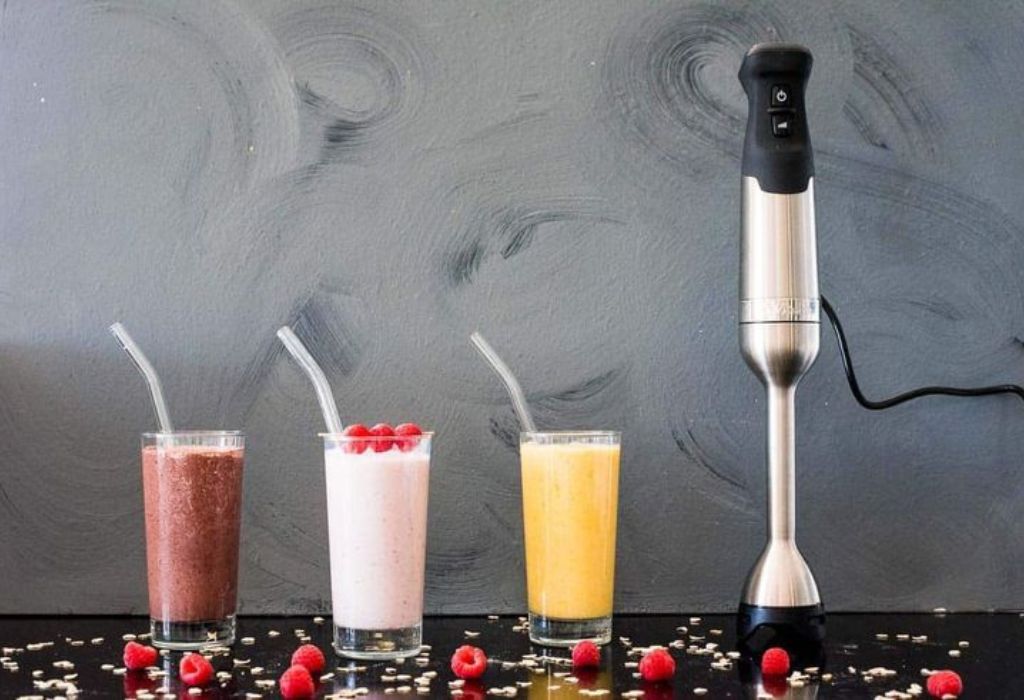
Smoothies made with an immersion blender can be as creative as they are convenient. Whether it’s a refreshing fruit mix or a high-protein energy drink, the right combination of ingredients ensures both flavor and nutrition.
Because immersion blenders work best with soft or semi-frozen ingredients, it’s smart to start with easy-to-blend fruits like bananas, strawberries, mangoes, or peaches. These create a naturally creamy texture without needing heavy ice. Adding yogurt or milk improves consistency and provides extra protein.
For those who prefer plant-based options, almond milk, oat milk, or coconut milk make excellent bases. They complement both sweet and green smoothies, giving a lighter and smoother finish.
If you want a thicker, colder drink, use small pieces of frozen fruit instead of large ice cubes. According to KitchenAid, blending frozen fruit directly in a tall glass reduces splashing and helps maintain a balanced texture (source).
Here are some simple recipe combinations to try with an immersion blender:
1. Classic Berry Boost
Blend half a banana, a handful of mixed berries, Greek yogurt, and a splash of milk for a creamy antioxidant-packed smoothie.
2. Tropical Morning Energizer
Combine mango, pineapple chunks, coconut milk, and a drizzle of honey for a sweet and refreshing tropical blend.
3. Green Power Smoothie
Mix spinach, kiwi, apple slices, and almond milk for a nutritious, fiber-rich drink with a fresh kick.
4. Protein Fuel Blend
Use peanut butter, banana, chocolate protein powder, and oat milk for a high-energy workout smoothie.
Can you use frozen fruit without ice?
Yes, smaller frozen fruit pieces blend smoothly without diluting flavor.
Can you add greens like spinach or kale?
Yes, but expect a slightly thicker or coarser texture.
What liquids work best for immersion blending?
Milk, plant-based alternatives, and yogurt provide creaminess and consistency.
Should large fruits be pre-chopped?
Yes, cutting into smaller chunks ensures even blending.
Can you make protein or meal-replacement smoothies?
Yes, adding protein powder or nut butter makes them filling and nutrient-rich.
Conclusion
Immersion blenders prove that powerful results can come from compact tools. When used correctly, they deliver smooth, flavorful, and nutrient-packed smoothies with minimal effort.
Their lightweight design, fast cleaning, and ability to blend directly in the glass make them a game-changer for quick morning routines or post-workout refuels.
However, understanding their limitations is essential — they aren’t built for crushing large ice cubes or handling heavy batches like countertop blenders.
Choosing high-quality ingredients, pre-cutting frozen items, and using the right container can make all the difference. For small-batch smoothie lovers, the immersion blender is more than enough to create delicious blends anytime.
Experiment with your favorite combinations, adjust thickness to your liking, and enjoy how effortlessly this small tool can fit into a healthy lifestyle. With the right technique, an immersion blender can transform simple ingredients into a perfectly blended smoothie every single time.

I’m Emma J. Caldwell, the founder, lead writer, and home-cooking enthusiast behind KitchenGuideCo.com. With a background in culinary arts and over a decade of cooking experience in both professional and personal kitchens, I created this platform to demystify recipes, offer smart kitchen gadget reviews, and guide readers through meal prep with confidence and clarity.