A morning smoothie has become a symbol of convenience and healthy living. Yet many people still wonder if their blender can deliver the creamy, lump-free texture that makes a smoothie truly satisfying.
The question often arises — are KitchenAid blenders good enough to make that perfect blend without the noise and hassle?
The sleek design and trusted name of KitchenAid draw plenty of attention, but appearance alone doesn’t guarantee performance. Smoothie enthusiasts need a machine that can crush frozen fruit, grind fibrous greens, and mix thick ingredients with ease.
According to Rtings, the popular KitchenAid K400 blender earned an 8.4 rating for smoothie performance, producing a velvety consistency across various fruit blends (source).
Another TechRadar review praised the brand’s solid construction and long-lasting motor system, noting that it can rival some higher-end competitors (source).
Still, not all models deliver the same results. Some users claim that entry-level KitchenAid blenders struggle with heavy frozen ingredients or large smoothie batches. This contrast creates curiosity about which models truly stand out for performance and reliability.
What Are KitchenAid Blenders?
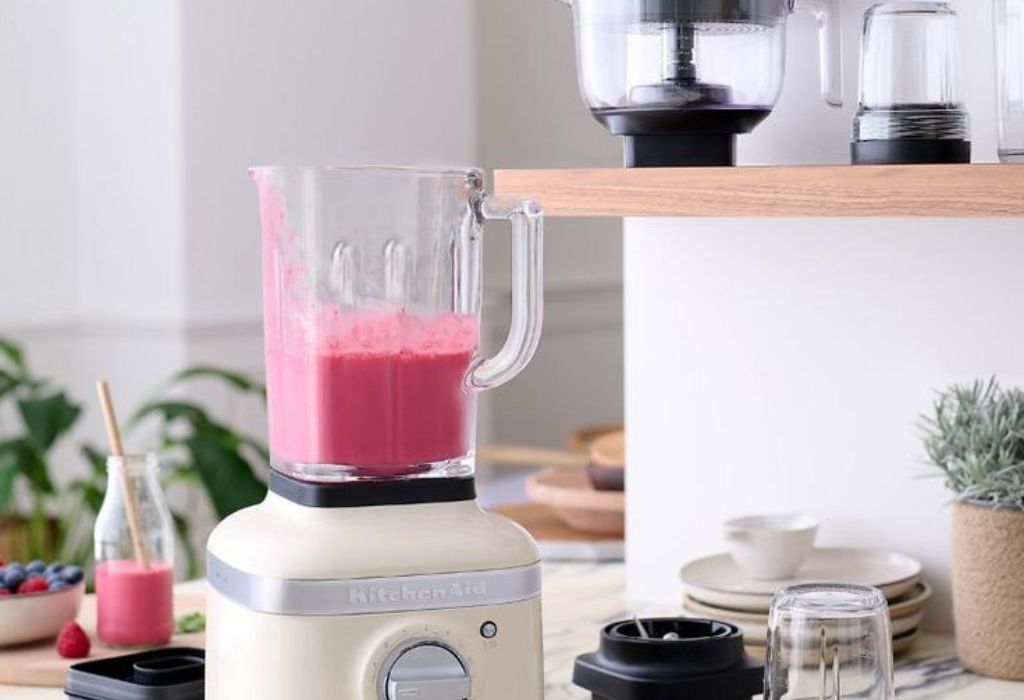
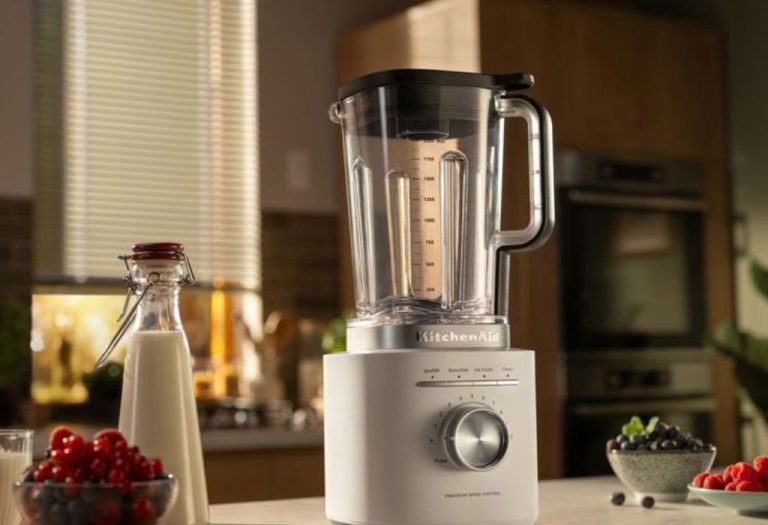
KitchenAid blenders are part of a premium line of countertop appliances recognized for their strength, precision, and longevity. Built by the same brand famous for its stand mixers, these blenders blend aesthetics with functionality, making them a favorite in both home and semi-professional kitchens.
Each model features a robust motor base, durable stainless-steel blades, and variable speed settings designed for everything from pureeing soups to crushing ice for smoothies. Their sturdy construction ensures that they can handle both light and heavy-duty blending tasks with ease.
According to Rtings, models like the KitchenAid K400 are engineered to handle challenging ingredients, producing consistent results in every use (source).
The brand’s attention to detail—like jar design, blade angle, and preset modes—helps maximize blending efficiency while minimizing noise and vibration.
KitchenAid offers different blender tiers: entry-level options like the K150 for simple tasks, the K400 for daily smoothie lovers, and high-performance models for professional-grade blending. Their sleek, modern designs also complement any kitchen setup, offering a balance of power and visual appeal.
What is a KitchenAid blender?
It’s a countertop blender built for home and semi-professional use, known for smooth blending, powerful motors, and stylish design.
What key features do they include?
They typically include stainless-steel blades, a heavy motor base, and multiple speed or preset options.
What sizes are available?
Most come with jars ranging from 48 to 60 ounces—ideal for single or family servings.
How do they differ from low-cost brands?
They offer stronger build quality, quieter performance, and better control settings for texture.
What is the average power rating?
Motor power usually ranges between 650 and 1200 watts, enough to crush ice and process fibrous ingredients effectively.
How Good Are KitchenAid Blenders for Smoothies?
When it comes to smoothies, KitchenAid blenders stand out for their consistency and reliability. Their powerful motors and intelligently designed blades can crush frozen fruit, blend greens, and mix proteins with a smooth finish.
The KitchenAid K400, for instance, has been praised for creating silky, lump-free textures even with fibrous ingredients like spinach or kale. According to TechGearLab, its asymmetric blade design pulls ingredients toward the center, ensuring even blending across the jar (source).
Their preset smoothie mode takes the guesswork out of blending by automatically adjusting speed and time for optimal results. For busy mornings, this means effortless, café-quality smoothies with minimal preparation and cleanup.
However, some entry-level models, such as the K150, may take longer when blending frozen ingredients or thick mixtures. Even so, for most home users, they deliver a smooth texture suitable for daily use without the noise and complexity of industrial machines.
Are KitchenAid blenders good for smoothies?
Yes. Models like the K400 consistently produce creamy smoothies, even with frozen fruits and leafy greens.
Can they crush ice and frozen ingredients effectively?
Yes, mid-to-high-tier models handle ice and frozen berries with ease, leaving minimal chunks.
Do they handle fibrous ingredients well?
Yes, the blade and jar design help break down fibers, resulting in smooth, consistent drinks.
Does jar size affect blending performance?
Larger jars offer more room for circulation, improving results for multiple servings.
Is the texture comparable to premium blenders?
Almost. While ultra-premium blenders like Vitamix may create slightly finer results, KitchenAid blenders deliver excellent consistency for their price range.
Key Advantages of KitchenAid Blenders for Smoothie Lovers
KitchenAid blenders are designed to balance power, design, and everyday usability. Their sturdy build and consistent blending ability make them stand out for home users who want smooth, creamy drinks without the bulk of a commercial blender.
Their stainless-steel blades and intelligently designed jars create a strong vortex that pulls ingredients down for even blending. According to TechRadar, the KitchenAid K400 consistently produces silky smoothies with minimal residue, proving its effectiveness for daily use (source).
The large jar capacity also makes it easy to prepare multiple servings in one go, while the preset functions for smoothies and ice crushing remove guesswork. For those seeking convenience and durability in one appliance, KitchenAid blenders deliver a reliable performance every time.
What are the biggest benefits when making smoothies?
KitchenAid blenders offer consistent blending, strong motors, and pre-programmed settings that simplify smoothie-making.
Is build quality and durability better than budget brands?
Yes. KitchenAid blenders are built with heavy-duty bases and metal couplings, lasting longer than most plastic-body blenders. (source)
Do speed settings and presets help for smoothie making?
Absolutely. The variable speed control and preset modes allow you to adjust blending texture and achieve uniform consistency.
Is cleanup and usability improved?
Yes. The self-cleaning cycle and dishwasher-safe jars make cleaning effortless after each use. (source)
Does it suit everyday use and home kitchens?
Yes. Its compact design and smooth operation fit perfectly into modern kitchen routines, even for daily blending.
Common Limitations and When KitchenAid May Not Be Ideal
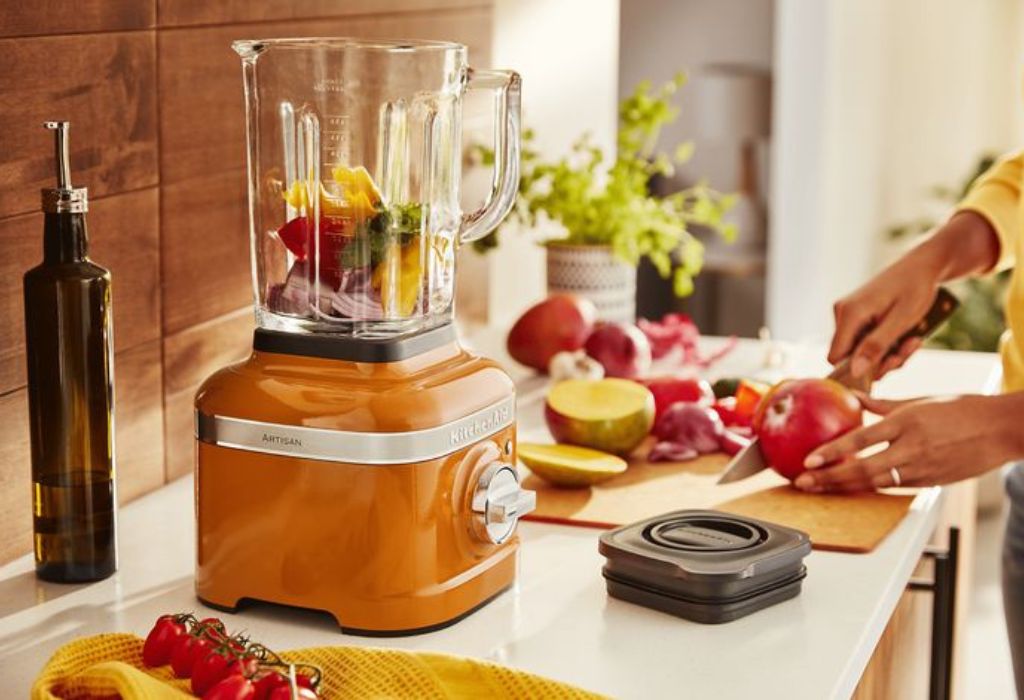
While KitchenAid blenders excel in many areas, they’re not without limitations. Certain models may lack the raw power needed for ultra-thick smoothies or heavy-duty blending.
The entry-level models, such as the K150, can struggle when tackling large amounts of ice or frozen fruit. Reviews from Rtings show that lower-end versions sometimes leave small chunks in thick mixtures (source).
The larger models also take up more counter space and can feel bulky in smaller kitchens. Some users find the higher-end units a bit pricey compared to competitors offering similar features.
What are the main drawbacks?
While KitchenAid blenders offer quality performance, they can fall short in crushing very dense frozen ingredients or nut butter.
Can they struggle with thick or heavy mixtures?
Yes. Even the stronger models may require extra blending time or additional liquid to process dense textures effectively.
Is ice-crushing performance always top tier?
Not always. While capable, they may take longer to fully crush ice compared to high-end brands like Vitamix or Blendtec.
Does size or design affect usability?
Yes. The larger jar and wide base might not be ideal for smaller countertops or compact kitchens.
Is the cost justified for occasional smoothie drinkers?
For infrequent use, the investment might be unnecessary since smaller, more affordable blenders can handle light tasks.
Best Practices to Get Smoothie Results with a KitchenAid Blender
Making perfect smoothies in a KitchenAid blender depends on proper technique and preparation. Ingredient order, blending speed, and liquid ratio all play vital roles in achieving a creamy texture.
Start by adding liquids first, then soft ingredients, followed by frozen fruits or ice. This ensures better circulation and prevents air pockets from forming near the blades. According to KitchenAid, layering ingredients this way helps create a consistent vortex and smoother blend (source).
Always blend in short intervals when handling frozen ingredients to prevent overheating the motor. Regular cleaning also keeps performance consistent over time.
What ingredient order works best?
Liquids at the bottom, then soft fruits, with frozen ingredients or ice on top.
Which speed setting should be used?
Start at a low speed, then gradually increase to high for a perfectly smooth finish.
How to choose jar size for smoothie batches?
Use 48–56 oz jars for family-size servings, or smaller personal cups for on-the-go smoothies.
How to maintain the blender for longevity?
Clean immediately after use, avoid overloading, and regularly check the blades for sharpness.
What smoothie recipes suit KitchenAid blenders best?
Fruit and yogurt blends, green smoothies with spinach or kale, and frozen berry smoothies with moderate ice content.
Which KitchenAid Model Should You Choose for Smoothies?
Choosing the right model can make a huge difference in performance and satisfaction. KitchenAid offers a range of blenders designed for different needs, from quick morning shakes to thick smoothie bowls.
The K150 is a budget-friendly option ideal for soft fruits and basic blending tasks. The K400 is a customer favorite for everyday smoothies thanks to its strong motor and preset programs. Meanwhile, the High-Performance Series KSB6060 delivers near-commercial results with more torque and blade strength.
According to TechRadar, the KSB6060 performs exceptionally well for frozen ingredients, giving it a near-professional rating for texture and consistency (source).
What model tiers exist for KitchenAid blenders?
The lineup includes entry-level (K150), mid-range (K400), and high-performance (KSB6060) models.
How much motor power is ideal for smoothies?
Models with 1200 watts or higher perform best for frozen fruits and thick blends.
Are variable speeds and preset programs worth it?
Yes. They provide better control and more predictable results for different smoothie textures.
Do accessories or jar materials matter?
Yes. Glass jars provide clarity and sturdiness, while extra cups and cleaning tools add convenience.
How to balance budget vs performance?
Casual users can opt for the K150 or K400, while daily smoothie enthusiasts should consider high-performance options.
Smoothie Recipe Ideas and Ingredient Combinations
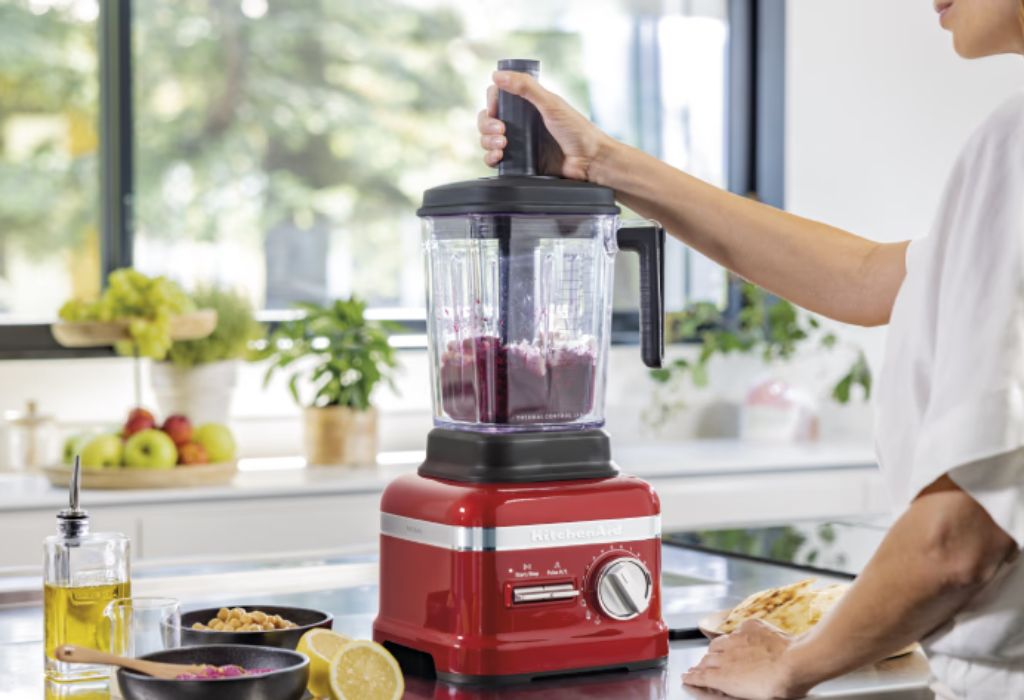
Experimenting with smoothie recipes is one of the best ways to appreciate the versatility of a KitchenAid blender. From fruity breakfasts to green detox blends, it can handle most recipes with ease when the ingredients are layered correctly.
1. Berry Protein Boost
Blend frozen strawberries, blueberries, banana, Greek yogurt, and protein powder for a nutrient-packed drink.
2. Tropical Energy Smoothie
Combine mango, pineapple, coconut milk, and a spoon of honey for a refreshing tropical mix.
3. Green Detox Blend
Use spinach, green apple, cucumber, and lime juice for a revitalizing and fiber-rich smoothie.
4. Chocolate Peanut Power Shake
Blend cocoa powder, banana, peanut butter, and almond milk for a dessert-style smoothie that fuels your day.
Can you use frozen fruit without adding ice?
Yes. Frozen fruit provides a thick texture and chills the smoothie naturally.
Can you add greens like kale or spinach?
Yes. These blenders can process fibrous greens, though adding extra liquid helps smooth the mix.
Which liquids create the best consistency?
Milk, almond milk, or yogurt work best for creaminess and flavor balance.
Should large fruits be pre-chopped?
Yes. Smaller pieces blend faster and prevent overloading the motor.
Can you make high-protein smoothies?
Yes. Adding nut butter, oats, or protein powder enhances nutrition and text
Conclusion
So, are KitchenAid blenders good for smoothies? The short answer is yes—very much so. They strike a remarkable balance between performance, design, and durability, offering home users a dependable option for daily blending.
From quick fruit smoothies to creamy protein shakes, these blenders consistently deliver smooth, even textures with minimal effort.
KitchenAid’s engineering ensures that each blend benefits from precision and power. The asymmetric blade system, variable speeds, and preset programs work together to process ingredients evenly and efficiently.
Whether you’re blending soft fruits, fibrous greens, or ice-heavy mixes, most mid- to high-range models perform impressively without overheating or leaving chunks behind.
However, it’s important to match the right model to your needs. The K150 is great for light, everyday tasks, while the K400 and KSB6060 High-Performance Series excel in tougher blending scenarios.
If you frequently make frozen smoothies or multi-serving batches, investing in one of the higher-powered models will ensure longer lifespan and smoother results.
In terms of build quality, KitchenAid maintains its reputation for craftsmanship. Their blenders feature solid motor bases, premium jars, and long-lasting blades, all supported by easy-to-clean designs.
According to TechRadar, these machines are not only durable but also aesthetically appealing, making them a smart addition to any modern kitchen (source).
While ultra-premium brands like Vitamix may edge them out in raw power, KitchenAid blenders provide outstanding value for their price. They blend fast, clean easily, and last for years—ideal for those who want professional-level smoothies without the commercial bulk or cost.
Ultimately, KitchenAid blenders are more than just “good” for smoothies—they’re reliable kitchen companions built for real-life use. If convenience, consistency, and design matter to you, a KitchenAid blender can easily become the centerpiece of your healthy routine.

I’m Emma J. Caldwell, the founder, lead writer, and home-cooking enthusiast behind KitchenGuideCo.com. With a background in culinary arts and over a decade of cooking experience in both professional and personal kitchens, I created this platform to demystify recipes, offer smart kitchen gadget reviews, and guide readers through meal prep with confidence and clarity.