Walking into a well-stocked appliance store, the tag “Made in USA” often stands out. It evokes visions of domestic manufacturing, shorter supply chains, and strong craftsmanship.
But when it comes to blenders from KitchenAid, the label raises an important question: are KitchenAid blenders made in the USA?
Many buyers today associate U.S. manufacture with higher quality, easier servicing, and supporting American jobs. At the same time, global supply chains complicate the simple narrative of “made here.”
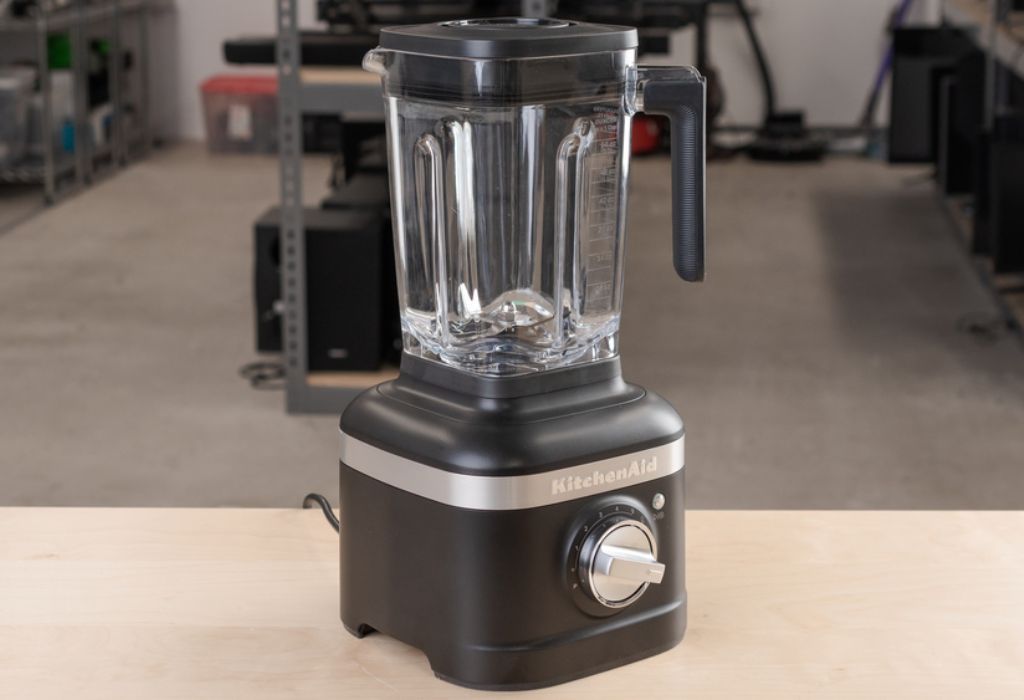
For example, one listing for a KitchenAid K400 blender states it is “Made in the USA with domestic and imported materials.” (Williams Sonoma)
This article digs into the full story: the history of KitchenAid manufacturing, how the “Made in USA” label is regulated, where its blenders are actually made today, why manufacturing location matters, how you can verify origin claims, and what your decision should really be based on.
By the end you’ll be equipped to interpret the label, weigh your values, and choose confidently.
KitchenAid Brand Origins and Manufacturing Legacy
Founded in 1919 by the Hobart Corporation, KitchenAid built its reputation on the stand mixer that became a fixture in American homes.
(Wikipedia) Production for those iconic mixers has taken place in Greenville, Ohio since 1941. (AllAmerican.org) That American manufacturing heritage underpins the brand’s identity today.
As the appliance lineup expanded to include blenders, food processors, and small countertop machines, the manufacturing footprint evolved. Some products retained domestic assembly; others adopted global sourcing of parts or assembly in other countries.
This hybrid model reflects modern manufacturing realities: cost-pressures, specialized component supply, and global logistics all play a role.
Evidence shows that while some KitchenAid appliances are still assembled in U.S. facilities, many use imported parts or overseas manufacturing for components.
For example, a brand investigation states: “Not all KitchenAid products are produced domestically… some are made in China, Canada, Mexico.” (AllAmerican.org) For blender buyers, it means the origin may vary by model.
Thus, the manufacturing legacy of KitchenAid is strongly American for certain flagship products but more nuanced when it comes to the blender category.
Understanding this helps set realistic expectations: the brand may be American-based, but the supply chain and assembly may cross borders.
What “Made in USA” Really Means for Appliances
The claim “Made in USA” carries marketing weight—but legally it’s more complex. The U.S. Federal Trade Commission (FTC) stipulates that a product labelled “Made in the U.S.A.” must be “all or virtually all” made domestically—parts, processing and final assembly must occur in the U.S. With global supply chains, reaching that threshold is challenging. (Everything Kitchens)
Many manufacturers instead use phrases like “Made in USA with domestic and imported materials” or “Assembled in USA.”
The listing for the KitchenAid K400 uses precisely such wording: “Made in the USA with domestic and imported materials.” (Williams Sonoma) This phrasing conveys that final assembly may be stateside, while key components come from abroad.
Importantly, “Assembled in U.S.A.” does not guarantee that most parts are U.S.-made. It only confirms where the final assembly happens.
Buyers seeking purely domestic supply should look for unqualified “Made in U.S.A.” claims and product documentation. That distinction matters for brands like KitchenAid whose manufacturing is blended.
In practical terms, origin alone doesn’t determine quality. Design, materials, manufacturing standards and after-sales support matter more.
But for consumers who value domestic jobs, supply-chain transparency or minimal global shipping, verifying “Made in USA” claims becomes significant.
Where KitchenAid Blenders Are Manufactured Today
The manufacturing story of KitchenAid blenders reveals a blend of U.S. assembly and global component sourcing. While some parts and final assembly happen in the United States, many components or sub-assemblies are imported.
One example: the product listing for the KitchenAid K400 blender states “Made in the USA with domestic and imported materials.”
(Williams Sonoma) This signals that while final assembly may occur in a U.S. facility, motors, electronics or plastics may originate overseas.
Additionally, brand documentation notes manufacturing plants in multiple U.S. states (Ohio, South Carolina, Indiana, Arkansas) but also acknowledges overseas production for other product lines. (AllAmerican.org)
Consequently, when purchasing a KitchenAid blender, the exact manufacturing origin may differ by model, batch or region. Some jars, blades or base units may be U.S.-made; others may not. Retailers may not always disclose full sourcing details.
For a buyer, the practical impact lies in serviceability and transparency rather than national origin alone.
It’s worth noting that assembly in the U.S. still offers benefits: domestic support networks, shorter shipping for replacement parts and adherence to U.S. labour and manufacturing standards.
While not a guarantee of all-American components, U.S. assembly adds value for many consumers.
Why Manufacturing Location Matters to Buyers
Manufacturing origin isn’t just a promotional label—it has real implications for consumer expectations and values.
Many buyers associate “Made in USA” with superior craftsmanship, stronger labour protections, better customer service and easier access to replacement parts. For KitchenAid blenders, these factors intersect with brand heritage and product perception.
From a social perspective, U.S. manufacturing supports domestic jobs, shorter supply chains and potentially lower carbon impact for U.S.-based consumers.
From a practical angle, appliances assembled domestically may benefit from better parts availability, streamlined service and clearer warranty pathways. For example, a domestic-assembled blender may allow quicker part dispatch from U.S. stock.
On the flip side, globalized manufacturing doesn’t inherently compromise quality—many components sourced globally adhere to high standards.
Yet transparency becomes key: if a model is partially overseas-made but labeled in a way that suggests full U.S. origin, the discrepancy may upset buyers seeking authenticity.
Investigations show that while KitchenAid stand mixers are assembled in Ohio, replacement parts may be imported. (AllAmerican.org)
Thus, origin influences more than patriotism—it affects perceptions of value, repairability and longevity. For buyers weighing their options, considering manufacturing origin alongside performance, warranty and parts availability leads to a more informed decision.
How to Verify Manufacturing Origin for a Blender
If you value domestic manufacturing or want clarity about origin, verifying the claims on a blender model is key. For KitchenAid, start at the product listing—for example, the K400 states “Made in the USA with domestic and imported materials.”
(Williams Sonoma) Next, inspect packaging and manuals: look for phrases like “Assembled in U.S.A.” or “Made in U.S.A. of domestic and imported parts.”
You can also contact customer service and ask for a parts-sourcing breakdown. Some consumer forums share user-reported sightings of packaging stating imported components in KitchenAid parts.
(AllAmerican.org) Checking for warranty terms, service-centre locations and availability of replacement parts in your region can also provide clues about manufacturing and supply-chain status.
If the company cannot provide clear sourcing details, and “Made in USA” is a priority for you, you might consider alternatives that guarantee higher domestic-content or full-U.S. manufacture.
Knowing this allows you to align your purchase with your values—whether that’s domestic production, performance or global design.
Does Manufacture Origin Impact Quality, Warranty & Parts?
Quality and origin are related but not inseparable. A blender assembled in the U.S. by KitchenAid leverages strong brand reputation, but performance still depends on materials, engineering, and user care.
Even when components are imported, stringent quality controls and design standards can maintain excellent performance.
Warranty and parts availability are influenced by manufacturing and distribution. Appliances assembled in the U.S. may benefit from domestic support networks and faster parts shipping. For instance, investigative reports found that while KitchenAid mixers are assembled in Ohio, replacement parts are frequently labeled as “made in China” which may lengthen delivery times. (AllAmerican.org) Thus, origin awareness becomes practical, not just ideological.
When comparing blenders, also consider your local service ecosystem—whether technicians and parts are readily available in your area. Ultimately, origin matters less than reliability, service, and lifespan.
However, for buyers who prioritize repairability and supply-chain transparency, manufacturing location remains a meaningful factor.
What Your Purchase Decision Should Consider

When choosing a KitchenAid blender and asking “are KitchenAid blenders made in the USA?”, your decision should be grounded in priorities: U.S. manufacture, performance, warranty, parts availability, or global pricing. Start by asking what you care about most.
If you value supporting U.S. manufacturing and labour, look for models explicitly labelled “Made in USA” without qualifiers. If performance, colour variety or price matter more, a U.S.-assembled, globally-sourced model may suffice.
Verify materials (glass vs plastic jar, motor wattage), service and parts availability. Check whether the retailer discloses origin and assembly details.
Cost will often reflect origin. U.S.-assembled models may command a premium. But the added cost may be worthwhile if your expectations include longevity, domestic service and domestic job support.
On the other hand, a blended origin model may offer excellent value without substantial quality compromise.
In the end, origin should be one factor among many. For KitchenAid blenders, the brand reputation, global supply chain and U.S. assembly mean you’ll likely receive a quality product. Align your purchase with your values and usage pattern for the best outcome.
Are KitchenAid blenders really made in the USA?
Many KitchenAid blenders are assembled in the USA, but they often include imported parts such as motors or electronic components. The brand’s official listings, like the K400 model, state “Made in the USA with domestic and imported materials.”
Where exactly are KitchenAid blenders assembled?
KitchenAid blenders are primarily assembled in U.S. facilities, such as plants in Ohio, Indiana, and Arkansas, though component sourcing is global. Larger KitchenAid appliances share some of the same production hubs.
Does “Made in USA with imported materials” mean 100% American?
No. That phrase means the product is assembled in the United States, but some materials or parts are produced abroad before being brought to the U.S. for final assembly and quality checks.
Are all KitchenAid products manufactured domestically?
No. While stand mixers and some blenders are U.S.-assembled, other KitchenAid products — such as hand mixers or smaller appliances — may be made in China, Canada, or Mexico, depending on the model.
Why doesn’t KitchenAid produce all parts in the USA?
KitchenAid, like many global brands, uses an international supply chain to access specialized components and maintain competitive pricing while still keeping assembly and design standards high.
How can I check if my KitchenAid blender is made in the USA?
Look for the origin statement on the product packaging, owner’s manual, or retailer listing. You can also contact KitchenAid customer support for model-specific manufacturing details.
Does being made in the USA affect the blender’s quality?
Quality depends more on design, materials, and testing than geography. KitchenAid maintains strict quality controls across all plants, ensuring reliable performance regardless of part origin.
Are U.S.-assembled blenders more expensive than imported ones?
Generally, yes. Products assembled in the U.S. may have higher labor and compliance costs, but many buyers see this as an investment in better support, faster parts service, and brand authenticity.
Does manufacturing origin impact warranty or repairs?
No. KitchenAid offers the same warranty coverage and repair service regardless of where the blender is assembled, as long as it’s purchased through authorized channels.
Should I prioritize “Made in USA” when buying a KitchenAid blender?
That depends on your values. If supporting American manufacturing and local jobs matters most, choose a U.S.-assembled model. If you prioritize features and performance, imported-part models perform just as well.
Conclusion
The question “Are KitchenAid blenders made in the USA?” requires a nuanced answer. While KitchenAid has deep American manufacturing roots—especially with its iconic stand mixers assembled in Ohio—the blender line blends U.S. assembly with global component sourcing.
Listings such as “Made in the USA with domestic and imported materials” reflect that reality. (Williams Sonoma)
That doesn’t diminish quality. U.S. assembly supports serviceability, domestic labour and established warranty infrastructure. But it also means not every component is purely domestic. If full U.S. manufacture is your key criterion, verify model-specific claims and component origins.
If your priority is performance, design and brand support, the global-sourced, U.S.-assembled KitchenAid blender remains a strong choice.
Ultimately, choosing a blender comes down to aligning your values with product specs and manufacturing reality.
Whether you’re supporting domestic industry, seeking premium performance or balancing cost and features, the right KitchenAid model can fit your needs. Understanding the origin story simply helps you decide with clarity—and buy with confidence.

I’m Emma J. Caldwell, the founder, lead writer, and home-cooking enthusiast behind KitchenGuideCo.com. With a background in culinary arts and over a decade of cooking experience in both professional and personal kitchens, I created this platform to demystify recipes, offer smart kitchen gadget reviews, and guide readers through meal prep with confidence and clarity.