Every home cook has faced this moment: standing over a glass of ice, immersion blender in hand, wondering if it can handle the challenge. The question can immersion blenders crush ice often comes just before a risky experiment that could end in victory or a damaged appliance.
It sounds simple, yet the outcome can vary wildly. Some claim their hand blender turned ice cubes into fine slush within seconds, while others report sparks, dull blades, or even motor burnout.
Curiosity grows when you realize these compact tools are powerful enough to puree soups and whip cream but seem fragile against solid ice. Can a stick blender really rival a countertop machine, or does the secret lie in technique and preparation?
Recent kitchen tests show mixed results. In a Serious Eats study, high-end models with wide blade guards crushed ice successfully, while weaker ones struggled even after 45 seconds (source).
Another report from Consumer Reports found that performance depends heavily on wattage and design (source).
Understanding how to safely use an immersion blender for ice could save money and frustration. It also opens the door to new possibilities like frozen drinks, smoothies, and desserts without bulky countertop blenders.
What “Can Immersion Blenders Crush Ice” Really Means
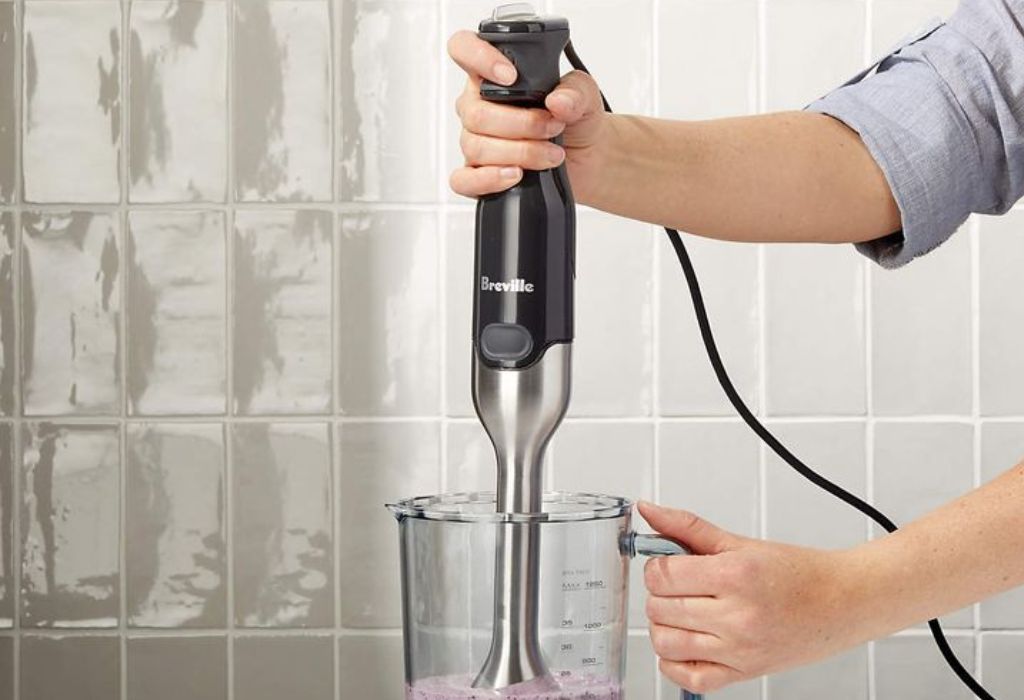
The phrase can immersion blenders crush ice seems straightforward but hides a complex reality.
Most immersion blenders, also known as hand or stick blenders, are designed to blend soups, sauces, and soft foods, not hard materials like ice. Yet many home users test their limits, hoping to turn cubes into smooth, drinkable slush.
Crushing ice means more than breaking it apart. True ice crushing creates consistent, fine shards that mix easily into frozen drinks or smoothies.
Without the right power or blade design, an immersion blender often ends up chipping only the edges, leaving behind half-melted chunks that ruin texture and strain the motor.
Unlike countertop blenders, which trap ingredients in a vortex, immersion blenders rely on constant movement to keep ice and liquid circulating. The lack of a sealed container makes ice-crushing harder and riskier.
Manufacturers often caution against this practice to avoid blade dulling or motor burnout, but some higher-end models can handle light ice loads when used properly.
Understanding what “crushing ice” truly means helps set realistic expectations and prevents equipment damage. Before attempting, it’s essential to know your model’s power rating, blade type, and manufacturer’s guidelines.
Can any immersion blender crush ice cubes on its own?
No. Most models cannot handle solid ice without liquid or added support.
What counts as crushing ice versus blending iced ingredients?
Crushing involves breaking cubes into smaller, even pieces, while blending just mixes ice with other elements.
Does adding liquid change performance?
Yes. Liquid creates a smoother vortex, reducing strain and improving consistency.
Are countertop blenders still better for ice?
Absolutely. Their higher wattage and enclosed containers make them superior for large ice loads.
Why isn’t the answer to can immersion blenders crush ice simple?
Because success depends on wattage, blade design, container shape, and user technique.
Design and Power Factors That Affect Ice Crushing
When asking can immersion blenders crush ice, the first thing to consider is power. Ice is one of the hardest materials for small kitchen appliances to handle, and only models with strong motors can manage it safely.
Lower-powered hand blenders may stall or overheat, while higher-wattage models (typically above 500 watts) stand a better chance at breaking down cubes efficiently.
Blade design plays an equally important role. Immersion blenders with wider blade guards and open vents allow better circulation, creating a stronger vortex that pulls ice and liquid toward the blades.
According to Serious Eats, models with larger guards and sharper stainless-steel blades performed far better in ice tests than compact or narrow designs (source).
The container you use can also influence the result. A tall, narrow blending jar helps keep ice closer to the blades, while wide bowls or cups cause scattering and uneven crushing.
Manufacturers like Philips and Braun specifically warn users to avoid dry ice blending, suggesting instead to include water or liquid for smoother motion (source).
Ignoring design limits can lead to dull blades, cracked guards, or burnt motors. Always read your user manual before attempting to crush ice. If your blender isn’t rated for frozen ingredients, it’s best to use a countertop or personal blender for the task.
How much motor power do you need for ice crushing with an immersion blender?
Models rated around 500 to 1000 watts can handle light ice loads better than lower-powered ones.
Why does blade guard width matter?
A wider guard improves suction and lets ice flow smoothly toward the cutting edges.
Does the type of container matter?
Yes. A deep, narrow container ensures better control and prevents flying ice shards.
What happens if you ignore the manual and crush ice anyway?
You risk overheating, damaging the motor, or voiding the product warranty.
Are there immersion blenders built for crushing ice?
Yes. Some premium models feature reinforced blades and power settings specifically designed for frozen ingredients.
Safe Techniques for Using an Immersion Blender to Crush Ice
When exploring can immersion blenders crush ice, the key lies in using proper technique. Even a powerful motor can fail if used incorrectly. The safest approach involves starting with a mix of ice and liquid instead of dry cubes.
Liquids like water, juice, or milk create a vortex that helps the blades catch the ice evenly and prevents overheating.
Short bursts of power are safer than long, continuous blending. Use quick pulses to break the ice gradually and avoid stressing the motor.
Always keep the blade head fully submerged to prevent flying shards and maintain consistent texture.
The process should take place in a tall, sturdy container made of plastic or stainless steel that won’t crack under sudden impact.
It’s important to allow the blender to rest between blending cycles. Continuous operation for more than 30 seconds can heat the motor and dull the blades. After blending, rinse immediately to remove any trapped ice particles that could rust or damage the guard over time.
According to Serious Eats, even top-rated hand blenders struggled when used for more than 45 seconds straight on dense ice, proving that technique matters just as much as power (source).
What’s the recommended ice-to-liquid ratio when using an immersion blender?
A good balance is one pint of ice for every cup of liquid. This helps form a smooth vortex that reduces strain on the blades.
Should you keep the blender static or move it around?
Move it slowly in an up-and-down motion to ensure even blending and prevent chunks from settling at the bottom.
How long can you safely blend ice with an immersion blender?
Stick to short pulses and avoid running it continuously for more than 20–30 seconds.
What safety precautions should you follow?
Always use a sturdy container, keep hands away from blades, and stop blending if the motor or handle feels hot.
What after-use care is necessary?
Rinse the blending shaft under warm water, remove trapped ice pieces, and dry thoroughly to prevent corrosion or dullness.
When It Works — Realistic Use Cases
There are moments when can immersion blenders crush ice isn’t just a question, but a success story.
Under the right conditions, these compact tools can produce finely crushed ice perfect for single-serve drinks, smoothies, or frozen cocktails. The key is moderation: small batches, added liquid, and short bursts of blending.
For example, some high-power immersion blenders like the Nutribullet Immersion Blender are rated to handle frozen fruit and light ice loads when mixed with water or juice (source).
When used correctly, the result can be surprisingly smooth, with evenly crushed pieces ideal for margaritas or slushies.
This technique also works well for blending frozen fruit with ice in smoothie bowls. Adding liquid ensures movement and prevents the motor from locking up.
Users report that thick mixtures of yogurt, milk, or juice with a few ice cubes create a creamy texture close to what countertop blenders achieve.
Still, it’s important to remember that immersion blenders are not built for large-scale ice crushing.
Overfilling the container or blending continuously for too long can lead to overheating or mechanical wear. Used sparingly, though, they can perform well enough for small-scale frozen recipes.
Can a hand blender reliably produce crushed ice for margaritas?
Yes, but only in small batches and with a sufficient amount of liquid to help the blending process.
Can you make slushies or snow-style ice using an immersion blender?
It’s possible, though the texture will be coarser compared to a countertop or shaved-ice machine.
What about blending frozen fruit and ice together?
Yes, provided you include enough liquid and use a model rated for frozen ingredients.
Is it wise to crush ice frequently with a hand blender?
Not ideal. Regular ice crushing can wear out the blades and reduce the motor’s lifespan.
Will the crushed ice match a full-sized blender’s consistency?
No, immersion blenders create slightly uneven textures, but they’re good enough for casual drinks and quick recipes.
When It Doesn’t Work — Common Pitfalls and Alternatives
While can immersion blenders crush ice sounds promising, there are many situations where it simply doesn’t work as expected. Ice is dense and unforgiving, and most hand blenders aren’t engineered for repeated impact against such hard material.
If you use one without proper precautions, you risk dulling the blades, overheating the motor, or even cracking the blending guard.
The biggest mistake users make is attempting to crush dry ice cubes without adding liquid. Without moisture to create movement, the blades hit solid ice directly, producing noise, vibration, and potential internal damage. Even high-power models perform poorly under these conditions.
Manufacturers such as Philips explicitly warn against using their standard hand blenders for ice, noting that it can void the warranty and permanently damage the blade housing (source).
Another common issue is overloading. Filling the container with too many cubes prevents proper circulation, causing uneven results or total jamming. If the ice doesn’t move freely, the motor is forced to work harder, leading to quick overheating.
Always crush small portions, use short pulses, and stop immediately if the sound changes or the handle becomes warm.
For those who need finely crushed or shaved ice regularly, there are better options. Full-sized countertop blenders, dedicated ice crushers, or shaved-ice machines are designed for heavy workloads and consistent texture. They also offer stronger blades, better cooling, and more durable construction.
Why did my immersion blender leave large ice chunks after blending?
Insufficient liquid or low blade power likely caused uneven blending.
Can blending too much ice damage the appliance?
Yes. Overloading increases stress on the motor and dulls the blades.
Is there a difference between small cubes and large chunks?
Absolutely. Smaller cubes are easier to crush and less likely to jam the guard.
When should you switch to another appliance?
If you plan to crush large volumes or make shaved ice, a countertop blender or ice crusher is the smarter choice.
Can attachments improve ice-crushing performance?
Only if the manufacturer specifies that they are safe for frozen ingredients; otherwise, they can cause damage or void the warranty.
Buying Guide – What to Look for if You Will Crush Ice
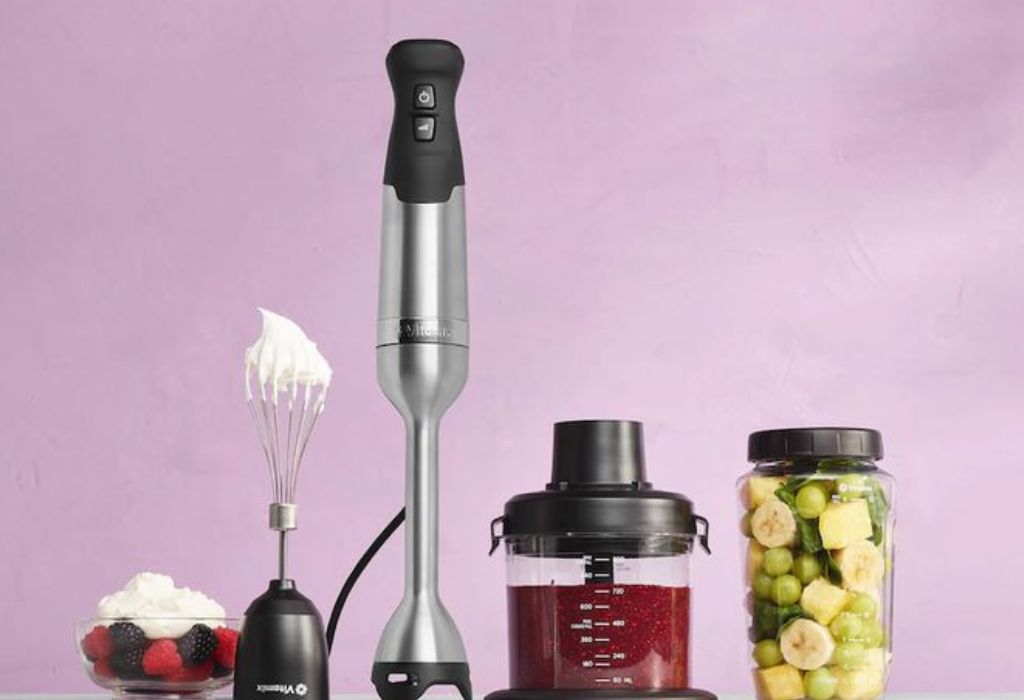
If can immersion blenders crush ice is a question you ask often, choosing the right model makes all the difference.
Not all immersion blenders are built equally, and only a few are designed to handle hard materials like ice or frozen fruit. Paying attention to specifications before buying can save you from damaged blades and wasted money.
Start by checking motor power. A model with at least 500 watts provides enough torque to handle light ice loads, while anything under that may struggle.
Look for a brand that specifically mentions ice-crushing or frozen-food capability in its product details or manual. Many budget options skip this feature, which limits their performance.
Blade design also matters. Stainless steel blades with sharp, angled edges perform best for ice, especially when paired with a wide blade guard that promotes smooth circulation. Avoid blenders with narrow guards or plastic housings, as these can trap chunks and block the flow.
Another key consideration is container compatibility. Some immersion blenders come with blending jars or tall beakers designed to handle impact and reduce splatter.
Using a strong, narrow container helps maintain control and prevents flying shards. Corded models tend to deliver more stable power than cordless ones, making them better suited for short bursts of ice crushing.
Lastly, never overlook manufacturer recommendations and warranty terms. If the manual warns against crushing ice, following that advice prevents damage and protects your investment. Models that explicitly support frozen ingredients usually come with reinforced gears and better cooling systems.
What minimum power should you look for in an immersion blender that can crush ice?
Choose a model with at least 500 watts for light to moderate ice blending tasks.
Does the container type affect performance?
Yes. A tall, impact-resistant blending jar provides better control and prevents splashing or blade blockage.
Are corded or cordless immersion blenders better for ice?
Corded versions typically offer steadier power output, making them more efficient for ice crushing.
Why is warranty information important when buying?
Ignoring the manufacturer’s warnings about ice use can void your warranty and shorten appliance life.
Should you consider accessories or attachments for crushing ice?
Only if they are designed for frozen ingredients. Standard chopper or whisk attachments are not suitable for ice.
Conclusion
The question can immersion blenders crush ice doesn’t have a one-size-fits-all answer. The truth depends on the blender’s design, motor strength, blade quality, and how it’s used.
While some high-power models can handle small amounts of ice, most standard immersion blenders aren’t built for continuous or heavy-duty crushing.
When used correctly—with enough liquid, short pulses, and a sturdy container—an immersion blender can safely create slush, smoothie bases, or light crushed ice for drinks.
However, attempting to crush large ice chunks or running the motor too long can quickly lead to dull blades or burnout.
The safest approach is to follow the manufacturer’s recommendations. If your manual warns against using the blender for ice, take it seriously. Pushing beyond design limits can void warranties and shorten the tool’s lifespan.
For anyone who frequently makes frozen beverages or crushed-ice recipes, a countertop blender or dedicated ice crusher is the smarter investment. These machines offer higher torque, longer durability, and finer texture control.
In short, an immersion blender can crush ice—but only within limits. Use it wisely, keep batches small, and combine ice with liquid for best results. Treat the tool as a helper for occasional frozen treats rather than a full-time ice crusher, and it will serve you well for years to come.

I’m Emma J. Caldwell, the founder, lead writer, and home-cooking enthusiast behind KitchenGuideCo.com. With a background in culinary arts and over a decade of cooking experience in both professional and personal kitchens, I created this platform to demystify recipes, offer smart kitchen gadget reviews, and guide readers through meal prep with confidence and clarity.