Owala bottles have become one of the most loved reusable water bottles for people who value both style and function.
They keep drinks cold or hot for hours and are built with durable materials that last for years. But one question often comes up for every new owner can Owalas go in the dishwasher
The answer depends on which Owala model you own. Some are completely dishwasher safe while others require hand washing to protect their insulation and coating.
Understanding the difference between these models is important if you want your bottle to last longer and look new for years.
Dishwashers are convenient but the heat and water pressure inside can damage certain materials. Owala bottles are made with specific materials that react differently to heat and detergent. Knowing how to clean them the right way will save you from costly mistakes.
In this guide you will learn everything about Owala bottles and dishwashers which parts can go inside safely which cannot and the best ways to clean and maintain your bottle for daily use.
Understanding Owala Bottles and Their Design
Owala bottles are designed to provide easy drinking and long lasting insulation. They come in two main types the stainless steel insulated version and the Tritan plastic version. Each has its own advantages and cleaning rules.
The stainless steel Owala bottle has a vacuum sealed double wall design. This layer keeps drinks cold for up to twenty four hours and hot for several hours. However the vacuum seal is sensitive to heat and can lose its insulating ability if placed in a dishwasher.
The Tritan plastic version is lightweight BPA free and resistant to odour. It is specifically engineered to tolerate dishwasher temperatures on the top rack. This model is ideal for busy people who want quick and easy cleaning.
All Owala bottles include silicone gaskets straw pieces and flip lids that make them spill proof. These parts need regular cleaning to remove trapped moisture and residue that can cause mould or odour.
The materials used in each Owala design determine how it reacts to heat and detergent. Knowing this difference helps you decide which bottle is safe for your dishwasher and which needs hand washing care.
Are All Owala Bottles Dishwasher Safe
Not every Owala bottle is dishwasher safe. The cleaning method depends on the model and materials used.
If you own a Tritan plastic Owala bottle you can safely wash it on the top rack of the dishwasher. This material can handle moderate heat without warping or losing shape. It is also stain resistant and easy to clean with gentle detergent.
If your Owala is made of stainless steel it should never go in the dishwasher. The high heat can damage the vacuum insulation that keeps drinks cold or hot. Repeated washing can also dull the powder coated finish and cause rust spots over time.
Some Owala bottles feature coloured prints or custom coatings. These designs may fade or peel in the dishwasher because of detergent concentration and water pressure. Hand washing these bottles is the best way to protect their appearance.
The easiest way to know whether your Owala is dishwasher safe is to check the bottom of the bottle or the packaging. It will clearly state if it is top rack dishwasher safe or hand wash only.
If you are unsure or the label has worn off treat the bottle as hand wash only. It is always better to be cautious than to risk damaging your bottle permanently.
Which Owala Parts Can Go in the Dishwasher
Even though not all Owala bottles are dishwasher safe many of their parts are designed for it. Knowing which pieces can safely go inside will help you clean more efficiently.
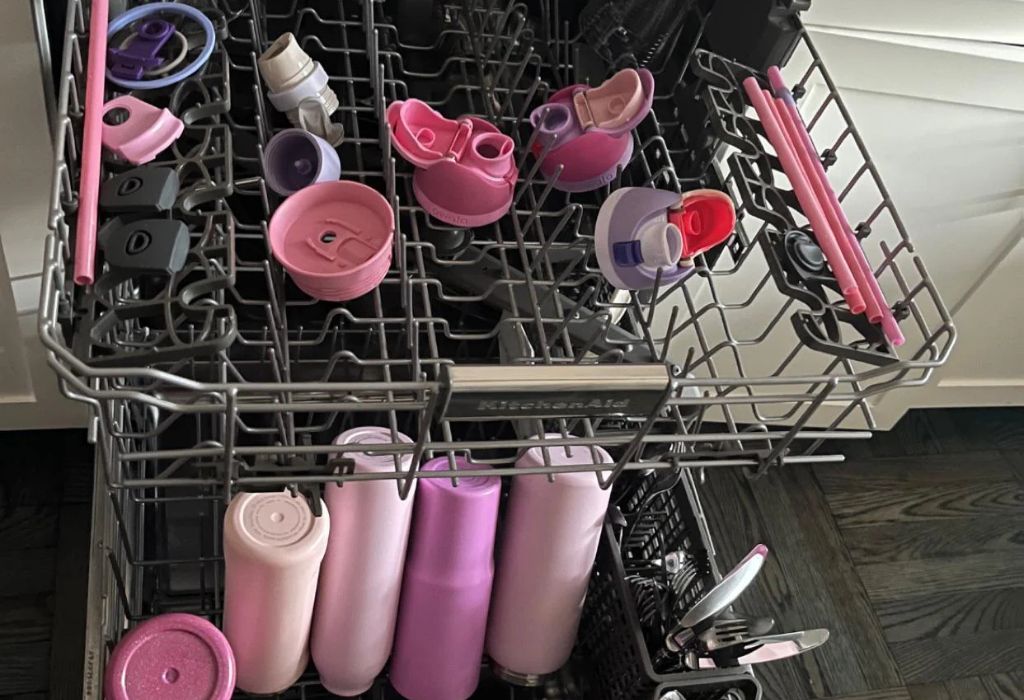
The lid straw and silicone gasket can all be washed in the dishwasher. These components are made from heat resistant materials that can handle top rack temperatures. Always remove the silicone seal before placing the lid in the dishwasher to allow full cleaning.
The Tritan plastic bottle body is also safe for top rack washing. It can withstand high water pressure and mild detergent without losing clarity or shape. However avoid the bottom rack because it gets too close to the heating element.
Stainless steel bottles should always be washed by hand. The interior vacuum seal and painted exterior cannot tolerate intense heat or chemicals. Placing them in the dishwasher may reduce insulation performance and cause surface wear.
Small parts like straws or gaskets should be placed in the utensil basket or a mesh bag. This prevents them from moving around or falling through the rack during cleaning.
By separating the safe parts and washing them properly you keep your Owala fresh and functional without risking unnecessary damage.
How to Wash Owala Bottles in the Dishwasher Safely
If your Owala is dishwasher safe washing it properly ensures it stays in good condition. The right steps make a big difference in how long your bottle lasts.
First take the bottle apart completely. Remove the lid straw and silicone rings. Rinse them under warm water to remove leftover liquid or sugar buildup from drinks.
Place all parts on the top rack of the dishwasher. The top rack receives less direct heat and gentler water pressure which protects delicate components. Position the bottle upside down for better drainage.
Use only mild detergent or fragrance free dishwasher pods. Strong chemicals can damage silicone seals or leave a lingering taste inside the bottle. Avoid bleach or sanitising agents completely.
Select a normal or eco wash cycle. High heat or sanitising cycles are not recommended because they can cause warping or discolouration. After the cycle finishes open the dishwasher door slightly and let steam escape.
Remove all parts and leave them to air dry separately. Do not reassemble the bottle until every piece is completely dry. This prevents moisture from getting trapped inside and stops mould from forming.
Following these steps will give you a clean and safe Owala bottle every time without harming its design or insulation.
Common Mistakes to Avoid When Washing Owala Bottles
Many people unknowingly make small cleaning mistakes that reduce their bottle’s lifespan. Avoiding these errors will help your Owala stay perfect for longer.
Never place the bottle on the bottom rack. The bottom rack is exposed to extreme heat that can warp plastic or damage insulation. The top rack always provides safer cleaning conditions.
Do not use bleach abrasive pads or strong chemical cleaners. These products strip protective coatings and scratch surfaces. Use gentle soap and warm water instead.
Avoid using the heated dry cycle on your dishwasher. This feature reaches very high temperatures that can weaken silicone gaskets or deform lids. Let the bottle air dry naturally after washing.
Never leave the lid attached during washing. Trapped moisture under the cap can cause bacteria and odour. Always disassemble and let each part dry individually.
Do not overload your dishwasher. When dishes are packed tightly water cannot reach every surface of the bottle or lid. Clean fewer items per load for better results.
If you follow these simple precautions your Owala bottle will stay strong clean and reliable for everyday use.
Can Owala Bottles Go on the Bottom Rack
Placing Owala bottles on the bottom rack of the dishwasher may seem faster but it is not recommended. The bottom rack is much closer to the heating element and exposes items to intense heat during drying.
This heat can weaken silicone seals and damage the vacuum insulation inside stainless steel models. Once insulation is compromised the bottle will no longer keep drinks cold or hot for long periods.
Even Tritan plastic bottles can lose clarity or develop cracks from repeated bottom rack exposure. Over time the heat may also cause slight warping that affects how the lid fits.
Metal utensils or heavy pots placed nearby can scratch the surface of the bottle. These scratches not only look bad but also create spots where bacteria can grow.
The safest method is always top rack placement. The top rack provides gentler heat and equal water coverage ensuring your bottle gets clean without risk.
If you must use the bottom rack due to space make sure the heated dry function is off and that your bottle is far from the heating coil. Still the top rack is always the better option for longevity and safety.
How to Tell If Your Owala Is Dishwasher Safe
Determining whether your Owala is dishwasher safe is simple once you know where to look. Most bottles include a clear marking that states their cleaning instructions.
Start by examining the bottom of the bottle. You may find a label or engraved text saying top rack dishwasher safe or hand wash only. This is the manufacturer’s direct recommendation.
If you see a small icon of a fork and glass that means the product is food safe and suitable for dishwashers. If the bottle says hand wash only do not risk placing it in the machine.
For stainless steel Owalas assume they are hand wash only even if the label is missing. The insulation layer is too sensitive to withstand dishwasher heat.
For Tritan plastic Owalas top rack washing is safe. This includes models like the FreeSip or Flip series that are designed with dishwasher friendly materials.
If your bottle’s label has faded or worn away check the official Owala website for model information. Every product page lists the recommended cleaning method for that specific bottle.
When uncertain it is always safer to wash by hand. Taking this precaution helps preserve your bottle’s performance and appearance for many years.
How to Deep Clean Owala Bottles for Odour Removal
Even dishwasher safe Owala bottles can sometimes develop odour from regular use. Deep cleaning removes lingering smells and restores freshness naturally.
Start by filling your bottle with warm water and adding two tablespoons of baking soda. Shake gently and let it sit for one hour before rinsing thoroughly. Baking soda neutralises acids and eliminates trapped odours from the silicone and bottle walls.
For stronger smells mix equal parts of white vinegar and warm water. Fill the bottle halfway and leave it overnight. Rinse completely the next day and allow it to air dry.
If the smell persists squeeze lemon juice into the bottle and add warm water. The natural acidity of lemon helps break down organic buildup and leaves a fresh scent.
Remember to clean the straw and lid separately. Use a thin cleaning brush or pipe cleaner to scrub the inside of the straw where bacteria can hide.
After deep cleaning rinse all parts with plain water to remove any remaining solution. Let them air dry completely before reassembly.
Performing this deep clean once a month keeps your Owala bottle hygienic fresh and ready for daily use.
How to Store Your Owala Bottle After Washing
Proper storage is essential for keeping your Owala in good condition after cleaning. The way you store it can prevent mould odour and material wear.
After washing let the bottle dry fully before putting it away. Any moisture trapped inside can cause bacteria or mould growth over time. Leave all parts separated until they are completely dry.
Store your Owala with the lid open or loosely attached. Allowing air circulation helps prevent condensation inside the bottle. Never seal the bottle while it is still damp.
Avoid direct sunlight or high temperatures during storage. Prolonged heat can weaken seals and fade colours. A cool and dry cupboard is the best place to keep your bottle.
If you own multiple bottles store them upright and unstacked to prevent scratches. For stainless steel versions ensure they are stored without lids to keep the interior odour free.
Before using the bottle again rinse it quickly with water to refresh it. Consistent care after every wash guarantees your Owala stays clean and durable for daily hydration.
Common Owala Cleaning and Storage Questions
Can all Owala bottles go in the dishwasher
No only Tritan plastic Owalas are dishwasher safe. Stainless steel bottles should be hand washed to protect insulation and finish.
Is the Owala lid dishwasher safe
Yes lids and silicone gaskets can go on the top rack. Always separate the parts before washing for a complete clean.
Can I wash Owala stainless bottles in the dishwasher
No stainless steel models lose insulation if exposed to high heat. Wash them by hand using mild soap and warm water.
Will the dishwasher damage the Owala straw
Not if placed on the top rack. Avoid high heat or drying cycles to prevent bending.
Can Owala bottles go on the bottom rack
No the bottom rack is too hot and can warp plastic or damage seals. Use the top rack only.
How do I clean the silicone gasket properly
Remove it from the lid and soak it in warm soapy water for a few minutes. Rinse and dry completely before reattaching.
Why does my Owala smell even after washing
Odour comes from trapped moisture under the lid or gasket. Deep clean with baking soda or vinegar once a month.
Can I use bleach to clean my Owala
No bleach can damage coatings and leave residue. Use natural cleaners like vinegar or mild dish soap.
Is Owala safe for the sanitising cycle
No the sanitising cycle uses very high heat that can harm seals and insulation. Use normal or eco mode instead.
Can Owala straws go in the dishwasher
Yes they are top rack safe. For deep cleaning use a straw brush occasionally.
What detergent should I use for Owala bottles
Use mild fragrance free dishwasher detergent. Avoid heavy chemical pods or bleach based cleaners.
Are Owala bottles rust proof
Stainless steel models are rust resistant but not rust proof. Hand washing and drying immediately prevents corrosion.
Can I dry Owala bottles in the dishwasher
Do not use the heated dry function. Air drying keeps the bottle safe and prevents warping.
Can I put hot drinks in a Tritan Owala
It is best for cold drinks. Hot liquids may deform plastic over time.
How often should I clean my Owala
Rinse daily and deep clean weekly if used for flavoured or sugary drinks.
Conclusion
Owala bottles are durable stylish and designed for modern convenience. But like any reusable product they need proper care to stay clean and functional. Knowing whether your Owala can go in the dishwasher is the first step to keeping it in perfect condition.
Tritan plastic bottles are dishwasher safe and can be placed on the top rack with mild detergent. Stainless steel insulated bottles should always be washed by hand to protect the vacuum seal and colour coating.
Following these simple cleaning rules ensures your bottle lasts for years without losing performance.
Removing small parts like gaskets and straws before washing prevents mould and keeps your drinks tasting fresh. Regular deep cleaning with natural ingredients such as baking soda and vinegar helps eliminate odour and residue safely.
Once clean let the bottle dry completely and store it in a cool ventilated place. These simple habits protect the bottle’s structure and appearance.
Owala bottles can safely go in the dishwasher when you follow the correct steps. Proper care guarantees hygiene convenience and long term value from one of the best reusable bottles available today.

I’m Emma J. Caldwell, the founder, lead writer, and home-cooking enthusiast behind KitchenGuideCo.com. With a background in culinary arts and over a decade of cooking experience in both professional and personal kitchens, I created this platform to demystify recipes, offer smart kitchen gadget reviews, and guide readers through meal prep with confidence and clarity.