Cast iron cookware has a reputation for lasting generations, but only when it is cared for correctly. Many new cast iron owners see the dishwasher as the easiest way to clean their cookware after a long day of cooking.
This makes them wonder whether cast iron can safely survive a dishwasher cycle without suffering damage.
Some people assume cast iron is indestructible because of its weight and strength. Others think the seasoning layer is strong enough to handle detergent and heat inside a dishwasher. These assumptions create confusion and lead many to test their cookware in unsafe ways.
Imagine finishing a hearty meal cooked in a cast iron skillet, with bits of food stuck on the surface and grease around the edges. The temptation to drop it into the dishwasher and let the machine do all the work feels strong. But cast iron behaves very differently from stainless steel, ceramic or glass.
Dishwashers use harsh detergents that break down oils quickly. The seasoning on cast iron is made from polymerized oil, and strong detergents can strip it off instantly. Without this protective layer, the metal underneath becomes vulnerable to rust.
Moisture is another problem. Cast iron cannot sit in water for long periods, and dishwasher cycles expose it to water, steam and humidity for extended time. This environment can cause immediate rusting and damage that is difficult to reverse.
This guide explains exactly what happens when cast iron goes in the dishwasher. From seasoning loss to rust formation, each section gives detailed insight into proper cleaning and restoration.
By the end, you will know the safest way to protect your cast iron and keep it performing beautifully for a lifetime.
WHY PEOPLE WONDER IF CAST IRON CAN GO IN THE DISHWASHER
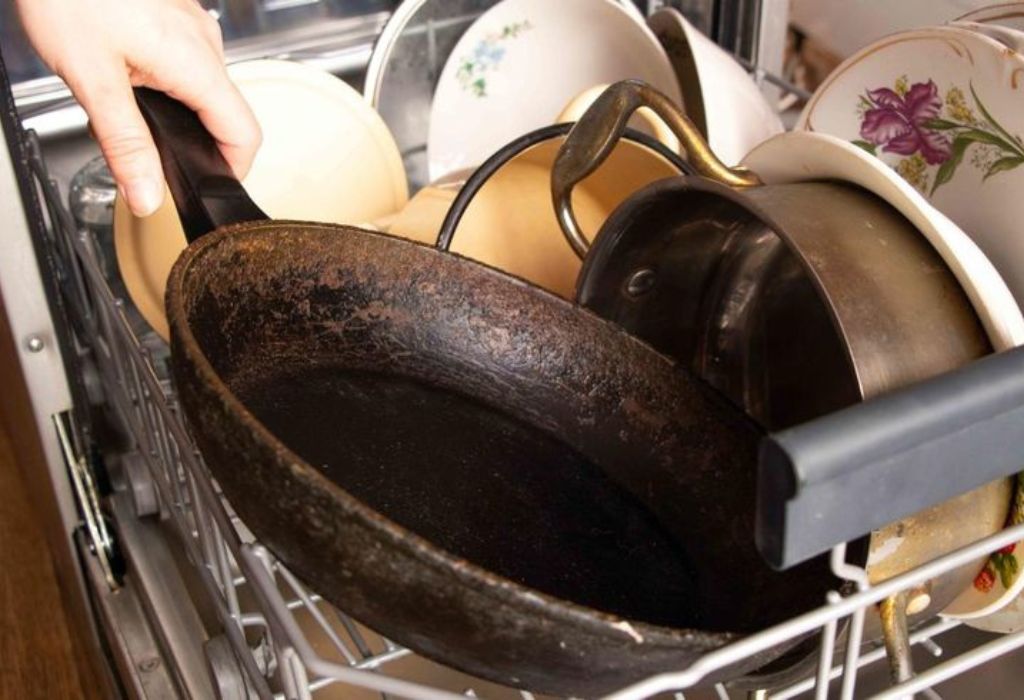
Cast iron cookware is known for its strength and durability, but it also requires special care that many new users do not fully understand.
Because dishwashers offer quick and effortless cleaning, people often hope cast iron can be cleaned the same way as modern cookware. The combination of convenience and confusion creates curiosity about dishwasher safety.
Some users believe cast iron is almost indestructible. They assume its heavy weight means it can handle heat, steam and detergents without issues. These assumptions lead many to take risks with dishwasher cleaning.
Others have heard about seasoning but are unsure how fragile or strong the layer actually is. The idea that oil can be baked onto metal sounds permanent. This makes users wonder whether dishwasher detergent can really strip it away.
Online advice makes the situation even more confusing. Some people claim they have washed cast iron in the dishwasher without damage, while others describe instant rust and ruined pans. These mixed stories create uncertainty for beginners.
The popularity of enameled cast iron also adds to the confusion. People see “dishwasher safe” labels on enamel cookware and assume the same applies to raw cast iron. This misunderstanding leads to frequent cleaning mistakes.
Dishwashers seem appealing because cast iron often becomes greasy or sticky after cooking. People hope strong water jets will remove stubborn residue quickly. This expectation encourages experimentation.
Many users simply want a faster way to clean their cookware. Cast iron requires patience, and dishwashers promise speed. Understanding why dishwashers are unsafe helps prevent damage and frustration.
WHAT HAPPENS WHEN CAST IRON GOES IN THE DISHWASHER
Dishwasher detergent is specifically designed to remove oil aggressively. Because cast iron seasoning is made of polymerized oil, detergent strips it off completely in a single cycle. Once the seasoning disappears, the bare metal is exposed.
Dishwashers keep cookware inside a moist environment for a long time. Cast iron reacts instantly to moisture, and even a few minutes of wetness can cause rust. Sitting through an entire wash and dry cycle accelerates rust development significantly.
Steam inside the dishwasher softens the seasoning layer. As the steam builds, it breaks down the oil molecules that protect the metal. This makes the surface more vulnerable to detergent.
Heat cycles inside dishwashers create temperature swings. Cast iron is sensitive to rapid temperature changes, which can stress the surface. The seasoning may crack or peel as a result.
Bare metal becomes rough quickly. Dishwasher jets blast away any remaining protective oil. This leaves the skillet dry and textured instead of smooth.
Residual detergent may remain on the cast iron. These chemicals cause discoloration and unpleasant smells. They also interfere with re seasoning.
A dishwasher cycle turns a well seasoned cast iron pan into bare metal. Recovering from this damage requires careful cleaning and full restoration. Understanding this helps users avoid costly mistakes.
WHY DISHWASHERS ARE NOT SAFE FOR CAST IRON
Dishwasher detergents are alkaline and extremely powerful. They break down fats, oils and polymers effectively. Because seasoning is made from bonded oils, detergent destroys it instantly.
Cast iron should never soak in water, and dishwashers expose it to water for long durations. The porous nature of cast iron allows moisture to penetrate the surface. This quickly leads to oxidation.
Dishwasher humidity causes significant surface damage. Cast iron needs to be dried immediately after washing. Leaving it wet inside a closed environment increases rust risk.
Drying cycles do not help cast iron. Steam settles on the pan, and droplets remain. These droplets form rust patches before the cycle finishes.
Temperature changes inside the dishwasher create stress on the metal. Cast iron heats slowly and cools slowly. Rapid shifts can weaken the seasoning layer.
Dishwashers cannot protect the pan from detergent residue. Any leftover chemical affects both taste and safety. Careful hand washing avoids this problem.
Cast iron requires oil to maintain its non stick coating. Dishwashers remove every trace of oil. This strips the pan of its natural protective layer and makes it more prone to damage.
HOW TO PROPERLY CLEAN CAST IRON WITHOUT A DISHWASHER
Start by rinsing the pan with warm water while it is still slightly warm. Heat helps loosen food residue easily. Avoid soaking the pan to prevent rust.
Use a stiff brush or gentle scraper to remove stuck food. These tools help clean the surface without damaging the seasoning. Scrubbing is often enough to restore cleanliness.
For stubborn residue, sprinkle coarse salt on the surface. Salt acts as a natural abrasive that removes residue safely. It also helps maintain the seasoning layer.
Rinse the pan thoroughly after scrubbing. Make sure all salt or residue is removed. Keeping the pan clean prevents buildup.
Dry the pan immediately with a towel. Moisture left on cast iron leads to rust quickly. Heat the pan on a burner to ensure it is completely dry.
Apply a thin layer of oil to the warm surface. Oil seals the pores of the metal and protects it from moisture. This keeps the seasoning healthy.
Heat the oiled pan for a few minutes. This helps the oil bond to the surface. Repeating this step regularly maintains a smooth non stick coating.
COMMON MISTAKES PEOPLE MAKE WHEN CLEANING CAST IRON
One common mistake is soaking cast iron in water. Soaking quickly leads to rust because water penetrates the surface. Even short soaking times can cause damage.
Another mistake is using soap incorrectly. Mild soap is sometimes acceptable, but strong detergents strip seasoning. Users often misunderstand which soaps are too harsh.
Scrubbing with harsh metal tools can remove seasoning. Aggressive cleaning damages the non stick layer. It creates the need for frequent re seasoning.
Some people store cast iron before it is fully dry. Even a small amount of moisture causes rust spots. Immediate drying is essential.
Heating cast iron too long on high heat is another mistake. Excess heat burns the seasoning layer. This leads to flaking and cracking.
Using the wrong type of oil affects seasoning quality. Thick or flavored oils may leave sticky residue. Neutral oils are best for cast iron maintenance.
Ignoring small rust spots leads to bigger issues. Rust spreads quickly across the surface. Early intervention prevents extensive restoration.
WHAT TO DO IF YOU PUT CAST IRON IN THE DISHWASHER BY ACCIDENT
Remove the pan from the dishwasher immediately. Dishwasher cycles expose the pan to moisture for long periods. The sooner you remove it, the better.
Dry the pan thoroughly with a towel. Moisture causes immediate oxidation. Heat the pan to remove hidden water.
Inspect the surface for rust or discoloration. Rust appears quickly after dishwasher exposure. Identifying affected areas helps guide the restoration process.
Scrub off all rust using steel wool. This step removes damaged seasoning and exposes clean metal. Continue until the entire pan feels smooth.
Wash the pan with warm water and a small amount of mild soap. This removes lingering detergent residue. Rinse thoroughly to avoid chemical traces.
Dry the pan completely by heating it on the stove. Heat evaporates all moisture trapped in the pores. Ensure the surface is fully dry before applying oil.
Re season the pan fully. Apply oil and bake it to rebuild the protective layer. A full seasoning restores performance and prevents future rust.
CAN ENAMELED CAST IRON GO IN THE DISHWASHER SAFELY
Enameled cast iron is different from raw cast iron. The enamel coating protects the underlying metal. This makes it more resistant to moisture.
Manufacturers often label enameled cast iron as dishwasher safe. The enamel coating tolerates detergent well. It also prevents rust formation.
However, metal rims on some enameled pieces may still rust. These exposed areas behave like raw cast iron. Careful drying helps prevent problems.
Dishwashers may dull the enamel shine. Detergent and heat affect the outer finish. This change is cosmetic rather than structural.
Knobs and handles on enameled cookware may not be dishwasher safe. High heat may damage certain materials. Checking manufacturer guidelines is important.
Long term dishwasher use can affect enamel appearance. Fading, scratches and dulling are common issues. Hand washing preserves the finish.
Although enameled cast iron can survive dishwashers, hand washing is still the gentlest method. It keeps the enamel shiny. It protects the cookware for many years.
HOW OFTEN SHOULD YOU SEASON CAST IRON
If you cook frequently, light seasoning should be done after every wash. A thin oil layer maintains a smooth non stick coating. This habit protects the pan.
Deep seasoning may be needed every few months. This rebuilds the base layer that supports everyday performance. Baking the oil creates a strong protective surface.
Seasoning frequency depends on use. High heat cooking wears seasoning faster. Gentle cooking requires less maintenance.
Look for signs that indicate seasoning needs attention. Sticky residue, dullness and food sticking are common indicators. Addressing these signs prevents further wear.
Seasoning improves cooking performance. It keeps food from sticking and enhances flavor. It also protects the pan from moisture.
Oil choice affects seasoning quality. Neutral oils with high smoke points work best. They create a smooth, durable layer.
Regular maintenance prevents major restoration. Keeping a consistent routine helps cast iron last a lifetime. This makes seasoning an essential habit.
SIGNS YOUR CAST IRON IS DAMAGED OR NEEDS RESTORATION
Rust spots signal early damage. These areas spread quickly if ignored. Cleaning and re seasoning solve the problem.
A sticky surface indicates seasoning failure. Food residue bonds with weak seasoning layers. Deep cleaning restores the surface.
Uneven coloring shows wear. Dark and light patches appear as seasoning deteriorates. Re seasoning creates a consistent finish again.
Cracks are rare but serious. Cracked cast iron may not be safe to use. Replacement is often necessary.
A rough texture means the seasoning has peeled away. The metal becomes exposed. Full restoration is needed to rebuild the coating.
Unpleasant odors signal trapped moisture or residue. Deep cleaning removes the cause. Re seasoning improves the smell.
Loss of non stick performance is a clear indicator. Food sticking becomes frequent. Restoring the seasoning returns smooth performance.
FINAL CARE AND MAINTENANCE TIPS FOR CAST IRON COOKWARE
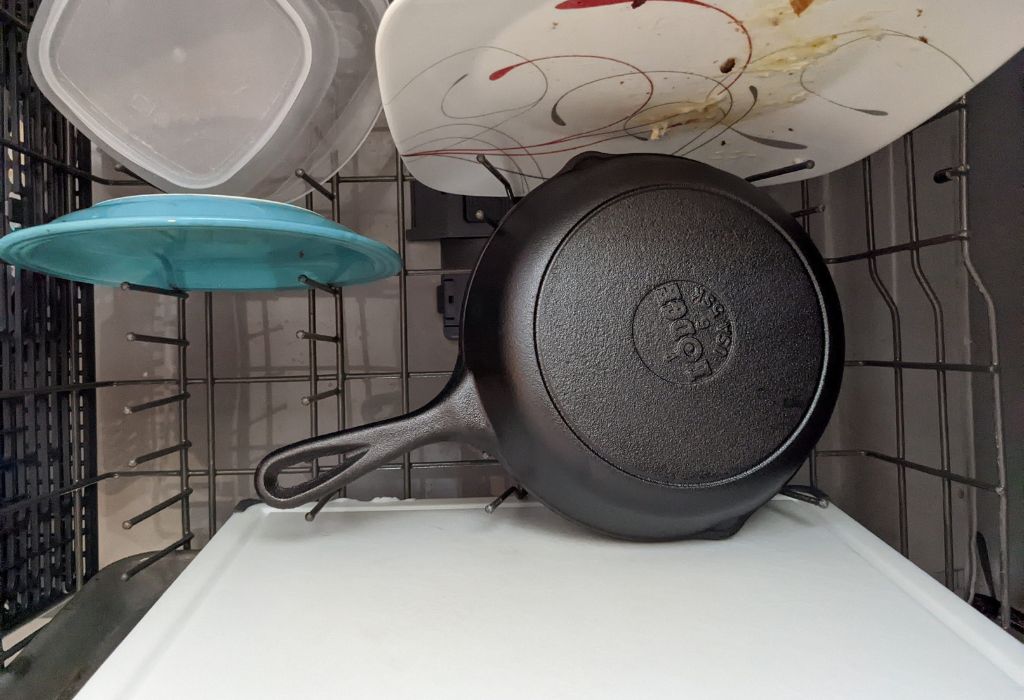
Dry cast iron immediately after washing. Moisture causes rust rapidly. Heat the pan to ensure no water remains.
Apply a thin layer of oil after every cleaning. This maintains seasoning and prevents drying. Light maintenance ensures long term durability.
Store cast iron in a dry place. Humid environments encourage rust. Keeping the pan dry protects its surface.
Avoid soaking cast iron in water. Prolonged exposure weakens the seasoning. Quick cleaning prevents this problem.
Use gentle tools when scrubbing. Soft brushes protect the seasoning layer. Avoid aggressive tools that strip the coating.
Re season regularly to maintain smoothness. Consistent care keeps the pan reliable. Regular upkeep enhances cooking performance.
Cast iron lasts for generations when cared for properly. With the right habits, your cookware remains strong and dependable. This ensures excellent results every time you cook.
FAQ About Washing Cast Iron in the Dishwasher
Can cast iron be safely washed in the dishwasher?
No, raw cast iron should never be washed in the dishwasher. The detergent strips seasoning instantly and exposes the metal. This leads to fast rusting.
What happens if cast iron goes through a dishwasher cycle?
The seasoning layer dissolves in the detergent and heat. Moisture settles on the bare metal, creating instant rust. The surface becomes rough and loses its non stick performance.
Will the dishwasher completely ruin cast iron?
It will not ruin the pan forever, but it destroys the seasoning and causes rust. This requires full restoration. With proper steps, the damage can be reversed.
Why does dishwasher detergent harm cast iron so quickly?
Dishwasher detergents are formulated to break down oils aggressively. Since seasoning is made of oil, the detergent strips it away. Without that layer, cast iron becomes vulnerable.
Can cast iron handles or bottoms go in the dishwasher?
No part of raw cast iron should enter the dishwasher. Even brief exposure to moisture and detergent can cause damage. Hand washing is always safer.
Is it okay to dishwash cast iron if it is very greasy?
No, even heavy grease does not protect the seasoning from detergent. The dishwasher still strips the oils completely. Scrubbing with salt is the safer method.
What if I already put my cast iron in the dishwasher by mistake?
Dry it immediately and inspect for rust. Then scrub, clean and fully re season the cookware. This restores function effectively.
Can enameled cast iron go in the dishwasher?
Some enameled cast iron is labeled dishwasher safe. However, repeated dishwashing may dull the enamel or weaken metal rims. Hand washing keeps it looking new.
How can I prevent rust on cast iron after cleaning?
Dry the pan immediately and heat it briefly on the stove. Apply a thin layer of oil while warm. This protects the metal from moisture.
Why is hand washing better for cast iron?
Hand washing preserves seasoning and prevents moisture exposure. It keeps cast iron smooth, non stick and rust free. This maintains long term durability.
Conclusion
Cast iron cookware lasts for generations when it is cleaned and maintained with care, but it cannot survive the harsh environment inside a dishwasher.
The detergents used in dishwashers are designed to break down grease and oil, which also destroys the valuable seasoning on cast iron. Once that protective layer is gone, the exposed metal becomes vulnerable to moisture and rust.
Dishwashers also keep cast iron wet for long periods, creating the perfect conditions for oxidation. Even a short cycle exposes the pan to high humidity, steam and water, all of which weaken the surface. This results in rough texture, discoloration and significant loss of non stick performance.
Hand washing cast iron keeps the seasoning intact and protects the cookware from unnecessary damage. Simple cleaning methods like warm water, a scrub brush and a salt scrub work far better than any machine cycle. These techniques preserve the smooth surface of the pan and prevent rust formation.
Re seasoning plays a major role in cast iron care. Applying a thin layer of oil after each cleaning strengthens the surface and extends the lifespan of the cookware. With consistent care, cast iron develops a natural non stick layer that improves with every use.
Cast iron cannot go in the dishwasher, but it does not require complicated maintenance. With mindful cleaning, proper drying and regular seasoning, cast iron remains strong, reliable and ready for daily cooking. These habits ensure your cookware performs beautifully for decades.

I’m Emma J. Caldwell, the founder, lead writer, and home-cooking enthusiast behind KitchenGuideCo.com. With a background in culinary arts and over a decade of cooking experience in both professional and personal kitchens, I created this platform to demystify recipes, offer smart kitchen gadget reviews, and guide readers through meal prep with confidence and clarity.