Dutch ovens have become essential cookware in many kitchens because they offer consistent heat, long lasting construction and the ability to cook everything from stews to bread.
Many people appreciate how durable these pots feel, especially when lifting their heavy cast iron bodies or noticing the thick enamel coating that protects the surface.
After preparing a long simmering meal, however, cleaning the pot can feel like the hardest part of the cooking process, especially when food sticks to the bottom or sauces leave stubborn stains.
This is when people wonder if they can simply place the Dutch oven inside the dishwasher and let the machine do the work for them. The dishwasher promises convenience by using hot water, strong pressure and detergent to loosen grease and remove residue quickly.
However, Dutch ovens are made from materials that respond differently to heat, detergent and water pressure, which makes the answer more complicated than it first appears.
Confusion often begins when people read conflicting opinions online or hear mixed advice from friends, chefs or cookware enthusiasts.
One person may insist that their Dutch oven has survived years of dishwashing without a problem, while someone else may warn that a single dishwasher cycle caused their enamel to chip or dull. These contradictions make it difficult to know what is safe and what is risky.
Dutch ovens come in several types including bare cast iron, enameled cast iron, ceramic, stainless steel and aluminum, and each of these materials reacts differently inside the dishwasher environment.
Some materials withstand heat and detergent better, while others become damaged quickly. Understanding these differences helps prevent costly mistakes and keeps your Dutch oven performing well for many years.
This guide explains in detail whether Dutch ovens belong in the dishwasher, what can happen to each type of material, which components are safe to wash and how to clean your cookware properly.
By reading through each section carefully, you will understand how to protect your Dutch oven and avoid accidental damage that could reduce its lifespan or cooking performance. The goal is to give you clear, complete and practical information to make the right cleaning decision.
Types Of Dutch Ovens And Their Dishwasher Compatibility
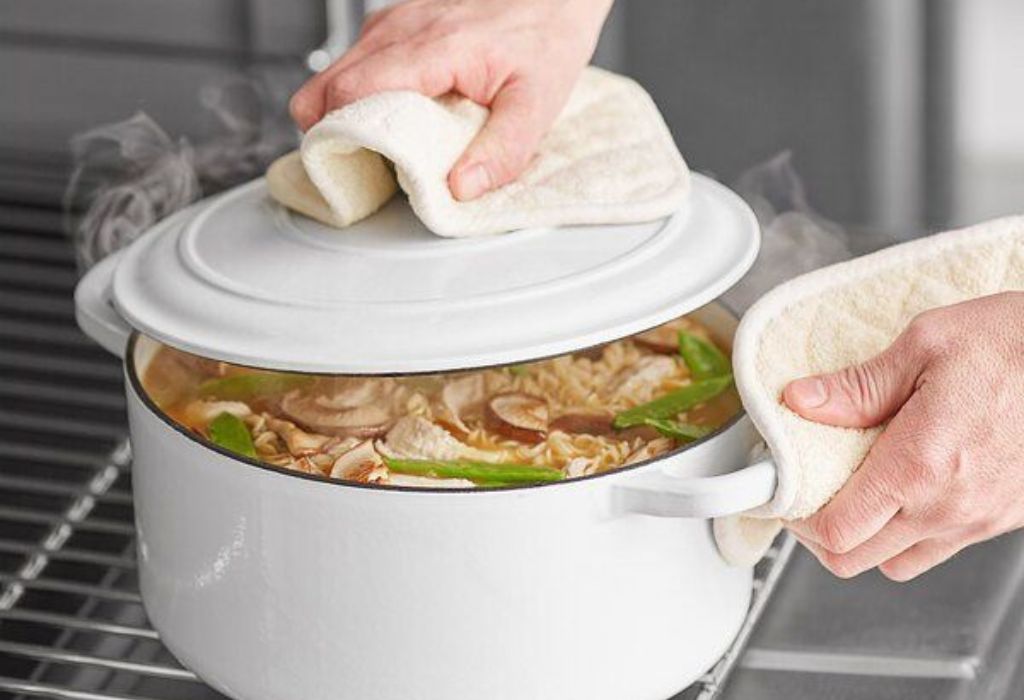
Dutch ovens come in multiple materials, and each material behaves differently when exposed to the dishwasher’s heat, moisture and detergent.
Bare cast iron Dutch ovens should never go into a dishwasher because the high heat and water exposure cause immediate rusting. Cast iron relies on a protective seasoning layer that detergent strips away quickly.
Enameled cast iron Dutch ovens hold up better because the enamel coating shields the cast iron from direct water exposure.
Many brands label these models as dishwasher safe, but repeated dishwashing gradually dulls the enamel’s shine. Over time, the glossy surface may develop a matte finish that affects appearance more than performance.
Ceramic Dutch ovens vary widely in dishwasher resistance. Some ceramic cookware can tolerate dishwasher cleaning, while others develop cracks due to the abrupt temperature changes inside the dishwasher cycle. Ceramic finishes may also lose color or become chipped from pressure and detergent.
Stainless steel Dutch ovens generally tolerate dishwashers well because stainless steel resists rust and heat. However, some stainless steel lids may discolor due to the detergent reacting with minerals in the metal. This discoloration does not affect functionality but may bother some users.
Aluminum Dutch ovens react poorly to dishwashers because aluminum corrodes easily when exposed to strong dishwasher detergent.
This corrosion creates dark gray stains that become difficult to remove, and the surface weakens over time. Hand washing aluminum cookware prevents these issues.
Understanding the material of your Dutch oven is the first step toward deciding whether dishwasher cleaning is safe. Following manufacturer guidelines is essential, as each brand tests its materials under different conditions. This ensures the cookware lasts as long as possible.
Why Bare Cast Iron Dutch Ovens Should NEVER Go In The Dishwasher
Bare cast iron Dutch ovens rust rapidly when exposed to water for long periods, making dishwashers extremely dangerous for them.
The dishwasher’s heat and steam create an environment where water remains trapped against the metal for extended cycles. Once rust forms, the metal weakens and the pot begins losing its natural protective layer.
Detergent also strips away cast iron seasoning, which is the polymerized oil coating that gives the cookware its nonstick effect. Without seasoning, food burns and sticks easily, making the pot difficult to use. Rebuilding seasoning requires significant time, effort and multiple oven cycles.
The high temperatures inside dishwashers also create subtle warping in cast iron. Even small warps can make the pot sit unevenly on stovetops, affecting heat distribution. Over many washes, the metal becomes increasingly unstable.
Dishwasher jets strike cast iron with high pressure, removing seasoning unevenly and exposing more metal to rust. The force of the jets may also cause the pot to bounce or shift during cycles. This movement increases the risk of surface damage.
Rust spreads quickly on cast iron once the protective layer disappears. Removing rust requires abrasive scrubbing that scratches the metal, making seasoning adhesion even harder. This creates a cycle of wear that shortens the pot’s life.
Maintaining cast iron requires gentle hand washing with mild soap or warm water. Proper drying prevents rust, and occasional seasoning keeps the pot smooth and nonstick. Dishwashers destroy this careful balance, so keeping bare cast iron out of them is essential.
Why does bare cast iron rust so quickly in the dishwasher?
Dishwashers trap heat and moisture, causing water to remain on cast iron for too long.
Can one dishwasher cycle ruin a cast iron pot?
Yes, even a single cycle can strip seasoning and introduce rust.
Does dishwasher detergent damage seasoning layers?
Yes, detergent dissolves the protective oil coating that cast iron needs.
Is warped cast iron reversible?
No, once cast iron warps, it cannot be fully corrected.
Can rust be cleaned off easily?
It requires aggressive scrubbing and full reseasoning to restore.
Are Enameled Dutch Ovens Dishwasher Safe
Many manufacturers advertise enameled Dutch ovens as dishwasher safe, which leads people to assume regular dishwasher use is harmless.
In reality, dishwasher safe means the pot will not break immediately, but long term exposure still causes gradual wear. The enamel coating becomes dull over time due to the detergent’s abrasive chemicals.
The glossy enamel exterior reacts to dishwasher heat by expanding and contracting at a slightly different rate than the cast iron underneath.
This difference creates internal stress, which increases the likelihood of hairline cracks forming. Although these cracks may be tiny, they weaken the enamel layer and promote future damage.
Dishwasher jets can strike enamel surfaces with enough force to chip or scratch them. When utensils or bowls shift inside the dishwasher, they may collide with the Dutch oven, creating small dents or chips. Once enamel chips occur, the cast iron underneath becomes exposed and vulnerable.
Detergent residue may also stain enamel surfaces. Some dark sauces or acidic foods leave marks that become harder to remove after a dishwasher cycle. Hand washing prevents many of these stains from becoming permanent.
Although enameled Dutch ovens can technically survive a dishwasher cycle, consistent dishwashing shortens their lifespan.
Repetitive exposure causes gradual cracks, dullness and surface texture changes. Hand washing preserves the enamel’s beauty and smooth finish much longer.
For best care, most cooks recommend hand washing all enameled Dutch ovens even if the manufacturer states they are dishwasher safe. A gentle sponge and mild soap remove residue without causing long term damage. This routine maintains both appearance and performance.
How Dishwasher Detergent Affects Dutch Oven Materials
Dishwasher detergent contains strong alkali agents that break down grease effectively but are harsh on cookware materials.
These chemicals react aggressively with enamel, dulling its shine and roughening the surface over time. Rough enamel becomes more prone to staining, making cleanup harder in the future.
For stainless steel Dutch ovens, detergent may cause rainbow discoloration due to the reaction between detergent additives and metal minerals. Although harmless, this discoloration leaves the pot looking worn or aged. Repeated exposure makes the effect more noticeable.
Aluminum Dutch ovens suffer the most from dishwasher detergent. The alkali chemicals corrode aluminum rapidly, creating gray oxidation marks that darken with each wash. This corrosion weakens the structural integrity of the Dutch oven, making it unsafe for cooking over time.
Ceramic Dutch ovens may lose color or decorative patterns due to detergent abrasion. Over time the finish becomes thinner and more fragile, which makes the surface vulnerable to cracking. Ceramic glazes are not designed for rough chemical exposure.
Dishwasher detergent is designed for plates and utensils, not heavy cookware materials like cast iron or enamel.
While the detergent removes grease well, it slowly destroys cookware surfaces. Hand washing minimizes this exposure and keeps Dutch ovens in much better condition.
Does dishwasher detergent dull enamel?
Yes, the alkali agents in detergent wear down the glossy enamel finish.
Why does stainless steel discolor in the dishwasher?
Detergent reacts with metal minerals, causing rainbow stains.
Is aluminum safe in the dishwasher?
No, it corrodes quickly and develops dark oxidation marks.
Will ceramic finishes fade in the dishwasher?
Yes, detergent gradually removes glaze patterns and colors.
Are dishwasher tablets harsher than liquid detergent?
Yes, tablets contain concentrated chemicals that damage surfaces faster.
How Dishwasher Heat Impacts Dutch Oven Construction
Dishwashers use extremely hot water to sanitize dishes, often exceeding temperatures that Dutch ovens are designed to handle repeatedly.
This heat causes materials to expand and contract rapidly, creating structural stress. Over time, these stress cycles weaken enamel, ceramic and even metal.
Cast iron retains heat longer than other metals, causing uneven expansion when exposed to sudden bursts of hot water.
This uneven expansion places internal pressure on enamel coatings, which may eventually crack. Hairline fractures slowly grow with each dishwasher cycle.
Ceramic Dutch ovens suffer even more under high heat. Abrupt temperature changes cause crazing, which appears as tiny spiderweb like cracks on the ceramic surface. Although cosmetic at first, crazing reduces durability significantly.
Stainless steel Dutch ovens handle heat better than other materials, but their attachments, handles or knobs may not.
Some handles are attached with adhesive or lower grade metal screws that loosen under repeated dishwasher cycles. Once handles weaken, the Dutch oven becomes unsafe to lift.
How Dishwasher Heat Impacts Dutch Oven Construction
The drying cycle exposes Dutch ovens to prolonged blasts of hot air, which amplifies the stress on enamel and metal. During these cycles, pots undergo extended thermal strain that weakens joints, handles and surface coatings.
Continuous exposure shortens the Dutch oven’s lifespan even if it appears to survive a few early washes.
Moisture trapped inside the Dutch oven during a dishwasher cycle also causes damage. When the pot cools after the drying phase, steam condenses on hidden areas like rims, handles and lid edges. This moisture encourages rust formation underneath enamel and weakens bonding layers.
Different materials within a Dutch oven expand at different rates. Cast iron expands slower than enamel, while stainless steel expands faster. These inconsistent expansion rates lead to tension between layers, creating small gaps or cracks that reduce the pot’s structural integrity.
Repeated exposure to dishwasher heat gradually wears down even the strongest cookware. While Dutch ovens are known for durability, they are not built to withstand constant cycles of extreme heat followed by sudden cooling. This repeated shock slowly reduces performance and resilience.
Dishwashers also expose Dutch ovens to heat far beyond the temperatures used in typical hand washing. Hot water used during manual cleaning rarely exceeds safe limits for enamel and ceramic. This gentler approach protects the cookware from stress fractures.
Dishwasher heat is one of the major factors that shorten the lifespan of Dutch ovens. Even models labeled as dishwasher safe suffer gradual damage when exposed to repeated cycles. Hand washing avoids these temperature extremes and keeps the cookware in prime condition.
Risks Of Putting Dutch Oven Lids In The Dishwasher
Dutch oven lids, especially enameled ones, are prone to dulling and cracking when exposed to dishwasher conditions.
The enamel on lids is often thinner than the enamel inside the pot, making it more vulnerable. Prolonged exposure to heat and detergent wears down the protective finish.
Some Dutch oven lids contain steam vents or metal rims. These components react negatively to dishwashers because high heat causes expansion that weakens joints and attachments. Over time, the metal may warp or detach from the lid.
Dishwasher detergent is harsh on metal screws or knobs attached to lids. These components loosen under continuous heat and repeated exposure to detergent. A loose knob becomes unsafe when lifting a hot Dutch oven during cooking.
Glass lids, while sometimes dishwasher safe, commonly show water spots or hard mineral deposits after repeated cycles. These spots become increasingly difficult to remove and affect the lid’s clarity. Hand washing helps retain a clean, spotless surface.
Rubber or silicone gaskets used on some Dutch oven lids do not hold up well to high heat. The dishwasher’s drying cycle degrades their elasticity over time, causing cracks or loss of sealing ability. A weakened seal reduces cooking efficiency by allowing steam to escape.
Dishwasher pressure jets may strike lids with force that chips or cracks enamel. This is especially risky when utensils shift around and collide with the lid during a wash. Hand washing eliminates these risks entirely.
Overall, Dutch oven lids should be washed gently by hand to preserve their structure, appearance and safety. Caring for the lid is just as important as caring for the pot itself. Manual cleaning guarantees a longer lifespan for all lid components.
Can Dutch oven lids handle dishwasher heat?
Not well, because enamel and metal attachments weaken under extreme heat.
Will knobs loosen after repeated dishwashing?
Yes, detergent and heat degrade screws and weakening knobs over time.
Do glass lids get damaged in dishwashers?
They often collect water spots and lose clarity after repeated washes.
Can rubber gaskets survive dishwasher cycles?
No, high heat causes rubber to crack and lose flexibility.
Are dishwasher jets strong enough to chip lid enamel?
Yes, jets and loose utensils can easily chip or crack enamel surfaces.
How Dishwasher Jets Damage Dutch Ovens Over Time
Dishwasher jets spray water with strong force, and Dutch ovens are heavy items that do not remain perfectly still during washes. When the pot shifts inside the dishwasher, water jets strike the surface at inconsistent angles. These repeated impacts weaken enamel layers gradually.
If utensils, bowls or other objects are placed near a Dutch oven, the high pressure jets may cause them to collide. These collisions create chips, scratches and dents in the enamel surface. Even small chips allow moisture to seep into the cast iron beneath the enamel.
Enamel is a glass like coating that does not flex with pressure. When subjected to constant movement and water force, it begins to fracture microscopically. These micro fractures weaken the enamel until larger chips eventually appear.
Dishwasher jets also contribute to vibration, which stresses the pot and lid during each cycle. Heavy cookware vibrates more intensely because of its weight. These vibrations weaken enamel bonds and cause structural fatigue.
The jets may also cause water to infiltrate the Dutch oven’s rim. Once moisture reaches the cast iron underneath, it begins to rust slowly. Rust beneath enamel eventually causes the enamel to lift and flake off.
Dishwashers are also designed for lightweight dishes, not heavy cast iron pots. Overloading the machine makes it harder for jets to reach all areas evenly, causing some parts of the Dutch oven to be under cleaned while others are overexposed. This imbalance worsens wear on certain sections.
Over years of repeated washing, dishwasher jets cause both visible and invisible damage to Dutch ovens. Hand washing avoids the unpredictable impacts and vibrations, making it the safest cleaning method. Manual care extends the life of your cookware significantly.
When Is It Safe To Put A Dutch Oven In The Dishwasher
Some modern enameled Dutch ovens are labeled dishwasher safe, and these may tolerate occasional dishwasher cycles.
Manufacturers test them to handle moderate heat and detergent exposure, but these labels do not guarantee long term durability. Even dishwasher safe models show wear after repeated cycles.
If you choose to dishwash an enameled Dutch oven, place it on the top rack to reduce heat exposure. The top rack is further from the heating element, which minimizes enamel stress. Bottom rack placement exposes the pot to extreme heat during the drying cycle.
Use only gentle or eco dishwasher cycles when washing Dutch ovens. Avoid sanitizing or heavy duty cycles that use intense heat and powerful jets. These cycles cause the most damage to enamel and metal attachments.
Before running the dishwasher, remove all sharp utensils or metal objects nearby. These items may shift and strike the Dutch oven during the wash, creating chips. Ensuring a clear area reduces collision risks.
Avoid dishwashing lids with rubber gaskets, metal vents or delicate knobs. Even if the pot itself survives the dishwasher, the lid may not. Washing both pieces by hand ensures consistency.
For best results, reserve dishwasher cleaning for rare situations such as heavy staining or deep residue buildup. Occasional use is acceptable, but frequent dishwashing reduces the pot’s lifespan. Hand washing remains the recommended daily method.
Can I use the dishwasher for my enameled Dutch oven?
Yes, but only occasionally and on gentle cycles to prevent long term damage.
Is top rack placement better for Dutch ovens?
Yes, it reduces exposure to intense heat from the bottom heating element.
Should I avoid high temperature cycles?
Yes, high heat weakens enamel and stresses the cast iron underneath.
Can dishwasher jets chip enamel?
Yes, strong jets and shifting items can easily chip enamel surfaces.
Is it okay to wash the lid separately by hand?
Yes, hand washing the lid protects knobs, vents and gaskets from damage.
Best Way To Hand Wash A Dutch Oven Safely
Hand washing is the most effective and gentle method for cleaning any Dutch oven, regardless of material. Start by filling the pot with warm, soapy water to loosen stuck on food. Allowing it to soak for several minutes helps soften residue naturally.
Use a nonabrasive sponge or nylon brush to scrub the surface. Enamel is sturdy but still vulnerable to scratches from abrasive pads. Gentle tools maintain the glossy finish and prevent dulling.
Avoid using metal scrapers or sharp utensils to remove burnt food. These tools damage enamel and create permanent marks. Wooden or silicone tools safely remove stubborn residue.
For difficult stains, sprinkle baking soda across the surface and scrub gently. Baking soda acts as a mild abrasive that lifts stains without scratching. This method preserves enamel while restoring brightness.
Rinse the Dutch oven thoroughly with warm water to remove soap and baking soda. Leftover soap residue may affect flavors or leave streaks. Rinsing ensures a fresh, clean surface for future cooking.
Dry the Dutch oven immediately using a soft towel. Air drying may leave water spots or encourage rust under enamel edges. Towel drying protects the pot and prevents moisture buildup.
Hand washing protects Dutch ovens far better than any dishwasher cycle. By avoiding harsh chemicals and high heat, the pot retains its quality and remains reliable for many years. Gentle care always produces the best results.
How To Remove Burnt Food From A Dutch Oven
Burnt food clings tightly to enamel, making it difficult to remove without force. Begin by filling the Dutch oven with warm water and adding a few drops of dish soap. Set the pot on the stove and heat the water gently until it simmers.
Simmering loosens burnt residue and makes it easier to lift from the enamel surface. Use a wooden spoon to scrape the softened food gently. Avoid using metal utensils that scratch or chip the enamel.
For stubborn burnt areas, add a tablespoon of baking soda or vinegar to the water. Baking soda lifts residue, while vinegar dissolves mineral deposits and stains. Let the mixture sit for ten minutes before scrubbing.
If the burnt food still persists, mix baking soda with water to create a paste. Apply the paste to the affected areas and allow it to rest for fifteen minutes. Then scrub gently to remove all remaining residue.
Avoid exposing enamel to extreme temperature changes during cleaning. Pouring cold water into a hot Dutch oven may cause enamel cracking. Allow the pot to cool before rinsing thoroughly.
Once clean, dry the Dutch oven carefully with a soft cloth. Proper drying is crucial to avoid water spots and prevent rust under the enamel. With consistent care, burnt food becomes easier to handle over time.
What Manufacturers Recommend For Dutch Oven Cleaning
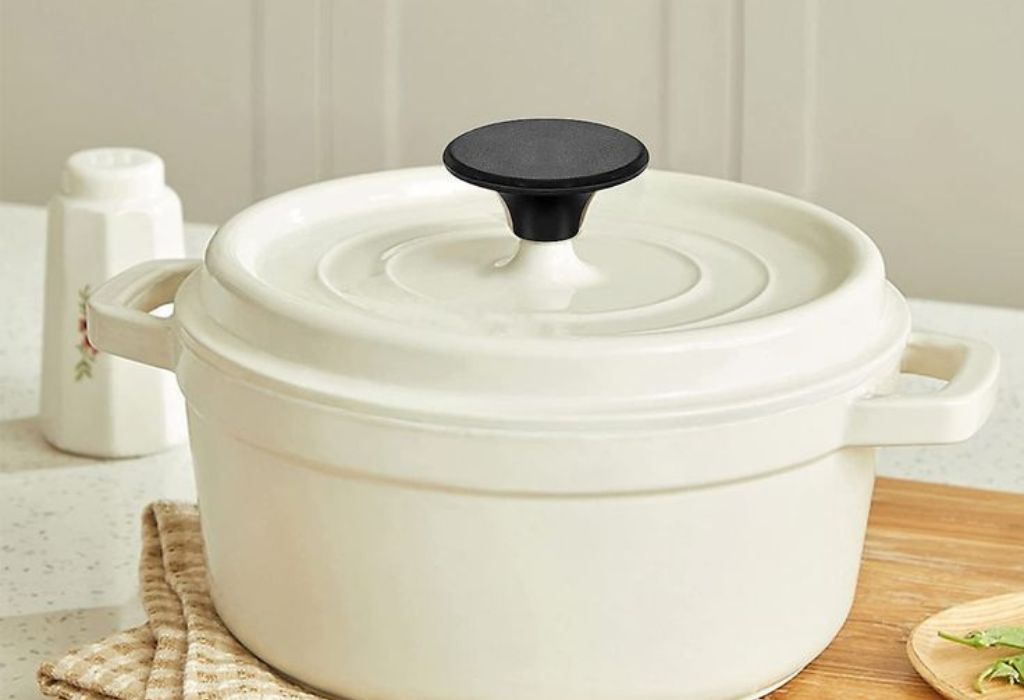
Manufacturers generally recommend hand washing all Dutch ovens, regardless of material. Even for dishwasher safe models, the instruction manual usually advises limiting dishwasher use. Hand washing preserves both enamel quality and internal structure.
Many brands warn specifically against using abrasive tools or harsh detergents. Abrasives scratch enamel and weaken ceramic coatings. Mild soap and warm water are the safest options.
Manufacturers also caution against soaking lids with metal parts for long periods. Water exposure may cause rusting around screws or vents. Proper drying is essential for maintaining lid integrity.
Some brands recommend using baking soda for deep cleaning because it is safe on enamel. Baking soda removes stains effectively without damaging the surface. Vinegar is also safe when used sparingly.
Manufacturers stress the importance of drying Dutch ovens thoroughly. Even small amounts of moisture trapped under the enamel can lead to rust. Drying immediately after washing prevents long term issues.
Following manufacturer guidelines extends the Dutch oven’s lifespan. These recommendations come from extensive testing and research. Trusting them ensures safe and reliable use over many years.
Common Misconceptions About Cleaning Dutch Ovens
Many people mistakenly believe that enamel is indestructible and can withstand any scrubbing or chemical. Although enamel is durable, it is still a glass like coating that chips under pressure. Treating it gently maintains its appearance and performance.
Another misconception is that dishwasher safe means the pot can be washed daily in a dishwasher. Dishwasher safe simply means the pot will not break immediately, not that it will last forever. Repeated dishwashing accelerates wear and dulls enamel quickly.
Some people assume burnt food must be scraped aggressively to remove it. Aggressive scraping harms enamel and creates long term problems. Gentle cleaning methods are far more effective and safer.
Others believe ceramic Dutch ovens are as tough as enameled cast iron. Ceramics are generally more delicate and prone to cracking. They require extra care during cleaning and use.
A common myth suggests that cast iron seasoning is permanent. Seasoning can be stripped easily by detergent and high heat. Proper care is necessary to maintain a nonstick surface.
Dispelling these misconceptions helps users protect their Dutch ovens better. Understanding proper care methods preserves cookware quality and performance. Knowledge prevents unnecessary damage and extends lifespan.
Conclusion
Dutch ovens are among the most durable and versatile cookware pieces available, but they still require proper care to maintain their quality.
While some enameled Dutch ovens may survive occasional dishwasher cycles, regular dishwashing exposes them to harsh detergent, intense heat and abrasive jets that gradually weaken enamel and metal components.
Bare cast iron and aluminum Dutch ovens should never be placed in a dishwasher because they rust or corrode quickly under these conditions.
Hand washing always remains the safest and most effective cleaning method for all Dutch oven types. By using warm water, mild soap and gentle tools, you protect the enamel coating, prevent rust growth and maintain the pot’s strength.
Proper drying ensures that moisture does not accumulate under the enamel or cause water spots.
Understanding how different materials respond to dishwashing helps you care for your Dutch oven wisely. With consistent, gentle cleaning, your Dutch oven will continue performing beautifully for many years, delivering excellent results with every meal.
Taking a few minutes to wash it by hand ensures longevity and reliability, making your investment worthwhile.

I’m Emma J. Caldwell, the founder, lead writer, and home-cooking enthusiast behind KitchenGuideCo.com. With a background in culinary arts and over a decade of cooking experience in both professional and personal kitchens, I created this platform to demystify recipes, offer smart kitchen gadget reviews, and guide readers through meal prep with confidence and clarity.