The first few weeks of caring for a newborn often feel like a blur of feedings, diaper changes and quick moments of rest. Many parents find themselves standing in front of the sink late at night, scrubbing tiny baby bottles while wishing there was an easier way to keep everything clean.
That is usually the moment the question appears in their mind, wondering whether the dishwasher can safely take over this repetitive task.
Some parents feel confident using a dishwasher while others hesitate, worried that high heat or strong water pressure might damage the bottles.
Stories from friends or online parenting groups often make the decision even more confusing, with some saying it is completely safe and others insisting on washing by hand.
These mixed opinions create doubt, especially for first time parents who want to avoid any risk to their baby’s health.
Imagine finishing a long day and placing every bottle into a machine that promises to clean, sanitize and dry them with almost no effort. It seems like a dream for exhausted parents who want to spend more time resting and less time washing bottles.
But the real question is whether this method keeps bottles just as safe and hygienic as careful hand washing does.
Understanding how dishwashers work, which bottles are safe and what precautions parents must follow removes all the confusion.
Once you know the correct settings, placement and cleaning routine, the dishwasher can become one of the most useful tools in a newborn household.
This guide explains everything you need to know so you can clean your baby bottles with confidence and keep every feeding moment safe.
Why Parents Consider Using a Dishwasher for Baby Bottles
Many parents feel overwhelmed by the constant cycle of preparing, feeding and cleaning baby bottles.
The dishwasher appears as a convenient option that reduces time spent standing at the sink. For households with multiple daily feedings, even a small shortcut can make a big difference.
Some parents believe dishwashers clean more thoroughly than hand washing. The high temperature of dishwasher cycles gives them confidence that harmful bacteria will be removed.
This sense of hygiene and safety is one of the biggest reasons parents consider using a dishwasher.
The dishwasher also offers consistency in the cleaning routine. Hand washing can vary depending on how tired a parent feels or how long bottles stay in the sink. The dishwasher provides the same wash quality every time.
Many families want to reduce the manual tasks that fill their day. With so many responsibilities, saving fifteen minutes on bottle cleaning feels valuable. The dishwasher helps parents focus on feeding, resting and caring for their baby.
Parents also consider the dishwasher because it minimizes physical effort. Scrubbing small nipples and narrow bottle necks can be tiring after long days. The dishwasher provides a hands free method that feels more manageable.
Some households use the dishwasher because they trust modern appliances. New dishwashers offer sanitize cycles and improved spray mechanisms that feel safer than older models. This gives parents confidence in the machine’s ability to clean bottles correctly.
The dishwasher option convinces parents who want a cleaner and more organized kitchen. Instead of leaving bottles to soak, everything can go directly into the top rack or basket. This creates a more efficient routine that fits busy family life.
Are Baby Bottles Dishwasher Safe
Most modern baby bottles are designed to be dishwasher safe, but not all materials react the same way. Plastic bottles often withstand dishwasher heat, but only if they are free from harmful chemicals. High quality silicone bottles usually perform well in dishwashers too.
Glass bottles are generally the safest choice for dishwasher cleaning. They resist high temperatures easily and rarely warp or degrade. However, parents must place them securely to prevent accidental breakage during cycles.
Some older plastic bottles may not be intended for dishwashers. If the label does not mention dishwasher safety, heat could cause warping or weakening. Bottles purchased many years ago may also contain materials that do not tolerate modern wash cycles.
Manufacturers provide the clearest guidance on dishwasher safety. Labels or packaging normally state whether the bottles can be placed on the top rack. Parents should always follow these instructions to maintain bottle quality.
Heat resistance is an important factor in dishwasher safety. Bottles made from polypropylene or PPSU often perform better under high heat. Lower grade plastics may soften or release odor after repeated washing.
Silicone nipples are typically dishwasher safe, but they can degrade with time. Repeated exposure to heat may reduce their firmness or elasticity. Parents should inspect nipples regularly to ensure they have not thinned or cracked.
Stainless steel baby bottles are also dishwasher safe in most cases. They tolerate heat very well but require immediate drying to prevent water spots. These bottles offer long lasting durability even with frequent dishwasher use.
How Dishwashers Clean Baby Bottles
Dishwashers clean through a combination of high pressure water jets and heated cycles. The water temperature often reaches levels that are difficult to achieve with hand washing. This helps break down milk residue and remove bacteria.
Detergent plays a key role in cleaning performance. Dishwasher detergent is formulated to dissolve fats and proteins found in milk. When combined with hot water, it helps clean bottles thoroughly.
Dishwashers use powerful rotating spray arms to reach every angle. Bottles placed on the top rack or inside baskets receive direct contact with the spray. Small bottle parts require baskets to avoid being pushed around by the water jets.
Many dishwashers offer a sanitize cycle designed to kill additional bacteria. This cycle uses higher heat and longer wash durations. Parents who worry about hygiene often prefer using this option for baby items.
Drying functions help remove remaining moisture from bottles. Heat dry and extended dry options prevent water from lingering inside bottle parts. A dry interior reduces the risk of mold or bacteria growth.
The dishwasher cleaning method is more consistent than hand washing. Human error is reduced because the machine follows the same process every time. This creates a reliable cleaning routine for busy parents.
Compared to hand washing, dishwashers combine pressure, temperature and detergent strength. These elements work together to break down residue that might remain after manual scrubbing. This makes the dishwasher a dependable tool for baby bottle care.
Step by Step Guide to Washing Baby Bottles in the Dishwasher
Parents should begin by rinsing bottles immediately after each feeding. Removing leftover milk prevents sticky buildup from becoming harder to clean. Pre rinsing also reduces unpleasant smells inside the dishwasher.
Bottle parts should be separated before loading. Nipples, caps, rings and vents must be placed individually so water can reach every surface. This prevents residue from staying trapped between connected pieces.
The safest placement for bottles is on the top rack. The heat there is gentler compared to the bottom rack. This protects plastic and silicone from unnecessary high temperature exposure.
Small components must be placed in a dishwasher safe basket. These baskets prevent nipples and valves from moving around or falling through. Securing parts also ensures they receive uniform water pressure.
Baby safe dishwasher detergent should be used instead of heavily scented varieties. Mild detergent reduces the chance of residue remaining on bottle surfaces. This makes the cleaning process safer for infants.
Parents can choose a sanitize cycle if their dishwasher provides one. This cycle offers higher temperature cleaning with extended duration. It helps remove stubborn bacteria and improves hygiene.
After the cycle finishes, bottles should be removed and inspected. Any pieces with leftover residue should be rewashed separately. Proper inspection ensures every bottle meets safe feeding standards.
Which Dishwasher Settings Are Safe for Baby Bottles
Most parents choose a normal wash cycle for daily cleaning. This cycle provides enough heat and pressure to clean bottles thoroughly. It also protects plastic parts from excessive exposure.
A high temperature wash is helpful for deeper cleaning. It raises the heat to levels that break down milk proteins more effectively. Parents often use this setting when bottles have been sitting for longer periods.
The sanitize cycle is ideal for newborn households. It kills more bacteria and provides a higher hygiene standard. This cycle is especially helpful during early months when parents want more reassurance.
Heat dry settings help remove moisture from bottles. Removing moisture is important because wet surfaces can grow bacteria. Heat dry also prevents water spots from forming on bottles.
Eco mode may use less heat, which can be gentler on plastic. However, it may not remove heavy milk residue as effectively. Parents should use this mode only when bottles are lightly soiled.
Some dishwashers offer automatic soil sensing features. This determines the best wash duration and temperature automatically. For baby bottles, this can be useful when parents are unsure about cycle selection.
Parents should avoid quick wash settings for baby bottles. These cycles often do not reach high enough temperatures. They may leave behind residue that is unsafe for infant feeding.
Safety Precautions Before Dishwashing Baby Bottles
Parents should check all bottles for cracks before placing them in the dishwasher. Even small cracks can trap residue and become unsafe for feeding. Damaged bottles must be replaced immediately.
Removing milk residue by rinsing helps the dishwasher perform better. Sticky proteins can become tough to remove if left for too long. Prepping bottles this way supports cleaner results.
Parents should always separate bottle parts before loading. Connected pieces prevent water from accessing internal surfaces. Separation ensures thorough and even cleaning.
Dishwashers should not be overcrowded when cleaning baby bottles. Overcrowding reduces water flow and prevents detergent from reaching every part. Proper spacing guarantees consistent cleaning results.
It is important to avoid using heavily scented detergents. Strong fragrances can cling to bottle surfaces and irritate sensitive babies. Mild or fragrance free detergents are best for infant items.
Parents should check manufacturer instructions for every bottle brand. Some bottles require top rack placement while others tolerate any rack. Following these guidelines protects the bottle materials.
The dishwasher filter should be cleaned regularly. A clogged filter reduces water pressure and cleaning efficiency. Proper dishwasher maintenance supports better hygiene for baby items.
Common Mistakes Parents Make When Washing in Dishwasher
One common mistake is placing bottles on the bottom rack. The heat there is stronger and can warp plastic parts. Top rack placement is typically recommended for safety.
Another mistake is washing bottles without separating all components. When pieces remain attached, water cannot clean tight spaces. This can leave behind residue that is unsafe for feeding.
Parents sometimes use regular scented detergent for baby items. These detergents may leave chemical residue on bottle surfaces. Baby safe detergent provides a gentler and safer alternative.
Many parents overload the dishwasher. Overloading limits water spray and reduces cleaning quality. Bottles placed too close together may remain dirty after the cycle.
Another mistake is skipping pre rinsing. Warm milk can dry into thick residue that becomes difficult to remove. A quick rinse prevents stubborn buildup.
Some parents wash old or worn bottle parts repeatedly. Silicone nipples eventually thin or tear and should be replaced. Using damaged parts increases feeding risks.
Parents may also forget to check dishwasher maintenance. Dirty filters or blocked spray arms reduce cleaning power. Regular maintenance ensures high performance when cleaning baby items.
How to Sterilize Baby Bottles After Dishwasher Cleaning
Parents who want added hygiene can sterilize bottles after dishwashing. Sterilizing provides reassurance during early months. It helps protect newborns who have sensitive immune systems.
Boiling is a traditional sterilization method. Clean bottles can be submerged in boiling water for several minutes. This process kills bacteria through direct heat exposure.
Electric steam sterilizers offer another option. These devices surround bottles with hot steam for quick sterilization. They are efficient and require minimal effort.
UV sterilizers use ultraviolet light to kill bacteria. These devices do not use heat and are ideal for heat sensitive materials. Parents who prefer chemical free sterilization often choose this method.
Chemical sterilizing tablets can also be used. These tablets dissolve in water to create a disinfecting solution. They are helpful when traveling or during power outages.
Air drying after sterilization is important. Towels may transfer fibers or bacteria to clean surfaces. Air drying on a clean drying rack ensures safer results.
Parents do not need to sterilize bottles after every dishwasher cycle. Sterilization is most important for newborns and premature infants. Older babies may not require sterilization as frequently.
Can the Dishwasher Damage Baby Bottles
Dishwashers can damage bottles if used incorrectly. High heat may warp certain plastics over time. Warped bottles can develop leaks or become unsafe.
Silicone nipples may degrade with repeated heat exposure. They can lose firmness or elasticity if placed near strong heat. Parents must inspect nipples regularly for changes.
Scratches may appear on plastic bottles after repeated washing. These scratches can harbor bacteria if not monitored. Long term damage reduces bottle safety.
Certain bottles may become cloudy after many dishwasher cycles. Cloudiness indicates material wear or detergent buildup. This does not always affect safety but does signal aging.
Overcrowding increases the risk of bottle parts knocking into each other. This can create cracks or chipped edges. Proper spacing is important for protection.
The wrong detergent can damage bottle surfaces. Strong chemical detergents may cause discoloration or stickiness. Mild detergent prevents these issues.
Ignoring manufacturer guidelines is another cause of damage. Some bottles are designed only for top rack placement. Following these instructions protects bottle integrity.
How Often Should You Wash Baby Bottles in Dishwasher
Baby bottles should be washed after every feeding. Leaving milk residue for long periods increases the risk of bacterial growth. Consistent cleaning helps maintain hygiene.
Newborns require frequent feedings, which means more washing cycles. Parents may run the dishwasher once or twice daily depending on bottle quantity. This routine keeps bottles ready for each feeding.
Working parents may choose to wash bottles once per day. A full dishwasher load can include bottles, nipples and accessories. Running one cycle each night provides fresh bottles for the next day.
Parents should adjust washing frequency based on usage. If bottles sit for long periods, they may require additional rinsing. Fresh residue is easier to clean than dried residue.
Some parents hand wash occasionally between dishwasher cycles. Hand washing helps when bottles are needed quickly. It offers flexibility during busy schedules.
Dishwasher frequency may decrease as babies grow older. Older babies often use fewer bottles each day. This means fewer dishwasher loads are needed.
Maintaining a regular washing routine keeps bottles safe. A predictable cleaning schedule supports better feeding hygiene. Parents can plan cycles based on their daily rhythm.
When Hand Washing Is Better Than Dishwasher
Hand washing is better when bottles are needed immediately. The dishwasher requires time to complete a full cycle. Hand washing provides quicker results during busy moments.
Delicate or older bottles sometimes require hand washing. These bottles may not tolerate high heat or pressure. Hand washing protects fragile materials from damage.
Parents should hand wash bottles when traveling. Access to dishwashers is limited in many places. Hand washing ensures bottles remain clean on the go.
Some homemade or specialized bottle parts may not be dishwasher safe. These items require gentle cleaning to preserve their shape. Hand washing avoids potential warping.
If milk residue dries inside the bottle, hand washing can be more effective. Scrubbing removes thick buildup that the dishwasher may miss. This keeps bottles clean and odor free.
Parents may choose hand washing when using limited detergent. Baby safe detergent may not always be available for dishwasher use. Hand washing allows proper care using mild soap.
Hand washing is helpful when only one or two bottles need cleaning. Running a full dishwasher cycle for few items is unnecessary. Quick manual washing becomes more efficient.
How to Dry and Store Baby Bottles After Dishwasher Cleaning
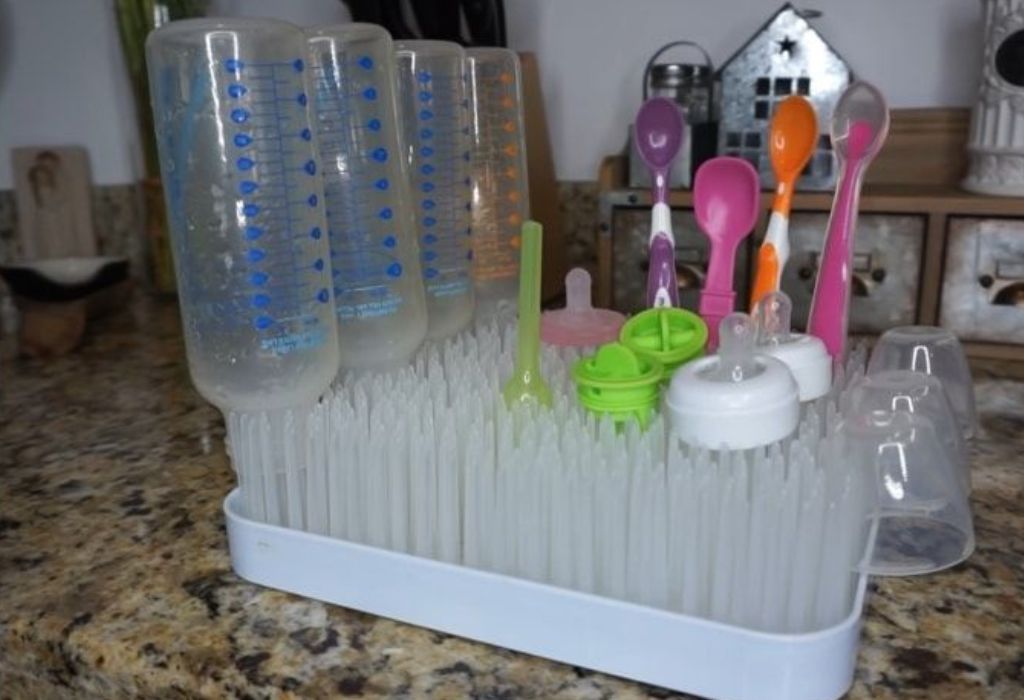
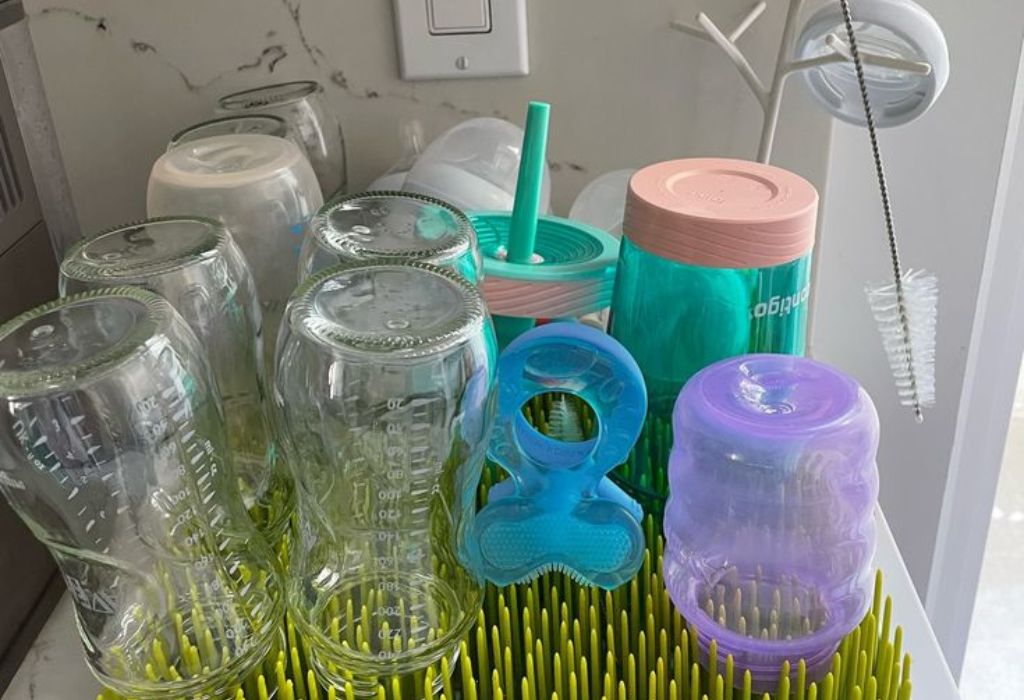
Air drying is the safest method after dishwashing. It prevents contamination from towels or cloths. Air drying lets bottles dry completely without added contact.
A dedicated drying rack works best for baby bottles. The rack keeps bottles upright and well ventilated. This helps prevent moisture buildup that can lead to mold.
Parents should avoid wiping bottles with kitchen towels. Towels may leave behind fibers or bacteria. Air drying eliminates this risk entirely.
After drying, bottles must be stored in a clean, enclosed space. A cabinet or drawer protects them from dust and insects. Proper storage keeps bottles ready for use.
Bottles should never be stacked while still moist. Moisture can create a breeding ground for bacteria. Ensuring full dryness is essential.
Parents should check that all bottle parts are completely dry. Nipples and caps can trap water inside small crevices. Thorough drying prevents hidden moisture.
Regular cleaning of the drying rack is important. Dust or residue may collect over time. Clean racks support healthy storage habits.
Signs Your Baby Bottles Should Be Replaced
Cloudiness is one of the first signs that bottles are aging. Cloudy plastic may no longer be safe for long term use. Replacing these bottles keeps feeding safer.
Cracks indicate serious damage. Even tiny cracks can trap milk residue. Damaged bottles must be discarded immediately.
Leaks suggest that the bottle or nipple is no longer functioning correctly. Milk escaping during feeding creates hygiene issues. Replacing worn parts ensures smooth feeding.
Stubborn odors may develop after long use. This happens when plastic materials absorb smells over time. Persistent odors suggest it is time for a new bottle.
If nipples become thin or soft, they should be replaced. Worn nipples may break or leak unexpectedly. Safe feeding requires firm and intact nipples.
Discoloration is another warning sign. Yellow or brown stains indicate exposure to heat or residue buildup. Discolored bottles are less reliable.
Parents should check bottles weekly for wear. Consistent inspection helps prevent feeding issues. This habit supports safer routines.
FAQ About Washing Baby Bottles in the Dishwasher
Can baby bottles go in the dishwasher safely?
Yes, most modern baby bottles are dishwasher safe when placed on the top rack, but parents should always follow the manufacturer’s instructions for safe cleaning.
Do I need to sterilize baby bottles after using the dishwasher?
You do not always need to sterilize after every wash, but sterilizing is recommended for newborns or premature babies who need extra protection.
What dishwasher setting is best for baby bottles?
The sanitize or high temperature setting is best for deeper cleaning, while the normal wash cycle is usually safe for everyday use.
Can silicone nipples be washed in the dishwasher?
Yes, silicone nipples are generally dishwasher safe, but they should be placed in a small parts basket to prevent damage or loss.
Should I pre rinse baby bottles before putting them in the dishwasher?
Pre rinsing helps remove milk residue that may harden during the wash cycle, making the cleaning process more effective.
Can the dishwasher damage plastic baby bottles?
Dishwashers can warp or cloud lower quality plastics, which is why top rack placement and baby safe detergents are important.
Is it safe to use regular dishwasher detergent for baby bottles?
It is better to use mild or baby safe detergent because strong fragrances and chemicals may leave residue on bottle surfaces.
How do I prevent small bottle parts from getting lost?
Using a dishwasher safe basket keeps nipples, rings and vents secure during the wash cycle and ensures they are cleaned properly.
How often should I wash baby bottles in the dishwasher?
Baby bottles should be washed after every feeding, and many parents run the dishwasher once or twice a day depending on usage.
Why do baby bottles smell after washing?
Smells usually come from trapped milk residue or aging plastic, which means bottles may need deeper cleaning or replacement.
Conclusion
Parents should always follow manufacturer instructions. Bottle guidelines are designed to protect materials during dishwasher use. Ignoring these recommendations may cause damage.
Using baby safe detergent ensures bottle cleanliness. Mild detergent avoids harsh chemicals that can cling to surfaces. This keeps feeding items safer for infants.
Dishwasher maintenance is essential for consistent cleaning. Filters and spray arms must stay clear for strong water pressure. A clean machine supports better hygiene.
Parents should avoid mixing heavily soiled dishes with baby bottles. Grease and food residue can transfer to bottle parts. Separating loads creates a cleaner washing environment.
Cross contamination should be avoided by washing bottles on the top rack. This protects them from strong heat and large food particles. Proper rack placement maintains bottle quality.
Parents should check bottle parts after every cycle. Any residue should be washed again before feeding. Consistent inspection ensures safe feeding routines.
Following these safety practices keeps bottle cleaning simple and reliable. A well maintained dishwasher and proper bottle care create a safe feeding routine. Parents can rely on this method for daily use with confidence.

I’m Emma J. Caldwell, the founder, lead writer, and home-cooking enthusiast behind KitchenGuideCo.com. With a background in culinary arts and over a decade of cooking experience in both professional and personal kitchens, I created this platform to demystify recipes, offer smart kitchen gadget reviews, and guide readers through meal prep with confidence and clarity.