You open your dishwasher, expecting to see shining glasses and spotless plates. Instead, you’re greeted by a cloudy haze and chalky streaks that just won’t go away.
The dishes look dull, even though you used your best detergent. That’s when you notice something else — the inside walls of your dishwasher look faded and coated with a white film.
This is the silent work of hard water. Every wash cycle leaves behind tiny mineral deposits of calcium and magnesium that slowly build up over time. According to appliance experts, more than 60% of households in hard water regions face the same problem, leading to poor cleaning performance and shortened dishwasher lifespan.
Ignoring this buildup doesn’t just make your dishes look bad — it also forces your machine to work harder. The heating elements and spray arms become clogged, water flow weakens, and detergent struggles to dissolve properly. The result? Cloudy dishes, unpleasant odors, and wasted electricity.
The good news is that cleaning hard water buildup is easier than it looks. With the right mix of natural ingredients and a simple routine, you can bring your dishwasher back to its original shine and efficiency.
In this complete guide, you’ll learn how to identify mineral buildup, clean it using vinegar and baking soda, compare natural and commercial methods, and protect your dishwasher from future damage.
Why Hard Water Causes Dishwasher Problems
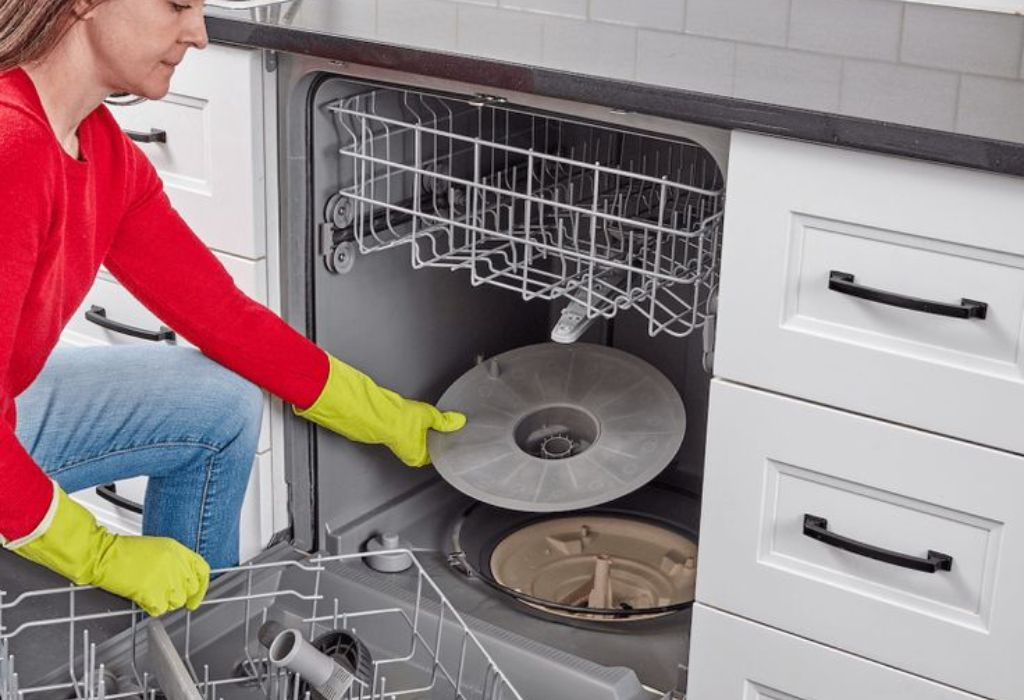
Hard water is water that contains a high concentration of minerals like calcium and magnesium. When this water is heated during wash cycles, those minerals separate and cling to the inner surfaces of your dishwasher. Over time, they form a chalky white film that affects both the appliance and your dishes.
The minerals in hard water don’t dissolve completely, especially under heat. They settle on heating elements, spray arms, and the stainless-steel walls, slowly reducing cleaning efficiency.
What begins as a faint residue often turns into thick, crusty buildup that interferes with water flow and temperature.
Cloudy glasses and streaked plates are among the first visible signs of hard water damage. Even after using high-quality detergent, the leftover minerals prevent soap from lathering properly, leaving stains behind.
The problem worsens if you live in areas with consistently hard water and use your dishwasher daily.
Mineral buildup can also cause the heating element to work harder. Since it’s covered in a layer of scale, it takes longer to heat the water, consuming more electricity. That means you’re not only dealing with dirty dishes but also higher utility bills.
Over time, hard water residue can clog tiny holes in spray arms, making them less effective. This affects the overall pressure and distribution of water inside the dishwasher. If not cleaned regularly, the result can be poor performance or even mechanical failure.
Many homeowners try to solve the issue with stronger detergents, but that often makes things worse. The right solution is not more soap—it’s removing and preventing the mineral buildup that’s causing all the trouble in the first place.
How Hard Water Affects Cleaning Detergents
Hard water doesn’t just leave behind mineral deposits—it actually weakens your dishwasher detergent. The calcium and magnesium ions in hard water react with the surfactants in most detergents, preventing them from forming a rich lather.
As a result, the detergent can’t break down grease and food particles effectively, leaving residue behind.
When detergents are less effective, you’ll notice that dishes come out dull or spotted, no matter how much soap you add. The minerals bind with detergent ingredients and form insoluble salts that stick to dish surfaces instead of rinsing off. This creates the cloudy film that most people associate with hard water.
Another issue is that detergents struggle to dissolve fully in mineral-rich water. This leads to undissolved soap particles that can clog filters and jets, worsening water flow during the rinse cycle. Even premium brands can’t overcome this problem without soft water or proper additives.
Over time, this interaction between minerals and soap causes a sticky buildup on the inside walls and door seals of the dishwasher. This buildup traps odors and food particles, further reducing cleaning performance.
Many modern detergents now include water-softening agents, but their effectiveness depends on how hard your water actually is. In very hard water areas, even these additives might not be enough to neutralize all mineral ions.
That’s why pairing the right detergent with preventive cleaning habits is so important. Choosing products labeled “for hard water” and maintaining a monthly cleaning routine will keep detergent efficiency high and your dishes spotless.
How to Identify Hard Water Buildup in Your Dishwasher
Before you start cleaning, it’s important to confirm that hard water is actually the problem. The signs are usually visible and easy to recognize once you know what to look for.
The most common clue is a white, chalky residue on the inside walls or on the heating element. If your glasses or dishes come out looking cloudy even after a full wash, that’s another strong indicator. You might also notice white spots on silverware or a powdery texture that rubs off easily.
Sometimes, people confuse soap scum with hard water residue. Soap scum feels greasy, while mineral deposits feel dry and powdery. If you’re unsure, wipe a small area with vinegar—if the white film dissolves quickly, it’s mineral buildup.
Another sign is poor water flow from spray arms. Hard water can clog the small holes, causing uneven cleaning. If you hear the machine struggling or notice that dishes on the top rack stay dirty, the buildup may already be blocking the jets.
You can also test your water hardness using inexpensive strips available in most hardware stores. These test kits can tell you whether your home’s water supply has high mineral content. If it does, it’s wise to start a regular cleaning schedule for your dishwasher.
Ignoring these signs can lead to reduced performance and even permanent damage. Once buildup reaches internal pipes or sensors, cleaning becomes more difficult. Early detection makes the job easier and helps extend your dishwasher’s life.
Cleaning Dishwasher Filters and Spray Arms in Detail
The filter and spray arms are the heart of your dishwasher’s cleaning system, and they’re also the first places where hard water minerals settle.
When calcium deposits form on these parts, they block water flow and reduce pressure, making every wash cycle less effective. A simple cleaning routine can restore full performance and prevent cloudy dishes.
Start by removing the bottom rack to access the filter. Most modern dishwashers have a two-part filter — one coarse and one fine mesh. Twist and lift both parts out gently, then rinse them under warm water. If the buildup is thick, soak the filters in a bowl of vinegar for 15 to 20 minutes to dissolve the scale.
While the filters soak, inspect the spray arms. These narrow tubes distribute water during the cycle, but their small holes easily clog with minerals or food particles. Use a toothpick or a soft brush to clear each nozzle carefully. Avoid metal tools that could scratch or enlarge the holes.
Next, fill a basin with warm water and vinegar, then submerge the spray arms for 20 minutes. This loosens any hidden deposits inside. Rinse them thoroughly afterward and check that water flows evenly through every hole before reattaching them.
Once both the filter and spray arms are clean, wipe the surrounding area inside the dishwasher, especially the base and under the door. These zones often trap hard water residue and grease that can cause odors over time.
Reinstall all parts and run a short rinse cycle with no detergent. This flushes away any remaining particles and ensures smooth water flow for the next wash. Cleaning these parts monthly keeps your dishwasher powerful, efficient, and odor-free — the way it’s meant to be.
Step-by-Step Guide to Clean Hard Water from Dishwasher
Cleaning hard water buildup doesn’t require expensive chemicals. Most of the ingredients you need are already in your kitchen.
Step 1: Prepare the dishwasher. Remove all dishes and racks, then wipe away any loose debris or food particles. Take out the filter at the bottom and rinse it under warm water to remove grime.
Step 2: Use vinegar for deep cleaning. Fill a dishwasher-safe cup with white vinegar and place it on the top rack. Run a hot-water cycle with no detergent. The vinegar will help dissolve mineral deposits and neutralize odors inside the machine.
Step 3: Apply baking soda rinse. Once the vinegar cycle finishes, sprinkle a cup of baking soda across the bottom of the dishwasher. Run a short, hot cycle again. This helps remove stains, deodorize the interior, and bring back the shine.
Step 4: Scrub the seals and spray arms. Use an old toothbrush or soft brush to clean the door gaskets and the spray arm holes. These parts often collect mineral residue that isn’t fully removed by the rinse cycle.
Step 5: Clean the filter housing and drain. Pour a little vinegar into the drain area and let it sit for 15 minutes before rinsing. This helps loosen buildup in hidden corners where water collects.
Step 6: Final wipe and dry. Once the cleaning is done, leave the door open to air-dry completely. Wipe the inside with a soft microfiber cloth to prevent new spots from forming.
Performing this cleaning routine once every month will keep your dishwasher in excellent condition. It’s simple, affordable, and highly effective in fighting hard water buildup.
Natural Remedies vs Commercial Cleaners
Many homeowners debate between natural cleaning agents and store-bought cleaners. Both work, but each has specific advantages depending on the situation.
Vinegar, lemon juice, and citric acid are safe, affordable, and eco-friendly. They dissolve calcium deposits naturally and leave behind a fresh scent. These options are ideal for regular monthly maintenance and for households that prefer chemical-free cleaning.
However, natural remedies might not be strong enough for severe buildup. If your dishwasher hasn’t been cleaned for several months or has thick scale deposits, a commercial dishwasher descaler might work faster.
Commercial cleaners are formulated to target mineral deposits and often include surfactants that enhance dissolving power. Always follow the manufacturer’s instructions carefully, as overuse can damage rubber seals or plastic parts.
Safety should always come first. Avoid mixing vinegar and bleach-based cleaners, as this combination releases toxic fumes. Also, don’t use abrasive scrubbers that could scratch the stainless-steel interior.
A good routine is to alternate between natural and commercial cleaning every few months. This keeps your dishwasher clean without exposing it constantly to strong chemicals. Eco-conscious users can also choose certified biodegradable descalers to minimize environmental impact.
By balancing both methods, you ensure powerful cleaning results while protecting your appliance for years to come.
Using Dishwasher Salt and Rinse Aid Effectively
Dishwasher salt and rinse aid play vital roles in fighting hard water, yet many users overlook how to use them properly.
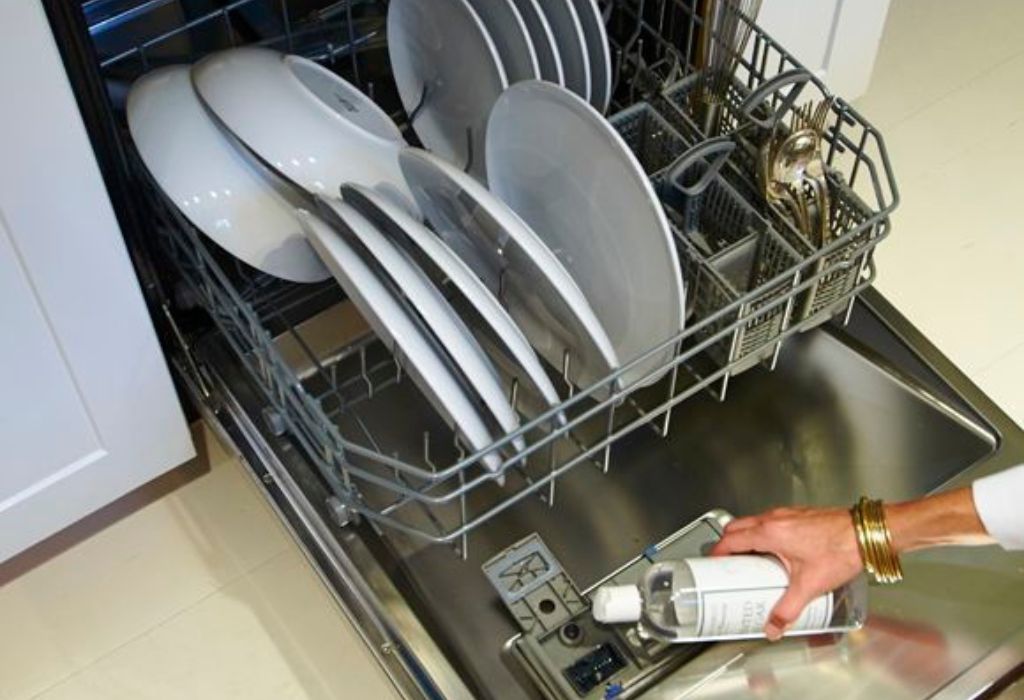
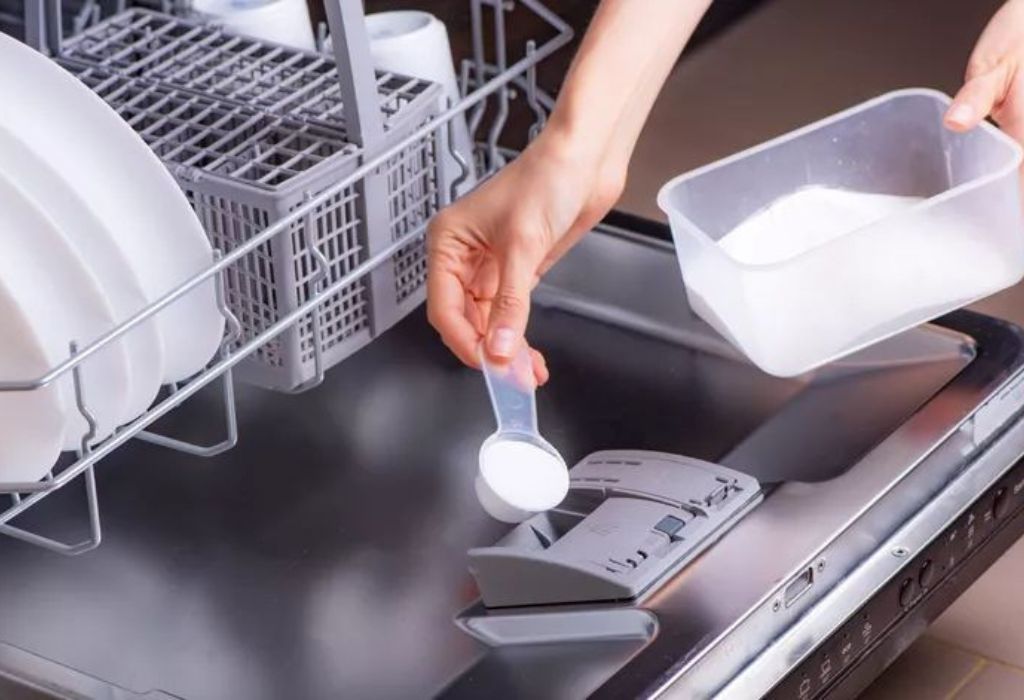
Dishwasher salt is specifically designed to soften the water that enters your appliance, preventing calcium and magnesium from forming limescale. This simple addition can dramatically reduce mineral buildup and improve cleaning results.
The salt doesn’t mix directly with the washing water. Instead, it goes into a special compartment at the bottom of the dishwasher, where it regenerates the built-in ion-exchange system. This system swaps out hard minerals for sodium ions, ensuring the water that washes your dishes is soft and detergent-friendly.
For best results, always use genuine dishwasher salt rather than table salt. Table salt contains anti-caking agents that can clog the softener compartment or cause corrosion. Refill the compartment whenever the indicator light appears, or at least once a month if you use the machine frequently.
Rinse aid works differently. It helps water slide off dishes evenly during the rinse cycle, preventing water spots and streaks. In hard water areas, this step is essential because it breaks surface tension and reduces mineral spotting on glassware.
To use rinse aid effectively, pour it into the dispenser inside the door and adjust the setting according to your water hardness level. Higher settings release more rinse aid per cycle, which helps if you notice cloudy glass or stubborn streaks.
Combining both dishwasher salt and rinse aid ensures your appliance performs at its best. The salt protects internal components from scaling, while the rinse aid keeps your dishes crystal clear. Together, they form your first line of defense against hard water damage.
How to Prevent Hard Water Buildup in the Future
Once you’ve cleaned your dishwasher, it’s time to make sure it stays that way. Prevention is the key to reducing future buildup and extending your machine’s life.
Installing a water softener is the most effective solution. It removes calcium and magnesium before they enter your appliance, ensuring cleaner water and better washing results. If you can’t install a whole-house system, use dishwasher salt if your model supports it.
Running a vinegar rinse cycle once a month helps dissolve small mineral traces before they become visible. Simply place a cup of vinegar on the top rack and run a hot cycle with no dishes. This simple habit can make a big difference.
Always use detergents made for hard water, as they contain additives that prevent mineral spots. Read the label to make sure they’re phosphate-free and safe for your model.
Keep your spray arms and filters clean by rinsing them regularly. Even a small clog can trap hard water residue, so inspect them once every few weeks.
After each wash, leave the door slightly open to allow moisture to escape. This reduces humidity and prevents mineral residue from sticking to the interior walls.
Finally, schedule a deep cleaning session every 3–4 months, even if you use soft water. A consistent routine keeps performance high and prevents future problems before they start.
The Role of Temperature and Water Pressure in Cleaning
Temperature and water pressure are two hidden factors that decide how effectively your dishwasher fights hard water deposits.
If the water isn’t hot enough or the pressure is too low, detergent won’t dissolve properly, and minerals will stick to your dishes and machine parts. Balancing these settings can make a big difference in your cleaning results.
Hot water helps break down grease, dissolve detergent, and loosen calcium and magnesium residues. Most dishwashers perform best when the incoming water temperature is between 120°F and 140°F (49°C–60°C). If your water heater is set too low, minerals remain undissolved, and cloudy stains start forming faster.
Before running a cycle, it’s a good idea to run the kitchen faucet until the water feels hot. This ensures your dishwasher fills with pre-heated water right from the start. The first few minutes of the cycle are crucial for dissolving detergent efficiently and preventing buildup.
Water pressure is just as important. Weak pressure means spray arms can’t reach all areas, leaving detergent and minerals to settle unevenly. Check your home’s water pressure; it should ideally be between 20 and 120 psi for optimal dishwasher performance.
Blocked spray arm holes or dirty filters can also reduce pressure inside the dishwasher. Cleaning these parts regularly ensures that jets deliver strong, consistent water flow to every corner of the rack.
If your dishes often come out dull even after a full wash, check both temperature and pressure before blaming the detergent. A quick adjustment in these two factors often restores the sparkle to your dishes and prevents new layers of hard water buildup from forming.
Expert Maintenance Tips for Long-Term Dishwasher Health
Proper maintenance goes beyond just cleaning. A few expert tips can help your dishwasher run more efficiently and last much longer.
Avoid overloading the racks. When dishes are packed too tightly, water can’t reach all surfaces, leading to uneven cleaning and mineral accumulation. Load items so that spray arms can rotate freely.
Check the heating element for scale buildup regularly. If you notice a chalky film, clean it with vinegar or a specialized descaler. This keeps water temperatures consistent and prevents strain on the motor.
Measure detergent properly. Using too much soap doesn’t mean cleaner dishes—it actually worsens buildup by leaving more residue behind. Follow your detergent’s dosage instructions carefully.
If you live in an area with very hard water, consider using a rinse aid. It helps reduce spots on glassware and speeds up drying, making the interior less likely to trap minerals.
Inspect hoses and gaskets every few months for leaks or mold. Replacing worn-out seals early prevents hidden moisture problems.
Lastly, run your dishwasher on a hot cycle at least once a week, even if you don’t have many dishes. The high temperature helps dissolve residues and keeps the system fresh.
DIY Deep-Clean Schedule and Checklist
Regular cleaning keeps your dishwasher running like new, but having a clear schedule makes it easier to stay consistent.
A structured deep-clean plan ensures that mineral buildup, odors, and residue never get the chance to take over. The key is combining quick weekly habits with a thorough monthly routine.
Weekly Routine:
Once a week, wipe the door edges, control panel, and gasket with a damp cloth dipped in vinegar. These areas often trap soap scum and calcium dust. Remove any visible debris near the filter to prevent it from hardening over time.
Bi-Weekly Maintenance:
Every two weeks, check the spray arms and filter for clogs. Run a quick vinegar rinse cycle by placing a cup of vinegar on the top rack. This helps dissolve small mineral traces and keeps the inside odor-free.
Monthly Deep-Clean:
Each month, take out the racks, filter, and spray arms for a full cleaning. Soak them in a vinegar-water solution for 20 minutes, then scrub gently with a soft brush. Follow up with a baking-soda rinse cycle for a sparkling finish and fresh scent.
Seasonal Deep-Clean (Every 3–4 Months):
Inspect the heating element for scale and wipe the inside walls with a microfiber cloth soaked in vinegar. If buildup is thick, use a commercial descaler to restore shine. This is also a good time to check for leaks, cracked hoses, or gasket wear.
Quick Checklist for Long-Term Care:
- Run a hot cycle once a week.
- Use vinegar and baking soda monthly.
- Refill dishwasher salt regularly.
- Keep the door slightly open after each wash.
- Clean the filter and spray arms often.
Following this checklist helps you maintain peak performance, save on electricity, and extend your dishwasher’s lifespan. A few minutes of care every week ensures your appliance always delivers spotless, streak-free dishes—no matter how hard your water is.
Everything You’ve Wanted to Ask About Hard Water and Dishwashers
Can vinegar damage my dishwasher?
No, white vinegar is safe for most dishwashers when used in moderation. Avoid overuse, as frequent exposure can degrade rubber gaskets over time.
How often should I clean for hard water?
A monthly cleaning routine is ideal for areas with moderate hardness. If your water is very hard, perform a full cleaning every two weeks.
What if my dishwasher still smells after cleaning?
Persistent odors may come from trapped food particles or mold. Remove and scrub the filter, and use baking soda to neutralize the smell.
Should I use lemon juice instead of vinegar?
Yes, lemon juice works well for light buildup and adds a pleasant scent. However, it’s slightly less acidic, so it may not remove heavy mineral layers.
What’s the best commercial cleaner for mineral stains?
Products like Affresh, Finish Dishwasher Cleaner, or Lemi Shine are effective for tough buildup. Always check your manufacturer’s guidelines before use.
Can I prevent buildup without a softener?
Yes, regular vinegar cycles, rinse aids, and the right detergent can help control buildup even without a softener.
Conclusion
Hard water can quietly turn your dishwasher from a cleaning hero into a cloudy, inefficient machine. Those white streaks and dull dishes are clear signs that minerals have taken over, but with the right care, your appliance can easily be restored.
By following this guide, you’ve learned how to identify hard water buildup, clean it effectively using simple home ingredients, and prevent it from returning. Monthly maintenance, regular vinegar cycles, and mindful detergent use are the secrets to spotless dishes and long-lasting performance.
A clean dishwasher doesn’t just look better—it saves energy, reduces repair costs, and delivers sparkling results every time. Start your cleaning routine today and enjoy the satisfaction of perfectly clear glassware and a fresh, odor-free dishwasher after every wash.

I’m Emma J. Caldwell, the founder, lead writer, and home-cooking enthusiast behind KitchenGuideCo.com. With a background in culinary arts and over a decade of cooking experience in both professional and personal kitchens, I created this platform to demystify recipes, offer smart kitchen gadget reviews, and guide readers through meal prep with confidence and clarity.