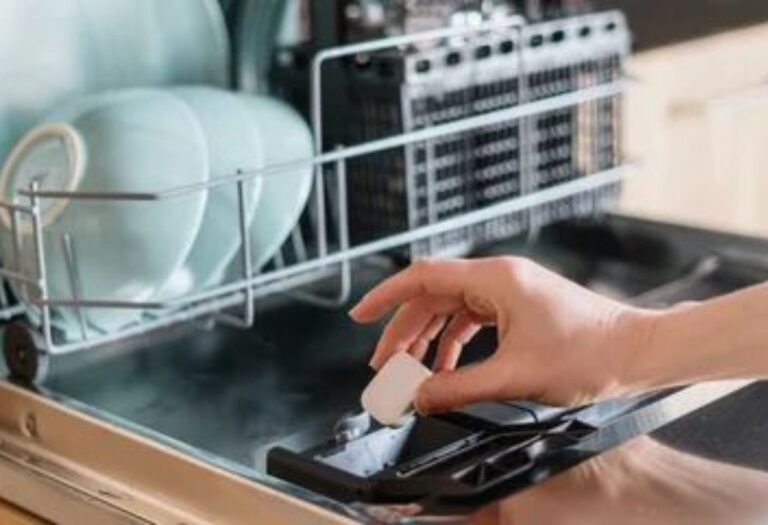
You finish a big family dinner, and the sink is overflowing with dishes. The question instantly pops into your head — should you wash them by hand or load them into the dishwasher?
Most people believe that hand washing saves more water, thinking machines are wasteful. But what if the truth is the opposite?
In reality, modern dishwashers are engineered for efficiency. They’re designed to recycle, filter, and reuse small amounts of water during each cycle, drastically reducing waste. Meanwhile, leaving the tap running during hand washing can drain gallons of water before you even realize it.
According to the U.S. Environmental Protection Agency, an Energy Star-certified dishwasher uses as little as 3 to 5 gallons per cycle, while traditional hand washing can use 20 to 27 gallons for the same number of dishes. That’s a fivefold difference in water use — and a huge impact on your utility bill and the planet.
The myth that hand washing is “greener” comes from an outdated view of how dishwashers worked decades ago.
Today’s machines use smart sensors, targeted jets, and optimized heat cycles to clean efficiently. The result is not just sparkling dishes but also significant water and energy savings.
In this article, we’ll dive deep into how dishwashers conserve water, the real costs of hand washing, and how you can maximize your cleaning efficiency while helping the environment.
You’ll discover why the best way to save water might actually be pressing the “Start” button on your dishwasher.
The Ongoing Debate — Dishwasher vs Hand Washing
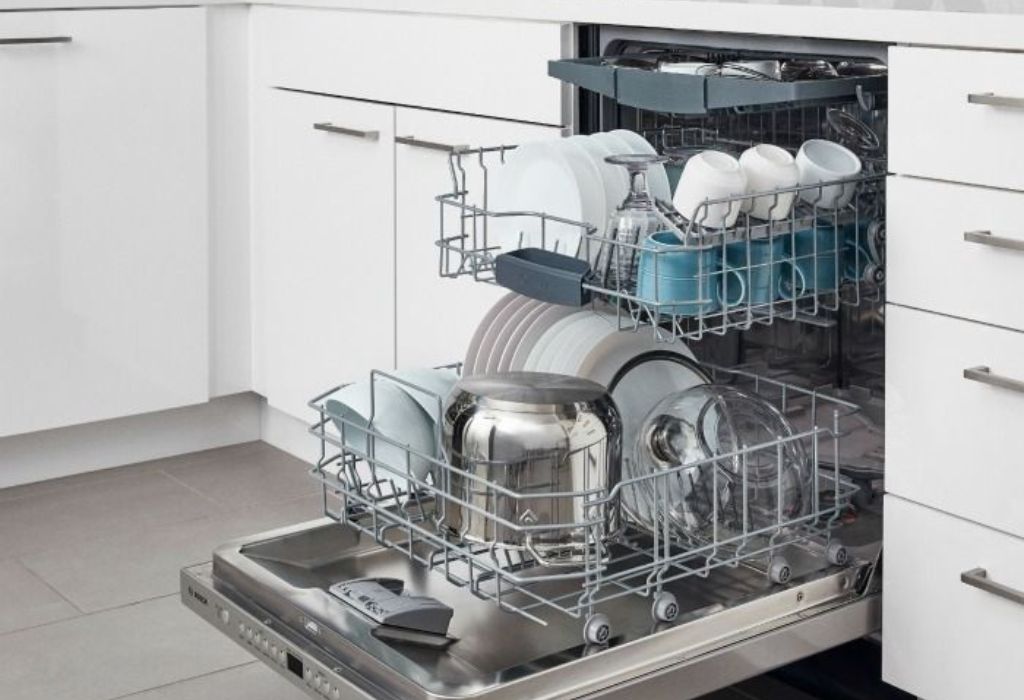
The dishwasher-versus-hand-washing debate has existed since the first home dishwashers appeared in the 1950s. Back then, machines were noisy, expensive, and far less efficient, using nearly 15 gallons of water per load. It’s no surprise that early users believed hand washing was better.
However, the technology behind modern dishwashers has evolved dramatically. Current Energy Star models are designed with sensors that measure how dirty your dishes are and adjust water use accordingly. This makes them far more efficient than running a faucet continuously during manual washing.
The main reason hand washing wastes more water is simple: human behavior. When washing dishes under running water, most people let the tap flow the entire time — even while scrubbing or soaping dishes. Those few extra minutes can waste several gallons.
Dishwashers, on the other hand, use closed systems. Water is circulated multiple times, filtered, and heated precisely to break down grease and food particles efficiently. This means no constant flow or waste down the drain.
The environmental debate also includes energy usage, but even there, dishwashers often win. Heating water for manual washing requires more total energy over time than the controlled, targeted heating used in dishwashers.
So while both methods clean dishes, dishwashers consistently come out ahead in both water and energy efficiency — especially when loaded correctly and used with full cycles.
How Dishwashers Actually Work to Save Water
Dishwashers are like miniature water recycling plants inside your kitchen. Instead of using fresh water throughout the entire cycle, they reuse the same small amount multiple times. The water is sprayed, collected, filtered, and pumped back through the jets.
At the start of each wash, the machine fills with only a few gallons of water. That water is mixed with detergent and heated to an ideal temperature for breaking down grease and food residue. Unlike hand washing, where water runs constantly, a dishwasher ensures every drop is used effectively.
Modern models include turbidity sensors that detect how dirty the water is. If the rinse is still clean, the dishwasher won’t drain it unnecessarily. This smart automation prevents water waste while maintaining spotless results.
Some machines even have variable spray zones that target dirtier areas with higher pressure while using minimal water elsewhere. This allows for efficient cleaning without flooding the appliance.
Because dishwashers are sealed systems, they also lose less heat and water vapor than open sinks. Everything is contained and recycled within the machine. This process not only conserves water but also improves cleaning consistency.
In essence, dishwashers save water because they clean smartly, using precision and repetition instead of constant flow and guesswork.
How Much Water Does Hand Washing Really Use
Hand washing feels simple, but it’s one of the biggest sources of domestic water waste. Most people underestimate just how much water runs down the drain while scrubbing plates, pots, and utensils.
According to multiple studies, the average person uses 2 gallons per minute when washing dishes under a running faucet. Even if you’re quick, a 10-minute session easily wastes 20 gallons. If you fill a sink basin, it still takes about 8 to 10 gallons to fill it to a usable level.
The problem becomes worse when washing greasy or heavily soiled items. People tend to rinse multiple times, refill basins, and keep the water hot — all of which multiply water and energy use.
Temperature also plays a role. Hot water used for rinsing adds to both energy bills and water waste since the heater must work continuously to maintain temperature.
Some people claim they save water by turning off the tap between dishes, and while that helps, it’s rarely done perfectly. Even cautious washers use far more than a single dishwasher load.
When you multiply this by the number of meals a family eats weekly, the total water waste from hand washing adds up to thousands of gallons per year. It’s a habit that feels harmless but has a lasting environmental impact.
Comparing Water Efficiency — Real-World Statistics
Let’s break down the numbers to see how dishwashers truly compare. On average, an Energy Star-certified dishwasher uses 3 to 5 gallons per cycle, while hand washing typically consumes 20 to 27 gallons. That’s a savings of up to 5 times less water per wash.
Even non-Energy Star dishwashers from recent years rarely exceed 7 gallons per cycle, which is still far more efficient than manual washing. Some ultra-efficient models use as little as 2.7 gallons per full load.
The European Environmental Agency reported similar results: modern dishwashers use 74% less water than washing by hand. Over a year, this translates into hundreds of gallons of savings per household.
Energy savings are also significant. Dishwashers heat water internally with more precision, using less electricity than a home’s central heater does for a sink full of dishes.
One key factor is load size. Running a half-empty dishwasher cancels much of the benefit, while hand washers often clean in small batches. The best results come from running a fully loaded dishwasher using an eco or light cycle.
So, in nearly every measurable way, dishwashers outperform hand washing in water efficiency, energy use, and overall sustainability.
Why Modern Dishwashers Are Designed for Water Conservation
Today’s dishwashers are built with sustainability in mind. Engineers focus on maximizing cleaning power with the least possible water. The result is an appliance that’s both eco-friendly and economical.
Key innovations include smart sensors, variable pressure jets, and optimized water paths. These technologies let the dishwasher adjust water use based on how dirty your dishes are — using more when needed and conserving when not.
Internal filters continuously clean and reuse the same water during the cycle, reducing waste. Instead of constantly draining and refilling, the machine recirculates heated water through fine mesh filters.
The nozzles are precisely angled to deliver targeted cleaning rather than flooding the interior. This ensures even stubborn residue is removed efficiently without excessive water.
Even drying cycles have improved. Many machines now use condensation drying, which doesn’t rely on additional hot air or energy. It allows dishes to dry naturally through steam condensation, saving both water and electricity.
Altogether, these advances make modern dishwashers far superior to their older counterparts, and far more efficient than any manual washing method.
The Role of Detergent and Technology in Water Saving
Dishwasher efficiency isn’t just about mechanics — it’s also about chemistry. The detergent you choose and how your machine applies it both affect water usage and cleaning results.
Modern detergents are formulated to work in low-water environments, dissolving quickly and breaking down grease without excess rinsing.
In traditional hand washing, people often use too much soap, thinking more suds mean cleaner dishes. In reality, those extra bubbles require extra rinsing, wasting gallons of water. Dishwashers avoid this problem by dispensing precise amounts of detergent at the perfect time in the cycle.
High-efficiency tablets and gels activate in stages. The first phase softens food residue, the second removes it, and the final rinse clears remaining detergent — all using minimal water. This smart dosing ensures effective cleaning without repeated rinses.
Technology also helps improve detergent performance. Many dishwashers use sensor-based dosing that adjusts soap levels based on how dirty the water becomes. This prevents overuse and saves both detergent and water.
The water jets and filtration systems are designed to circulate detergent evenly throughout the tub, making sure every surface gets covered without overspray. This balanced delivery system maximizes coverage and cleaning strength per drop of water used.
Together, modern detergents and smart appliance design create a cleaning process that’s both powerful and conservative. It’s proof that the right combination of technology and chemistry can lead to cleaner dishes and a greener home.
Energy and Heat Efficiency Factors in Dishwashing
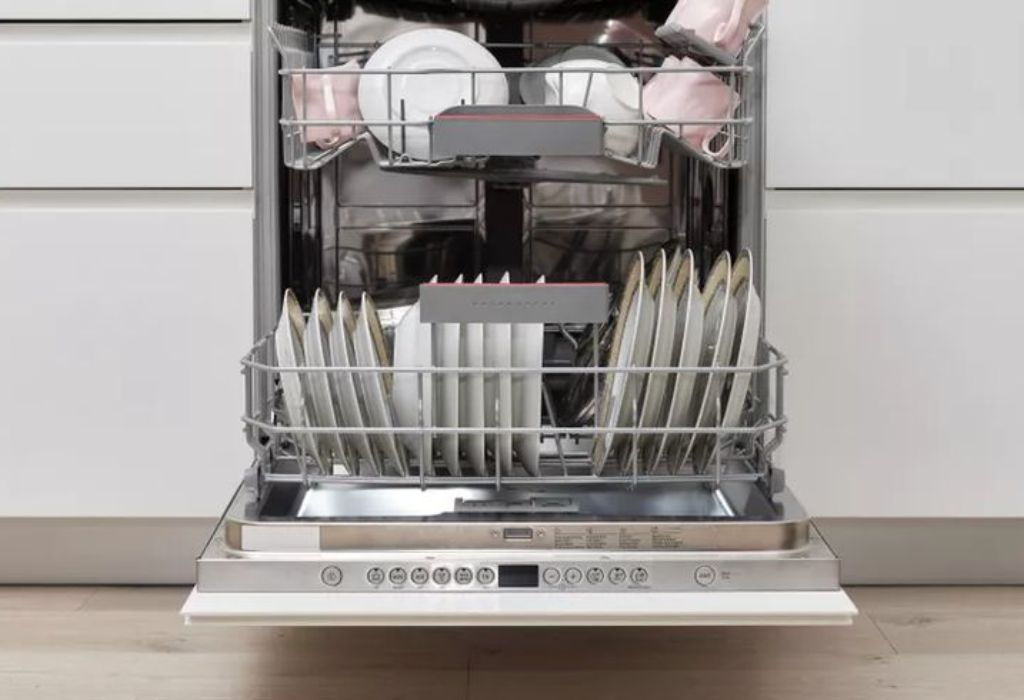
Water savings are only part of the story. Dishwashers also excel at using heat and energy efficiently, which further reduces environmental impact.
During manual washing, the biggest energy draw comes from heating water. Because the faucet runs continuously, the water heater must maintain temperature throughout the entire session. This wastes not only water but also gas or electricity.
Dishwashers, in contrast, heat smaller amounts of water to precise temperatures. The heating element inside the machine activates only when necessary. As a result, it uses up to 30% less energy than continuous sink washing.
High temperatures in dishwashers also mean better sanitization. Most run between 130°F and 150°F, which kills bacteria and removes oil without the need for prolonged rinsing. This further reduces water and energy waste.
Energy-efficient dishwashers also feature “eco” or “quick wash” modes that use less heat and shorter cycles. These options clean light loads effectively without excess consumption.
When combined with efficient detergent and full loads, dishwashers can save hundreds of gallons of water and several kilowatt-hours of energy per month compared to hand washing.
The Hidden Energy Cost of Hand Washing Dishes
Most people think the only difference between hand washing and dishwashing lies in water use, but the hidden factor is energy. When you wash by hand with hot water, your home’s water heater must continuously supply and maintain that temperature.
This constant reheating consumes large amounts of gas or electricity — often far more than a dishwasher uses in an entire cycle.
In fact, studies show that heating water for manual washing accounts for nearly 80% of the total energy used in the process.
Because there’s no temperature control, you end up using far more heat than necessary just to keep the water warm while scrubbing. That heat quickly escapes into the air, wasting energy and money.
Dishwashers, on the other hand, heat smaller amounts of water in a sealed chamber. This process retains heat longer and uses it more effectively for cleaning. As a result, even though they rely on electricity, they operate more efficiently overall.
The inefficiency of hand washing also affects your energy bills. If you wash dishes daily, the cost of heating all that water can exceed the annual energy cost of running a dishwasher. For large families, this difference becomes even more noticeable.
Temperature control also plays a role in sanitization. Many people can’t comfortably touch water hot enough to kill bacteria, so they end up washing dishes in lukewarm water that’s less hygienic. Dishwashers, meanwhile, reach temperatures that fully sanitize every item without wasting extra heat.
When water and energy costs are combined, dishwashers clearly win. They don’t just save water, they save energy, lower bills, and create a cleaner, safer kitchen routine.
Environmental Impact — What the Science Says
Research consistently shows that dishwashers have a smaller carbon footprint than manual washing. The difference comes mainly from reduced water and energy use during every cycle.
A study by the University of Bonn found that using an efficient dishwasher emits up to half the CO₂ compared to hand washing. The reason is simple: less hot water means less fuel burned for heating.
Additionally, dishwashers recycle their water several times, which minimizes waste. Every drop is used purposefully, while hand washing allows clean water to escape continuously down the drain.
The environmental impact also depends on user behavior. A full dishwasher load cleaned on an eco cycle is far more sustainable than multiple small hand-wash sessions each day.
Manufacturers are now designing machines made from recyclable materials and incorporating lower standby energy use. Together, these developments make dishwashers one of the most eco-friendly home appliances available today.
Common Mistakes That Waste Water While Using Dishwashers
Even though dishwashers are efficient, bad habits can reduce their water-saving potential. One of the most common mistakes is pre-rinsing dishes under running water. Modern machines are designed to handle food residue, so pre-rinsing only wastes gallons unnecessarily.
Another error is running half loads too frequently. Every cycle, even a light one, still uses several gallons of water. Waiting until you have a full load maximizes water and energy efficiency.
Using the wrong detergent or overfilling the dispenser can cause excessive suds. This may lead the machine to add rinse cycles to remove them, using more water in the process.
Ignoring maintenance also leads to inefficiency. Clogged filters or spray arms restrict water flow, forcing the machine to run longer cycles. Cleaning these parts monthly helps maintain peak performance.
Lastly, selecting the wrong cycle for your dish type wastes resources. For lightly soiled dishes, always choose the “eco” or “quick” wash mode. Heavy-duty cycles should only be used for greasy pots and pans.
By avoiding these small mistakes, you ensure that your dishwasher runs at its most water-efficient capacity every time.
How to Make Your Dishwasher Even More Water Efficient
To maximize your dishwasher’s performance, a few small habits make a big difference. First, scrape off large food scraps instead of rinsing dishes under running water. This keeps filters clean and eliminates unnecessary pre-wash water use.
Second, always run full loads. Dishwashers use nearly the same amount of water for small and large loads, so it’s best to fill them completely before starting a cycle.
Third, use eco-mode whenever possible. This setting lowers the temperature and shortens cycles without compromising cleanliness. Over time, it saves hundreds of gallons annually.
Fourth, check your water heater settings. Setting it to around 120°F ensures your dishwasher receives water that’s hot enough to clean efficiently but not so high that it wastes energy.
Finally, maintain your appliance regularly. Clean the filters, seals, and spray arms monthly to prevent mineral buildup that can restrict water flow. A well-maintained machine always performs at peak efficiency.
These simple adjustments take little effort but greatly increase both water and energy savings over time.
Best Practices for Eco-Friendly Dish Cleaning at Home
Water efficiency doesn’t stop at your dishwasher — it’s part of a larger kitchen routine. Combining smart habits with appliance use ensures the most eco-friendly results possible.
Start by planning dishwashing sessions strategically. Instead of washing after every meal, load throughout the day and run the dishwasher once at night when it’s full. This minimizes total cycles.
Use detergents that are biodegradable and phosphate-free. They’re better for the environment and designed to work with low-water systems.
If you must hand wash certain delicate items, fill a small basin instead of letting the faucet run. Use cooler water when possible and rinse multiple items at once to minimize flow time.
Drying methods also matter. Skip heated drying cycles and let your dishes air-dry naturally by opening the door after the final rinse. This saves both water and power.
Together, these best practices reduce waste, protect your appliance, and align with sustainable living habits. Small changes lead to big savings over time.
How Small Habits Influence Total Water Usage
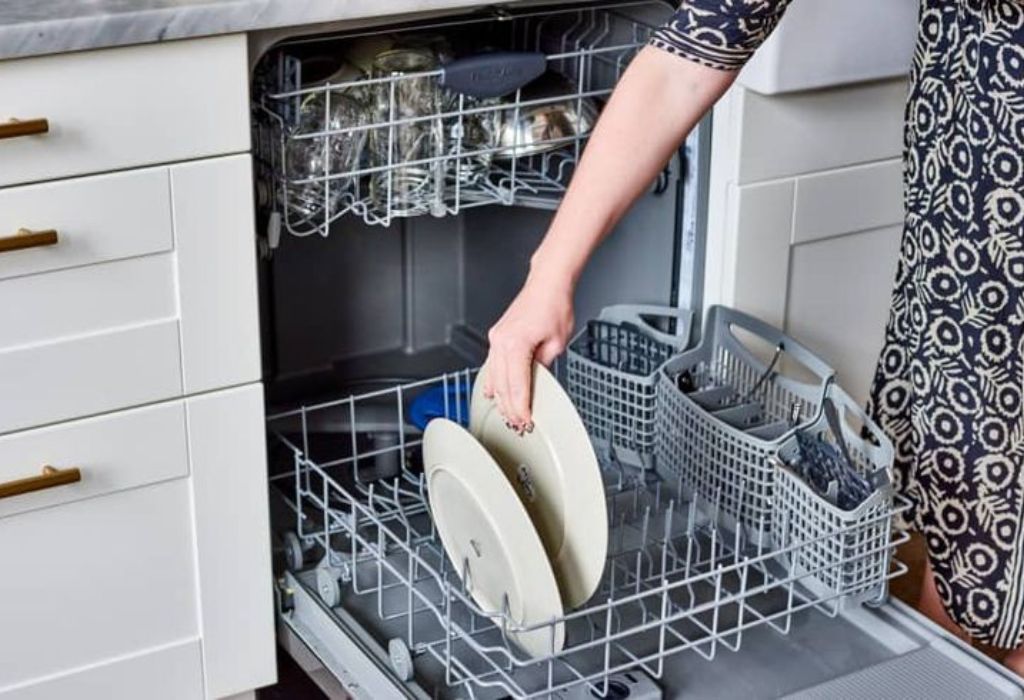
Even with the most advanced dishwasher, your daily habits still determine overall water savings. How you load, maintain, and operate your machine can either boost or reduce its efficiency. Fortunately, small tweaks make a huge difference.
Start with loading technique. When dishes block the spray arms or overlap, water can’t reach all surfaces. You might feel forced to run an extra cycle, wasting water unnecessarily. Proper spacing ensures that every plate, cup, and utensil gets cleaned in one go.
Next, avoid washing small batches. Running your dishwasher only when it’s full is the easiest way to maximize efficiency. Modern models won’t use much more water for a full load than for a half one, so fill it up before hitting “Start.”
Use the right rinse and drying settings. Skip the high-heat dry option and let dishes air-dry with the door open after the final rinse. This not only saves energy but also reduces water condensation inside.
Maintenance is another small habit that pays off. Cleaning filters, seals, and spray holes regularly keeps water pressure consistent and prevents extra rinsing cycles.
Lastly, timing matters. Run your dishwasher during off-peak hours or at night when water demand is lower. This supports grid efficiency and, in some areas, can even lower your utility rate.
When these habits become routine, your dishwasher runs cleaner, faster, and greener. Over a year, these small choices can save hundreds of gallons of water — all without changing your lifestyle dramatically.
FAQs — Dishwasher and Hand Washing Water Usage
Do dishwashers really save water compared to hand washing?
Yes, dishwashers use far less water. Modern Energy Star models typically use 3–5 gallons per load, while hand washing can use 20 gallons or more.
Does pre-rinsing dishes help save water?
No. Dishwashers are designed to handle food residue. Pre-rinsing under running water wastes gallons unnecessarily. Just scrape off leftovers instead.
Are old dishwashers less efficient?
Yes. Models older than 10 years can use up to 10–15 gallons per cycle. Upgrading to an Energy Star unit cuts water use by half or more.
Can eco-mode really clean dishes properly?
Absolutely. Eco-mode uses lower temperatures and less water but cleans effectively for normal soil levels. It’s ideal for daily use.
Is it better to hand wash fragile items?
Yes, but fill a small basin instead of running the tap. Wash several items together to reduce total water waste.
Do dishwashers use less electricity too?
Usually, yes. They heat smaller amounts of water more efficiently than household heaters used for manual washing.
Should I run my dishwasher daily?
Only if it’s full. Running half loads wastes water and energy. Wait until you have enough dishes for a full cycle.
Can I make my dishwasher even more eco-friendly?
Yes. Clean filters monthly, avoid pre-rinsing, and use eco or quick wash settings whenever possible.
Do hand washers waste more hot water?
Definitely. Keeping the tap hot for long periods consumes large amounts of energy. Dishwashers heat only what they need.
What’s the total water savings per year using a dishwasher?
Switching from hand washing to an Energy Star dishwasher can save over 5,000 gallons of water annually for an average family.
Conclusion
The verdict is clear: dishwashers use significantly less water than hand washing. What once seemed like a luxury appliance has become a champion of conservation.
Modern dishwashers are intelligent, precise, and designed to clean effectively with minimal water and energy. By reusing and filtering water internally, they outperform even the most careful hand washers.
Hand washing might feel traditional and mindful, but in terms of sustainability, dishwashers take the lead. With smart habits — like skipping pre-rinsing, running full loads, and using eco cycles — you can make them even more efficient.
The next time you hesitate between filling the sink or pressing “Start,” remember that saving water can be as easy as letting your dishwasher do the work.

I’m Emma J. Caldwell, the founder, lead writer, and home-cooking enthusiast behind KitchenGuideCo.com. With a background in culinary arts and over a decade of cooking experience in both professional and personal kitchens, I created this platform to demystify recipes, offer smart kitchen gadget reviews, and guide readers through meal prep with confidence and clarity.