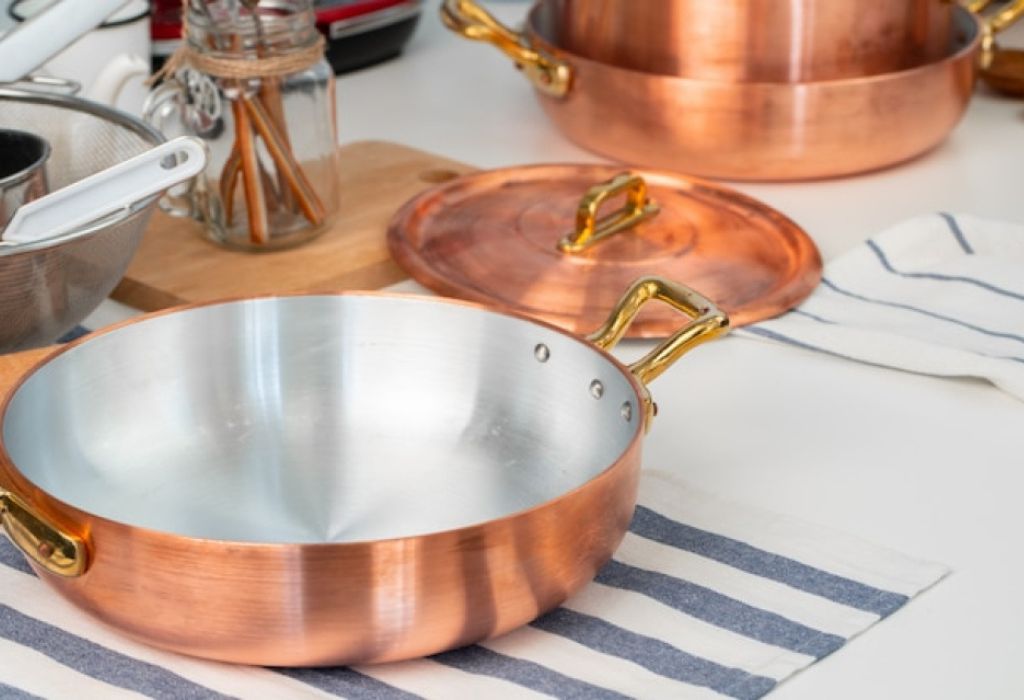
Copper cookware has long been admired for its superior heat conductivity and elegant appearance. From professional kitchens to home cooking enthusiasts, copper pots and pans deliver precise temperature control and stunning presentation.
With the increasing popularity of induction cooktops, a critical question arises: does copper cookware work on induction stovetops safely? Traditional copper lacks magnetic properties, making it incompatible with standard induction cooking methods.
Statistics show that over 40% of home cooks are unaware that not all cookware works on induction cooktops. This lack of awareness can lead to wasted energy, uneven cooking, or damage to expensive cookware.
Understanding which copper cookware is induction-compatible and how to use it safely is essential for anyone looking to combine the benefits of copper with modern cooking technology.
Proper selection, maintenance, and occasional use of adapters or magnetic bases can ensure that copper cookware performs efficiently on induction stovetops.
Understanding Induction Cooking Technology
Induction cooking uses electromagnetic energy to heat cookware directly rather than relying on traditional gas or electric heat sources. This method allows for precise temperature control, rapid heating, and improved energy efficiency compared to conventional cooking techniques.
Unlike gas or electric stoves, which transfer heat from the burner to the pan, induction cooktops generate heat within the cookware itself.
This direct heating minimizes energy loss and ensures more consistent cooking results, making induction one of the most efficient modern cooking methods.
For induction cooking to work effectively, cookware must have magnetic properties. Materials such as cast iron and magnetic stainless steel respond to the cooktop’s electromagnetic field, producing heat that cooks the food.
Non-magnetic materials, like traditional pure copper, do not respond to this field, rendering them incompatible without modification.
Understanding this principle is crucial for anyone considering copper cookware on an induction stovetop. While copper offers excellent heat conductivity, it must be adapted—usually with a magnetic base or layer—to function with induction technology.
Without this adaptation, copper cookware will simply sit on the induction cooktop without heating, negating its cooking benefits.
Induction technology also brings additional advantages beyond speed and efficiency. It reduces residual heat in the kitchen, lowers the risk of burns, and allows for more responsive temperature adjustments.
These benefits make induction cooktops highly appealing, but they also require cooks to carefully select compatible cookware to achieve optimal results.
By grasping the fundamentals of induction cooking, it becomes clear why standard copper cookware cannot be used without modification.
Awareness of magnetic compatibility ensures that copper’s superior cooking properties can be harnessed safely and efficiently on induction stovetops.
Copper Cookware and Induction Compatibility
Traditional copper cookware is not inherently compatible with induction stovetops due to its non-magnetic nature.
Pure copper cannot interact with the electromagnetic field generated by induction cooktops, preventing it from heating efficiently or at all.
To use copper on induction, manufacturers incorporate a magnetic layer, usually stainless steel, into the base of the cookware.
This modification allows the pan to respond to the induction cooktop while retaining copper’s excellent heat conductivity and aesthetic appeal.
Induction-compatible copper cookware is available from several reputable brands, offering both functionality and style.
For instance, the Mauviel M’6S series and de Buyer Prima Matera line feature copper cores with stainless steel bases designed for induction use.
These products combine rapid heat transfer, even cooking, and induction efficiency, making them ideal for both professional and home kitchens.
For traditional copper pans without a magnetic base, induction adapter plates provide an alternative solution. These plates create a magnetic interface between the cooktop and the copper cookware.
While they allow copper to function on induction, they can slightly reduce heating efficiency and responsiveness compared to direct induction-compatible cookware.
Understanding copper cookware compatibility ensures that cooks can take full advantage of both copper’s superior heat distribution and the speed and energy efficiency of induction technology.
Choosing induction-ready copper or using adapters allows for safe, effective cooking without sacrificing performance or appearance.
Proper care and handling are also essential for induction-compatible copper cookware. Maintaining the magnetic base, avoiding abrasive cleaning methods, and following manufacturer guidelines ensure that the cookware continues to perform optimally over time.
Common Mistakes When Using Copper Cookware on Induction Stovetops
Even with induction-compatible copper cookware, improper usage can lead to reduced performance or damage. One of the most frequent mistakes is assuming all copper cookware works on induction.
Pure copper without a magnetic base will not heat on induction, and using it on such cooktops results in wasted energy and uneven cooking. Understanding compatibility is the first step to avoiding frustration and ensuring efficiency.
Another common error is using the wrong cleaning methods. Abrasive sponges, harsh detergents, or metal scrubbers can scratch the magnetic base or tarnish the copper exterior.
This not only diminishes the cookware’s visual appeal but may also reduce heat distribution efficiency, causing hot spots and uneven cooking. Proper hand washing with mild soap and soft cloths is essential for preserving both functionality and appearance.
Stacking copper cookware improperly is another issue. Many cooks store pans in a tight stack without protective liners, which can lead to scratches and dents on both the copper surface and the magnetic base. Using soft cloths or felt pads between pans prevents these issues and maintains long-term durability.
Overheating is also a frequent mistake. Induction cooktops heat cookware very quickly, and copper’s rapid heat conductivity can cause scorching if not monitored carefully.
Even induction-compatible copper pans require attention to temperature settings to avoid burning food or damaging non-stick or lined surfaces.
Ignoring regular maintenance is another problem. Copper cookware requires periodic polishing to maintain shine and prevent tarnish, while the induction-compatible base should be checked for warping or damage.
Neglecting these steps can shorten the lifespan of the cookware and diminish its performance over time.
Finally, using metal utensils on lined copper cookware can cause scratches and wear down protective linings. Opting for wooden, silicone, or nylon utensils prevents damage and preserves both the interior and the exterior of the cookware.
By recognizing these common mistakes, cooks can extend the life of their copper cookware and ensure optimal results on induction stovetops.
Awareness and proper handling—from selecting the right cookware, using appropriate cleaning methods, to maintaining the magnetic base—protects the investment and allows for safe, efficient, and visually appealing cooking experiences.
Choosing the Right Copper Cookware for Induction
Selecting the right copper cookware for induction stovetops requires attention to both material composition and design. Induction-compatible copper pans typically feature a magnetic stainless steel base or core to interact with the cooktop’s electromagnetic field effectively.
A flat, even bottom is essential for optimal heat transfer and stability on the induction surface. Cookware that is warped or uneven may not make full contact with the cooktop, resulting in inconsistent heating and reduced cooking efficiency.
Several premium brands specialize in induction-ready copper cookware, offering a combination of functionality and durability.
The de Buyer Prima Matera series provides a copper core with a stainless steel base, ensuring rapid, even heat distribution while remaining induction-compatible.
The Mauviel M’6S line incorporates multiple layers of copper, stainless steel, and aluminum, providing excellent temperature control and long-term durability.
Hestan CopperBond cookware features a multi-ply construction with a copper core and magnetic stainless steel exterior, making it fully induction-ready.
Identifying induction compatibility is straightforward with most modern cookware. Many brands clearly label their products as “induction-ready,” and a simple magnet test can confirm compatibility. If a magnet sticks to the base of the pan, it will work on induction cooktops.
Choosing high-quality, induction-compatible copper cookware not only ensures safe and efficient cooking but also preserves the aesthetic appeal of the cookware. Proper selection reduces frustration, improves cooking results, and maximizes the investment in premium copper cookware.
Routine care remains important for induction copper cookware. Regular hand washing, thorough drying, and occasional polishing help maintain both performance and visual appeal, allowing these versatile pans to deliver precise heat and elegance in the kitchen for years.
Maintaining Copper Cookware for Induction Use
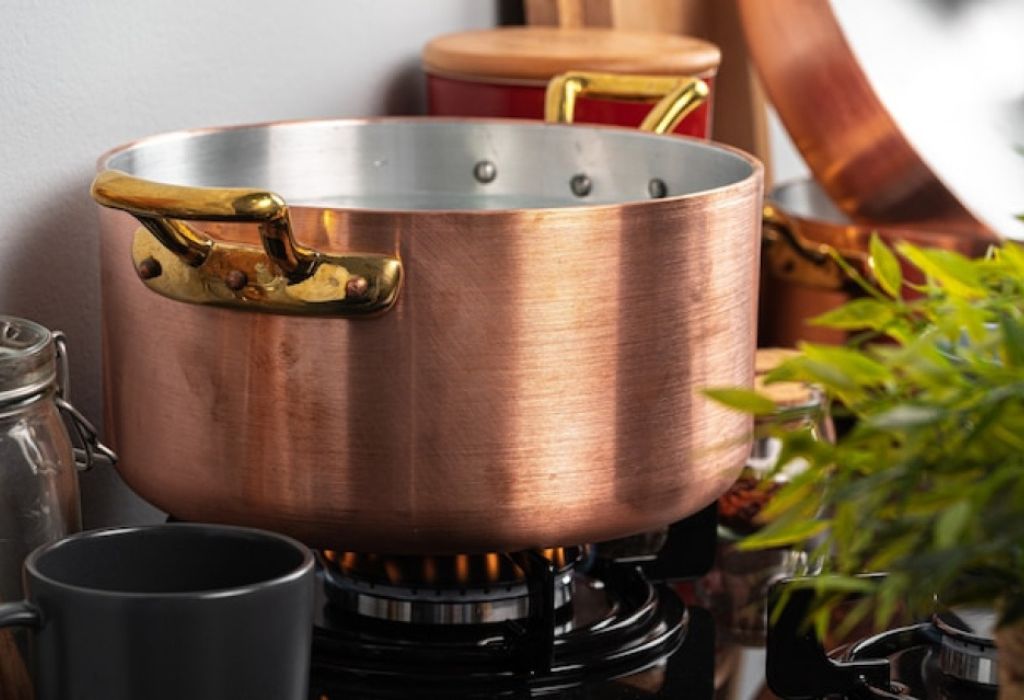
Proper maintenance is essential to preserve both the functionality and appearance of induction-compatible copper cookware.
Hand washing with warm water and mild dish soap removes food residues without exposing the copper or magnetic base to harsh chemicals that could cause corrosion or scratches.
Drying cookware immediately after washing prevents water spots, tarnishing, and potential damage to the stainless steel base.
Prolonged moisture can accelerate oxidation, reducing the cookware’s aesthetic appeal and potentially affecting heat distribution over time.
Polishing copper regularly helps maintain its natural shine and prevents tarnish from developing. Natural solutions, such as a mixture of vinegar and salt, or commercial copper cleaners can be used to restore brilliance, while careful attention ensures that the magnetic base and lining remain intact.
For lined copper cookware, such as those with tin or stainless steel interiors, it is important to avoid abrasive scrubbers or metallic utensils. These can scratch the lining, compromising both food safety and the overall performance of the cookware.
Proper storage also contributes to longevity. Storing pans in a dry environment, using protective cloths or pads between stacked cookware, and avoiding contact with moisture-prone surfaces help maintain both the copper exterior and the induction-compatible base.
Maintaining copper cookware for induction use is not only about preserving aesthetics but also ensuring optimal cooking performance.
Regular care and attention allow these high-quality pans to deliver consistent heat, precise temperature control, and a long-lasting visual appeal, maximizing the investment in premium induction-compatible copper cookware.
Does copper cookware work on induction stovetops?
Pure copper cookware does not work directly on induction stovetops because copper is not magnetic. Induction cooktops require a magnetic base, such as iron or steel, to generate heat.
Why doesn’t pure copper work on induction?
Induction cooking relies on electromagnetic energy to create heat within the cookware. Since copper is non-magnetic, it cannot interact with the magnetic field and therefore doesn’t heat up.
Can copper cookware be used on induction with a special base?
Yes, some modern copper cookware has a built-in stainless-steel or magnetic base that allows it to work efficiently on induction stovetops.
What is induction-compatible copper cookware?
Induction-compatible copper pans have a magnetic stainless-steel layer bonded to the bottom, enabling the induction cooktop to generate heat through that base.
How can I check if my copper pan works on induction?
Use a magnet test—if a magnet sticks firmly to the bottom of the pan, it’s induction-compatible. If it doesn’t, the pan won’t heat on an induction cooktop.
Can I use an induction converter plate with copper cookware?
Yes, you can use an induction interface disc or converter plate. It acts as a magnetic bridge between the cooktop and copper pan, allowing heat transfer.
Does using a converter plate affect cooking performance?
Yes, it slightly reduces efficiency and heat responsiveness because the converter plate adds an extra layer between the pan and the cooktop.
Is it safe to use copper cookware with a converter plate?
Yes, it’s safe as long as you use a high-quality, heat-resistant converter plate and ensure good contact between the plate and cookware base.
Do all copper pans with stainless-steel linings work on induction?
No, the stainless-steel lining inside doesn’t make it induction-compatible. Only a magnetic stainless-steel base bonded to the bottom can make it work.
Will using copper on induction damage the cooktop?
If used incorrectly, yes. Non-compatible copper cookware can cause scratches or fail to heat properly, leading to uneven cooking and potential surface damage.
Can I use induction-ready copper cookware on other cooktops?
Yes, induction-ready copper cookware also works perfectly on gas, electric, and ceramic cooktops, making it highly versatile.
Does induction heating affect the copper’s color or shine?
Prolonged exposure to high heat can cause some discoloration on the copper exterior, but this is cosmetic and doesn’t affect performance.
What are the benefits of using induction-compatible copper cookware?
It offers the same precise heat control and responsiveness as traditional copper pans, combined with the energy efficiency and speed of induction cooking.
Is induction-compatible copper cookware expensive?
Yes, it tends to be more expensive due to the complex multi-layer construction, but it’s a long-term investment for serious cooks.
What’s the best option if I want copper cookware for induction?
Choose tri-ply or multi-ply copper cookware with a magnetic stainless-steel base or use a converter plate if you already own pure copper pans.
Conclusion
Traditional copper cookware is not inherently compatible with induction stovetops due to its non-magnetic nature.
However, induction-compatible copper cookware with magnetic bases or stainless steel layers allows cooks to enjoy the benefits of copper while harnessing the efficiency of induction cooking.
Selecting high-quality induction-ready copper cookware ensures precise heat distribution, rapid cooking, and long-term durability.
Routine care, including hand washing, thorough drying, and occasional polishing, preserves both the performance and visual appeal of these premium pans.
For those who already own traditional copper cookware, induction adapter plates provide a temporary solution, though direct induction-compatible cookware offers better responsiveness and efficiency.
By understanding compatibility and following proper maintenance practices, cooks can safely and effectively use copper cookware on induction stovetops.
Investing in induction-ready copper cookware combines the elegance and superior heat control of copper with the modern convenience of induction technology.
Following these guidelines ensures consistent cooking results, protects the cookware, and maximizes its longevity in any kitchen.

I’m Emma J. Caldwell, the founder, lead writer, and home-cooking enthusiast behind KitchenGuideCo.com. With a background in culinary arts and over a decade of cooking experience in both professional and personal kitchens, I created this platform to demystify recipes, offer smart kitchen gadget reviews, and guide readers through meal prep with confidence and clarity.