Uneven baking is one of the most frustrating kitchen problems because it ruins food even when the recipe is perfect. A cake may rise beautifully on one side and stay dense on the other. Cookies may burn on one tray while remaining pale on another.
A roast may be dry on one end and undercooked on the other. These problems waste ingredients, time, and effort, and they reduce confidence in home baking.
Many people assume uneven baking means their oven is broken. In reality, uneven baking usually comes from a combination of heat imbalance, airflow problems, incorrect rack placement, cookware behavior, and temperature inaccuracies.
Even brand-new ovens can bake unevenly if airflow is restricted or if sensor calibration is off.
Understanding how to fix uneven baking in an oven requires learning how heat actually moves inside the oven. Ovens do not heat like a perfectly balanced box.
Heat rises, circulates, escapes through weak seals, gets blocked by cookware, and shifts based on fan performance. When any part of this system fails, uneven baking appears.
This guide explains the real causes of uneven baking and shows proven solutions that restore balance. By the end, you will know how to diagnose the exact problem in your oven and how to correct it permanently instead of guessing with trial and error.
What Uneven Baking Really Means
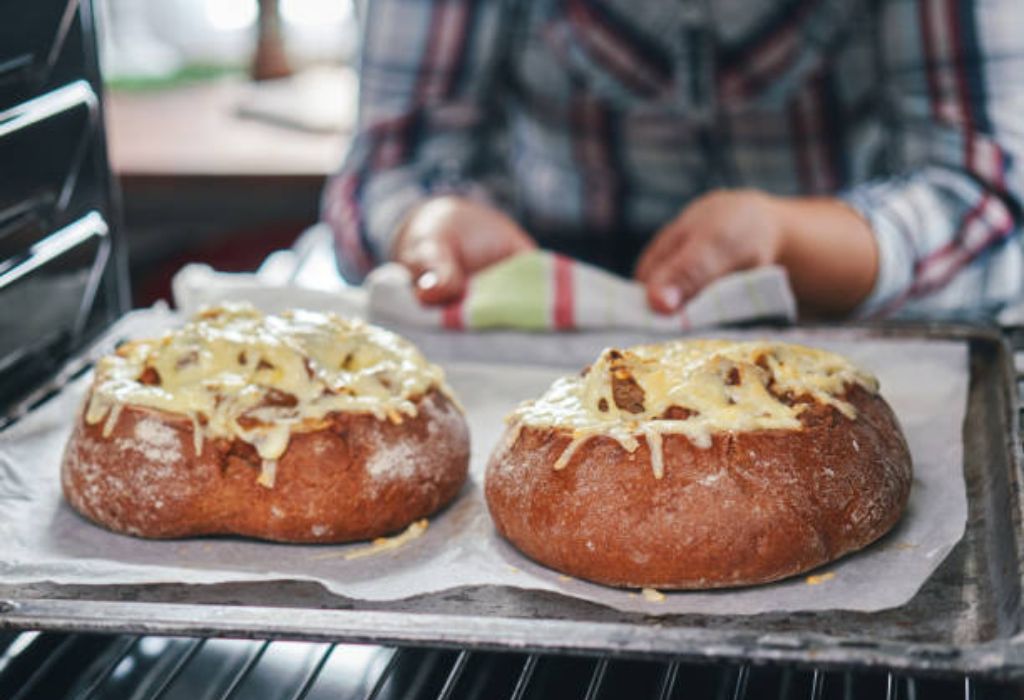
Uneven baking means that different areas of the food cook at different speeds due to inconsistent heat distribution inside the oven.
One side may brown faster, the center may be undercooked, or the bottom may burn while the top stays pale. This problem appears in baked goods, roasts, casseroles, pizzas, bread, and pastries.
Uneven baking does not always mean temperature is wrong. It often means the temperature is different in different areas of the oven at the same time.
For example, the back left corner may be 375°F while the front right corner is only 325°F. Food in these locations will cook at completely different rates even though the control panel shows one set temperature.
This happens because ovens rely on heat sources that are not evenly positioned. Electric ovens use bake elements at the bottom and broil elements at the top.
Gas ovens use a burner underneath. Heat must travel through air and metal surfaces before it surrounds your food. During this journey, heat naturally forms hot zones and cool zones.
Uneven baking also develops when heat is trapped by large pans, blocked by foil, redirected by warped racks, or pulled toward a leaking door seal. These problems make temperature uneven across the cooking chamber.
Once you understand that uneven baking is a heat flow problem rather than simply a temperature setting issue, the correct fixes become much clearer.
Primary Causes of Uneven Baking in Ovens
Uneven baking almost always traces back to a few mechanical or environmental causes rather than the recipe itself.
The most common causes include temperature fluctuations, poor airflow, faulty heating elements, incorrect rack placement, blocked vents, damaged door seals, and cookware problems.
In electric ovens, the bake element may no longer heat evenly across its length. If one side of the element glows brighter than the other, heat will concentrate in one area of the oven. This causes pans on that side to brown faster.
In gas ovens, uneven flame distribution under the oven floor creates strong heat on one side and weak heat on the other. If burner ports are partially blocked by grease or debris, flame shape becomes irregular, creating major temperature differences.
Airflow problems are another leading cause. Hot air must circulate freely inside the oven to equalize temperature. When airflow is blocked by oversized pans, foil-lined racks, or debris buildup, hot air pools in one area and fails to reach another.
Door seal damage allows hot air to escape from specific edges of the oven cavity. This pulls heat toward the leaking side and creates persistent cold spots inside. Over time, this imbalance becomes severe enough to ruin most baked foods.
Each of these factors alone can cause uneven baking. When several happen at the same time, baking results become unpredictable and inconsistent.
How Oven Temperature Fluctuations Create Uneven Baking
Oven temperature is not perfectly stable. Every oven cycles above and below the set temperature as the heating system turns on and off.
This cycle is normal and necessary. However, when temperature swings become too wide or uneven across the chamber, uneven baking becomes unavoidable.
If the oven overshoots temperature on one side and undershoots on the other, baked goods cook unevenly even when total bake time appears correct.
For example, the side closest to the heating element may reach 400°F while the opposite side stays near 325°F. Food exposed to 400°F browns fast and dries out. Food at 325°F lags behind and remains undercooked.
Temperature sensors can fail or drift out of calibration over time. When this happens, the control board receives false readings and supplies incorrect heat output. The oven may think it is maintaining 350°F while actual internal temperatures range wildly.
Old-style mechanical thermostats also lose accuracy. Springs weaken, contacts warp, and reaction time slows. This causes long temperature overshoot periods before the oven stabilizes again.
The only reliable way to detect temperature fluctuation problems is to use an external oven thermometer placed in multiple locations. This reveals hidden hot spots and cold zones that the control panel never shows.
The Critical Role of Airflow in Even Oven Baking
Airflow is the main force that balances temperature inside the oven. Without airflow, heat collects near the source and fails to distribute evenly across the cooking chamber.
Conventional ovens rely on natural convection. Hot air rises from the heating source, cool air sinks, and slow circulation gradually spreads heat throughout the cavity. This process is easily disrupted when airflow paths are blocked.
Convection ovens include a fan that forces hot air to move continuously around the food. This dramatically improves temperature uniformity and speeds up cooking.
However, if the fan is dirty, blocked, worn out, or malfunctioning, the oven loses this advantage and may bake unevenly.
Airflow becomes severely restricted when foil lines oven racks, when large baking sheets cover too much surface area, or when multiple trays are packed tightly together. These obstacles trap hot air behind them and starve other areas of circulation.
When airflow fails, heat stagnates. One tray may receive direct hot airflow while another remains shielded. Even perfect temperature settings cannot overcome poor circulation. Restoring airflow is one of the most powerful fixes for uneven baking.
Why Rack Placement Directly Controls Baking Uniformity
Rack position determines how food is exposed to radiant and circulating heat. The closer food sits to a heating element, the stronger the radiant heat it receives.
The middle rack is the most balanced position for most baking. It places food midway between the upper broil element and the lower bake element. This location receives even convection and gentle radiant heat.
The top rack receives strong top heat. It is ideal for broiling and final browning but can cause burning during normal baking if used incorrectly.
The bottom rack receives intense bottom heat. It is useful for crisping pizza and bread crusts but can scorch cookies, cakes, and pastries.
Incorrect rack use causes uneven vertical baking. A cake may burn on the bottom but stay pale on top if positioned too low. If positioned too high, the top browns while the center remains underbaked.
Using multiple racks without proper spacing also blocks airflow and creates dead zones. Each rack must allow space above and below for hot air to circulate freely.
How Cookware Material Changes Heat Behavior
Cookware plays a major role in how evenly food bakes. Different materials absorb, reflect, and retain heat in different ways.
Dark-colored metal pans absorb heat aggressively. They promote fast browning and crisp edges. In uneven ovens, they exaggerate hot spot damage and can burn food quickly on one side.
Light-colored aluminum pans reflect heat and bake more gently. They provide more forgiving results in ovens with temperature variation.
Glass and ceramic cookware heat slowly but retain heat for a long time. They often cause food to overbake at the edges while remaining undercooked in the center, especially in uneven ovens.
Warped baking sheets are a hidden cause of uneven baking. Warping creates air gaps between the pan and oven rack. These gaps change heat conduction across the pan surface, producing hot and cool patches.
Using consistent cookware across batches improves predictability. Mixing glass, light metal, dark metal, and ceramic in the same bake often produces wildly uneven results.
How Door Seals and Heat Loss Create Uneven Baking
The oven door seal traps heat inside the cooking chamber. When this seal becomes damaged, compressed, or brittle, hot air escapes continuously from a specific area.
This escaping heat pulls hot airflow toward the leak. The side near the broken seal becomes cooler, while the opposite side overheats to compensate. The result is persistent left-to-right or top-to-bottom baking imbalance.
A damaged seal also allows moisture to escape during baking. This changes humidity inside the oven and affects bread, pastries, and cakes. One side may dry out too fast while the other stays too moist.
Seal failure often goes unnoticed because the oven still appears to reach the correct temperature. But inside the chamber, temperature stability is lost.
The paper test is the simplest seal check. If a strip of paper slides easily out of the closed door, the seal can no longer hold heat properly and must be replaced.
Why Preheating Mistakes Lead to Unstable Baking
Preheating is not just about warming air. It allows the entire oven system, including walls, racks, and internal metal surfaces, to reach thermal equilibrium.
Putting food into a cold or partially heated oven exposes it to unstable heat waves as the oven warms. Some zones heat faster than others. This causes early structure formation on one side of the food while other areas remain flexible.
Once this early imbalance forms, later heat cannot correct it. The food is already locked into an uneven cooking pattern.
Most ovens require at least 15 to 20 minutes of full preheating to reach stable internal temperature. Rushing this step is one of the most common causes of uneven baking.
Step-by-Step Mechanical Diagnosis for Uneven Baking
Fixing uneven baking properly requires a systematic mechanical diagnosis instead of guesswork. The first step is to verify real oven temperature using a standalone oven thermometer.
Place the thermometer in the center of the oven and preheat to 350°F for at least 20 minutes. If the thermometer reads more than 15°F above or below the set temperature, calibration or sensor problems are likely.
Next, perform a hot-spot mapping test. Place slices of white bread on every rack position and across the full width of each rack. Bake for 5 to 7 minutes.
The slices that brown first reveal the hottest zones. Pale slices reveal cold spots. This visual test quickly confirms airflow and heat distribution problems.
Then inspect the heating system. In electric ovens, observe the bake element during operation. It should glow evenly along its entire length.
Dark or uneven sections indicate a failing element. In gas ovens, inspect the burner flame pattern through the bottom access panel. The flame should be uniform across the burner. Gaps in flame indicate blocked ports.
After that, test the convection fan (if equipped). Run the oven in convection mode and confirm that air is actively circulating. Weak airflow indicates a failing motor or dirty blades.
Finally, inspect the door seal and oven cavity for physical damage. This full diagnostic sequence allows you to identify the exact mechanical cause instead of guessing and wasting time on ineffective fixes.
Electric Oven vs Gas Oven Uneven Baking Differences
Electric and gas ovens develop uneven baking for different mechanical reasons. Electric ovens rely on heating elements and electronic sensors.
If the bake element weakens on one side, heat concentrates unevenly near the strongest portion of the element. This typically causes one half of the oven to overbrown while the other underbakes.
Electric ovens also depend heavily on temperature sensors and control boards. When a sensor becomes coated with grease or loses calibration, the oven cycles at incorrect intervals. This produces wide temperature swings that affect different oven zones unevenly.
Gas ovens suffer uneven baking mainly due to burner and airflow issues. If burner ports clog with grease or debris, the flame becomes irregular. This creates direct hot spots above the hottest flame sections and cold zones elsewhere.
Gas ovens also produce natural humidity during combustion. This moisture affects how heat transfers across food surfaces. When airflow is poor, this humidity becomes unevenly distributed, worsening temperature imbalance.
Electric ovens usually suffer from element and sensor faults, while gas ovens most often suffer from burner and airflow faults. Understanding which system you own makes troubleshooting far faster and more accurate.
How to Test and Repair a Convection Fan
The convection fan is one of the most important components for preventing uneven baking. Its role is to move hot air evenly across all food surfaces. If the fan fails, the oven turns into a heat-trap system with multiple hot and cold zones.
To test the fan, turn the oven to convection mode and place your hand near the interior fan cover without touching it. You should feel strong air movement. If airflow is weak or absent, the fan motor may be failing or the blades may be clogged with grease.
Next, listen for unusual noises such as grinding, rattling, or whining. These sounds indicate worn bearings or a loose fan blade. Even if the fan spins, irregular rotation creates uneven airflow.
Cleaning the fan often restores proper function. Remove the fan cover (after unplugging the oven) and clean all grease buildup with degreaser and a soft brush. Grease buildup alone can reduce airflow by more than 40 percent.
If the motor is weak or stops intermittently, it must be replaced. A faulty convection fan guarantees uneven baking regardless of other oven conditions.
How to Recalibrate Oven Temperature Correctly
Temperature recalibration is critical when uneven baking persists despite proper airflow and rack placement. Most modern digital ovens allow temperature offset adjustment through the control panel settings.
To recalibrate, first measure the real temperature using a standalone thermometer after 20 minutes of full preheating. If the difference is +20°F or −20°F, enter the oven’s calibration mode and adjust the offset accordingly.
For older mechanical ovens, recalibration involves adjusting the thermostat screw located behind the control knob or inside the rear panel. This adjustment changes how quickly the thermostat reacts to heat.
If recalibration is skipped, the oven may consistently overshoot or undershoot temperature. This causes top-overbrowning, bottom burning, or undercooked centers. No amount of rack adjustment can compensate for incorrect temperature control.
Accurate temperature is the foundation of even baking. Without proper calibration, every other fix becomes unreliable.
How Door Seal Failure Causes Persistent Uneven Baking
A damaged door seal allows heat to escape unevenly, creating permanent hot and cold zones. When hot air exits through a leaking seal, nearby areas cool rapidly while the opposite side overheats to compensate.
This airflow distortion causes one side of pans to brown faster while the other remains pale. Over time, it also damages internal oven components by forcing them to work harder.
The simplest test is the paper strip test. Close the oven door on a piece of paper. If the paper slides out easily, the seal is no longer airtight. Repeat this test around the entire door perimeter.
Replacing the door gasket restores proper heat containment and immediately improves temperature stability. Many homeowners replace heating elements without realizing the true problem is a leaking seal.
A healthy door seal is essential for balanced baking. Ignoring it guarantees persistent uneven results.
Food-Specific Fixes for Uneven Baking
Different foods react differently to uneven heat. Cakes suffer most from side-to-side imbalance. When one side rises faster, the structure collapses unevenly. Using light-colored metal pans on the middle rack at slightly reduced temperature produces the best correction.
Bread suffers when airflow is blocked. One side may develop strong oven spring while the other stays dense. Keeping loaves centered and ensuring strong convection airflow solves this problem.
Cookies reveal hot spots faster than any other food. If the back row always burns first, convection airflow or flame distribution is uneven. Halfway tray rotation and fan cleaning usually fix it.
Pizza highlights bottom heat issues. Burned crust with pale toppings means excessive bottom heat. Raising the rack by one level balances top-to-bottom cooking.
Roasts and casseroles react to heat pooling. Deep pans and rack repositioning fix liquid boil-over on one side while the opposite side remains undercooked.
Understanding how each food responds to heat imbalance allows you to fix uneven baking more precisely and consistently.
Professional Techniques to Maintain Even Baking Long-Term
Professional kitchens prevent uneven baking through routine maintenance. Ovens are cleaned regularly to prevent airflow obstruction. Convection fans are inspected monthly. Temperature calibration is verified several times per year.
Pan rotation is standard practice in commercial baking. Even the best ovens benefit from halfway rotation to compensate for minor airflow shifts.
Professionals also standardize cookware. Using identical pan sizes and materials reduces heat response variation across different trays.
At home, following these same habits ensures long-term baking consistency. Uneven baking almost always returns when maintenance habits stop.
Fixing Uneven Oven Baking Common Questions
Why does my oven bake unevenly on one side?
Uneven baking on one side is usually caused by poor airflow, a weak heating element, blocked gas burner ports, or heat loss through a damaged door seal.
Can a faulty oven temperature sensor cause uneven baking?
Yes, a faulty temperature sensor can misread the internal temperature and cause wide heat fluctuations that lead to uneven baking.
Does convection mode fix uneven baking?
In most cases, yes. Convection mode improves airflow and helps distribute heat more evenly, reducing hot and cold zones.
Why do my cookies always burn at the back of the oven?
This usually indicates a hot spot near the rear heating source or weak convection airflow that traps heat at the back.
Can incorrect rack placement cause uneven baking?
Yes, placing food too close to the top or bottom heating element exposes it to unbalanced radiant heat, leading to burning on one side and underbaking on the other.
Does using foil in the oven cause uneven baking?
Yes, foil can block airflow and redirect heat, which often creates hot spots and cold zones inside the oven.
How do I know if my oven door seal is bad?
Use the paper test. If a strip of paper slides easily out of the closed door, the seal is leaking and causing heat loss.
Why is the bottom of my food burning while the top stays pale?
This usually means excessive bottom heat from the lower element, incorrect rack position, or dark cookware absorbing too much heat.
Should I rotate pans to prevent uneven baking?
Yes, rotating pans halfway through baking helps compensate for minor airflow and heat distribution differences.
Can an old oven still bake evenly after repairs?
Yes, once airflow, temperature calibration, heating elements, and door seals are properly restored, even older ovens can bake very evenly.
Conclusion
Uneven baking is not a mysterious kitchen problem. It is the direct result of heat imbalance, airflow restriction, temperature inaccuracy, or physical component failure inside the oven.
When heat does not move freely and evenly, food naturally cooks at different speeds across the same pan. No recipe adjustment can compensate for this mechanical imbalance.
The most effective way to fix uneven baking is through structured diagnosis. Verifying real oven temperature, mapping hot spots, testing the convection fan, inspecting heating elements or gas burners, and checking the door seal all reveal the true cause.
Once these root problems are corrected, baking performance improves immediately and permanently.
Proper rack placement, consistent cookware, correct preheating, and strategic pan rotation then fine-tune results. Together, these practices restore uniform heat distribution and eliminate the unpredictable failures that ruin baked goods.
With the right inspection, small repairs, and improved baking habits, even an older oven can deliver consistent, professional-level results.
Uneven baking does not mean the oven is finished. It simply means the heat system is unbalanced. Once balance is restored, perfect baking becomes repeatable and reliable again.

I’m Emma J. Caldwell, the founder, lead writer, and home-cooking enthusiast behind KitchenGuideCo.com. With a background in culinary arts and over a decade of cooking experience in both professional and personal kitchens, I created this platform to demystify recipes, offer smart kitchen gadget reviews, and guide readers through meal prep with confidence and clarity.