A favorite skillet pulled from storage should be ready to deliver sizzling steaks and golden cornbread. Instead, many home cooks discover sticky residue, faint rust spots, or food stubbornly clinging to the surface.
This frustration is common because cast iron cookware requires consistent care to stay at its best. Without proper cleaning, drying, and oiling, the protective patina weakens and the iron becomes vulnerable to moisture.
Caring for cast iron is more than tradition. It is a simple science of polymerized oil forming a shield that prevents rust and creates natural nonstick performance.
Curiosity often arises about why one family’s skillet lasts for generations while another’s deteriorates after a single season. The answer is in how the cookware is cleaned, seasoned, and stored day after day.
According to Statista, nearly 80 percent of households in the United States own cast iron cookware【https://www.statista.com/statistics/754051/us-households-with-cast-iron-cookware/】. Yet most owners admit to confusion over how to clean or oil their pans correctly.
Research also shows that a properly seasoned layer can withstand oven temperatures of up to 500°F, giving cast iron unmatched durability compared to many modern nonstick alternatives【https://www.seriouseats.com/the-ultimate-guide-to-cast-iron-skillets】. These numbers highlight why correct care is both practical and rewarding.
Learning how to care for cast iron cookware is not difficult. With just a few daily habits, a skillet or Dutch oven can remain slick, rust-free, and strong enough to pass down through generations.
What Proper “Care” Means for Cast Iron

Caring for cast iron cookware is not just about preventing rust. It is about building a routine that preserves the protective seasoning layer and strengthens the nonstick patina over time.
Proper care can be summarized in a simple loop: clean the pan while it is warm, dry it completely, apply a whisper-thin coat of oil, and heat briefly to seal the surface. This cycle creates a consistent barrier that blocks moisture and keeps food from sticking.
The science behind this process is polymerization. When oil is heated to high temperatures, it transforms into a hardened film that bonds with the iron. This film becomes the seasoning layer that protects the cookware and improves performance.
Without this layer, bare cast iron is highly reactive. Exposure to water or acidic foods can quickly lead to rust or metallic flavors. With it, the pan becomes one of the most durable and versatile tools in the kitchen.
Care also means understanding the balance between cleaning and preservation. Gentle scrubbing removes food residue, but harsh abrasives or long soaks can strip away seasoning. The goal is to protect the patina while keeping the pan hygienic.
These small, daily actions are what separate cast iron that lasts a lifetime from cookware that fails after a few months. Proper care ensures every skillet, Dutch oven, or griddle remains a dependable part of the kitchen.
Daily Cleaning That Preserves Seasoning
Daily cleaning is the foundation of learning how to care for cast iron cookware. A few simple steps after each meal protect the seasoning layer and stop problems before they begin.
The first step is to clean the pan while it is still warm. Warm water loosens food particles quickly, and gentle scrubbing prevents residue from sticking. Using a nylon brush, chainmail scrubber, or a handful of kosher salt provides just enough abrasion without damaging the patina.
Soap has long been a debated topic, but modern dish soaps are mild and safe. The old belief that soap ruins seasoning came from an era when soaps contained lye. Today, occasional use of dish soap will not strip the polymerized oil layer that protects the cookware.
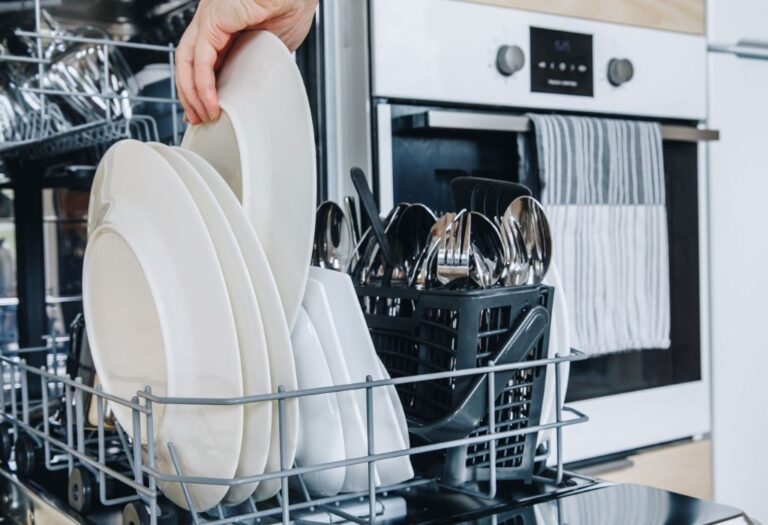
One cleaning method to avoid is soaking. Leaving cast iron submerged in water, even for a short time, increases the risk of rust. Likewise, dishwashers should never be used, as prolonged exposure to water and detergent destroys seasoning.
After cleaning, the pan must be dried immediately. Heating it on the stovetop for several minutes evaporates hidden moisture that can cause flash rust. Skipping this step is one of the most common mistakes cast iron owners make.
By combining gentle cleaning with thorough drying, the seasoning layer remains strong. This routine ensures that the pan stays slick, rust-free, and ready for the next recipe.
Post-Clean Oiling and Heat-Set (The “Whisper-Thin” Coat)
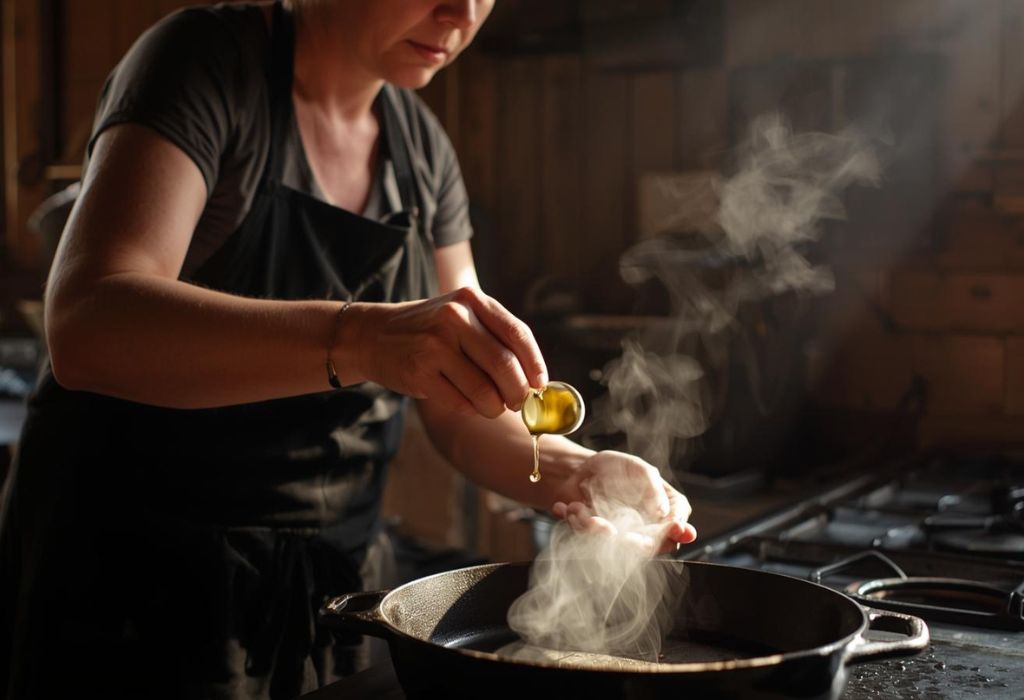
Cleaning alone is not enough to protect cast iron cookware. After each wash, the pan must be reinforced with a thin layer of oil that locks in the seasoning and prevents rust.
The key to success is applying less oil than most cooks expect. A whisper-thin coat should be rubbed across the entire surface, then buffed until the skillet looks almost dry. Any excess left behind can lead to sticky residue instead of a smooth finish.
The oil chosen for this step matters. Neutral, high-smoke-point oils such as canola, grapeseed, or vegetable oil work best because they polymerize evenly and do not leave unwanted flavors. Traditional options like shortening or lard can also be effective if applied correctly.
Once oiled, the pan should be placed over medium heat until it just begins to smoke. This brief heating bonds the oil to the patina and creates a water-resistant barrier. Without this step, moisture left in the pores of the iron can cause flash rust.
This practice is sometimes called “micro-seasoning.” It adds a thin protective layer every time the cookware is cleaned, reducing the need for frequent full reseasoning sessions. Over time, these layers build into a durable, glossy patina that improves with every use.
Consistent post-clean oiling is the difference between a skillet that lasts generations and one that quickly loses its shine. It is a small habit with long-lasting rewards.
Deep Clean & Reseason When Things Go Wrong
Even with good daily habits, cast iron cookware can sometimes lose its shine. Sticky surfaces, patchy spots, or light rust signal that the seasoning layer has weakened and needs repair.
A deep clean followed by reseasoning restores the pan to full strength. This process removes buildup, reestablishes the protective patina, and ensures the cookware remains reliable for years.
The first step is to scrub away residue or rust. Use warm water with a nylon brush, chainmail scrubber, or fine steel wool to reach bare metal. If rust is stubborn, a handful of kosher salt can act as a safe abrasive.
After scrubbing, wash the pan thoroughly with mild soap and hot water. Unlike daily cleaning, this step aims to strip away failing seasoning, so using soap here is both safe and effective.
Once clean, dry the cookware completely by heating it on the stovetop until no moisture remains. This step prevents flash rust from forming before oiling begins.
Apply a whisper-thin coat of neutral oil across the entire pan, inside and out. Canola, grapeseed, or vegetable oil work well, but shortening or lard are also traditional options. Buff the oil until the surface looks nearly dry.
Place the pan upside down in an oven preheated to 450–500°F. Bake it for one hour, then allow it to cool inside the oven. This high-heat cycle bonds the oil to the iron, forming a durable layer of seasoning.
Repeat the oiling and baking process two or three times for best results. Each round strengthens the patina and restores the skillet’s natural nonstick surface.
Rust Prevention and Fast Recovery
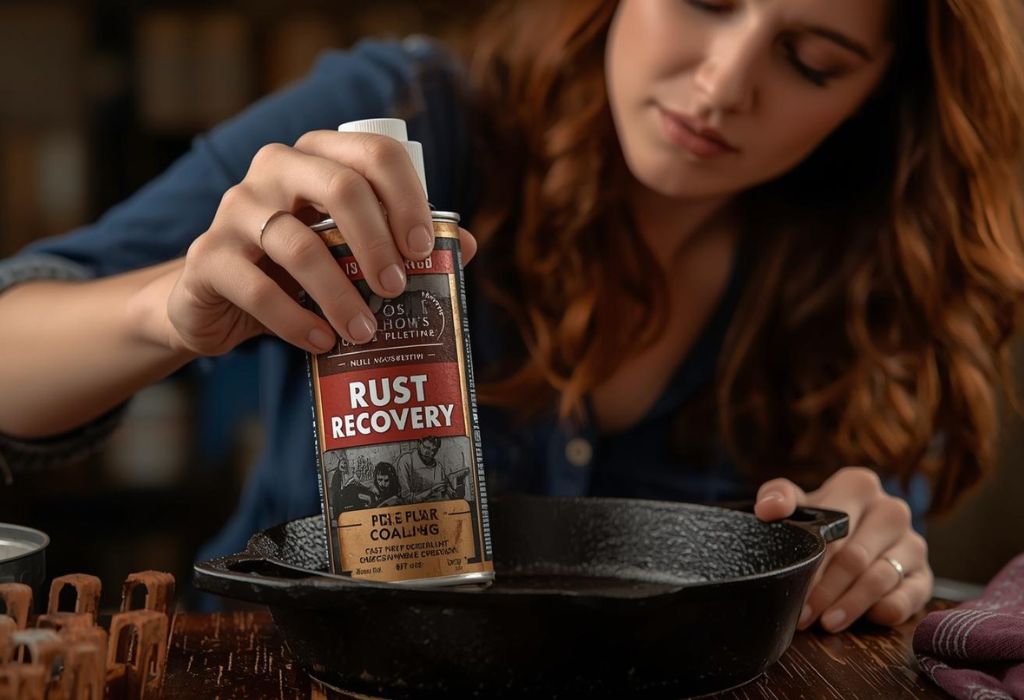
Rust is the most common enemy of cast iron cookware. Even a few drops of water left overnight can turn into orange freckles that weaken the seasoning and damage the surface.
Prevention is always the best solution. Proper drying after washing is the first line of defense. Heating the pan for several minutes drives out hidden moisture that a towel cannot reach.
A light coat of oil after drying provides extra protection. This thin barrier seals the pores of the iron and blocks humidity from causing corrosion. Skipping this step often leads to rust in damp kitchens.
Storage choices also matter. Cast iron should never be sealed with a tight-fitting lid, as trapped moisture can encourage rust. Instead, keep lids ajar or separate and place a paper towel between stacked pans to reduce scratching and condensation.
If rust does appear, fast recovery prevents long-term damage. For light rust, scrubbing with coarse salt, a nylon brush, or fine steel wool is usually enough. The pan can then be washed, dried, oiled, and lightly reseasoned.
Heavier rust requires stronger treatment. A 50/50 vinegar and water soak loosens corrosion, but it must be monitored closely. Leaving the pan too long in vinegar can damage the iron, so short checks are essential. Once the rust is removed, reseasoning restores the protective patina.
By acting quickly, rust can be stopped before it shortens the life of the cookware. With consistent prevention, it often never appears at all.
Storage & Moisture Control (Home and Travel)
Even the best cleaning and seasoning practices can be undone by poor storage. Cast iron cookware is highly sensitive to moisture, and the wrong storage conditions can lead to rust and a weakened patina.
At home, the most important step is to ensure the pan is completely dry before storing. Heating it for several minutes after washing drives out hidden moisture and reduces the risk of corrosion.
A whisper-thin coat of oil should be applied before putting the pan away. This layer acts as a seal against humidity and strengthens the seasoning over time. Skipping this habit can make the cookware vulnerable in damp environments.
When stacking pans, place a folded paper towel or cloth between them. This prevents scratches to the seasoning and absorbs any moisture that may collect in storage. It also allows for a small amount of airflow, which reduces the chance of rust.
Cast iron should not be stored with lids sealed tightly. Closed lids trap condensation, creating the perfect environment for rust. Keep lids ajar or store them separately to ensure ventilation.
For travel or camping, storage becomes even more important. Wrap pans in an absorbent towel or cloth to protect the surface and wick away humidity. Avoid leaving cast iron in damp bags or coolers for extended periods.
By controlling moisture at every stage, cast iron cookware remains strong and dependable, whether stored in a kitchen cabinet or packed for outdoor cooking.
Cooking Habits That Build the Patina
How cast iron cookware is used in daily cooking determines whether the seasoning becomes stronger or weaker. Certain habits naturally add layers to the patina, while others strip it away and shorten the pan’s life.
The best way to build the patina is through regular cooking with fats. Frying bacon, searing steaks, or sautéing vegetables in oil all leave behind trace amounts of fat that polymerize into the surface. Over time, this creates a smoother and more nonstick finish.
Preheating the skillet before adding food is another essential habit. Heating the pan evenly ensures better browning and prevents food from sticking. It also helps oil spread more effectively, reinforcing the seasoning with every meal.
Some habits, however, can weaken the seasoning. Long acidic cooks, such as simmering tomato sauces or vinegar-based dishes, can strip away protective layers if the patina is still young. Once the seasoning matures, occasional acidic recipes are less harmful but should still be kept brief.
Excessively scraping the surface with metal utensils can also cause scratches or thin spots in the patina.
While mature seasoning can handle some metal use, sharp scraping on new layers should be avoided. Wooden or silicone utensils are safer during the early stages.
Cooking with little to no fat can also make food stick, leading to aggressive scrubbing later. A thin layer of oil during cooking not only prevents sticking but also supports the seasoning process.
By practicing the right cooking habits, cast iron cookware becomes easier to use with every meal. Poor habits, on the other hand, undo hard work and lead to frequent reseasoning.
Oil Guide for Care vs Seasoning (What to Use When)
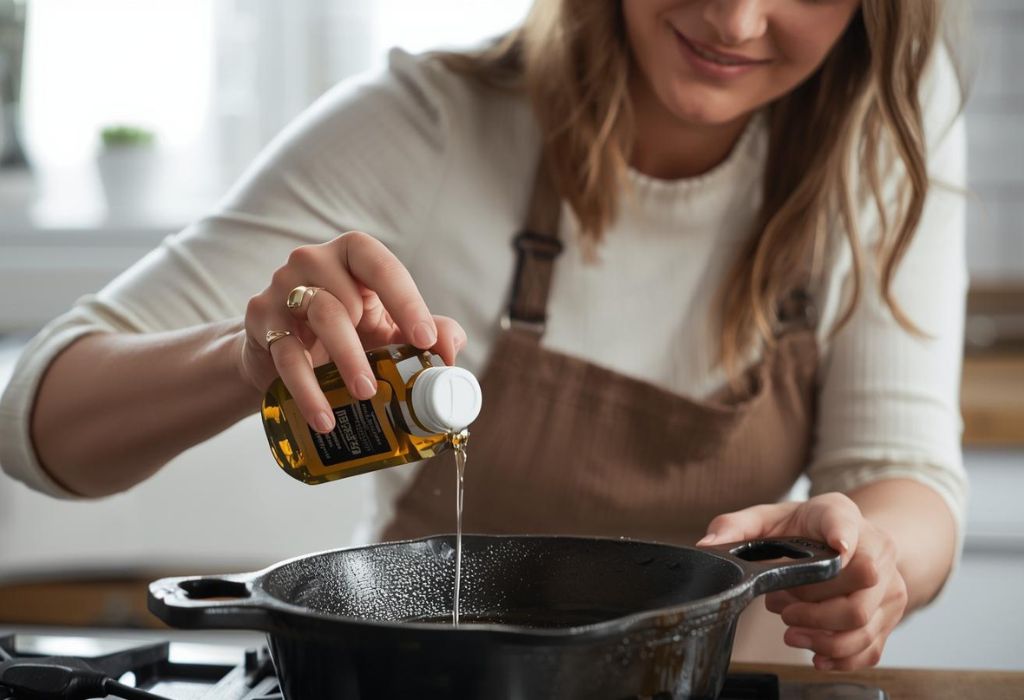
The oil used on cast iron cookware plays a major role in how well the seasoning develops and how long it lasts. Different oils perform better in different situations, so understanding when to use each type is essential.
For daily care, neutral oils with high smoke points are best. Canola, grapeseed, and vegetable oils are affordable, widely available, and reliable for thin coats after cleaning. They bond evenly and do not leave strong flavors behind.
For seasoning sessions, these same neutral oils are also excellent. When baked at 450–500°F, they polymerize into a durable layer that resists rust and creates a slick surface. Shortening and lard, often used in traditional methods, also work well if applied in thin coats.
Flaxseed oil is sometimes promoted as the ultimate choice for seasoning. While it creates a hard coating, it can also flake if applied too thickly or baked unevenly. For beginners, canola or grapeseed are safer and more forgiving options.
Olive oil, though common in kitchens, is less effective for seasoning. Its lower smoke point makes it prone to breaking down, which can leave a sticky or uneven finish. However, it can be used safely for cooking once a strong patina has developed.
Choosing the right oil is not about following trends. It is about using oils that create a stable, long-lasting layer and keeping them as thin as possible. The right match ensures the cookware stays protected and performs at its best.
Troubleshooting: Sticky, Flaking, or Patchy?
Even with careful maintenance, cast iron cookware can sometimes develop problems. Sticky residue, flaking layers, or patchy seasoning are common issues, but each can be fixed with the right approach.
A sticky surface usually comes from applying too much oil or not heating the pan hot enough during seasoning. Excess oil does not fully polymerize and instead leaves a tacky film that attracts food and dust.
The solution is simple: scrub the pan lightly with warm water and a nylon brush or chainmail scrubber, then reapply a whisper-thin coat of oil. Baking the pan at 450–500°F for one hour usually restores a smooth finish.
Flaking is another issue that can alarm new cast iron owners. This happens when thick layers of oil build up unevenly and later peel away under heat. It may look serious, but the fix is often as easy as scrubbing away the loose flakes and reseasoning with thinner coats.
Patchy or uneven seasoning is the least problematic. It often occurs on newer pans where the patina has not fully developed. Cooking with fats and repeating seasoning cycles gradually evens out the color and improves performance.
These problems are not signs of permanent damage. They are reminders that seasoning is built layer by layer and that thin coats and proper heat are the keys to success. With quick action, cast iron cookware can always be brought back to life.
Quick Reference — 10-Minute After-Dinner Care
The simplest way to care for cast iron cookware is to follow a short routine right after cooking. This method takes less than ten minutes and ensures the pan stays rust-free, smooth, and ready for the next meal.
Start by cleaning the pan while it is still warm. Warm water quickly loosens food particles, and a gentle scrub with a nylon brush or chainmail scrubber removes residue without harming the seasoning. For stubborn spots, a sprinkle of kosher salt can act as a natural abrasive.
Next, rinse quickly and dry the cookware completely. Towels alone are not enough, since hidden moisture lingers in the pores of the iron. Place the skillet over medium heat for several minutes until no steam remains.
Once dry, apply a whisper-thin coat of neutral oil such as canola, grapeseed, or vegetable. Spread it evenly across the cooking surface, handle, and exterior. The layer should be so thin that the skillet looks nearly dry to the eye.
Finally, heat the oiled pan until a faint wisp of smoke appears. This bonds the oil to the patina, adds strength to the seasoning, and prevents flash rust. Once cooled, the pan can be stored safely until the next use.
This short routine is often called “micro-seasoning.” Practiced daily, it eliminates the need for frequent deep reseasoning and keeps cast iron cookware in top condition with minimal effort.
When to Fully Strip and Start Over
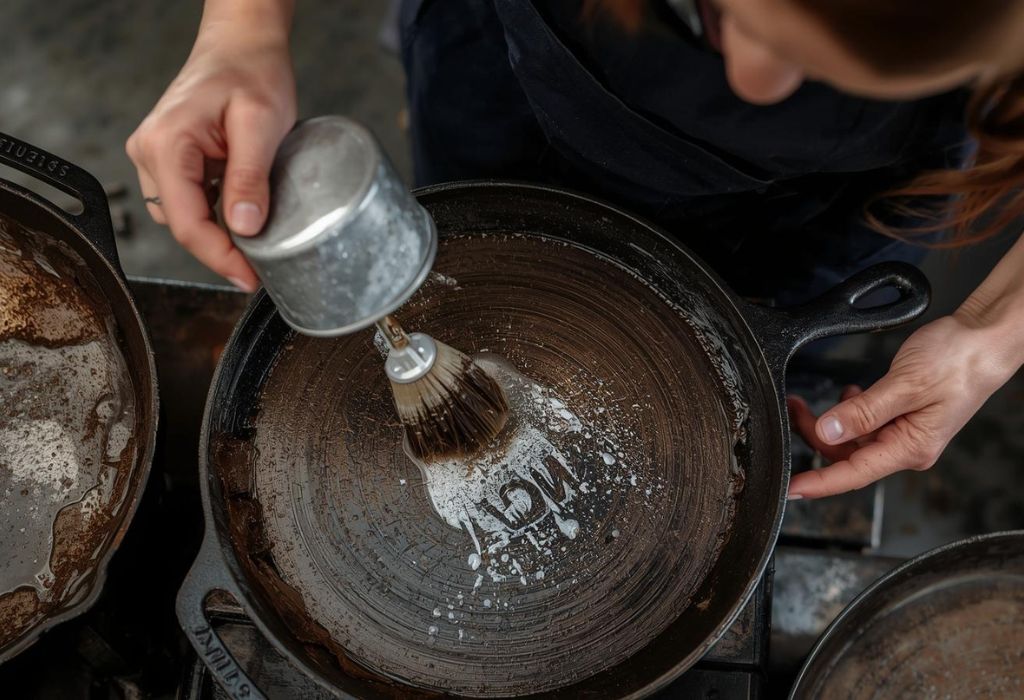
Most issues with cast iron cookware can be fixed with simple cleaning or reseasoning. However, there are times when the pan must be stripped down to bare metal and built back up from scratch. Knowing when to start over saves time and prevents frustration.
One clear sign is heavy rust. If large sections of the cookware are covered in rust, spot cleaning will not be enough. Stripping ensures the iron is clean and ready for a new protective layer.
Flaking seasoning is another warning. Thick, uneven layers of oil sometimes peel away, leaving rough patches. In this case, it is best to remove all seasoning and rebuild with thin coats.
Rancid odors are also a reason to strip. If the pan smells sour or unpleasant, oils have gone bad inside the layers. Cooking in such a pan can affect flavor, so stripping and reseasoning is the safest choice.
Unknown residues are another concern. Secondhand skillets or pans stored improperly may contain buildup that is unsafe for cooking. Stripping down to bare iron gives peace of mind and a fresh start.
Stripping can be done with steel wool, an oven’s self-clean cycle, or a lye bath for extreme buildup. Afterward, the pan should be washed, dried thoroughly, and reseasoned with two or three thin oiling and baking cycles.
Starting over may sound drastic, but it restores cast iron cookware to a like-new condition. Once reseasoned, the pan will perform just as well as it did the day it was made.
Conclusion
Caring for cast iron cookware is not complicated, but it does require consistency. Simple habits like cleaning while warm, drying thoroughly, oiling lightly, and reheating briefly protect the patina and keep the surface smooth.
These small steps prevent rust, strengthen the seasoning, and make every meal easier to cook. With proper care, a skillet or Dutch oven becomes more nonstick over time, offering better performance than many modern alternatives.
When problems appear, they are rarely permanent. Sticky residue, patchy spots, or even rust can be fixed with scrubbing, thin oiling, and reseasoning at high heat. In the rare cases where stripping is needed, a fresh start restores the cookware completely.
The strength of cast iron lies in its ability to improve with age. Each use, each thin layer of oil, and each round of heating builds a patina that becomes tougher and more reliable. With the right care, this process continues for decades.
Learning how to care for cast iron cookware ensures it will not only serve today’s kitchen but also be ready to pass down to the next generation. Few tools offer the same durability, value, and connection to tradition.
Start applying these habits now. With only a few minutes of daily attention, cast iron cookware will remain rust-free, resilient, and always ready to deliver perfect results.

I’m Emma J. Caldwell, the founder, lead writer, and home-cooking enthusiast behind KitchenGuideCo.com. With a background in culinary arts and over a decade of cooking experience in both professional and personal kitchens, I created this platform to demystify recipes, offer smart kitchen gadget reviews, and guide readers through meal prep with confidence and clarity.