You open your dishwasher expecting spotless, sparkling dishes, but instead, you find cloudy glassware, bits of food stuck on plates, and a strange smell coming from inside. The problem isn’t your detergent or water quality. It’s your dishwasher filter.
The filter is a small but vital part of your machine. It traps leftover food particles, grease, and debris during each cycle, preventing them from being recirculated onto clean dishes. Over time, this filter gets clogged, making your dishwasher less effective and even smelly.
According to Consumer Reports (2024), dishwashers with neglected filters can lose up to 30% of their cleaning power within a few months of heavy use. That means more energy, more water, and less cleanliness. Fortunately, the fix takes only a few minutes and no special tools.
In this guide, you’ll learn exactly how to clean a dishwasher filter step by step. You’ll discover when to do it, how to remove and wash it safely, and what mistakes to avoid, all focused on keeping your dishwasher performing like new.
Why Cleaning the Dishwasher Filter Matters
Your dishwasher might look clean from the outside, but deep inside, the filter quietly collects everything your dishes leave behind — food particles, grease, and bits of detergent. If it’s not cleaned regularly, those trapped particles start to rot, creating bad odors and blocking water flow.
The dishwasher filter’s main job is to trap debris before it reaches the drain pump. When it’s clogged, water can’t circulate properly, meaning detergent doesn’t dissolve fully, and dishes come out dirty or streaked. You might also notice cloudy glassware or a slimy texture on plates — all signs of a struggling filter.
A dirty filter doesn’t just affect cleanliness; it strains the machine’s motor and increases energy use. The appliance has to work harder to push water through blocked areas, leading to higher electricity and water bills. According to Consumer Reports, regular filter cleaning can extend a dishwasher’s lifespan by up to 20% and maintain full washing efficiency.
Another problem caused by a neglected filter is odor. The warm, damp environment inside a dishwasher is perfect for bacteria and mold growth. Those bad smells that hit you when you open the door are often coming from trapped residue inside the filter housing.
Simply put, cleaning the dishwasher filter isn’t optional — it’s essential. This small maintenance step ensures your machine runs smoothly, your dishes come out spotless, and your kitchen smells fresh every day.
When and How Often Should You Clean the Filter
Just like any other part of your kitchen, your dishwasher filter needs regular care to keep working properly. If you leave it dirty for too long, grease and food particles can block the mesh and stop water from flowing freely during wash cycles.
How Often to Clean It
If you use your dishwasher every day, clean the filter once a week. This prevents buildup and keeps odors from forming. For smaller households or light usage, cleaning it every two to three months is usually enough.
Experts from Consumer Reports recommend inspecting the filter at least once a month to check for residue. Even a thin layer of grease or soap film can reduce washing performance.
Signs That Your Filter Needs Cleaning
Your dishwasher will show clear signs when the filter is overdue for maintenance. The most common warning is a bad smell that lingers after the cycle ends. That odor comes from food particles decomposing inside the mesh.
If your dishes come out with stuck food or cloudy spots, that’s another sign the filter is clogged. You may also notice standing water at the bottom of the tub after each wash, which means water can’t drain properly through the blocked filter.
Best Time to Clean the Filter
The best time to clean your dishwasher filter is right after the final load of the day. Make sure the dishwasher is empty, turned off, and cool to the touch. A slightly damp interior helps loosen residue, making the filter easier to remove and rinse.
Setting a regular cleaning schedule keeps your dishwasher performing at full strength and prevents unpleasant surprises like bad odors or poor washing results.
Pre-Cleaning Checklist (Before You Start)
Before you begin cleaning your dishwasher filter, take a few minutes to prepare properly. This helps prevent mess, protects the appliance, and makes the process faster and easier.
What You Will Need
Gather a few simple tools and supplies. You will need warm water, mild dish soap, a soft cloth or sponge, an old toothbrush, and a small bowl or sink for soaking the filter parts. If the filter has grease buildup, keep white vinegar nearby to help dissolve it.
Avoid using harsh chemicals, metal brushes, or strong cleaners. These can damage the filter mesh and rubber gaskets, leading to leaks or poor performance.
Safety and Preparation
Start by turning off your dishwasher. Unplug it or make sure it is not running. This step prevents accidental cycles from starting while you clean.
Next, remove the bottom rack so you can easily access the filter at the base of the tub. Most filters sit beneath the spray arm, in the center or back of the dishwasher floor.
Before removing anything, check your user manual for specific instructions. Some filters twist off, while others lift straight out. Knowing how your model works prevents damage during removal.
Inspect the Filter Area
Look closely at the bottom of the dishwasher. You might see bits of food, small pieces of plastic, or paper labels that have washed off containers.
Wipe out any loose debris using a damp cloth or paper towel. This ensures that dirt will not fall into the pump or drain when you remove the filter.
Examine the spray arm and drain area as well. If they look greasy or clogged, cleaning them during this process will help improve water pressure and washing performance.
Once everything is ready, you can move on to removing and cleaning the filter itself.
Step-by-Step Guide: How to Clean a Dishwasher Filter
Cleaning the dishwasher filter is simple and only takes a few minutes. Follow these steps carefully to remove grease, food particles, and residue without damaging any parts.
Step 1: Remove the Filter
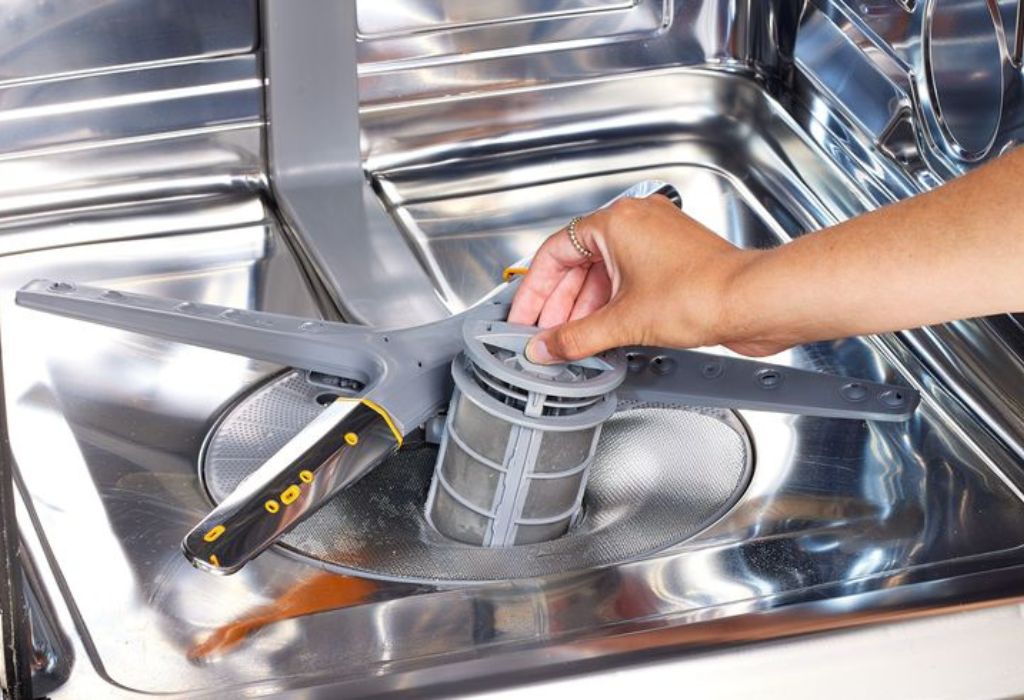
Locate the filter at the bottom center of the dishwasher tub. It is usually round or cylindrical and may be combined with a flat mesh screen.
Gently twist or unlock the filter counterclockwise, then lift it out. If your dishwasher has two parts (a fine mesh filter and a coarse filter), remove both.
Place the parts in a bowl or sink filled with warm water. Be careful not to force the filter out or use sharp tools, as this could damage the housing or mesh.
Step 2: Soak and Scrub the Filter
Add a few drops of mild dish soap to the warm water and let the filter soak for about 10 to 15 minutes. Soaking helps loosen grease and food residue stuck between the mesh layers.
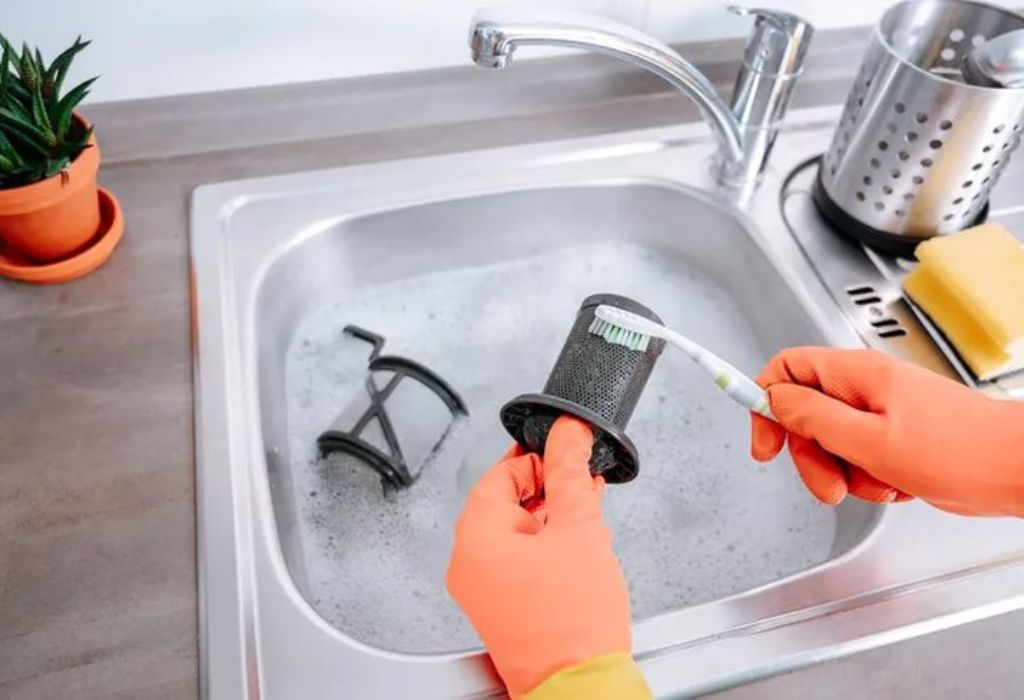
After soaking, use an old toothbrush or soft brush to gently scrub the filter. Focus on the mesh area, the sides, and the base where grease tends to collect.
If there is a strong odor or heavy buildup, add a tablespoon of white vinegar to the soaking water. Vinegar helps dissolve grease and kills odor-causing bacteria.
Rinse thoroughly under running water to remove all soap and residue. The filter should look clean and clear with no visible particles.
Step 3: Clean the Filter Housing and Surrounding Area
While the filter is soaking, wipe the filter housing area inside the dishwasher. Use a damp sponge or soft cloth dipped in warm soapy water.
Pay close attention to the area around the drain, as this is where grime and grease often collect.
If the drain area looks clogged, use a toothbrush or soft brush to gently clear it. Never use sharp tools or wires, as they can puncture the drain or damage the pump.
Step 4: Rinse and Reinstall the Filter
After cleaning, rinse the filter one more time under warm water and dry it lightly with a clean towel.
Place the filter back into its housing, making sure it sits securely. Twist it clockwise or lock it into place according to your dishwasher’s design.
A loose or misaligned filter can cause poor water flow and reduced cleaning performance. Check that it fits snugly before putting the bottom rack back in.
Step 5: Optional Deep Cleaning Cycle
Once the filter is clean and reinstalled, run an empty hot water cycle to flush any remaining residue from the machine.
If you want extra freshness, place a small cup of white vinegar on the top rack before starting the cycle. It will dissolve leftover grease and deodorize the interior.
After the cycle finishes, open the door slightly and let the inside air dry for about 30 minutes. This prevents moisture buildup and odor.
Cleaning your dishwasher filter regularly keeps your appliance performing at its best, prevents bad smells, and ensures every wash leaves your dishes spotless.
Maintenance Tips to Keep the Filter Clean Longer
A clean filter keeps your dishwasher running efficiently, but maintaining it regularly ensures it stays that way for months. Follow these simple habits to reduce buildup, prevent odors, and make future cleanings quicker and easier.
1. Rinse or Wipe Dishes Before Loading
Always scrape large food particles or bones off your dishes before placing them in the dishwasher. You don’t need to pre-wash everything, but removing heavy residue prevents the filter from clogging too fast.
Avoid loading dishes with thick sauces, rice, or vegetable peels that can stick to the mesh. This simple step helps reduce 80 percent of trapped debris according to Whirlpool Appliance Care.
2. Check the Filter Weekly
Once a week, pull out the bottom rack and take a quick look at the filter. If you notice any bits of food or grease, give it a light rinse under warm water.
This quick check only takes a minute and helps you avoid a bigger deep-cleaning job later.
3. Run a Hot Cycle Regularly
Heat naturally breaks down grease and soap scum. Running one empty hot cycle every two weeks helps keep the filter and drain area cleaner.
You can also add a cup of white vinegar in a bowl on the top rack for a natural deodorizing effect. It freshens the interior and reduces limescale buildup caused by hard water.
4. Avoid Overloading the Dishwasher
Overloading blocks the spray arms and prevents proper water circulation. When water doesn’t reach the filter area evenly, debris settles and clogs faster.
Leave enough space between dishes so water jets can move freely and carry food particles into the filter for easy capture and drainage.
5. Clean the Spray Arms and Drain Area Monthly
Once a month, check the spray arms and drain near the filter for residue or small blockages. Use a soft brush or toothpick to remove any buildup from the spray holes.
Keeping these parts clean ensures high water pressure and prevents food from accumulating in the filter area.
6. Use the Right Detergent and Amount
Too much detergent creates soap film that traps food particles inside the filter mesh. Always use the recommended amount based on your dishwasher model and water hardness.
If your dishes often look cloudy, it’s a sign you may be using too much soap or detergent pods.
7. Keep the Door Open After Each Cycle
After every wash, open the door slightly to let moisture escape. This prevents the warm, damp environment that bacteria love.
A few minutes of air circulation keeps your filter and interior smelling fresh and mold-free.
8. Schedule a Deep Clean Every Month
Even with regular care, grease and small residue can build up over time. Deep-clean the filter monthly using warm water, mild soap, and vinegar if needed.
This ensures your dishwasher stays odor-free, runs smoothly, and maintains consistent cleaning power.
Consistent filter maintenance not only improves performance but also saves energy, reduces detergent waste, and extends the lifespan of your dishwasher.
Common Mistakes to Avoid When Cleaning the Filter
Cleaning a dishwasher filter is simple, but small mistakes can reduce the effectiveness of your cleaning or even damage the filter. Avoiding these common errors will keep your dishwasher running smoothly and extend the life of its parts.
1. Cleaning Without Removing the Filter
Some people try to wipe the filter while it’s still installed. This doesn’t remove the buildup trapped beneath the mesh or around the edges.
Always remove the filter completely before cleaning. Taking it out allows you to scrub every surface and clear debris that blocks water flow.
2. Using Harsh Tools or Cleaners
Avoid using metal brushes, scouring pads, or harsh chemical cleaners. These can scratch or tear the fine mesh of the filter and damage the rubber seals.
Stick to warm water, mild dish soap, and a soft brush or old toothbrush. This is enough to remove grease and grime safely.
3. Forgetting to Clean the Filter Housing
Even if you clean the filter itself, the housing underneath can still hold trapped food particles.
Always wipe the area where the filter sits before reinstalling it. Leaving residue there can cause bad odors to return quickly.
4. Not Locking the Filter in Place
After cleaning, make sure the filter is reinstalled correctly and locked securely.
If it’s loose or misaligned, unfiltered water can bypass it, causing food particles to recirculate onto your clean dishes. This can also damage the pump over time.
5. Using Cold Water for Cleaning
Cold water does not dissolve grease effectively. Always use warm or hot water when rinsing the filter or soaking it in soap.
Hot water helps break down oils and detergent residue faster, ensuring a deeper clean in less time.
6. Ignoring Cleaning Frequency
Many users clean their filters only when a problem appears. By then, buildup has already spread to other parts of the dishwasher.
Make cleaning part of your regular routine. A quick rinse once a week and a full cleaning once a month keeps your filter in top shape.
7. Overloading the Dishwasher Regularly
An overloaded dishwasher prevents water from reaching the filter evenly. This leads to uneven washing and faster buildup inside the mesh.
Load your dishes properly with enough space between them so water can move freely through the filter system.
8. Skipping Post-Cleaning Test Runs
After reinstalling the filter, always run a short rinse cycle. This helps confirm that the filter is seated correctly and that water is draining properly.
If you notice standing water after the cycle, remove the filter again and check for alignment or leftover debris.
By avoiding these mistakes, you’ll keep your dishwasher filter clean, efficient, and working exactly as it should, without the need for frequent repairs.
FAQs About Cleaning a Dishwasher Filter
These frequently asked questions cover the most common issues people face when maintaining or cleaning their dishwasher filters. Each answer is short, direct, and written for quick reference.
1. Where is the dishwasher filter located?
The filter is usually found at the bottom center of the dishwasher, under the lower spray arm. It may have a round mesh cylinder or a flat metal screen depending on your model.
2. How often should I clean my dishwasher filter?
If you use your dishwasher daily, clean the filter once a week. For smaller households or light usage, cleaning every two to three months is enough.
3. How do I know if the filter needs cleaning?
Signs include cloudy or dirty dishes, a bad smell, or standing water at the bottom of the dishwasher. If you notice any of these, clean the filter immediately.
4. Can I use vinegar to clean the filter?
Yes. Vinegar is great for removing grease and odor. You can soak the filter in a mixture of warm water and one tablespoon of white vinegar for 10 to 15 minutes before scrubbing.
5. Do all dishwashers have removable filters?
Most modern dishwashers have removable filters, but some older models have self-cleaning systems instead. Always check your user manual to confirm.
6. What should I avoid when cleaning the filter?
Avoid using sharp tools, metal brushes, or strong chemicals. These can damage the mesh and seals. Use only mild soap, warm water, and a soft brush.
7. Why does my dishwasher still smell after cleaning the filter?
If odor persists, check the drain area, spray arms, and rubber seals. Residue or trapped water in these areas can cause lingering smells even after the filter is clean.
8. What happens if I don’t clean the filter regularly?
A dirty filter blocks water flow, reduces cleaning power, and can cause the pump to work harder. Over time, this can lead to mechanical failure or leaks.
9. How do I reinstall the filter after cleaning?
Place it back into its slot and twist or lock it until it clicks into place. Make sure it’s secure and aligned before running the dishwasher again.
10. Can I clean the filter in the sink after every few cycles?
Yes. A quick rinse under warm water every few cycles helps prevent buildup and keeps your dishwasher smelling fresh.
11. What can I do to make filter cleaning easier next time?
Rinse heavy food residue off plates before loading, avoid overloading the racks, and run a hot cycle occasionally to flush away hidden grease.
12. Is it safe to use baking soda on the filter?
Yes. Baking soda helps remove stains and neutralize odors. Sprinkle some on the filter before scrubbing gently with a soft brush, then rinse well.
Regularly cleaning your dishwasher filter ensures powerful cleaning, prevents odor, and keeps your appliance working efficiently for years.
Conclusion
Your dishwasher filter might be a small part of the appliance, but it plays a major role in keeping your dishes spotless and your machine running efficiently. Ignoring it can lead to bad smells, cloudy glassware, and even expensive repairs down the line.
Cleaning the filter is quick, simple, and requires no special tools. A few minutes of attention each month can prevent major problems later. According to Consumer Reports, routine filter cleaning helps maintain up to 30 percent better wash performance and reduces mechanical strain on the pump and spray arms.
By soaking, scrubbing, and reinstalling your filter correctly, you ensure smooth water flow, cleaner dishes, and a longer-lasting dishwasher. Combine this with regular maintenance, like wiping seals and running a hot vinegar cycle occasionally, and your machine will keep performing at its best for years.
Take ten minutes today to check your filter. If it looks greasy, slimy, or smells bad, give it the deep clean it deserves. You’ll instantly notice the difference in both cleanliness and performance.
If you found this guide useful, share it with others who rely on their dishwasher every day. A clean filter means cleaner dishes, fresher air, and a kitchen that runs as efficiently as you do.

I’m Emma J. Caldwell, the founder, lead writer, and home-cooking enthusiast behind KitchenGuideCo.com. With a background in culinary arts and over a decade of cooking experience in both professional and personal kitchens, I created this platform to demystify recipes, offer smart kitchen gadget reviews, and guide readers through meal prep with confidence and clarity.