The kitchen has evolved into a place where innovation meets practicality. Gone are the days when blending meant hauling out a bulky countertop machine and scrubbing multiple parts afterward.
Today, one sleek tool has simplified it all — the immersion blender. But the question many home cooks ask is, how do immersion blenders work, and why are they so useful?
An immersion blender, also known as a hand blender or stick blender, might look simple, but it’s a powerhouse of efficiency.
With just a press of a button, it can puree soups, whip up smoothies, blend sauces, or even emulsify salad dressings right in the pot or bowl. No transferring. No mess. Just smooth, consistent results in seconds.
According to Good Housekeeping Kitchen Lab, over 70% of home cooks who own immersion blenders use them weekly for everything from soups to baby food because of their convenience and quick cleaning. (source)
This guide dives deep into how immersion blenders actually work — from their internal mechanics to their everyday applications — and why every modern kitchen should have one.
The Design and Mechanics of an Immersion Blender
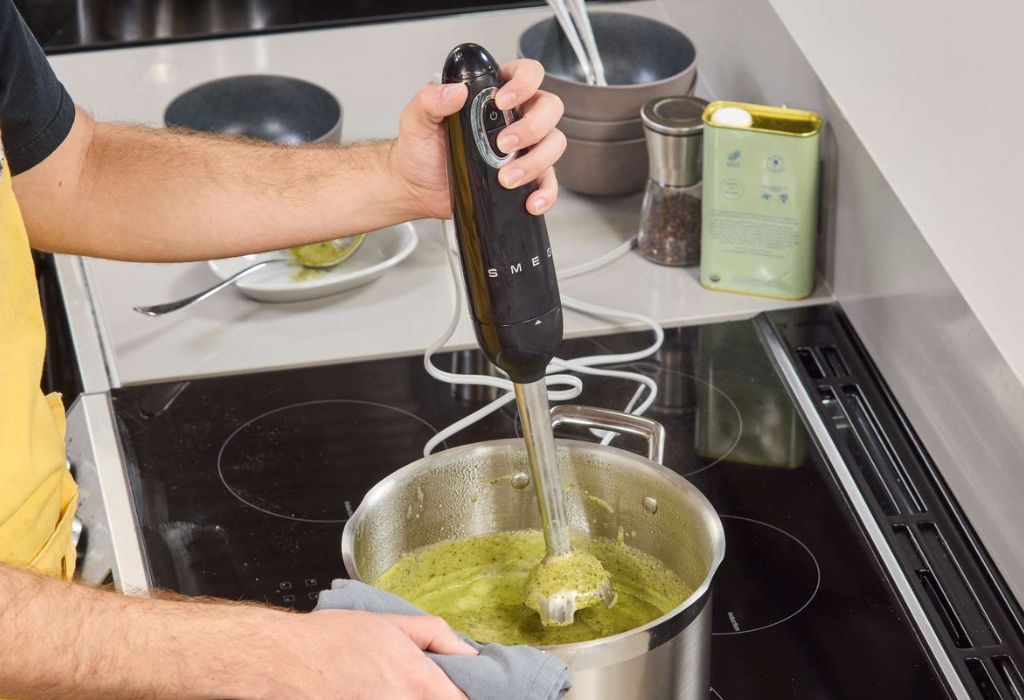
At first glance, an immersion blender seems almost too simple — a long, slim wand with a small blade at the end. But inside that minimalist design lies clever engineering.
An immersion blender consists of four main components: the motor housing, shaft, blade guard, and blade assembly. The top section houses an electric motor that spins a small drive shaft. This motion travels down the wand and powers the blade at the bottom, which spins at speeds up to 15,000 RPM.
The blade guard — that dome-shaped cover at the base — plays a key role. It prevents splashing, directs food toward the blades, and helps create a whirlpool effect that pulls ingredients inward. This motion ensures smooth, even blending without messy spills.
Unlike traditional blenders that rely on a jar to contain the vortex, immersion blenders create it directly in your pot or bowl. This freedom makes them ideal for hot soups, sauces, and batters. Just submerge, power on, and move the wand around until everything is silky.
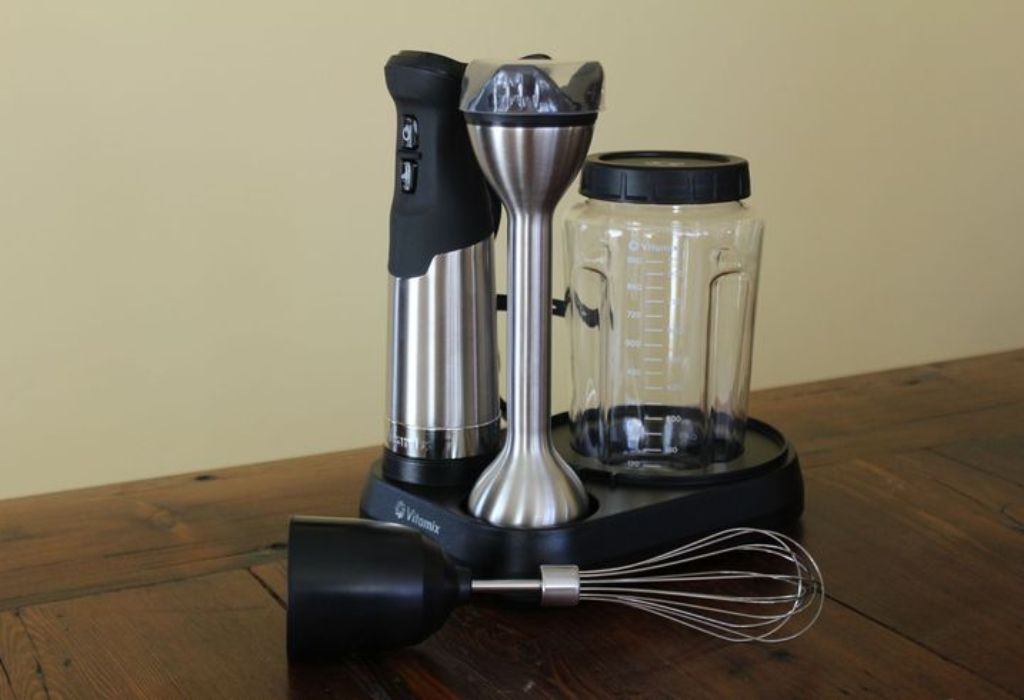
Some models include variable speed settings or turbo boosts for tougher jobs. Higher-end versions even have detachable shafts for easy cleaning and multiple attachments for whisking, chopping, or frothing.
The genius of the immersion blender lies in its combination of compact form and mechanical precision — small, portable, and surprisingly powerful.
How an Immersion Blender Blends and Purees
The secret to how immersion blenders work lies in the vortex effect they create. When the blades spin, they pull ingredients toward them, chopping and circulating them continuously until the mixture becomes uniform.
Because the blades are partially submerged, they combine air and liquid at the same time, producing a light, airy texture in soups or sauces. Unlike countertop blenders, immersion blenders don’t trap food in corners or overheat easily since you control their movement.
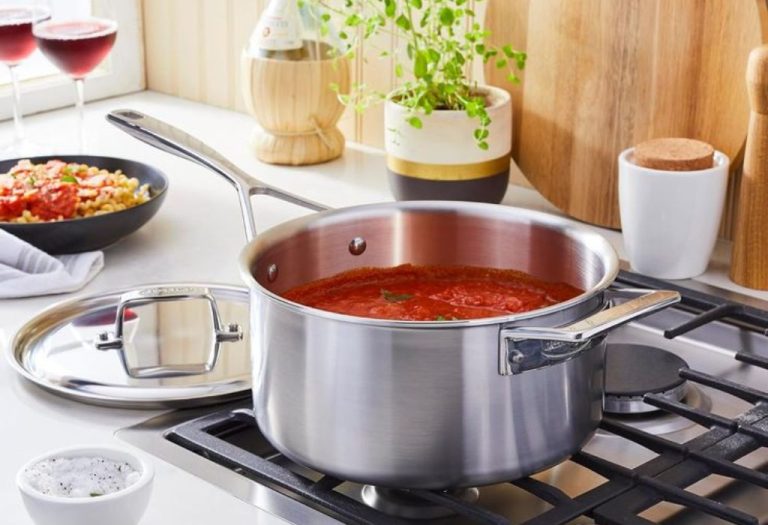
Let’s say you’re pureeing a pot of tomato soup. A countertop blender would require pouring hot liquid into a jar, risking spills and burns. But an immersion blender can be placed directly into the pot. As the blades spin, they pull chunks of tomato and broth downward, breaking them apart with rapid slicing action. Within seconds, the soup turns smooth and velvety.
The same process applies to smoothies, baby food, or whipped cream. The blades’ rapid circular motion emulsifies liquids and solids — mixing them evenly without separation.
Speed control makes a big difference. Low speeds are great for chunky blends, while high speeds liquefy completely. By controlling movement and duration, you decide whether to achieve a chunky salsa or a silky bisque.
In essence, immersion blenders blend through direct immersion and circulation — combining mechanical speed with fluid dynamics for perfect texture.
Immersion Blender vs. Countertop Blender
Both blenders share a goal — to mix, puree, or emulsify ingredients — but they differ greatly in design, usage, and purpose.
A countertop blender uses a fixed motor base and a jar with built-in blades. Ingredients are added, the lid is secured, and the vortex created by the blades pulls everything toward the center for uniform blending. It’s powerful and ideal for large batches, ice crushing, or frozen drinks.
An immersion blender, on the other hand, eliminates the jar altogether. Instead, the blades are at the end of a handheld wand that’s dipped directly into ingredients. This allows blending in any container — a pot, a glass, or even a mixing bowl.
The immersion model’s portability and easy cleanup are its biggest strengths. It’s also much safer when dealing with hot liquids, since there’s no need to transfer them. Countertop blenders, while more powerful, can be cumbersome and require more cleanup.
In performance, countertop blenders win in sheer strength, but immersion blenders win in versatility and control. You can adjust speed, immersion depth, and motion to suit your desired texture — from rough chops to creamy emulsions.
So, while countertop blenders dominate in power, immersion blenders dominate in practicality — especially for home cooks who value convenience and minimal cleanup.
What You Can Make With an Immersion Blender
Once you understand how immersion blenders work, their versatility becomes almost limitless. This single tool can replace multiple appliances when used creatively.
Soups are the most common application. Immersion blenders can transform chunky mixtures into smooth, restaurant-quality purees right in the pot. From roasted tomato bisque to creamy potato leek, consistency is fully under your control.
They’re also perfect for smoothies and shakes. Simply add your ingredients into a tall cup, submerge the blender, and blend until creamy. Cleanup is as easy as rinsing under warm water.
For baking enthusiasts, immersion blenders excel at mixing batters and doughs for pancakes, muffins, or brownies. Their ability to incorporate air creates lighter textures.
They also shine in sauces and dressings — effortlessly emulsifying oil and vinegar or blending herbs into pestos and marinades. In fact, many chefs use them to make mayonnaise in seconds.
Beyond liquids, immersion blenders can handle soft foods like boiled vegetables, beans, or fruits for purees and baby food. Some models include whisk attachments for whipping cream or eggs and mini choppers for nuts and herbs.
The beauty of the tool lies in flexibility. One compact device that can handle breakfast, dinner, desserts, and everything in between — no countertop clutter required.
Advantages of Using an Immersion Blender
There are many reasons why immersion blenders have become a kitchen essential worldwide. Their unique advantages make them stand out even among traditional appliances.
First and foremost is convenience. You can blend directly in your cooking pot, bowl, or even a mug — no need to transfer ingredients, which means fewer dishes and less cleanup.
Second is portability. Immersion blenders are small, lightweight, and easy to store. You can take them anywhere, even on camping trips with battery-operated models.
They’re also incredibly versatile. From soups and sauces to smoothies, they can handle both hot and cold mixtures. Attachments extend their functionality even further — whisking, chopping, and frothing all become possible with one tool.
Another benefit is precision control. The ability to move the blender around and adjust depth gives you textural freedom that countertop blenders can’t offer. Want a chunky salsa instead of a puree? Just pulse lightly and lift slightly.
Finally, they’re easy to clean. Most models feature detachable stainless-steel shafts that rinse clean in seconds. Some are even dishwasher-safe.
It’s no exaggeration to say that once you experience the convenience of an immersion blender, you may never go back to your bulky countertop model again.
Understanding the Limitations
While immersion blenders offer convenience, they’re not perfect for every task. Recognizing their limits ensures you use them effectively and safely.
The first limitation is power. Compared to full-size blenders, immersion models have smaller motors. This means they can struggle with extremely hard ingredients like ice cubes, raw carrots, or frozen fruits. For those tasks, a countertop blender is still the better choice.
Capacity is another constraint. Immersion blenders are designed for smaller batches. Trying to blend large volumes at once may lead to uneven results or overheating.
The open design also means splattering can occur if you don’t submerge the blade fully or start at too high a speed. Always begin at a low setting and gradually increase once ingredients start circulating.
Maintenance requires care, too. While many shafts detach for cleaning, the motor housing should never be submerged. Wipe it down gently with a damp cloth instead.
Lastly, because immersion blenders lack heavy bases, prolonged use can cause hand fatigue. Taking short breaks during long blending sessions helps maintain comfort.
Despite these limitations, understanding and working within them ensures long-lasting performance — and keeps your immersion blender one of the most valuable tools in your kitchen.
Choosing the Right Immersion Blender
Selecting an immersion blender isn’t just about brand — it’s about matching performance to your cooking habits.
Start with power. For light use like soups or sauces, 200–300 watts is enough. For tougher jobs such as nuts or fibrous vegetables, go for 400 watts or more. Models like the KitchenAid Variable Speed Corded Hand Blender and Breville Control Grip deliver exceptional balance between strength and control. (source)
Next, consider blade design. Look for stainless-steel blades with protective guards that reduce splashing. Multi-angle blades create a smoother blend by improving circulation.
Speed settings are also crucial. Single-speed blenders are fine for occasional users, but variable speeds provide more control over texture.
Pay attention to ergonomics — a comfortable grip and balanced weight make long blending sessions easier.
If versatility matters, choose models with attachments such as whisks or mini choppers. These add-ons extend the tool’s usefulness beyond blending.
Finally, evaluate cleaning convenience. Detachable shafts that are dishwasher-safe save time, while seamless buttons and smooth finishes make wiping effortless.
The right immersion blender fits comfortably in your hand, handles your favorite recipes easily, and makes cleanup a breeze — exactly what a busy kitchen needs.
Safety and Maintenance Tips
Immersion blenders are powerful tools, and like all electrical appliances, they require careful handling.
Always unplug the blender before attaching or detaching accessories. Never touch the blade while it’s connected to power, even if it seems off.
When blending hot liquids, fully submerge the blade before switching it on. Starting above the surface causes splattering, which can result in burns.
Avoid blending in fragile or shallow containers. Deep, sturdy pots or jars minimize mess and protect the blade from contact with surfaces.
For maintenance, rinse immediately after use. Dried residue is harder to remove and can affect performance. Use warm soapy water and a soft brush for thorough cleaning.
Inspect your cord regularly for wear, and never twist it tightly when storing. Keep motor vents clear of food debris to prevent overheating.
If your immersion blender has detachable parts, check seals and joints periodically. Tighten or replace them when necessary to avoid leaks.
Proper care ensures your immersion blender remains efficient and safe for years, saving both time and frustration in your kitchen.
Why Every Kitchen Needs an Immersion Blender
Every home cook eventually discovers a few tools they can’t live without — and the immersion blender easily earns a spot on that list.
Its compact design replaces multiple bulky appliances, offering unmatched convenience for daily cooking. Whether you’re blending creamy soups, whisking eggs, or preparing fresh salsa, this one tool simplifies prep and cleanup alike.
Unlike many gadgets that serve a single function, an immersion blender adapts to nearly every cooking style. It suits minimalists who value space and busy families needing quick, healthy meals.
Moreover, it’s the perfect blend of affordability and longevity. A quality immersion blender costs a fraction of a countertop model yet performs most of the same tasks — often faster and with less mess.
Professionals love it for its precision; home cooks love it for its simplicity. In short, it bridges the gap between convenience and performance.
If you want a kitchen that works smarter, not harder, an immersion blender is the tool that delivers. Once you use one, you’ll wonder how you ever cooked without it.
Frequently Asked Questions About How Immersion Blenders Work
How do immersion blenders actually work?
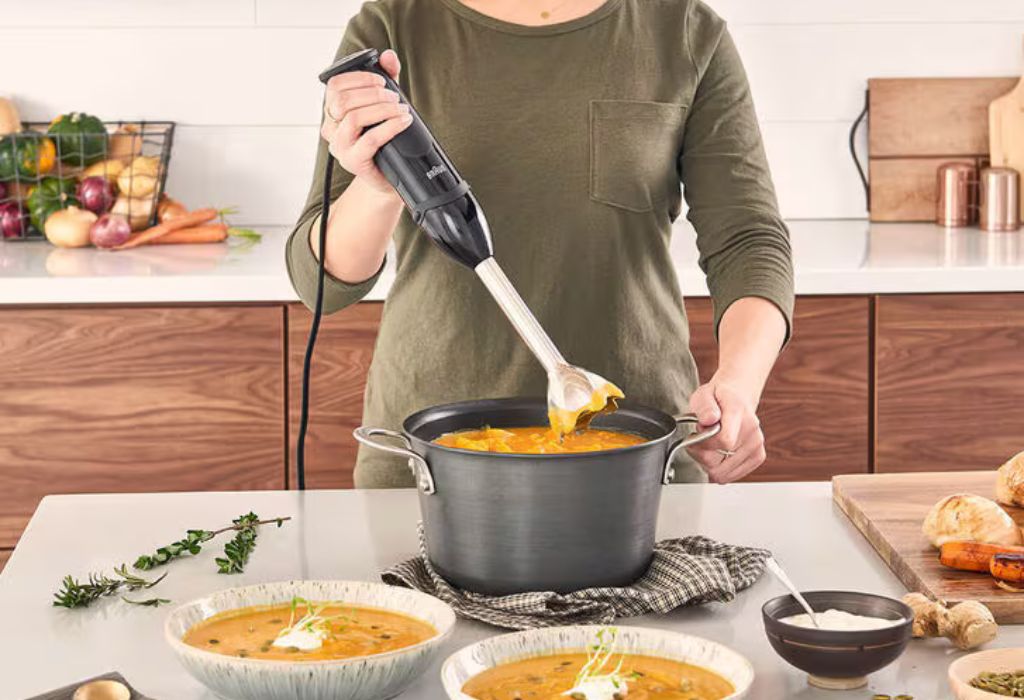
Immersion blenders use a small motor inside the handle to spin sharp blades at the bottom of a metal shaft. When submerged in liquid, these blades create a vortex that pulls food toward them, chopping and pureeing it evenly.
Can an immersion blender replace a regular blender?
Partially. Immersion blenders can handle most blending tasks like soups, smoothies, and sauces, but they may struggle with heavy jobs such as crushing ice or thick nut butters that require stronger motors.
Is an immersion blender safe to use with hot liquids?
Yes, it’s perfect for hot soups or sauces. Just make sure the blade is fully submerged before turning it on to prevent splattering and burns.
Do immersion blenders work in any container?
They work best in deep, sturdy containers like pots, tall jars, or mixing cups. Avoid shallow dishes, as they can cause splashing or uneven blending.
What can I make with an immersion blender?
You can prepare soups, smoothies, baby food, pancake batter, whipped cream, salad dressings, sauces, and even homemade mayonnaise — all without transferring ingredients to another container.
How powerful should an immersion blender be?
A motor between 250 and 400 watts is ideal for most kitchen tasks. If you blend tougher foods frequently, go for a model with at least 500 watts for more torque and speed.
Is it hard to clean an immersion blender?
Not at all. Most have detachable shafts that rinse clean under warm water. Some are even dishwasher-safe. Always unplug before cleaning the blade section.
Can immersion blenders crush ice or frozen fruit?
They can handle small pieces of soft frozen fruit, but they’re not designed for solid ice. Crushing ice can damage the blades or strain the motor.
Do immersion blenders come with attachments?
Yes, many models include extra tools like whisks, mini choppers, and frothers. These attachments increase versatility, turning one tool into a multi-purpose kitchen assistant.
Why should I own an immersion blender?
It saves time, space, and effort. You can blend directly in your pot, control texture easily, and clean up in seconds — making it one of the most practical tools any kitchen can have.
Conclusion
The immersion blender stands as one of the most ingenious and practical inventions in modern kitchens — blending simplicity, power, and precision in one handheld tool.
It works through a seamless fusion of motor-driven speed and vortex motion, drawing ingredients toward the blades to create consistent, smooth textures in seconds.
But its brilliance goes beyond how it blends — it’s about where it blends. You can puree soup right in the pot, whip cream in a cup, or mix sauces in a bowl — no transferring, no mess, and no extra cleanup.
This small yet mighty device gives cooks total control over texture and consistency, allowing anything from chunky sauces to creamy bisques with just a few gentle pulses.
Its ability to adapt to countless kitchen tasks — from smoothies and batters to dressings and foams — makes it a true multitasking hero that replaces several bulky appliances.
Compact, lightweight, and effortless to clean, an immersion blender fits perfectly into the rhythm of everyday cooking, making prep work faster and meals smoother.
It’s not just a gadget — it’s a time-saving essential that brings professional results to home kitchens without complexity.
With each blend, it transforms your cooking into a more intuitive and enjoyable experience.
So if you’re wondering whether to invest in one, the answer is simple — once you use an immersion blender, you’ll never want to cook without it again.

I’m Emma J. Caldwell, the founder, lead writer, and home-cooking enthusiast behind KitchenGuideCo.com. With a background in culinary arts and over a decade of cooking experience in both professional and personal kitchens, I created this platform to demystify recipes, offer smart kitchen gadget reviews, and guide readers through meal prep with confidence and clarity.