Modern dishwashers are far more advanced than the noisy, water-hungry units of the past. Today’s machines can automatically sense how dirty your dishes are, adjust water usage, regulate temperature, and even control drying time.
Yet, one common question homeowners still ask is: “Why does my dishwasher take so long?”
Dishwasher cycle lengths can range anywhere from 30 minutes to over four hours, depending on model, soil level, and selected wash settings.
Older machines were fast but inefficient, while modern dishwashers prioritize energy and water savings, resulting in longer—but smarter—cycles.
According to the U.S. Department of Energy, Energy Star–rated dishwashers use up to 30% less water and 20% less energy than older models, but they often achieve this by extending cleaning duration.
Understanding how cycle length varies and what factors influence it helps you operate your appliance efficiently and choose the right setting for every load.
In this comprehensive guide, we’ll break down how long different dishwasher cycles last, why they vary by model and brand, and how factors such as water temperature, load size, and soil level affect total runtime.
You’ll also learn maintenance and optimization techniques to reduce cycle time without compromising cleaning quality.
Typical Dishwasher Cycle Duration
Dishwasher cycle times depend primarily on cycle type and technology level. The average standard cycle on modern machines takes between 1.5 and 3 hours, but specific programs can be shorter or longer.
1. Normal or Standard Cycle
This is the most commonly used program, balancing energy efficiency and cleaning performance.
- Duration: 90 to 150 minutes (1.5–2.5 hours).
- Function: Designed for everyday dishes with moderate soil. Uses sensors to optimize water volume and temperature.
- Water Temperature: Around 120°F to 140°F (49°C–60°C).
2. Heavy or Pots-and-Pans Cycle
Used for cookware, casseroles, or heavily soiled items.
- Duration: 2.5 to 4 hours.
- Function: Extends wash and rinse phases, uses higher water pressure, and heats water up to 150°F.
- Energy Use: Up to 25% more electricity than the normal cycle.
3. Quick Wash or Express Cycle
Ideal for lightly soiled dishes.
- Duration: 30 to 60 minutes.
- Function: Shorter wash and rinse times, higher water temperature for faster cleaning.
- Limitation: Less effective for greasy or baked-on residue.
4. Eco or Energy-Saver Cycle
Eco cycles use lower water temperatures and extended run times to reduce total consumption.
- Duration: 2.5 to 3.5 hours.
- Function: Optimized for minimal water and power use; relies on longer soaking.
5. Rinse Only or Pre-Rinse
Used when you plan to run a full cycle later but want to prevent food from drying on dishes.
- Duration: 10 to 15 minutes.
- Function: No detergent, minimal water use, prevents odor buildup.
6. Sensor or Auto Cycle
Smart dishwashers automatically adjust based on soil sensors and turbidity levels.
- Duration: 1.5 to 3 hours (variable).
- Function: Machine detects how dirty the dishes are and sets optimal cycle length.
Why are modern dishwashers slower than older ones?
Because they use less water and rely on longer soak cycles for efficiency.
Can cycle time vary each use?
Yes. Sensor-equipped models adjust duration dynamically depending on load soil level.
Is a longer cycle better?
Not always — longer doesn’t mean cleaner. It depends on temperature, pressure, and water quality.
Do short cycles consume more energy?
Often yes, because they use higher heat to compensate for shorter cleaning time.
Why Dishwasher Cycle Times Vary
Even identical models can have different cycle lengths depending on conditions. Several variables influence overall duration, including sensor technology, soil detection, water heating, and local water conditions.
1. Water Temperature
If your home’s water heater is set too low (below 120°F), the dishwasher compensates by heating internally. This increases runtime significantly — sometimes by 30 minutes or more.
2. Load Size and Soil Level
Large or heavily soiled loads require longer washing and rinsing. Soil sensors detect turbidity (cloudiness of water) and extend the wash cycle until water runs clear.
3. Sensor Technology
Modern dishwashers use optical and pressure sensors to adjust water usage dynamically. While this improves efficiency, it also creates variable cycle lengths based on real-time data.
4. Energy Efficiency Standards
Post-2012 Energy Star regulations restrict water flow and power draw. As a result, modern units achieve equal or better cleaning results but require longer cycles to compensate for reduced energy input.
5. Drying Method
Condensation drying is energy-efficient but slower than heated-dry methods. A condensation-only drying system may add up to 30–40 minutes per cycle compared to older fan-assisted systems.
6. Ambient Conditions
Cold kitchen environments and hard water increase heating time. Likewise, low household water pressure can delay the filling and rinsing stages.
FAQs:
Why does my dishwasher take longer in winter?
Because incoming water is colder, forcing longer heating times.
Does running hot water first help?
Yes, running your kitchen faucet until it’s hot ensures faster fill times and shorter overall cycles.
Do Eco cycles always take longer?
Yes, they trade time for energy savings by using lower heat and less water.
Why does the cycle time change every load?
Because sensor-based models continuously adjust to optimize cleaning and drying efficiency.
How Dishwasher Sensors Affect Cycle Time
Modern dishwashers are built with advanced sensors that control every stage of the cleaning process.
These include turbidity sensors to measure how dirty the water is, temperature sensors to regulate heat, and flow meters to track how much water enters the unit. Together, they determine how long the cycle should run.
When the turbidity sensor detects cloudy or particle-filled water, it automatically extends the wash or rinse stages until the water runs clear.
This ensures thorough cleaning but adds extra time to the total cycle. Conversely, if dishes are only lightly soiled, the dishwasher shortens the wash duration to save water and energy.
Temperature sensors also influence timing. If incoming water isn’t hot enough, the machine activates its internal heater, delaying the cycle until the desired temperature is reached. This is a common reason why two identical loads can have different runtimes.
While these sensors optimize performance and efficiency, they can also make cycles unpredictable.
Environmental factors such as hard water or detergent buildup on the sensors can cause inaccurate readings. Regular cleaning of the filters and interior surfaces helps maintain sensor accuracy and consistent cycle times.
Sensor-based operation is one of the biggest differences between older mechanical dishwashers and modern energy-efficient ones.
Instead of running a fixed 90-minute cycle every time, your machine now decides how long it actually needs — ensuring spotless dishes with minimal waste.
Why does my dishwasher run longer sometimes?
Because sensors detect heavier soil and automatically extend wash and rinse times.
Can dirty sensors increase cycle time?
Yes, residue on turbidity sensors can misread water clarity, forcing longer washes.
How often should I clean my sensors or filters?
Once per month to keep readings accurate and prevent buildup.
Do sensors improve cleaning quality?
Absolutely — they tailor each cycle for maximum efficiency and spotless results.
Can I disable sensor-based cycles?
Some models allow manual modes, but sensor automation provides better long-term performance.
Impact of Water Hardness and Pressure on Cycle Duration
Water quality and pressure play crucial roles in determining how long a dishwasher cycle lasts. The harder the water and the lower the pressure, the longer your dishwasher must work to achieve clean, residue-free dishes.
Modern dishwashers are sensitive to these variables and adjust cycle time automatically based on water flow and rinse performance.
Hard water contains high levels of calcium and magnesium minerals that can interfere with detergent effectiveness. These minerals bind with soap, creating a chalky film that clings to dishes and internal components.
To compensate, the dishwasher may repeat rinse phases or extend the heating period to dissolve stubborn residue. This is why homes with untreated hard water often experience cycles that last 20–30 minutes longer than average.
Low water pressure, typically below 20 psi, also prolongs the wash. A dishwasher depends on steady flow to fill its tub quickly and generate adequate spray force.
When pressure is weak, filling stages take longer, spray jets lose power, and overall cleaning time increases. Some models even pause mid-cycle until sufficient water volume is detected.
Installing a water softener or descaling the system regularly reduces mineral buildup inside pipes and spray arms, improving both efficiency and lifespan.
Maintaining stable pressure and treating hard water can restore normal cycle duration, improve cleaning consistency, and prevent long-term wear on the pump and heating element.
Ultimately, proper water conditions are as important as the cycle you select. Clean, well-pressurized, moderately heated water helps the dishwasher run efficiently, saving both time and energy every load.
Why does hard water make cycles longer?
Because mineral buildup reduces detergent efficiency, forcing extra rinse and heat cycles.
Can low pressure delay dishwasher cycles?
Yes, filling takes longer and water jets lose cleaning force under low pressure.
How can I test my home’s water pressure?
Attach a gauge to the kitchen faucet; ideal pressure is between 20–120 psi.
Will a water softener speed up cycles?
Yes, by improving detergent action and reducing mineral interference.
Can clogged filters mimic hard-water issues?
Absolutely — debris in filters can restrict flow, just like mineral buildup.
Understanding Each Dishwasher Stage
A dishwasher runs through multiple internal stages, each with a distinct purpose. The total cycle length is the sum of these phases.
1. Pre-Wash
Duration: 5–15 minutes.
Purpose: Loosens debris and softens food residue using warm water before detergent is introduced.
2. Main Wash
Duration: 40–90 minutes.
Purpose: Circulates hot, soapy water through spray arms at high pressure to remove grease and soil.
3. Rinse Cycle
Duration: 20–40 minutes.
Purpose: Removes detergent and residues using fresh hot water. Many modern machines use two or three rinse phases.
4. Final Rinse + Drying
Duration: 30–60 minutes.
Purpose: Heats water or uses condensation drying to evaporate moisture from dishes.
Tip: Machines with heat-assisted drying finish faster but consume more electricity, while condensation drying is slower but energy-saving.
Brand Comparison: Dishwasher Cycle Times
| Brand | Normal Cycle | Quick Cycle | Heavy Cycle | Eco Cycle |
| Bosch | 2–2.5 hours | 30–60 min | 3–4 hours | 2.5–3.5 hours |
| KitchenAid | 2–3 hours | 1 hour | 3.5 hours | 3 hours |
| Whirlpool | 1.5–2.5 hours | 45–60 min | 2.5–3 hours | 2.5 hours |
| LG | 2–2.75 hours | 45 min | 3–4 hours | 2.5–3.5 hours |
| Samsung | 2.5–3.5 hours | 60 min | 3.5–4 hours | 3–4 hours |
| GE | 1.5–2 hours | 45 min | 3 hours | 2.5 hours |
Observation: European brands like Bosch and Miele tend to have longer but quieter cycles, while American models like Whirlpool and GE favor faster, slightly louder performance.
How to Shorten Dishwasher Cycle Time
Although long cycles are normal in efficient models, a few smart practices can help minimize runtime without compromising cleanliness.
1. Use Hot Water Supply
Ensure the home water heater is set to 120°F–130°F. Pre-run your kitchen tap until hot before starting a cycle to reduce pre-heating delays.
2. Avoid Overloading
Overcrowding prevents water jets from reaching every surface. Fewer dishes per load often lead to shorter, more efficient cycles.
3. Choose Express or Quick Wash
For lightly soiled dishes, Quick Wash cycles finish in under an hour with minimal energy use.
4. Maintain Clean Filters and Spray Arms
Dirty filters cause sensors to read higher turbidity levels, extending cycles. Clean filters monthly and check spray holes for blockages.
5. Disable Heated Dry
Turning off heated dry or using air-dry cuts 15–30 minutes from total runtime.
6. Use High-Quality Detergent
Premium detergents dissolve faster and clean more effectively, reducing cycle extensions caused by repeated rinsing.
Can I manually shorten my dishwasher’s cycle?
Yes, selecting Quick Wash or skipping heated dry reduces total runtime.
Does pre-rinsing dishes help shorten cycles?
Not significantly — modern sensors detect soil levels automatically.
Can water pressure affect cycle time?
Yes, low pressure prolongs filling and rinsing stages.
Does dishwasher age increase runtime?
Yes, older pumps and heaters take longer to perform the same tasks.
Cycle Time Differences Between Old and New Models
Dishwasher technology has evolved dramatically over the past two decades. Older machines were designed for speed and simplicity, while modern models prioritize energy and water conservation.
This shift in engineering explains why new dishwashers often run much longer than their predecessors, even though they use fewer resources and deliver cleaner results.
Older dishwashers, especially those made before 2010, typically completed a full cycle in 45 to 90 minutes. They relied on powerful heating elements and high water volumes—often 8 to 12 gallons per load—to blast away food residue.
These machines used brute force: high heat, strong jets, and minimal electronic control. While fast, they were inefficient, noisy, and hard on delicate dishware.
Modern Energy Star–rated dishwashers, by contrast, are engineered to use only 3 to 4 gallons of water per cycle.
To achieve similar cleaning power with less water and lower heat, manufacturers introduced turbidity sensors, recirculating pumps, and longer soaking periods.
This gentle yet effective cleaning method extends cycle times to 2–4 hours but drastically reduces both water and electricity consumption.
Another key difference is drying technology. Older units used electric heating elements for rapid drying, while newer ones rely on condensation or fan-assisted drying. These methods are more energy-efficient but add 30–40 minutes to total runtime.
In short, longer cycles don’t indicate malfunction—they’re a byproduct of modern efficiency. The extra time allows smart dishwashers to clean thoroughly while consuming a fraction of the resources older models required.
Over a year, that translates to substantial energy savings and longer appliance life.
Why were older dishwashers faster?
They used more water and heat, relying on brute force instead of sensors or efficiency controls.
Do modern dishwashers clean better despite longer cycles?
Yes, they clean more effectively using precision water jets and optimized heat.
Is a 3-hour cycle normal for new dishwashers?
Yes, that’s standard for Energy Star models prioritizing low water and energy use.
Can I make a modern dishwasher run faster?
Yes, by choosing quick-wash or express cycles and using hot water supply.
Do newer dishwashers last longer than older ones?
Generally yes — modern materials resist corrosion and motor wear more effectively.
Energy Efficiency vs. Cycle Duration
Longer cycles are not design flaws — they’re part of energy-efficient operation. Older dishwashers used up to 10 gallons of water per load, while modern Energy Star units average 3.2 gallons. To achieve the same cleaning results with less water, machines circulate smaller amounts for longer periods.
Energy-efficient dishwashers rely on lower wattage heating elements and optimized water jets to save power. They clean just as thoroughly as older models but take more time to do it.
Tip: The extra 30–60 minutes on an Eco cycle can save hundreds of gallons of water and significant energy costs over a year.
Are longer cycles wasteful?
No, they balance lower resource use through extended run times.
Is Eco mode worth it?
Yes — it’s designed for maximum efficiency, not speed.
Why do newer dishwashers use less water but take longer?
They rely on more precise cleaning jets and extended soaking to compensate.
How Drying Methods Change Total Runtime
Drying is one of the most time-consuming phases in a dishwasher cycle. Depending on the drying technology used, this stage can significantly impact total runtime, sometimes adding up to 30–45 minutes.
Modern dishwashers use several drying methods — each with distinct advantages in speed, efficiency, and energy consumption.
Older dishwashers relied on heated drying, where a resistive coil at the base of the tub rapidly evaporated moisture using high temperatures.
This method was quick, typically finishing drying in 20–30 minutes, but it consumed large amounts of electricity. The intense heat could also warp plastic dishes and damage seals over time.
In contrast, most new models feature condensation drying. This process uses residual heat from the final rinse and the cool air of the stainless-steel interior to condense water vapor into droplets that drain away.
While it’s much more energy-efficient, it extends total drying time by 30–40 minutes. Dishes may also come out slightly damp, especially plastic items.
Some mid- and high-end dishwashers now combine condensation and fan-assisted drying, where a built-in fan circulates air to accelerate evaporation. This hybrid system balances speed and energy efficiency, offering dry results without excessive power draw.
For those seeking the fastest turnaround, selecting a heated-dry option or opening the dishwasher door slightly at the end of the cycle can reduce moisture retention. However, these shortcuts increase energy usage slightly.
Ultimately, drying performance is a trade-off between time, efficiency, and energy cost. Understanding your model’s drying method allows you to choose settings that best match your needs for speed and sustainability.
Why does drying take longer in modern dishwashers?
Because condensation drying uses lower heat levels and relies on natural cooling.
Can I shorten drying time manually?
Yes, by opening the door after the final rinse or enabling heated dry mode.
Why are plastic dishes often still wet?
Plastic retains heat poorly, preventing complete evaporation during condensation drying.
Is heated drying safe for all dishware?
Yes, but avoid it for delicate plastics or insulated items that can warp under high heat.
Does rinse aid help speed up drying?
Absolutely — it lowers surface tension so water slides off dishes more easily.
Common Myths About Dishwasher Cycle Times
- “Longer cycles clean better.”
Not always — performance depends on temperature, water pressure, and detergent quality. - “Quick cycles waste energy.”
They can, because they heat water faster at higher wattage. - “Eco mode is too slow to be practical.”
Eco mode saves money and resources; the added time rarely affects overall convenience. - “Pre-rinsing dishes helps shorten the wash.”
False — sensors often misread pre-rinsed dishes as clean, reducing cycle effectiveness. - “Dishwasher time differences indicate malfunction.”
Not necessarily; modern adaptive sensors intentionally vary cycle length.
Troubleshooting Excessively Long Cycles
If your dishwasher consistently runs much longer than usual, there may be an issue beyond normal variation.
1. Clogged Filters or Spray Arms
Restricted water flow makes sensors detect higher soil levels, extending cleaning time. Clean both monthly.
2. Faulty Heating Element
When the element can’t reach proper temperature, cycles prolong indefinitely as the system waits for heat confirmation.
3. Defective Thermostat or Sensor
Malfunctioning sensors send inaccurate soil readings, causing endless rinse loops.
4. Hard Water Scaling
Mineral buildup reduces flow efficiency. Use descaler monthly to maintain water pressure.
5. Software or Control-Board Errors
Unresponsive control logic may fail to advance stages, requiring a reset or replacement.
Tip: Run a diagnostic cycle or reset according to the manufacturer’s manual. If issues persist, professional servicing may be needed.
Maintenance to Improve Efficiency and Speed
- Clean filters monthly to maintain optimal water flow.
- Use hot water from your main line to reduce heating delay.
- Load dishes properly to ensure full spray coverage.
- Replace worn seals to prevent leaks and heat loss.
- Run vinegar rinse cycles every 30 days.
Best Practices for Choosing the Right Cycle Every Time
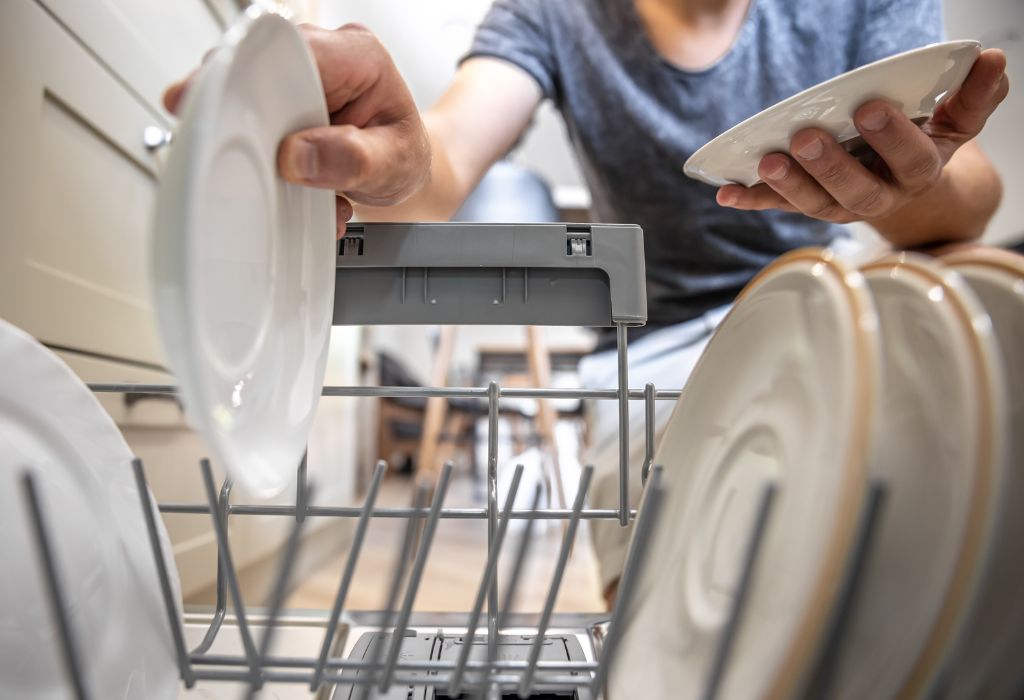
Selecting the correct dishwasher cycle is essential for both cleaning performance and efficiency. Using the wrong setting can waste time, energy, and water—or even leave residue on dishes.
Every dishwasher model includes a range of cycles designed for specific purposes, and understanding how to match each one to your load ensures optimal results.
For everyday dishes with moderate soil, the Normal cycle is your go-to option. It balances wash time, temperature, and water usage.
For tougher cleaning, such as pots, pans, and baked-on food, choose the Heavy or Pots & Pans cycle. It uses hotter water and longer wash times to dissolve grease and remove stubborn residue effectively.
If you need clean dishes quickly, the Quick or Express cycle is ideal. It completes a load in under an hour, though it works best for lightly soiled items. When conserving energy and water is the priority, switch to the Eco cycle, which runs longer but uses lower temperatures and minimal water.
For fragile glassware or china, use the Delicate or Gentle cycle. It reduces spray intensity and temperature to prevent scratches or damage. And if you’re unsure what to select, Auto or Sensor mode is the smartest choice—modern dishwashers will automatically adjust cycle time and water levels based on soil detection.
By aligning the cycle with your load type, you’ll maximize cleaning performance while saving time and energy.
What is the most efficient dishwasher cycle?
The Eco or Energy-Saver cycle—it minimizes water and electricity use through longer, lower-heat operation.
Which cycle is best for greasy pots and pans?
The Heavy cycle—it uses higher heat and pressure to remove baked-on grease.
Can I use Quick Wash for everyday cleaning?
Yes, but only for lightly soiled dishes; it may not fully clean tough residue.
What cycle should I use for glassware?
Select the Delicate or Glass cycle to prevent clouding or scratches.
Is Auto mode better than manual settings?
Yes, it adjusts automatically based on soil levels, optimizing both time and energy.
Conclusion
Dishwasher cycle time is more than a matter of convenience — it’s the result of advanced engineering, environmental regulations, and intelligent cleaning design.
Modern dishwashers run longer not because they’re inefficient, but because they’re built to do more with less — less water, less energy, and less detergent waste.
Where older machines completed cycles in under an hour, they did so by consuming enormous amounts of hot water and electricity.
Today’s Energy Star–rated dishwashers, equipped with sensors, flow controllers, and efficient pumps, use less than half the water yet deliver superior cleaning.
Longer cycles allow these systems to recycle water strategically, maintain consistent temperatures, and ensure complete sanitization — all while keeping operating costs low.
Cycle duration also depends on many real-world variables — water hardness, household pressure, drying methods, and even ambient temperature.
Understanding these factors empowers you to adjust habits accordingly: run hot water first, clean filters monthly, and select cycles that match load types. A well-maintained, properly used dishwasher runs not only faster but more efficiently and quietly.
Most importantly, a longer cycle doesn’t mean wasted time; it means optimized performance. By extending wash stages and reducing intensity, your dishwasher protects delicate items, cuts down on noise, and extends its own lifespan.
In the end, the best approach is balance — choose quick cycles for convenience, Eco cycles for savings, and Heavy cycles for thorough cleaning. Combine smart usage with regular care, and your dishwasher will continue delivering spotless, sanitized dishes for over a decade.
Modern dishwashers are not just cleaning appliances — they’re precision-engineered water- and energy-management systems that reflect how sustainability and performance can coexist seamlessly in the modern home.

I’m Emma J. Caldwell, the founder, lead writer, and home-cooking enthusiast behind KitchenGuideCo.com. With a background in culinary arts and over a decade of cooking experience in both professional and personal kitchens, I created this platform to demystify recipes, offer smart kitchen gadget reviews, and guide readers through meal prep with confidence and clarity.