A heavy skillet pulled from the cupboard should promise sizzling steaks and golden cornbread. Yet many home cooks discover a sticky surface and patches of rust instead of the slick nonstick finish they expected.
This frustration is common, and it often happens because the seasoning layer is thin, uneven, or missing altogether. Without proper seasoning, cast iron cookware can quickly lose its protective barrier and become prone to rust.
Seasoning is more than a tradition. It is a proven method that transforms bare iron into a durable surface resistant to moisture and wear. A well-seasoned pan delivers flavor, consistent searing, and decades of use if maintained correctly.
Curiosity often arises around why some pans last for generations while others deteriorate in a single season. The answer lies in how effectively the oil is bonded to the metal at high heat to create a hard, polymerized layer.
The importance of this process is clear when considering that nearly 80 percent of households in the United States own at least one piece of cast iron cookware【https://www.statista.com/statistics/754051/us-households-with-cast-iron-cookware/】. Yet many of these pans never reach their full potential because of poor or inconsistent seasoning.
Statistics also show that a properly seasoned surface can withstand oven temperatures up to 500°F, creating a heat-tolerant coating that resists corrosion【https://www.seriouseats.com/the-ultimate-guide-to-cast-iron-skillets】. These numbers highlight the advantage of understanding and mastering the process.
Learning how to season cast iron cookware is not just about protecting a pan. It is about creating a kitchen tool that improves over time, cooks food evenly, and resists damage for years.
What “Seasoning” Really Is on Cast Iron
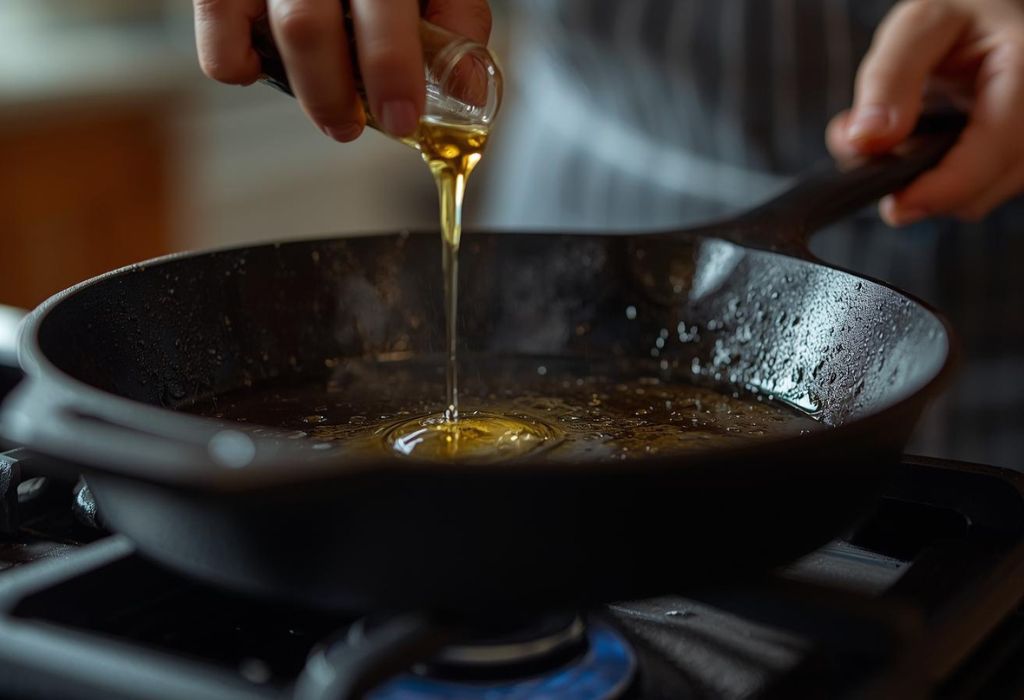
At first glance, a cast iron skillet looks like simple black metal. In reality, the dark finish is not the iron itself but a hardened layer of oil that has been transformed by heat. This layer is what cooks refer to as seasoning.
Seasoning is formed when thin coats of oil are applied to the pan and baked at high temperatures. The heat breaks down the oil and triggers a process called polymerization, creating a durable film that bonds tightly to the iron.
This polymerized oil layer does two critical jobs. It prevents moisture from reaching the iron surface, which stops rust, and it gives the pan a slick, semi-nonstick quality that improves with repeated use.
A seasoned cast iron skillet is stronger than a simple protective coating. Over time, as more oils are applied and cooked onto the surface, the layer builds into a resilient patina that can withstand high heat and daily cooking.
Curiosity often arises about why some pans develop glossy, jet-black finishes while others remain dull and patchy. The difference lies in how evenly the oil is applied and how well the high heat cycle is performed during seasoning.
Research confirms that seasoning is highly effective. A study published by Serious Eats notes that a properly seasoned surface creates a water-repellent barrier that blocks corrosion and enhances browning of foods https://www.seriouseats.com/the-ultimate-guide-to-cast-iron-skillets.
This explains why professional chefs and home cooks alike rely on seasoning as the foundation of cast iron care.
When understood correctly, seasoning is less about appearance and more about performance. The slick patina created by multiple layers of baked oil allows eggs to release cleanly, meats to sear beautifully, and sauces to simmer without metallic flavors.
What is seasoning on cast iron?
It is a hardened layer of polymerized oil that bonds to the skillet, giving protection and nonstick qualities.
Does seasoning make pans nonstick?
Yes, the patina formed from multiple layers of oil provides natural nonstick performance.
Is the pan itself black metal?
No, the iron underneath is silver-gray. The black finish is the seasoning layer.
Why does seasoning stop rust?
It creates a moisture-resistant barrier that shields the iron surface from oxidation.
Does seasoning improve with use?
Yes, every time oil is heated and bonded, the patina grows stronger and smoother.
How to Season Cast Iron Cookware (Step-by-Step)
A cast iron skillet fresh from the box or rescued from storage often needs help before it can shine in the kitchen.
Seasoning transforms raw or faded iron into a cooking tool that resists rust and delivers even heat. The process may seem intimidating, but when broken down into simple steps, it becomes easy to master.
The goal is to create thin, durable layers of polymerized oil that bond to the metal. These layers build the protective patina that keeps food from sticking and ensures the pan will last for decades.
Every step matters, from washing to baking, because shortcuts often lead to sticky surfaces or weak coatings.
The first step is to wash the cookware thoroughly. Warm, soapy water is recommended to remove residues from the factory or any storage dust. Once clean, the pan must be dried completely, preferably by heating it on the stovetop to drive out hidden moisture.
After drying, a thin film of oil is applied. Neutral oils with high smoke points, such as canola, grapeseed, or vegetable oil, work best. The trick is to wipe the oil until the surface looks almost dry. Any excess left behind can result in a tacky finish instead of a smooth layer.
The oiled skillet is then placed upside down in an oven preheated to around 450–500°F. Baking at this temperature for one hour bonds the oil to the metal, while positioning it upside down prevents pooling.
Once the hour is complete, leaving the pan in the oven to cool naturally ensures the coating hardens properly.
Repeating the oiling and baking process two or three times creates a strong foundation for future cooking.
Each cycle deepens the color and builds a patina that becomes more resilient with every use. This step-by-step approach guarantees a seasoned surface that is ready to handle high heat, searing, and daily meals.
Can soap be used before seasoning?
Yes, modern dish soaps are safe and help remove protective factory oils.
Why is the pan baked upside down?
It prevents oil from pooling and ensures even coverage.
How many coats should be applied?
Two or three cycles create a stronger seasoning base.
Which oil works best?
Canola, grapeseed, or vegetable oils with high smoke points are most reliable.
Is one bake enough for new cookware?
Yes, but additional layers improve durability and performance.
Daily Maintenance to Keep Seasoning Strong
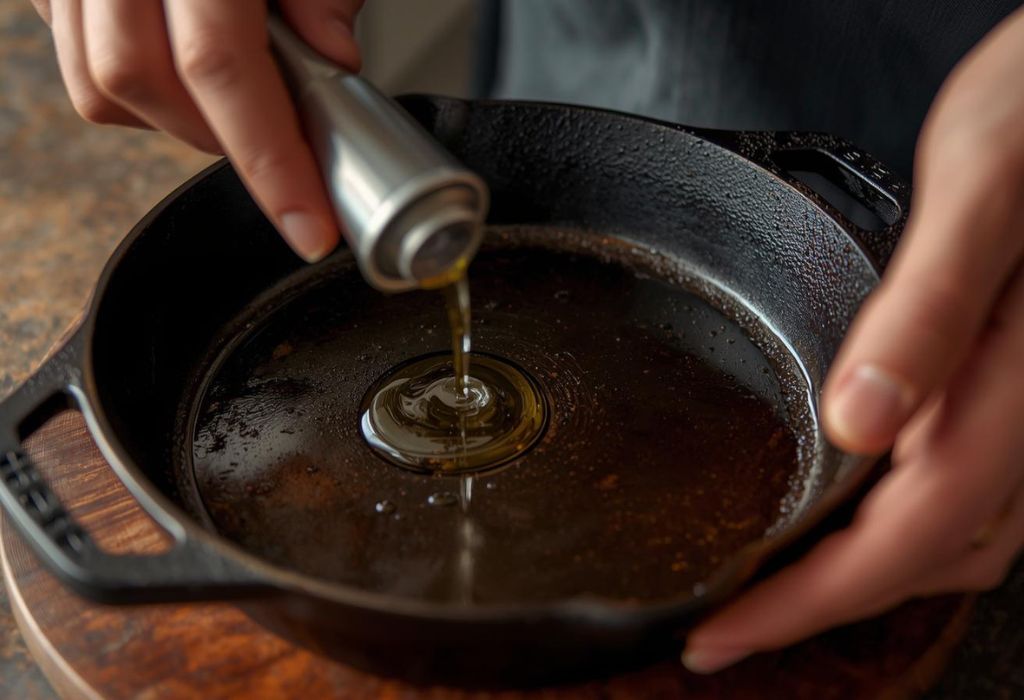
Seasoning is not a one-time process but an ongoing relationship with cast iron cookware. Each use of the skillet or Dutch oven can either strengthen or weaken the protective patina depending on how it is cared for.
Daily maintenance is the key to keeping the seasoning layer intact and preventing rust. Small habits, performed consistently, make the difference between a slick, nonstick surface and one that feels rough or patchy.
After each cooking session, the pan should be cleaned while still warm. Warm water loosens food particles quickly, and a gentle scrub with a soft brush or chainmail scrubber removes residue without damaging the patina.
Soap can be used if necessary, but harsh detergents and soaking should be avoided. Extended exposure to water can strip the seasoning and invite rust, while abrasive scouring can wear away the protective film.
Once washed, the pan must be dried immediately. The best method is to place it over medium heat for several minutes to evaporate hidden moisture. This step ensures the iron is fully dry before storage.
When the pan is dry, a small amount of oil should be applied. A paper towel or cloth can be used to spread a whisper-thin film across the cooking surface. Heating the pan briefly until the oil just begins to smoke bonds the oil to the patina and reinforces the existing layer.
Consistent care makes seasoning stronger over time. Instead of worrying about stripping or reseasoning often, these daily steps allow cast iron cookware to develop a glossy, durable finish that performs better with every meal.
Does soap remove seasoning?
No, regular dish soap does not harm the polymerized layer, though harsh chemicals should be avoided.
Should cast iron be oiled after every wash?
Yes, applying a thin coat of oil after cleaning helps maintain the protective patina.
Can cast iron go in the dishwasher?
No, dishwashers expose the pan to excessive water and detergents, which damage seasoning and cause rust.
What happens if the pan is stored wet?
Moisture will lead to rust spots and weaken the seasoning layer.
Which foods should be avoided early on?
Highly acidic dishes such as tomato sauces can strip light seasoning until the patina is well established.
Fixing Common Problems Fast
Even well-seasoned cast iron cookware can run into trouble. Sticky spots, dull patches, or freckles of rust are signs that the patina needs attention. Quick fixes prevent small issues from turning into major setbacks.
One of the most common problems is a sticky or gummy surface. This usually happens when too much oil is applied or the oven temperature was too low during seasoning. A thin coat and higher heat solve the issue.
If the surface feels tacky, a light scrub with warm water and a nylon brush can remove residue. Afterward, applying a whisper-thin layer of oil and baking again at 450–500°F restores a smooth finish.
Another frequent problem is patchy or uneven seasoning. Areas of dull gray often appear when the oil was not spread evenly or baked properly. Spot seasoning or performing a full oven cycle evens out the patina.
Rust is another issue that frustrates many cooks. Light rust can be scrubbed away with coarse salt, chainmail scrubbers, or fine steel wool. Once the surface is clean and dry, a single round of seasoning is usually enough to recover.
For heavy rust or neglected pans, stronger action is needed. A 50/50 vinegar and water soak loosens stubborn rust, but it must be monitored closely to avoid damaging the metal. After soaking, the pan should be washed, dried, and rebuilt with several layers of seasoning.
These solutions are fast, practical, and proven. Addressing issues quickly ensures that cast iron cookware stays ready for daily use without losing its hard-earned patina.
Why did my cast iron turn sticky?
Too much oil was applied or the pan was not baked at a high enough temperature.
How do I fix a tacky surface?
Scrub lightly, apply a thin coat of oil, and bake again at 450–500°F.
Is patchy seasoning normal?
Yes, especially on new pans. Cooking and repeated seasoning cycles will even it out.
Can light rust be removed easily?
Yes, a scrub with salt or steel wool followed by reseasoning restores the surface.
What if the pan has heavy rust?
Use a vinegar soak to loosen corrosion, then strip, dry, and rebuild seasoning with multiple oven cycles.
Choosing the Right Oil for Seasoning
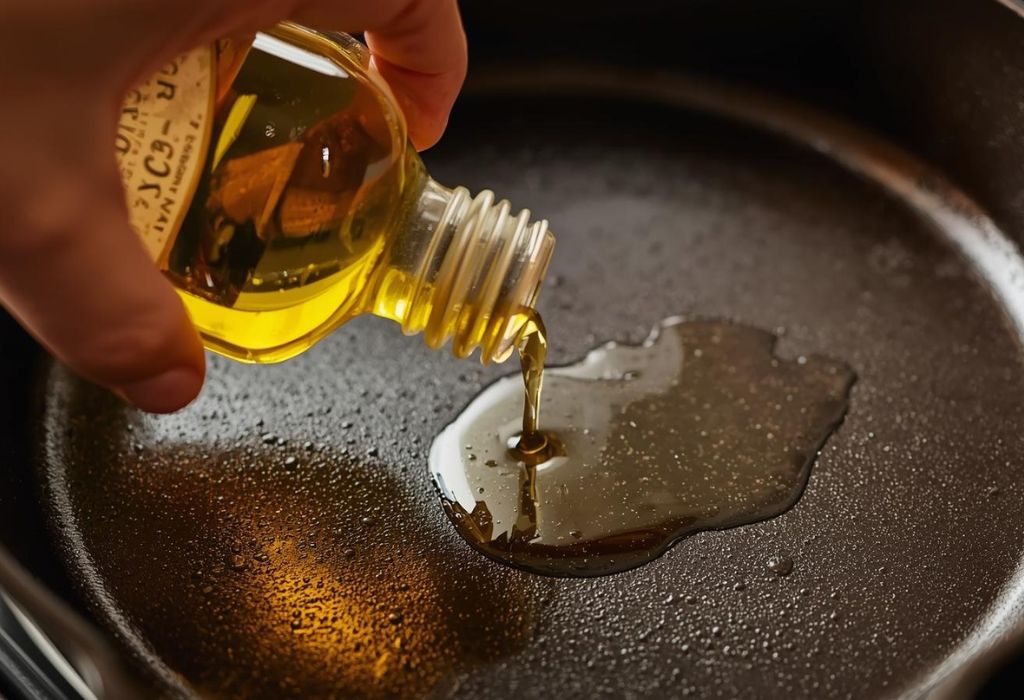
Not every oil is created equal when it comes to seasoning cast iron cookware. The choice of oil affects how well the patina bonds, how durable it becomes, and how resistant it is to sticking or rusting.
The most important factor is smoke point. Oils with high smoke points are better for seasoning because they withstand oven temperatures of 450–500°F without breaking down too quickly. Canola, grapeseed, vegetable, and sunflower oils are all reliable options.
Another important factor is polymerization quality. Neutral oils with a simple fat structure tend to polymerize evenly, creating a smooth and hard finish. Shortening and lard have also been used traditionally, producing strong coatings that last.
Some cooks recommend flaxseed oil because it hardens into a durable layer. While effective, it can also flake if applied too thickly or baked incorrectly. This makes it less forgiving than more neutral oils like canola or grapeseed.
Olive oil, though popular for cooking, is not ideal for seasoning. Its lower smoke point and tendency to break down quickly make it prone to sticky finishes. It can be used for cooking once the patina is strong, but not for initial seasoning cycles.
Lodge, one of the most trusted cast iron brands, recommends basic vegetable oil as a dependable choice. Its balance of affordability, availability, and performance makes it suitable for both beginners and seasoned experts.
The right oil is not about choosing the most exotic option. It is about selecting something accessible, affordable, and stable at high heat to ensure the seasoning process is successful every time.
What is the best oil for seasoning cast iron cookware?
Canola or grapeseed oil are considered the most reliable due to high smoke points.
Is flaxseed oil the top choice?
It works but can be fragile. Many cooks prefer neutral oils for consistent results.
Can shortening or lard be used?
Yes, both create strong coatings and have been used in traditional seasoning methods.
Why avoid olive oil for seasoning?
Its low smoke point can lead to sticky surfaces and uneven layers.
Does the oil choice affect food flavor?
No, once polymerized, the oil becomes a hardened layer and does not affect taste.
Pro Tips to Build a Slick, Durable Patina
Seasoning cast iron cookware is about more than just following basic steps. The difference between a dull surface and a glossy, restaurant-quality patina often comes down to technique. A few professional tips can accelerate the process and create results that last for decades.
The first tip is to apply extremely thin layers of oil. Excess oil leads to sticky residue, while paper-thin coats bond evenly and form a hard finish. A good rule is to wipe the skillet until it looks nearly dry before baking.
Another tip is to repeat seasoning cycles instead of relying on one coat. Two or three rounds of oiling and baking create a stronger foundation, while cooking fatty foods afterward continues to build layers naturally.
Heat is also critical. Higher oven temperatures between 450–500°F ensure that oils polymerize completely. Allowing the pan to cool slowly in the oven prevents flaking and creates a uniform surface.
Early cooking choices also influence the patina. Frying bacon, searing steaks, or roasting vegetables with a touch of oil can all reinforce the layer. Avoid simmering acidic sauces until the patina has matured, as acids can strip away fresh seasoning.
Finally, patience pays off. A glossy, durable finish does not appear after one session. It develops gradually through repeated use and proper care, turning cast iron cookware into a prized tool that only improves with age.
Why use very thin layers of oil?
Thin coats bond evenly, while thick coats stay sticky and peel.
How many seasoning cycles are ideal?
Two or three initial cycles give the best base for long-term durability.
Does higher heat make seasoning stronger?
Yes, baking at 450–500°F ensures the oil fully polymerizes.
Can everyday cooking help build the patina?
Yes, cooking fatty foods naturally strengthens the nonstick layer.
Why avoid acidic foods early on?
Acids can break down new seasoning before it has hardened fully.
Cleaning Myths and What Actually Works
Few topics around cast iron cookware create more debate than cleaning. For generations, myths have circulated about what should never touch a skillet, leading many cooks to hesitate when it comes time to wash their pans.
One of the most common myths is that soap will ruin seasoning. This belief dates back to a time when soaps contained harsh lye that could strip oils. Modern dish soaps are mild and do not harm the polymerized oil layer.
Another misconception is that water alone is safe if the pan is soaked. Extended soaking is one of the fastest ways to invite rust, since bare iron reacts quickly to moisture. Quick rinses are safe, but prolonged exposure is not.
Some cooks insist that only salt scrubs can clean cast iron. While kosher salt works well as a gentle abrasive for stuck-on bits, it is not the only method. Warm water and a soft scrubber can be equally effective without damaging the patina.
Chainmail scrubbers are another debated tool. They can be used safely as long as the pan is dried and re-oiled afterward. The key is to avoid aggressive scouring that strips down to bare metal.
Paper towel storage is often overlooked but effective. Placing a folded paper towel inside a skillet prevents trapped moisture and keeps pans stacked without scratching. This simple step reduces the risk of rust during storage.
Understanding what actually works clears the confusion. Cast iron cookware is durable, and the seasoning layer is stronger than many believe. With the right habits, cleaning becomes simple, quick, and worry-free.
Does soap remove cast iron seasoning?
No, modern soaps are safe and do not strip the hardened patina.
Can cast iron be soaked in water?
No, soaking promotes rust. Rinse quickly and dry immediately.
Is kosher salt the only cleaning method?
No, warm water and gentle scrubbing are equally effective.
Are chainmail scrubbers safe to use?
Yes, if followed by proper drying and a light oiling.
How can pans be stored safely?
Use a paper towel between stacked pans to reduce moisture and scratches.
Reseasoning Schedule and Long-Term Care
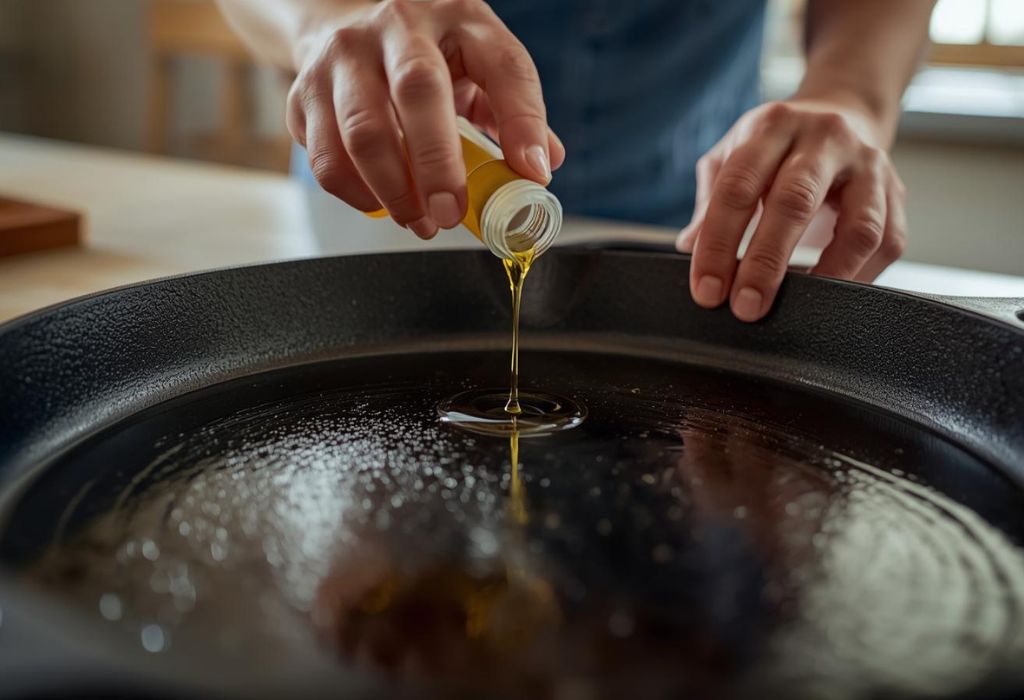
Even the best seasoning will not last forever without attention. Over time, daily cooking and cleaning gradually wear the patina, leaving dull spots or sticky patches that signal it is time to reseason.
There is no fixed schedule for reseasoning cast iron cookware. Instead, the condition of the pan determines when it needs refreshing. Signs include food sticking more than usual, visible rust freckles, or faded gray areas replacing the dark finish.
For many home cooks, reseasoning two or three times a year is enough. Frequent use with fatty foods can reduce the need, while heavy cleaning or exposure to moisture may increase it. The key is to act quickly when problems appear.
When reseasoning is needed, the process mirrors the initial seasoning steps. Wash the pan, dry thoroughly, apply a thin coat of oil, and bake it upside down at 450–500°F for an hour. Allow it to cool in the oven before storing.
Long-term care also includes smart storage practices. Cast iron should always be stored dry and lightly oiled to prevent rust. Using paper towels between stacked pans protects both the seasoning and the cooking surface.
Avoid storing cast iron with lids sealed tightly. Trapped moisture can corrode the surface over time. Instead, keep lids ajar or separate during storage to maintain airflow.
Proper long-term care means seasoning rarely needs a full reset. With consistent maintenance, a skillet can last generations, becoming smoother and stronger with every use.
How often should cast iron be reseasoned?
Reseason when food begins to stick, rust spots appear, or the finish looks dull.
Does frequent use reduce the need for reseasoning?
Yes, regular cooking with oils and fats naturally strengthens the patina.
What storage practices prevent rust?
Keep pans dry, lightly oiled, and store with airflow to avoid trapped moisture.
Do lids cause problems in storage?
Yes, sealed lids can trap humidity. Store them slightly ajar or off the pan.
Is stripping necessary before reseasoning?
No, stripping is only needed if heavy rust or flaking is present.
Quick Reference — The 90-Minute Rust-to-Ready Rescue
Sometimes cast iron cookware needs to be restored quickly. Light rust, sticky residue, or patchy seasoning can make a skillet frustrating to use, but the solution does not always require a full weekend project. With the right steps, a pan can be revived in under 90 minutes.
The first step is to scrub away any visible rust or sticky spots. A steel wool pad, chainmail scrubber, or coarse salt mixed with water works well for surface problems. The goal is to reach clean iron without damaging the pan.
Once the rust or residue is gone, the pan should be washed in warm, soapy water. This removes loose particles and any oils that may interfere with reseasoning. After washing, the cookware must be dried immediately over heat to prevent new rust from forming.
The next step is applying a thin layer of oil. Canola, grapeseed, or vegetable oil are reliable options because of their high smoke points. Wipe the oil until the surface looks almost dry to prevent tacky buildup.
Place the pan upside down in a preheated oven set to 450–500°F. Bake for one hour, allowing the oil to polymerize and bond with the iron. Keep a sheet of foil on the lower rack to catch drips and avoid smoke buildup.
After the cycle ends, leave the pan inside the oven until it cools naturally. This cooling period allows the seasoning to harden into a smooth, durable patina. At this stage, the skillet is rust-free, sealed, and ready for cooking again.
This fast method restores functionality without stripping down to bare metal. It is ideal for busy kitchens where cast iron cookware needs to return to service the same day.
Can rust be removed in less than two hours?
Yes, light rust can be scrubbed away and reseasoned in about 90 minutes.
Is one seasoning cycle enough?
For minor issues, one cycle restores performance, though more layers improve durability.
What oil works best for fast restoration?
Canola or grapeseed oil provide reliable seasoning at high heat.
Does this process work for sticky residue too?
Yes, scrubbing and a single bake remove stickiness as effectively as rust.
Is the pan safe to cook with immediately?
Yes, once cleaned, dried, and reseasoned, the skillet is safe for use the same day.
Conclusion
Seasoning is the foundation of cast iron cookware care. A properly seasoned pan not only resists rust but also develops a slick surface that makes cooking easier and more enjoyable.
The process is simple yet powerful: wash, dry thoroughly, apply a thin layer of oil, and bake at high heat. With consistent care, this cycle creates a strong patina that transforms raw iron into a reliable cooking tool.
Daily habits such as cleaning while warm, drying completely, and applying a light coat of oil protect the seasoning layer. These small steps prevent common issues like rust, stickiness, or patchy spots before they start.
When problems do appear, they can be resolved quickly. Light rust, uneven coating, or gummy surfaces can all be restored with scrubbing, thin oiling, and a high-heat oven cycle. Even neglected pans can be revived and brought back to life.
Choosing the right oil, cooking fatty foods early on, and avoiding acidic dishes until the patina matures all help build a durable nonstick finish. Over time, each meal strengthens the protective layer, making the cookware more dependable with every use.
Learning how to season cast iron cookware is more than maintenance. It is a way to create a kitchen tool that grows better with age and can be passed from one generation to the next.
Start the seasoning process today, and enjoy cast iron cookware that lasts a lifetime while delivering exceptional flavor and performance in every dish.

I’m Emma J. Caldwell, the founder, lead writer, and home-cooking enthusiast behind KitchenGuideCo.com. With a background in culinary arts and over a decade of cooking experience in both professional and personal kitchens, I created this platform to demystify recipes, offer smart kitchen gadget reviews, and guide readers through meal prep with confidence and clarity.