A favorite stainless steel pan often starts with a mirror-like shine and flawless surface.
After a few rushed dinners, it may look dull, spotted, and harder to clean than expected.
Food sticking, rainbow discoloration, and burnt stains are common frustrations.
These problems are rarely signs of poor quality but rather of skipped care and small mistakes.
Curiosity arises when some pans keep their shine for decades while others lose their appeal in months.
The difference lies in consistent routines and simple methods proven to protect the steel’s surface.
Stainless steel remains one of the most durable cookware choices in kitchens worldwide.
Global sales of stainless cookware are projected to surpass $3.5 billion by 2030 as demand for long-lasting pans continues to grow (source).
Yet durability does not mean indestructibility.
The chromium oxide layer that prevents rust can weaken if exposed to harsh cleaners, long soaks, or improper use.
Surveys show that over 40% of home cooks struggle with food sticking to stainless pans, leading to premature replacement and wasted money (source).
This highlights why learning how to take care of stainless steel cookware is both practical and cost-effective.
The good news is that maintenance does not require expensive products or complicated steps.
With the right habits, cookware can stay bright, resist stains, and perform like new for years.
What Stainless Steel Cookware Is and Why Care Matters

Stainless steel cookware is built to handle high heat, resist rust, and provide consistent cooking results.
Its strength comes from the blend of chromium and nickel that forms a protective surface against corrosion.
Understanding what makes these pans durable explains why care is still essential.
The protective oxide layer can be weakened by poor cleaning methods or harsh chemicals.
Shiny pans are not just about appearance.
Properly maintained cookware ensures even heating, better flavor release, and decades of reliable service.
Investing in stainless steel is a long-term choice.
Learning how to take care of stainless steel cookware keeps that investment safe from premature wear.
What does 18/10 mean in stainless steel cookware?
It refers to 18% chromium and 10% nickel, which create shine and strong resistance to rust.
Why do stainless steel pans show rainbow colors?
Heat changes the oxide layer on the surface, leaving rainbow discoloration that is harmless but removable with vinegar.
Is stainless steel naturally nonstick?
No, but proper preheating and oiling help food release more easily.
How long can stainless steel cookware last?
With correct care, stainless steel pans can last for decades without losing performance.
Does stainless steel react with food?
High-quality stainless is non-reactive, so it will not alter flavors or leach into meals.
The Daily Routine: How to Take Care of Stainless Steel Cookware
Daily habits make the biggest difference in keeping stainless steel cookware looking new.
A consistent routine removes residue before it hardens and prevents long-term damage.
After cooking, rinse the pan with warm water while it is still slightly hot.
This helps loosen food particles and reduces the chance of stubborn stains.
Use mild dish soap and a soft sponge to wash thoroughly.
Avoid harsh scrubbers or bleach, which can scratch or corrode the surface.
Once cleaned, dry the pan immediately with a towel.
This step prevents water spots and preserves the natural shine of the steel.
By repeating this simple routine, stainless steel cookware maintains performance and appearance.
Skipping these small steps often leads to discoloration, film buildup, and dull finishes.
Can stainless steel cookware go in the dishwasher?
Yes, but handwashing is strongly recommended to protect shine and reduce spotting.
What type of sponge should be used for cleaning?
Always choose a non-abrasive sponge or soft cloth to avoid scratching the surface.
Do I need special soap for stainless steel?
No, regular mild dish soap works perfectly for daily cleaning.
How do I prevent water spots on cookware?
Dry immediately after washing or wipe with a vinegar solution if spots appear.
Is soaking overnight safe?
Short soaking is fine, but long soaks in salty or acidic water can cause pitting.
Cooking Technique That Prevents Sticking and Stains

Good cooking habits are just as important as cleaning routines.
The right technique keeps food from sticking and makes pans easier to wash.
Preheat the pan before adding oil or butter.
A hot surface creates a natural barrier that prevents food from bonding to the steel.
Wait until the oil shimmers before placing food in the pan.
This ensures even searing and reduces stubborn residue.
Avoid overcrowding, which lowers the temperature and causes sticking.
Cook in batches when needed to keep heat consistent.
Moderate heat levels are best for stainless steel cookware.
Excessive high heat can burn oil, discolor the surface, and shorten the pan’s life.
Why does food stick to stainless steel cookware?
Food sticks when the pan is too cool or overcrowded, which interrupts even heating.
Is cooking spray safe for stainless steel?
It is not recommended, as sprays can leave a residue that discolors the surface.
Should stainless steel cookware be seasoned like cast iron?
Seasoning is optional; proper preheating and oiling are more effective for release.
What is the best heat setting for stainless steel?
Medium to medium-high heat is ideal, avoiding extremes that cause burning or rainbow stains.
Does stainless steel work for delicate foods like eggs or fish?
Yes, but only if the pan is properly preheated and lightly oiled.
Quick Fixes After Cooking: Deglaze = Clean + Flavor
Deglazing is more than a cooking trick.
It also works as one of the fastest cleaning methods for stainless steel cookware.
When food leaves browned bits stuck to the bottom, add a splash of water, broth, or wine.
Heat loosens the fond, making it easy to lift without scrubbing.
Use a wooden or silicone spatula to scrape gently.
This avoids scratches and saves time compared to soaking.
Deglazing not only cleans but also creates rich sauces.
It turns residue into flavor while keeping the pan spotless.
Making this step part of the routine means less buildup.
It also protects the surface from stains that would otherwise require heavy scrubbing.
Does deglazing damage stainless steel cookware?
No, when done with gentle utensils, it safely cleans without scratching.
What liquids can be used for deglazing?
Water works well, but broth or wine can enhance flavor and cleaning power.
If the pan has cooled, will deglazing still work?
It is best done when the pan is hot; reheat slightly if needed for best results.
Can deglazing replace soaking the pan?
Often yes, since it loosens food before residue hardens.
Is vinegar good for deglazing?
Yes, vinegar can help dissolve tougher residues while also removing light stains.
Deep Cleaning Guide: Step-By-Step Methods
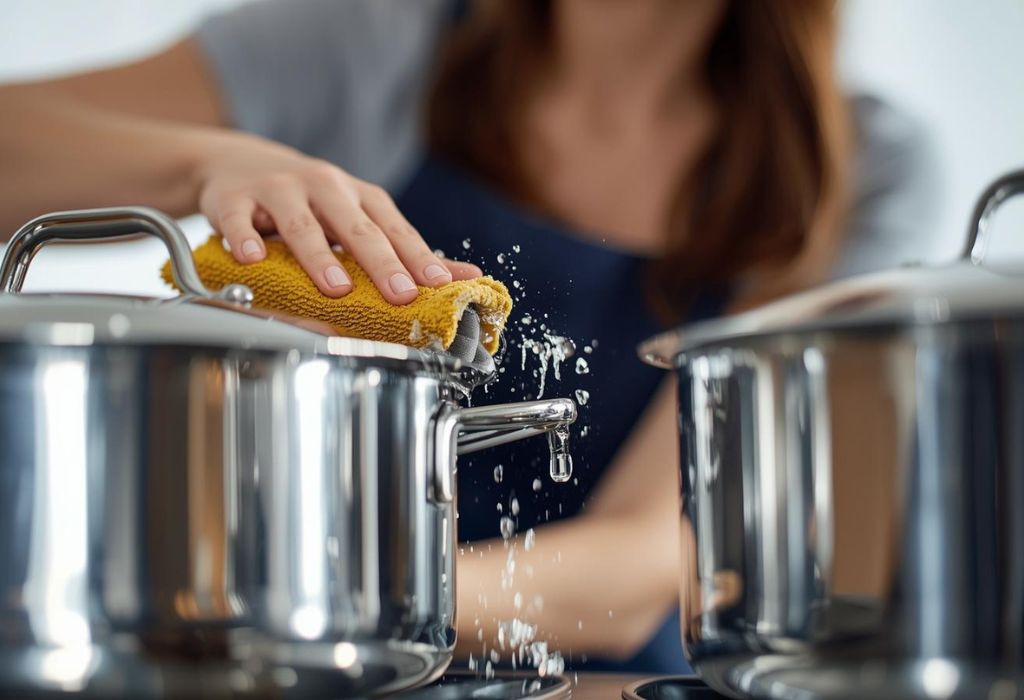
Even with the best habits, stainless steel cookware sometimes needs a deeper clean.
Grease, stains, or discoloration can build up and require stronger methods.
Always start with the gentlest solution first.
This protects the surface while still removing most stains.
Step 1: Baking soda slurry for light stains.
Mix baking soda with water, spread it over the spot, rest briefly, then wipe clean.
Step 2: Vinegar rinse for rainbow discoloration and mineral film.
Pour diluted white vinegar onto the stain, wipe gently, rinse, and dry immediately.
Step 3: Oxalic acid cleanser for heavy discoloration.
Products like Bar Keepers Friend dissolve burnt oil and heat tint with short contact time.
Each method has its purpose, and the right choice depends on the problem.
Avoid harsh abrasives or bleach, as they can damage the protective oxide layer.
How long should Bar Keepers Friend sit on stainless steel cookware?
Apply for about one minute, then rinse thoroughly before it dries.
Is Bar Keepers Friend safe for stainless steel?
Yes, when used as directed, it removes stains without harming the steel.
Can steel wool be used for scrubbing?
Avoid coarse steel wool, which can leave scratches and weaken the surface.
What is the best method for burnt-on grease?
Use a paste of oxalic acid cleanser or boil water with baking soda before wiping.
Does vinegar damage stainless steel cookware?
No, diluted vinegar is safe and effective for discoloration and mineral film removal.
Removing Common Issues the Right Way
Stainless steel cookware can develop several common problems.
Each issue has a simple solution when the right method is used.
Rainbow or heat tint appears after cooking on high heat.
A quick vinegar wipe removes the discoloration and restores shine.
White spots or chalky film come from hard water.
These dissolve easily with a vinegar rinse followed by a soft towel dry.
Burnt-on oil and brown stains form when food residues are left too long.
A short application of Bar Keepers Friend or baking soda paste clears them away.
Cloudy or dull finishes are often cosmetic.
Polishing with an oxalic acid cleanser brings back the original luster.
Are rainbow colors on stainless steel cookware harmful?
No, rainbow discoloration is only cosmetic and safe for cooking.
Do hard water spots damage cookware?
No, they only affect appearance and can be removed with vinegar.
Can lemon juice replace vinegar for cleaning?
Yes, lemon juice also dissolves mineral film and leaves a fresh scent.
What removes years of built-up stains?
Regular polishing with Bar Keepers Friend restores shine even on older pans.
Does baking soda scratch stainless steel?
No, baking soda is gentle and safe for scrubbing cookware.
Preventing Pitting and Corrosion (Critical Care)

Stainless steel cookware is resistant to rust, but it is not invincible.
Pitting and corrosion occur when salt or acids attack the protective oxide layer.
One of the most common causes is adding salt to cold water.
Salt crystals settle on the bottom and eat into the steel before dissolving.
To prevent this, always add salt only after the water reaches a boil.
Stir immediately to ensure complete dissolving and protection of the surface.
Avoid leaving acidic foods like tomato sauce or citrus in the pan overnight.
Extended exposure weakens the steel and may leave rough spots.
Drying cookware completely after washing is another crucial step.
Moisture left on the surface encourages tiny pits and dull marks.
What causes pitting in stainless steel cookware most often?
Undissolved salt crystals at the bottom of the pan create tiny holes over time.
Can pitting be repaired once it starts?
No, pitting is permanent damage; pans with deep pits should be replaced.
Does soaking stainless steel cookware overnight cause problems?
Yes, especially in salty or acidic water, which increases corrosion risk.
Is light surface etching the same as pitting?
No, etching is shallow and mostly cosmetic, while pitting leaves deeper craters.
How can corrosion be avoided long-term?
By boiling before salting, avoiding harsh chemicals, and always drying thoroughly.
Storage, Stacking, and Utensils That Protect Your Pans
How stainless steel cookware is stored has a direct impact on its lifespan.
Scratches, dents, and warped edges often come from careless stacking.
Always stack pans with protectors, paper towels, or cloth between them.
This prevents rim-to-rim friction that leaves marks over time.
Hanging stainless steel cookware is another safe option.
It avoids scratches and makes pans easy to access during cooking.
The utensils used daily also determine how long cookware stays smooth.
Wooden, silicone, or nylon tools are best for preserving the surface.
Metal utensils are not completely forbidden but increase the risk of micro-scratches.
Over time, scratches dull the finish and make cleaning harder.
Can stainless steel cookware warp in storage?
Yes, if heavy pans are stacked improperly or dropped, warping can occur.
Are metal utensils safe for stainless steel cookware?
They can be used lightly, but non-metal tools are safer for long-term protection.
Is hanging cookware better than stacking?
Yes, hanging prevents scratches, while stacking requires protectors.
Do stainless steel lids need special care?
Yes, wash and dry edges carefully to prevent mineral buildup around rims.
Can cookware be nested directly without protection?
No, direct nesting often leads to scratches and wear on polished surfaces.
Dishwasher, Bleach, and Other Don’ts
Not every cleaning shortcut is safe for stainless steel cookware.
Some methods cause permanent damage and shorten the lifespan of pans.
Dishwashers are convenient but often leave water spots and detergent film.
Handwashing is always safer for protecting shine and performance.
Bleach and chlorine-based cleaners should never be used.
They corrode the protective surface and can trigger pitting.
Abrasive powders and rough steel wool also cause damage.
They scratch the finish and make future cleaning harder.
Avoid sudden temperature shocks, such as rinsing a hot pan in cold water.
This can warp the base and weaken its bonded layers.
Is it okay to put stainless steel cookware in the dishwasher?
Yes occasionally, but frequent cycles dull the surface and leave mineral spots.
Why should bleach be avoided on stainless steel cookware?
Bleach attacks the steel, causing corrosion and permanent surface damage.
Are abrasive cleaners safe?
Only specialized cleaners like Bar Keepers Friend should be used for polishing.
Can oven cleaner be used on burnt pans?
No, oven cleaners are too harsh and can damage the cookware permanently.
Does thermal shock harm stainless steel?
Yes, sudden cooling can warp the base and reduce cooking performance.
Pro-Level Shine Routine (Monthly or As Needed)

Even with good daily care, stainless steel cookware benefits from a deeper polish.
This routine restores brilliance and removes lingering stains.
Apply a gentle cleanser like Bar Keepers Friend as a paste.
Rub lightly for one minute, rinse thoroughly, and dry with a soft towel.
Polishing the exterior keeps the cookware looking professional and new.
It also prevents buildup that dulls the steel over time.
For lighter care, products like Bon Ami or baking soda also work well.
They refresh the surface without stripping the protective oxide layer.
Repeating this shine routine once or twice a month keeps pans looking their best.
It also ensures cooking performance remains consistent for years.
How often should stainless steel cookware be polished?
Every few weeks or after heavy discoloration to maintain shine.
Is Bar Keepers Friend safe for regular use?
Yes, when used properly with short contact times and rinsing.
Can Bon Ami replace Bar Keepers Friend?
Yes, it is a gentle alternative for light cleaning and polishing.
Will polishing remove manufacturer logos or markings?
No, if used lightly; avoid heavy scrubbing on stamped areas.
Do I need to season the pan again after polishing?
No, stainless steel does not require seasoning like cast iron.
When to Replace a Stainless Steel Pan
Stainless steel cookware is built for decades of use.
However, some types of damage mean it is time to replace the pan.
Warping is one clear sign.
A warped base does not sit flat, leading to uneven cooking and wasted energy.
Delamination is another problem.
When layers of a tri-ply or multi-ply base separate, heat distribution becomes unsafe and unreliable.
Deep pitting also signals the end of a pan’s life.
Unlike surface stains, pits grow worse over time and cannot be repaired.
Loose handles or rivets may be fixable.
But if they continue to loosen after repairs, replacement is the safest choice.
Cosmetic discoloration, scratches, or rainbow stains are not reasons to discard cookware.
These issues can be polished away and do not affect cooking performance.
What is delamination in stainless steel cookware?
It is when the bonded layers in the base separate, reducing safety and performance.
Can warped pans be fixed at home?
No, once warped, the steel cannot be flattened back to its original shape.
Are scratches a reason to replace stainless steel cookware?
No, scratches are cosmetic and rarely affect function.
Is rust on stainless steel cookware repairable?
Small rust spots can be removed, but widespread rust means replacement.
When is discoloration considered serious?
Only if it comes with pitting or warping; color alone is harmless.
How to Take Care of Stainless Steel Cookware on Day One
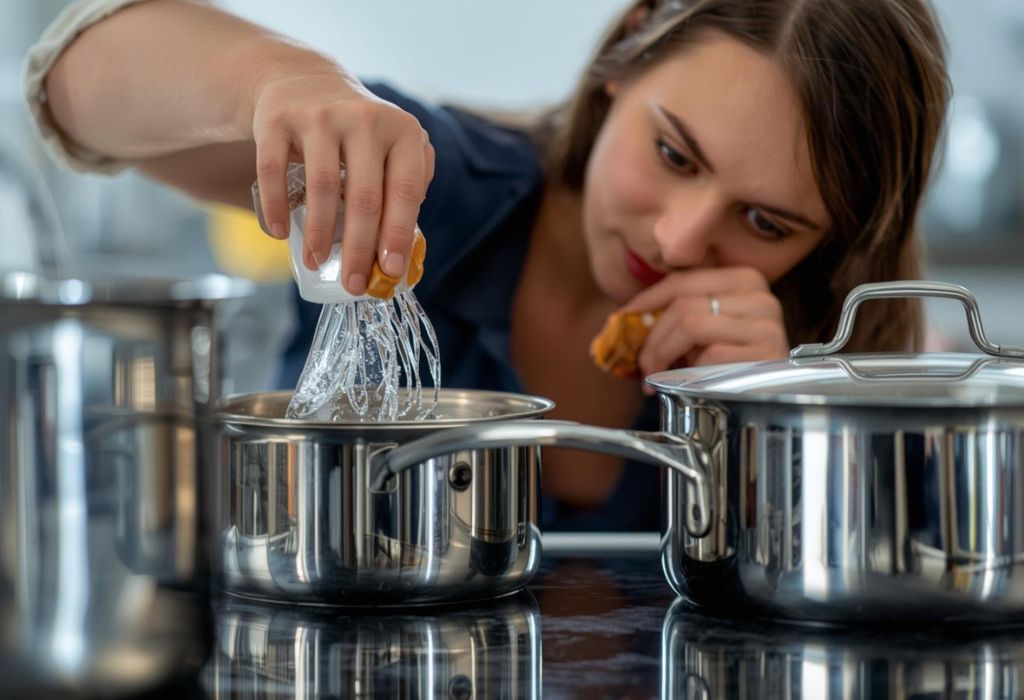
The first day of use sets the foundation for years of performance.
Simple preparation steps protect the surface and make cooking easier.
Start by washing the new pan with warm water and mild dish soap.
This removes factory oils and residue left from production.
Dry the cookware completely with a soft towel.
Moisture left on the surface may cause water spots or dullness.
Perform a quick “water bead test” before cooking.
Drop water onto a preheated pan; if beads form and dance, it is ready for oil and food.
For those who prefer extra release, a light seasoning can be applied.
Heat the pan, add a thin layer of neutral oil, and wipe away excess.
Following these steps ensures stainless steel cookware starts strong.
Early care prevents problems and builds good cooking habits immediately.
Do new stainless steel pans need seasoning?
Seasoning is optional; proper preheating and oiling are usually enough.
What type of oil works best on day one?
Neutral oils with high smoke points, such as canola or grapeseed, are ideal.
Should new cookware be washed before use?
Yes, always wash to remove any factory residues before cooking.
Does seasoning turn stainless steel nonstick?
It adds some release, but stainless steel will never be fully nonstick.
Can improper first use damage cookware?
Yes, overheating or using harsh cleaners early can dull the finish quickly.
Troubleshooting: Fast Answers for Common Situations
Even with good care, stainless steel cookware sometimes develops frustrating issues.
Most of these problems have quick and effective solutions.
Burnt milk rings can be stubborn.
Simmer water with baking soda in the pan, then wipe clean once cooled.
Blue or brown discoloration often comes from overheating.
A short vinegar soak removes the tint and restores shine.
Cloudy exteriors may appear after repeated washing.
Polish lightly with Bar Keepers Friend for a brighter finish.
Sticky eggs or fish usually mean the pan was not hot enough.
Preheat properly and wait for oil to shimmer before cooking.
Rust specks may form if the pan was left wet or exposed to chlorine.
Clean with a gentle cleanser and always dry completely after washing.
Why do eggs stick to stainless steel cookware every time?
Because the pan was too cool or the oil was added before it shimmered.
How can rust spots be prevented in the future?
By handwashing, drying fully, and avoiding chlorine-based cleaners.
What is the best fix for a burnt-on stain?
Simmer water with baking soda or apply an oxalic acid cleanser.
Why does stainless steel look dull after cleaning?
Mineral buildup or detergent film can dull the shine; polish restores brightness.
Can vinegar remove all discoloration?
Yes, diluted vinegar works for most rainbow or heat stains on stainless steel.
Conclusion
Stainless steel cookware rewards care with decades of reliable performance.
Simple routines and smart habits make the difference between frustration and satisfaction.
Daily handwashing, quick drying, and proper preheating prevent most problems.
Periodic polishing and gentle cleaners restore shine and keep the surface smooth.
Avoiding harsh chemicals, thermal shock, and long soaks protects against pitting.
Safe storage and the right utensils ensure cookware stays strong for years.
Learning how to take care of stainless steel cookware is not complicated.
It is about consistency, small details, and respect for the material.
With these methods, every pan stays bright, food releases with ease, and cooking becomes more enjoyable.
Care today creates confidence in every meal tomorrow.

I’m Emma J. Caldwell, the founder, lead writer, and home-cooking enthusiast behind KitchenGuideCo.com. With a background in culinary arts and over a decade of cooking experience in both professional and personal kitchens, I created this platform to demystify recipes, offer smart kitchen gadget reviews, and guide readers through meal prep with confidence and clarity.