Ceramic cookware is often sold as the perfect combination of beauty, safety, and performance. Its glossy, smooth surface makes food slide effortlessly, while the vibrant colors brighten any kitchen.
But many cooks discover too soon that the shine fades, the nonstick coating weakens, and scratches appear where none should be.
This experience raises an important question: is the problem with the cookware itself, or the way it is cleaned? The truth is that ceramic cookware requires special care, and the cleaning routine used for stainless steel or cast iron often does more harm than good.
Improper cleaning is one of the top reasons ceramic cookware loses its nonstick ability early. Metal utensils, abrasive scrubbers, and dishwashers can destroy the delicate coating in weeks instead of years. Once scratches appear, food begins to cling, and the cookware becomes frustrating to use.
Statistics support this issue. Consumer Reports testing revealed that about 30% of nonstick pans lose their effectiveness within the first year of use when mishandled (source). Ceramic cookware, being more brittle than PTFE-based coatings, is even more vulnerable if not cleaned correctly.
Health and safety concerns also come into play. According to the National Library of Medicine, damaged coatings can leach particles or expose underlying metals that may affect food quality (source).
That means scratches and chips are not just cosmetic—they can impact both performance and safety.
The good news is that ceramic cookware can last for years with the right cleaning methods. Simple changes in daily habits, like allowing pans to cool before washing or using baking soda instead of harsh chemicals, can dramatically extend the life of the coating.
What Is Ceramic Cookware & Why Is It Prone to Scratches?

Ceramic cookware refers to pots and pans coated with a nonstick ceramic finish made from silica or sol-gel materials. This glossy coating is applied over a metal base such as aluminum or stainless steel.
Unlike traditional PTFE nonstick coatings, ceramic is free from PFAS, PFOA, and other synthetic chemicals. This makes it popular among buyers seeking safer and eco-friendly cookware.
However, ceramic is naturally more brittle than polymer-based coatings. The surface can chip, scratch, or lose its smoothness if handled without care.
High heat and abrasive cleaning tools speed up surface wear. Once the coating is damaged, food begins to stick and the pan becomes harder to clean.
Q: What exactly is ceramic cookware?
A: Cookware with a silica-based nonstick coating over a metal base.
Q: How is ceramic coating different from PTFE nonstick?
A: Ceramic uses mineral-based layers, while PTFE is a synthetic polymer.
Q: Why does ceramic cookware scratch more easily?
A: The ceramic layer is hard but brittle, so abrasives and metal tools cause surface damage.
Q: Does heat exposure increase the risk of scratches?
A: Yes, overheating weakens the coating, making it more vulnerable to scratches.
Q: Can scratches affect nonstick performance?
A: Even small scratches reduce food release and shorten the lifespan of the cookware.
Common Mistakes That Cause Scratches & Damage
Many ceramic pans lose their nonstick ability not from age but from poor cleaning habits. Simple mistakes during washing or cooking can cause scratches that ruin the surface.
One of the biggest errors is using metal utensils. Even a single scrape from a fork or knife can leave lasting marks.
Another common mistake is cleaning while the cookware is still hot. Sudden cooling creates thermal shock that weakens the ceramic coating.
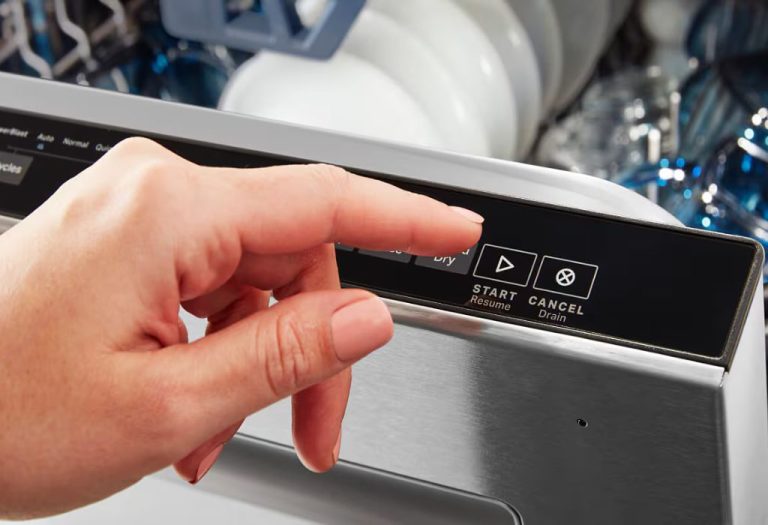
Dishwashers also shorten the lifespan of ceramic pans. Harsh detergents and high water pressure damage the delicate surface over time.
Stacking cookware without protection is another silent destroyer. The friction between pans chips and scratches the coating.
Q: Is using metal utensils safe on ceramic cookware?
A: No, metal utensils quickly scratch or chip the nonstick coating.
Q: Can washing hot cookware cause damage?
A: Yes, rapid cooling creates cracks and weakens the ceramic layer.
Q: Does putting ceramic cookware in the dishwasher harm it?
A: Yes, dishwashers use strong detergents and heat that erode the coating.
Q: Why should abrasive scrubbers be avoided?
A: Abrasive pads leave micro-scratches that build up and ruin the surface.
Q: Is stacking pans without separators a bad idea?
A: Yes, stacking causes friction that chips or scratches the coating.
Essential Tools & Supplies for Scratch-Free Cleaning
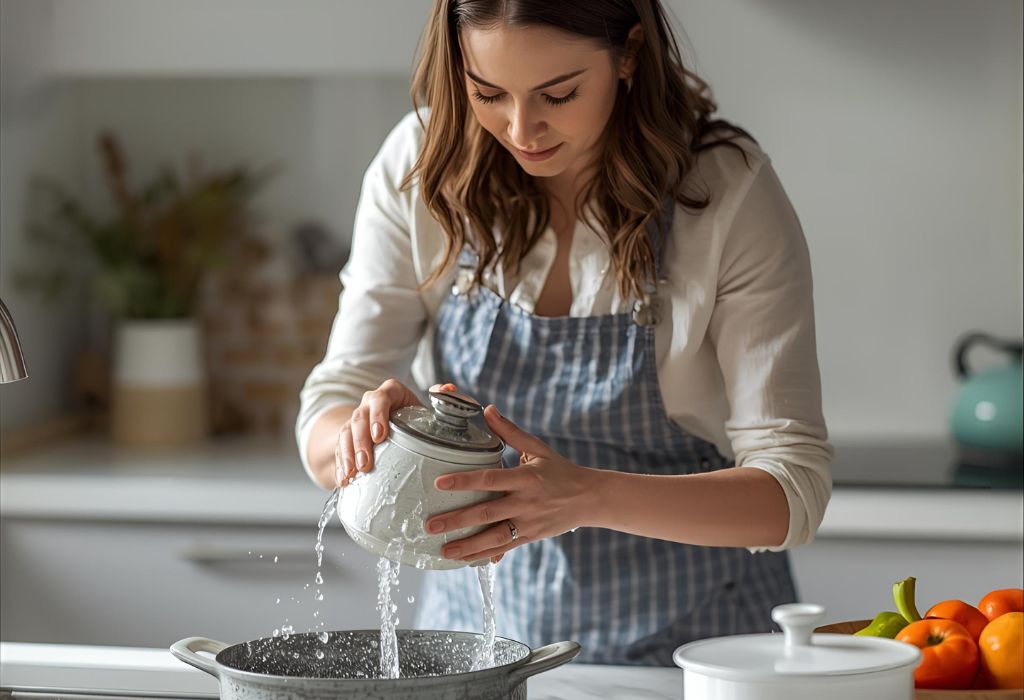
Cleaning ceramic cookware requires gentle tools designed to protect the coating. The right supplies ensure stains are removed without leaving scratches.
Soft sponges or microfiber cloths are the safest options. They lift residue without harming the nonstick surface.
Mild dish soap is another essential. Strong detergents are unnecessary and can erode the coating over time.
For tougher stains, natural cleaners like baking soda and white vinegar are highly effective. These common ingredients remove burnt-on food without harsh abrasion.
Hydrogen peroxide can also help restore shine. It is useful for lightening discoloration on both the interior and exterior.
Q: What cleaning tools are safest for ceramic cookware?
A: Soft sponges, dishcloths, or microfiber cloths work best.
Q: Which cleaning agents should be used daily?
A: Mild dish soap and warm water are sufficient for regular washing.
Q: Can baking soda clean tough stains?
A: Yes, baking soda paste removes stuck-on food gently and effectively.
Q: Is vinegar safe for ceramic cookware?
A: Yes, white vinegar helps loosen residue and reduce discoloration.
Q: Should harsh cleaners or bleach be used?
A: No, they damage the ceramic coating and shorten the pan’s lifespan.
Step-By-Step Routine for Daily Cleaning
Ceramic cookware lasts longer when cleaned gently after every use. A simple daily routine protects the coating and prevents scratches.
Always allow the pan to cool completely before washing. Sudden temperature changes can weaken or crack the ceramic surface.
Use warm water with mild dish soap. A soft sponge or microfiber cloth should be used instead of abrasive scrubbers.
If food sticks, soak the cookware briefly in soapy water. This loosens residue without harsh scrubbing.
After cleaning, rinse thoroughly and dry with a soft towel. Moisture left on the surface may cause stains or mineral buildup.
Q: What is the first step in cleaning ceramic cookware?
A: Let the pan cool completely before washing.
Q: How should ceramic cookware be washed daily?
A: Use mild dish soap, warm water, and a soft sponge.
Q: Is soaking safe for ceramic pans?
A: Yes, short soaking helps loosen residue, but avoid leaving it overnight.
Q: How should the pan be dried?
A: Towel dry or air dry thoroughly to prevent stains.
Q: Can cooking sprays affect daily cleaning?
A: Yes, aerosol sprays leave sticky residue that is hard to remove.
Deep Cleaning for Burnt, Stained or Discolored Ceramic Cookware
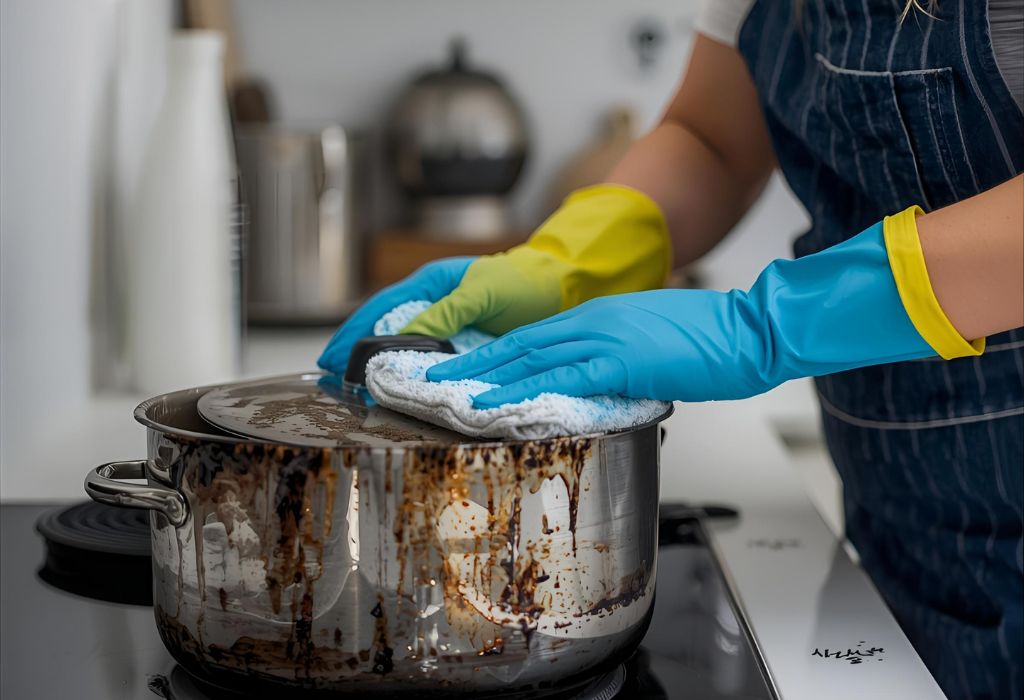
Even with proper care, ceramic cookware may develop stubborn stains or burnt-on residue. Deep cleaning helps restore the surface without scratches.
The safest approach is to soak the pan in warm soapy water. Gentle simmering of water inside the pan can also loosen stuck food.
For stains, a baking soda paste works effectively. Spread it on the affected area, let it sit, then wipe with a soft sponge.
White vinegar is another natural option. It helps dissolve residue and remove discoloration caused by heat or oils.
Hydrogen peroxide can be used for tough exterior stains. It lightens discoloration without the need for abrasive scrubbing.
Q: How can burnt-on food be removed safely?
A: Fill the pan with warm soapy water, let it soak, or simmer gently before wiping clean.
Q: What is the best method for discoloration?
A: Apply a baking soda paste or soak with white vinegar to restore shine.
Q: Is boiling water safe for deep cleaning?
A: Yes, simmering water loosens tough residue without damaging the coating.
Q: Should abrasive cleaners ever be used?
A: No, they scratch the ceramic coating and reduce nonstick performance.
Q: How often should deep cleaning be done?
A: Only as needed, usually once a month or when stains build up.
Best Practices for Heat, Cooking & Storage to Prevent Damage
Ceramic cookware performs best when used at low to medium heat. High temperatures weaken the coating and cause discoloration.
Oils with higher smoke points, such as avocado or sunflower oil, help protect the nonstick surface. Cooking sprays should be avoided because they leave sticky residue.
Only wood, silicone, or nylon utensils should be used with ceramic pans. Metal utensils can cause permanent scratches in just one use.
Proper storage is also important. Pans should never be stacked directly on top of each other without pan protectors or soft cloth.
Sudden temperature changes shorten cookware life. Pouring cold water into a hot pan creates thermal shock that can crack the coating.
Q: What heat level is safest for ceramic cookware?
A: Low to medium heat preserves the coating and prevents damage.
Q: Do oils help maintain nonstick performance?
A: Yes, using oils with high smoke points reduces sticking and residue.
Q: Which utensils should be used with ceramic cookware?
A: Use wood, silicone, or nylon utensils to avoid scratches.
Q: How should ceramic pans be stored safely?
A: Place protectors or soft cloth between stacked pans to prevent friction damage.
Q: Can sudden temperature changes harm ceramic cookware?
A: Yes, thermal shock can cause cracks or weaken the nonstick surface.
When to Replace or Inspect Ceramic Cookware

Even with the best care, ceramic cookware will eventually wear out. Knowing when to replace it ensures safe and effective cooking.
Deep scratches or chips are the clearest signs of damage. These flaws expose the base material and reduce nonstick performance.
Persistent sticking is another warning. If food continues to cling even after proper cleaning, the coating has likely degraded.
Discoloration alone is usually cosmetic. However, when combined with scratches or peeling, it signals the end of the cookware’s lifespan.
High-quality ceramic pans may last several years, but cheaper options often need replacing within two to three years.
Q: What are the main signs ceramic cookware needs replacing?
A: Deep scratches, chips, peeling, or persistent sticking are clear signs.
Q: Is discoloration alone a reason to replace cookware?
A: No, unless it occurs alongside coating damage or reduced nonstick ability.
Q: Can slightly scratched cookware still be used?
A: Minor scratches are safe but will affect performance; deep ones require replacement.
Q: How long should good ceramic cookware last?
A: With proper care, quality pans last 3–5 years, while budget pans wear out faster.
Q: Do warranties help with premature coating failure?
A: Yes, reputable brands often cover defects and coating deterioration.
Conclusion
Ceramic cookware delivers a beautiful, nonstick surface that makes cooking enjoyable and presentation stylish. Yet the same qualities that make it appealing also demand extra care.
Understanding how to clean ceramic cookware properly is the difference between a pan that fails in months and one that performs for years.
The core principles are simple. Always allow the cookware to cool before washing, use soft sponges and mild soap, and avoid dishwashers and abrasive cleaners.
Natural solutions like baking soda, vinegar, and hydrogen peroxide can handle stains and discoloration without damage.
Cooking practices play just as important a role as cleaning. Limiting heat to low or medium settings, using oils with higher smoke points, and avoiding metal utensils preserve the delicate ceramic layer.
Storage habits also matter, since stacking unprotected pans quickly leads to chips and scratches.
Despite all precautions, no ceramic cookware lasts forever. Scratches, peeling, and persistent sticking are clear signs that replacement is needed.
High-quality brands may last several years, while cheaper options often wear out sooner, but careful maintenance always extends their lifespan.
The benefit of these practices goes beyond convenience. Proper care keeps ceramic cookware safe by reducing the risk of coating degradation or leaching. It also saves money by delaying replacement and ensures a healthier, more enjoyable cooking experience every day.
In the end, ceramic cookware rewards those who treat it with respect. With the right cleaning routine, careful cooking methods, and smart storage, it can remain glossy, nonstick, and reliable.
Think of it not as fragile, but as cookware that thrives with gentle care. Apply these methods consistently, and ceramic pans will continue to deliver the promise that made them so appealing in the first place.

I’m Emma J. Caldwell, the founder, lead writer, and home-cooking enthusiast behind KitchenGuideCo.com. With a background in culinary arts and over a decade of cooking experience in both professional and personal kitchens, I created this platform to demystify recipes, offer smart kitchen gadget reviews, and guide readers through meal prep with confidence and clarity.