You open your dishwasher after a cycle, expecting spotless dishes. Instead, you find a pool of murky, smelly water at the bottom.
This frustrating scenario is a common household headache. It often signals a clogged dishwasher drain.
Drain-related issues account for over 20% of all dishwasher service calls. Knowing how to clean a dishwasher drain is essential maintenance that preserves your appliance.
This guide provides a detailed, step-by-step method to restore your dishwasher’s power. You will also learn proactive habits to prevent future blockages.
Why a Clean Dishwasher Drain is Crucial for Your Kitchen
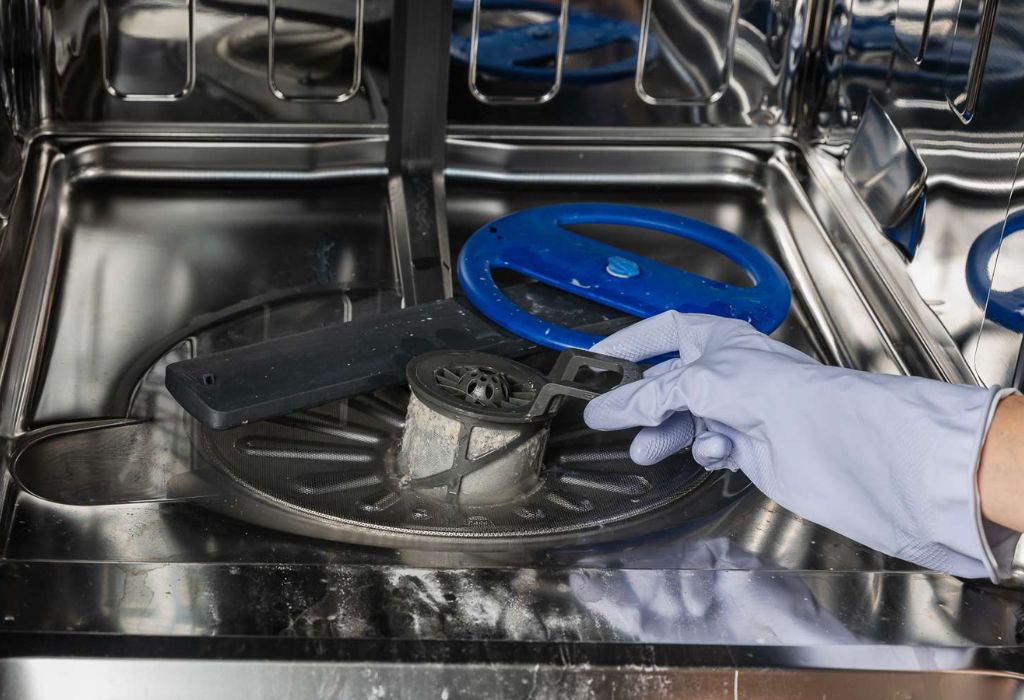
Your dishwasher drain is the exit route for food debris and wastewater. A clear path is vital for a successful cleaning cycle.
A clean drain ensures your appliance runs efficiently. It also guarantees cleaner dishes and better kitchen hygiene.
The Consequences of a Neglected Dishwasher Drain
Ignoring your drain leads to immediate problems like standing water. You will also notice foul odors and poorly cleaned dishes.
Over time, clogs force the drain pump to work harder. This strain can lead to premature failure and costly repairs.
Recognizing the Signs of a Clogged Dishwasher Drain
Watch for standing water at the bottom after a cycle completes. This is the most obvious sign of a blockage.
Listen for unusual gurgling or straining sounds during the drain phase. A persistent foul smell is another clear call to action.
Safety First: Preparing to Clean Your Dishwasher Drain
Always disconnect the appliance from its power source first. This is a non-negotiable step for your safety.
Gather your supplies: gloves, a towel, a bucket, and a flashlight. Having a mild dish soap and a soft-bristled brush is also helpful.
How to Clean Your Dishwasher Drain: A Step-by-Step Guide
Follow these six steps to clear your drain and restore function. Work methodically and carefully to avoid damage.
Step 1: Accessing and Cleaning the Bottom of the Dishwasher
Start by removing the bottom rack to access the dishwasher tub. You will now see the filter assembly and the floor of the appliance.
Wipe away any visible debris from the tub’s floor. Pay special attention to the area around the drain cover.
Step 2: Locating and Removing the Dishwasher Filter
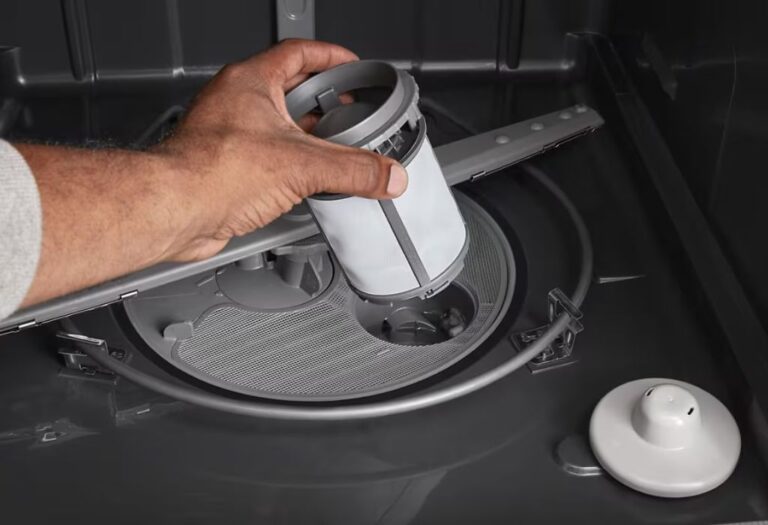
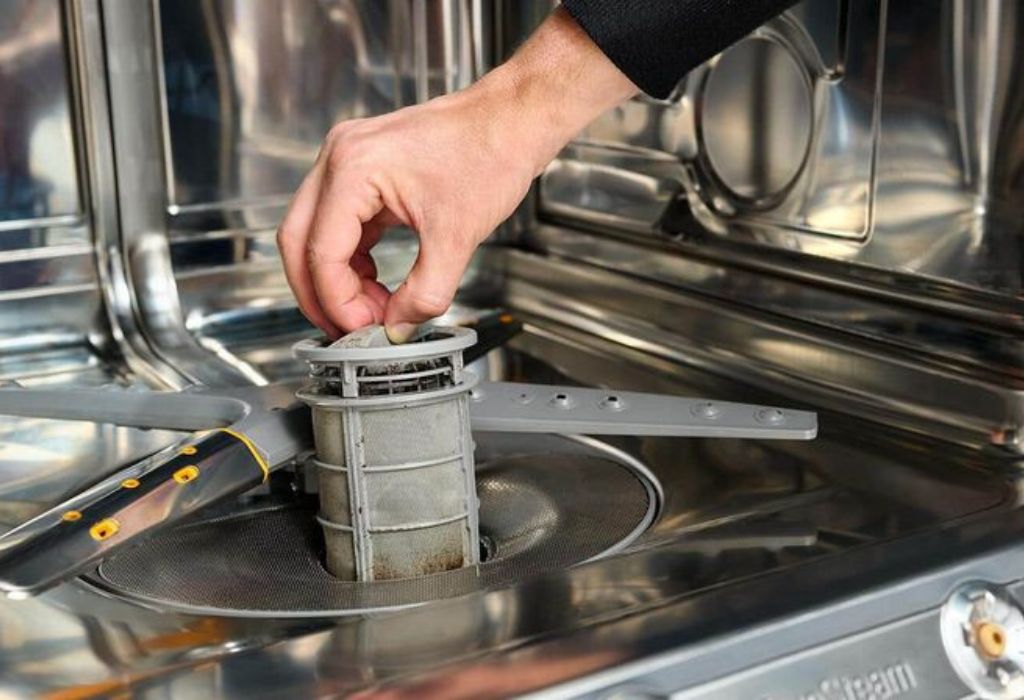
Most modern dishwashers have a twist-and-lock filter assembly in the center. Consult your user manual if you are unsure of your model’s type.
Gently twist the filter counterclockwise to unlock it. Carefully lift the entire filter unit out of its housing.
Step 3: Deep Cleaning the Dishwasher Filter
Rinse the filter unit under warm running water to remove loose particles. This will wash away the majority of the debris.
For greasy, caked-on grime, use a soft brush and mild soap. Scrub all components thoroughly until they are clean.
Step 4: Inspecting and Clearing the Drain Sump and Air Gap
Look into the now-empty drain sump beneath the filter. Remove any large food particles or obstructions you can see by hand.
If your dishwasher has a sink air gap, check it for clogs. Remove the cap and clean it out with a pipe cleaner or small brush.
Step 5: Tackling the Drain Hose (The Advanced Check)
For persistent clogs, check the drain hose. Place a towel and bucket underneath before disconnecting it from the dishwasher.
Run water through the hose or use a plumbing snake to clear it. Reconnect the hose securely once you confirm it is clear.
Step 6: Reassembling and Running a Test Cycle
Carefully place the clean filter back into its housing. Twist it clockwise until it locks securely into place.
Reconnect the dishwasher to power and run a hot water cycle. Adding a cup of vinegar to the bottom will help deodorize and provide a final clean.
Proactive Maintenance: How to Prevent Future Drain Clogs
Scrape and rinse dishes thoroughly before loading them into the dishwasher. This simple habit prevents most debris from entering the drain system.
Run hot water in your kitchen sink before starting the dishwasher. This ensures the wash cycle begins with hot water, which dissolves grease better.
Establish a monthly cleaning routine for the filter. A quarterly deep-clean with vinegar can break down residual grease and odors.
Regular maintenance can extend a dishwasher’s lifespan by up to 3 years. This simple upkeep saves you from the hassle and cost of early replacement.
When to Call a Professional Appliance Repair Technician
If you have followed all the steps and the dishwasher still won’t drain, the problem may be more serious. A faulty drain pump or an electronic control board issue could be the cause.
Listen for a humming or grinding noise from the drain pump area. These sounds often indicate a mechanical failure that needs expert attention.
Professional repairs can resolve complex drain issues in over 90% of cases. Calling a technician can be more cost-effective than attempting a complex self-repair.
Frequently Asked Questions (FAQs) About Cleaning a Dishwasher Drain
How often should I clean my dishwasher drain?
You should rinse the filter every 1-2 weeks. A full deep-clean of the drain system is recommended every 3-6 months.
Can I use chemical drain cleaners in my dishwasher?
No, you should never use chemical drain cleaners in your dishwasher. They are too harsh and can damage internal seals and components.
Why is there standing water in my dishwasher after cleaning the drain?
Persistent standing water indicates a deeper blockage in the hose. It could also mean the drain pump itself is malfunctioning.
Where is the dishwasher drain filter located?
The filter is almost always at the bottom of the dishwasher tub. It is located directly beneath the bottom spray arm.
Is it safe to put baking soda and vinegar in the dishwasher?
Yes, baking soda and vinegar are safe for cleaning your dishwasher. They are an effective natural method to deodorize and break down grime during an empty cycle.
What’s the difference between a fine filter and a coarse filter?
The coarse filter catches large particles like chunks of food. The fine filter traps smaller sediments like grains of rice or seeds.
My dishwasher drain is connected to the garbage disposal. Could that be the problem?
Yes, a clogged garbage disposal can definitely back up into your dishwasher drain line. Always ensure the disposal is clear before diagnosing the dishwasher.
What does a dishwasher drain pump sound like when it’s failing?
You may hear a loud humming sound without any water movement. A grinding noise is another common sign of a mechanical failure.
Can a clogged dishwasher drain cause a leak?
Yes, a severely clogged drain can cause water to back up and overflow. This water can leak from the door seal or the base of the appliance.
Should I see water in the dishwasher drain sump after a cycle?
A small amount of water in the sump is completely normal. This water helps keep the seal lubricated.
What if my dishwasher has a disposable filter?
If your model has a disposable filter, you should simply replace it according to the manufacturer’s instructions. There is no cleaning required.
Can I clean the dishwasher drain with bleach?
It is not recommended, as bleach can corrode metal parts and damage rubber seals over time. Stick with vinegar or dedicated dishwasher cleaning products.
Why does my dishwasher smell like rotten eggs?
A rotten egg smell often points to food trapped in the filter or drain. It can also be caused by a dry P-trap under your sink.
Conclusion
Learning how to clean a dishwasher drain is a simple yet powerful way to maintain your appliance. This skill saves you money and ensures your dishes are consistently clean.
Incorporate this maintenance into your regular home care routine. Your dishwasher will thank you with years of reliable, odor-free service.

I’m Emma J. Caldwell, the founder, lead writer, and home-cooking enthusiast behind KitchenGuideCo.com. With a background in culinary arts and over a decade of cooking experience in both professional and personal kitchens, I created this platform to demystify recipes, offer smart kitchen gadget reviews, and guide readers through meal prep with confidence and clarity.