A favorite Dutch oven often tells the story of countless family meals. Yet, after simmering rich tomato sauces or slow-braising meats, stubborn brown stains and baked-on residue can turn its glossy interior into a frustrating eyesore.
Many home cooks wonder whether those marks are permanent or if harsh scrubbing will damage the surface. The curiosity grows as people search for ways to restore enamel cookware without risking scratches or discoloration.
Statistics show that nearly 63% of home cooks rank easy cleaning and durability as the top features they look for in cookware (Statista).
At the same time, leading brands like Le Creuset confirm that while their enamel cookware is dishwasher safe, hand washing with gentle methods extends its lifespan and preserves its shine (Le Creuset Care Guide).
The good news is that restoring the original luster does not require expensive cleaners or hours of scrubbing. Simple household ingredients like baking soda, vinegar, and hydrogen peroxide can tackle stains effectively when used correctly.
Learning how to clean enamel cookware the right way not only keeps it spotless but also prevents long-term damage from aggressive cleaning methods. With the right approach, even burnt-on residue and discolored interiors can be safely removed, leaving the cookware looking almost new.
How to Clean Enamel Cookware — What Enamel Is and Why Care Matters
Enamel cookware has earned a permanent spot in modern kitchens for its durability, heat retention, and striking appearance. Beneath its smooth, glossy surface lies a metal core, usually cast iron or steel, coated with a layer of porcelain enamel for strength and non-reactivity.
This glass-like coating creates a barrier that prevents acidic foods from touching the metal beneath. It also makes the cookware resistant to rust and much easier to clean compared to traditional uncoated cast iron.
Over time, however, high cooking temperatures, burned-on oils, and improper cleaning tools can leave behind stains or scratches. Understanding how enamel works helps explain why certain cleaning methods keep the surface shiny while others cause irreversible damage.
What is enamel cookware made of?
It is a metal core, often cast iron, fused with a porcelain enamel coating.
Why is enamel cookware popular?
It is durable, retains heat evenly, and does not react with acidic foods.
Why do stains appear on enamel cookware?
High heat, oil residues, and mineral deposits can leave marks over time.
Do stains mean the enamel is damaged?
No, stains are usually cosmetic and do not affect cooking performance.
Why is gentle cleaning important?
Harsh cleaners or sudden temperature changes can weaken or chip the enamel surface.
Prep & Safety Before You Clean
Before learning how to clean enamel cookware effectively, it is important to prepare properly and avoid common mistakes. Simple precautions protect the enamel surface from unnecessary wear and extend the life of the cookware.
The first rule is patience. Placing hot enamel cookware under cold water can cause thermal shock, leading to cracks or chips that cannot be repaired.
Equally important is choosing the right cleaning tools. Soft sponges, nylon brushes, and silicone scrapers are recommended to prevent scratches on the glossy surface.
Manufacturers also advise using mild dish soap or natural cleaners like baking soda instead of harsh chemicals or bleach. These gentle methods remove stains without damaging the protective coating.
Why should enamel cookware cool before cleaning?
Thermal shock from cold water on a hot pot can crack or chip the enamel.
What tools are safe for cleaning enamel cookware?
Soft sponges, nylon brushes, and silicone scrapers prevent scratches.
Are dishwashers safe for enamel cookware?
Yes, but hand washing with mild soap preserves the enamel’s shine longer.
Can bleach be used on enamel cookware?
No, bleach and harsh abrasives can dull or damage the enamel surface.
Should enamel cookware be dried after washing?
Yes, drying prevents water spots and protects exposed metal rims from rust.
Daily Cleaning Routine
Knowing how to clean enamel cookware daily keeps it looking new and prevents stubborn stains from building up over time. A simple routine takes only a few minutes but protects the glossy enamel surface for years.
After cooking, let the cookware cool completely before cleaning. Sudden temperature changes risk thermal shock, which can cause small cracks invisible to the eye but harmful over time.
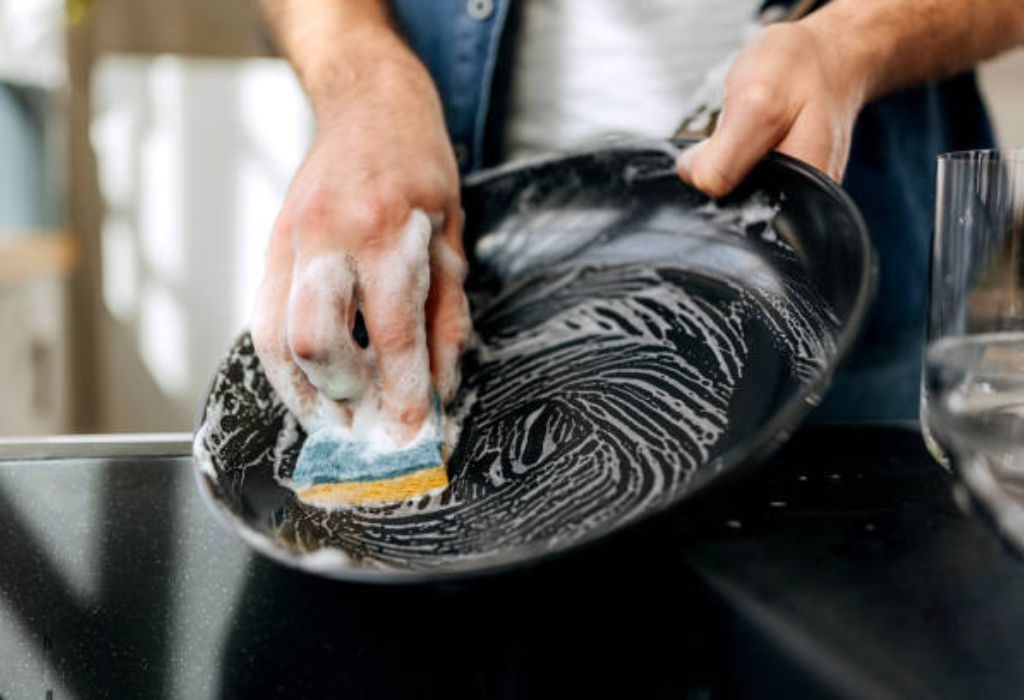
Start by filling the pot with warm water and adding a few drops of mild dish soap. Let it soak for 10–15 minutes to loosen any food particles without scrubbing aggressively.
Use a soft sponge or nylon brush to clean the surface gently. Avoid steel wool, metal scrapers, or abrasive powders that can dull or scratch the enamel finish.
Dry the cookware thoroughly with a soft towel instead of air-drying. This step prevents mineral deposits and rust along the rims or exposed edges.
What is the best way to clean enamel cookware daily?
Soak in warm, soapy water, then clean with a soft sponge or nylon brush.
How long should it soak before cleaning?
About 10–15 minutes helps loosen food residue effectively.
Can metal scrapers be used for tough spots?
No, use silicone or wooden scrapers to protect the enamel surface.
Is air-drying safe for enamel cookware?
No, towel-drying prevents water spots and rust on exposed areas.
Does daily cleaning prevent long-term stains?
Yes, regular cleaning stops grease and food particles from hardening.
Step-by-Step Methods to Remove Stains
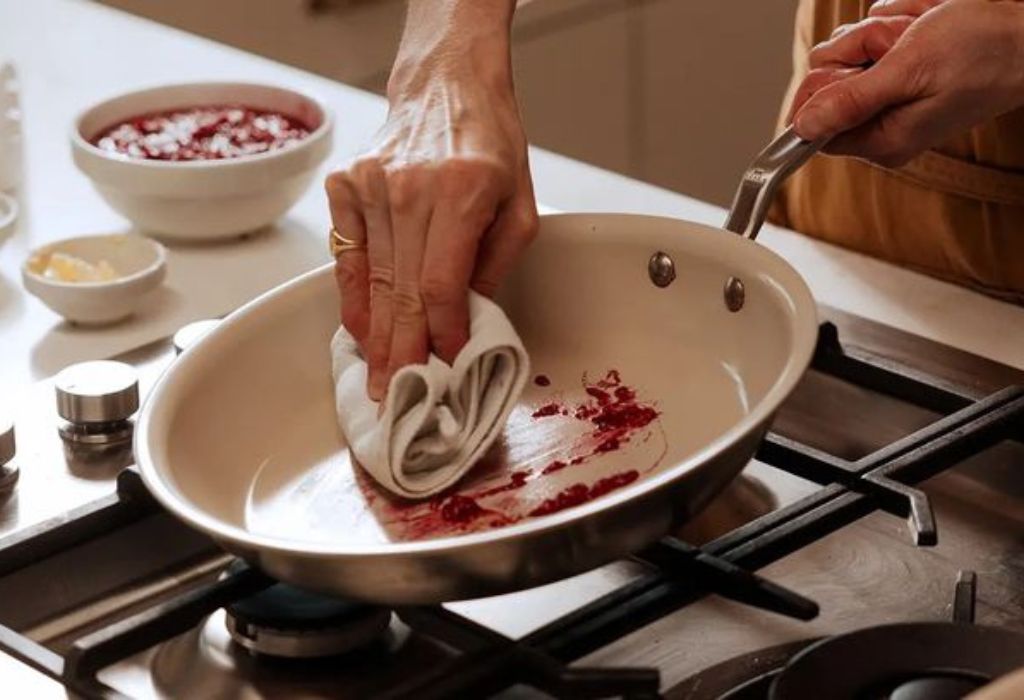
Sometimes daily cleaning is not enough, and tougher stains require a deeper approach. Learning how to clean enamel cookware with the right techniques restores its original shine without risking damage.
The first method is the baking soda simmer. Fill the pot with water, bring it to a gentle simmer, then add a few tablespoons of baking soda. Let it bubble for 10–15 minutes before scrubbing lightly with a soft sponge.
For mineral stains or hard-water deposits, use a vinegar soak. Mix equal parts of water and white vinegar, heat until warm, then let it sit for 30 minutes before rinsing thoroughly.
Stubborn brown marks often respond to a baking soda paste. Apply a thick paste to the stain, let it sit for 15 minutes, then scrub gently with a nylon brush.
The toughest spots may need the hydrogen peroxide method. Simmer a small amount with water and a spoon of baking soda, let it fizz, then rinse well.
What is the safest method for general cleaning?
The baking soda simmer cleans effectively without scratching.
Can vinegar damage the enamel surface?
No, diluted vinegar is safe if rinsed thoroughly afterward.
How often can baking soda paste be used?
As often as needed, since it is gentle and non-abrasive.
Is hydrogen peroxide safe for enamel cookware?
Yes, when used in small amounts and rinsed after cleaning.
Do these methods remove burnt stains completely?
Most stains fade significantly, but extreme cases may need repeating.
Burnt-On, Black, or Caramelized Stains
Burnt-on stains often feel like the end for enamel cookware, but the right approach removes most of them safely. Learning how to clean enamel cookware after accidents like overcooked sauces or sugar spills keeps the cookware usable for years.
Start with a baking soda boil by filling the pot with water and bringing it to a simmer. Add a few tablespoons of baking soda and stir gently while the mixture bubbles for 10–15 minutes to loosen the toughest stains.
For sticky caramelized spots, a soapy overnight soak often works well. Fill the cookware with warm, soapy water, leave it overnight, and scrub lightly in the morning with a soft sponge.
If stains persist, try the hydrogen peroxide and baking soda method. Simmer the mixture for a few minutes, allow the fizzing action to work, then rinse thoroughly to reveal a cleaner surface.
Avoid harsh chemicals, steel wool, or oven cleaners since these can scratch or damage the glossy enamel finish permanently.
What is the first step for burnt-on stains?
Start with a baking soda boil to loosen stuck-on residue safely.
Can overnight soaking damage enamel cookware?
No, warm soapy water softens debris without harming the enamel surface.
Is hydrogen peroxide effective for tough stains?
Yes, when combined with baking soda, it lifts heavy discoloration effectively.
Should abrasive tools be used for black stains?
No, they can scratch or dull the enamel coating permanently.
Do burnt stains affect food safety?
No, they are cosmetic, but removing them improves cookware appearance.
What NOT to Do When Cleaning Enamel Cookware
Knowing how to clean enamel cookware properly is important, but avoiding common mistakes is equally essential. The wrong tools or methods can cause permanent damage even when stains are removed successfully.
Harsh abrasives like steel wool or metal brushes leave tiny scratches on the enamel surface. Over time, these scratches grow into weak spots that chip or dull the glossy finish.
Strong chemical cleaners such as bleach or oven sprays can also react with the enamel coating. Instead of restoring shine, they often leave the surface looking faded or rough.
Another major risk comes from thermal shock. Pouring cold water into hot cookware can crack the enamel layer, creating damage that cannot be repaired.
Following manufacturer guidelines helps maintain both the appearance and the safety of enamel cookware for long-term use.
Can steel wool be used on enamel cookware?
No, it scratches and weakens the protective coating.
Is bleach a safe cleaner for enamel cookware?
No, harsh chemicals can discolor or damage the enamel surface.
Can enamel cookware handle sudden temperature changes?
No, thermal shock can cause cracks or chips in the enamel layer.
Do citrus-based cleaners harm enamel surfaces?
Yes, frequent use may dull the finish or cause pitting over time.
Are metal utensils safe for cooking in enamel cookware?
No, metal utensils can scratch and damage the interior coating.
Maintenance & Prevention — Keep It Spotless
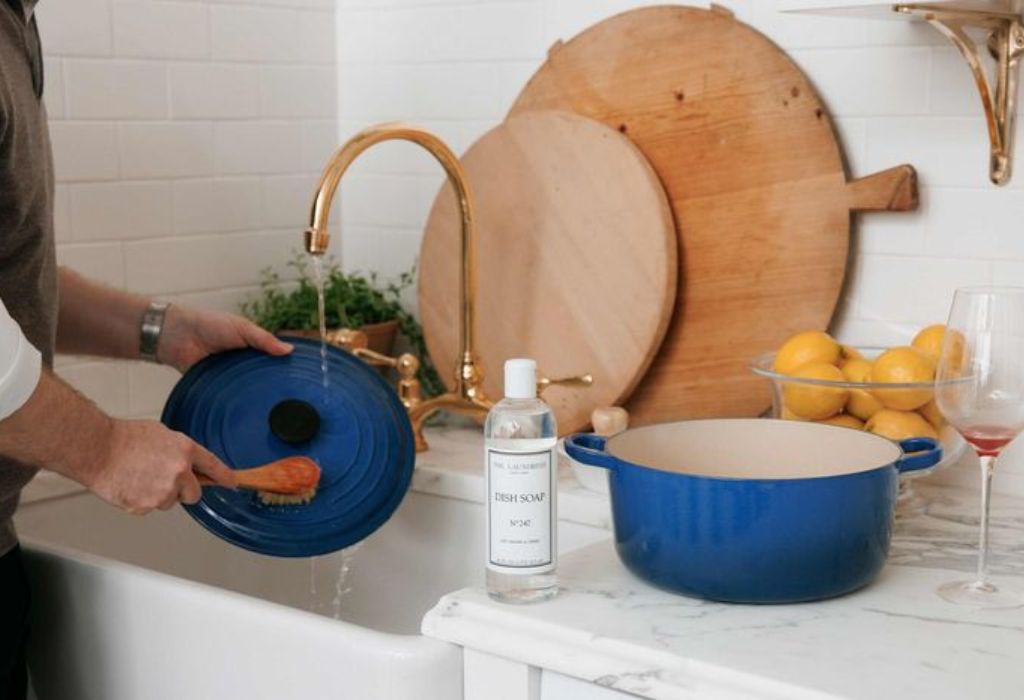
Knowing how to clean enamel cookware properly is important, but preventing damage keeps it looking new for years. Regular maintenance and smart cooking habits reduce the need for heavy scrubbing or stain removal treatments.
Cooking on low to medium heat protects the enamel coating from discoloration and burnt-on residue. High temperatures often cause stains that require extra effort to remove later.
Using wooden, silicone, or nylon utensils prevents scratches on the glossy surface. These materials are gentle and safe for both cooking and cleaning.
Proper drying and storage also help maintain the cookware’s appearance. Storing pieces with soft pads between them prevents chipping or scratches caused by contact with other cookware.
Cleaning enamel cookware shortly after use stops stains and grease from hardening overnight. Quick, gentle cleaning keeps the surface smooth and easy to maintain.
What cooking heat is best for enamel cookware?
Low to medium heat preserves the enamel surface and prevents stains.
Which utensils should be used for cooking?
Wooden, silicone, or nylon utensils protect the interior coating.
Does drying cookware matter after washing?
Yes, drying prevents water spots and protects exposed metal rims.
How should enamel cookware be stored?
Use soft pads between pieces to avoid chips or scratches.
Does cleaning right after cooking make a difference?
Yes, early cleaning stops residue from hardening and causing stains.
Conclusion — How to Clean Enamel Cookware, Summarized
Enamel cookware remains one of the most versatile and durable options in modern kitchens. However, keeping it clean and damage-free requires the right approach and consistent care.
Stains, burnt-on residue, and discoloration often happen with regular cooking. The key is knowing how to clean enamel cookware using gentle, effective methods instead of harsh tools or chemicals.
Baking soda simmering, vinegar soaks, and mild dish soap clean the majority of stains safely. For tougher discoloration, hydrogen peroxide combined with baking soda offers a deeper clean without damaging the glossy surface.
Daily habits like cooling cookware before washing, avoiding thermal shock, and using soft sponges or nylon brushes prevent scratches and cracks. These small steps keep the enamel layer intact for years of reliable cooking.
Proper cooking techniques also help maintain the cookware’s appearance. Cooking on moderate heat, cleaning right after use, and drying thoroughly protect both the look and performance of enamel cookware.
By combining smart prevention with proven cleaning methods, it is possible to maintain enamel cookware that looks as good as it performs. Long-term care ensures every pot and pan stays safe, shiny, and ready for countless meals.

I’m Emma J. Caldwell, the founder, lead writer, and home-cooking enthusiast behind KitchenGuideCo.com. With a background in culinary arts and over a decade of cooking experience in both professional and personal kitchens, I created this platform to demystify recipes, offer smart kitchen gadget reviews, and guide readers through meal prep with confidence and clarity.