A built-in dishwasher brings efficiency and style to any modern kitchen—but only if it blends seamlessly with the surrounding cabinetry.
One of the most overlooked details during installation is the dishwasher end panel, the finishing piece that closes the gap between the appliance and the adjoining cabinet or wall.
Without it, your dishwasher can look unfinished, misaligned, and even expose plumbing or electrical components.
Installing an end panel isn’t just about aesthetics—it provides structural stability and moisture protection. It shields cabinet edges from steam, reduces vibration noise, and ensures the countertop remains securely supported.
Many homeowners assume installing one requires a carpenter, but with the right tools and understanding of cabinet structure, this is a manageable DIY task.
This guide explains everything you need to know about how to install a dishwasher end panel like a pro—from measuring and material selection to mounting brackets, alignment, and finishing trim.
You’ll learn both standard and custom installation methods for framed and frameless cabinets, ensuring your dishwasher looks built-in, stable, and professionally finished.
Understanding What a Dishwasher End Panel Does
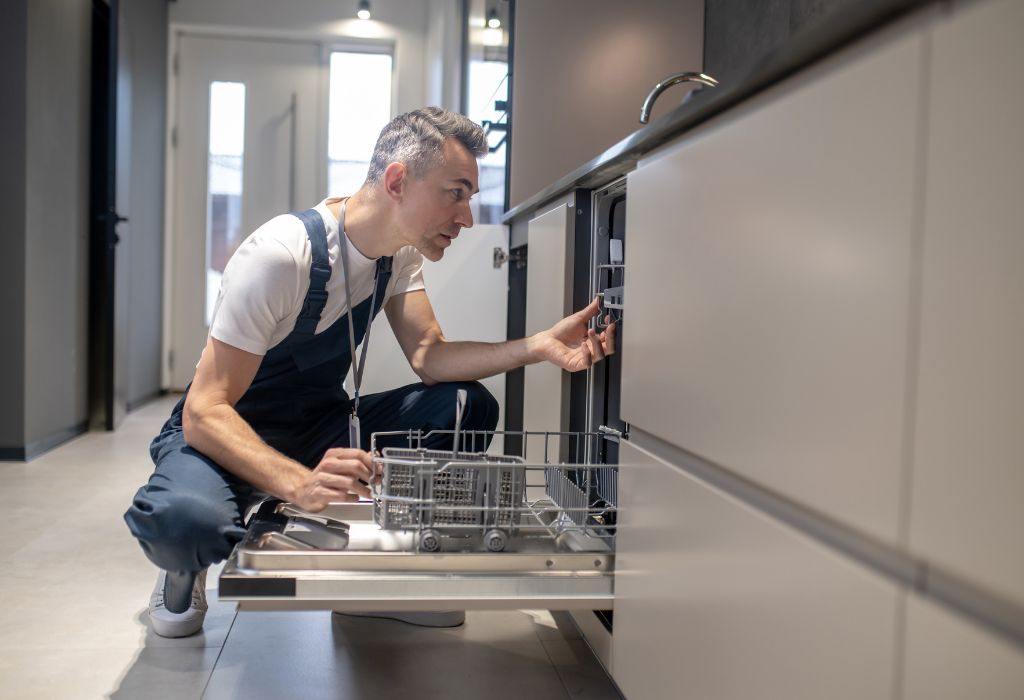
A dishwasher end panel is a vertical decorative board, usually made of laminate, plywood, or solid wood veneer, that conceals the exposed side of a dishwasher when it’s placed at the end of a cabinet run. It serves both aesthetic and functional purposes.
Functionally, the panel acts as a spacer and anchor point for countertop brackets. Dishwashers are designed to slide into a cavity between cabinets, but when one side is open, like next to a wall or freestanding section, an end panel provides the missing side support. It also prevents heat and moisture from damaging nearby surfaces.
Aesthetically, the panel gives a clean, built-in appearance by matching the surrounding cabinet finish. Many manufacturers offer pre-finished panels to match popular cabinet lines, though you can also paint or veneer them for custom integration.
Understanding its role is key before installation—because it determines how the panel is mounted and which hardware or brackets are required.
Choosing the Right End Panel Material
End panels come in various materials, each with its pros and cons. Selecting the right one ensures longevity, visual consistency, and ease of maintenance.
Laminate panels are the most common choice for budget-friendly installations. They resist moisture and scratches and are easy to clean. However, they can chip along cut edges if not handled carefully.
Plywood panels offer superior durability and are ideal for humid environments. Marine-grade or moisture-resistant plywood is best if your dishwasher vents steam from the top or sides.
Solid wood panels provide unmatched aesthetics and strength but require sealing to resist humidity and warping.
MDF panels can be cost-effective but must be sealed thoroughly with paint or laminate to avoid swelling from steam exposure.
Match the finish to your existing cabinetry for a unified look. Always measure the exact height from floor to underside of the countertop, since dishwashers vary slightly in height (33⅞ to 35 inches). The panel should align flush with cabinet faces and countertop edges.
Measuring and Planning the Installation
Accurate measurement is the foundation of a flawless end-panel installation. Start by measuring the height, depth, and width of the space where the panel will sit.
The typical depth matches that of your countertop—around 24 inches—but verify that your dishwasher cavity allows for this without obstructing plumbing or wiring.
The panel should extend from the floor to the underside of the countertop. Use a level and mark the line on the wall or floor where the panel will be fixed.
Determine how the panel will connect—either by screwing to the floor and countertop brackets or attaching to a filler cleat secured behind it. In frameless European-style kitchens, panels often fasten with metal angle brackets hidden from view.
Before drilling or fastening, ensure there’s enough space for the dishwasher door to open fully. The panel edge should sit flush with the cabinet face frame, leaving a minimal gap (1/8 inch) to allow smooth door movement.
Taking time to plan this ensures precise alignment, which gives your kitchen that true built-in, showroom finish.
Preparing the Workspace
Before installation, clear the area around the dishwasher bay. Turn off electrical power and water supply to avoid accidental contact while working. Remove any temporary spacers or packaging from the dishwasher cavity.
Use painter’s tape to mark the outline of where the panel will sit. This helps visualize alignment and protects your flooring or walls from scratches during adjustments.
If the floor beneath the dishwasher is uneven, use shims to level it before panel installation. End panels must sit perfectly vertical; any tilt will affect the countertop’s stability once secured.
Have all fasteners, brackets, and screws within reach. Use corrosion-resistant hardware, especially if your kitchen experiences humidity or frequent steam exposure. Stainless-steel or zinc-coated screws are ideal.
Finally, protect the front face of the panel with cardboard or foam during handling. This prevents scuffs and dents while you maneuver it into position.
Installing the Mounting Cleats or Brackets
A dishwasher end panel cannot stand unsupported—it needs a structural connection. Depending on your kitchen layout, you’ll either attach floor cleats or angle brackets.
For floor-mounted installations, position a narrow wooden cleat (¾ × 2 inches) along the floor line where the panel will rest. Anchor it using screws or construction adhesive, ensuring it’s perfectly perpendicular to the front cabinet face.
If your countertop requires side support, install a metal L-bracket at the top of the panel location. This will later secure the countertop while the panel holds the vertical load.
In frameless designs, additional small brackets can secure the panel directly to the wall behind the dishwasher cavity. Avoid overtightening, as this may cause the panel to bow outward.
Confirm that the cleats or brackets are square with your base cabinets. Proper foundation ensures that once the panel is installed, the countertop sits evenly and the dishwasher slides in smoothly without side friction.
Positioning and Securing the End Panel
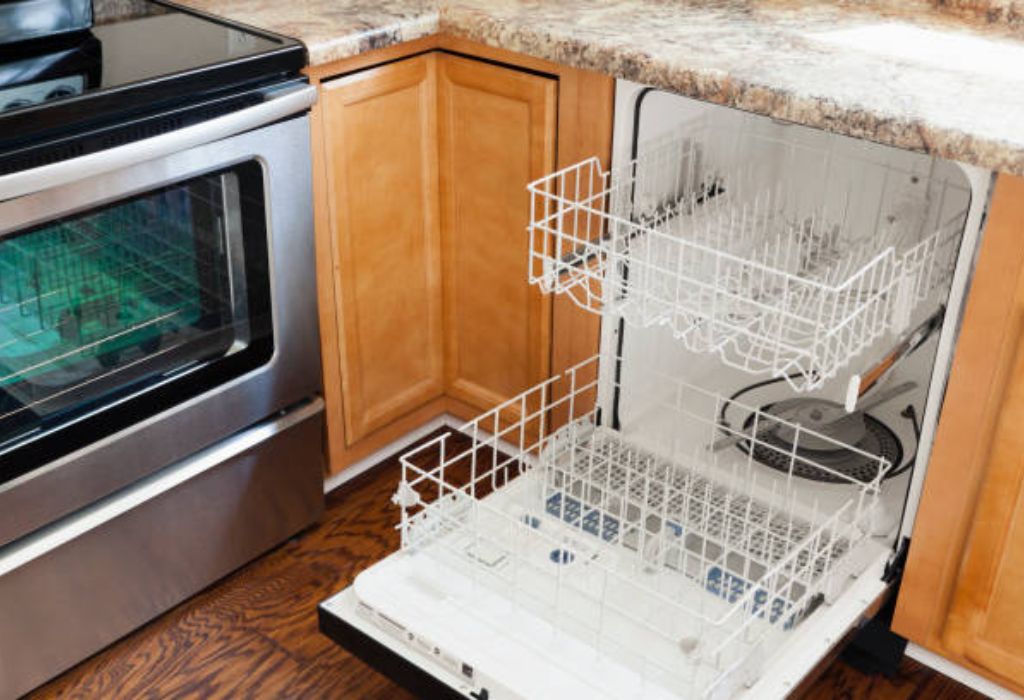
With the brackets in place, set the end panel upright on the floor cleat and align it flush with the cabinet face frame. Use a level to confirm perfect vertical alignment. If gaps appear along the floor, add thin shims until the panel is plumb.
Clamp the panel temporarily to the cabinet using spring or bar clamps. This holds it steady while you pre-drill pilot holes through the panel into the cleats or brackets. Using pilot holes prevents splitting, especially in laminate or plywood.
Secure the panel with screws long enough to penetrate the cleat or bracket by at least one inch. Avoid driving screws too close to the visible edge to prevent cracking.
Once anchored, remove the clamps and recheck the level. A properly installed panel should feel rigid when pressed and remain square against the countertop edge.
Installing Decorative Trim and Edge Finishing
After the panel is secured, conceal raw edges using matching edge banding or trim molding. Many manufacturers supply self-adhesive veneer strips that can be ironed on. Others may require wood glue or small brad nails.
For laminate panels, use a plastic T-molding or PVC strip that snaps into a routed edge. This protects against chipping and gives a smooth, professional appearance.
Caulk the seam where the panel meets the floor and countertop using clear silicone. This prevents moisture from seeping underneath, especially important in dishwashers that vent steam from the door top.
If painting or staining, apply two thin coats of moisture-resistant finish, allowing full drying between coats. This ensures long-term protection against heat, humidity, and cleaning chemicals.
A properly trimmed panel transforms the installation from “functional” to “finished,” making the dishwasher look seamlessly integrated.
Testing Alignment and Countertop Support
Before reinstalling your dishwasher, check that the panel supports the countertop securely. The panel’s top should sit snug beneath the counter, carrying a portion of its weight.
Place a straightedge across the countertop to verify evenness from cabinet to panel. Adjust if necessary using shims at the base. Gaps between the panel and counter can lead to vibration noise or movement over time.
Once level, secure the countertop bracket through the top of the panel using screws. Do not overtighten—tight screws can warp thin panels.
Test-fit the dishwasher by sliding it into place. The sides should clear the panel easily without rubbing. The door should open freely, and the front face should align evenly with neighboring cabinetry. This test ensures perfect symmetry before final installation.
Securing the Dishwasher and Final Adjustments
After confirming alignment, anchor the dishwasher to the underside of the countertop or side brackets, depending on model design. Some dishwashers allow side-mounting directly to the end panel for extra stability.
Reconnect the water supply, drain hose, and electrical cord if previously disconnected. Run a short cycle to verify that no vibrations or rattling occur—the end panel should remain firm.
If minor gaps appear between the panel and dishwasher edge, use thin rubber spacers or trim strips for a seamless look. Check the floor again for stability; over time, even slight unevenness can loosen fasteners.
A professionally installed end panel should look like a continuation of your cabinetry—tight, level, and structurally sound.
Maintenance Tips to Keep the End Panel in Perfect Shape
Although end panels require little maintenance, a few precautions will keep them looking new. Wipe down the exterior regularly with a soft, damp cloth to remove dust and moisture residue. Avoid harsh chemical cleaners that can degrade the finish.
Inspect caulking and edge trim annually. Reapply silicone if you notice gaps forming near the floor or countertop. This protects against steam infiltration that can swell or discolor wood-based materials.
If your dishwasher vents steam from the top edge of the door, open it briefly after each cycle to let heat escape—this prevents moisture from building up against the end panel.
Finally, check that the panel remains tight and level after a few months of use. Vibration from the dishwasher can sometimes loosen screws; retighten them gently if needed.
With these steps, your end panel will remain sturdy, visually flawless, and moisture-resistant for years.
DIY Dishwasher End Panel Guide: Your Most Asked Questions Answered
Why do I need an end panel for my dishwasher?
It provides side support, protects nearby cabinets from moisture, and completes the built-in look.
Can I install a dishwasher without an end panel?
Only if both sides are enclosed by cabinetry; otherwise, one side will appear unfinished and unstable.
What material is best for dishwasher end panels?
Moisture-resistant plywood or laminate are ideal for durability and easy maintenance.
How thick should a dishwasher end panel be?
Typically ¾ inch, matching standard cabinet thickness for structural support and visual alignment.
Do I attach the countertop directly to the end panel?
Yes, but ensure the panel is anchored securely to carry part of the countertop’s load.
Can I paint or stain an end panel?
Yes, use moisture-resistant paint or polyurethane to seal wood surfaces before exposure to steam.
What’s the difference between framed and frameless panel installation?
Framed cabinets use cleats or face-frame attachment; frameless types rely on angle brackets or metal supports.
Can I cut the panel myself?
Yes, with a fine-tooth saw or circular saw; always mask the cut line with tape to prevent chipping.
Should the panel sit on top of flooring or subfloor?
Install it on the finished floor to align perfectly with the rest of your cabinetry.
How do I hide screw heads?
Use wood plugs, color-matched caps, or trim strips to conceal fasteners after installation.
Can the dishwasher be screwed directly into the panel?
Some models allow side mounting; verify manufacturer recommendations before drilling.
How do I prevent moisture damage?
Seal all edges with silicone and use water-resistant materials.
Do I need professional tools to install an end panel?
Basic DIY tools—drill, level, clamps, and screws—are sufficient for most installations.
Why is my panel not aligning with the countertop?
The floor may be uneven or cleats slightly off-level; adjust with shims for correction.
Can I reuse an old panel from another kitchen?
Yes, if it’s structurally sound and trimmed to fit the new dimensions.
Conclusion
Installing a dishwasher end panel might appear to be a minor finishing task, but it plays a major role in achieving a clean, integrated, and professional kitchen design.
A properly installed panel not only enhances visual appeal but also reinforces the structural integrity of the countertop and protects surrounding cabinetry from moisture and heat.
The secret to success lies in precise measurement, solid anchoring, and thorough sealing. Whether you’re working with laminate, plywood, or solid wood, careful alignment and finishing make the difference between an average job and a professional-grade result.
By following the correct steps—preparing, measuring, securing, trimming, and testing—you can install a dishwasher end panel confidently without needing to hire a carpenter.
The result is a stable, durable, and aesthetically perfect finish that seamlessly ties your dishwasher into the rest of your kitchen layout.

I’m Emma J. Caldwell, the founder, lead writer, and home-cooking enthusiast behind KitchenGuideCo.com. With a background in culinary arts and over a decade of cooking experience in both professional and personal kitchens, I created this platform to demystify recipes, offer smart kitchen gadget reviews, and guide readers through meal prep with confidence and clarity.