Shopping for new cookware can feel overwhelming. Rows of gleaming pots and pans promise durability, nonstick performance, and health benefits.
Labels highlight trendy terms like granite nonstick, ceramic coating, and PFOA-free. For the average home cook, these claims create confusion. Which option truly performs best in daily use: granite cookware or ceramic cookware?
The stakes are higher than they appear. Cookware is not just about cooking; it influences health, safety, efficiency, and long-term costs.
Choosing the wrong type can lead to pans that scratch within months, coatings that wear down quickly, or surfaces that release harmful chemicals when overheated.
A survey by Consumer Reports revealed that over 65% of buyers replace nonstick pans within two years because of performance loss or coating damage.
Meanwhile, global cookware sales continue to climb, with ceramic and granite emerging as two of the fastest-growing categories. This trend reflects the modern cook’s search for healthier, more sustainable alternatives to traditional Teflon.
What Are Granite and Ceramic Cookware?
Granite Cookware
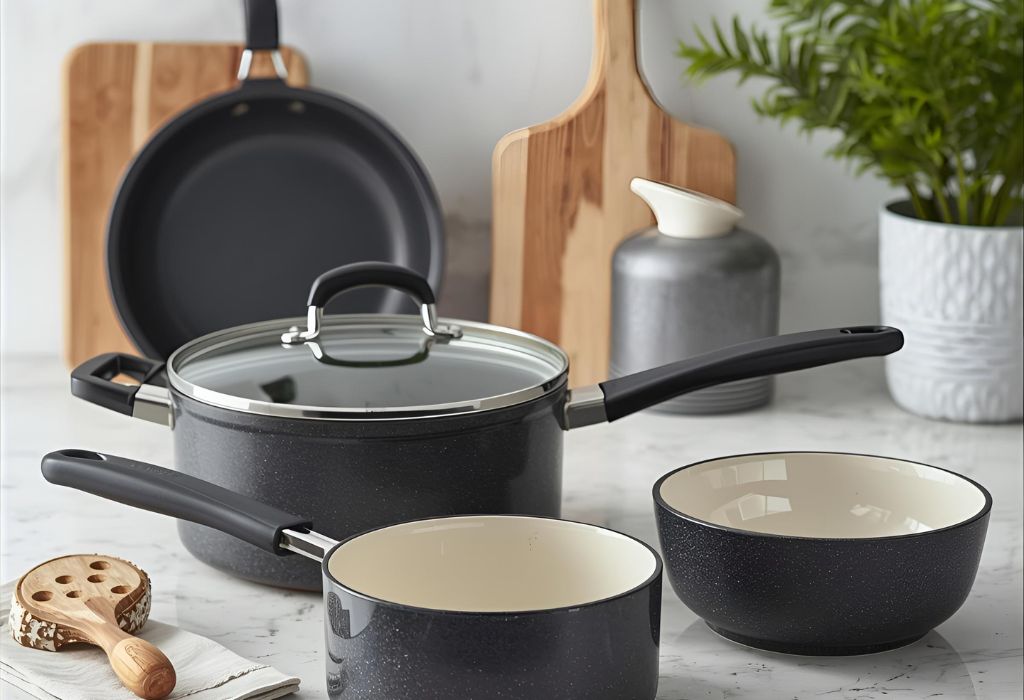
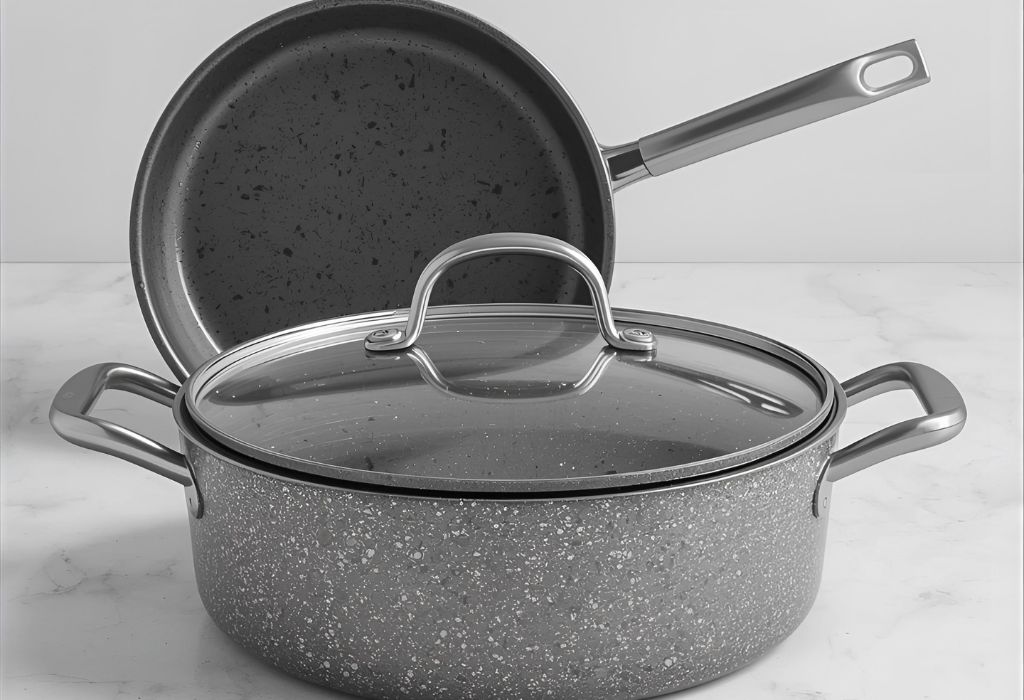
Despite the name, granite cookware is not carved from stone. Instead, it typically consists of a metal core—often aluminum or stainless steel—coated with porcelain enamel or a speckled, granite-like nonstick surface.The granite aesthetic is achieved with flecks and patterns, giving it the look of natural stone.
The coating provides a smooth cooking surface that resists sticking when new. Unlike older nonstick technologies, granite coatings are often marketed as PTFE-free and PFOA-free.
However, not all granite cookware is identical. Some versions still include synthetic resins for nonstick performance, while others rely purely on enamel.
Granite cookware is valued for its visual appeal, lightweight handling compared to cast iron, and ease of cleaning. It is generally affordable, making it popular for households seeking a stylish, budget-friendly option.
Ceramic Cookware
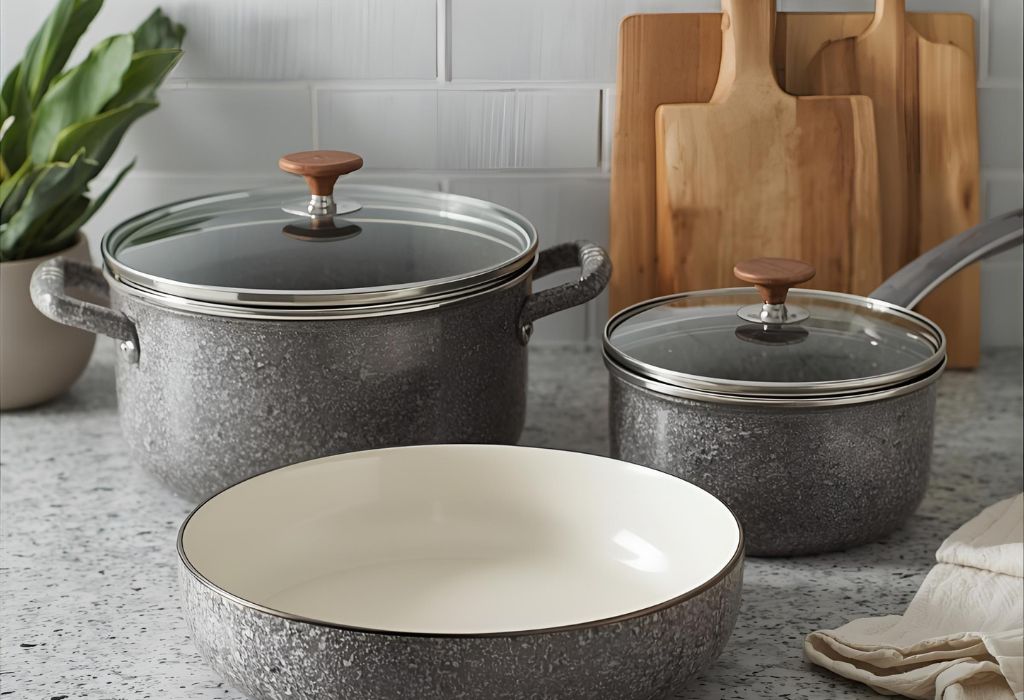
Ceramic cookware refers to two types: fully ceramic pans (rare and heavy) or, more commonly, metal pans with a ceramic-based coating. These coatings are derived from silica, hardened at high temperatures to form a non-reactive, glass-like surface.
Ceramic coatings are promoted as a greener, healthier alternative to traditional nonstick, being free of PTFE, PFOA, and other harmful chemicals. They often provide a glossy, smooth surface that excels at low-to-medium-heat cooking.
A key selling point of ceramic cookware is safety. Many consumers choose it for reassurance that their food will not absorb toxic residues. Additionally, the bright colors and modern designs of ceramic pans make them attractive for contemporary kitchens.
Durability and Lifespan
Cookware durability is often the deciding factor for buyers. Both granite and ceramic offer advantages, but neither is indestructible.
Granite cookware, when enamel-based, is generally resistant to rust and corrosion. However, the surface can chip if dropped or scratched with metal utensils.
Once the enamel chips, the exposed metal underneath may affect performance or aesthetics. Longevity depends heavily on coating quality and user care. Cheaper granite pans may lose their nonstick properties within a year of daily cooking.
Ceramic cookware faces similar challenges. While its initial nonstick performance is excellent, studies show that ceramic coatings degrade faster than traditional PTFE.
A research analysis by Serious Eats highlighted that ceramic nonstick coatings often lose effectiveness after one to three years of frequent use, particularly if overheated. Scratches from improper utensils further shorten lifespan.
In practical terms, granite cookware may outlast ceramic if the enamel layer is thick and well-bonded. However, high-end ceramic brands can compete strongly when handled gently.
Heat Performance and Cooking Efficiency
Cooking is about heat management, and here the two materials diverge.
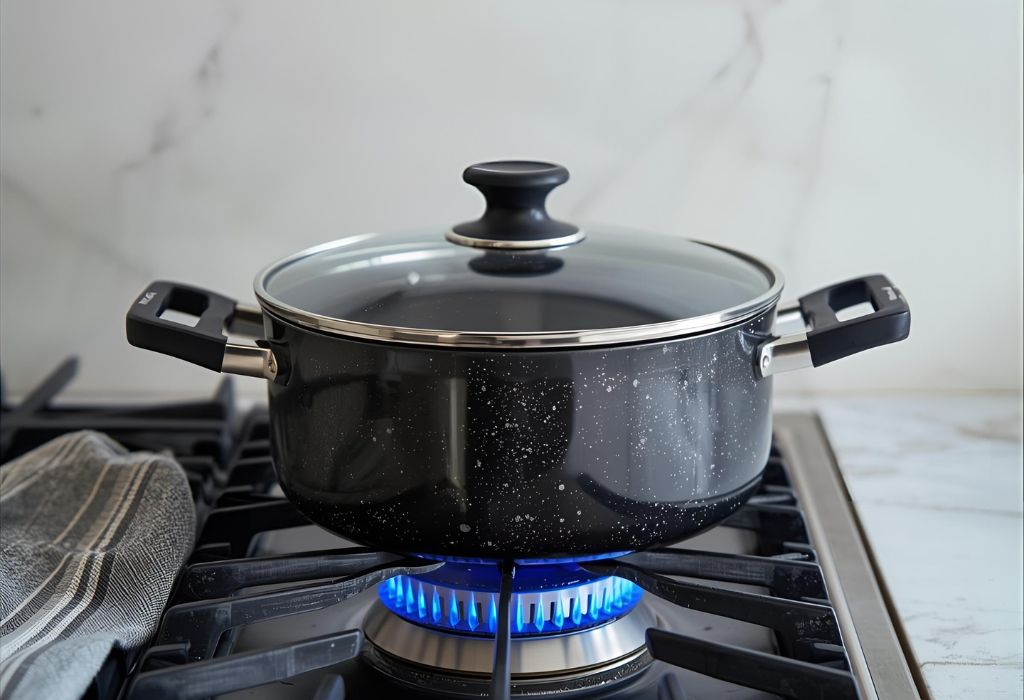
Granite cookware, with its metal core, heats relatively quickly and evenly. The enamel coating adds stability, preventing food from sticking under moderate conditions.
However, granite cookware is not ideal for extreme temperatures. Overheating may damage the coating, reduce nonstick ability, and cause discoloration.
Ceramic cookware shines at medium-heat cooking. The surface tolerates gentle frying, sautéing, and simmering beautifully.
Yet, ceramic coatings are more vulnerable to high heat. Exceeding recommended temperatures (usually around 450°F/230°C) can accelerate coating breakdown.
Heat retention also varies. Granite, especially when paired with a thicker base, can hold heat slightly longer. Ceramic cookware, being thinner in many models, loses heat more quickly, making it better suited for fast cooking rather than prolonged simmering.
For searing steaks or stir-frying at high heat, granite cookware has a slight advantage. For delicate tasks like cooking eggs or vegetables at medium heat, ceramic excels.
Safety and Health Concerns
Health is often the top priority driving buyers toward granite or ceramic cookware. Both are generally safer alternatives to traditional Teflon.
Granite cookware with enamel coatings is non-reactive, meaning it does not leach harmful chemicals into food. Modern versions are advertised as free from PFOA, PTFE, and lead.
However, consumers should verify brand claims, since some low-quality products may still use questionable additives.
Ceramic cookware is strongly marketed as eco-friendly and toxin-free. Its silica-based surface is naturally non-reactive. This means acidic foods like tomato sauce or citrus will not absorb metallic tastes. Importantly, ceramic is also PFAS-free—a group of chemicals linked to health risks.
The main safety issue with both cookware types is overheating. Exposing granite or ceramic coatings to excessive heat can cause breakdown, leading to reduced nonstick properties or surface damage. While not as hazardous as Teflon fumes, it still shortens lifespan and may compromise safety.
In summary: both granite and ceramic cookware are safe when used as intended. For maximum health protection, avoid overheating, never cook on damaged coatings, and replace cookware once surfaces become heavily scratched.
Affordability and Value
Price plays a major role in kitchen purchases. Granite cookware sets are typically more budget-friendly. They are often found at mid-range price points, offering a stylish appearance without breaking the bank.
Ceramic cookware, particularly from premium brands, tends to cost more. High-quality ceramic coatings are marketed as long-lasting and eco-friendly, commanding higher prices. However, cheaper ceramic sets are widely available too, though their performance may degrade faster.
When calculating value, consider cost per year of use. A granite pan that lasts four years may prove cheaper than a ceramic pan that needs replacing after two years. Conversely, a well-cared-for ceramic set could outperform low-quality granite.
Ultimately, the better value depends on your cooking habits. For families cooking daily on a budget, granite cookware offers solid cost efficiency. For health-conscious cooks willing to pay extra, ceramic cookware’s safety credentials may justify the investment.
Maintenance and Care
Proper care determines how long cookware lasts.
Granite cookware requires minimal effort. The enamel coating resists most stains and can often be cleaned with warm soapy water. However, harsh scrubbing pads or steel utensils should be avoided to prevent chips. While many granite pans are labeled dishwasher safe, handwashing extends their life.
Ceramic cookware needs more delicate handling. The glossy surface, while attractive, is prone to scratches. Wooden or silicone utensils are recommended. Dishwashers, abrasive cleaners, and sudden temperature changes can quickly wear down the coating. Most manufacturers advise gentle handwashing.
Compatibility also matters. Many granite and ceramic pans work on gas and electric stoves, but not all are induction-ready. Always check product specifications. Oven safety varies, with ceramic coatings often limited to lower maximum temperatures.
For both types, consistent low-to-medium heat use, proper utensils, and gentle cleaning will significantly prolong performance.
Matching Cookware to Cooking Style
The question “is granite or ceramic cookware better” cannot be answered without considering cooking habits.
- For busy families: Granite cookware offers resilience, affordability, and the ability to handle higher heat. It suits kitchens where pans are used multiple times daily and sometimes handled roughly.
- For health-focused cooks: Ceramic cookware is attractive for its chemical-free surface. Those prioritizing toxin-free meals, eco-friendly choices, and stylish designs will appreciate ceramic despite its shorter lifespan.
- For budget buyers: Granite often provides the better balance of cost and durability, making it ideal for households seeking practical, long-lasting cookware without premium pricing.
- For occasional cooks: If you cook infrequently, either option works. A ceramic pan may suffice for light cooking, while granite handles diverse tasks.
The best choice depends on whether you prioritize durability, safety, budget, or aesthetics.
Conclusion
When deciding is granite or ceramic cookware better for daily cooking, the answer is not one-size-fits-all. Both options carry unique strengths and weaknesses that directly influence performance, safety, and long-term value in the kitchen.
Granite cookware is well-suited for households seeking affordable durability. With its enamel or granite-style coating layered over a sturdy metal base, it can handle higher heat than ceramic and generally withstand the rigors of daily cooking.
Families that prioritize longevity, easy cleaning, and budget-friendly solutions will often find granite cookware to be the more practical investment. Its speckled, stone-like finish also adds visual appeal, blending durability with style.
Ceramic cookware, on the other hand, is the choice for cooks who place health and eco-friendliness at the forefront. Free from PTFE, PFOA, and other controversial chemicals, ceramic coatings provide peace of mind that meals are prepared on a non-reactive surface.
Its sleek, glossy finishes and modern colors also make it a centerpiece in many kitchens. While ceramic cookware demands more careful handling and typically has a shorter lifespan, its toxin-free promise and aesthetic value justify the investment for health-conscious users.
The trade-off ultimately comes down to priorities. If cost-efficiency, heat resilience, and everyday toughness matter most, granite cookware is the better fit. If safety, chemical-free cooking, and style are more important, ceramic cookware is the stronger contender.
For many households, the best strategy may not be choosing exclusively one or the other. A mixed collection—granite pans for high-heat frying and ceramic skillets for gentle, health-focused meals—can deliver the benefits of both worlds.
In the end, the cookware you choose should align with how you cook, how often you cook, and what you value most in your kitchen.
By weighing durability, safety, cost, and performance, you can make a confident choice that not only elevates your daily cooking but also supports your long-term health and culinary satisfaction.

I’m Emma J. Caldwell, the founder, lead writer, and home-cooking enthusiast behind KitchenGuideCo.com. With a background in culinary arts and over a decade of cooking experience in both professional and personal kitchens, I created this platform to demystify recipes, offer smart kitchen gadget reviews, and guide readers through meal prep with confidence and clarity.