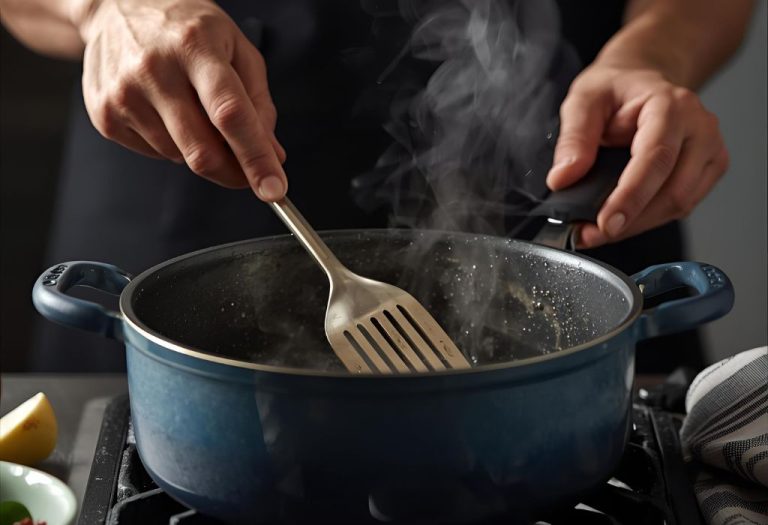
A casserole dish is ready, the oven is preheated, and the granite stone pan is sitting on the counter. Many home cooks hesitate at this stage, unsure if the pan can handle the high heat without damage.
This confusion is common. Marketing often uses terms like “granite,” “stone,” or “diamond” without clear details about oven safety.
Some packaging claims 500°F oven safety, while others limit use to 400°F. Without clarity, users risk damaging their cookware or worse, exposing their kitchen to fumes from overheated coatings.
Research confirms why limits matter. Studies show that PTFE coatings, used in many nonstick pans, can begin degrading above 500°F, releasing fumes that impact air quality source.
A 2023 safety review noted that several suspected polymer fume fever cases in households were tied to overheated nonstick pans source.
What Granite Stone Cookware Really Is
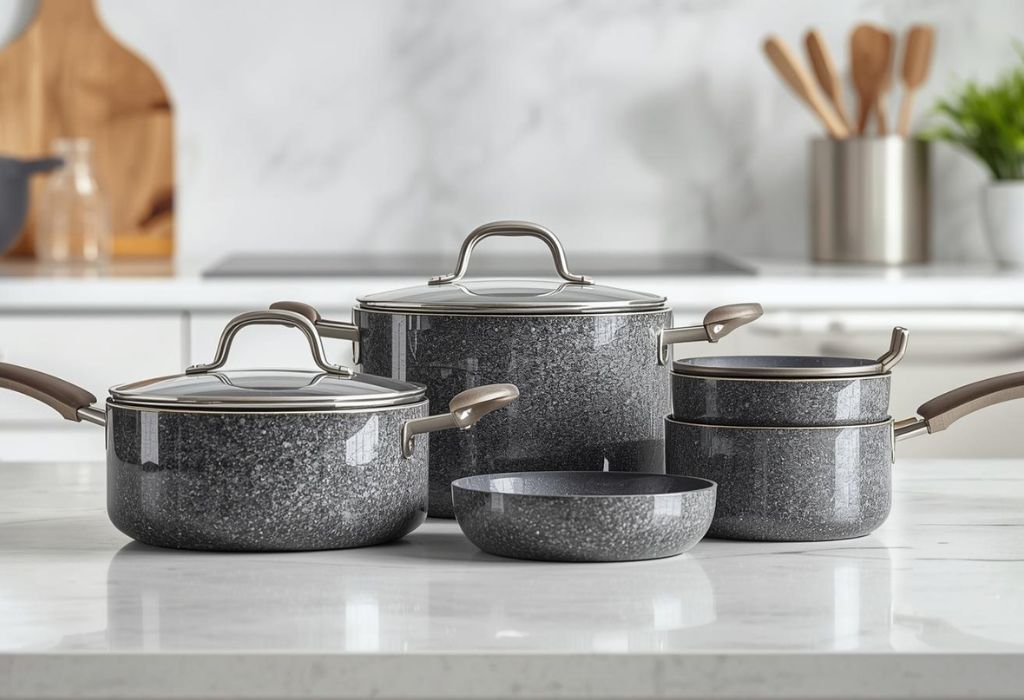
Granite stone cookware is rarely made of real stone. Most products feature an aluminum base layered with a nonstick coating marketed as “granite,” “stone,” or “diamond-reinforced.”
The aluminum provides quick heating, while the coating creates a smooth, easy-to-clean surface. These coatings vary: some are PTFE-based, while others are ceramic-like or marketed as PFAS-free.
Understanding this distinction is important. A PTFE-coated pan has strict limits because overheating breaks down its nonstick layer. A ceramic-coated version may tolerate slightly different conditions but can still discolor or crack under extreme heat.
Labels are often inconsistent. One GraniteStone line might specify 500°F oven safety, while another restricts use to 400°F. Both are technically correct but depend on the construction of that specific pan.
Handles and lids further complicate the rating. Tempered glass lids may shatter above 400°F, while silicone-trimmed handles can fail even sooner. The weakest component sets the real limit for the entire cookware system.
Is Granite Stone Cookware Oven Safe?
The direct answer is yes, granite stone cookware is oven safe, but only within the limits provided by the manufacturer. Many GraniteStone-brand pans list a maximum oven temperature of 500°F, while others cap at 400°F.
For example, the Armor Max series highlights oven safety up to 500°F, while some stainless tri-ply “Blue” skillets specify 400°F. Both are accurate but model-specific.
The danger lies in assuming that all granite stone cookware shares the same heat tolerance. Exceeding a listed temperature risks damaging the coating, breaking handles, or producing fumes.
Ovens also spike in temperature during preheating, sometimes overshooting the set heat by 20–30°F. This means a pan placed in a 500°F oven could experience brief exposure to 525°F or more, enough to stress its coating.
Safe practice is to preheat the oven fully, let it stabilize, then insert the cookware. Staying 25°F below the maximum rating provides a safety margin.
How Coatings and Temperature Limits Work

Most granite-style nonstick cookware uses PTFE as its base. PTFE is stable up to about 500°F, but degradation begins beyond that point.
At high temperatures, PTFE can release fumes invisible to the eye. While short exposure in a ventilated kitchen is usually not dangerous for humans, birds are extremely sensitive and can die from fume inhalation.
Ceramic-coated granite pans are marketed as PFAS-free alternatives. These coatings avoid PTFE but come with their own risks. At temperatures above 500–600°F, they can discolor, lose nonstick properties, or develop cracks.
Heat transfer also matters. Oven air temperature differs from the surface temperature of a pan. A pan exposed to broiler flames or placed near a heating element may reach much higher surface temperatures than the oven dial suggests.
Because of these variables, treating 500°F as an absolute ceiling is critical. Pushing higher offers no cooking benefit and only accelerates wear.
Handles, Lids, and Broilers
Even if the pan body is rated to 500°F, handles and lids often reduce the effective limit.
Tempered glass lids usually max out around 400°F. Beyond that, thermal stress increases the risk of cracking or shattering. Silicone or plastic handle trims soften or melt at similar temperatures.
Some granite stone sets advertise broiler safety. In practice, broilers often exceed 500°F with direct radiant heat from above. This creates hot spots that can outpace the tolerance of any nonstick surface.
Direct broiler use on nonstick cookware is rarely recommended. Even if a product lists “broiler safe,” short exposure at the low-broil setting should be the absolute limit. For searing, stainless steel or cast iron remain the safer choices.
Brand and Model Examples
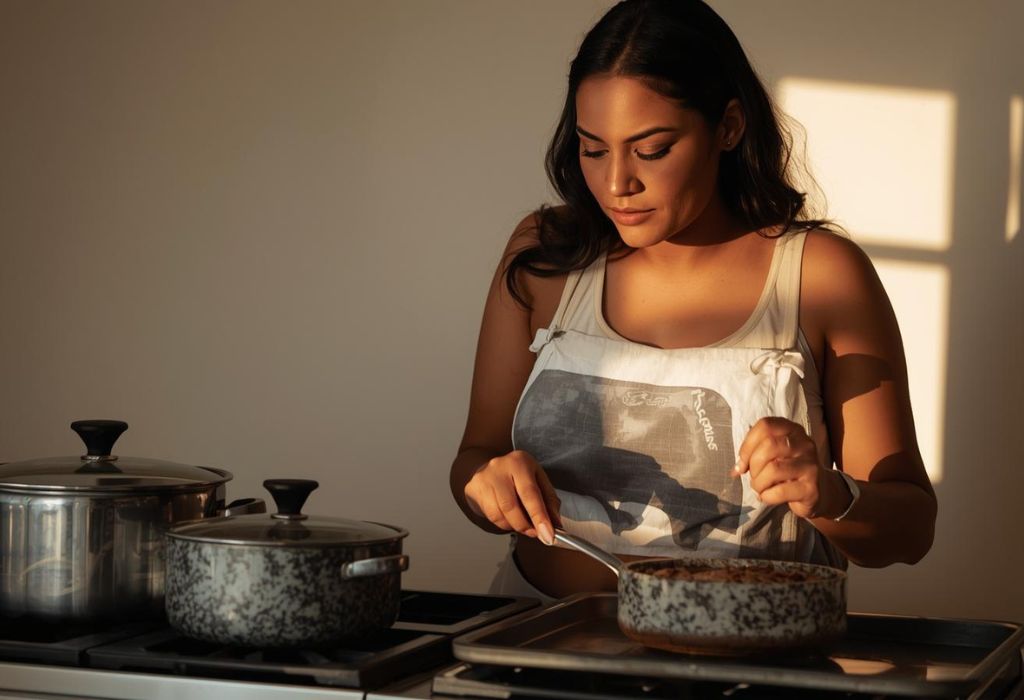
GraniteStone Armor Max cookware lists oven safety up to 500°F. This line uses reinforced PTFE coatings and stainless handles.
GraniteStone Blue stainless tri-ply skillets list a maximum of 400°F. The lower tolerance comes from a combination of handle materials and lid limits.
Retailers like Home Depot and Walmart repeat the 500°F claim on popular fry pan and saucepan sets, but careful reading reveals exceptions for certain models.
The takeaway is simple: oven safety is model-specific. Always confirm by checking the product manual or the base stamp on the pan itself.
Oven Safety Checklist
Safe oven use with granite stone cookware follows a series of simple steps.
First, always verify the stated maximum temperature for your specific model.
Second, preheat the oven fully and let it stabilize. Inserting the pan during a heat spike risks exposing it to more than its rated limit.
Third, avoid placing an empty nonstick pan in a hot oven. Food helps regulate surface temperature, preventing sudden overheating.
Fourth, remove lids or silicone handles if they have lower ratings than the pan body.
Finally, always ventilate your kitchen. Even within safe ranges, airflow helps protect air quality and extend coating life.
Common Problems and Fixes

Overheating is the most common issue. When a granite stone pan exceeds its limit, the nonstick surface can peel, discolor, or lose effectiveness.
A sticky surface often indicates that the coating has partially degraded. While gentle cleaning may help, severe cases require replacing the pan.
Lingering odors after high-heat use suggest coating breakdown. Ventilation helps, but frequent overheating will permanently shorten the cookware’s lifespan.
Scratches also reduce safety. A scratched surface exposes underlying layers, which are more vulnerable to heat and abrasion. Using metal utensils accelerates this process.
Dishwasher use further weakens coatings. Harsh detergents and high water temperatures reduce heat resistance and longevity. Handwashing is the safer choice for maintaining oven safety.
Best Practices for Longevity
The best way to protect granite stone cookware is to stay conservative with oven temperatures. Baking at 425°F or below keeps a comfortable margin under the 500°F ceiling.
Use the oven for roasting, baking, and finishing dishes, not for broiling or searing at maximum heat.
Handwash with soft sponges and mild soap to preserve coating quality. Avoid abrasive scrubbers or scouring powders.
Store pans with protective padding to prevent scratches from stacking. Scratches not only reduce nonstick performance but also increase vulnerability in the oven.
Choose utensils wisely. Silicone, wood, or nylon prevent scratches and prolong the nonstick layer, helping the cookware remain safe under heat.
Alternatives for High-Heat Cooking

Granite stone cookware is useful, but not for every task. When searing steaks, roasting under the broiler, or using self-clean cycles, other cookware is safer.
Cast iron and carbon steel tolerate temperatures above 600°F without issue. Stainless steel pans also handle broilers and extreme oven use safely.
Enameled cast iron offers a middle ground, with oven ratings typically around 500°F while avoiding PTFE coatings.
Some ceramic cookware brands advertise higher heat tolerance, sometimes up to 600°F. Even then, manufacturer instructions must be followed carefully.
Conclusion
So, is granite stone cookware oven safe? Yes, but only within the stated limits. Most models are safe up to 500°F, while some cap at 400°F.
Understanding these differences prevents coating damage, ensures safe cooking, and extends the lifespan of the cookware.
The key is moderation. Avoid broilers, monitor oven temperatures, and stay below the maximum rating.
When higher heat is required, switch to cast iron or stainless steel. By respecting the limits of granite stone cookware, users enjoy reliable performance and longer durability.

I’m Emma J. Caldwell, the founder, lead writer, and home-cooking enthusiast behind KitchenGuideCo.com. With a background in culinary arts and over a decade of cooking experience in both professional and personal kitchens, I created this platform to demystify recipes, offer smart kitchen gadget reviews, and guide readers through meal prep with confidence and clarity.