Cooking should bring confidence, not concern. Yet many households wonder if the cookware in their kitchens may be silently exposing them to harmful chemicals.
Nonstick pans are convenient, but questions about coatings and toxic fumes have made health-minded cooks more cautious.
The curiosity around granite stone cookware often begins with its name. The speckled surface gives the impression of natural stone, but appearances can be deceiving.
Shoppers want to know if the attractive design is truly safe or simply a marketing label hiding chemical coatings.
This concern is not unfounded. A recent study by the Ecology Center found that nearly 79% of nonstick pans contained PTFE coatings that could degrade at high heat and release hazardous fumes (Ecocenter.org). Such findings have led to growing scrutiny of cookware marketed as “PFOA-free” or “stone-derived.”
At the same time, the benefits of granite stone cookware are appealing. Its nonstick performance promises easier cooking with less oil. Its lightweight design offers a practical alternative to heavy cast iron, and its stylish appearance fits well in modern kitchens.
Yet the central question remains clear: Is granite stone cookware safe in daily cooking use? Consumers want reliable answers backed by research, not vague claims. Safety depends on the materials, coatings, and the way the cookware is maintained.
What Exactly Is Granite Stone Cookware?
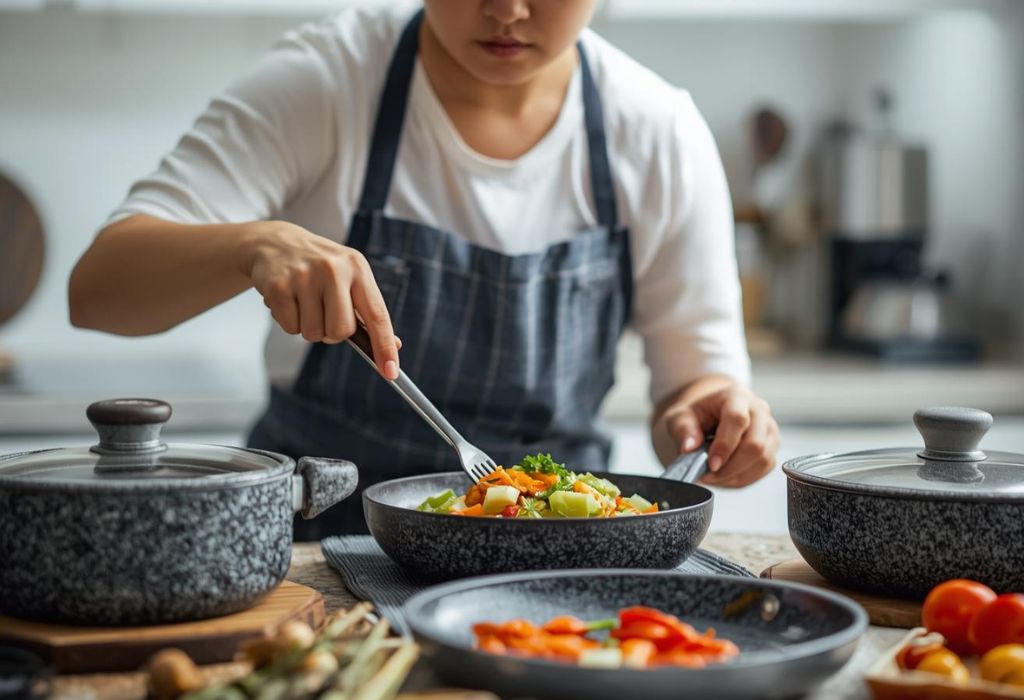
Granite stone cookware has captured attention because of its striking appearance and marketing appeal.
The speckled black-and-white surface looks like natural granite, which suggests durability and purity.
In reality, most products labeled as granite stone cookware do not contain actual stone but instead rely on coatings applied over a metal base.
The typical structure involves an aluminum or stainless steel core for heat distribution, covered with a nonstick or enamel coating.
Some brands use ceramic coatings infused with mineral particles to create the granite-like pattern.
Others rely on porcelain enamel baked onto the surface for a glassy, durable finish. These variations explain why performance and safety differ widely between products.
Many consumers assume that granite stone cookware is chemical-free, but that is not always the case. Some pans marketed under this category still contain PTFE, the same substance used in traditional Teflon coatings.
While PTFE is stable at low and medium heat, overheating can release toxic fumes, raising legitimate health concerns.
Manufacturers that advertise “PFOA-free” often aim to reassure buyers, but this claim only refers to one specific chemical no longer widely used in cookware production.
Another common variation is granite stone cookware with a ceramic-based nonstick layer. Ceramic coatings are typically free from PFAS, PTFE, and PFOA, making them more appealing for health-conscious households.
However, ceramic can be less durable than PTFE and may lose its nonstick properties faster with frequent use.
Enamel-coated options are also available, offering a non-reactive surface that resists acidic foods and provides strong scratch resistance.
The challenge for buyers is that “granite stone” is more of a marketing description than a regulated category.
Different manufacturers apply the term loosely, so one product may contain safe ceramic coatings while another may rely on PTFE. This inconsistency makes brand research essential before purchasing.
In short, granite stone cookware is not a single material but a family of products with varied compositions. The safety of daily cooking depends on what lies beneath the attractive surface.
By understanding the differences in coatings and bases, consumers can better judge which pans are genuinely safe for long-term use.
What is meant by “granite stone cookware”?
It usually refers to cookware with a speckled nonstick or enamel coating over a metal base.
Does it contain real granite?
No. The “granite” look comes from minerals or pigments in the coating, not natural stone.
What coatings are most common?
PTFE, ceramic, and porcelain enamel are the main types used.
Do all granite stone pans have the same safety profile?
No. Safety depends on the specific coating and brand manufacturing standards.
Safety Concerns: What the Research & Lab Tests Reveal
Granite stone cookware often appears safe at first glance. The speckled surface looks durable and trustworthy, but the actual safety depends heavily on the type of coating applied.
Some products are lined with PTFE, while others rely on ceramic or enamel coatings. This distinction is crucial because coatings behave very differently when exposed to high heat.
PTFE, commonly known as Teflon, is stable under medium heat but begins to degrade at around 500°F (260°C). When overheated, PTFE coatings can release toxic fumes, which pose health risks to both humans and household pets.
Ceramic and enamel coatings avoid this issue, but they come with their own challenges, such as reduced lifespan or susceptibility to cracking.
Independent research highlights the concern. A report from the Ecology Center revealed that 79% of tested nonstick pans contained PTFE despite many being marketed as safe alternatives (Ecocenter.org). This finding demonstrates how labeling can be misleading, leaving consumers with a false sense of security.
Another worry involves heavy metal leaching. Poor-quality enamel coatings may contain trace amounts of lead or cadmium.
While top-tier brands comply with FDA or European safety standards, cheaper cookware can chip or crack, potentially exposing the underlying aluminum or contaminating food. Acidic foods like tomato sauce increase this risk, especially when the surface is damaged.
Heat distribution and durability also play a role in safety. If a pan develops hot spots, the coating may degrade unevenly, leading to premature breakdown.
This breakdown not only reduces performance but can also increase the chances of chemical leaching or surface wear. Overheating and sudden temperature changes can cause thermal shock, which further weakens the protective layer.
Ultimately, granite stone cookware is not inherently unsafe, but its safety depends on the specific materials, coating quality, and user habits.
High-quality enamel or ceramic-coated pans usually offer non-reactive surfaces with better resistance to acidic foods. In contrast, lower-quality nonstick versions may carry risks if not used with care.
Does granite stone cookware release harmful chemicals?
Yes, if coated with PTFE and overheated, it can release toxic fumes.
Can heavy metals leach into food?
It is possible when coatings chip or crack, especially with acidic dishes.
Are “PFOA-free” labels reliable?
They only mean the product is free from one chemical, not all PFAS compounds.
What temperature is considered unsafe?
Exceeding 500°F (260°C) often triggers PTFE breakdown and safety concerns.
Pros & Advantages: Why Granite Stone Cookware Is Popular
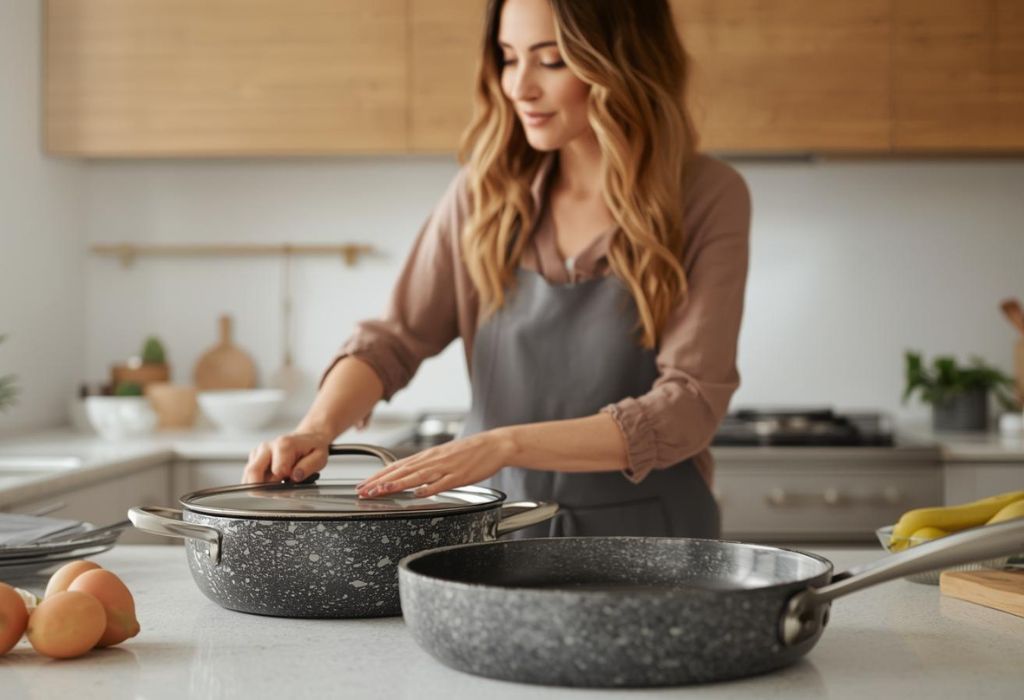
Granite stone cookware continues to attract attention because it offers a blend of practicality and style.
Beyond its distinctive speckled look, this type of cookware provides advantages that appeal to both beginner cooks and seasoned home chefs.
One of the strongest selling points is its nonstick surface. Whether achieved through PTFE or ceramic coatings, granite stone pans make it easy to prepare delicate foods like eggs or fish without sticking.
This reduces the need for oil or butter, which supports healthier cooking with fewer added fats. Cleaning is also simpler because food residue rarely clings to the smooth surface.
Heat distribution is another advantage. Most granite stone cookware is built on an aluminum base, which promotes quick and even heating.
Even cooking ensures fewer hot spots, lowering the risk of burning food and extending the life of the coating.
Lightweight construction further adds to convenience, offering a middle ground between heavy cast iron and ultra-light stainless steel pans.
Aesthetic appeal cannot be overlooked. The speckled finish gives a modern and stylish appearance that fits seamlessly into many kitchens.
For consumers who want cookware that looks as good as it performs, granite stone provides an attractive option.
Durability is also a common selling point. Quality granite stone pans resist scratches better than traditional nonstick cookware when used properly.
Many are advertised as dishwasher-safe, although hand washing is still recommended to maximize lifespan. Some brands also highlight compatibility with ovens and induction stoves, offering greater versatility.
For families concerned about food safety, granite stone cookware coated with ceramic or enamel brings peace of mind. These surfaces are generally non-reactive and resist acidic foods such as tomatoes or citrus, unlike bare aluminum which may leach into meals.
Ultimately, the popularity of granite stone cookware comes from its balance of performance, ease of use, and stylish design.
It appeals to buyers looking for nonstick convenience without committing to heavy, high-maintenance cookware.
Is granite stone cookware good for nonstick cooking?
Yes. Its surface makes low-fat and oil-free cooking much easier.
Does it heat evenly?
The aluminum base usually ensures quick, even heat distribution.
Is it safe for acidic foods?
Ceramic and enamel coatings are non-reactive, making them safe for tomato and citrus dishes.
Is cleaning simple and efficient?
Yes. Most pans require little scrubbing and are often dishwasher-friendly.
Drawbacks & Risks in Everyday Use
Despite its popularity, granite stone cookware is not free from limitations. The biggest concern lies in the durability of its coating.
Even high-quality nonstick or enamel finishes can wear down with frequent use, especially if exposed to rough utensils or abrasive cleaning tools.
Once the surface becomes scratched or chipped, the cookware loses both safety and performance.
Overheating presents another risk. Nonstick coatings, particularly PTFE-based, can degrade when exposed to temperatures beyond 500°F (260°C).
This breakdown may release toxic fumes, which are harmful to humans and dangerous to household pets like birds.
While ceramic or enamel coatings avoid this problem, they may be more vulnerable to thermal shock when subjected to sudden temperature changes.
Granite stone cookware also tends to have a shorter lifespan compared to uncoated options like stainless steel or cast iron.
Even when handled carefully, the nonstick layer will eventually weaken, leading to reduced food release and uneven cooking.
Replacing cookware every few years can become costly and less sustainable for households seeking long-term value.
Another drawback is compatibility. Not all granite stone pans are induction-ready, and oven safety varies by brand and handle construction.
Some handles may warp or loosen at high oven temperatures, limiting versatility. Consumers must carefully check manufacturer specifications before assuming a pan is universally safe.
Chemical leaching is also a risk when coatings deteriorate. Damaged enamel can expose underlying metals, while poor-quality glazes may contain trace amounts of lead or cadmium.
Acidic dishes such as tomato-based sauces increase the potential for metal migration, raising health concerns over time.
Finally, marketing claims can sometimes mislead buyers. Labels such as “PFOA-free” or “eco-friendly” sound reassuring but may not cover other harmful compounds like PFAS.
Without third-party testing or certifications, these claims are not always verifiable. This inconsistency makes it difficult for consumers to confidently assess safety.
While granite stone cookware offers convenience and style, these risks highlight the need for careful handling, brand research, and realistic expectations about lifespan.
Choosing quality over low cost can reduce many of these drawbacks, but users must remain aware of potential safety issues.
What causes granite stone cookware to wear out?
Frequent use, metal utensils, and abrasive cleaning can damage coatings.
Is overheating a serious risk?
Yes. PTFE-based coatings can break down at high temperatures, releasing toxic fumes.
Does it last as long as stainless steel or cast iron?
No. Nonstick coatings typically wear out in a few years.
Can acidic foods damage the cookware?
Yes, acidic dishes may accelerate wear or trigger leaching if the surface is damaged.
How to Choose Safer Granite Stone Cookware
Selecting granite stone cookware requires more than judging by appearance. Since the term “granite” is not standardized, products vary widely in composition and safety. Understanding what to look for can help buyers avoid hidden risks and ensure safer cooking for daily use.
The first step is examining the coating. High-quality ceramic or porcelain enamel coatings are generally safer than PTFE-based nonstick surfaces.
Ceramic coatings are usually free from PFAS, PFOA, and PTFE, making them a strong choice for health-conscious households.
Enamel coatings provide a non-reactive glass-like surface, offering resistance to acidic foods and reducing the likelihood of chemical leaching.
Certification is another key factor. Look for cookware tested and approved by organizations such as the FDA, REACH in Europe, or other recognized safety standards.
Some brands highlight third-party testing to confirm their “non-toxic” or “chemical-free” claims. Without such verification, labels may be misleading.
Brand reputation also matters. Established companies that invest in research and manufacturing quality often produce cookware with longer lifespans and safer coatings.
Cheap alternatives may mimic the granite look but cut corners with thin coatings or questionable materials. Checking independent reviews and customer feedback provides insights into durability and performance.
Functionality should also guide the purchase. Induction compatibility, oven safety, and handle construction are important considerations.
A pan with heat-resistant handles and oven-safe certification expands versatility, while compatibility with multiple stovetops ensures broader use.
Budget is another practical concern. While ceramic or enamel-coated granite stone cookware may cost more initially, the investment often pays off in safety and durability.
Low-cost options may seem appealing but can wear out faster, leading to repeated purchases and potential safety risks.
Finally, buyers should consider warranties. A reliable brand often offers a replacement guarantee, signaling confidence in the product’s longevity and safety.
This assurance can help reduce long-term costs while protecting consumer trust.
Choosing safer granite stone cookware requires attention to coating type, certifications, brand reputation, and construction details.
With careful selection, consumers can enjoy the benefits of nonstick convenience without unnecessary risks.
What labels should buyers check for safety?
Look for “PFOA-free,” “PTFE-free,” FDA approval, or European REACH certification.
Which coatings are considered safest?
Ceramic and porcelain enamel are generally safest for daily cooking.
Do trusted brands matter?
Yes. Established brands typically ensure better quality and testing standards.
Is paying more for premium cookware worthwhile?
Yes. Higher-priced pans often offer safer coatings and longer lifespans.
Proper Care for Safety & Longevity

Even the safest granite stone cookware can become risky if not maintained properly. The lifespan and safety of these pans depend heavily on how they are cleaned, stored, and used in daily cooking.
Correct care ensures the coating remains intact, reducing the risk of scratches, chemical leaching, or surface wear.
Cleaning is one of the most important factors. Harsh scouring pads, steel wool, and abrasive powders can scratch coatings and expose the metal beneath.
A soft sponge with mild soap is usually sufficient for removing food residue. For stubborn stains, soaking the pan in warm water before gentle cleaning prevents unnecessary abrasion.
Utensil choice also plays a major role. Metal spatulas or forks can damage nonstick and enamel surfaces, leading to chips or cracks. Safer options include silicone, wood, or nylon utensils, which preserve the coating while still being durable for everyday cooking.
Heat management is another aspect of proper care. Overheating a pan, especially one with a PTFE-based coating, risks toxic fume release and faster degradation. Using medium or low heat not only protects health but also extends the cookware’s nonstick performance.
Similarly, thermal shock should be avoided. Placing a hot pan under cold water can crack ceramic or enamel coatings, creating long-term safety issues.
Dishwasher use is often debated. While some granite stone cookware is marketed as dishwasher-safe, the high heat and strong detergents inside dishwashers can gradually wear down coatings. Hand washing is recommended for those who want to maximize longevity.
Storage practices should not be overlooked. Stacking pans directly on top of each other without padding can cause scratches and chips.
Using protective pan dividers, cloths, or hanging storage solutions helps preserve the surface.
Replacing cookware at the right time is also essential. Even with proper care, nonstick coatings lose effectiveness after years of use.
If food begins sticking frequently, or if chips, scratches, or peeling appear, the cookware should be replaced to avoid potential exposure to harmful materials.
By following these guidelines, granite stone cookware can remain safe and effective for daily use. Proper care not only ensures healthier cooking but also reduces costs by extending the life of each pan.
How should granite stone cookware be cleaned?
Use mild soap and a soft sponge; avoid harsh abrasives.
Can metal utensils be used safely?
No. Silicone, wood, or nylon utensils are recommended.
Does overheating damage the cookware?
Yes. High heat degrades coatings and may release toxic fumes.
Is dishwasher cleaning safe?
Hand washing is safer, as dishwashers can shorten coating lifespan.
Alternatives & Comparisons

Granite stone cookware is only one option among many available to home cooks. While it offers a balance of nonstick performance and aesthetic appeal, it is important to compare it with other popular cookware materials to understand its relative strengths and weaknesses.
Stainless steel is a trusted alternative for households focused on durability and safety. It contains no coatings that can peel or degrade, making it virtually non-reactive and long-lasting.
However, stainless steel requires more oil to prevent sticking and may present a learning curve for beginners who are used to nonstick pans. For searing and browning, though, it is unmatched.
Cast iron is another strong competitor. Known for its longevity, it can last for decades when properly seasoned. Cast iron naturally develops a nonstick surface through seasoning and can even enrich food with trace amounts of dietary iron.
On the downside, it is heavy, requires regular maintenance, and may react with acidic foods if seasoning is compromised.
Ceramic cookware often appeals to those seeking non-toxic and eco-friendly options. High-quality ceramic coatings are free from PFAS, PFOA, and PTFE, providing safer cooking surfaces.
While ceramic is generally safer at high heat than PTFE, it can be more fragile and may lose nonstick qualities faster over time.
Traditional nonstick cookware, often coated with Teflon, remains popular due to its exceptional food release properties.
However, health risks associated with overheating PTFE and the environmental impact of PFAS compounds have led many consumers to seek alternatives like granite stone or ceramic.
When compared side by side, granite stone cookware offers a compromise. It provides easier food release than stainless steel, lighter handling than cast iron, and often greater durability than ceramic.
Yet, its safety depends heavily on the type of coating used. Buyers should weigh their priorities—whether it’s longevity, chemical-free cooking, or ease of use—before making a final decision.
How does granite stone compare to stainless steel?
Stainless steel is more durable and non-reactive but requires oil for nonstick performance.
Is cast iron safer than granite stone cookware?
Cast iron avoids chemical coatings but needs seasoning and careful maintenance.
Are ceramic cookware options better?
Ceramic is non-toxic and chemical-free but less durable than granite stone.
What about traditional Teflon-coated pans?
They excel in nonstick ability but may release toxic fumes when overheated.
What the Future Holds – Trends & Regulatory Outlook

Granite stone cookware exists in a market that is evolving quickly. Growing awareness about chemical safety, durability, and sustainability is shaping the way cookware is manufactured and regulated.
Consumers today want products that are both effective and safe, putting pressure on brands to adopt cleaner technologies.
One of the strongest trends is the move away from PFAS chemicals. PTFE and PFOA, once common in nonstick cookware, are being phased out in many regions.
The European Union has proposed strict regulations to limit PFAS use in consumer goods, while the United States has increased scrutiny on cookware labeled as “non-toxic.” These changes are pushing manufacturers to innovate with safer alternatives.
At the same time, research into new coating technologies is accelerating. Mineral-infused ceramic layers, reinforced porcelain enamel, and hybrid coatings are emerging as possible solutions.
These options aim to deliver the same nonstick convenience without the risks of chemical leaching or toxic fumes. Brands that successfully combine safety with durability are likely to lead the market in coming years.
Transparency is also becoming a regulatory priority. Misleading marketing terms such as “stone-derived” or “eco-friendly” are facing closer inspection.
Consumer advocacy groups are calling for clearer labeling and independent safety testing to ensure buyers know exactly what their cookware contains.
This shift will likely reduce confusion and help establish stronger trust between brands and consumers.
Sustainability is another factor influencing cookware development. Eco-conscious buyers are demanding recyclable materials, longer-lasting products, and reduced environmental impact in manufacturing.
Granite stone cookware will need to adapt to these expectations, either by improving durability or providing greener production methods.
The future suggests that granite stone cookware will continue to hold a place in kitchens, but its safety and reputation will depend on industry standards.
As stricter regulations and innovations arrive, consumers may see a wider range of chemical-free, certified-safe cookware options, offering both peace of mind and improved performance.
Are regulations on PFAS tightening?
Yes. Many regions are restricting PFAS in cookware to protect consumers.
Are new coating technologies being developed?
Yes. Innovations include mineral-infused ceramics and hybrid nonstick layers.
Will marketing terms face stricter oversight?
Yes. Labels like “eco-friendly” or “stone-derived” will require greater transparency.
How is sustainability shaping cookware trends?
Manufacturers are adopting recyclable materials and greener production methods.
Conclusion
The question of is granite stone cookware safe in daily cooking use does not have a single answer. Safety depends on the materials and coatings used, the quality of manufacturing, and the way the cookware is maintained.
While granite stone cookware offers undeniable advantages such as nonstick convenience, stylish design, and lighter handling, it also presents risks when coatings degrade, overheat, or contain questionable compounds.
Research shows that many products labeled as “granite stone” rely on PTFE or other nonstick coatings, which can release harmful fumes when overheated.
In contrast, ceramic or enamel-coated options provide safer, non-reactive surfaces but may sacrifice some durability.
This makes careful brand selection and attention to certifications essential for consumers who want both performance and safety.
Proper care further extends the lifespan of granite stone cookware. Avoiding harsh utensils, preventing thermal shock, and washing gently all help preserve protective coatings.
Replacing cookware when visible damage appears is another important step in maintaining safety at home.
Ultimately, granite stone cookware can be a safe choice if chosen wisely and used responsibly.
By focusing on high-quality materials, verified safety standards, and consistent care, consumers can enjoy healthier cooking with fewer risks.
Informed decisions not only protect households but also encourage manufacturers to produce safer and more sustainable cookware for the future.

I’m Emma J. Caldwell, the founder, lead writer, and home-cooking enthusiast behind KitchenGuideCo.com. With a background in culinary arts and over a decade of cooking experience in both professional and personal kitchens, I created this platform to demystify recipes, offer smart kitchen gadget reviews, and guide readers through meal prep with confidence and clarity.