Hydro Flask bottles have become an everyday companion for people who want cold water at the gym, hot drinks on the go or long lasting hydration outdoors. With constant daily use, cleaning becomes a routine that many people want to make faster and easier.
This leads to the common question of whether Hydro Flask bottles can safely go in the dishwasher.
Some people have heard that vacuum insulated bottles should never be washed in a dishwasher because the heat might affect the insulation.
Others believe the powder coat finish may fade or peel after repeated wash cycles. These conflicting opinions make Hydro Flask owners uncertain about the best cleaning method.
Imagine finishing a long workout and dropping your Hydro Flask straight into the dishwasher for convenience. The next morning, you expect it to come out clean, fresh and ready for the day.
But a small doubt lingers about whether the dishwasher could slowly affect the bottle’s performance or appearance.
Hydro Flask bottles are made from durable stainless steel and designed to handle rough use. Even so, people still worry about how heat, detergent and water pressure interact with the insulation and exterior coating. Understanding how dishwashers affect these materials helps remove the confusion.
This guide explains everything you need to know about whether Hydro Flask bottles are truly dishwasher safe.
From official manufacturer guidelines to practical cleaning tips, each section helps you protect your bottle and maintain its long term performance. By the end, you will know exactly how to clean your Hydro Flask safely and confidently.
WHY PEOPLE ASK WHETHER HYDRO FLASK BOTTLES ARE DISHWASHER SAFE

Many Hydro Flask owners drink from their bottle every single day, which makes cleaning an important and repetitive task. The dishwasher seems like the easiest option because it saves time and effort. This convenience makes users wonder if it is actually safe for the bottle.
People often hear that double wall vacuum insulated bottles should not go into the dishwasher. They fear that the heat or pressure might harm the insulation. This fear creates confusion about what is safe and what is not.
There are also concerns about the powder coat exterior. Many think that repeated dishwashing might cause the coating to fade, peel or scratch. This makes owners extra careful because the bottle’s appearance matters to them.
Users also worry about the lids and rubber gaskets. These small parts can trap moisture and bacteria if not properly cleaned. The question becomes whether the dishwasher can reach those tight areas effectively.
Conflicting information online adds to the confusion. Some people say their Hydro Flask survives years of dishwashing, while others experience small cosmetic issues. These mixed experiences make users unsure of what to follow.
Another concern is taste and odor. If dishwasher detergents leave behind a smell or residue, it can affect the taste of drinks. This makes proper cleaning even more important.
Overall, the question exists because people want the safest cleaning method. Hydro Flask bottles are expensive and valuable, so owners want to protect them. Understanding the truth behind dishwasher safety becomes essential.
WHAT HYDRO FLASK SAYS ABOUT DISHWASHER SAFETY
Hydro Flask has updated their guidelines over the years, which creates some confusion. Newer models with the updated powder coat are officially labeled dishwasher safe. This means the exterior can handle dishwasher heat and detergent without damage.
Older Hydro Flask models were not marked dishwasher safe. The brand originally recommended hand washing to protect the coating. This difference causes mixed advice in online discussions.
Hydro Flask notes that their stainless steel body can handle dishwashing safely. The metal structure and double wall insulation remain stable under high heat. This reassurance helps reduce fear of insulation damage.
The company recommends removing the lid before washing. Lids include small parts that require separate cleaning for hygiene. Washing them individually ensures proper cleaning.
Hydro Flask suggests placing lids and small components on the top rack. The top rack exposes them to gentler heat. This prevents warping or deformation of plastic parts.
Gaskets should be removed for cleaning. Dirt and moisture often collect beneath the rubber ring. Separate washing keeps the lid free from odors or mold.
Hydro Flask’s updated testing confirms dishwasher safety for most new models. Following their guidelines protects both appearance and functionality. This makes cleaning simpler and more reliable.
HOW DISHWASHERS AFFECT STAINLESS STEEL WATER BOTTLES
Dishwashers rely on strong water pressure and high heat to clean thoroughly. These elements can affect different materials in different ways. Stainless steel handles this combination very well.
High heat does not warp stainless steel because of its strength. Hydro Flask bottles use premium steel that resists structural changes. This allows the bottle body to remain stable in dishwashers.
Detergents may affect cheaper metals, but Hydro Flask steel is higher quality. It resists dullness caused by strong detergents. This keeps the interior looking clean for a long time.
Hard water can create mineral spotting. These mineral marks do not damage the bottle but make it look dirty. A simple vinegar rinse removes them easily.
The drying cycle may leave streaks if water evaporates unevenly. This is mostly cosmetic and not harmful. Air drying solves this issue effectively.
Rubber components react differently to heat. Gaskets may lose elasticity faster when exposed to dishwasher temperatures. Cleaning them manually helps protect them.
Powder coat finishes are durable, but harsh detergents can reduce shine. Mild detergents help keep the surface smooth. This prevents early wear or fading.
Overall, dishwashers affect appearance more than structure. Stainless steel remains strong even after repeated wash cycles. This makes Hydro Flask bottles suitable for dishwasher cleaning when done correctly.
HOW TO SAFELY WASH HYDRO FLASK BOTTLES IN THE DISHWASHER
Start by removing the lid completely from the bottle. Lids contain small crevices that require extra cleaning. Removing them ensures no dirt remains trapped.
Take out the gasket from the lid. The gasket often hides moisture and residue. Cleaning it separately prevents odor and mold formation.
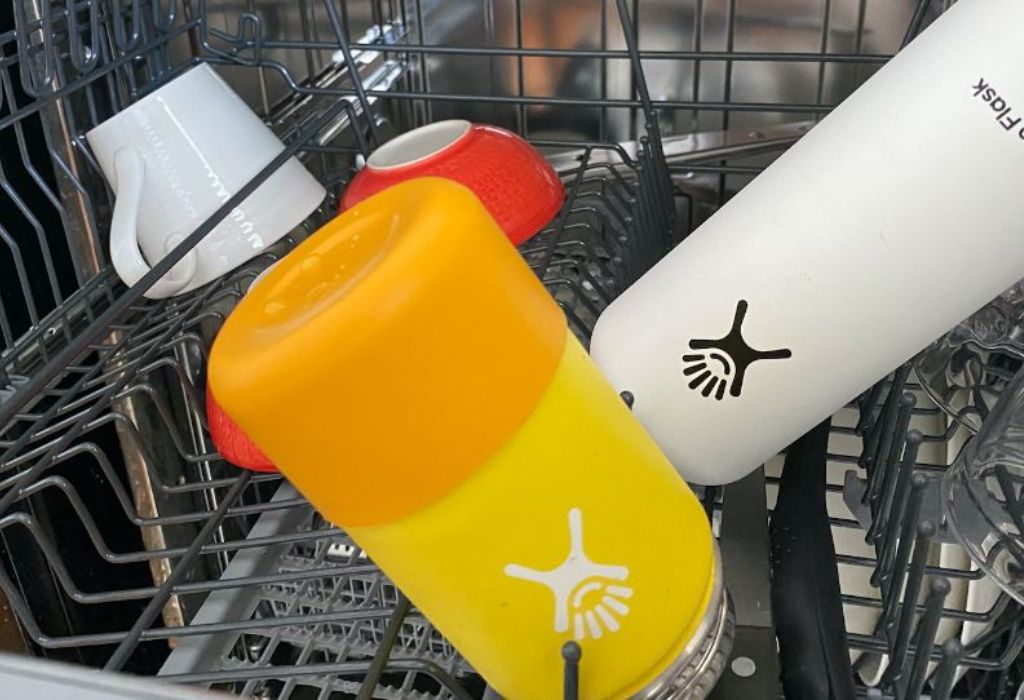
Place the stainless steel bottle on the bottom rack. The strong water pressure helps clean the interior effectively. Stainless steel can safely handle this bottom rack heat.
Put the lid on the top rack. Plastic parts require gentler heat exposure. This prevents damage and maintains lid durability.
Use a mild and fragrance free detergent. Strong detergents may leave behind smells that affect drink taste. Mild formulas keep the bottle fresh.
Choose a normal or sanitize cycle. Both cycles clean thoroughly without excessive stress on materials. Sanitizing cycles add extra hygiene.
Allow all parts to dry completely. Moisture trapped inside the lid or gasket can cause bad smells. Air drying ensures proper freshness.
COMMON MISTAKES PEOPLE MAKE WHEN WASHING HYDRO FLASK BOTTLES
One mistake is washing the bottle with the lid still attached. This prevents water from reaching hidden areas in the lid. It also increases odor risk.
Many people forget to remove the gasket. Gaskets trap residue beneath them. Cleaning them separately keeps the bottle smelling clean.
Some users wash the lid on the bottom rack. The bottom rack is too hot for plastic components. This may cause warping or deformation.
Using abrasive cleaners damages the powder coat finish. Harsh detergents reduce shine and cause surface dullness. Gentle cleaners protect the coating.
Overloading the dishwasher blocks water flow. When items touch each other, water pressure becomes weak. This leaves residue inside the bottle.
Ignoring hard water buildup causes long term issues. Minerals stain the inside of stainless steel. Regular cleaning prevents permanent marks.
Leaving the bottle damp after washing leads to odor. Moisture allows bacteria to grow quickly. Full drying prevents this problem.
WILL DISHWASHERS DAMAGE HYDRO FLASK OVER TIME
Dishwashers may slightly fade the powder coating if harsh detergents are used. The coating stays strong, but mild dullness can occur. Using gentle detergents avoids this issue.
Stainless steel may lose shine after years of dishwashing. This is only cosmetic and does not affect performance. Polishing helps restore the look.
Heat cycles may cause minimal interior scratching. These scratches do not affect drink safety. They are part of natural long term use.
Gaskets may wear out faster with dishwasher heat. Replacing gaskets helps maintain the lid seal. This prevents leaking problems.
Mineral deposits appear frequently in hard water areas. These spots stay on the surface and look like stains. A vinegar rinse fixes this easily.
Plastic lids may show signs of aging. Heat exposure slowly weakens plastic over time. Top rack placement slows this process.
Hydro Flask bottles remain structurally strong even after years. Most changes are cosmetic, not functional. This makes dishwashing safe for the bottle body.
HAND WASHING VS DISHWASHER FOR HYDRO FLASK BOTTLES
Hand washing gives users full control over cleaning. It is gentle on the powder coat. This helps maintain the bottle’s exterior shine.
Dishwashing is faster and more convenient. Busy people benefit from this hands free cleaning method. It reduces daily effort and saves time.
Hand washing removes stains more effectively. Scrubbing tough areas provides deeper cleaning. This is useful when the bottle holds strong flavored drinks.
Dishwashers sanitize better than hand washing. High heat kills more bacteria. This is ideal for households focused on hygiene.
Hand washing protects the gasket better. Rubber stays flexible longer without heavy heat exposure. This increases gasket lifespan.
Dishwashers clean odor buildup well. The combination of heat and detergent removes strong smells. This helps keep the bottle fresh.
Both methods have advantages. Users can choose based on time, convenience and preservation goals. Combining both offers the best long term care.
HOW TO DEEP CLEAN HYDRO FLASK BOTTLES SAFELY
Baking soda works well for removing stains. Mixing it with warm water creates a natural scrub. This removes residue without damaging surfaces.
Vinegar helps dissolve mineral buildup. Soaking the bottle in vinegar eliminates hard water spots. It restores the steel’s shine.
Lids require detailed deep cleaning. Using a small cleaning brush reaches tight areas. This prevents mold in hidden corners.
Gaskets must be sanitized regularly. Soaking them in warm soapy water removes bacteria. This keeps the bottle hygienic for daily use.
Tea and coffee stains need extra cleaning effort. A baking soda paste removes deep discoloration. This keeps the interior looking bright.
Odor removal is essential for long term use. Filling the bottle with diluted vinegar eliminates strong smells. Rinsing well restores fresh taste.
Monthly deep cleaning maintains the bottle’s longevity. This routine keeps all parts clean and odor free. It ensures safe use every day.
SIGNS YOUR HYDRO FLASK NEEDS REPLACEMENT
Rust spots indicate structural damage. Stainless steel should not rust. If rust appears, replacement becomes necessary.
A peeling powder coat exposes metal beneath. This reduces appearance quality. It also affects scratch resistance.
A damaged or leaking lid shows lid failure. Replacing the lid may help, but long term leaking signals deeper issues. In such cases, a new bottle is safer.
Persistent smells indicate hidden bacteria. If cleaning cannot remove the odor, the bottle may be compromised. Smells reflect deeper contamination.
Mold that returns repeatedly shows internal damage. Damaged lids trap moisture permanently. Replacement prevents health risks.
Deep dents affect insulation. Insulation depends on air layers that get compromised by dents. This reduces temperature control.
If drinks taste metallic even after cleaning, the steel is deteriorating. This shows the inner layer is affected. Replacement becomes necessary.
Important FAQs About Washing Hydro Flask in Dishwashers
Are Hydro Flask bottles really dishwasher safe?
Yes, newer Hydro Flask bottles with updated powder coating are officially labeled dishwasher safe. The stainless steel and insulation can handle the dishwasher environment. Following proper washing steps keeps them safe long term.
Can dishwasher heat damage the insulation inside a Hydro Flask?
No, the vacuum insulation is sealed between two steel walls and is not affected by dishwasher heat. The structure remains stable even with repeated washing. Most concerns about insulation damage are based on old myths.
Can I put the Hydro Flask lid in the dishwasher?
Yes, but only on the top rack to protect plastic parts from heat. Removing the gasket first allows cleaner and safer washing. Washing lids separately improves hygiene.
Should the gasket be removed before dishwashing a Hydro Flask?
Yes, the gasket should always be removed before washing. It collects moisture and bacteria under the rubber ring. Cleaning it separately prevents odor and mold growth.
Why does my Hydro Flask smell after using the dishwasher?
The smell usually comes from trapped moisture in the lid or under the gasket. If the gasket is not removed, detergent residue may remain inside. Air drying all parts fully removes the issue.
Will the powder coat fade if I wash my Hydro Flask in the dishwasher?
Mild fading is possible if harsh detergents or hot cycles are used often. Using gentle detergent greatly reduces this risk. The updated Hydro Flask powder coat is designed to resist wear.
Why are there white spots on my Hydro Flask after washing?
White spots are caused by mineral deposits from hard water. These do not damage the bottle but look unattractive. A vinegar rinse easily removes them.
Is it better to hand wash or use a dishwasher for Hydro Flask bottles?
Both methods are safe when done correctly. Hand washing is gentler on the powder coat, while dishwashing provides quick and effective cleaning. Choosing the method depends on convenience and personal preference.
Can dishwashing cause my Hydro Flask lid to warp?
Yes, if the lid is placed on the bottom rack where heat is strongest. Using the top rack prevents warping and extends lid lifespan. Proper placement is important.
What detergent is best for washing Hydro Flask bottles in the dishwasher?
Mild, fragrance free detergent is the safest choice. Strong scented or abrasive detergents can leave residue or dull the surface. Gentle detergents keep the bottle clean and odor free.
Conclusion
Remove the gasket frequently to prevent odor buildup. Cleaning underneath keeps the lid fresh. This ensures safe drinking.
Avoid strong or scented detergents. Mild cleaners protect stainless steel and powder coating. This maintains long term color and shine.
Dry the bottle completely after washing. Moisture causes odor and mold. Full drying protects the interior.
Use vinegar occasionally for hard water areas. This helps prevent mineral stains. It keeps the bottle looking clean.
Store the bottle with the lid off. Airflow prevents odor buildup. This keeps the bottle fresh for daily use.
Avoid freezing the bottle. Freezing damages insulation. Room temperature storage is safest.
Regular maintenance extends the bottle’s lifespan. Hydro Flask bottles last years with proper care. Consistent cleaning ensures long term performance.

I’m Emma J. Caldwell, the founder, lead writer, and home-cooking enthusiast behind KitchenGuideCo.com. With a background in culinary arts and over a decade of cooking experience in both professional and personal kitchens, I created this platform to demystify recipes, offer smart kitchen gadget reviews, and guide readers through meal prep with confidence and clarity.