Many people wonder if their NutriBullet can take the place of a food processor, especially when kitchen space is limited or when they want one machine to handle all their blending and food prep tasks.
NutriBullet blenders are known for their compact size and high speed blades, which make them excellent for smoothies, sauces, and purees.
But food processors are designed for much more varied tasks, including chopping, slicing, shredding, mixing, and kneading. This difference leads to confusion about whether a NutriBullet can do the same work.
Someone who uses their NutriBullet daily for smoothies may assume it should be strong enough to chop vegetables or shred cheese. However, blenders and food processors work in fundamentally different ways, using different blade shapes, bowl designs, and motor strengths.
These structural differences affect how ingredients move, how they break down, and what texture they end up with. Understanding these differences is the first step in knowing what your NutriBullet can and cannot replace.
NutriBullet blenders rely heavily on creating a vortex that pulls food toward the blades. This vortex is only possible when there is enough liquid to move ingredients in a circular motion.
Food processors, on the other hand, chop ingredients using torque and sharp blades without needing any liquid. This makes them more versatile for texture control, especially when working with dry or solid foods.
People often try using their NutriBullet for chopping onions, making salsa, or processing vegetables, only to end up with a watery, mushy mixture.
This happens because the NutriBullet is built for blending rather than precise chopping. The speed of the blades liquefies ingredients quickly, while a food processor cuts ingredients into controlled, even pieces.
Knowing what tasks a NutriBullet can perform well helps you make the most of your appliance. It also prevents damage to the motor and saves you from disappointing results in your recipes.
This guide breaks down exactly what NutriBullets are good at, what they struggle with, and when you absolutely need a food processor instead.
By the end, you will clearly understand whether a NutriBullet can truly replace a food processor in your kitchen.
How NutriBullet Blenders Work
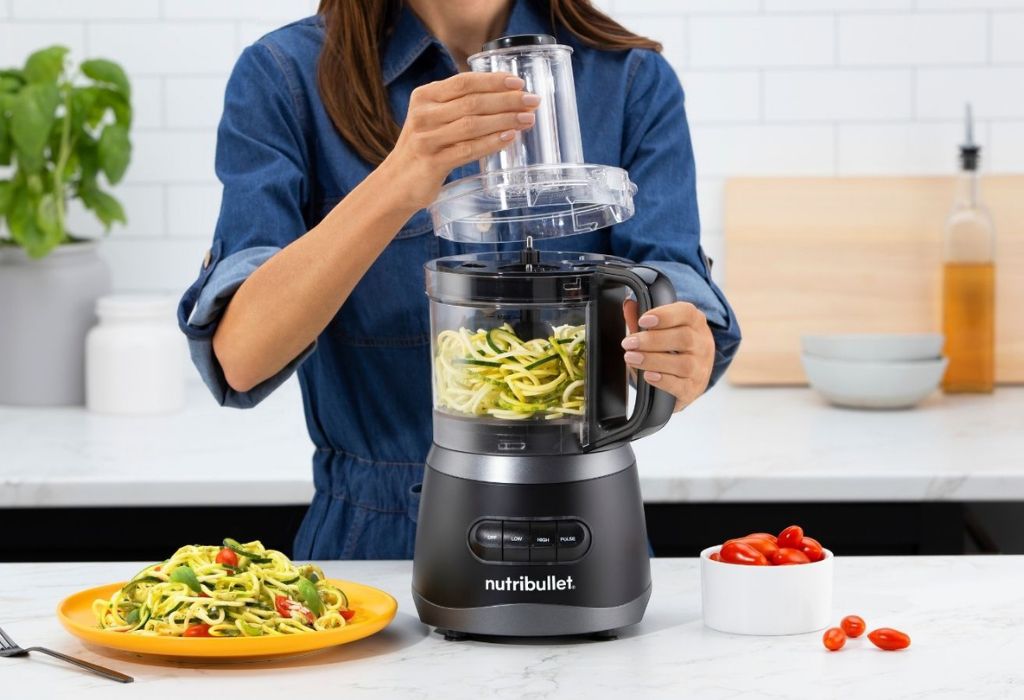
NutriBullet blenders operate with extremely fast spinning blades that rely on speed to break down ingredients. This high speed action creates a vortex that pulls food downward toward the blades. The vortex is essential for blending liquids, fruits, vegetables, and ice.
Unlike food processors, NutriBullet machines depend on having enough liquid to keep food circulating. Without liquid, ingredients get stuck along the sides of the cup. This prevents proper blending and may strain the motor.
The blade design in a NutriBullet is crafted for pulverizing and liquefying. It is not meant for chopping or controlled slicing. This makes the NutriBullet ideal for smoothies but not ideal for other food prep tasks.
The compact size of NutriBullet cups means food has limited space to move. This contributes to quick blending but not efficient mixing. Food processors have wider bowls that allow ingredients to circulate more effectively.
NutriBullet motors are powerful in terms of speed but not in terms of torque. Torque allows machines to push through thick, dense mixtures. Low torque makes NutriBullet machines unsuitable for doughs or thick batters.
The design of NutriBullet cups encourages blending from top to bottom. This movement is very different from the circular chopping pattern of a food processor. As a result, NutriBullets create smooth results rather than textured ones.
Understanding how NutriBullet blenders work helps explain their strengths and limitations. This knowledge shows why they excel in certain tasks but struggle in others. It also helps you use your NutriBullet safely and effectively.
How Food Processors Work and Why They Are Different
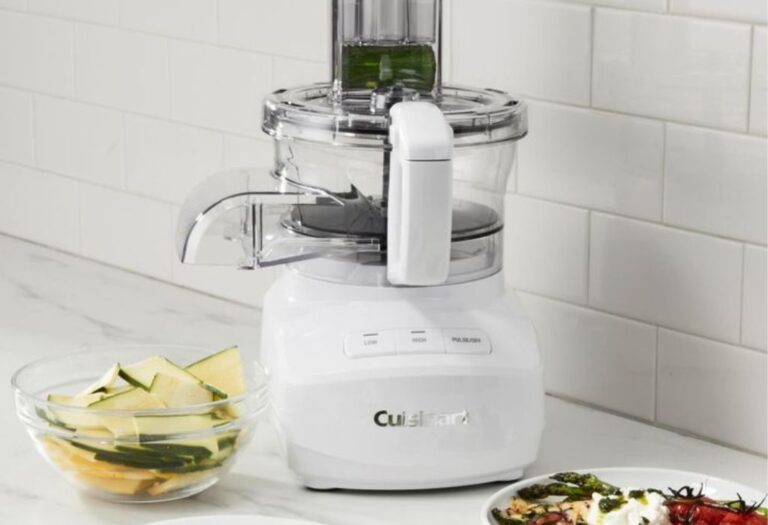
Food processors use sharp, strong blades that rotate at moderate speed to chop, slice, shred, and mix ingredients.
Their motors deliver high torque, which allows them to handle thick or dry foods without difficulty. This makes food processors ideal for a wide range of tasks beyond blending.
The wide bowl in a food processor is designed to allow ingredients to spread out. This gives the blade room to reach everything evenly. It also helps prevent food from getting stuck or over processed.
Food processors do not require liquid to work properly. They are built to chop solid ingredients effectively. This independence from liquid is a major difference from the NutriBullet.
The pulse function provides complete control over texture. Each pulse cuts ingredients into consistent pieces. Blenders cannot provide this level of precision.
Food processors can handle heavy mixtures like dough. Their motors are designed for strength rather than speed. This helps them work through dense ingredients without burning out.
The various blades and discs give food processors multiple abilities. You can slice vegetables, shred cheese, puree sauces, or create crumble mixtures. NutriBullets do not have interchangeable blades.
Food processors excel at preparing meals that require texture, shape, and consistency. Their design supports precise chopping and controlled cutting. This is why they are so valuable for cooking and meal prep.
Can a NutriBullet Chop Vegetables Like a Food Processor
A NutriBullet can chop vegetables only if you do it very carefully and only for soft vegetables. Hard vegetables such as carrots, potatoes, or beets will not chop well. They require the strength and torque of a food processor.
When you place vegetables in a NutriBullet, the blade spins too quickly. This quick spinning liquefies the vegetables rather than chopping them. The result is a mushy mixture instead of solid pieces.
NutriBullets also struggle because they require liquid to keep food moving. Vegetables do not naturally have enough liquid to support the vortex. This creates uneven results inside the cup.
Soft vegetables like tomatoes or cucumbers may chop somewhat, but they become watery quickly. This makes them unsuitable for salads or recipes requiring firm texture. A food processor keeps vegetables crisp.
Using short pulses can improve texture slightly. However, the blade speed still breaks down vegetables too quickly. This causes over processing after only a few seconds.
NutriBullets cannot chop evenly because ingredients move vertically instead of horizontally. The vertical motion promotes blending rather than chopping. Food processors move ingredients throughout the bowl for even cuts.
For proper chopping, a food processor is essential. Its blade and bowl design produce clean, consistent pieces. NutriBullets simply do not provide the same control or precision.
Can a NutriBullet Make Dough or Mix Thick Batters
NutriBullets are not designed to make dough or mix thick batters. Dough requires strong torque and slow movement. The fast spinning NutriBullet blade cannot perform this type of mixing safely.
Thick doughs put heavy strain on the motor. The machine struggles because the blade cannot move through dense mixtures. This leads to overheating or motor damage.
Food processors use a dough blade with strong torque. NutriBullets do not have torque based power. They rely on speed, which is the opposite of what dough requires.
Thick batters like cookie dough or cake batter also present problems. Blenders cannot push heavy mixtures around the cup. Ingredients stick to the sides and stop moving.
Even if the NutriBullet moves the mixture slightly, it often becomes over processed. Over mixing affects the texture of cakes and pastries. This results in dense baked goods.
The NutriBullet blades are not shaped for folding or mixing. They are designed for cutting and blending. Dough requires stretching and kneading motions that a blender cannot mimic.
For any task involving dough or thick batter, a food processor is necessary. The NutriBullet cannot take on these jobs safely or effectively. This makes it unsuitable as a dough mixing replacement.
Can a NutriBullet Slice or Shred Ingredients
NutriBullets cannot slice or shred ingredients. Food processors use slicing discs and shredding discs to create uniform cuts. These attachments spin at controlled speeds that prevent over processing.
The NutriBullet has only one blade type. This blade is designed to cut and blend food into fine pieces. It cannot create consistent slices or shreds.
Vegetables like carrots, cabbage, and zucchini require slicing wheels to produce clean cuts. NutriBullets reduce these vegetables to pulpy mixtures instead. The final texture is not usable for salads or stir fries.
Cheese also cannot be shredded in a NutriBullet. Instead of creating shreds, the NutriBullet heats the cheese through friction. Heated cheese becomes sticky and clumps together.
Herbs and leafy greens do not slice cleanly in a NutriBullet. They become bruised and watery. This affects color, flavor, and appearance.
Meat cannot be shredded properly either. Blenders turn meat into a paste rather than clean strands. A food processor creates more controlled results.
Only food processors can slice or shred effectively. NutriBullet machines do not have the attachments or design for these tasks. Their purpose is blending rather than precision cutting.
Can a NutriBullet Grind or Mill Ingredients
NutriBullets can grind certain ingredients, but only soft to moderately hard ones. Nuts, seeds, grains, and coffee beans can be milled to some extent. However, the results vary based on blade sharpness and cup size.
Grinding nuts in a NutriBullet often leads to nut butter rather than coarse pieces. The blender generates heat which causes nuts to release oil. This turns the mixture into a paste quickly.
Spices can be ground but may not achieve a perfectly fine powder. The blade speed pulverizes them unevenly. Food processors and spice grinders produce more consistent results.
Coffee beans can be ground, but the grind size is inconsistent. Some beans become powder while others stay coarse. This affects brewing quality.
The NutriBullet struggles with hard grains like wheat or corn. The cup design and blade shape limit grinding efficiency. Grain mills or processors perform these tasks better.
Seeds such as chia or flax can be milled effectively. The small size of the seeds makes them easy to break apart. This works reasonably well in a NutriBullet.
Grinding is possible but limited. The NutriBullet excels in pulverizing rather than creating coarse textures. This makes it insufficient for some recipes.
Can a NutriBullet Make Salsa, Dips, or Chopped Mixes
A NutriBullet can make smooth salsa or blended dips, but struggles with chunky textures. When ingredients enter the cup, the blades break them down too quickly. This creates a watery or overly smooth mixture.
Pulse control is limited in NutriBullet machines. Even short bursts can over process ingredients. This makes chunky salsa difficult to achieve.
Guacamole also becomes too soft. The blades puree the avocado rather than mashing it gently. Food processors allow better texture control.
Chopped mixtures like pico de gallo do not work well in a blender. Tomatoes release water instantly when blended. This causes soggy, uneven texture.
Hummus can be made in a NutriBullet but may require extra liquid. This changes the consistency of traditional recipes. Food processors create thicker results.
NutriBullets are excellent for creamy dips. Smooth sauces blend quickly and evenly. This makes them useful for certain recipes.
Chunky dips require a food processor. Only a processor provides enough texture control. The NutriBullet cannot replace this functionality.
Can a NutriBullet Be Used for Meal Prep
A NutriBullet can help with some parts of meal prep, but not all. It blends sauces, purees, and smoothies well. These are useful for many meal plans.
It struggles with chopping vegetables for meal prep bowls. Vegetables become mushy when blended. Their texture becomes unsuitable for fresh dishes.
Hard vegetables cannot be processed properly. Carrots, onions, and cabbage require food processor strength. The NutriBullet lacks the necessary torque.
Proteins cannot be prepped in the NutriBullet. Chicken and beef require controlled chopping. Blenders turn them into paste.
NutriBullets perform well for puree based meal prep. Baby food, soups, and sauces blend smoothly. This makes them helpful for some diets.
For dry chopping tasks, a food processor is essential. It handles volume and control that a NutriBullet cannot. This makes the processor more suitable for full meal prep tasks.
NutriBullets support meal prep only in blending tasks. They are not replacements for full food prep machines. The two appliances complement each other rather than compete.
What Tasks a NutriBullet Performs Well
NutriBullets excel at blending smoothies quickly and smoothly. Their high speed blades liquefy fruits, vegetables, and ice easily. This makes them perfect for daily drink preparation.
The NutriBullet is excellent at making pureed soups. Heated ingredients blend into silky smooth textures. This creates restaurant quality soup bases.
The machine performs well with sauces and dressings. Ingredients emulsify quickly, creating creamy mixtures. This includes salad dressings, marinades, and dips.
NutriBullets make great nut milks. Nuts blend smoothly with water to create creamy results. The mixture filters easily with a fine strainer.
The machine also excels at quick grinding tasks. Seeds, soft nuts, and herbs break down easily. This supports healthy lifestyle recipes.
Smoothies, shakes, and drinks turn out consistent. The vortex maintains even blending. This reliability is why NutriBullets are so popular.
NutriBullets thrive in any task involving liquids. Their design promotes smooth, uniform textures. This makes them excellent blending appliances.
What Tasks You Should Always Use a Food Processor For
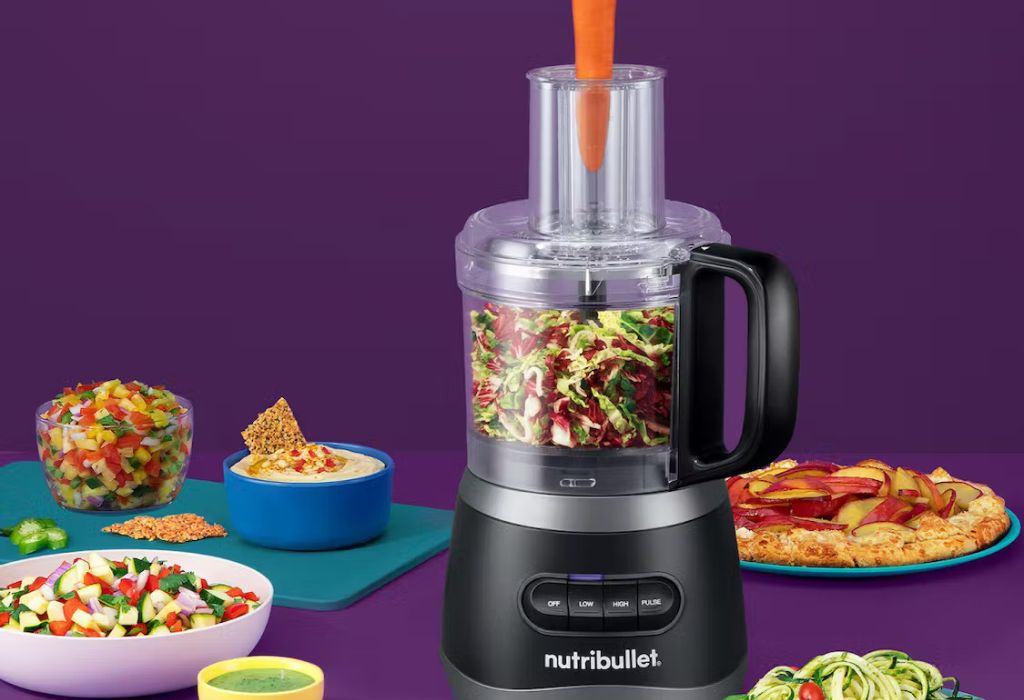
You should always use a food processor for chopping vegetables. The processor creates even, controlled pieces. Blenders turn vegetables to mush.
Shredding cheese requires the shredding disc. Using a NutriBullet melts the cheese through heat. This results in clumps rather than shreds.
Slicing vegetables is only possible with slicing discs. NutriBullets lack these attachments. Their blades cannot create uniform slices.
Any dough or pastry mixture belongs in a food processor. The torque based motor handles thick dough. NutriBullet motors cannot push through dense mixtures.
Meat processing requires precision and control. Food processors chop meat evenly. Blenders produce paste.
Recipes requiring texture control need a food processor. From salsa to chopped nuts, control is essential. NutriBullets do not offer this control.
Food processors excel at dry, thick, or structured foods. Their design allows precise cutting and mixing. They are essential for many meal prep tasks.
NutriBullet vs Food Processor: Which One Should You Choose
If you primarily make smoothies, shakes, purees, or soups, a NutriBullet is the ideal choice. It performs these tasks quickly and efficiently. The texture is always smooth and consistent.
If you prepare meals requiring chopped vegetables or sliced ingredients, a food processor is better. It handles texture based tasks with precision. This makes cooking easier and faster.
For people who bake, a food processor offers greater value. It mixes dough, crumbles, and pastry ingredients. The NutriBullet cannot perform these tasks.
If you have limited space, consider your most common recipes. A NutriBullet suits liquid based cooking. A food processor suits everything else.
Some households benefit from owning both appliances. They complement each other in the kitchen. Each tool offers unique advantages.
Choosing depends on your cooking lifestyle. Think about what you prepare most often. The right choice supports your daily cooking needs.
NutriBullets excel in blending, while processors excel in processing. Each serves a distinct purpose. Understanding this helps you make the best decision.
Frequently Asked Questions
Can I chop vegetables in a NutriBullet?
Only soft vegetables chop partially. Hard vegetables become mushy. Food processors perform better.
Can a NutriBullet replace a food processor completely?
No, it cannot handle chopping, slicing, shredding, or dough. It is designed for blending only. Food processors remain essential for solid foods.
Can I shred cheese in a NutriBullet?
No, it melts and clumps due to friction. Food processors create clean shreds. Blenders cannot replicate this.
Can a NutriBullet make cookie dough?
No, dough requires torque based motors. NutriBullet blades spin too fast. This damages texture and the machine.
Can I use a NutriBullet for chopping onions?
It will turn onions watery. Food processors chop evenly. Blenders break them down too quickly.
Can NutriBullets grind spices?
They can, but not evenly. The grind size varies. Spice grinders produce better results.
Can a NutriBullet crush ice like a food processor?
It crushes ice well for drinks. It cannot handle ice for food prep. Food processors lack ice crushing blades.
Does a NutriBullet need liquid to work?
Yes, liquid supports the vortex. Without liquid, ingredients stick. Food processors do not require liquid.
Can a NutriBullet make salsa?
Only smooth salsa. Chunky salsa is not possible. A food processor gives better texture.
Is it safe to process meat in a NutriBullet?
No, it turns into paste. Food processors chop evenly. Blenders lack control.
Conclusion
A NutriBullet is a powerful blender, but it is not a full food processor replacement. It excels at smoothies, purees, sauces, and liquid based recipes. Its high speed blades are designed for blending rather than chopping or cutting.
Food processors use torque, blade variety, and controlled speed to handle solid ingredients. They chop vegetables, slice fruits, shred cheese, mix dough, and prepare textured recipes. These tasks cannot be performed safely or effectively in a NutriBullet.
Understanding the strengths of each appliance helps you choose the right tool for your kitchen. NutriBullets are ideal for drink based and blended recipes. Food processors are essential for meal prep, chopping, and baking support.
Both tools serve valuable roles in cooking. Using each machine for the right task ensures better results, safer operation, and improved efficiency. You can enjoy smoother blends from the NutriBullet and better texture control from the food processor.
With this knowledge, you can confidently decide whether your NutriBullet can handle your food prep needs. It may not replace a food processor, but it remains an excellent appliance for many recipes. Knowing the difference gives you more control over every dish you prepare.

I’m Emma J. Caldwell, the founder, lead writer, and home-cooking enthusiast behind KitchenGuideCo.com. With a background in culinary arts and over a decade of cooking experience in both professional and personal kitchens, I created this platform to demystify recipes, offer smart kitchen gadget reviews, and guide readers through meal prep with confidence and clarity.