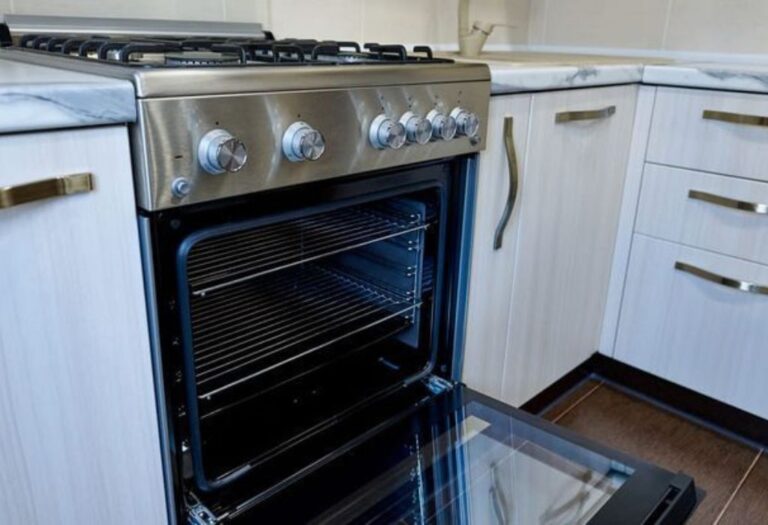
In a small kitchen, every inch matters. One misplaced appliance can turn cooking into a daily struggle of bumping elbows, blocking cabinets, and fighting poor airflow.
Among all appliances, the oven creates the biggest placement challenge because it needs space, heat clearance, ventilation, and safe access all at once.
Many homeowners focus only on fitting the oven into any available gap. What they often overlook is how oven placement affects safety, cooking comfort, energy efficiency, and long-term kitchen usability.
In a compact layout, even a few inches of wrong positioning can lead to overheating cabinets, constant congestion, and poor ventilation.
This detailed guide explains the best oven placement in a small kitchen using real planning logic rather than guesswork.
From wall ovens and under-counter setups to corner placement, airflow clearance, and safety zones, every option is explained so you can choose the smartest arrangement for your limited space.
Why Oven Placement Matters More in a Small Kitchen
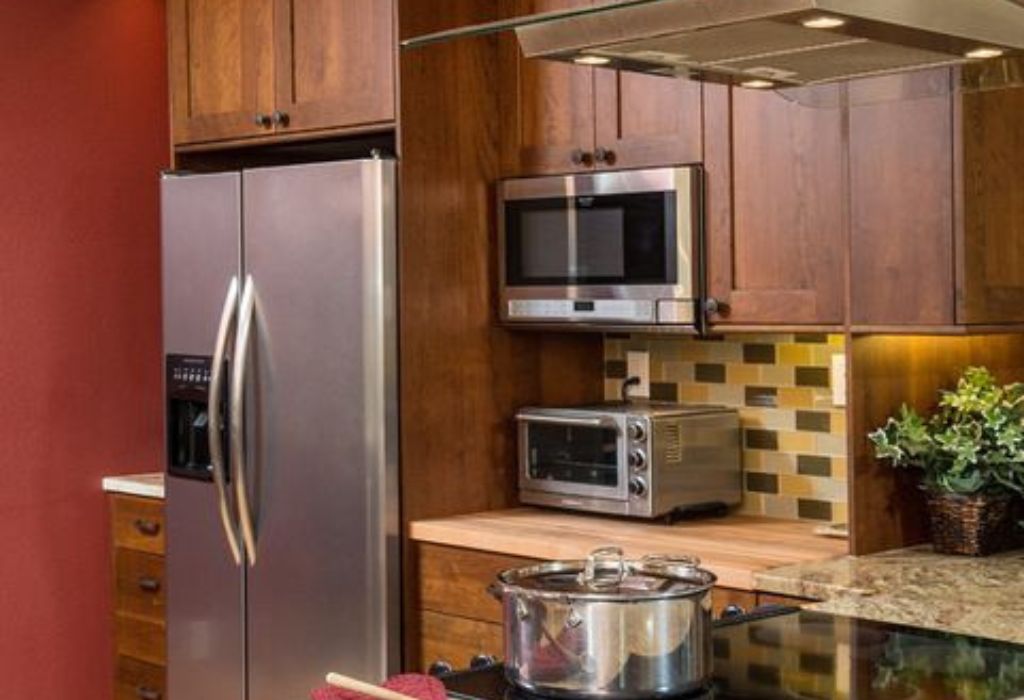
In large kitchens, poor oven placement can be inconvenient. In small kitchens, it becomes a daily operational problem. Poor oven placement can block walkways, restrict cabinet access, and create dangerous heat build-up in tight spaces.
Heat concentration is the first major issue. Ovens generate intense radiant and exhaust heat. When placed too close to side walls, cabinetry, or refrigerators, heat gets trapped and slowly damages nearby surfaces.
This leads to warped cabinets, peeling laminate, and reduced appliance lifespan.
Workflow disruption is another major problem. In a small kitchen, the oven often sits directly on the primary cooking path. If the oven door opens into a tight walkway, it blocks movement completely and increases the chance of burns and collisions.
Ventilation also becomes more critical in compact spaces. Poor oven placement causes steam, smoke, and heat to linger in the kitchen. This increases humidity, grease buildup, and long-term air discomfort.
Core Safety and Clearance Rules for Small Kitchen Ovens
Every oven requires minimum clearance on all sides. These clearances prevent heat damage and ensure proper air circulation. In small kitchens, ignoring these rules leads to serious safety hazards.
Side clearance is especially important. Ovens must never be pressed tightly against side cabinets without heat shielding. Even modern insulated ovens radiate heat during prolonged cooking.
Rear clearance allows heat exhaust to escape. When the oven is pushed directly against walls without airflow space, internal components overheat. This shortens heating element life and stresses electronic controls.
Vertical clearance is critical for under-counter and built-in oven installations. Heat must rise and escape freely without being trapped under thick countertops or enclosed cabinetry.
Door clearance affects day-to-day safety. The oven door must open fully without hitting adjacent drawers, dishwasher doors, or narrow walkways.
Under-Counter Oven Placement in Small Kitchens
Under-counter oven placement is one of the most common space-saving strategies. It keeps the oven beneath the countertop, usually under a cooktop or beside a cabinet unit.
This placement preserves wall space and keeps the kitchen visually open. It also maintains a traditional workflow between stovetop and oven in one cooking zone.
However, under-counter ovens sit low. This requires bending frequently, which becomes uncomfortable for elderly users. It also increases burn risk when removing heavy hot trays at a low height.
Proper side insulation becomes very important in under-counter setups. Heat builds up beneath counters faster than in wall-mounted designs. Vent slots and rear exhaust outlets must remain unobstructed.
Wall-Mounted Oven Placement for Compact Kitchens
Wall-mounted ovens are increasingly popular in small kitchens because they free valuable base cabinet space and improve ergonomics. The oven sits at chest or waist height, making tray access safer and easier.
This placement also improves heat distribution. Since the oven is elevated, heat escapes more freely and does not bake nearby cabinets or floors.
Wall-mounted ovens can be paired with compact microwave units above or storage drawers below. This vertical stacking maximizes space efficiency.
The main limitation is wall width. Narrow kitchens may not have enough uninterrupted wall space to accommodate a full-height oven tower without blocking windows, doorways, or storage cabinets.
Corner Placement of Ovens in Small Kitchens
Corner placement is sometimes used when straight wall space is unavailable. A corner oven allows otherwise unused space to become functional.
This placement works best with angled cabinetry or diagonal oven mounts. It preserves walkway space and opens up surrounding counter areas.
However, corner placement demands precise door clearance planning. The oven door must open fully without hitting adjacent cabinets or walls.
Heat concentration can also occur in corners if ventilation is poor. Additional exhaust pathways or heat shields may be required to prevent long-term cabinet damage.
Best Oven Placement in Galley Kitchens
Galley kitchens are long and narrow with appliances arranged on both sides. Oven placement in this layout requires careful balance to avoid blocking the center walkway.
The oven should never open directly into the narrow aisle if possible. This creates a dangerous bottleneck when the door is open.
Placing the oven at the end of one wall run reduces traffic interference. This allows the door to open into less busy space.
Wall ovens work especially well in galley kitchens because they keep floor pathways clear and improve safety during tray removal.
Best Oven Placement in L-Shaped Small Kitchens
L-shaped kitchens offer better flexibility for oven placement because they provide two connected wall sections.
The oven is best positioned on the outer edge of one leg of the L. This prevents the oven door from blocking the inner corner where most movement occurs.
Placing the oven near the refrigerator should be avoided when possible. The radiant heat from the oven forces refrigerators to work harder and reduces cooling efficiency.
Corner junctions in L-shaped layouts should be reserved for lazy Susan storage or blind cabinets rather than ovens to preserve accessibility.
Oven Placement Near Sink and Dishwasher in Small Kitchens
Placing the oven too close to water sources creates thermal shock and electrical safety risks. Sudden temperature differences between hot oven surfaces and moisture increase long-term damage.
Steam from dishwashers can also enter oven ventilation vents if placed directly adjacent. This causes internal condensation and accelerates corrosion of electronic components.
If oven and dishwasher must be adjacent due to space limitations, a heat-resistant divider panel should be installed between them.
The oven should also remain far enough from the sink to prevent splash exposure when the door is open.
Best Oven Placement for Proper Ventilation in Tight Spaces
Ventilation is often overlooked in small kitchens. Ovens release heat, steam, smoke, and grease vapor during operation. If this air cannot escape efficiently, the entire kitchen becomes uncomfortable.
The oven should ideally be installed beneath a proper range hood or near an external exhaust wall. This shortens airflow pathways and improves heat evacuation.
Recirculating hoods are less effective in small kitchens and require frequent filter maintenance to prevent odor buildup.
Wall-mounted ovens should include top vent clearance zones to release hot air upward without back-pressure buildup.
Vertical Stacking with Microwave and Oven in Small Kitchens
Vertical stacking is one of the smartest oven placement solutions in compact layouts. The oven is placed below, with a microwave or steam oven above.
This arrangement centralizes cooking functions into a single vertical zone. It minimizes walking distance between appliances and improves workflow.
Stacking also frees countertop space that would otherwise be occupied by a microwave.
Proper vent separation between stacked appliances is essential. Each unit must dissipate heat independently without transferring thermal stress between devices.
How Oven Placement Affects Daily Kitchen Workflow
In small kitchens, workflow efficiency determines cooking comfort more than overall layout design. Poor oven placement interrupts natural movement patterns.
The ideal workflow follows a simple sequence: refrigerator to prep surface, prep surface to cooktop, cooktop to oven. This flow minimizes steps and prevents crossing hot zones.
If the oven sits outside this sequence, it causes unnecessary backtracking. This leads to collisions, congestion, and fatigue during routine cooking.
The oven door should never block access to the sink, refrigerator, or main prep surface when opened. This is one of the most common small kitchen planning mistakes.
Built-In Oven vs Freestanding Oven Placement in Small Kitchens
Built-in ovens are designed to integrate seamlessly into cabinetry, making them ideal for small kitchens where visual clutter must be minimized. They allow precise height placement and can be paired with storage above and below to maximize vertical space usage.
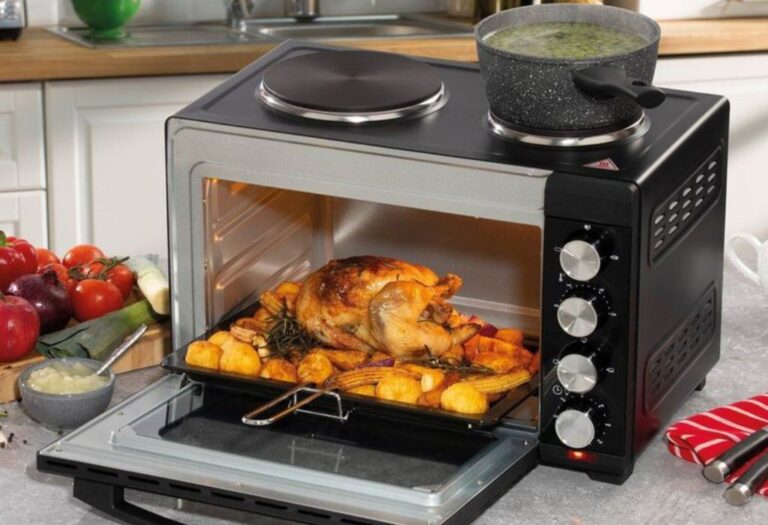
Freestanding ovens combine the cooktop and oven into one unit. While they save initial installation effort, they consume significant horizontal space. In small kitchens, this often limits countertop workspace and interrupts prep zones.
Built-in ovens allow separate placement of cooktops and ovens. This separation greatly improves workflow in tight layouts because users can cook and bake simultaneously without congestion.
Freestanding ovens work best in very narrow layouts where only one appliance zone is possible. Built-in ovens offer superior flexibility and better space efficiency when customization is possible.
Optimal Distance Between Oven, Refrigerator, and Pantry
The oven should never be placed directly beside the refrigerator if space allows. The radiant heat from the oven forces the refrigerator compressor to work harder, increasing energy usage and reducing long-term reliability.
Pantry placement also matters. If dry food storage sits next to the oven, heat exposure slowly degrades food quality and shortens shelf life. Flour, grains, and baking mixes are especially sensitive to repeated heat exposure.
The ideal placement keeps the oven at least one base cabinet width away from the refrigerator. If this is impossible, a heat-resistant buffer panel should be installed between them.
Keeping the pantry across the aisle from the oven works well in small kitchens. This allows easy access to ingredients without placing them in direct heat zones.
Best Heights for Wall Oven Installation in Compact Spaces
Wall oven height determines daily comfort and long-term safety. In small kitchens, incorrect height placement causes strain, burns, and awkward reach angles.
The ideal placement positions the center of the oven door between waist and chest height for the primary user. This allows easy monitoring and safer tray handling.
If the oven is installed too high, lifting heavy hot dishes becomes dangerous. If installed too low, constant bending strains the back and increases spill risk.
Double ovens in small kitchens should be avoided unless absolutely necessary. They consume vertical space needed for storage and overload available ventilation capacity.
Vent Hood Alignment and Exhaust Zoning for Small Kitchens
Vent hood alignment must match oven placement for maximum air removal efficiency. In compact kitchens, poorly aligned vents trap heat, smoke, and grease.
If the oven sits beneath a cooktop, the range hood must fully cover the cooking surface width. Undersized hoods allow heat to escape into cabinets.
Wall ovens require dedicated upper ventilation slits to release rising heat. Blocking these vents causes internal overheating and early electronic failure.
If external ducting is unavailable, recirculating hoods must be serviced frequently. Filters should be cleaned regularly to prevent grease buildup and restricted airflow.
Electrical and Gas Line Planning for Tight Kitchen Layouts
Small kitchens demand precise utility planning. Oven placement must align perfectly with existing gas lines or electrical outlets to avoid expensive rerouting.
Electric ovens often require dedicated high-amperage circuits. Overloading existing circuits leads to breaker trips and serious fire hazards.
Gas ovens require proper vented piping with accessible shutoff valves. In tight spaces, emergency access to gas shutoff must never be blocked by cabinetry.
Planning utility access before finalizing oven position prevents destructive cabinet removal and costly retrofits later.
Child Safety and Burn Prevention in Small Kitchen Oven Placement
Small kitchens concentrate heat zones close to movement paths. Children are at higher risk of burns because they move unpredictably in tight spaces.
Ovens should never be placed where children frequently pass through. Entry points, refrigerator access zones, and dining transition paths are high-risk areas.
Installing cool-touch oven doors and child safety locks dramatically reduces accident risk. Remote monitoring and auto shutoff systems also add protection in compact layouts.
Corner ovens often provide safer child access control when properly shielded from main walkways.
Mistakes to Avoid in Small Kitchen Oven Installation
Placing the oven directly beside tall pantry cabinets without insulation is a major mistake. Heat damage builds slowly and becomes visible only after permanent material warping.
Ignoring door swing clearance causes constant obstruction. Drawer collisions and blocked walkways are common results of poor door planning.
Installing the oven too close to corner walls restricts full door opening and limits airflow. This causes both safety hazards and long-term mechanical failures.
Overlooking ventilation capacity is another major error. Insufficient exhaust leads to lingering smoke, grease buildup, and heat discomfort throughout the kitchen.
Professional Layout Optimization Tips for Tiny Kitchens
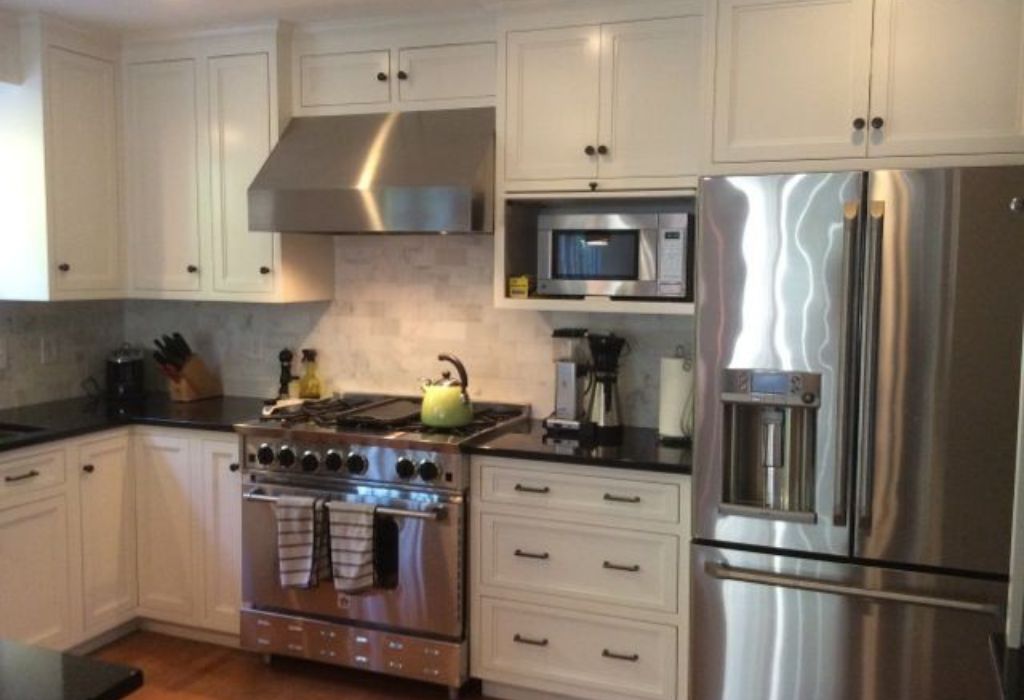
Design professionals use zoning to allocate heat, prep, and storage areas efficiently. Ovens are always kept within defined hot zones away from refrigeration and food storage.
Using narrow-profile wall ovens creates extra base cabinet room for drawers and pull-out storage beneath.
Reflective backsplash materials near ovens help redirect heat visually and technically reduce thermal absorption by surrounding walls.
Professionals also favor vertical stacking because it concentrates heat output into a single ventilated column instead of spreading it across cabinets.
Future-Proofing Oven Placement for Kitchen Upgrades
Oven placement should anticipate future appliance upgrades. Modern ovens are becoming smarter, heavier, and more ventilation-dependent.
Leaving extra clearance space during installation allows easier replacement later without cabinet reconstruction.
Planning for future smart oven wiring and ventilation capacity keeps the layout adaptable as technology advances.
A flexible placement saves thousands in remodeling costs when upgrading to new appliance generations.
Oven Installation Questions for Small Kitchens
What is the safest oven placement in a small kitchen?
Wall-mounted ovens away from walkways provide the safest placement.
Can I place an oven next to the refrigerator?
It is not recommended due to heat transfer and energy loss.
Is under-counter oven placement safe in small kitchens?
Yes, if proper insulation and ventilation are provided.
What is the best oven height for short users?
The oven center should align between waist and chest level.
Can a corner oven work in a small kitchen?
Yes, with proper door clearance and heat shielding.
Do wall ovens need extra ventilation?
Yes, top ventilation slots are essential for heat release.
Are freestanding ovens bad for small kitchens?
They consume more horizontal space but can still work in narrow layouts.
How close can an oven be to a sink?
There should be sufficient separation to prevent moisture exposure.
Is vertical stacking safe in compact kitchens?
Yes, when each appliance has independent ventilation.
Should children’s safety affect oven placement?
Absolutely. Walkway and entryway placement should always be avoided.
Conclusion
Choosing the best oven placement in a small kitchen is not just about fitting an appliance into limited space. It is about balancing safety, airflow, workflow efficiency, and long-term durability.
A poorly positioned oven can damage cabinets, disrupt cooking flow, increase burn risks, and shorten appliance lifespan.
Wall-mounted ovens, vertical stacking, and carefully planned under-counter installations offer the most efficient solutions for compact layouts. Proper clearance, ventilation alignment, and utility planning prevent future repair headaches and ensure safe daily operation.
By treating oven placement as a strategic design decision rather than an afterthought, homeowners can transform even the smallest kitchen into a safe, functional, and comfortable cooking space that performs efficiently for years to come.

I’m Emma J. Caldwell, the founder, lead writer, and home-cooking enthusiast behind KitchenGuideCo.com. With a background in culinary arts and over a decade of cooking experience in both professional and personal kitchens, I created this platform to demystify recipes, offer smart kitchen gadget reviews, and guide readers through meal prep with confidence and clarity.