The smell of roasted vegetables filled the kitchen as the timer beeped softly in the background. What should have been a golden tray of perfectly cooked food instead revealed half-burnt edges and a soggy center.
The recipe was followed carefully, the ingredients were fresh, yet the dish failed. The real mistake was not the spices or the timing. It was the oven temperature.
Vegetarian cooking in the oven depends more on temperature control than many people realize. Vegetables contain high water content, plant-based proteins behave differently than meat, and grains require steady heat to bake evenly.
A few degrees too high can dry out vegetables. A few degrees too low can leave casseroles undercooked in the center.
Many home cooks assume one fixed temperature works for all vegetarian dishes. This leads to uneven cooking, dull flavors, and wasted ingredients. Different vegetarian foods require different heat levels depending on moisture, thickness, and cooking method.
This guide explains the correct oven temperature for vegetarian dishes in a simple, practical, and reliable way.
From roasted vegetables to casseroles, bread, snacks, desserts, and reheating, every major category is covered clearly so that every vegetarian dish comes out perfectly every time.
Why Oven Temperature Matters for Vegetarian Cooking
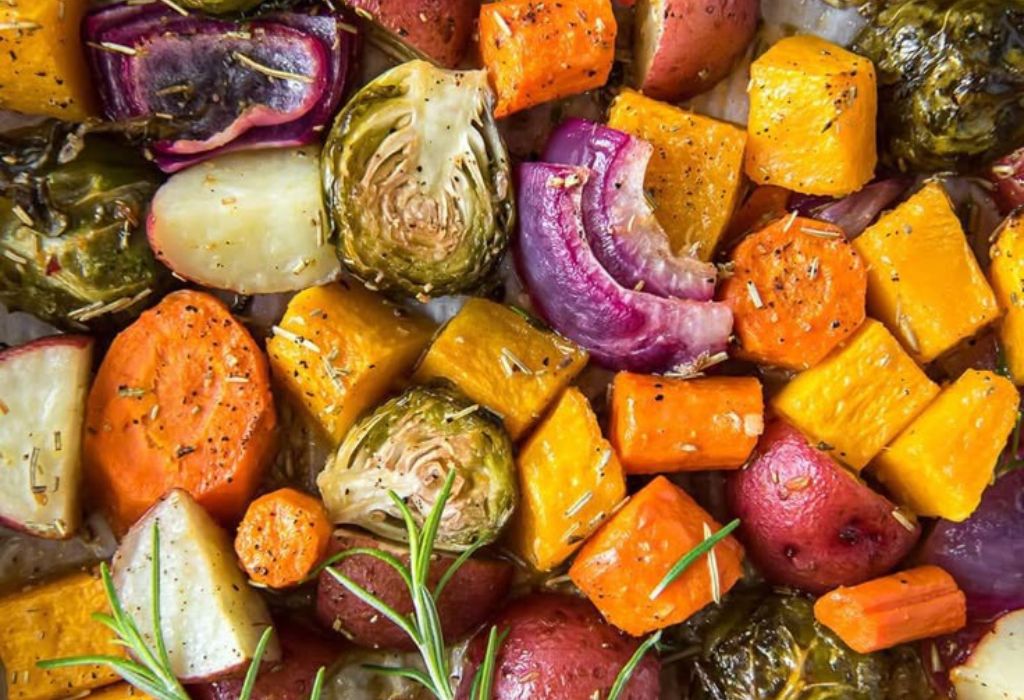
Oven temperature plays a critical role in vegetarian cooking because plant-based ingredients behave very differently from meat.
Vegetables contain high levels of water, which means they release steam as they cook. If the temperature is too low, vegetables will steam instead of roast, leaving them soft and bland.
If the temperature is too high, moisture evaporates too quickly and causes burning on the outside while the inside stays undercooked.
Vegetarian proteins such as tofu, paneer, beans, and lentils also react differently to heat. They absorb heat gradually and need steady temperature to cook evenly. Sudden high heat can cause outer surfaces to dry out while leaving the center cold.
Grains and dough-based vegetarian foods like bread, pizzas, and pies rely on controlled expansion. Yeast, air pockets, and moisture balance all depend on correct oven temperature for proper rise and crumb structure.
Temperature also affects flavor development. Caramelization of natural sugars in vegetables occurs only within specific heat ranges. Too low and flavors stay flat. Too high and sugars burn before the food cooks through.
Understanding temperature control ensures even cooking, better texture, richer flavor, and consistent results for every vegetarian dish.
Basic Oven Temperature Ranges Explained Simply
Oven temperatures are generally divided into low, moderate, and high heat ranges. Low temperature typically falls between 150°C to 160°C. This range is used for slow cooking, gentle baking, and dishes that need to dry or set slowly such as certain veggie loafs or custards.
Moderate heat ranges from 170°C to 180°C. This is the most commonly used setting for everyday vegetarian cooking. Cakes, casseroles, baked pasta, and stuffed vegetables usually cook best at this temperature. It allows even heating without burning.
Moderately high heat ranges between 190°C to 200°C. This range is ideal for roasting vegetables, baking pizzas, and cooking dishes that need a crisp outer layer with a soft interior. Root vegetables, potato wedges, and roasted cauliflower perform best at this level.
High heat ranges from 210°C to 230°C or more. This level is used for fast cooking, browning, and creating crispy textures. Flatbreads, thin-crust pizza, and certain snack items benefit from this intense heat.
Knowing these basic ranges helps home cooks choose the right temperature based on food type instead of guessing every time.
Ideal Oven Temperature for Baked Vegetable Dishes
Most baked vegetable dishes cook best between 180°C and 200°C. This range allows vegetables to soften inside while developing a golden surface. Common baked dishes such as stuffed peppers, baked broccoli, carrot bakes, and mixed vegetable trays all benefit from this temperature zone.
For soft vegetables such as zucchini, tomato, mushroom, and eggplant, 180°C is usually sufficient. These vegetables release water quickly and soften fast. Lower temperature prevents them from collapsing into mush.
For dense vegetables such as potato, beetroot, pumpkin, sweet potato, and cauliflower, 200°C works better. These require stronger heat to cook through fully while forming a crisp exterior.
If multiple vegetables are baked together on one tray, choose an average of 190°C and cut denser vegetables slightly smaller. This ensures even cooking across different textures.
Using oil also affects temperature choice. With oil, vegetables tolerate higher heat and caramelize better. Without oil, slightly lower temperatures prevent drying out.
Correct temperature selection is the key difference between soggy baked vegetables and perfectly roasted ones.
Oven Temperature for Vegetarian Casseroles and Bakes
Vegetarian casseroles and baked meals require gentle, steady heat to cook evenly from edge to center. The ideal temperature for most vegetarian casseroles ranges between 170°C and 180°C.
Dishes such as vegetable lasagna, baked pasta, potato gratin, lentil bakes, and rice casseroles contain thick layers and high moisture. Cooking them too fast at high temperature burns the top while the center remains undercooked.
170°C is ideal for casseroles with cheese, cream, and sauce-heavy bases. This allows slow heat penetration without separating sauces or over-browning cheese.
180°C works best for drier casseroles that include breadcrumbs, layered vegetables, or baked stuffing. This temperature helps form a light crust without burning.
Covering casseroles with foil during the first half of baking helps avoid surface drying. The foil can be removed later to allow browning at the same temperature.
Correct casserole temperature ensures soft interior, fully cooked grains, well-melted cheese, and stable structure without collapse.
Oven Temperature for Bread, Pizza, and Flatbreads
Vegetarian bread, pizza, and flatbreads require higher oven temperatures than most baked vegetable dishes because dough structure depends heavily on rapid heat expansion.
Yeast activation, steam formation, and crust development all work together within a specific heat range.
For most homemade breads, the ideal oven temperature is 190°C to 200°C. This range allows the dough to rise properly while forming a golden crust. Lower temperatures produce pale bread with dense interior, while excessive heat hardens the crust too fast and traps moisture inside.
Vegetarian pizza performs best at higher temperatures between 220°C and 250°C. Thin crust pizza requires intense heat to create crispy edges and bubbly cheese without drying the toppings.
Thick crust pizza works better at around 210°C to 220°C so that the base cooks through without burning.
Flatbreads such as naan, pita, and focaccia benefit from temperatures between 220°C and 240°C. High heat causes rapid puffing and creates soft interiors with lightly crisp surfaces. Lower heat makes flatbreads dry and stiff.
Always preheat the oven fully before baking dough-based vegetarian foods. Proper preheating ensures immediate heat contact which is essential for correct texture and rise.
Oven Temperature for Vegetarian Snacks and Appetizers
Vegetarian snacks and appetizers require precise temperature control to achieve crispy exteriors and soft interiors. Popular snacks such as samosas, spring rolls, pakoras, cutlets, stuffed mushrooms, and baked fritters all fall into this category.
Most baked vegetarian snacks cook best between 190°C and 210°C. This temperature range allows the outer surface to crisp while cooking fillings thoroughly. Lower heat results in pale, soft snacks. Higher heat risks burning before the inside cooks properly.
Snacks with breadcrumb coatings or pastry layers benefit from slightly higher heat around 200°C to 210°C. This ensures proper browning and flaky texture.
Cheese-based snacks such as baked cheese balls, stuffed peppers, or paneer bites work best at around 180°C to 190°C. Cheese melts smoothly without separating or burning.
If snacks are frozen before baking, increase temperature by about 10°C and extend cooking time slightly. This prevents undercooked centers.
Proper spacing on the baking tray is also important. Overcrowding traps steam and reduces crispness even if temperature is correct.
Oven Temperature for Cakes, Cookies, and Desserts
Vegetarian desserts rely heavily on controlled heat for proper texture, structure, and moisture balance. Cakes, cookies, brownies, and custards all require stable oven temperatures.
Most cakes bake best at 170°C to 180°C. This temperature allows gradual rise, even crumb formation, and proper moisture retention. High heat causes cracked tops and dry interiors.
Cookies typically require higher heat between 180°C and 190°C. This range allows quick setting of edges while maintaining soft centers. Too low produces flat and over-spread cookies.
Brownies and dense bars bake best at around 170°C. Lower heat prevents excessive drying while keeping the interior moist and fudgy.
Custards, cheesecakes, and milk-based vegetarian desserts require gentle heat between 150°C and 165°C. Slow baking prevents curdling and surface cracking.
Always avoid opening the oven repeatedly during dessert baking. Temperature fluctuations collapse cakes and affect texture.
Accurate temperature control ensures desserts rise evenly, set correctly, and maintain proper sweetness balance.
Fan Oven vs Conventional Oven for Vegetarian Dishes
Fan ovens and conventional ovens distribute heat differently, which directly affects vegetarian cooking temperature selection. Fan ovens circulate hot air continuously, creating more even heat distribution across all shelves.
Because fan ovens cook faster, temperatures should generally be reduced by about 15°C to 20°C compared to conventional ovens. For example, if a recipe calls for 180°C in a conventional oven, use around 160°C to 165°C in a fan oven.
Fan ovens are excellent for roasting vegetables because airflow removes surface moisture quickly and promotes even browning. They are also well suited for baking biscuits, crackers, and multiple trays of snacks at once.
Conventional ovens rely on static heat from top and bottom elements. They are better suited for delicate desserts like custards and soufflés where airflow might cause uneven surface drying.
Vegetarian casseroles and layered dishes often benefit from conventional heat because gentle upward heating allows even internal cooking.
Understanding the difference between fan and conventional baking prevents overcooking, drying, and uneven browning in vegetarian dishes.
How Pan Material Affects Oven Temperature Selection
The material of the baking pan plays a major role in how heat is transferred to vegetarian dishes. Different materials absorb and distribute heat in different ways.
Metal pans heat up quickly and promote fast browning. They work well for roasted vegetables, cookies, and bread. However, metal pans may require slightly lower oven temperatures to prevent burning.
Glass and ceramic pans heat slowly but retain heat longer. They are ideal for casseroles, gratins, and baked pasta. Dishes in glass pans often need slightly lower temperatures and longer baking times to prevent overcooked edges.
Stoneware provides very even heat distribution and is excellent for bread and thick vegetable bakes. It requires full preheating to work properly.
Dark-colored pans absorb more heat and brown food faster. Light-colored pans reflect heat and cook more gently.
If switching pan types, slight temperature adjustments are often necessary to maintain consistent cooking quality.
Common Oven Temperature Mistakes in Vegetarian Cooking
One of the most common mistakes is using a single temperature for every dish. Different vegetarian foods require different temperature ranges based on moisture content and density.
Another major mistake is skipping preheating. Placing vegetarian food into a cold oven delays cooking and affects texture formation.
Cooking multiple dishes with different temperature requirements at the same time also creates uneven results. For example, baking bread and casseroles together often compromises both.
Overcrowding trays reduces airflow and causes uneven browning even at correct temperatures.
Using inaccurate oven thermometers leads to consistent undercooking or overcooking. Many household ovens run hotter or cooler than the dial indicates.
Failing to adjust temperatures for fan ovens, pan materials, and frozen foods further increases inconsistency.
Avoiding these mistakes improves cooking reliability more than changing recipes or ingredients.
How to Adjust Oven Temperature for Frozen Vegetarian Foods
Frozen vegetarian foods contain internal ice that must melt before proper cooking begins. This requires higher oven temperatures and extended cooking time.
Most frozen vegetarian items such as nuggets, patties, samosas, and frozen pizzas cook best between 200°C and 220°C. This ensures quick surface crisping while allowing internal thawing.
Lower temperatures cause frozen foods to release water and become soggy. High heat evaporates surface moisture quickly and promotes crisp texture.
Never bake frozen food at the same low temperature used for fresh items. Always follow package recommendations as a baseline.
For thicker frozen casseroles and lasagna, 180°C is usually sufficient but requires longer bake time and foil covering initially.
Turning frozen snacks halfway through cooking ensures even heat exposure on all sides and prevents undercooked centers.
Oven Temperature for Meal Prep and Reheating Vegetarian Dishes
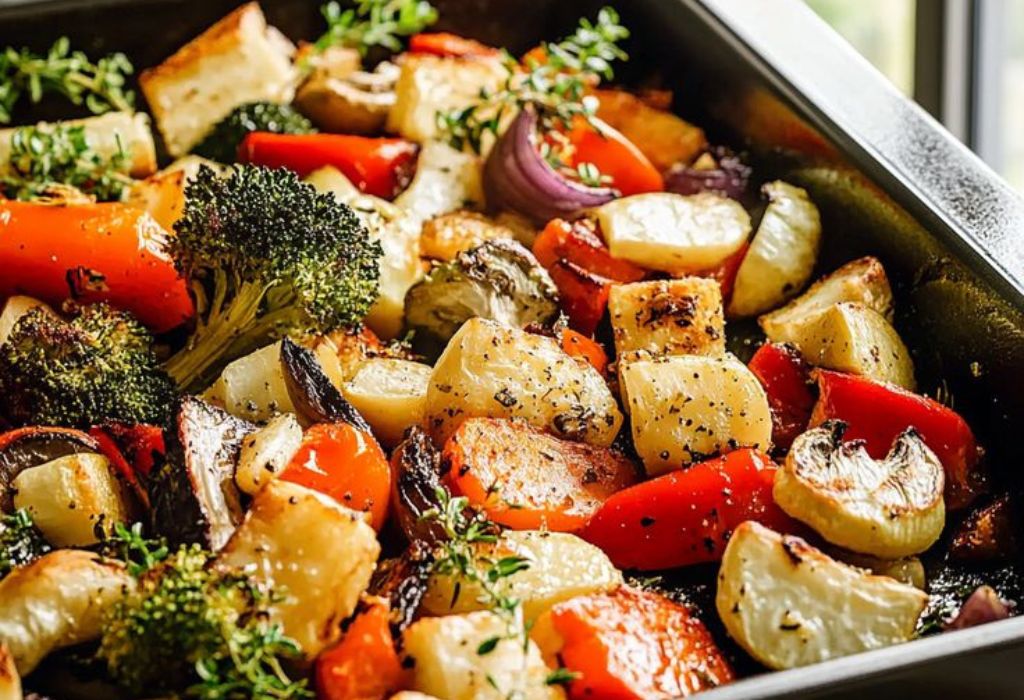
Reheating vegetarian food requires gentler heat than initial cooking to prevent drying and texture damage. Most vegetarian leftovers reheat best at 150°C to 170°C.
Higher heat causes moisture loss, rubbery vegetables, and dried sauces. Low steady heat allows internal warming without surface overcooking.
Covered dishes retain steam and prevent drying. Foil or oven-safe lids work best for casseroles and baked grains.
For crispy snacks and roasted vegetables, reheating at 180°C restores surface texture but should be done briefly.
Frozen meal prep portions should be reheated at 170°C to 180°C with extended time and covered to ensure even internal warmth.
Proper reheating temperature preserves flavor, texture, and nutritional quality of vegetarian meals.
Professional Chef Tips for Perfect Vegetarian Baking
Professional chefs treat oven temperature as a precise control tool rather than a fixed setting. They constantly adjust heat based on ingredient moisture, pan type, and desired texture.
Chefs preheat ovens longer than home cooks to ensure stable heat before food enters. This prevents sudden temperature drops.
Rotating trays halfway through baking ensures even browning, especially in fan ovens.
Chefs use thermometer probes for thick casseroles to confirm internal doneness without overbaking.
They also finish certain dishes with short bursts of high heat for browning after slow cooking for tenderness.
Professional temperature control is about flexibility and observation rather than blindly following dial numbers.
FAQs on Oven Temperature for Vegetarian Dishes
What is the best general oven temperature for vegetarian cooking?
For most vegetarian dishes, 170°C to 180°C is the safest general temperature for even cooking and good texture.
At what temperature should I roast vegetables in the oven?
Vegetables roast best between 190°C and 200°C for proper browning and crisp edges.
Is a lower temperature better for vegetable casseroles?
Yes, casseroles cook best at 170°C to 180°C so the center cooks evenly without burning the top.
What oven temperature is best for vegetarian pizza?
Vegetarian pizza needs high heat, usually between 220°C and 250°C for crispy crust and well-melted toppings.
Which temperature works best for vegetarian snacks like samosas and cutlets?
Most baked vegetarian snacks crisp perfectly between 190°C and 210°C.
What temperature should I use for vegetarian cakes and desserts?
Cakes bake best at 170°C to 180°C, while custards and cheesecakes require gentler heat around 150°C to 165°C.
Should I change the temperature when using a fan oven?
Yes, reduce the temperature by about 15°C to 20°C when using a fan oven.
Does baking pan material affect oven temperature?
Yes, metal pans heat faster than glass or ceramic, so temperature adjustments may be needed.
What temperature should I use for frozen vegetarian foods?
Frozen vegetarian foods usually bake best at 200°C to 220°C for proper crisping and internal cooking.
What is the best oven temperature for reheating vegetarian dishes?
Reheating works best at 150°C to 170°C to prevent drying and texture loss.
Conclusion
Oven temperature is the foundation of successful vegetarian baking and roasting. Every category of vegetarian food, from vegetables and casseroles to bread, desserts, and frozen snacks, reacts differently to heat.
Low temperatures provide gentle cooking for delicate dishes. Moderate heat ensures even doneness for everyday meals. High heat delivers crisp texture for snacks, pizzas, and roasted vegetables.
Fan ovens, pan materials, frozen foods, and reheating all require temperature adjustments for consistent results. Ignoring these variables leads to uneven texture, dryness, and flavor loss.
By matching the correct oven temperature with the type of vegetarian dish, home cooks gain full control over texture, moisture, flavor, and appearance.
When temperature is mastered, vegetarian cooking becomes predictable, efficient, and deeply satisfying. Every dish comes out golden, tender, and properly cooked from the inside out.

I’m Emma J. Caldwell, the founder, lead writer, and home-cooking enthusiast behind KitchenGuideCo.com. With a background in culinary arts and over a decade of cooking experience in both professional and personal kitchens, I created this platform to demystify recipes, offer smart kitchen gadget reviews, and guide readers through meal prep with confidence and clarity.