Most people load their dishwasher expecting sparkling clean dishes, but the results often depend on something they barely think about.
The dishwasher detergent plays a bigger role than the machine itself, and many homeowners discover this only after dealing with cloudy glasses or stubborn residue. Choosing the right detergent can completely change the way your dishwasher performs.
Imagine a busy evening when you finally finish dinner and load everything into the dishwasher, hoping for spotless results. The cycle ends, but the dishes come out dull, streaky or still dirty. That moment makes you question whether the detergent you used is actually doing its job.
Some households try various brands without understanding why each detergent behaves differently. Others stick to the same product for years even though better options might exist for their water type or dish materials.
This confusion grows because modern detergents come in pods, gels, tablets and powders, each offering different cleaning powers.
The truth is that choosing the best dishwasher detergent requires understanding how detergents interact with water temperature, spray arms and cleaning cycles.
The goal is not just removing food but preventing buildup, protecting dishes and ensuring a hygienic cleaning environment. Once these factors are clear, selecting the right detergent becomes much easier.
This guide explains every detail you need to know before choosing the best detergent for your dishwasher. It explores detergent ingredients, cleaning performance, water conditions and real household needs.
By the end, you will confidently know which detergent matches your dishwasher, your dishes and your daily routine.
Why Choosing the Right Dishwasher Detergent Matters
Choosing the right dishwasher detergent has a major impact on the cleanliness of your dishes. A weak or low quality detergent often leaves residue behind that becomes noticeable over time. This residue can build up on plates, glasses and utensils.
Food particles left behind after washing can create hygiene concerns. Bacteria may remain trapped inside small crevices if detergent does not dissolve them properly. This affects how safe your dishes are for everyday use.
Detergent strength must match the type of dish material used in the household. Some materials require stronger cleaning power to remove grease. Others need gentler formulas to prevent damage.
Modern dishwashers are built to work specifically with dishwasher detergent, not regular dish soap. Using the correct formula ensures the machine can complete each cycle effectively. The results are better cleaning and better machine health.
The right detergent also reduces the need for rewashing dishes. Rewashing increases time spent in the kitchen and wastes water. A strong detergent solves these problems.
Sensitive users benefit from choosing detergents free from harsh chemicals. Some detergents include fragrances that irritate sensitive skin. Hypoallergenic formulas prevent these issues.
Dishwasher detergents must also prevent film on glassware. The correct formula makes glasses look clear instead of cloudy. Clear glasses reflect better overall cleanliness.
Types of Dishwasher Detergents Explained
Powder detergents are one of the oldest types used. They require manual measuring and offer flexibility in adjusting the amount. Some users like powders because they dissolve well in hot water.
Gel detergents offer smooth consistency and easy measuring. They are simple to pour and distribute evenly. Gels work well for daily light cleaning needs.
Tablet detergents come in solid compressed blocks. They dissolve slowly during the wash cycle and release cleaning agents gradually. Many households prefer tablets for their strong cleaning performance.
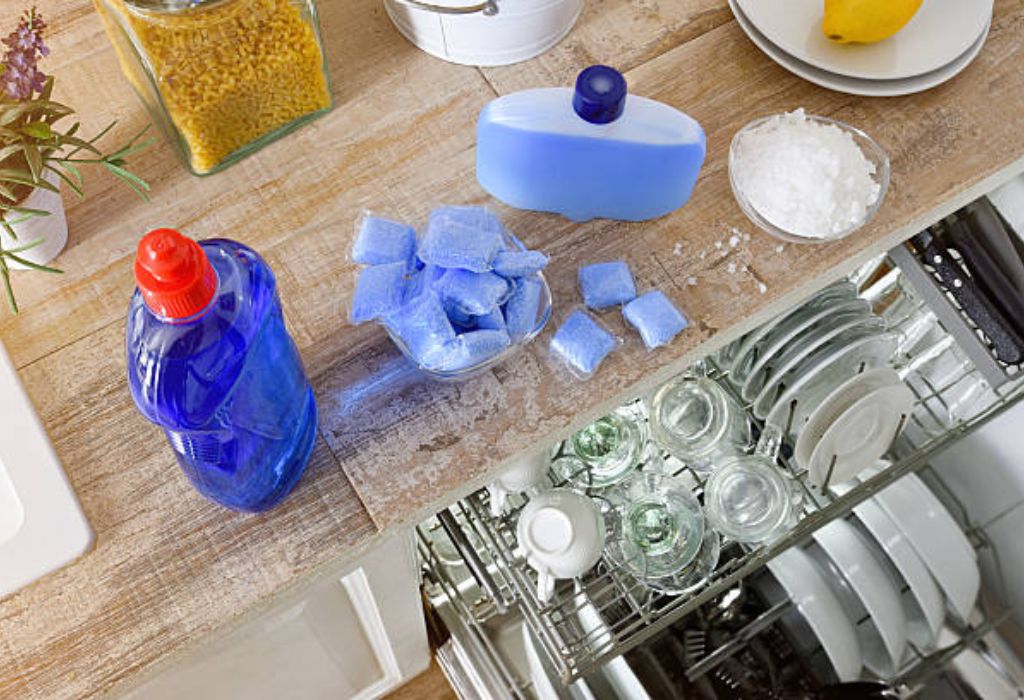
Pods combine detergent, rinse aid and cleaning boosters in a pre measured packet. They offer convenience and reduce the chances of using too much product. Pods are popular because they provide consistent results with every wash.
Eco friendly detergents use plant based or biodegradable ingredients. These options appeal to families who want fewer chemicals in their home. They also reduce environmental impact without sacrificing performance.
Some detergents are designed specifically for hard water. These detergents contain minerals that counteract water hardness. They reduce spotting and mineral deposits on dishes.
Fragrance free detergents help users sensitive to scent. They leave no smell on dishes and reduce irritation. These detergents are suitable for households with babies or allergy prone family members.
How Dishwasher Detergent Works Inside the Machine
Dishwasher detergent breaks down grease through special cleaning agents. These agents dissolve food particles and oils that cling to dish surfaces. Without these ingredients, dishes remain greasy.
Water temperature plays a major role in detergent effectiveness. Hot water helps activate cleaning agents faster. This improves overall washing performance.
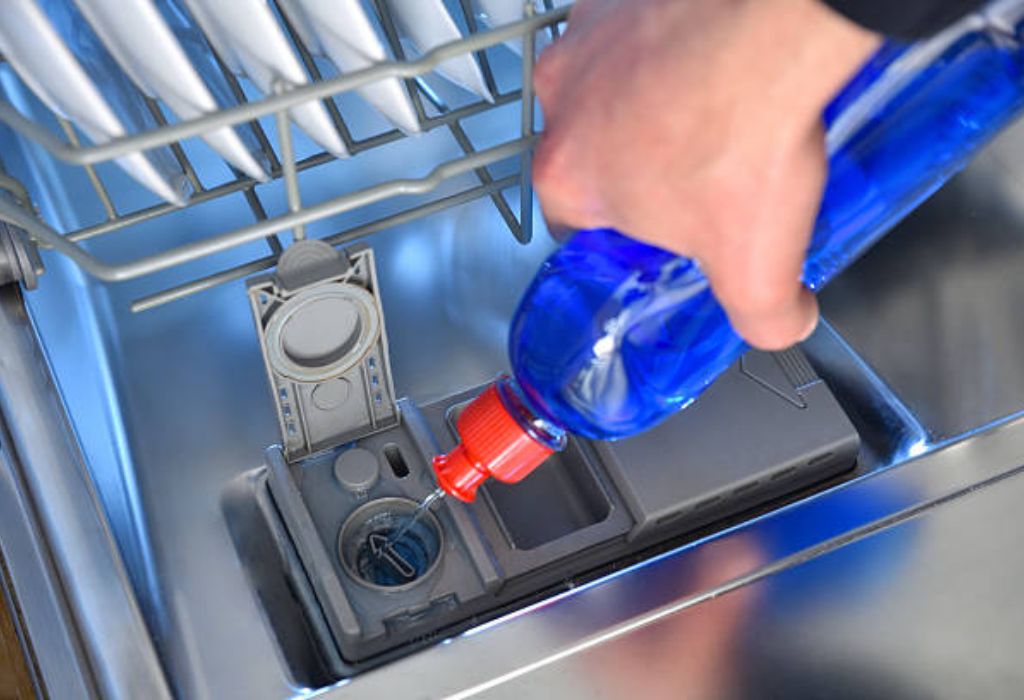
The detergent is dispensed at the right time during the wash cycle. The dishwasher door opens the detergent compartment when water flow begins. This ensures the detergent mixes with water properly.
Spray arms distribute hot water and detergent throughout the machine. These arms rotate to reach every corner. Proper distribution helps clean dishes evenly.
The rinse cycle washes away detergent residue. Any remaining particles are rinsed off before drying begins. This step is necessary for spotless results.
Drying cycles help prevent leftover moisture. The heat in the drying cycle removes water from surfaces. This reduces the chance of water spots.
Dishwashers need specific detergents because regular soap produces foam. Foam disrupts the machine’s cleaning action. Proper detergent avoids this problem entirely.
Best Dishwasher Detergent Ingredients to Look For
Enzymes are essential for breaking down food particles. They target proteins and starches commonly found on dirty dishes. This makes enzymes key for effective cleaning.
Surfactants help lift grease and oil off dishes. They reduce the surface tension of water so it can spread evenly. This leads to fewer greasy spots.
Oxygen based cleaners help remove stains and discoloration. They brighten glassware and dishes using active oxygen. This creates a cleaner appearance.
Water softening agents reduce mineral buildup. These ingredients make detergents more effective in hard water conditions. They prevent white residue on dishes.
Hypoallergenic ingredients benefit sensitive households. These ingredients avoid harsh chemicals that may cause irritation. This is ideal for young children and babies.
Eco safe compounds offer cleaner results without harming the environment. They break down completely without leaving harmful traces. Families who value sustainability prefer these ingredients.
Avoid detergents with excessive dyes and artificial fragrances. These chemicals provide no cleaning benefit. They may also cause residue on dishes.
Which Dishwasher Detergent Is Best for Hard Water Areas
Hard water contains minerals that interfere with cleaning. These minerals leave behind chalky white spots. This affects the appearance of dishes.
Hard water also reduces detergent performance. The minerals bind with detergent ingredients. This prevents proper activation during washing.
Detergents formulated for hard water work better in these areas. They include water softening ingredients to fight mineral deposits. This helps detergents work at full strength.
Using rinse aid improves cleaning in hard water conditions. Rinse aid helps water slide off dishes without leaving spots. This works well with strong detergents.
Combined detergent and rinse aid pods offer good convenience. They target hard water problems with a single product. Many users in hard water regions prefer this combination.
Performance improves when users match detergent to water type. Hard water detergents produce clearer glassware and smoother plates. They also reduce buildup inside the dishwasher.
Regular dishwasher maintenance becomes more important in hard water areas. Mineral deposits can clog spray arms. Cleaning the machine helps detergents work better.
Comparing Pods, Tablets, Gels and Powders
Pods are the most convenient option. They contain pre measured detergent, rinse aid and boosters. Users simply place one pod in the dispenser and start the cycle.
Tablets offer strong cleaning power. Their slow dissolving formula works well in long cycles. Tablets are ideal for heavy soiling.
Gels offer flexibility in measuring. Users can adjust the amount based on load size. Gels dissolve quickly in warm water.
Powders offer the best cost advantage. They usually come in large containers with lower cost per use. However, powders require precise measuring.
Different users prefer different detergent types based on convenience. Large families may prefer pods for simplicity. Smaller households may choose powders for budget reasons.
Cleaning performance varies by detergent type and water temperature. Pods and tablets generally provide the strongest cleaning performance. Gels and powders work better in lightly soiled loads.
Each detergent type carries unique residue concerns. Some gels may leave streaks if too much is used. Tablets and pods reduce this issue through accurate dosing.
How to Choose the Best Dishwasher Detergent for Your Home
Choosing detergent depends on household size. Larger families with heavy loads need stronger detergents. Smaller families may prefer flexible options.
Dishwashing frequency influences detergent needs. Daily cycles require a detergent that works well with repeated use. Occasional users may prefer long lasting containers.
The type of dishes used also affects detergent choice. Glassware needs gentle ingredients for clarity. Greasy pots need stronger formulas.
Local water quality plays a major role. Hard water users benefit from specialized detergents. Soft water users have more flexibility.
The age and model of the dishwasher matters as well. Older machines may require more powerful detergents. Newer machines often work with a wide variety.
Safety preferences guide detergent selection. Households with babies or allergies need fragrance free options. Sensitive users prefer mild ingredients.
Budget considerations affect the final decision. Powders offer lower cost, while pods offer convenience. Users must balance price with performance.
Common Mistakes People Make When Using Dishwasher Detergent
Using too much detergent leads to residue. Excess detergent may stick to dishes or the dishwasher interior. Proper dosing prevents this problem.
Using too little detergent reduces cleaning power. Under dosing leaves food particles behind. This results in dirty dishes after each cycle.
Some people mistakenly use regular dish soap. Dish soap creates foam that damages the machine. This can cause leaks and malfunctions.
Ignoring water hardness leads to poor cleaning. Hard water requires special detergents to avoid spots. Using the wrong type reduces wash quality.
Placing detergent in the wrong compartment affects cleaning. Detergent must be in the main dispenser for proper release. Incorrect placement wastes product.
Mixing different detergent types causes inconsistent results. Switching between gels and pods confuses cleaning performance. It is better to use one type consistently.
Using old or expired detergent reduces strength. Ingredients weaken over time. Fresh detergent gives better results.
Signs You Are Using the Wrong Dishwasher Detergent
Cloudy glasses indicate the detergent is not dissolving minerals. This is common in hard water areas. Hard water detergents solve the problem.
Greasy film on dishes means the detergent is too weak. Stronger formulas break down grease better. Pods and tablets are often the best choice.
Food residue after washing suggests detergent is not activating. This can happen when detergent is expired. Replacing it improves washing.
An unpleasant smell indicates leftover residue. Detergent must clean both dishes and the dishwasher interior. Wrong detergent causes buildup.
Detergent clumps left behind show improper dissolving. This happens when detergent does not match cycle length. Choosing the right type prevents clumping.
Build up inside the dishwasher indicates low quality detergent. Stronger formulas keep the machine cleaner. Regular machine cleaning helps too.
Poor drying performance suggests the detergent lacks rinse aid ingredients. Pods often include built in rinse aid. Adding separate rinse aid improves drying.
Tips for Getting the Best Results From Any Dishwasher Detergent
Correct loading improves cleaning results. Dishes must not block spray arms. Proper spacing ensures even water flow.
Rinsing off heavy food improves wash quality. Large food pieces reduce cleaning efficiency. Light rinsing helps the detergent work better.
Using the right dishwasher cycle makes a big difference. Heavy cycles remove tough residue. Quick cycles may not dissolve detergent fully.
Dishwasher cleaning routine supports better performance. Filters and spray arms must stay clear. Clean machines produce cleaner dishes.
Water temperature is important for activating detergent. Higher temperature improves cleaning. Users should check incoming water temperature.
Maintaining spray arms prevents blockages. Blocked arms limit water distribution. Regular cleaning prevents these issues.
Storing detergent correctly preserves strength. Detergent must stay dry and sealed. Moisture ruins cleaning ingredients.
Eco Friendly Dishwasher Detergent Options
Plant based detergents offer gentler cleaning power. They avoid harsh chemicals found in traditional formulas. Families who want safe cleaning appreciate these options.
Biodegradable ingredients break down naturally. This reduces environmental impact. Eco friendly brands focus on sustainability.
Low chemical formulas help sensitive users. They reduce irritation for allergy prone families. These detergents offer safer daily use.
Residue free formulas work well for glassware. They leave no streaks or odors behind. This improves dish appearance.
Sustainable packaging helps reduce waste. Many eco brands use recycled materials. This supports environmentally conscious choices.
Performance comparison shows eco detergents are improving. Many now match traditional detergents in strength. Users appreciate the balance of safety and cleaning power.
Eco products work best in mild to moderate cleaning conditions. Very heavy soiling may require stronger detergents. Households can use both types when needed.
Common Questions About Dishwasher Detergents
What is the best type of dishwasher detergent to use?
Pods and tablets offer the strongest and most consistent cleaning performance. They release detergent at the right time and dissolve fully in most wash cycles. Many households prefer them for convenience and results.
Do dishwasher pods clean better than gels or powders?
Pods usually clean better because they contain detergent, rinse aid and boosters in one packet. Their pre measured formula prevents using too much or too little. This leads to more reliable cleaning.
Can eco friendly dishwasher detergents clean as well as regular ones?
Eco friendly detergents can clean very well when dishes are moderately dirty. They use plant based and biodegradable ingredients that are gentle but effective. Very heavy soiling may require stronger traditional formulas.
Is it safe to use scented dishwasher detergent?
Scented detergent is safe for most users, but some people prefer fragrance free options. Strong scents may irritate sensitive skin or transfer light odor to dishes. Households with babies often choose mild or unscented formulas.
Why do my glasses look cloudy after using dishwasher detergent?
Cloudiness is usually caused by hard water minerals not dissolving properly. Hard water detergents and rinse aid help reduce this problem. Glassware stays clearer with the right formula.
Can dishwasher detergent damage my dishes?
Using too much detergent or using harsh formulas may cause etching or dullness on glassware. Correct dosing and choosing suitable detergent prevents this issue. Most damage comes from misuse, not the detergent itself.
How much dishwasher detergent should I use for one load?
Pods and tablets require only one piece per load. Gels and powders need careful measuring to avoid residue or weak cleaning. Following label instructions ensures proper cleaning.
Do I need rinse aid if I use good dishwasher detergent?
Rinse aid helps with drying and reduces water spots. Even strong detergents benefit from rinse aid in many dishwashers. It gives clearer and shinier results.
Why does my dishwasher leave detergent residue?
Detergent residue forms when the detergent does not dissolve fully. This may happen due to low water temperature or blocked spray arms. Checking these issues helps improve cleaning.
Is cheap dishwasher detergent good enough for daily use?
Cheaper detergents can work for lightly soiled dishes. They may struggle with grease or dried food. Stronger formulas provide better results for heavy use households.
Conclusion
Store detergent in a dry sealed container. Moisture weakens ingredients. Proper storage maintains cleaning strength.
Choose safe fragrances if needed. Mild scents reduce irritation. Strong chemical fragrances should be avoided.
Testing different detergents helps users find the best match. Dishes and water conditions vary by household. Experimenting leads to better results.
Dishwasher maintenance supports detergent performance. Clean filters and spray arms allow detergent to work properly. Machines must stay in good condition.
Monitor long term effects of detergent on dishes. Some materials may react differently over time. Adjust detergent accordingly.
Using detergent economically helps reduce waste. Accurate dosing prevents unnecessary usage. This makes detergent last longer.
These safety tips support long lasting dishwasher performance. Choosing the right detergent and following best practices ensure clean dishes. Households benefit from better hygiene and efficiency.

I’m Emma J. Caldwell, the founder, lead writer, and home-cooking enthusiast behind KitchenGuideCo.com. With a background in culinary arts and over a decade of cooking experience in both professional and personal kitchens, I created this platform to demystify recipes, offer smart kitchen gadget reviews, and guide readers through meal prep with confidence and clarity.