A home cook places frozen fries into a compact countertop appliance and hears a powerful fan begin to spin inside.
Within minutes, the fries turn golden and crisp without deep oil bubbling on the stove. This surprising result often leads to one simple question, what is an air fryer oven and how does it cook so fast.
Modern kitchens now feature appliances that combine speed, efficiency, and healthier cooking methods. The air fryer oven stands at the center of this change by using rapid hot air circulation instead of deep frying oil. It promises crispy textures while reducing grease and excess fat.
Many people confuse air fryer ovens with regular air fryers or even convection ovens. Though they share similar principles, their design, capacity, and cooking behavior differ in important ways. Understanding these differences helps buyers choose the right appliance for daily use.
This guide explains what an air fryer oven is, how it works internally, and how it compares with other cooking appliances. Every function is broken down in simple technical detail. By the end, its role in modern cooking becomes very clear.
What an Air Fryer Oven Is
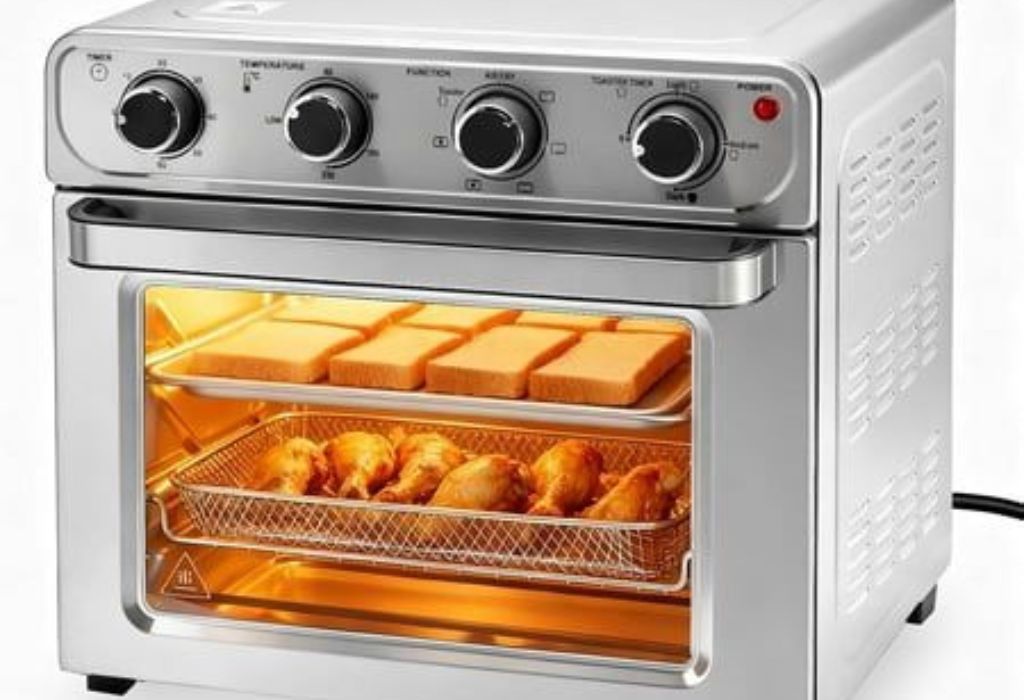
An air fryer oven is a countertop cooking appliance that combines air frying with oven-style cooking. It uses powerful heating elements and a high-speed fan to circulate hot air around food. This rapid airflow cooks food evenly and creates a crispy exterior.
Unlike basket-style air fryers, air fryer ovens look like small electric ovens. They usually have a front-opening glass door and multiple rack levels inside. This design allows cooking larger portions and multiple foods at once.
Air fryer ovens perform several cooking tasks in one unit. They can air fry, bake, broil, roast, and sometimes even dehydrate. This makes them multi-purpose appliances rather than single-use devices.
Most air fryer ovens operate within a wide temperature range. Typical models reach from low dehydration temperatures to high broiling heat. This temperature flexibility expands their cooking versatility.
Food inside an air fryer oven cooks without submerging in oil. Only light surface oil is needed for texture enhancement. This reduces overall fat content while preserving crispiness.
In simple terms, an air fryer oven is a convection oven enhanced for faster air movement. It accelerates heat transfer for quicker and crispier results. This defines its core identity in modern kitchens.
How an Air Fryer Oven Works
An air fryer oven works using a heating element and a powerful internal fan. The heating element generates intense radiant heat near the top or rear of the unit. The fan then forces this hot air to move rapidly around the food.
This fast-moving air strips moisture from the outer surface of food. As moisture evaporates, the surface becomes dry and crisp. This process mimics the effect of deep frying without oil immersion.
The cook chamber is shaped to direct airflow evenly across food surfaces. Racks and perforated trays allow air to pass under and over food. This ensures uniform browning from all sides.
Temperature sensors regulate heat output automatically. The system cycles power to maintain a consistent cooking temperature. Stable heat prevents burning and uneven cooking.
Cooking time is shorter than traditional ovens because heat transfer is more aggressive. Faster airflow delivers energy directly to the food surface. This reduces preheating and total cook time.
The combination of heat and airflow is the engine of air fryer oven performance. It creates crisp textures while using minimal oil. This method defines the appliance’s unique cooking behavior.
Difference Between Air Fryer and Air Fryer Oven
An air fryer is usually a compact appliance with a pull-out cooking basket. An air fryer oven uses front-door access with interior racks. This design difference changes both cooking capacity and flexibility.
Basket air fryers are optimized for small batches and fast meals. Air fryer ovens handle larger trays and multi-rack cooking. Families often prefer the oven-style design for volume cooking.
Air fryer ovens provide better visibility during cooking. The glass door lets users observe food without opening the unit. Basket fryers hide food during most of the process.
Cooking airflow in basket fryers is concentrated directly around the basket. Air fryer ovens distribute air across a larger internal space. This can slightly affect crisping speed.
Air fryer ovens usually include more cooking modes. These include baking, roasting, toasting, and dehydrating. Basket fryers are mainly focused on air frying only.
The key difference lies in size, capacity, and versatility. Both use similar air circulation principles. The choice depends on cooking needs and kitchen space.
Is an air fryer oven the same as a regular air fryer?
No, an air fryer oven has a larger oven-style chamber and more cooking functions.
Does an air fryer oven use a lot of oil?
No, it uses little to no oil for most recipes.
Can an air fryer oven replace a traditional oven?
It can replace many daily cooking tasks but not all large-batch oven uses.
Does food taste different in an air fryer oven?
Food usually tastes crispier with less oil residue.
Is cooking faster in an air fryer oven?
Yes, faster air circulation reduces cook time significantly.
Difference Between Air Fryer Oven and Convection Oven
An air fryer oven and a convection oven both use fans to circulate hot air. The main difference is the intensity and speed of airflow. Air fryer ovens move air much faster than standard convection ovens.
Convection ovens are usually built into kitchen cabinetry. Air fryer ovens are compact countertop appliances. This makes air fryer ovens more accessible for small kitchens.
Air fryer ovens cook food faster due to aggressive airflow. Convection ovens focus more on even baking than fast crisping. This difference changes texture outcomes.
Oil usage is another major distinction. Air fryer ovens require little to no oil for crisping. Convection ovens often rely on oil or butter for browning.
Air fryer ovens usually preheat much faster. Convection ovens take longer to reach full temperature. Faster preheating improves daily cooking convenience.
Both appliances use hot air technology. The air fryer oven simply intensifies this process. That is what creates its signature crispy finish.
Main Components Inside an Air Fryer Oven
The heating element is the core heat source inside an air fryer oven. It generates high-temperature radiant energy. This energy starts the cooking process instantly.
A high-speed fan sits near the heating element. Its job is to distribute hot air rapidly across the cooking chamber. This airflow creates even heat exposure.
The cooking chamber is designed for airflow efficiency. It includes perforated racks or mesh trays. These allow air to pass through food from all directions.
Temperature sensors monitor heat levels constantly. They adjust power to maintain stability. This prevents overheating and undercooking.
Most air fryer ovens include a control board. This board manages time, temperature, and fan speed. Digital models allow precise adjustments.
Together these components create accelerated convection cooking. Each part plays a specific mechanical role. Their coordination defines air fryer oven performance.
Cooking Functions of an Air Fryer Oven
Air frying is the primary function of these appliances. It creates crisp textures using high-speed hot air. This mimics deep frying without oil immersion.
Baking is another common feature of air fryer ovens. They can handle cakes, bread, and pastries. The circulating air ensures even rise and browning.
Roasting allows full-size proteins to cook evenly. Chicken, vegetables, and meats roast with reduced grease. This improves texture while lowering fat output.
Broiling exposes food to direct top heat. This rapidly browns thin foods. It is useful for melting cheese and crisping surfaces.
Many models offer dehydrating functions as well. These operate at low temperatures for extended periods. They remove moisture from fruits and herbs.
Some air fryer ovens even support rotisserie cooking. A rotating spit ensures uniform cooking of whole poultry. This adds to their multipurpose value.
Can an air fryer oven bake like a normal oven?
Yes, it can bake most foods using circulating hot air.
Does broiling work the same in an air fryer oven?
Yes, broiling uses direct top heat just like traditional ovens.
Can I dehydrate food in an air fryer oven?
Many models include dehydration settings.
Is roasting healthier in an air fryer oven?
Yes, it reduces excess oil while maintaining flavor.
Does every model support rotisserie cooking?
No, only specific models include a rotisserie feature.
Foods You Can Cook in an Air Fryer Oven
Frozen foods cook exceptionally well in air fryer ovens. Fries, nuggets, and snacks crisp evenly. No deep oil frying is needed.
Fresh vegetables roast quickly in these ovens. Airflow caramelizes surfaces without burning. This enhances both flavor and texture.
Meats cook efficiently with even browning. Chicken, steak, and fish retain moisture while forming crisp surfaces. Fat drains away during cooking.
Baked goods like cookies and muffins cook evenly. The hot air circulation prevents uneven browning. This improves consistency.
Frozen pizzas and flatbreads reheat efficiently. The crust becomes crisp without drying the toppings. Texture improves compared to microwave reheating.
Even leftovers reheat better inside air fryer ovens. Food regains crisp edges while warming internally. This restores original texture more effectively.
Advantages and Disadvantages of Air Fryer Ovens
One major advantage is healthier cooking. Reduced oil use lowers fat and calorie intake. This supports long-term dietary goals.
Cooking speed is another clear benefit. Faster heat transfer reduces total cook time. This is ideal for busy households.
Air fryer ovens also save kitchen space. They combine multiple appliances into one unit. This reduces clutter on countertops.
However, capacity is still limited compared to full-size ovens. Large family meals may not fit easily. This restricts bulk cooking.
Some models consume significant electrical power. High-wattage heating elements draw substantial current. Energy usage can be higher than expected.
Noise from the internal fan is another disadvantage. Continuous airflow produces audible sound. Sensitive users may find this distracting.
Are air fryer ovens energy efficient?
They are efficient for small meals but use high wattage during operation.
Do air fryer ovens make noise?
Yes, the internal fan produces noticeable sound.
Is cooking healthier in an air fryer oven?
Yes, reduced oil usage lowers fat intake.
Can I cook full meals in an air fryer oven?
Yes, within its size limitations.
Do air fryer ovens replace microwaves?
They can replace many reheating tasks but not instant heating.
Safety and Usage Guidelines
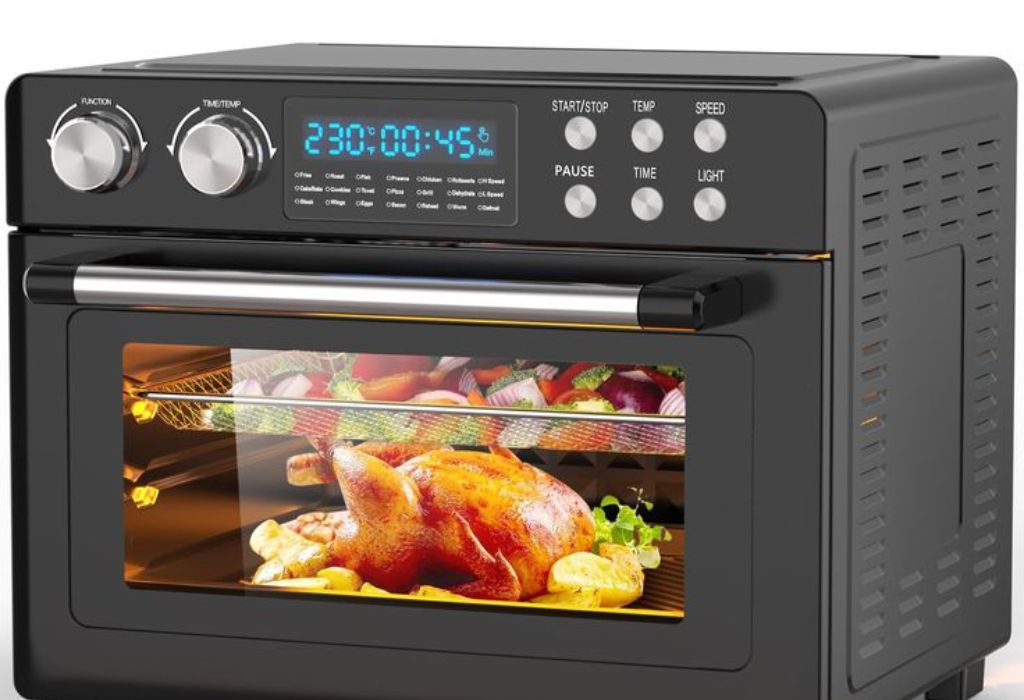
Air fryer ovens must always be placed on heat-resistant surfaces. Heat radiates from ventilation ports during operation. Improper placement causes material damage.
Users should never obstruct airflow vents. Blocked vents cause overheating. Overheating may trigger shutdown or damage internal components.
Metal accessories must match manufacturer recommendations. Incorrect trays disrupt airflow balance. This causes uneven cooking and risk of ignition.
The oven should never be operated empty at full power. Running without food stresses heating elements. This shortens internal component lifespan.
Grease trays must be cleaned regularly. Built-up grease becomes a fire hazard. Proper maintenance prevents electrical and flame risks.
Safe usage ensures not only cooking performance but long-term appliance reliability. Ignoring safety rules introduces unnecessary danger. Proper habits ensure safe daily operation.
Cleaning and Maintenance of an Air Fryer Oven
Regular cleaning preserves both hygiene and performance. Food residue blocks airflow and causes odor buildup. This affects cooking quality.
Racks and trays should be removed after cooling. These parts should be washed with warm, soapy water. Harsh abrasives should be avoided.
The interior walls should be wiped with damp cloths. This removes grease accumulation. Dry wiping prevents streaking and residue transfer.
Heating elements should never be soaked in water. Moisture damages electrical insulation. Only surface wiping is safe.
Crumb trays must be emptied frequently. Accumulated crumbs increase fire risk. Routine emptying prevents ignition.
Proper maintenance extends appliance lifespan significantly. Clean components perform more efficiently. Maintenance also preserves consistent cooking results.
How often should I clean my air fryer oven?
Cleaning after every few uses is recommended.
Can I wash air fryer oven racks in a dishwasher?
Only if the manufacturer allows it.
Is it safe to wipe the heating element?
Yes, only after cooling and without moisture contact.
Does grease buildup affect performance?
Yes, it disrupts airflow and increases fire risk.
Can I use oven cleaner inside an air fryer oven?
No, harsh chemicals damage internal coatings.
Conclusion
An air fryer oven is a powerful countertop appliance that combines fast convection cooking with multi-function capabilities. It uses intense airflow to cook food quickly and evenly. This creates crispy textures with minimal oil usage.
Its internal structure relies on heating elements, high-speed fans, and airflow-optimized chambers. These components work together to accelerate heat transfer. This distinguishes it from conventional cooking appliances.
Compared to basket air fryers and convection ovens, air fryer ovens offer greater versatility. They handle larger quantities and support more cooking modes. This makes them ideal for flexible daily cooking.
The ability to air fry, bake, broil, roast, and dehydrate increases their value. They replace several kitchen tools in a single appliance. This reduces countertop clutter and improves efficiency.
However, they still come with limitations in capacity and power consumption. Noise and space requirements also factor into buying decisions. These must be evaluated realistically.
Understanding what an air fryer oven is helps users make confident kitchen choices. With proper use and maintenance, it becomes a reliable everyday cooking companion. Its role in modern kitchens continues to grow.

I’m Emma J. Caldwell, the founder, lead writer, and home-cooking enthusiast behind KitchenGuideCo.com. With a background in culinary arts and over a decade of cooking experience in both professional and personal kitchens, I created this platform to demystify recipes, offer smart kitchen gadget reviews, and guide readers through meal prep with confidence and clarity.