Shiny speckled pans labeled “granite stone” line kitchen aisles, promising nonstick performance and a healthier way to cook. They appear modern, durable, and stylish, but the question remains: what is granite stone cookware made of.
Confusion is understandable because the name suggests carved stone when in reality it refers to coatings that mimic granite. Marketing phrases like “stone-reinforced” or “mineral-infused” sound technical but leave home cooks guessing about the actual materials.
This curiosity matters. Cookware materials directly affect heat performance, oven safety, durability, and health. Not knowing the composition can lead to misuse, coating damage, or unsafe heating practices.
Research confirms the importance of clarity. The global nonstick cookware market is valued at over $19.6 billion in 2024, expected to grow steadily as consumers choose lightweight pans with specialized coatings source.
Another study highlights the role of PTFE, a key coating ingredient in many “granite” pans. PTFE remains stable up to about 500°F / 260°C, but above this point degradation begins, producing fumes that impact air quality source.
What Granite Stone Cookware Actually Means

Granite stone cookware is not carved from granite rock. Instead, it typically consists of a metal core, usually aluminum, covered with a decorative or reinforced coating that imitates the look of stone.
The speckled surface is often a PTFE-based nonstick coating mixed with mineral particles to give a stone-like appearance. Some brands use ceramic-style coatings or porcelain enamel to achieve similar finishes.
The use of the word “granite” is more about aesthetics than substance. It signals durability and style but does not mean the cookware contains slabs of natural granite.
Manufacturers also blend terms, calling their products “stone-derived,” “diamond-reinforced,” or “mineral-infused.”
These phrases emphasize innovation but do not change the fundamental structure: metal beneath, coating on top.
This distinction is critical. Consumers sometimes believe they are buying solid stone or ceramic pans when they are actually purchasing nonstick aluminum cookware with specialized coatings.
Core Metals: Why Aluminum Leads
At the heart of most granite stone cookware is an aluminum base. Aluminum is chosen because it is lightweight, affordable, and distributes heat evenly across the pan’s surface.
Aluminum cores allow faster preheating compared to stainless steel, making them practical for everyday cooking. The material is also easier to form into multi-layered pans.
Some premium collections use tri-ply construction, combining aluminum with stainless steel for added durability. Others may use hard-anodized aluminum, which undergoes a treatment that strengthens the surface.
Despite these variations, the coating always determines how the cookware performs under certain conditions. Even tri-ply pans rely on the nonstick layer’s limits for oven use and utensil choice.
Weight can sometimes signal quality. Heavier pans often have thicker bases that resist warping, but weight alone cannot guarantee durability without strong coatings.
Coatings: PTFE vs Porcelain Enamel vs Ceramic
The most common coating in granite stone cookware is PTFE nonstick, sometimes marketed as “mineral-infused” or “triple-layer reinforced.” PTFE delivers smooth food release and easy cleaning at low to medium heat.
Another major category is porcelain enamel, also called vitreous enamel. This coating is essentially fused glass bonded to a steel core, creating a glossy, durable finish that resists rust and staining.
A third option is ceramic-style sol-gel coating. These coatings are often marketed as PFAS-free alternatives, using silicon-based compounds to form a smooth, stone-like surface.
Each coating type has unique benefits and limitations. PTFE excels at nonstick performance but should not exceed 500°F. Porcelain enamel is tougher but can chip if dropped. Ceramic-style coatings are PFAS-free but may lose nonstick properties faster.
Consumers often see terms like “PFOA-free” on labels. While reassuring, this only means a specific PFAS chemical is absent. It does not always mean the product is free of all PFAS or PTFE.
Brand Examples and Materials
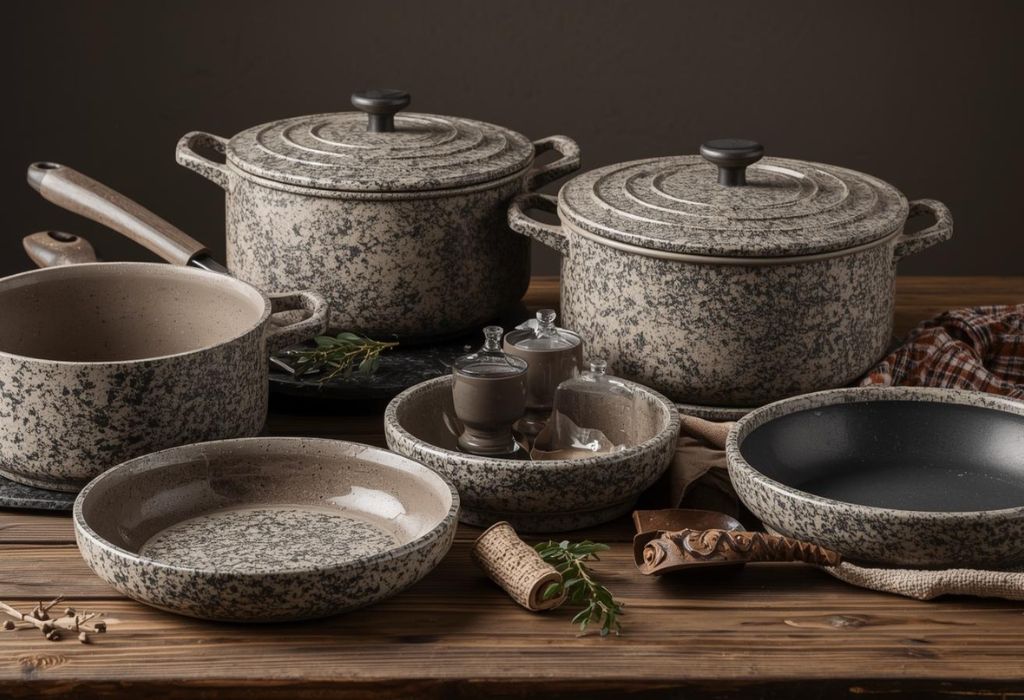
GraniteStone-brand cookware, one of the most recognized names, commonly features an aluminum core with a triple-layer nonstick coating described as mineral-infused. Many of their collections are rated oven safe up to 500°F, though some are capped at 400°F.
Hammered-style GraniteStone pans use the same construction but add textured finishes for appearance. Stainless tri-ply “Blue” lines use layered cores with stainless exteriors and still rely on nonstick coatings.
Other brands sell “graniteware,” which differs significantly. These pieces are steel cookware coated in porcelain enamel, a technology used for decades and known for durability.
The differences highlight why checking the box or manufacturer’s page matters. A pan that looks like granite stone cookware may in fact be enamelware, ceramic-coated aluminum, or PTFE-coated aluminum, each with unique safety limits.
Temperature and Safety Implications
When asking what granite stone cookware is made of, the discussion must include how its materials behave under heat.
For PTFE-based coatings, the widely recognized maximum safe temperature is 500°F / 260°C. At this point, the coating remains stable, but exceeding it can cause breakdown and loss of nonstick performance.
Ceramic-style sol-gel coatings can sometimes handle slightly higher oven ranges, but they are more prone to staining and losing slickness over time.
Porcelain enamel is stable at high heat because it is essentially glass, but it can crack under sudden temperature changes or if dropped.
Oven safety is also determined by the weakest component. Handles made with silicone or plastic can limit the safe temperature to 350°F or 400°F, even if the coating could tolerate more.
Preheating ovens adds another variable. Ovens often overshoot their target temperature briefly, meaning a pan rated at 500°F may be exposed to 525°F during preheat. Allowing the oven to stabilize first reduces risk.
Lids, Handles, and the Weakest Link
While coatings often get the attention, the other components of granite stone cookware are equally important.
Tempered glass lids are usually rated to around 400°F. Higher temperatures risk shattering, even if the pan itself is oven safe to 500°F.
Handles vary widely. Stainless steel handles can tolerate higher oven temperatures, while silicone grips or plastic trims often limit the usable range.
This means the entire cookware system should be judged by its weakest link. A pan with a durable aluminum core and PTFE coating may still be capped at 400°F because of its lid or handle design.
Broilers create another risk. Direct radiant heat from above can exceed 500°F rapidly. Even pans marketed as “broiler safe” should be used with extreme caution and only for short periods.
Graniteware vs Granite Stone Nonstick

The similarity in names causes confusion, but graniteware and granite stone cookware are not the same.
Graniteware refers to porcelain enamel on steel. It is heavy, glossy, and known for resisting rust. Many older households still use speckled enamel roasting pans that fall into this category.
Granite stone cookware, by contrast, usually refers to aluminum pans with PTFE or ceramic coatings designed to look like granite.
The shared “granite” word describes appearance, not actual material. Graniteware uses fused glass enamel, while granite stone nonstick uses synthetic coatings.
Understanding this distinction helps buyers avoid mismatched expectations. Someone seeking enamel durability may mistakenly purchase PTFE-coated aluminum if they only rely on product names.
Buying Checklist: What to Look For
When evaluating granite stone cookware, the most important step is checking the core metal, the coating type, and the stated oven limits.
Look for clear labeling about PTFE, PFAS, or ceramic coatings. Claims like “PFOA-free” are positive but should be understood in context.
Confirm whether the cookware is aluminum-based or porcelain enamel steel. Both are valid, but they perform differently in heat distribution and durability.
Check the manual for oven and broiler ratings. A pan advertised as 500°F safe may actually be limited to 400°F once lid and handle restrictions are factored in.
Ignore marketing claims like “indestructible” or “metal utensil safe.” Even reinforced coatings scratch over time. To extend life, use wood, silicone, or nylon utensils.
Care and Longevity of Materials

The materials in granite stone cookware require mindful care to maintain performance.
Use medium heat for stovetop cooking. High flames or empty preheats stress coatings and shorten lifespan.
Handwashing is strongly recommended. Dishwashers expose pans to harsh detergents and hot cycles that degrade coatings faster.
Avoid metal utensils, even if packaging says otherwise. Scratches expose layers beneath the coating and reduce oven safety.
For oven use, stay comfortably below the listed maximum temperature. Many users find 425°F or less provides good results while preserving the nonstick surface.
Storing pans with padding or separators prevents scratches from stacking. This small habit extends coating life significantly.
Alternatives for High-Heat Cooking
Granite stone cookware is versatile for everyday use but limited for extreme heat.
For broiling steaks, roasting at very high temperatures, or using self-cleaning oven cycles, cast iron or carbon steel are safer choices.
Stainless steel pans also handle high-heat searing and broiling without coatings that might degrade.
Enameled cast iron provides durability and higher oven tolerance, although it is heavier and requires careful handling to prevent chipping.
Ceramic cookware marketed as high-heat tolerant exists, with some lines rated up to 600°F, but performance varies widely by brand.
Matching cookware to the task ensures both safety and durability. Granite stone pans excel at everyday sautéing, roasting, and baking but are not designed for maximum heat extremes.
Conclusion
So, what is granite stone cookware made of. In most cases, it is an aluminum core coated with nonstick layers that imitate granite, often PTFE, porcelain enamel, or ceramic-style sol-gel.
The “granite” name describes appearance more than material. Graniteware enamel differs entirely, relying on fused glass over steel.
By knowing the true construction, consumers can choose cookware that fits their cooking style, respect oven limits, and avoid misuse.
Moderate oven use, careful utensil choices, and proper cleaning extend the lifespan of these pans. For high-heat searing or broiling, switching to cast iron or stainless ensures safety.
Granite stone cookware offers style and convenience, but its value lies in informed use. Checking labels, understanding coatings, and respecting limits will keep these pans performing beautifully for years.

I’m Emma J. Caldwell, the founder, lead writer, and home-cooking enthusiast behind KitchenGuideCo.com. With a background in culinary arts and over a decade of cooking experience in both professional and personal kitchens, I created this platform to demystify recipes, offer smart kitchen gadget reviews, and guide readers through meal prep with confidence and clarity.