You open your dishwasher expecting to see steam rise and dishes sparkling clean, but instead, everything feels cool to the touch.
Glasses look cloudy, plates have greasy spots, and detergent residue clings to the silverware. It’s frustrating, especially when your dishwasher has always handled messes perfectly before.
This problem usually starts small. One day the dishes aren’t quite as clean, and the next day, the water inside the machine feels cold.
You might even notice your cycles taking longer than usual or drying poorly afterward. These subtle signs often point to one issue — the water inside the dishwasher isn’t heating as it should.
Hot water isn’t just for convenience. It helps dissolve detergent, kill germs, and break down oils and food residue that cold water can’t remove. Without heat, your dishwasher struggles to perform, leaving you with half-clean dishes and unpleasant odors.
The good news is that this issue doesn’t always mean a major breakdown. In most cases, a faulty heating element, bad thermostat, or wiring fault is to blame, all of which can be diagnosed and repaired easily.
In this guide, you’ll learn how dishwashers heat water, why the process can fail, and how to fix it safely at home before calling a technician.
How Dishwashers Heat Water During a Cycle
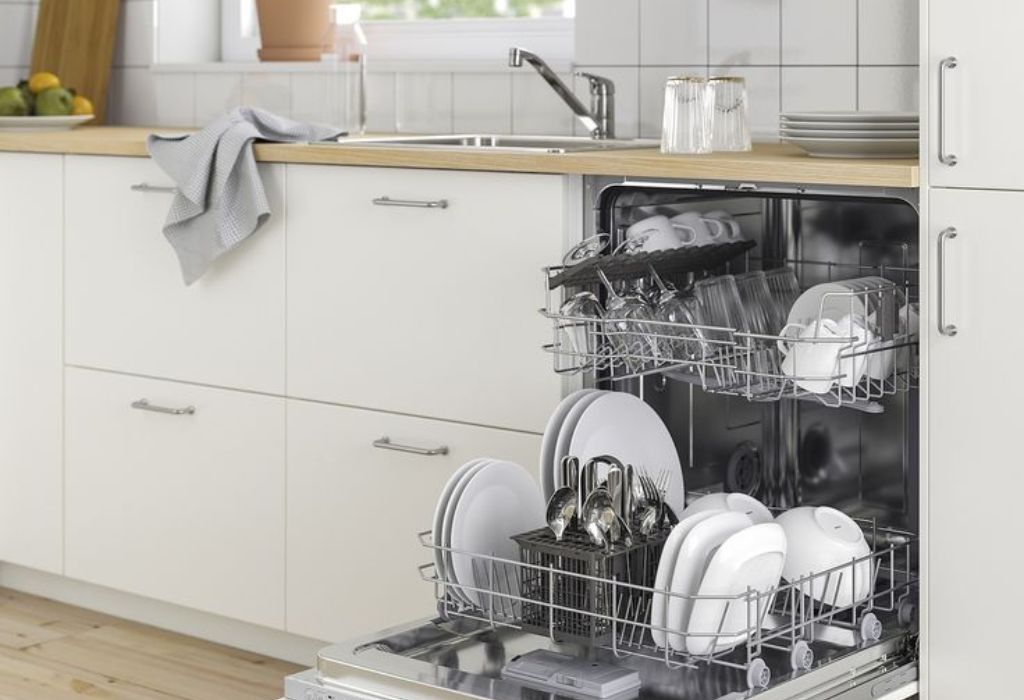
Your dishwasher doesn’t rely solely on the hot water line from your sink — it has its own built-in heating system designed to boost temperature when needed.
When you start a cycle, the machine fills with water and the heating element at the base warms it to about 120–150°F (49–65°C). This ensures detergent dissolves and sanitizes effectively. During the drying phase, the same element helps evaporate remaining moisture.
Some modern dishwashers use an inline water heater or thermostat sensor to regulate precise temperatures. These parts communicate with the control board to heat only when necessary, improving energy efficiency.
If any of these components fail, the dishwasher might still run normally but with cold or lukewarm water. That’s why you may not notice the issue until you unload dishes that look cloudy or oily.
Regular maintenance — like cleaning filters and ensuring water supply temperature — helps keep heating components functioning as intended.
Common Reasons Why the Dishwasher Isn’t Heating
When your dishwasher stops heating water, it usually comes down to one of a few key causes. Identifying which one applies can save time and money.
The most frequent culprit is a faulty heating element. This coil-shaped metal part sits at the bottom of the dishwasher and heats water and air during cycles. If it burns out, the machine can’t raise water temperature.
Another common issue is a broken thermostat. The thermostat tells the dishwasher when to heat and when to stop. If it fails, the system either doesn’t start heating or overheats prematurely.
Wiring faults, blown fuses, or control board issues can also interrupt the signal that activates heating. Even simple buildup, like calcium deposits on the element, can prevent efficient heat transfer.
Can cold incoming water cause the problem?
Yes, dishwashers rely on a minimum water temperature of around 120°F.
Does detergent dissolve properly without heat?
No, undissolved detergent often leaves film or spots on dishes.
Can clogged filters affect water temperature?
Yes, restricted flow can cause uneven heating during the wash cycle.
Is this issue common in older dishwashers?
Yes, heating components wear out over time, especially after 5–7 years of use.
Can power surges damage the heating circuit?
Yes, sudden voltage spikes can blow internal fuses that control heating.
Checking the Heating Element for Damage
The heating element is responsible for both hot washing and drying, so inspecting it is your first step.
Unplug your dishwasher or turn off the circuit breaker for safety. Remove the bottom rack to expose the coil at the base. Visually inspect it for burn marks, cracks, or corrosion. If you notice discoloration, the element may have burned out.
You can test it using a multimeter. Disconnect the wires and measure resistance. A working element should show continuity; if the reading is zero or infinite, it needs replacement.
Replacement is typically straightforward. Remove the lower access panel, disconnect wiring, unscrew the retaining nuts, and lift out the old element. Install the new one carefully to avoid bending it out of shape.
Once replaced, run a test cycle to confirm proper heating.
Inspecting the Thermostat and Thermal Fuse
The thermostat acts as the dishwasher’s temperature control. If it stops signaling the heating element, water won’t warm up even if everything else works perfectly.
To test it, unplug the dishwasher and locate the thermostat — usually found near the heating element or underneath the tub. Remove the wires and check for continuity using a multimeter. If it shows no reading, replace it.
Another component to check is the thermal fuse. This safety device cuts power to the control board if the machine overheats. A blown fuse stops the dishwasher from heating altogether.
Replacing a fuse or thermostat is inexpensive and can restore full heating quickly. Always ensure replacements match your model number to maintain compatibility and safety.
Checking the Wiring and Power Connections
Sometimes, the reason your dishwasher isn’t heating has nothing to do with internal parts — it’s the electrical connection. The heating element and thermostat rely on stable voltage to function. If power flow is interrupted or wiring becomes loose, heating will stop mid-cycle.
Start by switching off the power supply from the circuit breaker. Remove the lower access panel and check the wiring harness connecting the heating element, thermostat, and control board. Look for burned connectors, frayed wires, or loose terminals.
If you see discoloration or melted plastic, that’s a sign of overheating or short-circuiting. Tighten or replace the connections and reassemble the panel.
For added safety, use a multimeter to confirm the correct voltage reaching the heater terminals (usually around 120 volts for most models). If there’s no reading, the issue may be with the control board’s power output or a tripped thermal fuse upstream.
Electrical faults are easy to overlook but can cause repeat heating issues if not fixed properly. Always handle wiring checks with caution — when in doubt, call a certified technician to test circuits safely.
Testing Water Supply and Temperature Settings
Sometimes, the dishwasher isn’t at fault — the issue lies in your home’s water supply.
Your dishwasher depends on hot water from the kitchen line, which ideally should reach at least 120°F (49°C). If the temperature is too low, the dishwasher may struggle to heat efficiently, especially during short cycles.
Run your kitchen faucet on hot for 30 seconds and check how warm it feels. If it’s only lukewarm, adjust your water heater’s thermostat. You can also use a thermometer to measure the actual temperature.
Additionally, avoid running the dishwasher while other hot-water appliances — like showers or washing machines — are in use. Reduced flow can lower the incoming water temperature and affect wash quality.
Can I rely only on the dishwasher heater?
Yes, but starting with warm water helps the cycle run faster and more efficiently.
Does cold weather affect water temperature?
Yes, winter months can lower incoming water temperature significantly.
Will increasing the heater temperature raise energy bills?
Slightly, but it also improves cleaning efficiency and hygiene.
Can low water pressure affect heating?
Yes, insufficient flow prevents proper heating and rinsing.
Should I run the tap before starting the dishwasher?
Yes, it ensures the first water entering the machine is already hot.
When the Control Board or Sensors Fail
If your heating element and thermostat both test fine, the issue may be electronic.
The control board regulates every part of the dishwasher’s operation — from water intake to heating and drying. When it malfunctions, it can stop sending the signal that activates the heater.
Similarly, temperature or turbidity sensors can misread conditions inside the tub, preventing the heater from turning on. If you notice other odd behaviors — like incomplete cycles or unresponsive buttons — it’s likely a board issue.
While some homeowners attempt board replacement themselves, it’s best to let a technician handle it. Electronic components require careful calibration, and improper installation can cause further issues.
When to Call a Professional Technician
While many dishwasher heating problems can be solved with DIY inspection, some cases require professional diagnosis.
If your heating element, thermostat, fuse, and wiring all check out fine but water still stays cold, the problem could lie deeper within the electronic control system or temperature sensors.
Technicians have specialized tools to read diagnostic error codes and test voltage under load — something most homeowners can’t do safely.
You should also call a technician if your dishwasher repeatedly trips breakers, shows burnt smells during cycles, or has visible scorch marks near electrical components. These signs suggest overheating or internal short circuits.
Another case that requires expert help is when replacing the heating element or thermostat doesn’t solve the issue. A control board reprogramming or relay replacement may be needed.
Professional repair may seem expensive upfront, but it prevents repeated failures and extends your dishwasher’s lifespan. Plus, it ensures the job meets safety standards and keeps warranties valid.
If your dishwasher is over eight years old, an inspection can also help decide whether repair or replacement makes more financial sense. Sometimes, upgrading to a modern energy-efficient model saves money in the long term.
How to Prevent Dishwasher Heating Problems
Keeping your dishwasher heating system healthy starts with simple habits. Always run hot water in your sink for a few seconds before starting a load. This primes the system with warm water from the start.
Clean filters regularly to maintain proper circulation. Buildup around the heating element can insulate it, making it work harder and reducing efficiency. Once a month, run an empty cycle with white vinegar or a dishwasher cleaner to remove scale and soap film.
Avoid overloading your dishwasher, which can block the spray arms and reduce water movement. This not only affects cleaning but also disrupts even heat distribution.
Finally, check your home’s circuit breaker occasionally. Fluctuating power supply can weaken heating components over time.
Conclusion
A dishwasher that doesn’t heat water properly doesn’t mean it’s failing — it just needs a little attention. The problem usually lies in one of three places: the heating element, thermostat, or water supply. Once identified, most repairs are quick and affordable.
Heating plays a vital role in both cleaning and sanitizing your dishes. Without it, detergent can’t fully activate, and food residue lingers. By inspecting and maintaining your dishwasher’s heating components, you restore its full performance and energy efficiency.
Make it a habit to run cleaning cycles monthly, check filters weekly, and ensure the water entering your dishwasher is already hot. These small steps keep every wash cycle powerful and hygienic.
When your machine heats correctly, you’ll notice spotless glassware, fresh-smelling dishes, and the quiet satisfaction of knowing your appliance is running exactly as it should.

I’m Emma J. Caldwell, the founder, lead writer, and home-cooking enthusiast behind KitchenGuideCo.com. With a background in culinary arts and over a decade of cooking experience in both professional and personal kitchens, I created this platform to demystify recipes, offer smart kitchen gadget reviews, and guide readers through meal prep with confidence and clarity.